We’ve been in an arranged marriage for three years. I didn’t even know what my husband looked like. At a family dinner, a handsome man with a cold demeanor waved at me, “Hello. Are you, by any chance, my wife?” I smiled and replied, “No. I’m your mother.”
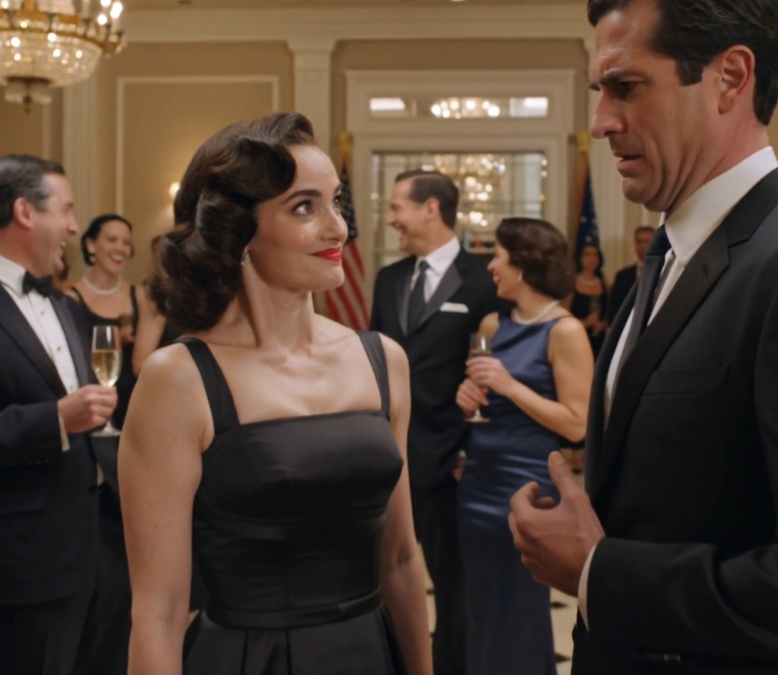
We’ve been married for three years, but I still haven’t bothered to learn my husband’s full name.
It’s not that my memory is bad. It was simply too much trouble to remember.
This marriage, to put it bluntly, was like an add-on to a corporate merger. I was a negotiating chip, my signature affixed to a contract at a lawyer’s office. I signed the documents, provided my thumbprint, and followed every rule to the letter.
My mother used beautiful words, calling it a wonderful match between families of equal standing. But the honest translation was simple: If you marry him, our company’s stock will go up three percent.
On my wedding day, I stood in the hotel lobby wearing a custom-made wedding gown. The five-inch heels made my toes feel like they were about to snap off. The groom remained expressionless throughout the ceremony. Even when we made the rounds pouring champagne, he never once touched my arm.
When the photographer said, “A little closer, please,” he moved a few inches to his left.
I suspected he had a precision ruler embedded in his brain.
A honeymoon? Of course not. That very night, he flew to Singapore. I didn’t even see the color of his suitcase.
According to his secretary, he had a girlfriend he’d been with for five years. They were apparently forced to break up because her family wasn’t considered a suitable match. That girlfriend was now studying abroad in London, and he flew there twice a month.
The number of plane tickets he’d bought for those trips was probably far greater than the number of words he’d ever spoken to me.
But I didn’t care. Truly, I had my own life.
I ran an art gallery. I had two cats. And on weekends, I went to the spa with my girlfriends. My life was far more fulfilling than it had been when I was single. The only real differences were the extra zeros in my bank account and having to go to my in-laws’ estate for Thanksgiving and Christmas, just to play the part of a happy couple at a table laden with extravagant food.
My mother-in-law was a very easy person to get along with. Having gone through an arranged marriage herself, she understood the underbelly of this world all too well.
Every time we met, she would grasp my hands and say, “Eleanor, you always have so much to deal with.”
Her eyes held a depth of understanding that went beyond words.
That’s why, over those three years, the conversations between my husband and me could be counted on one hand.
The first time was on our wedding day.
“A princess cut would have suited you better,” I said, handing him the ring.
The second time was three months into our marriage. He called me, and the first thing he said was, “What was your name again?”
I was in the middle of negotiating the price of a painting with a client at my gallery. Stifling a laugh, I replied, “Check the public records at the county clerk’s office. It’s written there.”
He was silent for about five seconds, then hung up.
The third time was at the end of last year.
He came home drunk and slumped onto the sofa, staring at me.
“You know, you’re actually quite beautiful.”
I replied, “Thanks. You too.”
Immediately afterward, he threw up at my feet, right onto an antique Persian rug worth a small fortune.
The next day, I slapped the invoice on his desk.
A few hours later, his secretary informed me that $1,000 had been wired to my account.
“This is compensation from the president,” she said.
I didn’t accept it. Instead, I left a message with the secretary.
“Mr. Sterling Senior is scheduled to visit my gallery today. Unfortunately, due to last night’s mess, we are not prepared to receive him. Please inform the president that I require the full $100,000 for the immediate replacement of the rug. Otherwise, I will have no choice but to explain the reason for this disarray directly to the chairman.”
The money was wired immediately.
This was our marriage.
We were a little more than strangers, a little closer than acquaintances. But in essence, we were just two sole proprietors who happened to be tied together by the same string.
Don’t interfere in each other’s lives.
That was the rule.
So when that gold-leaf invitation arrived, my first thought wasn’t, I finally get to meet his family.
It was, Ugh. I have to wear those painful heels again.
The invitation read: Sterling Group’s 30th Anniversary Gala.
The venue was a new six-star hotel in Manhattan. My mother-in-law, Catherine, called me personally.
“You absolutely have to come this year. Edward isn’t well, and he wants to see the two of you together.”
I couldn’t refuse. Deep down, I knew Catherine had always been good to me.
When I had acute appendicitis last year, she was the one who arranged for a car and stayed with me at the hospital. She held my hand until three in the morning.
At the time, my husband was in London.
I later heard he hadn’t even bothered with a phone call. He’d simply wired $50,000 with a cold note in the memo line.
Medical expenses.
I accepted it without hesitation. It felt like the alimony he should have been paying me all along.
On the day of the gala, I wore a black evening gown. It was haute couture, beautifully tailored to accentuate my waist and flatter my figure.
The makeup artist my best friend recommended was a genius, giving me a look that screamed confidence: sharp winged eyeliner and vibrant red lipstick.
Standing in front of the mirror, I was even impressed with myself.
My driver took me to the hotel, but the traffic was so bad that I ended up arriving thirty minutes late.
By the time I got there, the ballroom was already packed.
The manager at the entrance gave me a blank look, clearly not recognizing me. When I handed him the invitation, he glanced down, then back at me, his mouth falling open in panic.
“Mrs. Sterling, please, right this way.”
I gave a slight nod and walked in, the click of my heels echoing on the marble floor.
The ballroom was immense, with crystal chandeliers that shone so brightly they almost hurt my eyes. Fifty tables were set with pristine white tablecloths and gold-plated cutlery. Waiters moved through the crowd with trays of champagne, and the air was filled with the rustle of glamorous dresses and the clinking of glasses.
I scanned the room and saw faces I recognized from the covers of Forbes, Time, and Vanity Fair.
The Sterlings were a three-generation dynasty in this city. The guests were a who’s who of the wealthy and powerful.
I tried to be inconspicuous and took a seat in a corner.
To be honest, I felt completely out of place. Even though I was a Sterling by marriage, I hadn’t made a single public appearance in three years. I had never even set foot inside Sterling corporate headquarters.
But on paper, my name was irrevocably linked to that man’s.
Oh well. I’ll just think of it as a free meal.
Before the food was served, I was scrolling through my phone to pass the time when a text came in from my best friend, Chloe.
Seen the hubby yet?
Not yet, I typed back.
She followed up immediately.
What about his girlfriend? Seen her?
You have a truly wicked personality, I replied.
As we were texting back and forth, I saw someone approaching out of the corner of my eye.
I looked up to see a woman in her sixties smiling down at me. She was dripping in jewels and carried the unmistakable air of a Sterling relative.
I quickly stood up, my mind racing to figure out what I should call her.
The search came up empty.
I’d never met her before.
“You must be Arthur’s wife, aren’t you?”
The woman looked me up and down as if appraising livestock.
I nodded with a polite smile. “Yes, it’s a pleasure to meet you.”
“Oh my, you really are a beauty. Arthur is a lucky man.”
The woman patted my hand, then leaned in conspiratorially.
“You need to keep a close eye on your husband, dear. There are rumors he still hasn’t cut ties with that little Isabelle. Don’t let him walk all over you.”
I maintained my smile. “Thank you for the advice.”
The woman then launched into a long-winded lecture on wifely duties and a man’s infidelity. I let her words go in one ear and out the other, nodding at appropriate intervals.
After she finally left, I sat back down and took a sip of champagne.
This meal, it seemed, was not going to be worth the trouble.
My phone buzzed again.
Chloe had sent a picture of my two cats.
They miss you.
As I was about to reply, I sensed someone else approaching.
This time, it was a man.
He was tall, impeccably dressed in a custom-tailored black suit. He seemed to carry a chill in the air as he walked.
I instinctively looked up and met a pair of deep-set eyes, a strong nose, thin lips, and a cool gaze. He exuded an aura that pushed people away.
I held my breath for a second.
Not because he was handsome, though he certainly was. That wasn’t the issue.
The issue was the way he was looking at me.
It was a strange gaze, as if he were trying to confirm something.
Hesitant, he stopped in front of me and tilted his head slightly. He pulled his right hand out of his pants pocket and gave a small, tentative wave.
It wasn’t a proper greeting.
It was a slightly clumsy, uncertain, awkward gesture, like a little boy trying to talk to a stranger.
And then he spoke.
“Hello.”
His voice was a little low and raspy, the kind you get after a few drinks.
I said nothing, waiting for him to continue.
His Adam’s apple bobbed. His eyes darted away for a second before returning to my face. His right hand was still half-raised, frozen as if he didn’t know what to do with it.
Two seconds later, he took a deep breath and uttered a sentence I would never forget for the rest of my life.
“Are you my wife?”
The air suddenly went still.
I’m not exaggerating. The surrounding chatter vanished in an instant. Only his words seemed to echo in the space. I could even hear the faint clinking of the chandeliers overhead, like a soundtrack mocking us.
I stared at him, and he stared back at me.
He wasn’t joking.
In fact, he looked terrifyingly serious. Almost pathetic.
A man well over six feet tall, wearing a suit that cost tens of thousands of dollars, waiting for an answer like a lost child.
In that moment, a complex mix of emotions welled up inside me.
It was absurd, comical, and a little sad.
But more than anything, it was an indescribable rage.
Not at him, but at myself.
For three years, I had lived in this family as an invisible woman. So invisible that my own husband couldn’t even recognize my face. So invisible that he had to stand in front of me and ask, “Are you my wife?”
What a joke of a marriage.
People around us were starting to notice.
Middle-aged women whispered among themselves, staring at us. A man in glasses at the nearest table was discreetly filming us with his phone, a smirk of amusement on his face.
I brought my gaze back to the man in front of me.
A look of uncertainty began to spread across his face. He seemed to realize he might have made a mistake and took half a step back.
His lips moved, and I could tell he was about to say, “I’m sorry. I must have the wrong person.”
But I didn’t give him the chance.
I laughed.
Not my usual polite, manufactured smile, but a genuine laugh that came from the bottom of my heart.
I tilted my head slightly, looked him straight in the eye, and said in a clear, carrying voice for everyone in the ballroom to hear.
“No. I’m your mother.”
After a beat, I patted his shoulder and added, “Son, you’ve got the wrong person.”
The ballroom erupted.
A burst of laughter escaped from the next table. Someone made a sputtering sound as they choked on their champagne. Then the laughter spread like a contagion, and a wave of amusement swept through the room.
The man who had been filming us was laughing so hard he almost dropped his phone.
The high-society ladies covered their mouths with their handkerchiefs, their eyes wide as if they were watching a scene from a soap opera.
And the man standing before me—the fourth son of the Sterling family, my legal husband—his expression was a spectacle.
It shifted from confusion to shock, from shock to humiliation, from humiliation to anger, and finally settled into a stunned, frozen look that said, What in the world am I supposed to say now?
His ears turned red, the blush spreading down his neck.
Just as he was about to speak, a hearty laugh boomed from behind him.
A white-haired old man leaning on a cane was making his way toward us.
It was Edward Sterling Senior, the chairman of the Sterling Group and my nominal father-in-law.
He was laughing so hard there were tears in his eyes. He tapped his cane on the floor and gave me a thumbs-up.
“Excellent! That’s my Sterling daughter-in-law!”
Beside the chairman was Catherine. She was also laughing, shaking her head with a look that was part exasperation, part delight, as if she had finally gotten to see the entertaining drama she’d been waiting for all along.
Once her laughter subsided, Catherine shot my husband a glare and lowered her voice.
“Arthur, have you no shame? You’ve been married for three years, and you don’t even know your own wife’s face! Go bang your head against a wall!”
My husband stood there frozen.
His lips were pressed into a thin line, the muscles in his jaw tight.
The look he gave me was as sharp as a knife, but he said nothing. He couldn’t possibly talk back in front of his father.
He turned on his heel and strode away, the hard sound of his leather shoes echoing on the marble floor.
His back was ramrod straight, but the backs of his ears were still bright red.
I watched him go and took another sip of my champagne.
Quite delicious, actually.
The party continued, but the atmosphere had clearly changed.
Everyone was stealing glances at me. Whispers rippled through the ballroom like waves.
I had become the main event of the evening, but that was the last thing I wanted.
My plan had been to slip in unnoticed, eat quietly, and leave quickly.
Three years of a cold, distant marriage had made me accustomed to being alone, but now that plan was completely shot.
Well, whatever. He’s the one who made things awkward first. I just returned the favor.
He wouldn’t touch my arm at our wedding, flew to Singapore for our honeymoon, and couldn’t even remember my name for three years. And then he had the nerve to waltz up and ask, “Are you my wife?”
What was he thinking?
Did his parents force him to? Or did he come over reluctantly because his father told him to?
Either way, it was no concern of mine.
I put down my glass and decided to find some food. I had spent so much time on my makeup that I’d barely eaten lunch. My stomach felt empty and hollow.
Just as I stood up, a man in a gray suit approached me.
He looked to be in his early thirties, wore gold-rimmed glasses, and had a refined smile. He was holding two glasses.
“My dear sister-in-law.” He offered one of the glasses to me. “Harrison Sterling. I’m Arthur’s older brother. That was quite a performance earlier. Very impressive.”
I took the glass and looked at him.
Harrison Sterling, the second son, executive vice president of the group.
In the business world, he was known as the smiling tiger. Ruthless and willing to do whatever it took, yet always maintaining a warm and gentlemanly facade.
I had heard he was the one who orchestrated our arranged marriage, all to get his hands on the supply-chain resources my family’s company controlled.
“Harrison, good evening.”
I smiled politely, clinked my glass against his, and took a small sip.
“Father was very pleased,” Harrison said, pushing up his glasses. “He was always worried you two weren’t getting along. Seeing you so lively tonight seems to have put his mind at ease.”
I nearly choked.
Lively?
This man called a woman who publicly humiliated his brother lively.
The Sterling family’s way of thinking was truly something else.
I hid my internal commentary and nodded with a smile.
“Of course. I’m sorry to have caused any concern.”
A faint glint appeared in Harrison’s eyes. He probably hadn’t expected me to be so agreeable.
He continued with some polite small talk—how the gallery was doing, an invitation to visit the company anytime. I played along perfectly, giving nothing away.
When he left, he gave me another deep look, one that suggested he was reevaluating something he had previously dismissed as a stone on the side of the road.
I didn’t care what he was thinking.
I was hungry.
The buffet area stretched along the east side of the ballroom, laden with everything from lobster to steak to caviar.
I got a plate, selected a piece of steak, added a few large shrimp, and was looking for a place to sit when someone suddenly appeared beside me.
“Ma’am.”
It was a young woman in a waitress uniform, her voice low.
“That was so cool earlier. We could hear it in the kitchen, and everyone was cheering.”
I was a little surprised, then chuckled.
“Thank you.”
“But be careful.”
She glanced around, then lowered her voice even more.
“I saw your husband on the phone in the hallway just now. He was really angry, telling someone to dig something up on someone.”
I stabbed a piece of steak with my fork, put it in my mouth, and chewed slowly.
I said nothing.
Dig something up on me? Be my guest.
I had nothing to hide.
My gallery was run legally. My cats were microchipped. And I paid my taxes down to the last cent.
Let him investigate all he wanted. I wasn’t afraid.
What was really bothering me wasn’t that.
It was his words.
Are you my wife?
It wasn’t his tone or his attitude. It wasn’t even the fact that he didn’t recognize my face.
We hadn’t interfered in each other’s lives for three years, so it was natural that he wouldn’t have seen a picture of me. My social media had no trace of my marriage, so not knowing my face wasn’t strange.
What bothered me was his expression when he said it.
That wasn’t the face of someone addressing a stranger.
It was the face of a drowning person in the dark who had just brushed against a rope, not knowing if it was a lifeline or a venomous snake, but having no choice but to grab on.
A look of sheer desperation.
I gave a small shake of my head, trying to clear the unnecessary thought.
You’re overthinking it. His father probably told him to come say hello, but he didn’t remember what you looked like, so he had no choice but to ask. That’s all there is to it.
After I finished eating and returned to my seat, the official speeches began.
The chairman, Harrison, Catherine, and various executives took the stage one by one, delivering boring speeches.
I was starting to doze off when a name caught my attention.
“And now, a few words from the president of Sterling Group’s Western Division, Mr. Arthur Sterling.”
Arthur Sterling.
My husband’s name.
After three years, I could finally put a name to the face.
He walked onto the stage, bathed in the spotlight.
There was no trace of his earlier humiliation.
He stood at the microphone with a perfect business smile. In a calm, low voice, he spoke about the group’s performance and future prospects.
His speech was logical, his choice of words precise. He was the very picture of a true business elite.
If I hadn’t seen his ears turn bright red earlier, I might have been completely fooled.
The room erupted in polite applause.
He gave a slight nod, his gaze sweeping across the audience.
As his eyes passed over my table, they paused for a fraction of a second.
Just a split second, but I saw it.
The way he looked at me had changed.
It was no longer the searching, uncertain look from before. It was something more complex, something I couldn’t decipher.
Appraising, perhaps, mixed with some other emotion.
Then he looked away and left the stage.
When the party ended, I prepared to leave.
The shoes had given me blisters, and my heels were killing me. I felt like walking home barefoot.
As I reached the elevator bank, I heard footsteps behind me.
“Wait.”
I turned around.
He was standing about six feet away, holding a manila folder.
He looked so calm that you would never guess he was the one who had been publicly humiliated just hours before.
“What is it?” I asked.
He walked closer and held out the folder.
“Your file,” he said in a low voice. “I’ve read it all.”
I didn’t take it.
After a moment, he said, “I’m sorry. Let’s talk.”
I didn’t take the folder, and I didn’t say yes or no.
The elevator arrived.
I stepped inside and pressed the button for the ground floor.
Just as the doors were closing, a hand shot out, blocking the sensor. He slipped sideways into the small space.
Now it was just the two of us in the elevator.
He stood on my left, about three feet away, still holding the folder. His eyes were fixed on the digital display showing the floor numbers.
He wouldn’t look at me.
I didn’t look at him either.
The elevator descended in silence.
Six. Five. Four. Three.
The silence was like a wet cloth choking my throat. It wasn’t painful, but it was suffocating.
“What happened to your foot?” he asked abruptly.
I looked down at my feet.
The skin on my heel was indeed broken, and a small bloodstain was seeping through my stocking.
But I was wearing a long dress. He shouldn’t have been able to see it.
How did he know?
“Your gait changed,” he said, his voice as flat as if he were reading a report. “When you entered the ballroom, your weight was on your right foot. When you left, it was on your left. Before you sat down earlier, you did a small rotation of your right ankle. Didn’t you?”
I turned to look at him.
He was still staring at the numbers, but I saw his Adam’s apple move slightly.
“Your powers of observation are impressive,” I said. “But you’re using them in the wrong place. If you had recognized your wife’s face a little sooner, you might have avoided being called ‘son.'”
The corner of his mouth twitched.
I couldn’t tell if he wanted to laugh or get angry.
The elevator reached the ground floor, and the doors opened.
I stepped out, and he followed.
He followed me through the lobby all the way to the entrance.
The night air was chilly, and I shivered. My dress was sleeveless, and I hadn’t brought a coat.
Suddenly, a suit jacket was draped over my shoulders.
His body heat and the faint scent of cedarwood cologne enveloped me.
“Don’t get the wrong idea,” he said, stepping in front of me to hail a cab. “If you catch a cold, my mother will blame me.”
I looked at him.
His face was devoid of expression, but his ears were starting to turn red again.
A taxi pulled up in front of us.
He opened the door, waited for me to get in, and then leaned in and placed the folder on my lap.
“Read this when you get home,” he said. “If you feel like talking after you’ve read it, call me.”
Then he recited his phone number.
My memory is good. I remembered it after hearing it once, but I didn’t say anything.
As the taxi pulled away, I looked in the rearview mirror.
He was still standing at the hotel entrance, hands shoved in his pockets, wearing just a white shirt in the cold wind.
He stood there watching the taxi until we turned a corner and he was out of sight.
In the car, I opened the folder.
It was a thick stack of papers.
The first page contained my personal information: name, age, hobbies, the university I graduated from. It was more detailed than any résumé I had ever written myself.
The second page contained information on my parents. The third was my maternal grandfather’s family tree. The fourth was a financial report on my gallery.
On the fifth page, I gasped.
It was my college transcript.
Not just my grades in every class, but copies of my professors’ handwritten comments.
The sixth page was even stranger.
It was a photo of a painting I had submitted to a competition in my junior year of college. I had completely forgotten what it looked like, but here it was, scanned in high resolution.
There were a dozen more pages behind it, containing every piece of information about me imaginable.
Things even I didn’t know.
That my grandfather had provided a loan to the Sterling Group in his youth. Something my mother had never told me.
That I had volunteered for six months in college. Something I hadn’t even told Chloe.
The last page was handwritten in a very neat, practiced hand, using a fountain pen.
Arthur Sterling.
Age: 35.
Bad habits: None.
Doesn’t smoke. Drinks occasionally.
Marital status: No. Married.
Spouse: You.
Hobbies: None.
Flaws: Bad memory, especially with faces.
That’s it. The rest is up to you.
In the bottom right corner of the page was a lopsided smiley face.
A clumsy little doodle, like something a first grader would draw.
I stared at that smiley face for a long time.
The taxi arrived at my apartment building. I closed the folder and got out.
The night air was still cold, but with his jacket draped over me, I didn’t feel it as much.
When I got inside, my two cats rubbed against my legs.
I changed into my pajamas, washed my face, and sat on the sofa in a daze.
My phone buzzed.
It was a text from an unknown number.
Home?
I typed a single letter back.
K.
A reply came almost instantly.
Don’t forget to put something on your foot.
I didn’t reply again.
But before I went to bed, I actually pulled out the first-aid kit, found some antiseptic, applied it to my heel, and put on a bandage.
The next morning, I woke up very early.
The body’s internal clock is an unreasonable thing. No matter how late I went to bed, my eyes would snap open at seven in the morning.
As I was scrolling through my phone in bed, I saw a dozen messages from Chloe.
They were all candid shots from last night’s gala, taken from various angles.
Your husband is drop-dead gorgeous! Why didn’t you ever tell me?
Wait, look at the way he’s looking at you in this picture. It’s insane!
No, seriously, look at this. That is NOT how you look at a stranger.
I zoomed in on the photo she sent.
It was a profile shot.
He was standing in front of me, his right hand still awkwardly raised, looking at me.
The lighting was dim, and the picture was a bit blurry, but I could see his expression clearly.
It wasn’t humiliation or anger.
It wasn’t the appraising look from later, either.
It was a desperate gaze, one that was hard to put into words.
It was as if he had walked a long, long road and had finally found what he was looking for. He didn’t know if it was really what he was searching for, but just standing there seemed to be enough to fulfill him.
I zoomed in and out on the picture a few more times, then finally closed it and texted back.
You’re seeing things.
Chloe responded with a flood of shocked-face emojis and a voice message.
I didn’t even have to play it to know what it said.
He is totally into you! You two are surprisingly cute together!
Something like that.
Impossible.
The three years of mutual indifference weren’t a path he had chosen alone.
I never gave him an opening to get closer, either.
I refused the $1,000 settlement, went through appendicitis surgery alone, and even scheduled my Christmas travel to avoid being at his parents’ house at the same time as him.
This marriage was a contract from the start.
He wasn’t my partner, and I wasn’t his property.
We were just two insects tied to the same string, each struggling in our own way.
But now, it suddenly felt as if that man had given the string a sharp tug.
I wasn’t used to this feeling.
The next few days were very peaceful.
I opened the gallery, worked, and the cats made a mess at home.
Everything was as it always had been, as if the commotion at the gala had never happened.
Except for one thing.
The texts.
Every morning at eight, a message would arrive from him, never more than a few words.
Day one:
It’s cold today. Stay warm.
Day two:
Did you eat breakfast?
Day three:
The orange tabby at your gallery. What’s its name?
I ignored the first two, but on the third day, I replied.
How do you know I have an orange tabby?
A photo came through.
It was a long-distance shot of my apartment building’s fire escape. The quality was grainy, but you could clearly see my two cats sunbathing on the windowsill.
I stared at the photo for three seconds, then called him.
He picked up after two rings.
“Where did you take that from?” I asked.
“The intersection across from your building,” he said.
His voice was a little hoarse, like he had just woken up.
“I pass by there every morning.”
“Passing by my building to do what?”
“It’s on my way to work.”
I pictured a map in my head.
He lived in Midtown. His office was in the Financial District, and my apartment was on the Upper West Side.
The three points formed a perfect triangle.
There was no way my apartment was on his way to work.
“No,” I said. “Your ability to lie is on par with your ability to remember faces.”
There was a two-second silence on the other end of the line.
And then he laughed.
Not a forced laugh, but a real one.
A low, muffled chuckle that rumbled from deep in his throat, as if he’d been holding it in and it had finally burst out.
“True,” he said. “I’m terrible at both.”
I said nothing.
He continued, “Is that all you called for?”
“What?”
“I said what I wanted to say,” he said, his voice as calm as a still lake. “You can hang up now.”
But I didn’t hang up.
He didn’t either.
A ten-second silence passed over the phone.
From his end, I could hear the rhythmic gurgle of a coffee maker. On my end, one of my cats jumped onto the table and knocked over a glass with a soft thud.
“Did something fall?” he asked.
“A glass,” I said. “It’s wooden, so it didn’t break.”
“Good.”
More silence.
This time, I spoke first.
“That thing in the file about my grandfather. Is it true?”
“Ah, the loan to the Sterling Group. Yes, it’s true.”
His voice turned serious.
“Your grandfather lent my grandfather a substantial amount of money. It helped our company get through a crisis. We paid back the money, but we never forgot the debt. So when your mother brought up the idea of marriage, the chairman agreed without a second thought.”
“So you married me to repay a debt?”
He was silent for a moment.
“At first, yes,” he said. “But that changed along the way.”
“When?”
The other end of the line went quiet for a very long time.
So long that I thought the call had dropped.
I glanced at the screen.
The call duration was two minutes and seventeen seconds.
“When you refused to accept the settlement for the rug,” he finally said, his voice very low. “My secretary told me. ‘Mrs. Sterling refused the payment. She said she won’t accept a penny less than the full hundred thousand.'”
He paused.
“And then I thought, ‘This woman is actually quite interesting.'”
I leaned back on the sofa.
One of my cats jumped into my lap and started purring. The sunlight streaming through the window reflected off my phone screen, making it glare.
“So because I extorted $100,000 from you, you what? You’re a masochist?”
He laughed again, this time a little longer, with a self-deprecating tone.
“Maybe,” he said. “Everyone around me is always trying to kiss up to me. You’re the only one who’s ever tried to extort me.”
“You should make more normal friends.”
“I can’t,” he said. “At first, everyone cozies up to me, but when they realize there’s no point in trying to curry favor, they drift away.”
“Why is there no point?”
“Because I can’t remember their faces.”
I thought he was joking, but his tone was dead serious.
“I have prosopagnosia,” he said matter-of-factly, as if he were describing a flaw in a product. “It’s not that my memory is bad. It’s a physiological condition. I can’t see people’s faces clearly. Their features are blurry, as if I’m looking through frosted glass. I can only recognize people by their hairstyle, body shape, the way they walk, their voice, their scent. If they change their clothes or their hair, I have no idea who they are.”
I was about to say, You’ve got to be kidding me.
But I swallowed my words because it suddenly made sense.
On our wedding day, he never once made eye contact with me.
I thought it was because he was cold, but the truth was that he couldn’t see me.
When we were making the rounds with the champagne, he walked a little distance away from me. Not because he was being standoffish, but because he was using my stride and movements to identify me.
When he asked, “What was your name again?” it wasn’t because he’d forgotten my name, but because he couldn’t confirm it was me by my face. So he had to ask for my name to be sure.
“So, at the gala, when you asked if I was your wife, it was because you couldn’t recognize my face?”
“Yes,” he said. “I could see your dress, your hair, your silhouette, but your face was just a blur. I knew you were supposed to be there, but I wasn’t told what you would be wearing or where you would be sitting. So I had no choice but to go around asking people one by one.”
“How many people did you ask?”
He didn’t answer.
“Hey, I’m asking you.”
“It doesn’t matter now,” he said. “I found you in the end.”
The light from the window suddenly felt harsh.
It wasn’t exactly pity. It was an unfamiliar, unnameable feeling that tightened my chest and made it hard to breathe.
I remembered his awkward, tentative wave. His hesitant voice as he approached me. The desperate, pleading look on his face when he asked, “Are you my wife?”
The way his ears turned red as he walked away, his back ramrod straight.
“Why didn’t you tell me sooner?”
“What would have changed if I had?” His voice was low. “Everyone just tells me to look harder. That I’m not trying enough. I didn’t want you looking at me with pity, too.”
I couldn’t answer because I didn’t know.
“Well, anyway,” he said, “it’s time for you to get to the gallery. I have a business trip to Chicago today. I’ll bring you back something famous from there.”
“I didn’t ask you to bring me anything.”
“Then what do you want?”
“Nothing.”
“Okay,” he said. “Then I’ll pick something out for you.”
And the line went dead.
I sat on the sofa, still clutching my phone.
The cats had jumped off my lap and were standing by their food bowls, their tails twitching with impatience.
The light from the east-facing window flooded the living room, bathing it in a golden hue. The shadows on the floor were slowly shifting.
I looked down at my heel.
The edge of the bandage was peeling off slightly, but I didn’t want to take it off just yet.
From that day on, the texts increased to three times a day.
At 8:00 a.m.:
Awake?
Awake.
At noon:
Eating lunch?
Eating.
At 9:00 p.m.:
How was your day?
Fine.
It was the most banal conversation imaginable. But he sent them every day, and I replied every day.
When he traveled for work, he started sending photos from his trips. The Chicago skyline at night, a quiet alley in Boston, a historic tea house in Charleston, the snowy landscape of Aspen.
The composition was always crooked, the lighting terrible. They were clearly photos taken without any thought, but he always hid something in them.
In the Chicago photo, his long shadow stretched out from a streetlight. In the Boston photo, his hand was reflected in a glass window. On a wall in Charleston, there was a tiny scribble that looked like the word three. And behind a snowman in Aspen, his face, blurry but definitely smiling, was reflected in a window.
I saved all the photos to a nameless album on my phone.
I was too embarrassed for anyone to see it, but Chloe found out anyway.
She came to the gallery one day, and while I was in the restroom, she looked at my phone. I had her fingerprint registered, so I wasn’t exactly trying to hide anything, but still.
“Hey!”
When I came back, she was gripping my phone, yelling, “Who is this? Who are you dating?”
I snatched my phone back and locked the screen.
“Nobody. It’s no one.”
“Saving this many pictures, making a dedicated album. Do you think I’m an idiot? A friend? What kind of friend texts you morning, noon, and night? This is definitely a boyfriend!”
I sat her down, poured her some tea, and tried to change the subject.
“Hey, what do you think of this new painting? It’s from a young, up-and-coming artist.”
“Don’t change the subject!”
She slammed her hand on the desk.
“It’s your husband, isn’t it?”
I fell silent.
“It is him, isn’t it?”
Her voice cracked, and the two other clients in the gallery turned to look at us. I quickly dragged her into the back office.
“Keep your voice down.”
“So it’s true.”
I sighed and gave a small nod.
“I can’t believe it!” She covered her mouth, her eyes wide. “You didn’t speak for three years. What happened?”
“It’s a long story.”
“Then make it short.”
I hesitated for a moment, then told her about his prosopagnosia.
After she heard the whole story, she was silent for about ten seconds. Then her eyes welled up.
“Hey, don’t cry,” I said, panicking. “It’s not a big deal. What are you getting so emotional about?”
“Do you know why I’m emotional?” she asked, sniffling. “He can’t recognize your face, so he’s trying to remember you in other ways. Your walk, your voice, your scent. He’s desperately trying to burn you into his memory so he doesn’t lose you. How can you not cry at that?”
“You’re overthinking it,” I said. “He just can’t recognize faces. It doesn’t mean he has feelings for me.”
“Then why are you saving his pictures?”
I started to speak, but nothing came out.
She was right.
Why was I saving his pictures?
They were blurry and crooked, with terrible lighting and composition. Not a single one was a good photo.
But I couldn’t bring myself to delete them.
I would look at them before I went to sleep. And again, when I woke up, I would stare at his blurry shadow and just zone out.
That wasn’t something a person with no feelings for her husband would do.
I couldn’t lie to myself.
That weekend, Catherine called and said, “Come home for dinner.”
The words come home, not come over, warmed my heart a little.
Before I left, a text came from him.
Mom called you?
Yep.
I’ll be there, too. Just landed.
I didn’t reply.
When I arrived at the Sterling estate in Greenwich, the air was filled with the scent of autumn olive.
Catherine was busy in the kitchen. She waved off the housekeeper who tried to help, saying, “I’m cooking for my daughter-in-law.”
When I took off my shoes and came in, she smiled at me, took my hands, and looked me up and down.
“You’ve gotten thinner. You’re not eating properly, are you?”
“I’m eating just fine. I haven’t lost any weight.”
“Liar. Your face is much slimmer.”
She sat me down on the sofa and handed me a bowl of soup.
“Drink this first. Dinner will be ready soon.”
As I was drinking the soup, I heard footsteps on the stairs.
He came down.
He was wearing dark gray loungewear, his hair still slightly damp. He must have just showered.
He stopped in the middle of the living room, glanced toward the kitchen, and then his gaze shifted to the sofa.
His eyes paused on me for a second, then moved away.
No, to be precise, he looked at me but didn’t recognize me.
“Arthur, your wife is here! What are you doing just standing there?” Catherine called from the kitchen.
His gaze returned to me.
This time, it lingered for two seconds, and then his eyes changed.
He hadn’t recognized my face. He had pieced together the puzzle of who I was from my body shape, the way I was sitting, the way I drank my soup.
“You’re here,” he said.
His voice was a little lower, more defined than it was over the phone.
“You came straight from the airport?”
“Yeah.”
He walked over and sat down across from me at the coffee table.
He looked at me with his usual unreadable expression, but he was clutching a small box in his hand and hadn’t let go of it.
“What did you bring back?” I asked.
He looked down at the box in his hand, hesitated for a moment, then held it out to me.
“A souvenir.”
I opened it.
Inside was a scarf, a navy-blue cashmere scarf. It was incredibly soft and warm to the touch.
At the bottom of the box was a card that read:
It was warm in Dallas, so I didn’t need this. But then I thought you might.
I kept touching the scarf, saying nothing.
“You don’t like it?”
There was an undisguisable note of tension in his voice.
“I love it,” I said. “How did you know I like navy blue?”
He thought for a moment, then said, “It was the color of the dress you were wearing that day.”
That day.
The day of the gala.
The dress I wore to the gala was black.
I looked down at what I was wearing now: a light-blue sweater, jeans, and flat shoes.
He didn’t remember the color of the dress I wore at the gala, but he remembered that I liked blue. Not through sight, but through some other method only he understood.
I wrapped the scarf around my neck.
The navy blue made my skin look paler, and the cashmere felt warm against my neck.
“Does it look good?” I asked him.
He stared at me, his Adam’s apple bobbing.
“It does.”
There was no hesitation or doubt in those two words.
Just a statement of fact.
Even though he couldn’t see my face, I believed him.
During dinner, Catherine kept piling food onto my plate. Braised short ribs, steamed sea bass, garlic-sautéed broccoli. My plate was overflowing.
He sat across from me, quietly eating his own food. Every so often, he would look up, glance at me, then quickly look down again.
“Arthur, serve your wife some soup.”
Catherine nudged him with her elbow.
He stood up, took my bowl, filled it with soup, and placed it back in front of me. As he did, his fingertips brushed the back of my hand.
They were a little cool and damp.
“Thank you,” I said.
He just grunted and went back to his meal.
Catherine was watching us with the look of someone watching a romantic drama, as if she were expecting us to hold hands and whisper sweet nothings at any moment.
I pretended not to notice and drank my soup.
After dinner, Edward Senior went upstairs to rest.
He really did look unwell, leaning on the railing and catching his breath several times.
Arthur tried to help him, but his father waved him off.
“I’m not so old that I can’t walk yet.”
After the meal, Catherine and I had tea. Arthur sat nearby, scrolling on his phone, occasionally grunting in agreement but remaining mostly silent.
“Edward’s birthday is next month,” Catherine said. “We’re not doing anything big, just a family dinner. I want both of you to be there.”
I nodded. “Yes, of course.”
Then Catherine glanced at Arthur and turned back to me.
“There’s a charity gala next Tuesday. He doesn’t have a partner. If you have time, could you go with him?”
The if you have time was so transparently false.
It was clearly a line they had rehearsed beforehand.
I looked at Arthur.
He was staring at his phone with a blank expression, but the screen was dark.
“I’d be happy to,” I said.
Catherine’s eyes crinkled into crescents as she smiled.
On the ride home, he drove.
The car was very quiet, with only the low hum of the engine. There was no radio or navigation on, and he just drove in silence.
His hands on the steering wheel were long-fingered and elegant.
“You don’t have to put on an act,” I said. “Just in front of your parents is enough. You don’t have to go to the gala.”
He didn’t answer.
He turned the wheel, and the car entered a darker street.
The streetlights flickered across his face, alternating between light and shadow. I couldn’t see his expression clearly, but the play of light and shadow highlighted the sharp lines of his profile.
“It’s not an act,” he said.
“What?”
“Asking you to come to the gala. It’s not an act.”
He paused for a moment, then added, “I want you to come.”
The car fell silent again.
This time, the silence was different.
I didn’t reply, and he didn’t say anything more.
When we arrived in front of my building, I unbuckled my seat belt and prepared to get out.
“Wait,” he said suddenly.
He reached into the back seat, pulled out a paper bag, and handed it to me.
“What’s this?”
“You mentioned the other day that the lighting in your gallery was dim and bad for your eyes,” he said. “I had someone find a desk lamp that’s easy on the eyes. See if you can use it.”
I opened the bag.
Inside was a lamp with a simple design: a silver-gray shade and a wooden base. Very well made.
There was a small label on the base with the brand name, wattage, and a detailed range of color temperatures.
“Did you research this yourself?”
“A little,” he said.
A little was clearly an understatement.
The specifications on this lamp were perfectly optimized for art appraisal. It wasn’t something you could find with a quick internet search. You’d have to read dozens of reviews to pick this one.
I wanted to say thank you, but the words felt too light, too casual.
“I’m going up now,” I said instead. “Drive safely.”
I opened the car door, and a cold wind rushed in, scattering the warmth inside.
I had walked two steps when I turned back, leaned over, and knocked on his window.
He rolled it down and looked up at me.
“Hey,” I said. “The next time you go on a business trip, don’t bring me back a scarf.”
He looked a little surprised.
“You didn’t like it?”
“I love it,” I said. “But I already have over ten scarves in my closet. I don’t have anywhere to hang another one.”
“Then what do you want?”
I thought for a moment.
“Bring me back something you like.”
His expression changed.
A very subtle shift.
The corner of his mouth moved just a little, but his eyes were different. It was as if something had lit up deep inside them.
“Okay,” he said.
I turned and walked up the steps.
In the elevator, I looked in the mirror and noticed the corners of my own mouth were turned up in a smile.
The Tuesday charity gala was held at a historic mansion in the city, its brick facade covered in ivy.
The sky was still light when I arrived, but the driveway was already lined with luxury cars. Black, silver, and navy-blue sedans were parked neatly under the sycamore trees.
I got out of the taxi.
I was carrying a small clutch and wearing a long, deep-green velvet dress. My hair was up, exposing the nape of my neck.
The late-autumn air was a little chilly.
I waited at the entrance for a while, but he hadn’t arrived yet.
My phone buzzed.
A text from him.
Stuck in traffic. Five minutes late.
K, I replied, and went inside.
The hall was already crowded.
The men were mostly in black suits, the women in colorful dresses. They were gathered in small groups, chatting. Champagne flutes reflected the light, glowing amber.
I found a relatively inconspicuous spot and took a glass of water from a passing waiter’s tray.
“Well, if it isn’t Mrs. Sterling.”
The way she said my name sent a shiver down my spine.
I turned to see a woman in a red dress approaching.
She was in her thirties, with flawless makeup and a dazzling smile, but her eyes screamed trouble.
Beside her were two other women with a similar air about them. They were clearly from the same social circle.
“You certainly made a splash at the Sterling gala the other day,” the woman in red said with a laugh. “‘I’m your mother.’ We heard about that. It was priceless! I told everyone, this wife is not to be trifled with.”
“I’m honored by your praise,” I said with a polite smile.
“But to be honest…”
She lowered her voice and leaned in.
“We all know about your husband’s condition. You don’t have to feel bad that he doesn’t recognize you. When he was dating Isabelle, he often couldn’t recognize her face either. He made her cry so many times.”
Isabelle.
The ex-girlfriend in London.
“Poor Isabelle,” one of the other women chimed in. “She was devoted to him for years, put up with so much, only to be rejected by his family and forced to break up. The day she left for her studies, she was a complete wreck.”
“All right, all right. Let’s not talk about that anymore,” the woman in red cut in, turning to me with a smile. “Don’t you worry about it, dear. It’s all in the past.”
“I’m not worried,” I replied. “Everyone has a past.”
They exchanged glances.
They had been expecting me to get upset, and my calm response seemed to have thrown them off.
After a bit more small talk, they drifted away.
I stood there slowly finishing my glass of water.
I wasn’t worried.
It was true. I wasn’t.
I had known from the beginning that this woman, Isabelle, was part of the backstory of my marriage.
I knew he flew to London twice a month, buying more plane tickets for her than he had spoken words to me. I had never forgotten it.
I just never brought it up.
But now, hearing her name spoken out loud, so casually, as if her existence were a trivial matter not even worthy of my concern, a small part of my chest tightened.
It wasn’t jealousy.
It was an indescribable, nagging irritation, like having a small pebble in my shoe.
It doesn’t hurt, but it makes its presence known with every step.
“What are you spacing out for?”
A voice came from behind me, low and a little breathless, as if he had been running.
I turned around.
He was standing there in a black suit and a dark-gray tie. His hair was slightly messy from the wind, a lock falling over his forehead.
His breathing was still uneven, his chest rising and falling.
His gaze fell on my face.
No, that wasn’t right.
It fell on the outline of my body, quickly scanning from my shoulders to my waist to the hem of my skirt.
“The traffic was insane,” he said. “I ran the last few blocks.”
He glanced down at his leather shoes, which were indeed a little dusty. He frowned and wiped them with a tissue.
A waiter passed by, and he took two glasses of champagne, handing one to me.
I took it but didn’t drink.
“What’s wrong?” he asked.
He had noticed my expression.
“Did someone say something to you?”
“No,” I said. “Just a little cold.”
He said nothing and started to unbutton his suit jacket.
I reached out and stopped his arm.
“It’s warm inside. I’ll get used to it in a minute.”
His hand froze in midair.
He looked down at my hand on his arm and didn’t move.
I realized my hand was still resting there. Even through the fabric of his suit, I could feel the firm muscle underneath.
I pulled my hand back and took a sip of champagne.
He stopped trying to take off his jacket, but he took half a step closer to me.
We weren’t touching, but he was only about eight inches away, perfectly positioned to block the draft from the entrance.
Before the main event, there was a cocktail hour, a time for the rich to network, exchange business cards, and make connections.
He was surrounded by business associates discussing the market in the western region and investment strategies for the coming year.
I got bored listening, so I pretended to go to the restroom and slipped out onto the terrace for some fresh air.
The terrace was small, with just a few potted plants. The night was dark, with only a few stars visible.
As I leaned against the railing, the night air wicked the heat from my body.
I heard footsteps behind me.
Not his.
His footsteps were heavy and confident.
These were light and quick, the high-pitched click of heels.
“Mrs. Sterling, why are you out here all alone?”
I turned.
It was the woman in the red dress again. She was holding a glass of red wine, smiling elegantly.
“Getting some air,” I said. “It was a little stuffy inside.”
“Yes, I agree.”
She came to stand next to me, leaning on the railing as I was.
“These events are so dreadfully boring, aren’t they?”
When I remained silent, she suddenly asked, “Are you and your husband really that close? Or is it all just an act?”
It was a surprisingly direct question.
I couldn’t be bothered to come up with a polite evasion.
“What do you think?” I asked, turning the question back on her.
“Well…” She tilted her head, looking at me. “I think you two are quite an interesting pair. His condition, most people couldn’t handle it. But you don’t seem to mind. Is that genuine, or is it an act?”
The night wind blew, rustling the hem of my skirt.
I stared at the distant city lights for a few seconds before I spoke.
“Whether I mind or not, what does it have to do with you?”
She was momentarily speechless.
She clearly hadn’t expected me to be so direct.
I turned to face her, looking her straight in the eye.
I didn’t raise my voice, but I spoke each word clearly.
“I know who you are. A CEO’s wife. Your husband’s company does business with my family’s. I also know you’ve been digging around for information about me in your social circle. I’ve heard the rumors that I’m not worthy of the Sterling name, that I’m not a good match for him.”
I paused, watching her expression.
“I didn’t pay them any mind, but today you brought up his ex-girlfriend’s name to my face. That’s not digging anymore. That’s a provocation.”
Her smile faltered.
“The state of my marriage is none of your business,” I continued. “If you have so much free time, perhaps you should look into who your own husband has been getting close with lately. I heard he almost stayed at the same hotel as his female assistant last month. I don’t know if it’s true, but you know what they say. Where there’s smoke, there’s fire.”
The color drained from her face.
I gave a small, sharp smile.
“See? I’m pretty good at digging, too.”
With that, I turned on my heel and left her alone on the terrace, returning to the hall.
Inside, he was still talking with the group of men.
When he saw me enter, he excused himself and walked over.
“You were gone a while.”
“Just shooing away a fly,” I said, lightly brushing my skirt.
He didn’t press further.
His eyes stopped on my face, and he said, “Your lipstick is smudged.”
I took out my phone and looked at my reflection.
The outline of my lipstick was indeed a little blurred.
I took a compact mirror and lipstick out of my clutch to fix it, but he reached out and took the lipstick from my hand.
“I’ll do it.”
I stared at him, and he stared back.
“You can’t see my face clearly, can you?” I said. “How are you going to apply it?”
He didn’t answer.
With his left hand, he gently cupped my chin. His thumb rested on my jawline, his touch so light, as if he were afraid of breaking something.
His hand was large, the pads of his fingers dry and warm.
Where his skin touched mine, a fire seemed to ignite.
With his right hand, he brought the lipstick up, slowly leaning in.
The tip of the lipstick traced the outline of my lips.
It was so precise.
I couldn’t believe he couldn’t see.
I held my breath, my heart pounding so hard I thought it would burst.
He was too close.
I could see the curve of his eyelashes, long and thick, casting shadows beneath his eyes. His warm breath ghosted across my face, carrying the sweet scent of champagne.
After he finished my top lip, he pulled back slightly and tilted his head.
Not looking, but sensing.
He was judging the distance and lines to see if he had done it correctly.
“Open,” he said.
I obeyed unconsciously, parting my lips slightly.
In that instant, my entire body froze.
His thumb brushed against my lower lip.
It was for less than a second, but the sensation felt seared into my skin. The slightly rough texture of his fingerprint tracing my soft lip sent a shiver through me.
He let go, capped the lipstick, and put it back in my bag.
“Done,” he said, his voice a little hoarse.
I couldn’t speak.
The spot where his thumb had touched still felt warm.
The gala officially began, and we moved to the ballroom on the second floor.
The seating was assigned, and I was seated next to him.
On my other side was a middle-aged business partner, a man named Mr. Chen, who was the president of a real estate company.
“President Sterling, your wife is truly beautiful,” Mr. Chen said, raising his glass to me for a toast.
Arthur wasn’t a heavy drinker, so I was about to accept on his behalf, but he quickly took the glass and downed it in one go.
“Ha! It’s good to see a young man looking out for his wife.”
Mr. Chen laughed good-naturedly.
Arthur didn’t deny it. He just swallowed, his Adam’s apple bobbing.
I remembered his face so close to mine as he applied my lipstick, and my ears grew hot again.
About halfway through the meal, the host, a white-haired old man, went onstage to give a speech.
After some words of thanks, he began introducing the art pieces that would be up for auction that night.
I wasn’t paying much attention, but a name made me jolt.
“Next up, we have an oil painting generously donated by the up-and-coming artist Miss Isabelle Sato. It is titled Autumn River. The bidding will start at $8,000.”
Isabelle Sato.
I put down my knife and fork and looked at the stage.
The painting was brought out.
It depicted an autumn river under a golden sunset, with a solitary figure in the distance. You couldn’t tell the figure’s gender or age. It looked as if it could be walking away or trying to return.
It was a very good painting.
The colors were bold, the brushstrokes full of life.
But I wasn’t looking at the painting.
I was looking at him.
His hands had frozen in midair, his entire body rigid.
He couldn’t see the painting. It was too far away. He wouldn’t be able to make out the details.
But he had heard the name.
Isabelle Sato.
His ex-girlfriend.
The auctioneer started calling out prices.
As the price went up, his expression changed.
Not drastically, but like the last ripple on the surface of water just before it freezes.
A subtle shift.
“$35,000!”
Someone raised their paddle.
It was him.
Mr. Chen, sitting next to him, looked surprised for a moment, his expression becoming a little strange.
I stared at him, too.
He didn’t look at me.
His eyes were fixed on the painting on the stage, his jaw clenched.
“$35,000 going once. $35,000 going twice.”
“$40,000!”
A voice called from another corner.
“$45,000!”
He raised his paddle again.
I couldn’t take it anymore.
It wasn’t jealousy.
It was a sudden, overwhelming exhaustion, like I had walked a long, long road only to find a mountain in my path.
I put down my napkin and stood up.
He noticed my movement and turned to look at me.
For a second, a flash of panic crossed his eyes.
“I’m just going to the restroom,” I said.
“Wait—”
“It’s fine.” I smiled, a smile I knew was fake. “Don’t let it get away.”
I turned and walked away.
The auctioneer’s voice echoed behind me.
“$55,000 going three times. Sold!”
Thunderous applause erupted.
The air was filled with excitement and chatter.
I walked through the applause, past the curious and prying eyes, to the restroom at the end of the hall.
I closed the door, leaned against it, and took a deep breath.
My reflection in the mirror showed that my eyes were a little red, but I hadn’t been crying.
I stared at my reflection, my lips twisting, then splashed my face with cold water.
The water was shockingly cold, and it made my skin tingle.
Good.
I needed to calm down.
My phone buzzed in my purse.
I dried my hands and looked at the screen.
It was from him.
Where are you?
I didn’t reply.
It buzzed again.
I didn’t want the painting. The chairman told me to. He said we owed the Sato family a favor. So I was to win the painting and donate it to the charity. It was to repay a debt.
It buzzed again.
Where are you? I’m coming to find you.
Another message followed.
I’m not bidding anymore. I don’t want the painting. Just come out.
Then the last one.
Please.
I saw the word please glowing on the screen, and my thumb froze over the keyboard, unable to move.
From the hallway outside the restroom, I heard hurried footsteps. The sound of leather shoes on marble was getting louder.
They passed the restroom, went a little farther, then turned back and stopped right outside my door.
“Are you in there?”
His voice came through the door.
He was badly out of breath. I could tell he had been running around the building.
I didn’t answer.
“I know you’re in there.”
His voice dropped, taking on a pleading tone.
“Will you open the door?”
I opened the door.
He was standing there.
His suit jacket was gone. His white shirt was wrinkled, and his tie was crooked. His forehead was covered in sweat.
He scanned me with panicked eyes, and when he confirmed it was me, his shoulders slumped as if a great weight had been lifted.
“I didn’t buy the painting,” he said quickly, his voice strained. “I realized halfway through. That was the chairman’s wish, not mine. I didn’t want you to misunderstand.”
I leaned against the doorframe, saying nothing, just looking at him.
“I should have told you about Isabelle sooner.”
He took a deep breath.
“But not now. Not in a place like this. Let’s go home together. I’ll tell you everything after the party.”
Footsteps came from the other end of the hall, and two waiters walked by. They looked surprised to see us standing in front of the restroom and hurried past.
“Let’s go back,” I said. “It’s cold out here.”
He didn’t move.
He seemed to be trying to decipher the meaning of my words.
I took a step forward and walked past him.
My arm brushed lightly against his. He instinctively reached out to grab my wrist, but pulled his hand back just before he made contact.
“Arthur.”
I stopped but didn’t turn around.
“You have an obligation to explain. You understand that, right?”
That night, we didn’t go back to his parents’ house.
He drove, heading toward the river.
It was 10:30 p.m. The riverfront was deserted.
The wind was strong, and the surface of the water was choppy. Lights from the opposite shore shimmered on the waves.
He pulled the car over to the side of the road, left the engine running, and turned on the heat.
He cracked a window just a little, and the cold air carrying the scent of the river flowed in.
He unbuckled his seat belt and turned to face me.
The car was dark, lit only by the pale-blue light of the dashboard.
I couldn’t read his expression, but the way he drummed his fingers on the steering wheel and then stopped told me he was nervous.
“Where should I start?”
“From the beginning,” I said.
He was silent for a few seconds, then took his hands off the wheel, placed them on his knees, and squeezed them tightly before he began to speak.
“Isabelle and I met in London.”
His voice was flat, like he was reading a report.
“It was five years ago, when I was there for a project. She was a graduate student at a local art college. We met at a dinner, and she helped me tell people apart.”
“Helped you?”
“You know about my condition.”
He turned to look out the window.
“There were over a dozen people at that dinner. I couldn’t recognize a single one of them. I had to rely on their voices and where they were sitting to guess who was who. She was sitting next to me, and she noticed something was wrong.”
He paused, then continued.
“Every time someone approached, she would quietly tell me who they were, what they were wearing, and what their job was. If it hadn’t been for her that night, I probably would have alienated everyone there.”
I said nothing, waiting for him to continue.
“We exchanged numbers after that and got close. She was very thoughtful. When she found out I couldn’t recognize faces, she would always wear the same color clothes and the same hairstyle whenever we met. She spent a long time researching ways to help me adapt to the world.”
He took a breath.
“To be honest, I was grateful.”
“Grateful?” I repeated the word. “You didn’t love her?”
He turned to look at me.
It was too dark to see his eyes clearly, but his voice got even lower.
“I didn’t know the difference between gratitude and affection. I didn’t know if I loved her or not. In my thirty years of life, she was the first person who ever tried to understand my condition and help me.”
He continued, “Everyone else just said I’d remember if I looked harder, that I wasn’t trying enough. She was the only one who accepted the fact that I couldn’t see and tried to find solutions. Can you tell if that’s gratitude or love?”
I couldn’t answer because I didn’t know.
“We were together for three years, and she did a lot for me.”
His voice sank.
“I tried to do things for her, too. I memorized the brand of perfume she used, the rhythm of her walk, the phrases she used when she spoke. The perfume was orange blossom. She walked a little fast, and she often started sentences with ‘actually’ or ‘but.'”
He suddenly stopped, as if realizing he had said too much.
“It’s okay,” I said. “Keep going.”
He took a deep breath.
“But the problem was, I couldn’t do it well enough. When she changed her hairstyle, I couldn’t tell. She cut her hair short, and when she stood in front of me, I didn’t recognize her. She cried.”
He looked down at his hands.
“I couldn’t remember what she looked like in a dress. At a party, I walked past her three times after she changed her outfit. She got angry and left, and I had to chase her for three blocks before I finally caught up to her.”
Things like that happened over and over. Every time, she would say she was sad, but in the end, she would always say, “Don’t worry about it.”
His Adam’s apple bobbed.
“Then her family found out about my condition and objected to our relationship. Her parents said she would have a lifetime of hardship if she married me. That it was impossible to marry a man who couldn’t even recognize his own wife’s face. She resisted for a while, but eventually she gave up.”
“Why did she give up?”
“Because I made her.”
Silence fell in the car.
Only the low thrum of the engine could be heard.
“‘You deserve to be loved by a man who can recognize you at a glance,’ I told her.”
His voice was devoid of emotion, like he was reciting a line he had practiced many times.
“‘I can’t do that, so I’m letting you go.'”
A boat passed by on the river, its horn blowing a long, low note that echoed in the distance.
“The day she left, I went to the airport to see her off. She was wearing a white coat, her hair down. She turned around at the security gate and looked at me. I knew she was looking at me, but I couldn’t see her expression. I didn’t know if she was smiling or crying.”
He paused.
“That was the last time we saw each other.”
I leaned back deep into my seat.
The seat belt felt a little tight against my chest.
“And then she’s been in London ever since. Even when she comes back to the States, she never comes to Sterling family events. That painting today was something she donated. The chairman arranged for it to be in the auction. I didn’t know about it beforehand.”
“When you raised your paddle, I thought—”
“I heard you the first time,” I cut him off. “It was your father’s wish, right?”
He fell silent.
The wind blew in, and my neck felt cold.
I unconsciously adjusted the scarf he had given me, the navy-blue cashmere.
I had grabbed it without thinking as I left the house, but it was definitely this one.
“Are you done with your questions?” he asked.
“Yes, I am.”
“Then let me ask you one,” he said.
“Were you angry tonight because I bid on my ex-girlfriend’s painting, or because I kept her a secret from you?”
It was a direct, sharp question, the kind you use in a business negotiation to corner your opponent.
No room for evasion.
Straight for the weak spot.
I thought for three seconds before I answered.
“Neither.”
He tilted his head slightly, waiting for me to continue.
“I was angry,” I said, “because when you said ‘please,’ I caved. And that pissed me off.”
I rarely used profanity, but in my head, I was thinking, Damn it.
I had spent three years building a wall.
A wall I believed was indestructible.
And with one single word, that wall had crumbled.
The bricks had shattered. The mortar had turned to dust. And the anger I felt was at myself, standing there covered in soot amid the rubble.
The car was so quiet I could hear our breathing.
His breathing became ragged, his chest rising and falling heavily. He repeatedly clenched and unclenched his fists on his lap.
“Do you know why I raised my paddle for that painting?”
His voice was suddenly very low, as if he were talking to himself.
“Because your father—”
“No.”
He cut me off.
“When I raised my paddle, the order from the chairman hadn’t come through yet. The moment I heard the name Isabelle Sato, I raised it instinctively.”
I said nothing.
“But I stopped halfway through,” he said. “I wasn’t after the painting. I wanted to confirm something.”
“What?”
“Whether I still had any feelings left when I heard that name.”
He turned to me.
This time, the dashboard light reflected in his eyes, making them shine brightly.
It wasn’t tears.
It was a light of resolve, like the glint of a drawn sword.
“The result was zero,” he said. “Nothing. That name was just a name to me, like Smith or Jones. My body reacted out of an old habit of trying to help her. But when I was about to raise the paddle a second time, I realized the impulse was gone.”
He paused again.
“It was when you got up. That’s why I put the paddle down,” he said. “I had Mr. Chen raise it just once for me. That was the $35,000 bid. I didn’t bid again after that. The final $55,000 was Mr. Chen trying to be helpful because he saw I looked pale, but it was too late. You had already left.”
I thought back to the auction.
He had bid $30,000. Then Mr. Chen had bid $35,000. Then someone else had bid $40,000, followed by the final $55,000.
I had assumed he was the one bidding the whole time.
But from my angle, it was entirely possible that Mr. Chen had been bidding for him.
“Why didn’t you just explain that yourself?” I asked.
“By the time I sent the message, you were already at the end of the hall,” he said. “I saw you leaving and tried to follow, but Mr. Chen stopped me to talk about a multimillion-dollar deal. By the time I got away, you were already in the restroom.”
I remembered the sound of his hurried footsteps, approaching, moving away, then coming back and stopping in front of the door.
He really had been desperately chasing after me.
“When did you start?” I asked.
I chose my words carefully.
“Caring about whether I was angry.”
He looked down and stared at his hands for a long moment.
“When you sent back that $1,000 for the settlement.”
“Not this again,” I said. “Can we please be done with the rug story?”
“That money was the turning point,” he said, looking up. “Until then, our marriage was just a contract. If you didn’t fulfill your part, it didn’t matter to me. But when you sent back that $1,000 and said you wouldn’t take a penny less than $100,000, I thought for the first time, this person isn’t just a party to a contract. She’s my…”
He paused, as if searching for the word.
“Wife,” I finished for him.
He looked surprised for a moment, and then the backs of his ears turned red again.
“Why do your ears get so red tonight?”
“The heat in the car is too high.”
“The AC is on.”
He didn’t answer, just turned his face away toward the window.
The lights reflecting on the river seemed to splinter into even finer pieces. The wind was picking up, and the leaves on the trees were rustling.
It was just the two of us in the car.
No one spoke, but it wasn’t awkward.
It felt as if this silence was meant to be here all along, that there was no need to fill it with words.
“Arthur,” I began.
“What?”
“What do you owe your ex-girlfriend?”
He thought for a moment.
“An apology?”
“Then give it to her.”
“There’s no need,” he said. “She doesn’t need my apology. What she needs is to forget me.”
I unbuckled my seat belt and turned my body toward him.
I leaned back against the seat just as he was, tilted my head, and looked at him.
He turned to me.
“What do you need?” he asked.
I thought for a long time.
The wind blew in and out. Another boat passed on the river, and the dashboard light changed from blue to white.
That’s how long I thought.
“What I need,” I said, “is for you to know it’s me the next time you see me. Not by the color of my dress, not by my hairstyle, not by my voice or my scent.”
I pointed to my chest.
“Know it here.”
He looked at me.
His eyes, the eyes that couldn’t see faces, now seemed to be in perfect focus, locked onto me, unmoving.
“Okay.”
Just one word.
No excuses, no promises, no I’ll try.
It was like signing a contract.
A firm, inescapable, powerful word.
The car started again, and he drove me home.
It was almost midnight when we arrived at my building. I unbuckled my seat belt and was about to get out when he suddenly grabbed my wrist.
His grip wasn’t tight, but I could feel his resolve not to let go.
“I lied to you about something earlier.”
“What lie?”
“When you asked when I started caring, I said it was about the rug. But that wasn’t it.”
I looked at him.
“It was when you replied to my first text,” he said. “The letter K.”
I remembered the night of the gala.
He had texted to ask if I had arrived home, and I had replied with a single K.
“Just one letter,” he said. “But I stared at it for ten minutes.”
His hand was still on my wrist, and he made no move to let go.
I could feel the warmth of his fingertips. Not too hot, not too cold, just enough to stir something in me.
“Arthur, let go. I have to go up.”
“You haven’t said good night yet.”
“Good night.”
“Again.”
“Good night.”
Then I leaned in and kissed his cheek.
A fleeting touch, just for a split second. Lighter than a dragonfly landing on water.
No, lighter than a dragonfly. More like a moth. A speck of dust. A breeze caressing the skin so quickly that I wasn’t even sure if I had actually done it.
But I was sure of one thing.
His ears turned redder than they had ever been before.
With my free hand, I opened the door, got out, closed it, and walked toward the entrance.
I walked calmly, step by step, as if nothing had happened.
But the moment I opened the door to my apartment, my two cats jumped off the sofa at the same time and started circling my legs, meowing incessantly.
They must have smelled something on me that wasn’t me.
The scent of cedarwood.
A very nice scent.
The next day, I was late.
The gallery opened at ten, but I didn’t get there until 10:40.
The girl at the reception desk gave me a probing look, but I pretended not to notice.
“Ma’am, some flowers were delivered for you.”
She pointed to a large bouquet on the reception desk.
Not roses or lilies, but sunflowers.
Golden yellow, their petals still dotted with dew, wrapped in simple kraft paper.
There was no card, no sender’s name.
But I knew who they were from.
The unspoken message of sunflowers was adoration.
I put the flowers in a vase, took a picture, and posted it on social media with the caption, The reason I was late today.
Three minutes after I posted it, Chloe commented:
From who? From who? From who?
I replied, From the sunflowers.
A dozen direct messages from her flooded my inbox, but I didn’t answer a single one.
At noon, a text arrived right on schedule.
Eating lunch?
Not yet.
Why?
Busy.
Don’t skip meals.
I didn’t reply.
Five minutes later, the receptionist knocked and came in holding a thermal bag.
“A delivery for you, ma’am.”
I opened it.
It was piping-hot noodle soup.
The broth and noodles were in separate containers. The noodles were perfectly chewy, the beef topping tender and flavorful, and the scallions a vibrant green.
A Post-it note was stuck to the lid in handwritten letters.
Too busy today. Forgot to make a reservation. Make do with takeout. Will make a proper reservation tomorrow.
The handwriting was clumsy, like a first grader’s, but I could tell each stroke had been written with great force.
I took a picture and sent it to him.
Got the soup. Your handwriting is terrible.
An instant reply came back.
You didn’t complain my hands were clumsy when I kissed you.
I didn’t reply, but I smiled the entire time I was eating the soup.
When the receptionist came in with coffee, she stared at me for three seconds with the look one gives a mental patient.
That night, he sent a picture.
It was a handwriting practice book.
Practicing for what?
So my next Post-it looks a little better.
It’s fine, I texted back. I’d recognize your handwriting anywhere.
How?
With my heart.
I didn’t send that last part, but I almost dropped my phone in the bathtub.
And so the days passed.
The three-times-a-day texts soon became too many to count.
The topics expanded from Did you eat? to I have a meeting tomorrow, A painting sold today, The cat threw up again, and I have a business trip, but I won’t buy you a scarf.
And, of course, Shut up.
He really didn’t buy me a scarf on his business trips.
He brought back other things.
On his first trip, it was a handmade ceramic mug.
The glaze was uneven, and the shape was so warped it was almost comical.
“I made it,” he said, handing it to me with a straight face, but the backs of his ears gave him away. “The pottery teacher said it was good for a beginner.”
I looked at the signature on the bottom.
Arthur was carved into the clay.
That was the only part that was surprisingly well written. It was probably the only word he could write decently.
“It’s a terrible shape,” I said. “I’ll use it for my water from now on.”
The corner of his mouth twitched upward, then quickly went back down.
On his second trip, he brought back tea.
It was from a renowned local shop, a small-batch production that wasn’t available on the general market.
“How did you know I like tea?”
“You have a tea set in your office. One of the three canisters was empty.”
That time, I had to do a double take.
On his third trip, he came back with an envelope.
Inside was a hand-drawn portrait, a woman’s profile.
The lines were rough, the proportions a little off, but I knew immediately who it was supposed to be because of the small words written in the bottom right corner.
Drawn from memory.
It might not look like you, but this is all of my memory.
Your hair is black and this long. It sways to the left when you walk. When you smile, the right corner of your mouth goes up a little higher than the left. Your hands are slender and bony, and you wear deep-red nail polish.
You smell like honey and almond. Not perfume, but hand cream.
I stared at the drawing for a long time.
So long that he thought the call had dropped.
“Are you there?”
“I’m here.”
“You don’t like it?”
“I love it.”
“Then why are you so quiet?”
“Because I’m crying. Satisfied?”
The other end of the line was silent for about two seconds.
Then he said something I would never forget.
“What do your tears taste like?”
“Salty. Are you an idiot?”
“No.”
His voice was so gentle, as if he were trying not to startle something.
“I want to know because I’ve never seen them.”
The tears really started to fall then.
Not because I was sad.
It was a strange new feeling, as if a locked door in my heart had suddenly swung open and sunlight came flooding in.
Blinding, but warm.
He continued over the phone.
“From now on, I want to see every single one of your tears. My eyes can’t see faces, so I’ll see them in other ways.”
I couldn’t say anything more.
If I spoke, I would have cried even harder.
That night, I drank water over and over from the misshapen mug he had given me.
Each time, I would look at the name Arthur on the bottom, staring until the letters started to blur and lose their meaning before I set it down.
When one of the cats jumped onto the table and tried to knock it over, I shooed it away, put the mug in a display cabinet, and locked it.
It wasn’t that I was afraid the cat would break it.
I was afraid I would break it myself.
It was the first thing he had ever made for me.
It was warped and clumsy, but it was incredibly precious.
I opened the nameless album on my phone and added the new photos he had sent.
The Chicago skyline, the Boston alley, the Charleston tea house, the Aspen snow, the lopsided ceramic mug, the hand-drawn portrait.
I saved them one by one, arranging them by date.
When I saved the thirty-seventh picture, I stopped and went back to the first one.
The picture of the Chicago skyline, his shadow stretching out in the bottom left.
I hadn’t noticed it before, but the shadow’s right hand was slightly raised, as if he were waving to someone.
As if he were trying to confirm something.
Even if he couldn’t recognize my face, his shadow remembered me.
I locked my phone, turned off the lights, and lay down in bed.
The cats jumped up and started purring by my pillow.
I closed my eyes in the darkness, but my mind was full of him.
The him in the ballroom, waving his hand uncertainly.
The him whose thumb brushed my lip as he applied my lipstick.
The him who chased me to the restroom door and said, “Please.”
The him who grabbed my wrist and said, “You haven’t said good night yet.”
The him who sent sunflowers.
The him with the terrible handwriting.
The man who made a lopsided mug and drew a portrait that didn’t look like me.
All of these were his ways of trying to remember me.
Not with his eyes, but with his heart.
My phone buzzed.
It was one in the morning.
It was from him.
Can’t sleep.
Me neither.
What are you thinking about?
I stared at the screen for a moment before typing.
What you said in your last message.
When I asked when you started caring, you said that wasn’t the real answer. So what is it? I want to know the truth.
He was typing for a long time.
So long that I thought he had fallen asleep.
Finally, a single line of text appeared.
The moment you looked back from inside the taxi.
I stared at the words.
The taxi.
The night of the gala.
He was standing at the hotel entrance, his white shirt billowing in the wind.
As the taxi was about to turn the corner, I had looked at him in the rearview mirror.
And then I had turned around and looked at him through the back window.
I thought he hadn’t seen me.
You saw me turn around?
Not clearly. But I felt you looking at me.
For the first time in my life, I felt someone’s gaze and knew I was there.
I didn’t reply.
I put my phone on the nightstand, rolled over, and buried my face in my pillow.
The pillow was wet.
That’s strange.
Why was I crying so much tonight?
For the next month, our lives, which had been running on parallel tracks, began to converge.
Two lines slowly tilting, getting closer, until they were tangled together, inseparable.
Every morning at 7:45, he would be at the intersection across from my building. He would park his car, lean against the door, and wait for me.
He offered to drive me, but I refused many times, telling him I had a driver.
“I know,” he would insist. “But it’s on my way.”
On my way had become a private joke between us.
Every time he said it, I would ask, “Which corner of the triangle did you pass through today?”
He would smile, his eyebrows softening, and open the car door for me.
My things started to appear in his car.
The passenger seat was permanently reclined two degrees because I had said it was more comfortable that way.
In the cup holder was a red thermos.
He had bought it, saying, “It’s dangerous to drink hot water from that ugly mug. Use this to keep it warm.”
The music changed from classical to the songs I often played in my own car.
He had remembered a song I had idly commented on.
When I asked how he remembered, he said, “You replayed it three times and hummed along with the chorus twice.”
“You even counted how many times I listened to it?”
“I remember everything about you.”
On the dashboard was a neatly folded gray cashmere blanket.
The first time I used it, I asked when he had put it there.
“The other day, when you said you were cold in your skirt.”
I would pull the blanket over my lap, lean back in the seat reclined two degrees, listen to my favorite music, and hold the red thermos in my hands.
Inside was the ginger tea he had made.
“It’ll warm you up in the winter,” he had said.
I felt like a frog in a pot of slowly boiling water.
By the time you realize the water is boiling, it’s too late.
But I had no intention of jumping out.
Work at the gallery entered its busy season.
Orders for corporate gifts and private investments flooded in ahead of the holidays.
Every day was a whirlwind.
I was so busy I barely had time to drink water, let alone reply to his texts.
His messages became less frequent, quietly fading into the background.
But every day at noon, the receptionist would knock on my door right on schedule, holding a thermal bag.
Inside was a bento box.
There was always a Post-it on the lid.
His handwriting had improved slightly, but it was still terrible.
Don’t forget to eat even when you’re busy. Your health is your capital.
I put extra mushrooms in today’s soup. I know you like them.
I fed the cats so you don’t have to rush home.
I froze at the last sentence.
Fed the cats?
I called him.
He picked up immediately.
The background was quiet. He didn’t seem to be at the office.
“Where are you?”
“Your apartment.”
“What are you doing at my apartment?”
“Feeding the cats.”
He said it in a tone as casual as if he were discussing the weather.
“You said you’d be working late. The cats would get hungry.”
I was silent for three seconds.
“How did you get in?”
“When I picked up a package for you the other day, I saw the spare key under the doormat.”
“You made a copy of my key?”
“No,” he said without a trace of guilt. “I borrowed it and put it right back. But I memorized the shape of the grooves and made one myself.”
“Arthur, that is a complete violation of the rules.”
“Fine. Next time, I’ll send a request for entry before I go in.”
I hung up, but I couldn’t stop smiling.
The receptionist came in with some documents and looked at my face.
Then she said hesitantly, “Ma’am, you’ve changed a lot recently.”
“How so?”
“It’s hard to put into words.”
She thought for a moment.
“You smile more. You smiled before, but it was a smile for clients. Now you smile without realizing it. You don’t even notice, do you?”
I touched my face.
Was I that obvious?
When I got home that night, the lock wasn’t broken, and I hadn’t been robbed.
But on the dining table were three used dishes.
One large, two small.
The large bowl had some water left in it, and the small plates had been licked clean.
My two cats were curled up in balls on the sofa.
They didn’t even bother to move when I came in.
They just cracked open an eyelid, giving me a lazy look that said, I’m too full to move.
I checked the litter box.
The litter was fresh, and there was no smell at all.
How long had he been here to do all this?
My phone rang.
It was him.
Fed them. Changed the litter. Washed the dishes. You can rest as soon as you get home.
I texted back.
What else did you do?
Organized your fridge. Threw out the expired stuff. I’ll have some fresh groceries delivered tomorrow.
How did you know what was expired?
I opened them and checked.
Where else did you snoop?
After a few seconds of silence, a text came through.
Your closet.
You said you couldn’t find that scarf the other day. I found it for you. It’s hanging at the very front. The navy-blue one.
I had thought it was too worn to use and had shoved it to the back of the closet.
He had found it.
You went through my closet?
My fingers trembled slightly as I typed.
I didn’t go through it. I looked for it.
With my eyes closed, I touched the clothes. I tried not to look at your clothes. I just looked for the scarf. Looking at your clothes would be an invasion of your privacy.
With my eyes closed, I felt for something with the texture of cashmere, pulled it out, and confirmed it was navy blue. It was definitely that one.
I stood in front of my closet, clutching my phone.
The navy-blue scarf was hanging right at the front.
An indescribable feeling washed over me like a wave.
He had put it there so I would see it as soon as I got home.
He had searched my closet with his eyes closed.
How could this man do something like this?
How, with eyes that couldn’t see faces, could he see me so clearly?
Edward Senior’s birthday celebration was held at the family home.
No outside guests were invited, just a family dinner.
Catherine had been planning the menu for three days, rewriting it five times, and had spent two days arranging the flowers.
“I have to make my daughter-in-law happy,” she had said.
That day, I wore a pale-pink dress, my hair down with light makeup.
When I looked in the mirror before leaving, my complexion did look better. There was a light in my eyes.
It was probably because I had been sleeping well lately.
He came to pick me up at my building.
He was standing by his car, wearing a dark-gray coat and a black scarf.
When I came out of the entrance, he looked startled.
He couldn’t have recognized my face, but he knew it was me from the way I walked, the color of my coat, and the color of my scarf.
Navy blue.
The black scarf he was wearing was a gift from me.
His birthday had been last month, and after much deliberation, I had chosen a black cashmere scarf.
It wasn’t a high-end brand, but the material was good, and I had picked it out myself.
He didn’t say anything when he received it, but he had been wearing it every day since.
“Get in,” he said, opening the door. “It’s cold out.”
I sat in the passenger seat.
The familiar red thermos was there, the lid slightly open, steam rising with the sweet scent of ginger.
“Drink something warm,” he said. “Mom said it might snow today.”
Sure enough, as he was driving, snow began to fall.
At first, it was like fine grains of salt tapping against the windshield.
Gradually, it turned into large, fluffy snowflakes, blanketing the city in a white, dreamlike haze.
He slowed down, the wipers sweeping away the snow in a steady rhythm.
“Are you nervous?” he asked suddenly.
“About what?”
“Meeting the relatives. It’s not just my parents today. My oldest brother, his wife, my niece, and nephew. It’ll be crowded. They’ll stare.”
“It’s not the first time I’m meeting them.”
“But it’s the first time you’re meeting them officially as my wife.”
When he said the words my wife, his voice unconsciously softened, as if he were handling a precious treasure.
“So what was I before? Sterling’s contract number?”
He didn’t answer, but the corner of his mouth turned up.
In front of the house, several cars were parked, and red lanterns hung in the yard, creating a festive atmosphere in the snowy landscape.
Catherine was waiting at the entrance, and as soon as the car stopped, she ran out without an umbrella.
“You must be cold! Hurry inside!”
She took my hand and pulled me in, leaving him behind.
The living room was already full of people.
The eldest son, Harrison, was the smiling tiger I had met at the gala.
His wife was a gentle, soft-spoken woman holding a two- or three-year-old girl. The little girl had her hair in two pigtails and smiled at me with round eyes.
The third daughter was married and lived abroad, so she couldn’t be there, but a large screen on the wall showed her on a video call.
“Nice to meet you, sis!”
Her cheerful voice rang out.
The second son was a former soldier, a man of few words, but he looked me straight in the eye and gave a slight nod in greeting.
There were a few other relatives, but their attitude was completely different from the gala.
They were very polite.
No one mentioned Isabelle’s name.
Before dinner, Edward Senior gave a toast.
“I’m happy to have a new addition to the family this year. Hopefully, we’ll have an even smaller addition next year.”
He glanced at me and Arthur.
The meaning was clear.
I pretended not to notice and sipped my tea.
Arthur sat to my left, about two feet away.
During the meal, he kept putting food on my plate.
It was a natural movement, as if he had done it a thousand times.
In fact, for the past month, every time we had gone to his parents’ house, he had done the same thing.
He would serve my plate first, then his own.
Catherine saw this and beamed, her smile stretching from ear to ear.
“Arthur has learned to take care of someone else,” she said to Harrison’s wife. “He used to only see what was on his own plate. He wouldn’t even hold a bowl for someone else.”
Harrison’s wife also smiled, looking at us, and whispered, “He really has changed.”
He had changed.
Not just toward me, but toward his family.
He used to leave right after dinner, barely exchanging ten words.
Now he would talk to his father about the company, watch TV with his mother, and even play a little with his niece.
At first, the little girl was scared of his serious face and hid behind the adults.
But when he crouched down to try to talk to her, I couldn’t help bursting out laughing.
He looked back at me with a slightly pleading expression.
“Did I do something wrong?”
“You’re not smiling enough,” I said. “Kids don’t like adults who don’t smile.”
He looked startled and tried to smile, but his smile was as stiff as a passport photo.
His lips pulled back in a forced grin, his eyes not smiling at all.
It looked more like his face was spasming.
The little girl peeked out from behind an adult, saw him, and quickly hid again.
“Never mind. Stop smiling,” I said. “It’s even scarier.”
He went back to his blank expression and looked at me.
But under the table, his hand slowly reached out and touched my fingers.
I didn’t pull away.
His fingers slowly intertwined with mine, our palms pressing together.
His body heat transferred to me, gradually growing warmer.
His hands were large and bony, with faint calluses on his fingertips.
I didn’t know if they were from pottery or from drawing that picture, but I let him hold my hand.
At a table full of family, on a snowy winter night, under the warm orange light, beneath the table where no one could see.
It was a strange feeling.
We were just holding hands, but my heart was pounding like I had just run a half-mile sprint.
My palms were sweaty, and my ears were hot.
I stole a glance at him.
He had his usual expressionless face, talking to his father about some obscure business matter.
But under the table, his thumb was slowly tracing circles on the back of my hand.
One circle.
Two.
Three.
It felt like he was making a vow.
After dinner, everyone had tea and fruit.
The children ran around, and the adults chatted and played card games.
It was very lively.
Catherine sat me down on the sofa and showed me an old photo album.
She pointed to a black-and-white photo.
“This is Arthur when he was little.”
A four- or five-year-old boy in overalls was standing under a tree with a stern expression, as if he were in a board meeting.
“He was always like this, even as a child,” Catherine said with a laugh. “He didn’t smile. He didn’t talk. If another kid took his toy, he wouldn’t try to get it back. He would just stand there and stare.”
Her expression softened.
“It was only later that we realized he had a condition where he couldn’t recognize faces.”
Catherine’s smile faded a little.
“We took him to so many doctors, but they all said it was congenital and couldn’t be cured. He was bullied for it when he was little. They thought he was being arrogant, but the truth was he just didn’t know who was who.”
She turned the page.
There was a photo of him as a middle schooler.
He was in a school uniform, already tall.
He was surrounded by classmates, still with the same expressionless face, but his eyes weren’t looking at the camera.
All the other students were looking at the lens, but he was looking at someone behind it.
Someone holding the camera.
“Around this time, his father had him take up photography. He hoped he would learn something through the lens,” Catherine explained.
“It didn’t really work, but he did learn how to take pictures. The photos he took had strange compositions that no one could understand, but he would say, ‘I’m not taking a picture of a face. I’m taking a picture of a form.'”
She turned to the last page.
A family photo taken a few years ago in front of the Sterling house.
He was standing at the very edge, still with that cold expression, but his gaze was directed toward the center of the frame.
Not at the lens, but at someone behind it, staring intently.
“At this time,” Catherine said, “Arthur wasn’t looking at the camera. He doesn’t like having his picture taken, but we forced him.”
She paused, looking at the photograph.
“He was staring at your silhouette, standing quietly in the corner of the set, worried about your painful heels. That boy, he was searching for your form even back then.”
I stared at the photo, at his eyes, and suddenly I realized something.
It wasn’t that he couldn’t see faces.
It was that he saw people too much.
So clearly that he didn’t even need his eyes.
The snow got heavier, and by nine that evening, it was ankle-deep.
Catherine said, “Don’t even think about going home tonight. It’s too dangerous to drive in this snow. The guest room is all ready for you.”
The guest room was a small bedroom on the east side of the second floor, with an attached bathroom.
The bedsheets were fresh, and the room smelled of lavender fabric softener.
I stood in the middle of the room, not knowing what to do.
Because there was only one bed.
I heard footsteps, and he came in with a mug of hot milk.
He placed it on the nightstand.
“Mom said tea at night will keep you up, so she said to have milk instead.”
“And where are you sleeping?”
He pointed to the small balcony outside the room.
There was a deck chair with a thick blanket on it.
“Are you serious?” I said. “It’s twenty degrees out there.”
“I’m good with the cold.”
“What do you mean you’re good with the cold? The other day, you were sneezing nonstop just because you were underdressed. Did you think I didn’t notice?”
He fell silent.
“You sleep in the bed,” I said. “I’ll sleep on the deck chair.”
“No.”
“Why not?”
“Because you’re a woman.”
The question was absurd, and I swallowed it.
This wasn’t about that.
This was about his principles, something ingrained in his very bones.
It couldn’t be overturned with logic.
“Fine, we’ll sleep together,” I said. “We’ll put a pillow in the middle.”
He looked at me as if trying to gauge whether I was joking.
“I’m not joking,” I said.
I lined up pillows down the middle of the king-sized bed.
“We’ll be like two countries with a border. We absolutely do not touch. If you cross the line, I’ll kick you out.”
He looked down, his Adam’s apple bobbing.
“Okay.”
We turned off the main light, leaving only the small orange lamp on the bedside table.
Three pillows were lined up in the middle of the bed like a border.
He was on the left, and I was on the right.
We each had our own comforter.
The room was quiet, and I could hear the rhythmic gurgling of hot water flowing through the heating pipes.
It was still snowing outside, and a white glow flickered through the curtains.
I lay on my side, facing him.
Through the pillows, I could see him lying on his side, facing me.
It was too dark to see his face clearly, but I knew he was looking at me.
Not with his eyes, but with something else.
Something unnameable, like a blind person sensing the direction of light in the darkness.
“Arthur, can’t you sleep?”
“No.”
“Why?”
He was silent for a few seconds.
“The pillows are too close.”
I was confused for a moment, then looked at the pillows in the middle.
There were three of them, each about twenty inches wide.
Together, they were as thick as a person.
“How is that close?”
“I can’t see you.”
His voice was very low, almost like he was talking in his sleep.
“But I know you’re on the other side of those pillows. I’m so close I can hear you breathe, but my hand can’t reach you. It’s more agonizing than not being able to see.”
I rolled onto my back and stared at the ceiling.
There was a crack in it, a thin line running from the base of the light fixture to the wall.
It was like a fissure this old house had opened up in the night.
“Was it like this with Isabelle?” I asked.
Not out of jealousy, but pure curiosity.
“No.”
“What was different?”
“When I was with her, I spent all my energy trying to recognize her. Memorizing what she was wearing, her hairstyle, her perfume, so that when she appeared in front of me, I would know it was her. I was so exhausted from that, I had no energy to think about anything else.”
“And with me?”
“I don’t have to remember you.”
“You don’t have to remember me? You mean you won’t recognize me?”
“I will,” he said. “But even if I don’t, I don’t panic.”
The heater clicked off, then on again.
“Before, if I didn’t recognize her, I would be so anxious. I was worried I would make her sad or angry. I was afraid she would get fed up and say, ‘You didn’t recognize me again, did you?'”
His voice remained quiet.
“But with you, I don’t have to worry about that. I know you won’t judge my feelings based on things like that.”
The way he said I know held an unshakable conviction, as if it were a fact that had been confirmed time and time again beyond any doubt.
“How do you know I won’t?”
“At the gala, when you called me your mother…”
A hint of laughter crept into his voice.
“You were angry. Not because I didn’t recognize your face, but because you were mad at yourself for caving to my words.”
“Shut up.”
He laughed.
A low chuckle that echoed in the darkness.
It had the weight of snow, but was clear and crisp.
“If you laugh again, I’m throwing a pillow at you.”
He stifled his laughter, but the slight shaking of the comforter told me he was still smiling.
We lay there, neither of us speaking, neither of us sleeping.
As time passed, the small lamp dimmed and then brightened again.
The snow outside would stop and then start again.
I tossed and turned many times, and so did he.
The wall of pillows in the middle was like a transparent barrier.
Quietly there, a wall you could see but that blocked nothing.
“Do you know why I’m not anxious?” he asked suddenly.
“Why?”
“Your face is blurry, but your form is engraved in me.”
“Face and form. What’s the difference?”
“A face changes when you laugh, when you cry, when you’re wearing makeup, when you’re not. But a form doesn’t change. The air around you when you stand there, the way you talk, your habits, the way your left foot moves a little faster than your right when you walk.”
He paused.
“That’s you. Not your face.”
The heater clicked off again, this time for a long time, as if the heating for the whole house had shut down.
“So that portrait you drew,” I said. “That wasn’t my face. It was my form.”
“It didn’t look like you, did it?”
“No.”
He was silent.
“But I knew it was you.”
He said nothing, but I heard him shift in the darkness.
“Arthur, it’s okay. You can come over. I said we don’t need the pillows anymore.”
Three seconds of silence.
Five seconds of silence.
Then the sound of a comforter being thrown back, pillows being removed, and the mattress sinking.
An arm reached out from behind me and rested on my waist.
It was light, without any pressure, like a leaf falling onto the surface of water.
His breath was warm on the back of my neck, smelling faintly of the cold snow.
I could feel his heartbeat through my back.
Thud. Thud. Thud. Thud.
Mixing with my own until I couldn’t tell which was which.
“You can hold me a little tighter,” I said.
His arm tightened.
Not just a little.
So tightly that the outline of his chest was pressed against my back.
So tightly that our two heartbeats seemed to become one.
“Your hand cream,” he said, his voice muffled as he rested his face against my neck. “Honey and almond. It smells much better than orange blossom.”
I smiled.
A tear traced a path down my nose and fell onto the pillow.
More tears.
Why was I always crying?
But these tears were different.
Not sadness, not sorrow.
It was a feeling of being so full that I was overflowing, like a small cup that couldn’t hold anymore and had to spill over from my eyes.
Outside, the snow had become a blizzard.
Thick flakes covered the sky and piled up on the windowsill.
The light in the room reflected off the white, and the old grandfather clock on the wall chimed twelve times.
Bong. Bong.
As if marking the end of one time and the beginning of another.
“Arthur.”
“Hmm?”
“From now on, don’t go through my closet with your eyes closed.”
“Why?”
“Because I want you to see me.”
“I can’t.”
“Then find another way.”
He was silent for a long time.
So long that the sound of the clock had completely faded.
Then he said just one word.
“Okay.”
Outside the window, a blizzard raged.
Inside the room, it was warm.
Two people, bound by a contract, had finally, in their third winter, learned to see each other with something other than their eyes.
He would remember me in his way, and I would accept him in mine.
The beginning of this marriage was a piece of paper.
A contract.
Two signatures.
Four initials.
But what comes next?
I don’t know.
Maybe it’s a bouquet of sunflowers, a bowl of noodle soup, a misshapen mug, a portrait that doesn’t look like me, a navy-blue scarf, mushroom soup, or a man who searches a closet with his eyes closed.
Or maybe it was that one word.
Okay.
He said that word many times, and each time, it felt like he was signing a new contract.
No lawyers, no county clerk, no witnesses needed.
A promise heavier and more certain than any piece of paper.
A promise worth a lifetime to fulfill.








