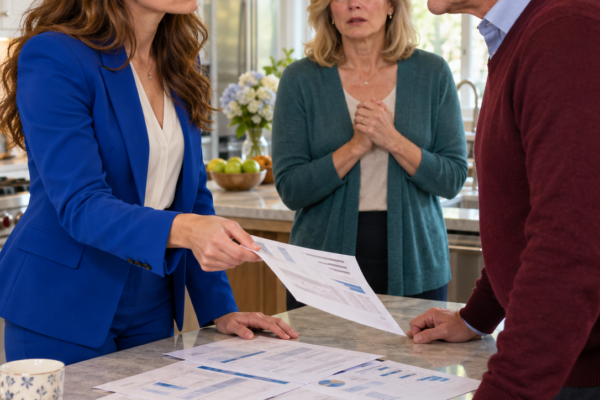
For a week, I told my husband something was wrong with my head. My MIL rolled her eyes. “You’re fine.” My husband refused to take me to the hospital. When I couldn’t take it anymore, I went to the ER alone. The doctor studied my test results, then suddenly shouted, “Call the police! Now!” I froze. What happened next shocked me…
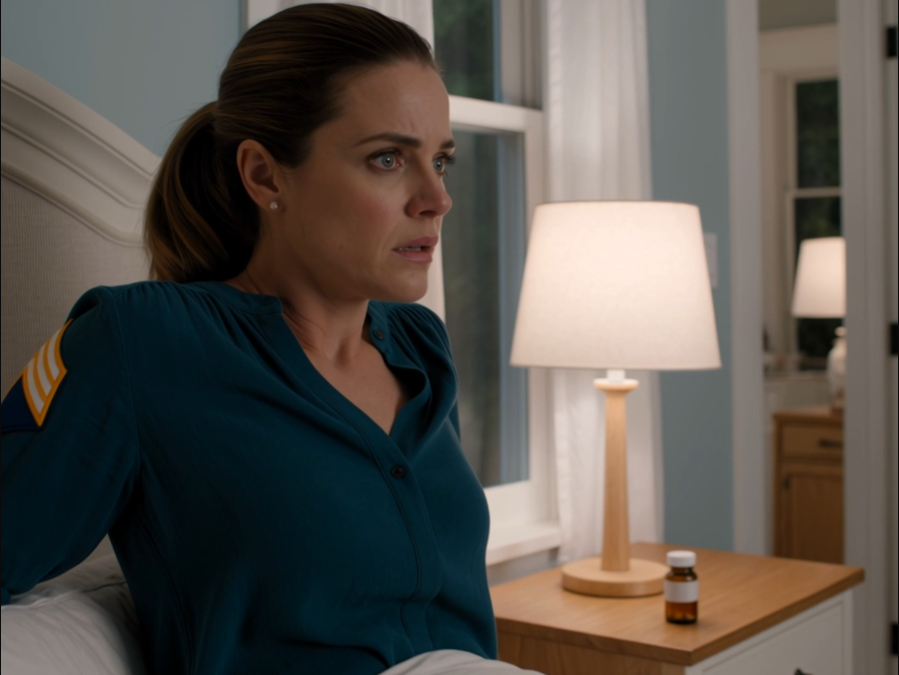
The fluorescent lights in the emergency room buzzed above me, and I remember thinking how strange it was that my hands—hands that had held a rifle steady through two deployments, hands that had never once trembled under enemy fire—were shaking so hard I could barely grip the edge of the exam table.
“Mrs. Whitfield, I need you to stay with me,” Dr. Harry said, his voice sharp with something I hadn’t heard from a doctor before. Not concern. Alarm.
“It’s Sergeant,” I corrected him, my tongue thick, my words slurring at the edges. “Sergeant Whitfield.”
He didn’t smile at that the way most people did when I corrected them. Instead, he turned to the nurse beside him, his jaw tight. “Get me a toxicology panel now, and call Detective Mafoy.”
The word detective hit me like cold water running down my spine. I tried to sit up, but the room tilted sideways, and my stomach lurched violently. “Why do you need a detective?” I asked, though some buried part of me already knew the answer. Had known it for days, maybe longer, in the way you know a storm is coming before the sky even darkens.
Dr. Harry looked at me, and for a moment, his expression softened into something almost gentle, almost sad. “Because I don’t think this was an accident, Sergeant. I think someone’s been poisoning you.”
I wanted to laugh. I wanted to tell him he was wrong, that this was some kind of terrible mistake, that my husband loved me, that my mother-in-law had never liked me but would never do something like this. But my body betrayed me before my voice could, and I gagged, my vision swimming at the edges, black spots creeping in like ink spilled across paper.
“Mark,” I whispered, gripping the rail of the bed. “Someone needs to call Mark.”
“Sergeant Whitfield.” Dr. Harry’s voice pulled me back from the darkness threatening to swallow me whole. “I need you to think very carefully. Has anyone given you anything recently? Medication? A supplement? Anything you didn’t buy yourself?”
And that was when it hit me.
Not like a slow realization creeping up, but like a gut punch, sudden and merciless. The little amber bottle. The handwritten label. Rose’s voice insisting it was just an herbal sleep supplement. Nothing to worry about.
My throat tightened, and tears I didn’t even realize I’d been holding back spilled down my face, hot and unstoppable.
Eleven years of marriage. Eleven years of believing I was simply exhausted, simply weak, simply not handling civilian life the way a soldier should. Eleven years, and I had never once imagined that the people sleeping under my own roof could be the ones trying to destroy me.
“Yes,” I finally managed, my voice breaking apart. “Yes, someone gave me something.”
Two days earlier, none of this had seemed possible.
My name is Anna Whitfield, and six weeks earlier, I had still been at Fort Liberty, finishing out a grueling rotation that followed two back-to-back deployments overseas. The Army had finally granted me extended leave to decompress before my next assignment, and I came home to our quiet neighborhood outside Fayetteville, expecting rest, not a different kind of battle entirely.
I was thirty-eight years old, a sergeant who had spent half her adult life giving orders and following them without flinching, and I believed, foolishly, that nothing waiting for me inside my own house could ever shake me the way enemy fire once had.
I was wrong about that.
It started on a Tuesday morning in October, the kind of crisp fall day that made the maple trees along our street blaze orange and red. I woke before my alarm, as I always did, and the moment I sat up, the room tilted hard to the left.
My stomach lurched. A dull, pounding pressure settled behind my eyes, like someone had wedged a boot heel against my skull and was pressing down slowly. I gripped the edge of the mattress until my knuckles went pale, waiting for the dizziness to pass.
It didn’t.
I made it to the bathroom on legs that didn’t feel entirely like mine, splashed cold water on my face, and stared at my reflection. My hands were trembling just slightly, the way they used to after twelve-hour field exercises in full gear. I hadn’t felt this shaky since basic training.
“Pull it together, Whitfield,” I whispered to the mirror, using my own last name the way my drill sergeant once had, as if discipline alone could override whatever was happening to my body.
Downstairs, Mark was already at the kitchen island, scrolling through his phone with a mug of black coffee at his elbow. My mother-in-law, Rose, sat across from him, buttering a slice of toast with the kind of precision she brought to everything, including her opinions.
“Morning,” I said, reaching for a mug with hands that weren’t quite steady.
Mark barely glanced up. “You look pale.”
“I feel pale. My head’s pounding, and the room won’t stop spinning.” I eased myself onto a stool, pressing my palm flat against my temple.
Rose set down her butter knife with a small, deliberate click. “Honestly, Anna, you’ve only been home six weeks, and you’re already falling apart. What happens when real pressure hits you?”
Something hot and sharp flared in my chest. “Rose, I spent fourteen months overseas. I know what real pressure feels like. This isn’t that.”
“Mm-hmm,” she said, not looking convinced in the slightest, her eyebrows arching in that way that made me feel smaller than any insult ever could.
Mark finally looked at me, but there was no concern in his expression, only mild irritation, like I’d interrupted something important.
“Maybe you’re just dehydrated. Soldiers are supposed to be tough, right? Isn’t that the whole point?”
My throat tightened, and my eyes stung with sudden, furious tears I refused to let fall. “I didn’t say I wasn’t tough, Mark. I said something feels wrong.”
“Everything feels wrong to you lately,” Rose muttered, reaching for her coffee.
I wanted to scream. Instead, I pressed my fingertips hard into my temples and breathed through the throbbing ache, the way I’d been trained to breathe through pain in the field, counting in my head, forcing my pulse to slow even as my hands kept shaking against my own skin.
“Did you take anything?” Mark asked almost as an afterthought, already turning back to his phone.
“No. I wanted to see if it passed on its own.”
“It’ll probably pass,” he said flatly.
And that was the end of the conversation as far as he was concerned.
His phone buzzed on the counter. He glanced down, smirked faintly, and typed something back one-handed.
“That’s Travis,” he said, not really to me, just brushing past my unanswered worry like it had never been spoken at all. “He says he can swing by next week if we need anything from the hospital pharmacy. He’s still got connections over there.”
Rose nodded approvingly. “Your brother always knows people who can help.”
I had survived convoys, sandstorms, and nights I never talked about with anyone outside my unit. Yet here, in my own home, with the two people who were supposed to care whether I lived or died, I felt completely, utterly dismissed.
Upstairs, alone, I sat on the edge of the bed and pulled out my phone. My fingers trembled as I opened a blank note and typed out everything I was feeling: the dizziness, the headache, the tremor in my hands, the exact time it had started.
I didn’t know why I did it. Maybe some instinct trained into me by years of writing incident reports told me that if something happened later, I would need a record of exactly how this began.
I pressed save and stared at the screen for a long moment, my jaw tight with resolve. Whatever this was, I was not going to let anyone convince me it was nothing.
Not this time.
By nightfall, the pounding in my skull had sharpened into something closer to an ice pick driving behind my left eye, and my hands shook so badly that I dropped the glass I was filling at the kitchen sink, sending shards skittering across the tile.
Mark appeared in the doorway at the sound, but instead of asking if I was hurt, he exhaled sharply through his nose.
“Jesus, Anna, be careful. That’s the good set.”
“I’m sorry,” I said, my voice cracking as I knelt to pick up the pieces, my fingers trembling so hard I nearly cut myself twice. “I need to go to urgent care. Something is really wrong with me.”
“We already talked about this.” He crouched down, more annoyed than concerned, and started gathering glass shards into his palm. “You’ve got an appointment with your regular doctor in two days.”
“Two days feels like forever right now, Mark. I can barely see straight.”
Rose swept into the kitchen at the sound of our voices, wrapped in her silk robe, her arms crossed tightly.
“What on earth is all this commotion?”
“Anna wants to go to the emergency room,” Mark said, standing and dumping the glass into the trash.
Rose’s mouth pulled into a thin, disapproving line. “For a headache, Anna? Sweetheart, I raised two boys through fevers of 104. This is not an emergency.”
My chest tightened painfully, a hot pressure building behind my ribs. “I was a combat medic’s patient twice overseas, Rose. I know the difference between a bad headache and something being seriously wrong with my body.”
“Then maybe,” she said, her voice dropping into something almost gentle, almost poisonous in its gentleness, “the problem isn’t your body at all. Maybe all that time overseas left you a little more fragile than you want to admit.”
Tears burned behind my eyes, hot and humiliating, and for one terrible moment, I actually believed her.
Maybe I was imagining this. Maybe fourteen months of convoys and gunfire and sleepless nights had finally caught up with my nervous system in some way I couldn’t name.
Doubt crept into my chest like cold water, and I hated how easily it slid in.
Mark softened his tone, sitting beside me at the table, and for a moment, I thought he might finally take my hand, finally look at me the way he used to before deployments and distance had worn something thin between us.
Instead, he reached into his jacket pocket and set a small amber-tinted bottle on the table between us.
There was no pharmacy label on it, only a narrow strip of masking tape with a few handwritten letters I couldn’t fully make out.
“What is this?” I asked, picking it up with fingers that wouldn’t stop shaking.
“Mom picked it up today. Some kind of herbal sleep supplement. She said it’ll calm your nerves and help you actually rest instead of lying awake spiraling all night.”
I turned the bottle over slowly. “There’s no label, no dosage, nothing.”
“It’s a supplement, Anna, not medication,” Rose said, waving her hand dismissively. “They don’t come with the same paperwork.”
Every instinct I’d spent a decade sharpening in the Army screamed at me not to put an unlabeled substance into my body. I had been trained to question everything, to verify everything, to never trust something simply because someone in a position of authority told me to swallow it.
But I was exhausted in a way I had never been exhausted before, not even after the worst missions, and some desperate, splintering part of me wanted so badly to believe that my own husband wouldn’t hand me anything that could hurt me.
“I don’t know,” I whispered, setting the bottle down.
Mark’s jaw tightened, the first real flash of irritation breaking through his calm. “Fine. Suffer through the night, then. Don’t say I didn’t try to help you.”
The guilt landed like a physical blow, exactly the way it was meant to.
That night, after he’d gone back downstairs, I sat alone on the edge of our bed, staring at the bottle in the lamplight, my resolve crumbling under the sheer weight of exhaustion.
I shook one tablet into my palm and swallowed it with a mouthful of water, telling myself I was only trying to sleep.
Within the hour, the room began to spin violently, far worse than before. My arms felt impossibly heavy, like they belonged to someone else entirely, and my thoughts turned thick and slow, wading through fog.
I tried to call out for Mark, but my tongue felt clumsy and useless in my mouth. When he finally appeared in the doorway, I was gripping the headboard so hard my knuckles had gone white.
“Mark,” I managed, my voice slurred and frightened. “Something’s wrong. This is so much worse.”
He glanced at the empty glass on the nightstand almost clinically.
“You probably just need to let it work. Go to sleep.”
He switched off the lamp before I could argue, and I lay there in the dark, my heart hammering painfully against my ribs, fighting the sickening sensation that the ceiling was tilting and dropping toward me.
When I woke the next morning, my head throbbed worse than ever, and an entire hour of the previous night felt completely erased from my memory. A blank space where panic should have lived.
I stumbled downstairs and searched the kitchen counter for the amber bottle.
It was gone.
I checked the bathroom cabinet, the junk drawer, even Mark’s gym bag by the door. Nothing.
My stomach dropped further when I opened our shared banking app on my phone, desperate for some small sense of control over something, anything.
The screen flashed red.
Incorrect password.
I tried again, my fingers trembling violently now, and the same rejection stared back at me.
I remembered with a cold jolt the faint blue glow I’d half noticed from Mark’s side of the bed the night before, after I’d gone under. His phone screen had illuminated his face while he typed something quickly before setting it face down on the nightstand.
I stood frozen in the kitchen, the phone clutched in my shaking hand, a sick realization unfurling slowly in my chest.
The bottle hadn’t simply misplaced itself. My bank access hadn’t simply glitched. Someone had moved through my life while I lay unconscious and unaware.
And for the first time since this had all begun, the fear tightening around my throat had nothing to do with my pounding head at all.
I didn’t wait for permission.
I called a rideshare with hands still trembling, grabbed my ID, my insurance card, and the phone holding that half-blurred photo of the amber bottle I’d snapped days earlier, and walked out the front door without telling Mark where I was going.
For the first time in eleven years, guilt didn’t stop me.
The emergency room at Cape Fear Valley buzzed with fluorescent light and quiet urgency. A nurse took one look at my unsteady gait and rushed me into triage.
Minutes later, a tall man in blue scrubs introduced himself as Dr. Harry, his eyes kind but sharp with focus as he reviewed my chart.
“Tell me everything,” he said, pulling a stool close. “Don’t leave anything out.”
My voice cracked as I described the dizziness, the confusion, the unlabeled pills. When I showed him the photo on my phone, his expression shifted, something careful and alert settling behind his eyes.
“Do you still have the bottle?”
“No. It disappeared. So did access to our bank account.”
He didn’t react with disbelief. He only nodded slowly and ordered a full toxicology panel.
“Do you still have the bottle?” he asked again, flipping to a new page on his chart.
Twenty agonizing minutes later, he returned with a woman in a gray blazer, her badge clipped visibly to her belt.
“This is Detective Mafoy,” Dr. Harry said. “Anna, your blood work showed something concerning. A sedative compound inconsistent with anything over the counter. Given what you’ve described, we have an obligation to involve law enforcement.”
My chest seized so hard I could barely breathe.
“Are you saying someone did this to me on purpose?”
“We’re saying it needs to be investigated as one,” Detective Mafoy said, her voice steady, measured, not unkind.
She pulled a chair beside my bed. “Walk me through the last week. Everything.”
As I spoke, my fingers accidentally brushed my phone’s lock screen, and I noticed with a jolt that my voice memo app had somehow been running since that morning, when I’d stood frozen in the hallway outside Mark and Rose’s room, listening after I overheard my own name through the half-open door.
My hands shook as I scrolled back and pressed play.
Rose’s voice crackled through the speaker, first low and urgent.
“She needs to sign those papers before this gets more complicated.”
“Mom, I’m trying,” Mark answered, irritation sharp in his tone. “She keeps asking questions.”
A pause. Then Rose again, colder than anything I’d ever heard from her.
“You told me she’d be easier to manage by now.”
The recording ended.
My whole body went cold, my throat tightening until I could barely force out a whisper.
“Oh my God.”
Detective Mafoy’s expression didn’t change, but something in her eyes sharpened considerably.
“Send me that file now.”
Tears spilled hot down my cheeks, my shoulders shaking as the weight of it crashed over me all at once.
They were talking about managing me, like I was a problem to be handled, not a person who was sick.
“I know this is overwhelming,” Dr. Harry said gently, resting a hand briefly on the bed rail. “But you did the right thing coming here.”
I pressed my palm against my mouth, fighting back a sob that tore loose anyway.
Between broken breaths, I told them about the power-of-attorney documents Mark had pushed me to sign weeks earlier. The ones I’d refused to initial without reading carefully. The ones that had made him furious in a way I hadn’t understood until this very moment.
Detective Mafoy closed her notebook slowly, her jaw set with quiet determination.
“Anna, based on the toxicology results, the recording, and the financial documents you’re describing, I believe we have enough to open this as a criminal investigation. I need you to trust the process now and let us handle what comes next.”
I nodded, my whole body trembling with a mixture of terror and something close to relief, the first relief I’d felt in six agonizing days.
Someone finally believed me.
But as the detective rose to leave the room, already dialing a number on her phone, I felt my heart pound with a dread I couldn’t shake.
If Mark had lied about something as small as a bottle of pills, I had no idea yet how far the rest of his lies might reach.
Five days passed before Detective Mafoy called me back to the station, and those five days felt longer than any deployment I’d ever survived.
I sat across from her in a small interview room, my knee bouncing beneath the table, my coffee going cold and untouched in my hands.
“We pulled Mark’s financial records,” she said, sliding a folder across the table. “He’s nearly $200,000 in debt from a series of bad investments he never disclosed to you. Real estate ventures that collapsed, margin calls he couldn’t cover.”
My stomach dropped straight through the floor. “Two hundred thousand? He never said a word.”
“There’s more.” She tapped a highlighted line on the page. “Six weeks ago, he increased your life insurance policy and added himself as the sole beneficiary. The signature on that update isn’t yours, Anna. That’s forgery on top of everything else. Around the same time, he started pushing you to sign that power of attorney.”
My hands trembled so violently that I had to set the coffee cup down before I dropped it.
“He was going to let me die.”
“We don’t know his full intent yet,” she said carefully. “But the pattern is deeply concerning, and it lines up with everything you brought us from the hospital.”
That same afternoon, Mafoy brought Rose in for questioning, and I watched through the observation glass as the woman who had spent a week calling me fragile unraveled in real time.
Her voice shook when Mafoy pressed her about the pills.
“I only wanted to help her sleep,” Rose insisted, her manicured hands twisting together in her lap. “I didn’t ask what was in them. I just told Mark to get something from his brother.”
“From Travis,” Mafoy said flatly.
Rose’s face went pale, her mouth opening and closing without sound escaping for a moment before she finally whispered, “Travis works with pharmaceutical reps. He has access to things that aren’t exactly over the counter. I never thought he’d give us anything dangerous.”
Watching from behind that glass, I felt something crack open in my chest, a mixture of fury and heartbreak so intense my eyes burned instantly with tears.
Travis. The quiet one. The brother-in-law who’d sent that text about hospital pharmacy connections right there at our kitchen counter. The comment I’d been too dizzy to even register as a warning.
Detectives picked up Travis later that evening at his apartment. By the next morning, Mafoy called me with an update, her voice carrying a rare note of grim satisfaction.
“He folded fast. Text messages going back three weeks show Mark explicitly asking for something that would, quote, ‘keep her calm and compliant without raising questions.’ Travis provided a prescription sedative diverted from his distribution contacts. No prescription, no oversight.”
“Is that enough?” I asked, my voice cracking. “Is that enough to charge him?”
“It’s enough to charge all three of them with something,” she said. “Mark will be charged with administering a controlled substance without consent and financial exploitation, both felonies under state law. Rose and Travis are looking at conspiracy and accessory charges, depending on what the prosecutor decides to pursue.”
They arrested Mark that same afternoon at his office, in front of coworkers who had no idea what kind of man they’d been shaking hands with for years.
I wasn’t there to see it, but Mafoy described it to me over the phone, her tone careful, almost gentle.
“He didn’t apologize,” she said. “He just asked if you’d drop the charges if he agreed to a quick divorce settlement.”
Something inside me finally went still, not with sadness this time, but with a clarity I hadn’t felt in weeks.
“Tell him I said no.”
That night, sitting alone in the small rental I’d moved into after leaving the house, I pressed my palms flat against my own trembling knees and let myself cry for the first time without any shame attached to it.
Deep, shuddering sobs that came from somewhere far beneath the headaches and the fear.
I cried for the eleven years I’d given a man who’d been calculating my death in spreadsheets. I cried for the mother-in-law who’d called me weak while helping poison me slowly.
And somewhere in the middle of all that grief, I felt something else rising up beneath it. Something steadier, something that felt almost like the version of myself I used to be before any of this started.
I wiped my face hard with the back of my hand, straightened my spine the way I had a thousand times before stepping into formation, and reached for my phone to call my unit commander about returning to active status early.
Whatever came next in the courtroom, I refused to face it as the fragile, broken woman Rose had always insisted I was.
Four months had passed, and I sat in that courtroom hallway, watching Mark sign papers with hands that used to feel so steady on mine.
The plea deal came through on a Tuesday.
Mark pleaded guilty to administering a controlled substance without consent and financial exploitation of an at-risk adult, a legal classification that applied to me because the sedatives in my system had left me medically incapable of managing my own affairs at the time.
He had altered those documents, and the original charges were reduced as part of a plea agreement that resulted in a sentence of six years, with eligibility for parole after three.
He didn’t look at me when the judge read the terms.
Rose received eighteen months of probation and a mandatory psychological evaluation, her attorney arguing that she’d been manipulated by her son’s desperation.
Travis lost his pharmaceutical license permanently and faced federal charges for drug diversion, a term I’d never heard before this whole ordeal but now understood meant stealing medication meant for real patients to feed someone else’s scheme.
“You did the right thing,” Detective Mafoy told me outside the courthouse, her hand resting briefly on my shoulder. “Not everyone has the strength to see something like this through to the end.”
I wanted to tell her it didn’t feel like strength.
It felt like survival, the same instinct that got me through two deployments. Except this time, the enemy had been sleeping in the room beside me every night for eleven years.
The divorce was finalized three weeks after the sentencing.
I kept my name, Whitfield, my mother’s maiden name, the one I’d had before I ever said “I do” in a backyard ceremony that now felt like it belonged to a stranger’s life.
The house went up for sale. I didn’t want a single thing from those walls except the box of my old deployment letters and the photo of my grandfather in his Army uniform, the one that used to sit on Rose’s mantel because she said it added character to her living room.
My sister Claire helped me move into a small one-bedroom apartment about twenty minutes from base. It wasn’t much—secondhand furniture, a kitchen table with a wobbly leg, boxes still half-unpacked in the corner—but it was mine.
“You cried the whole drive over here,” Claire said, setting down a box labeled Kitchen in my own handwriting.
“I know.” My voice cracked, and I let it. “I think I’m allowed to.”
She wrapped her arms around me, and I sobbed into her shoulder the way I hadn’t let myself do in front of anyone since this whole nightmare started.
Not the composed crying I’d done in hospital rooms and interview rooms, but the kind that comes from somewhere deeper, somewhere I’d kept locked down since basic training because soldiers weren’t supposed to fall apart.
“You held it together for eleven years,” Claire whispered. “You’re allowed to fall apart now that it’s finally safe.”
That night, alone in my new apartment, I sat on the floor because I hadn’t bought a couch yet, and I called my unit commander, Major Reyes.
“Sergeant Whitfield,” he said. “How are you holding up?”
“Better,” I said, and for the first time in months, I meant it. “I’d like to request an early return to active status. I think I’m ready.”
There was a pause on the line, the kind that told me he already knew more about my situation than he was letting on.
“Take the time you need, Whitfield. But if you’re asking, my answer is yes. We’d be glad to have you back.”
I hung up the phone and sat there in the quiet apartment, surrounded by boxes, feeling something I hadn’t felt in longer than I could remember.
Not relief exactly, but room to breathe.
Then I thought about the woman I’d been a year ago. The one who ignored her own trembling hands because her husband rolled his eyes every time she mentioned feeling unwell. The one who swallowed a pill from an unlabeled bottle because she was too exhausted to keep fighting for herself.
I wasn’t angry at her anymore.
I understood her.
She’d been taught her whole life that enduring pain quietly was a kind of virtue, that a good soldier and a good wife both learned to push through without complaint.
But endurance without boundaries isn’t strength. It’s just slow erosion dressed up to look like loyalty.
A week later, I unpacked the last box.
At the bottom, wrapped in an old T-shirt, was my grandfather’s photograph. I set it on the windowsill where the morning light hit it first.
And for a moment, I just stood there looking at his face, at the quiet pride in his eyes.
“I’m starting over, Grandpa,” I said out loud to no one and everyone. “And this time, I’m doing it on my own terms.”
Outside, the base was already stirring with the early sounds of reveille drifting faintly on the wind.
I pulled on my boots, laced them tight the way I’d done a thousand times before, and walked out the door into whatever came next.
Not as someone’s wife, not as someone’s burden, but simply as Sergeant Anna Whitfield, finally, completely her own.
One year after I signed the final divorce papers, I stood in front of a group of enlisted soldiers at a family readiness briefing, my hands steady on the podium in a way they hadn’t been in that hospital room so long ago.
Major Reyes had asked me to speak not about combat, not about deployments, but about something far harder to talk about in a room full of people trained to project strength at all times.
“I spent eleven years believing that enduring pain in silence made me strong,” I said, my voice carrying clearly across the room. “I was wrong. Recognizing when something is wrong and having the courage to seek help—that’s the real strength.”
A young specialist near the back raised her hand afterward, her eyes glassy, her fingers twisting the hem of her uniform jacket.
“How did you know it wasn’t just stress? How did you know something was actually being done to you?”
I thought about that question long after the briefing ended, long after I’d driven back to my apartment and set my keys on the counter beside a photo of my grandfather, still catching the morning light on the windowsill where I’d placed it over a year ago.
Mark’s motion for a reduced sentence had been denied three months earlier.
The judge upheld the original terms, citing the overwhelming financial and medical evidence against him: the forged insurance policy, the recorded conversation with Rose, the toxicology reports that showed a pattern of administered sedatives consistent with weeks, not days, of exposure.
He would serve a minimum of three years before his first parole hearing, and I had already decided I would attend that hearing. Not out of cruelty, but because I needed to look him in the eye one more time and know, with absolute certainty, that I no longer feared him.
Rose completed her probation quietly, her mandatory psychological evaluations revealing, according to the court-appointed counselor, a woman who had spent decades equating control with love and loyalty with obedience.
I didn’t know if she’d ever truly understand what she’d done. Some people never do. But I’d stopped needing her to understand it in order for me to heal from it.
Travis received a federal sentence of four years for his role in diverting prescription sedatives outside legitimate medical channels, a sentence that effectively ended any hope of returning to healthcare work in any capacity.
I heard through secondhand channels I no longer had much interest in following closely that his own professional community had distanced itself from him entirely, unwilling to be associated with someone who had weaponized trust built for healing patients and turned it into a tool for harming one.
As for me, Sergeant Anna Whitfield returned to active duty eight months after that night in the emergency room, and six months after that, I was selected for promotion.
My unit commander told me it was overdue, that my service record had always spoken for itself, long before anyone outside my family knew what I’d survived at home.
“You’re proof that strength isn’t about never breaking,” Claire told me the night before my promotion ceremony, sitting cross-legged on my apartment floor the same way she had the day we moved my boxes in. “It’s about what you do after you break.”
I didn’t cry that night, not because the memory didn’t still ache sometimes late at night when the apartment was quiet and my mind wandered back to amber pill bottles and banking apps that wouldn’t let me in.
I didn’t cry because I finally understood something I hadn’t understood a year earlier.
Healing doesn’t erase what happened. It just teaches you how to carry it without letting it crush you.
At my promotion ceremony, Major Reyes pinned the new rank to my uniform, his hands steady, his expression proud in the way of someone who had watched a soldier fight a battle no training manual ever prepared her for.
“Staff Sergeant Whitfield,” he said, loud enough for the room to hear.
I stood a little taller, feeling the weight of the new insignia, feeling the weight of everything I’d carried to get there.
Later that evening, standing alone on my small apartment balcony, I looked out at the base lights flickering on in the distance, and I thought about the woman I used to be. The one who mistook her own exhaustion for weakness, who trusted people simply because they shared her last name or sat across her dinner table every night.
I wasn’t angry anymore. I wasn’t even afraid.
I was simply, finally, home in my own skin.