Travel connects people. Stories make it meaningful. (A14: Boarding, baggage claim, ground transportation.)
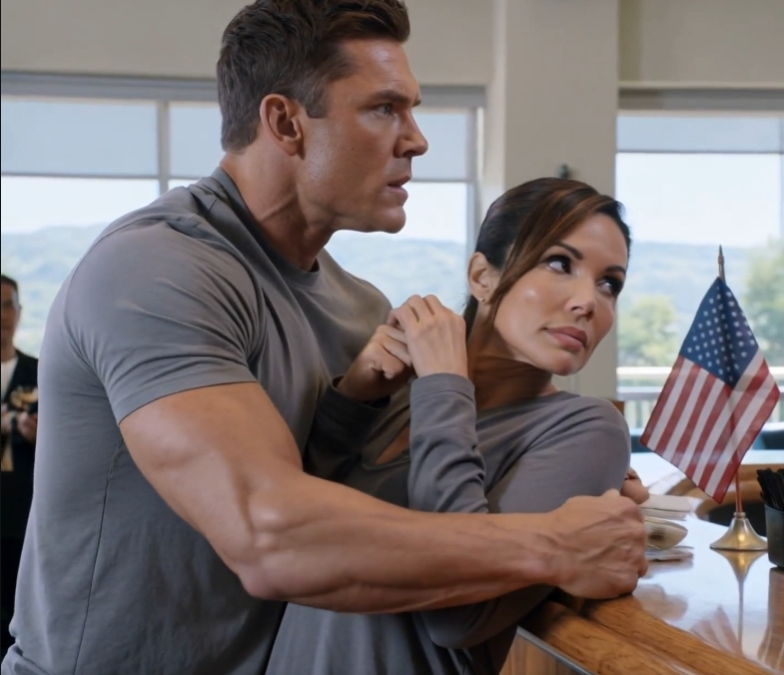
The hand that closed on my arm belonged to a man who had decided, somewhere between his third cup of coffee and his connecting flight, that I was a problem he was allowed to solve. I had not heard him cross the lounge. That should have bothered me more than it did. I was tired in the particular way that comes from three time zones in two days, and I had let my attention go soft over a paper cup and a window full of gray morning. A man my body should have clocked from across the room had walked up on my blind side and put his fingers around my upper arm like he was picking up something that had been left on his chair.
“Are you deaf?” he said. “Out. Now. This room is for people who actually earned it.”
He was big the way they build them for that work. Not heavy, but dense, with forearms that looked like they had been poured rather than grown and a flat tan that stopped at his collar. He wore civilian clothes, a fitted gray shirt, and a watch that cost more than my first car. On the back of his right hand, where his sleeve had ridden up, I could see the bottom edge of a tattoo whose shape I knew even partly hidden. An eagle’s talon, the curve of an anchor, a trident inked into skin by a man who had earned the right to wear it and had not yet learned what it was for.
I want to tell you that I stood up with dignity. The truth is plainer than that. I let my body go quiet. I let my eyes go flat. I had been touched in anger by larger men than him, in worse rooms than this, in places where the lighting was bad and the exits were worse, and nobody was going to answer if I raised my voice. The thing my training had burned into me over sixteen years was not how to fight. It was how to wait. How to go still and watch and give a man nothing to push against until the moment arrived when stillness stopped being the right answer.
So I waited. He read my stillness as fear, or as weakness, or as the kind of compliance that makes a certain sort of man feel larger. And he pulled. He hauled me up out of the low leather chair by the arm. When I came up, he turned me, put his forearm across my chest, and walked me back two steps into the edge of the bar counter, hard enough that its lip caught me across the spine. I felt the cold of the brass rail through my jacket. My coffee cup tipped off the little table and rolled across the floor.
My phone had been sitting faceup beside it. He swept it up in his free hand, and without even looking at it, he threw it underhand down the length of the bar the way you would skip a stone, sending it sliding across the polished wood toward the taps.
“There,” he said. “Now you don’t have anything to film me with. Walk out, or I walk you out.”
There were maybe fifteen people in that lounge. A pair of soldiers in travel uniform near the window had half stood. A woman with a toddler had pulled the child against her leg. Behind the man stood a younger one, twenty-five at the most, with the same haircut, a duffel over his shoulder, and a flight tag that read WOLF. He had made a sound that was trying to be a laugh and not quite getting there. His eyes kept moving to the door, to the bartender, to me, anywhere but at the thing his teammate was doing.
I have thought a great deal in the month since about why I did not simply tell him. Three sentences would have ended it. My name, my rank, the name of the man whose evaluations he would have recognized. But there is a habit you build over a career spent being no one, and the habit had become so much a part of me that I could not feel where it ended and I began.
The habit said, Give them nothing. Let them be wrong about you for as long as you can. The less they know, the safer everyone stays.
I had worn that habit like a coat for so long that I had forgotten I was allowed to take it off. So I did not tell him. I looked at him, kept my breathing low and even, felt the brass rail against my back, and waited for the part of the moment that would tell me what to do.
That was when the phone, sliding to a stop down the bar in front of the bartender, lit up and began to ring.
It was not a sound that should have mattered. A phone rings in a bar a hundred times a day. But the bartender, a heavyset man in his fifties with reading glasses pushed up into gray hair and a name tag that said PETE, picked it up the way you pick up anything that lands in front of you, on reflex, to hand it back to whoever dropped it. He turned it over. He saw the name on the screen, and something in his face made him do a thing he could not have explained afterward.
He swiped to answer it and held it up over the bar, speaker facing the man who had me pinned. The voice that came out of that small speaker filled the lounge.
“Release her,” it said. “That is an order. Then put Commander Bennett on this line.”
It was not a loud voice, exactly. It was a voice with the particular flat authority of a man who has never, in his adult life, had to repeat himself. The kind of voice that does not get louder because it has never needed to. It cut through the lounge the way a blade goes through water. Clean, without a splash.
I watched Brett Maddox’s hand open before the rest of him understood why. His forearm came off my chest. His fingers loosened on my arm. He took half a step back, his head turned toward the phone in the bartender’s raised hand, and his mouth came open. For the length of one breath, the only sound in that room was the boarding announcement bleeding faintly through the wall from the gate next door, calling Group Three for somewhere I was no longer going.
I straightened up off the rail. I rolled my shoulders back into place, and in the silence, the man who had thrown me against a bar thirty seconds earlier stood staring at his own empty hand as if it had betrayed him.
You learn things about a room in the seconds after it goes quiet. I learned that the two soldiers by the window were both noncommissioned officers, by the way they had come fully to their feet and squared toward the trouble without being told to. I learned that the mother with the toddler had stopped being afraid and started being angry, which is a better thing for a mother to be.
I learned that Pete, the bartender, was a man who did the right thing on instinct and worried about it afterward, because he was already holding the phone out toward me across the bar with an expression that asked whether he had done something wrong. And I learned again the thing I already knew, which is that the loudest person in a room is almost never the most dangerous one.
I crossed to the bar. I took the phone out of Pete’s hand and mouthed a thank-you at him. I turned my back half a degree on Maddox, not as a threat, just as the closing of a door, and put the phone to my ear.
“I’m here,” I said.
“Are you all right?”
The voice had lost none of its flatness, but there was something running underneath it now, banked and hot.
“I could hear the room. I could hear a man’s voice. Sloan, are you hurt?”
“I’m fine, sir.”
I kept my own voice level for the benefit of the people watching, which was all of them.
“I’m at the lounge. I’m going to be a few minutes behind. Don’t send anyone. I’ll come to you.”
“I am already in the terminal,” he said. “I am two minutes out. Do not let that man leave.”
I almost smiled.
“He’s not going anywhere.”
I ended the call. I set the phone facedown on the bar and turned back around to face the room that had, in the space of one phone call, completely changed its mind about who I was.
I want to be honest about what I am, because the whole of the story turns on it. I am not a large woman. I am not a hard-looking one. I have spent my professional life cultivating exactly the kind of face that men like Brett Maddox look straight past, because looking straight past me was the entire point of the work.
For sixteen years, I had been a name on rosters of staff billets so dull they functioned as camouflage. Logistics liaison. Plans coordinator. Assistant to an assistant in offices with no windows and no signs on the door. I had a cover so deep and so boring that my own extended family believed I pushed paper for a living, and I had let them believe it because the alternative was a conversation I was not allowed to have.
The truth was that I had spent those years as a mission planner in the part of the Navy that does not get talked about at dinner. I found people who did not want to be found. I built the picture that let other people act on it. And when the worst nights came, the nights when men were somewhere they should not have been able to survive, I was the voice in the dark that found a way to bring them home.
Then I disappeared back into the gray. The men I had kept alive went on with their lives, never knowing my name, because that was how it was supposed to work.
The cover was not a costume I put on for work. It was the whole architecture of my life. I drove a sensible car and lived in a sensible apartment. When people at the edges of my life asked me what I did, I said logistics, plans, the dull, true-sounding words. I watched their interest die in their eyes, which was the point, which was always the point.
Because a person whose eyes have gone dull with boredom is a person who will not remember you, will not describe you, will not think of you again. I had become so good at being forgettable that I had started forgetting myself. There were mornings I looked in the mirror and could not have told you, beyond the rank no one could see, what I was.
I had built a self out of negative space, out of all the things I was careful not to be. And you cannot live in negative space forever. It closes in.
I had let my own family believe the dull words. My mother told her friends her daughter pushed paper for the Navy, and I let her, year after year, holiday after holiday, while women my age talked about their work and I said nothing about mine because the nothing was the job, and the job had eaten the rest.
I do not say this for sympathy. I chose it every day with open eyes. But sixteen years is a long time to choose a thing, and the choosing leaves marks. One of the marks it had left on me was a reflex so deep I could not feel it. When a man decided I was nothing, some animal part of me agreed with him, because agreeing was how I stayed safe. And staying safe was the only religion I had left.
I had told myself for a very long time that this was a kind of humility, that there was something clean and good about doing the most important work of your life in a room no one was allowed to look into. I had built a whole identity on being the woman nobody noticed.
Standing in that lounge with the eyes of fifteen strangers on me and the print of a man’s forearm still warm across my chest, I felt the first crack in that story, though I did not yet have the words for it.
The young one, Wolf, was the first to move. He had picked my bag up off the floor, the soft leather carry-on that had been knocked off the chair when Maddox pulled me up, and he was holding it out toward me with both hands, the way you hand someone something you are sorry about.
“Ma’am,” he said.
His voice cracked on the word, and he hated himself for it. I could see it.
“I’m… I should have said something.”
I took the bag from him. I looked at his flight tag and the raw young edge of his jaw, and I thought about how many times in my life I had been the person in the room who knew something was wrong and said nothing because the cost of speaking felt higher than the cost of silence.
“Thank you, Petty Officer Wolf,” I said.
I watched him register that I had read his name, that I was the kind of person who read names.
“You picked up my bag. That’s not nothing. Remember that it didn’t feel like enough, and remember why.”
He swallowed and nodded and stepped back, and he did not look at Maddox either.
I went and sat back down in the low leather chair. I picked my coffee cup up off the floor and set it on the table, even though it was empty. I straightened my jacket, smoothed the gray fabric over my knees, and folded my hands. I let the room watch me be calm, because being calm was the only language I had ever fully trusted.
Maddox stood where I had left him, by the bar, and could not seem to make himself sit down or walk away. He was doing arithmetic. I could see it moving behind his eyes. A captain on the phone. A commander on the receiving end of an apology. The woman he had thrown against a bar was someone whose name a senior officer said the way you say a name you respect.
And the math of it was rearranging his morning into something he was going to have to live inside for a long time.
I have not told you about the autumn of 2014, and I need to, because everything that happened in that lounge was really about a ridge on the far side of the world eleven and a half years before.
I was a lieutenant then, thirty-one years old, nine years into a career I could not describe to anyone I loved. I worked nights in a windowless cell that smelled of burned coffee and the particular ozone smell of too many screens running too hot in too small a space. My job, stripped of all its jargon, was to know where people were. To take a thousand fragments, a voice here, a vehicle there, a pattern of movement that meant nothing on its own, and build them into a picture solid enough that someone could bet lives on it.
On the night I am telling you about, six men were on a ridge they were not supposed to still be on. They were a reconnaissance element, a small SEAL team that had gone in light to watch a valley and come back out, and the valley had not cooperated.
The weather had closed faster than anyone forecast. The kind of mountain weather that drops like a lid and turns a routine extraction into a coffin. Their planned recovery window had shut. The enemy had found the edges of their position and was working inward with the patience of men who knew the storm was on their side. And the people whose job it was to bring them home were running out of both options and night.
I was not supposed to be the one to fix it. I was support. I was the picture builder. But I had been watching those six men for eleven days. I knew the ground under them better than anyone awake at that hour. And when the aircrew said the window was closed, I looked at the same data and saw a seam in it, a gap in the weather, narrow and brief, on a heading nobody had tried because it meant flying a route that looked suicidal on paper and was merely very dangerous in fact.
I will not tell you the details of how I talked it through. Some of them I am still not allowed to, and the rest would mean nothing without the room and the hour. What matters is that I found the seam and built the track, and I stayed on the line through the whole of it, talking, adjusting, recomputing as the storm shifted for the better part of three hours.
At the end of it, two aircraft put down on a ridge in a gap in the clouds that lasted about as long as it took to load wounded men. Then they lifted off again into weather that closed behind them like water over a stone.
I remember the room more clearly than I remember almost anything in my life. I remember that the air handler had failed two days before and never been fixed, so the cell ran hot and close, and everyone in it was down to their undershirts, soaked through, the screens throwing pale light on faces I knew so well I could have drawn them blind.
I remember an aircrew supervisor, a chief who stood behind my shoulder for the whole three hours and did not say a word except twice, very quietly.
“You sure?”
Both times I said yes when I was not sure at all, because someone in that room had to be sure or no one would fly. I remember the weather officer reading me numbers in a flat voice while his hands shook. I remember that when the seam appeared on the picture, that narrow, brief gap, I felt it before I saw it, the way you feel a held breath.
And I remember saying, “Go. Go now. That is your window.”
I remember the long silence after that, the longest silence of my life, while two aircraft flew a route that should not have been survivable, into a hole in the sky that was open for about four minutes. And then a voice on the radio, thin and cracking with static and joy, saying, “We have them. We have six. We are coming out.”
The room came apart. Grown men weeping over their keyboards. And I sat very still in the middle of it because I had a seventh name on my screen, and his track was flat and had been flat for two hours. There was no one to weep with about him because no one else in that room had been watching his line go quiet while they cheered for the sixth.
Six men walked or were carried off that mountain. The seventh was a young petty officer named Cyrus Webb. He had been hit early in the first hour, holding the side of the position that kept the rest of them alive long enough for any of this to matter. He was gone before the aircraft ever found the seam.
I had his name on my screen the whole time. I had watched his vital track go flat while I was still computing headings for the men who could still be saved. And I did not let myself stop, because stopping for the one would have cost the six. That is a kind of arithmetic they do not prepare you for, and that you never stop doing for the rest of your life.
I have carried Cyrus Webb’s name for eleven years, the way you carry a stone in the pocket of a coat you never take off. You forget it is there for whole days at a time. Then you put your hand in your pocket for something else, and there it is, and it is exactly as heavy as it ever was.
The six men who lived never knew my name. They were not allowed to. The work that found them was classified at a level that meant the planner stayed a blank space. And so they went home and healed and went on with their lives believing they had been rescued by luck and by the pilots, who deserved every bit of the credit they got and more. The woman who had found the seam in the storm went back to being no one in particular.
There were citations. I could not attend the ceremonies. There were commendations whose language was scrubbed so smooth that you could not have told from reading them whether I had done something extraordinary or filed paperwork on time. The recognition that could be photographed went to faces that could be photographed, and mine could not.
I told myself that this was correct and good and the nature of the work. The pilots got medals, and they earned every gram of those medals, and I was glad for them, and I meant it.
There was a write-up in a magazine eventually, years later, about the rescue, the miracle flight through impossible weather. It named the aircrews and the ground commander, and it described the planning that found the route as a triumph of the unit, the team, the system. I read it in a dentist’s waiting room and felt nothing I could name, because the woman in the middle of that triumph was a blank space by design, a gap in the story exactly the shape of a person.
And you cannot resent a thing you spent your own career building.
I had asked for that blank space. I had defended it, and reading my own erasure in a glossy magazine, I told myself I was proud of it. The part of me that knew better stayed quiet, because the part of me that knew better had learned, like the rest of me, to disappear.
For a long time, I even believed it.
I sat in that airport lounge and looked at the bottom edge of the trident inked on the back of Brett Maddox’s hand, and I did a different kind of arithmetic. He was thirty-three, maybe thirty-four, the right age, the right community. And I understood, with the strange flat calm that had carried me through worse rooms than this one, that it was entirely possible that the man who had just thrown me against a bar was alive to do it because of a night eleven and a half years ago when I found a gap in a storm.
That he might be one of the six, or the teammate of one of the six, or owe his whole adult life to a chain of events I had set in motion from a windowless room. And that he would never know it because I had spent my whole career making sure men like him never knew it.
The thought did not make me angry. It made me unbearably tired.
The lounge doors opened with the particular hiss they have, and Captain Desmond Vance walked in.
He was forty-seven and built narrow and upright, with gray coming in at the temples of an otherwise dark head. He was in service uniform, the working khakis of a senior Navy officer, which in a terminal full of civilians and travel-rumpled troops had the effect of a uniform stepping out of a recruiting poster.
The four stripes on his shoulder boards and the eagle on his collar said captain, which in the Navy is not the company-grade captain the other services use, but a full O-6. A man who commands ships and groups and the careers of everyone junior to him, which in that lounge was everyone.
He came in fast, scanned the room once, and found me. The first thing he did, before he looked at Maddox, before he looked at anyone, was cross the floor to me and stop.
“Commander,” he said quietly, “I am sorry I’m late, and I am sorrier for whatever just happened in this room.”
I stood, because you stand, and I said, “It’s handled, sir. Nothing happened that can’t be handled.”
That is not the same as nothing happening.
He was looking at me with a doctor’s attention, checking me over for damage I would not mention. Then he turned slowly and let his gaze travel across the lounge until it found the only man in it standing at a brace he could not help.
I watched Brett Maddox do the rest of the arithmetic.
Captain. The man on the phone had been a captain. His captain, because Desmond Vance was the commander of the task unit Maddox belonged to, the man whose name was at the top of every evaluation Maddox had ever received and would ever receive.
Commander. The captain had called me commander and had apologized to me, and was now standing between me and the man who had assaulted me with the stillness of someone deciding how much weather to bring.
You could see the moment the picture finished assembling in Maddox’s head, because his tan went a shade lighter and his throat worked once. The brace he was standing at, the reflexive military attention that his body had snapped into the instant Vance walked in, stopped being reflexive and became the posture of a man who understood he was in very serious trouble.
“Petty Officer,” Vance said.
He did not raise his voice. He had the other kind of voice, the kind that gets quieter as the stakes get higher.
“You’re going to want to stand very still.”
Wolf, the young one, had drifted a half step away from his teammate without seeming to decide to, the way men move away from something that is about to be struck by lightning. The two NCOs by the window had sat back down but were watching with the frank interest of professionals seeing a thing handled correctly.
Pete, the bartender, had stopped pretending to polish glasses. I stood there between the captain and the petty officer and felt the whole weight of the moment swing toward me, because everyone in that room, Vance included, was waiting to see what I wanted done.
Here is a thing they do not warn you about. The hardest moment is not when you are wronged. The hardest moment is the one just after, when you hold the power to make it right or to make it even, and you discover those are not the same thing.
Vance came and stood close to me, close enough to speak low, and he said the words that put the whole of it in my hands.
“Tell me what you want done with him, Commander, and it is done.”
He meant it literally. He was a task unit commander with a petty officer who had assaulted a senior officer in front of fifteen witnesses, two of them NCOs who would write it down exactly as it happened. He was offering me, in plain language, the end of Brett Maddox’s career. And he was offering it the way you offer a grieving person a chair, as a kindness, as the obvious thing.
It would have been so easy. I want you to understand how easy.
One word and Brett Maddox would have spent the rest of his life as a cautionary tale. The man who threw a woman against a bar in an airport and found out she was a commander. Found out worse than that, and ended his own career in the time it takes to drink a cup of coffee.
There would have been a board. There would have been a finding. The trident on the back of his hand would have stopped meaning what it meant, and every part of it would have been just.
He had earned it. He had walked across a room and put his hands on a stranger because she was small and quiet, and he had decided she did not belong. And there is a part of me, the part that has been small and quiet in rooms full of men who decided things about me, that wanted to watch him pay the whole bill.
I looked at him, really looked, the way I had spent a career learning to look at people, past the surface of them to the thing underneath. Under the bravado and the poured forearms and the expensive watch, I saw a young man who was very frightened and very ashamed, who had earned a trident that men had died for, and who had just discovered in the worst possible way that being good at the hardest job in the world does not automatically make you a good man.
“Give me a minute with him, Captain,” I said, “before anyone decides anything.”
Vance looked at me for a long moment. Then he stepped back and gave me the room.
I walked over to Brett Maddox and stood in front of him, close, and spoke quietly enough that it was only for the two of us, though the whole lounge strained to hear it.
“Look at me,” I said.
He did. To his credit, he did not look away.
“I have spent sixteen years being the person people like you walk past,” I told him. “I am good at it. It is most of what I am good at. So I am going to tell you something true, and I want you to actually hear it, because you are not going to get this twice.”
His jaw was tight.
“Ma’am…”
“I am not going to take your trident.”
I watched the words land. Watched him not dare to believe them.
“I know what it cost. I know some of the men it cost along the way. I am not going to be the reason it comes off your hand.”
“Ma’am, I…” He stopped, started again. “You don’t have to do that.”
“I know I don’t. That’s the point.”
I held his eyes.
“You put your hands on me because I was quiet and I was small, and you decided that meant I was nothing. You were wrong, but that is not the part that matters. The part that matters is that you would have done it whether I was a commander or a flight attendant or somebody’s grandmother. Because the wrong was in the deciding, not in who you turned out to be wrong about. Do you understand the difference?”
Something moved in his face.
“Yes, ma’am.”
“I am not going to make you worthless,” I said. “I am going to make you worthy of the men who think that anchor on your hand means something. That is going to be harder on you than a board would be. And it is going to take longer. And there’s not going to be a single day of it where you get to feel like the hero of your own story.”
I let him hear that before I went on.
“Captain Vance is going to hold you to it. And every time it is hard, I want you to remember that the woman you threw against a bar is the reason you still get to do the work at all. Can you carry that?”
He was very still.
“I can carry it, ma’am.”
I turned then to Vance, who had been close enough to hear all of it and had not pretended otherwise.
“Proportion, sir,” I said. “Not destruction. Hold him hard. Hold him a long time. But hold him in the service, not out of it.”
Vance studied me the way a man studies a map that has just turned out to show a different country than the one he thought he was standing in.
“That is a great deal of mercy for a man who does not deserve it,” he said.
“Mercy is not about what he deserves,” I said. “It is about what I want to be. And I am done being the kind of person who disappears so that other people can stay comfortable, including, apparently, comfortable in their own worst behavior.”
I had not planned to say it. It came out of me whole, and the saying of it cracked something open that had been sealed for eleven years. I heard the truth of it in my own voice before I had finished understanding it.
Vance heard it, too. He nodded once, slowly, the nod of a man recalibrating everything.
“You are reporting to us in the open,” he said.
It was not quite a question.
“Under my own name,” I said. “For the first time in my career. I decided about ninety seconds ago.”
It was Rory Matthysse who turned the whole thing over.
I had not seen him come in. He had been somewhere at the back of the gathered crowd, a man in his early forties in a plain jacket with a duffel at his feet. The kind of man you do not look at twice in an airport, which is to say a man very like me.
He had the build that had gone slightly soft at the edges, the way it does when the operating years are behind you and the body finally gets to rest. And he had a quietness to him that I recognized because it was my own.
He had heard something. Standing at the edge of the crowd, he had heard Vance say a word, a code word for an operation, and a year in the low exchange between the captain and me. The word and the year had reached into him and pulled him forward out of the crowd before he seemed to decide to move.
“Say that again, sir,” he said.
His voice was rough.
“The year. The ridge. Say it again.”
Vance turned. He looked at Matthysse and at the duffel and at something in the man’s face, and he said the year again plainly. Autumn of 2014. And he named the ridge.
Rory Matthysse closed his eyes.
When he opened them, he was looking at me, and he was looking at me the way you look at a thing you had decided long ago was only a rumor. A story the older guys told that could not literally be true. A ghost you had stopped believing in because believing in it hurt too much to keep doing.
“I was on that ridge,” he said.
He said it to me, but he said it loud enough for the room, because some part of him understood that the room needed to hear it.
“I was twenty-nine years old, and I was on that ridge, and I was going to die on it. We all were. The weather had us in a box. They told us the window was closed. I heard it on the radio with my own ears.”
He paused, and something worked in his throat.
“The window is closed. And I made my peace, because when they tell you the window is closed, that is the last thing they ever tell you.”
The lounge had gone completely silent. Even the boarding announcement seemed to have stopped.
“And then somebody found a way in,” Matthysse said. “Somebody found a seam in that storm that nobody else could see. And they flew two birds through a hole in the sky that was open for about four minutes, and they took us off that mountain. Six of us.”
He looked down for a moment before raising his eyes again.
“We never knew who found us. We were never allowed to know. For eleven years, I have not known the name of the person I owe my entire life to. My wife, my kids, every day since I was twenty-nine. I owe all of it to a person I was told I would never be allowed to thank.”
He looked at Vance.
“Tell me I’m wrong, sir. Tell me I’m putting it together wrong.”
Desmond Vance did not say anything. He just looked at me and let his silence be the answer, because it was not his to confirm, and we both knew it. But he did not deny it either, and a denial was the only thing that would have stopped Rory Matthysse.
Now Matthysse turned back to me, and this man, this hard, quiet man who had made his peace with dying on a mountain at twenty-nine, took one step toward me and stopped as if there were a line he was not sure he was allowed to cross.
“It was you,” he said.
Not a question.
I have spent my whole career not answering that question. The habit of sixteen years told me to deflect, to deny, to disappear. I looked at Rory Matthysse, at the wet shine in the eyes of a man who did not cry easily, and I thought about the coat I had worn for so long that I had forgotten I could take it off.
“Six of you came home,” I said quietly. “The seventh was a petty officer named Cyrus Webb. He held the east side of your position for the first hour. He is the reason there were still six of you alive to find.”
Rory Matthysse made a sound I will not try to describe and put his hand over his mouth. For a moment, the strongest man in that room could not speak.
“Webb,” he said when he could. “Cy. Yeah. Yeah, he held the east side.”
He wiped his face with the heel of his hand, unembarrassed now, past embarrassment.
“I named my son after him. Cyrus. He’s nine.”
He looked at me, and there was a question in his face that he did not know how to ask. The question that men in his position carry their whole lives. The survivor’s question.
Why me and not him?
And I understood that I was perhaps the only person alive who could answer it, because I was the only one who had watched the whole of it from above. Every position, every line, the entire shape of that night laid out like a map.
“He bought you the hour,” I said, because he needed to hear it and because it was true. “The east side was the only side they could have rolled you up from in the dark, and he knew it. He held it alone after his partner went down, and he held it past the point where holding it could save him.”
I watched Matthysse listen, watched the years settle into the lines of his face.
“By the time the weather broke and I found the seam, the six of you were alive to find because one man decided the east side was not going to fall while he was breathing. You did not take his place, Senior Chief. He gave you the hour. There is a difference, and you are allowed to live inside the difference.”
Rory Matthysse looked at me for a long moment, and something that had been clenched in him for eleven years let go.
Not all the way. Those things never let go all the way. But enough. Enough to breathe around.
He nodded. He did not thank me. There are moments too large for thank you, and he was wise enough to know it.
We stood in the wreckage of that knowledge together while the lounge held its breath around us. And in the silence that followed, the whole lounge seemed to rearrange itself around what it had just heard.
Brett Maddox stood by the bar and understood fully, for the first time, what he had done and to whom. I watched the understanding go through him like cold water, and I did not feel triumphant. I felt the old stone in my pocket, and I said the name once more into the quiet, the only person in the room with the right to say it.
“Cyrus Webb.”
Rory Matthysse nodded, and we let it sit there between us, heavier than anything else in that room.
The fallout, when it came, moved through the people the way water finds the low places. Vance did not make a spectacle of Maddox. That would have been its own kind of indulgence, and Vance was not an indulgent man.
He took the petty officer aside into the little jet-bridge alcove past the lounge doors, and the two NCOs by the window gave their accounts to him plainly and without relish. Wolf gave his, and I gave mine, brief and exact, the assault and the words, and nothing embellished.
Then Vance told Maddox, in a voice I could just hear, exactly what proportion was going to mean.
“You will not lose your career today, Maddox,” he said. “You are going to wish on some of the days that are coming that you had.”
He let that settle before continuing.
“You assaulted a senior officer in a public place. That does not get erased because she is generous. It gets carried. You will carry it. There will be a record, and there will be consequences inside this unit that you will feel every day. And you will earn back the right to that anchor one watch at a time, for as long as it takes.”
Maddox stood motionless.
“The commander asked for that. She asked me to hold you in the service instead of putting you out of it. Remember who asked. Remember it on the hard days especially.”
“Yes, sir,” Maddox said.
“Look at me,” Vance said. “There are men in our community who are alive because of the woman you threw against a bar this morning. You may be one of them. We will never be able to tell you, and you will have to live not knowing, the same way she lived not telling.”
He held Maddox’s eyes.
“Let that be the thing that changes you. Or get out now and save us both the time.”
“It will change me, sir,” Maddox said.
And I believed him. Or at least I believed that he believed it, which is where change has to start.
Young Wolf found me by the window while that was happening. He stood next to me, not too close, looking out at the tarmac in the gray light, and he was quiet for a while before he said what he had come to say.
“I knew it was wrong,” he said. “When he grabbed you. I knew it the second he did it, and I didn’t do anything. I made a sound like I was laughing. I hate that I made that sound.”
“I know,” I said.
“How do I not be that guy?” he asked. “Next time. How do I not be the guy who knows it’s wrong and stands there?”
I looked at him, at how young he was, at how much it had cost him to ask.
“You already know how,” I said. “You picked up my bag. You said you should have said something. You are standing here asking me the question instead of pretending it didn’t happen. You know exactly how not to be that guy.”
I waited until I knew he was listening.
“You were just three minutes too late this morning.”
I let that sit.
“So be faster next time. That’s the whole secret. There isn’t a better one. Be faster next time, every time, until being fast is just who you are. The men you respect are not the ones who never feel the fear. They are the ones who move three minutes sooner.”
He nodded and looked at the tarmac, and I left him with it because some things a person has to hold by himself for a while.
The last I saw of Brett Maddox in that terminal, he was standing alone by the far window, away from everyone, looking at his own reflection in the glass over the gray expanse of the runway. Whatever he saw there, he did not appear to like it, which was, I thought, exactly the right place for him to be standing.
Vance and I sat at my departure gate afterward, waiting for a flight I had pushed back so I would not have to fly out in the middle of it. We sat the way people sit when the adrenaline has drained and left them tired and oddly peaceful.
The terminal had gone back to being a terminal. People rolled their bags past us toward their own ordinary mornings, none of them knowing that twenty minutes earlier and forty feet away, a thing had happened that would reorder the rest of several lives.
That is the strangeness of public places. The largest moments of your life happen in them while strangers walk past eating pretzels.
For a while, neither of us said anything, and the not saying was comfortable, the way silence is comfortable between people who have both spent their lives in rooms where every word was weighed.
“Sixteen years,” he said finally. “And you never pushed to be known. Not once. I have read what I am cleared to read about you, Commander, which is not much, but it is enough to know that you could have built a very different career in what you did. Why didn’t you?”
I thought about how to answer him honestly, because he had earned an honest answer.
“Because being unseen kept me safe,” I said. “And it kept me useful in a way that being known would have ended. And those were both true and both good reasons for a long time.”
I watched a plane push back from the gate across the way.
“And then somewhere in there, they stopped being the reasons. Somewhere in there, the work stopped needing me to disappear, and I kept disappearing anyway because I had gotten good at it. Because it was comfortable. Because being no one means no one can be disappointed in you, and no one can put their hands on you, and no one can ask you for the thing you cannot give.”
I looked at him.
“Being unseen kept me safe, and it kept me small. And somewhere along the way, I stopped being able to tell the difference between the two.”
Vance was quiet for a moment.
“And this morning you could tell.”
“This morning a man threw me against a bar,” I said. “And I went still and quiet and let him, because that is what I am good at. And for one second I watched myself do it, and I thought, I have been letting people do a version of this my whole life.”
I could still feel the brass rail against my back when I remembered it.
“Not the hands. The deciding. Letting people decide I was nothing because it was easier than insisting I was something. And I am forty-two years old, and I am tired of being safe in the way that is actually just being small.”
I took out my phone. I found the message I had been not answering for three weeks, the one from the directorate that had offered me a billet I could hold in the open under my own name, with my own record finally legible, and which I had been letting sit because saying yes to it meant the end of being no one.
I did not put the phone away this time.
“I lost a man on that mountain,” I told Vance. “Cyrus Webb. I have never said his name out loud to another living person who knew what it meant until today. I have carried him for eleven years in a pocket I never let anyone see.”
I looked down at the message on my screen.
“And I think I understand now that I was not honoring him by disappearing. I was just hiding, and I was using him to do it. And he deserved better than to be a secret I kept to keep myself safe.”
Vance looked at me, and there was something in his face that I had not earned and was not sure I wanted, which was respect. The real kind, the kind that is mostly silence.
“Report to us in the open, then,” he said. “Commander Bennett, under your own name. We will be glad to have you. All of you this time.”
I reported three weeks later, in the open, under my own name and rank, with no cover and no gray, nowhere-woman camouflage, as the director of the cell whose work I had been quietly running from the shadows for two years.
I will not pretend it was easy. Sixteen years of being no one does not come off like a coat after all. It comes off like a skin, slowly, and it stings.
The first time someone introduced me by what I had actually done instead of by a sanitized staff title, I had to physically stop myself from correcting them downward, from making myself smaller, from reaching for the comfortable gray.
Vance introduced me to the unit himself, and he did not give them the scrubbed version. He told them, within the limits of what could be told, who I was and what I had done, and he watched my face while he did it to make sure I let him.
For the first time in sixteen years, I walked into a room as myself, and I let it cost me nothing to be seen.
It is a strange thing to relearn how to be a person. For weeks, I caught myself reaching for the old camouflage out of pure reflex, softening my own accomplishments in a briefing, deflecting a question about my background, letting a junior officer assume I was less than I was, because being underestimated had been a tool for so long that I had forgotten it was also a wound.
Vance noticed. He started gently correcting me in front of others, not unkindly, just steadily.
“No, the commander built that.”
“No, that was the commander’s call.”
Until the correction stopped being necessary because I had stopped flinching from the truth of what I had done.
The skin came off slowly, but it came off.
Brett Maddox came to find me about a month into it. He requested five minutes through proper channels, formally, which I appreciated, and he stood in front of my desk in a way that cost him something. He gave me an apology that was sober and complete and contained not one word of excuse.
He did not say he had been tired or stressed or that he had not known who I was, because he had finally understood that not knowing who I was had been the whole problem and not any kind of defense.
“I have thought about it every day,” he said. “What I would be right now if you had said one word to Captain Vance. I know exactly what I would be. I would be out, and I would deserve it, and I would have spent the rest of my life telling myself it was bad luck instead of the truth.”
He stopped. I let him take the time he needed.
“I don’t want the short version of what you did, Commander. I have heard the short version. Six men, a storm, a seam in the weather. I want the one with his name in it. The man who didn’t come home. If you will give it to me, I think I need to carry it, too.”
So I told him.
I told a man who had once thrown me against a bar the whole of it, start to finish. The eleven days of watching and the night the weather dropped, and the voice on the radio saying the window was closed, and the seam I found in the storm, and the three hours of talking. Two aircraft through a hole in the sky.
And I told him about Cyrus Webb, who held the east side of the position for the first hour, who was gone before the seam ever opened, whose name I had carried for eleven years in a pocket no one was allowed to see.
Brett Maddox, who had decided one morning that a quiet woman in a gray jacket was nothing, stood in front of my desk with his cover in his hands and listened to all of it.
When I was done, he was quiet for a long time.
Then he said, “Thank you, ma’am. I’ll carry him right.”
We never became friends. I want to be honest about that, because the stories where the man who wronged you becomes your devoted ally are mostly stories, and this was not one.
What grew between Brett Maddox and me was not warmth. It was something more durable and less comfortable than warmth. It was respect, the correct kind, the kind that keeps its distance and keeps its word.
He became, over the months, a better operator and, more slowly, a better man. I do not take credit for that because a person only changes himself. But I had given him the room to do it instead of the ruin he had earned, and he knew it, and he carried it the way I had asked him to.
I went by myself on a gray afternoon near the end of that spring to a wall I had been avoiding for eleven years.
It is a quiet place, names cut into stone, more names than the mind can hold, arranged by the dates the country lost them. I had never gone in daylight. I had told myself for eleven years that I was too busy, that the work came first, that there would be a better time.
And the truth, which I could finally admit, was that I had been afraid that standing at his name in the open would make me feel that I had no right to be the one who lived.
I found Cyrus Webb’s name. I put my hand flat on the cold stone just beneath it, the way you would put your hand on a shoulder.
“Six of them came home, Cy,” I said out loud to the stone, in daylight, where anyone could have heard me. “Rory Matthysse named his boy after you. He’s nine years old. He has your name.”
A young family passed behind me on the path, a father carrying a sleeping child, and they slowed the way people slow near grief. The father gave me the small nod that strangers give each other in those places, one human being to another, and went on.
A month before, I would have turned my face away, made myself part of the stone, given them nothing to remember.
I let him see me.
I let myself be a woman standing at a wall with her hand on a name, which is the most ordinary and most human thing a person can be. And I did not disappear.
The not disappearing was its own small act of faith.
I stood there for a while. The stone was cold under my hand, and the spring light was thin and gray and ordinary, and I was not invisible. No one was going to rescue me from the weight of it, and that was, I understood at last, exactly as it should be.
“I’m done hiding, Cy,” I said. “I told myself I was keeping quiet to honor the work, to honor you. But you don’t honor a man by disappearing. You honor him by saying his name where people can hear it.”
I kept my hand on the stone.
“So I’m going to say it. As long as I’m around to say it, people are going to know there was a petty officer named Cyrus Webb who held the east side of a ridge with everything he had so that six other men could grow old. That’s not a secret anymore. That’s a thing people get to know.”
I took my hand off the stone.
I did not feel lighter. Not exactly.
The stone in my pocket was the same weight it had always been, and I think it always will be, and I have made my peace with that. But I had taken it out and looked at it in the light, and I had said the name out loud, and that was a different thing than carrying it in the dark.
I walked out into the thin gray light in my uniform, under my own name, with nothing hidden. And for the first time in a very long time, I did not feel the urge to make myself smaller as I went.
If you have spent your life being the person nobody noticed, I want you to hear this, because I learned it eleven years late, and you do not have to.
There is a difference between humility and disappearing.
They can look the same from the outside. They can even feel the same from the inside for years, for a whole career, for most of a life. Humility is knowing the work matters more than the credit. Disappearing is using that truth as a place to hide so that no one can put their hands on you, and no one can be disappointed in you, and no one can ask you for the thing you are afraid you cannot give.
I lived in that hiding place for sixteen years, and I told myself it was a virtue. A man throwing me against a bar in an airport is what it finally took to show me the door out.
So if your most important work has happened in the places no one was allowed to look, in the quiet, in the gray, in the rooms with no windows and no names on the doors, then hear me.
The right people were always going to respect you. The ones who decide you are nothing because you are quiet, because you are small, because you do not announce yourself, those people were never the point. And their respect was never worth the price of staying invisible to earn it.
Say the names you have been carrying. Stand at the walls you have been avoiding. Let yourself be seen by the people who matter, and let the rest of them be wrong about you, because they always will be, and it was never your job to fix that.
Settle whatever you have been carrying. Say the name, and let yourself at last be seen.
I am Commander Sloan Bennett.
For sixteen years, I was no one in particular on purpose, and I was good at it. So good that I nearly vanished inside the disguise and called the vanishing a virtue. And the morning a man decided I was nothing in a lounge full of strangers, with his forearm across my chest and my phone sliding down a bar, was the morning I finally decided I was not going to disappear anymore.
It is a hard way to learn a thing, but the lesson was true, and I have kept it, and I am keeping it still.
Cyrus Webb held the east side.
Six men came home.
And I am done keeping that in the dark.








