The night before my wedding, I heard them through the wall: “Ruin her dress, lose the rings. She doesn’t deserve him.” My maid of honor laughed, “I’ve been working on him for months.” I didn’t say a word. I changed everything.
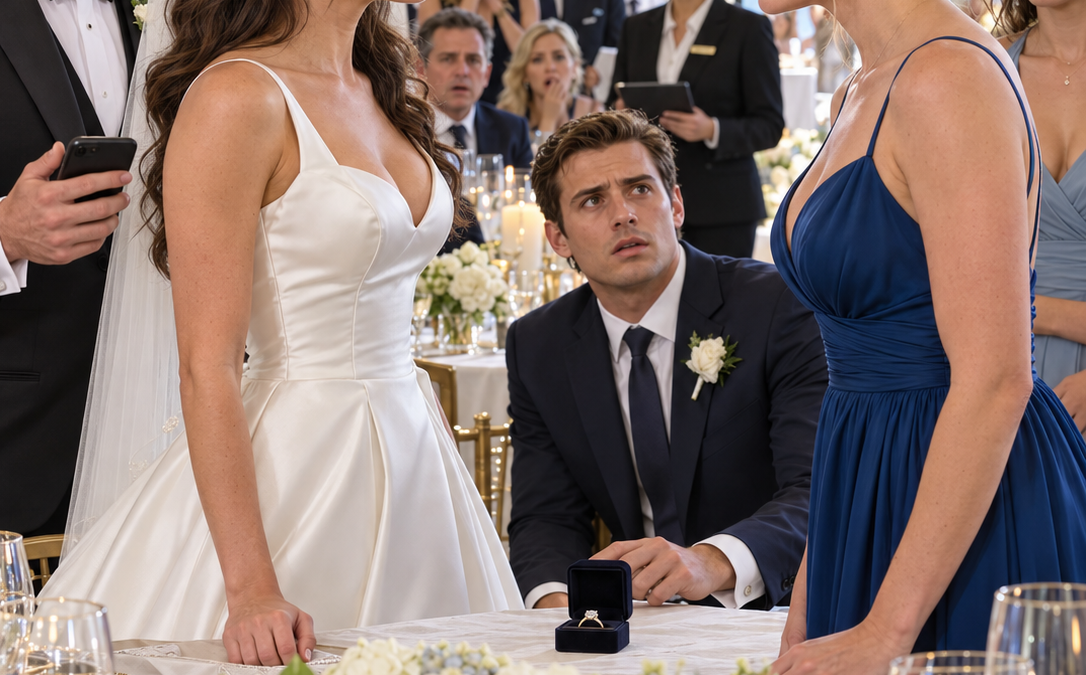
My name is Maya Carter. I’m 30 years old, and the night before my wedding, I heard my maid of honor explain exactly how she planned to destroy it.
I was standing in the narrow hallway outside my hotel suite when her voice came through the adjoining wall. The old beachfront hotel had thin walls, but what made every word unmistakable was the connecting door between our rooms. Someone on their side had left it slightly open.
“Ruin her dress, lose the rings. She doesn’t deserve him.”
Then came a laugh I had known for 15 years.
“I’ve been working on him for months. Tomorrow just needs one little push.”
I stopped with my hand inches from the door. For 15 years, that woman had been beside me through breakups, career failures, family arguments, and nights when I thought nothing in my life would work out. How could someone who once held my hand while I cried now laugh while planning to destroy the happiest day of my life?
I wanted to throw the door open and demand an explanation. Instead, I reached slowly into my bag, took out my phone, opened the voice recorder, and pressed record.
Then I heard the sentence that changed everything.
This wasn’t only about jealousy or some childish prank. She believed that if my wedding collapsed publicly, the man waiting to marry me would finally question whether he had chosen the wrong woman.
I backed away before either of them could notice me. I didn’t confront them. I didn’t cancel the wedding. I didn’t remove anyone from the bridal party. I went back to my room, locked the door, and started changing everything they thought they controlled.
By sunrise, the dress, the rings, the schedule, the access codes, the vendor instructions, and even the reception plan would be different. They would walk into my wedding believing their trap was still waiting for me.
What they didn’t know was that I had decided to let them try.
Before I tell you how far their plan went and what happened when they realized I had changed everything, tell me what time it is where you are right now and where you’re watching from. I’m curious to see how far this story travels.
I listened to the recording three times before I called anyone. Not because I doubted what I had heard, but because some stubborn part of me kept searching for another explanation. Maybe it was a horrible joke. Maybe I had missed a sentence that changed the meaning. Maybe 15 years of friendship deserved more than 97 seconds recorded through a hotel wall.
But on the third listen, I heard something I had missed the first two times.
“Once she sees the dress, she’ll panic,” Sarah said.
Lily answered, “And if the rings disappear too, Jake will think she lost control.”
Sarah laughed softly. “That’s the point. He already thinks she makes everything about work. Tomorrow he gets to see what marriage to her will really be like.”
That sentence hurt more than the threat against the dress. Sarah knew about the only serious argument Jake and I had experienced during our engagement.
Months earlier, when deadlines at my design studio had swallowed nearly every evening, Jake had told me he sometimes worried that I carried too much alone and refused to ask for help. It had never been an accusation. It had been one of those uncomfortable but necessary conversations couples have when they’re trying to build something that lasts.
I had told Sarah about it privately because I trusted her. Now she was planning to turn my vulnerability into evidence against me.
I called my younger brother, Brian. I didn’t choose him because he was conveniently available. I chose him because when we were teenagers and our parents went through a difficult separation, Brian and I learned something important about each other.
Neither of us panicked when the other one was in trouble.
He arrived at my room 20 minutes later wearing sweatpants and the expression he used whenever he knew something was wrong but was waiting for me to speak first.
I played the recording without explaining anything. Halfway through, his jaw tightened. When it ended, he simply asked, “What do you want to do?”
That question mattered. He didn’t tell me to cancel everything. He didn’t demand that I confront Sarah. He gave the decision back to me.
For several seconds, I couldn’t answer.
Sarah had been in my life since I was 15. She knew my first apartment, my first major design contract, every ridiculous haircut, and every person I had dated before Jake. I remembered her driving four hours after my first bridal collection failed to sell because she refused to let me spend that weekend alone. I remembered sleeping on her couch after a terrible breakup in my twenties. I remembered how proud she looked the first time one of my dresses appeared in a magazine.
Was I really prepared to destroy a 15-year friendship because of a recording?
Then I looked at my phone again.
No. I wasn’t destroying it. I was finally seeing what remained of it.
Brian and I called Jessica, my wedding planner, and Mia, an old friend who had returned to California the previous year. I trusted Mia precisely because she wasn’t part of Sarah’s immediate social circle.
By one in the morning, our counterplan had become extremely specific.
My real wedding dress, the one I had designed and sewn partly by hand, was moved from the bridal suite to Jessica’s locked office. In its place, we hung the unfinished sample version I had used during fittings. It looked almost identical from a distance, but it had no sentimental or financial importance.
Jessica changed the garment room access code and gave it only to herself and Mia. The real wedding rings went into Brian’s hotel safe. Two inexpensive replica bands went into the decorative ring box Sarah expected the best man to carry.
The ceremony timeline was shifted by 20 minutes while Sarah received the original schedule. The bouquet delivery was redirected directly to Jessica instead of the bridal suite.
The cake vendor, photographer, DJ, florist, transportation coordinator, hotel manager, and catering lead were quietly told that no schedule change, delivery adjustment, room access, payment request, or vendor instruction could be accepted without a verbal password from me or Jessica.
We even changed the name under which the real address had been logged with hotel staff.
Then Jessica suggested one more thing.
The hotel’s service corridors and preparation rooms already had security cameras. We didn’t need to manufacture a trap. We simply needed to stop interfering with whatever Sarah had already planned.
If she tried nothing, the wedding would proceed peacefully. If she tried something, her own decisions would create the evidence.
That was when the real conflict became clear to me.
Protecting myself was easy. Pretending I still trusted Sarah was not.
The next morning, when she knocked on my door carrying coffee and smiling like the woman I had known for half my life, I had to look directly into her eyes and say, “I’m so glad you’re here.”
She hugged me tightly. For one second, I nearly broke.
“You barely slept, did you?” she asked. “Big day nerves?”
I forced a small smile. “Something like that.”
She stepped back and studied my face. I wondered whether she could see suspicion in my expression, whether years of knowing me had taught her every tiny tell.
Then she smiled again and said, “Don’t worry. I’ve got everything under control.”
That sentence would have sounded comforting 24 hours earlier. Now it sounded like a warning.
I nodded anyway. “I know.”
She hugged me again and whispered, “I wouldn’t miss this for anything.”
“Neither would I.”
By ten that morning, Sarah was behaving like the perfect maid of honor. She checked my makeup, corrected a loose pin in my hair, reminded Jessica about photographs, carried emergency tissues, reorganized a tray of accessories nobody had asked her to touch, and repeatedly asked whether the rings were safe.
The fourth time she asked, I understood that the recording had not captured an impulsive fantasy. She was checking the progress of an operation.
“Brian has everything handled,” I told her.
Her smile remained in place, but something behind it shifted.
“Brian?” she asked casually. “I thought Lily was helping with the rings.”
“Plans changed.”
She recovered almost instantly. “Of course. Whatever makes you less stressed.”
Twenty minutes later, Mia texted me two words.
Dress room.
I didn’t move. I was sitting in front of the mirror while the photographer captured final preparation shots. Sarah excused herself moments later, claiming she needed to check the ceremony programs.
I counted to 30 before looking at Jessica. She nodded once and disappeared.
What happened next, I learned from the security footage afterward. But at the time, all I knew was that our first safeguard had been tested.
Sarah entered the preparation corridor using the old access code. It failed. She tried again.
Then Lily appeared less than a minute later with a hotel employee and claimed I had urgently asked for the dress to be brought upstairs. The employee called Jessica to verify. Jessica denied the request.
Sarah smiled, apologized for the wedding confusion, and walked away as though nothing had happened.
Then she tried a different route.
The unfinished sample dress was hanging in a secondary styling room that Sarah still believed was the main storage location. Jessica had deliberately left that room accessible because nothing important remained inside.
Fifteen minutes before the ceremony, Mia found a dark streak of foundation smeared down the sample gown’s bodice and a seam partially loosened near the waist. Someone had also spilled a small amount of clear liquid along the hem, enough to create visible discoloration once the fabric dried.
Mia photographed everything without touching it and locked the room.
When she showed me the pictures, I stared longer than I expected.
I had designed that sample myself. It was no longer valuable, but seeing the damage made the betrayal physical. Until then, Sarah’s plan had existed as sound waves on my phone. Now there was a handprint in beige foundation across white satin and a deliberately opened seam where someone had expected my dress to fail.
Brian stood beside me.
“We can remove them right now.”
I almost said yes. It would have been reasonable. We already had the recording. We had damaged property. We had enough to stop pretending.
Then I heard the ceremony music beginning outside.
For a moment, another memory surfaced. Sarah and me at 19, sitting on the floor of our first shared apartment because we couldn’t afford a dining table. She had eaten terrible takeout noodles from the carton and promised that when I eventually got married, she would be standing beside me.
She had kept that promise in the most twisted way possible.
“Not yet,” I said.
Brian frowned. “Maya—”
“If I stop everything now, the wedding becomes about her before it even starts. I want to marry Jake first.”
He studied me for a second, then nodded.
“Your call.”
I put on my real dress. The gown fit perfectly because I had adjusted the final seams myself just three days earlier.
When I walked toward the ceremony, Sarah was already standing where a maid of honor should stand. Her eyes dropped immediately to my gown. The change in her expression lasted perhaps half a second, but I saw it.
Confusion. Then alarm. Then calculation.
I smiled at her. She smiled back. Neither of us said a word.
I had considered exposing everything during the vows. At one in the morning, standing beside Brian with the recording in my hand, the idea had seemed satisfying. I imagined turning toward Sarah, playing her own voice, and letting the entire ceremony watch her collapse under the truth.
But when I reached Jake and saw him waiting for me, all of that suddenly felt wrong.
Sarah had already taken enough from the weekend. I wasn’t going to give her my vows, too.
So I said exactly what I had written weeks earlier. I told Jake that I loved the life we had built because neither of us needed the other to become smaller. I promised honesty when honesty was uncomfortable, patience when certainty was impossible, and partnership without ownership.
When he repeated his vows, his voice cracked slightly on the sentence about growing old together. I laughed because I knew I was about to cry.
Behind him, Brian reached into his jacket and produced the real rings.
Sarah’s head snapped toward Lily.
There it was again. That tiny fracture in their confidence.
Nothing happened. No missing rings, no ruined dress, no public meltdown.
We exchanged the rings, finished the ceremony, kissed, and walked back down the aisle while everyone applauded.
For approximately 12 minutes, I allowed myself to believe Sarah might understand that she had lost and simply leave.
Then Jessica intercepted me before the reception entrance.
“The replica ring box is gone,” she said.
I stared at her. Brian had placed it exactly where Sarah expected the real box to be.
“Who took it?”
Jessica turned her phone toward me.
On the security feed, Lily was walking away from the preparation area with the small velvet box hidden beneath a folded napkin.
That was when I understood something Sarah still didn’t.
She hadn’t merely failed. She had just given me proof.
I could have stopped the reception immediately. Instead, I asked Jessica to save copies of the security footage and contact the hotel manager. Brian retrieved the damaged sample dress and placed it inside a garment bag. Mia saved every photograph with timestamps and backed them up to a second device.
Nobody confronted Sarah or Lily. We simply documented what they had chosen to do.
That distinction mattered to me more than I expected. I didn’t want to spend the rest of my life wondering whether I had exaggerated something because I was hurt. I wanted facts.
When the reception began, Sarah entered smiling as if nothing had happened.
That confidence told me she still believed the missing ring box contained our actual wedding bands. She thought Brian had secretly replaced them at the ceremony with emergency substitutes.
In her version of events, I was probably pretending everything was fine because I was embarrassed.
That misunderstanding became useful.
During dinner, she approached me alone.
“You handled the dress problem surprisingly well.”
I looked at her. “What dress problem?”
For the first time all day, she hesitated.
It was tiny, barely visible, but I saw it. Then she laughed.
“I mean, all the last-minute wedding chaos. You know what I mean.”
“I do.”
She studied my face. “Do you?”
There was something almost challenging in her expression, and suddenly I understood why she had gone this far.
This wasn’t simply about wanting Jake. It was about needing me to lose.
Sarah and I had entered adulthood at roughly the same pace until my business began succeeding. My bridal designs started appearing in regional magazines, then national features. My studio expanded from a rented room with two sewing machines into a small company with employees, private fittings, and waiting lists.
At first, Sarah celebrated with me.
Then the jokes changed.
She would introduce me as “the famous one” even when nobody knew who I was. If I bought something nice, she would ask whether I had finally become too important for normal stores. If I missed dinner because of a client emergency, she would tell everyone that success had made me boring.
I laughed because that was our pattern. She teased. I rolled my eyes. Life continued.
Then I met Jake at a charity event where his band performed.
Sarah had been there, too.
At first, she joked that I had stolen the interesting guy in the room. Later, those jokes became comparisons. She would tell Jake that I worked too much, tell me musicians were unreliable, then tell our mutual friends she was the one keeping our relationship balanced.
I had mistaken interference for concern because I had no reason to imagine my closest friend was measuring our lives against each other.
Several months before the wedding, Jake had finally told me something I dismissed too quickly at the time.
Sarah had begun messaging him privately.
Nothing explicitly romantic at first. Memes, music recommendations, questions about wedding surprises. Then came late-night messages about whether he ever felt ignored because of my work.
He stopped replying to those messages and told her he preferred to keep wedding communication in the group chat.
I remember feeling embarrassed when he told me, not because he had done anything wrong, but because Sarah was my friend and I felt somehow responsible for her behavior.
I told myself she was overenthusiastic. I even defended her.
Now, her recorded words—“I’ve been working on him for months”—gave those messages an entirely different meaning.
Sarah leaned closer to me at the reception.
“You know what your problem has always been, Maya?”
I waited.
“You think being successful makes people stay? It doesn’t. Eventually, people get tired of living inside your schedule.”
That landed exactly where she intended.
She knew my fear. She had helped create it.
For a moment, I hated that the sentence still had power. Part of me wanted to defend every late night at the studio, every canceled dinner, every compromise Jake and I had made.
Then another voice came from behind me.
“That’s enough.”
Jake had heard her.
Sarah’s expression changed instantly.
“Jake, I was just—”
“I know what you were doing.”
She stared at him.
He pulled out his phone.
That morning, after I told him the essential truth about what I had overheard, he had searched his messages with Sarah. He hadn’t wanted to burden me before the ceremony with months of uncomfortable exchanges, but he had saved them.
Sarah asking whether he ever wondered what life would be like with someone less married to her career. Sarah inviting him for drinks without me. Sarah sending him songs about people choosing the wrong partner. Sarah saying she understood creative people in ways I supposedly didn’t.
Jake had rejected each suggestion politely, then more firmly.
Her plan had not begun the night before my wedding. That was merely the night I discovered it.
Sarah’s face hardened.
“You showed her?”
Jake shook his head. “You sent them to me. Don’t act like I created them.”
Then she looked at me and said something far more revealing than a denial.
“You always get everything.”
There it was.
Not love. Not concern. Competition.
Before I could respond, Lily appeared beside her and whispered something urgent. Sarah turned sharply toward the reception entrance.
Two hotel managers were speaking with Jessica. The missing replica ring box had been recovered. One manager was holding a tablet. Another had a printed incident form.
Sarah looked back at me.
For the first time that weekend, she wasn’t smiling.
“What did you do?” she asked.
“Nothing yet,” I said.
That frightened her more than shouting would have.
I refused to turn the reception into another long speech. That was what Sarah expected. She understood arguments, public scenes, and emotional chaos. She could interrupt, deny, cry, accuse me of misunderstanding, and turn everything into competing versions of the truth.
Evidence was harder to fight.
Jessica quietly removed the maid of honor toast from the schedule.
Sarah noticed almost immediately.
“You’re skipping my toast?”
“Yes.”
“You can’t be serious.”
“I am.”
She lowered her voice. “Maya, whatever you think happened, humiliating me in front of everyone is going to make you look unstable.”
That sentence almost made me laugh.
She still thought I needed the crowd to punish her.
“I’m not going to humiliate you,” I said. “I’m going to let you explain yourself.”
Brian placed the replica ring box on the table between us.
Sarah stared at it. Lily went pale.
Jake joined us, followed by Jessica and one of the hotel managers. We were standing away from most guests, but several members of the wedding party had already noticed the tension.
The manager explained that the box had been found inside Lily’s handbag after staff reviewed footage from the preparation area.
Lily immediately protested that Sarah had told her to take it.
Sarah turned on her instantly.
“I told you to check the box, not steal it.”
Lily stared at her. “Are you serious?”
“Don’t blame me because you misunderstood.”
“You gave me the makeup, too.”
Silence followed.
Lily realized what she had just admitted.
I didn’t need a microphone. I didn’t need applause. Their alliance had cracked because neither of them trusted the other anymore.
Sarah recovered first.
“This is ridiculous. Maya set us up.”
I answered quietly. “How?”
“You moved everything.”
“Yes, because I heard you planning to sabotage my wedding.”
“You recorded a private conversation?”
“I recorded a conversation about damaging my property and taking my rings.”
Her expression hardened.
“You’ve wanted an excuse to cut me out ever since you started thinking you were better than everyone.”
There were now several mutual friends close enough to hear us.
Then Jake unlocked his phone.
“I think they should know one more thing.”
Sarah stepped toward him.
“Don’t.”
He didn’t read her messages aloud. He simply said, “For months, Sarah has been contacting me privately and trying to convince me that Maya and I shouldn’t get married. I asked her to stop. She didn’t.”
Rachel frowned.
“Sarah, you told us Jake was messaging you.”
Another friend added, “You said Maya was jealous because Jake confided in you.”
A third said, “You told me they almost postponed the wedding.”
Jake shook his head.
“That never happened.”
Sarah’s eyes moved from face to face.
I finally understood that she had been running two stories at once. To Jake, she played the concerned friend. To everyone else, she implied he was emotionally drawn to her and I was too insecure to admit it.
Rachel pulled out her phone.
“I still have the messages where you said he was reconsidering the wedding.”
Jake said, “I never said that.”
Nobody shouted.
That made it worse for Sarah.
People were simply comparing notes.
Sarah reached for my arm.
“Can we talk privately?”
I stepped back.
“No.”
“Maya—”
“No more private versions.”
She stared at me while conversations spread quietly around us.
People weren’t laughing at her. They weren’t cheering for me. They were doing something she feared more.
They were checking her stories against one another.
Sarah tried to recover by claiming Lily had misunderstood her, that her messages to Jake were harmless, and that the damaged dress might have been an accident.
But each explanation contradicted something else.
Lily finally unlocked her phone and said, “Stop lying.”
Sarah turned toward her.
“You don’t want to do this.”
“You already blamed me.”
“Because you took the box.”
“Because you told me to.”
Sarah went still.
For the first time, the person who had spent months controlling information no longer controlled who had access to it.
Sarah left the reception area for almost half an hour.
Lily stayed behind, visibly shaken, while Jessica spoke with hotel management.
I didn’t comfort her. She had still participated willingly. But when she asked to speak with me in front of Brian, I agreed.
She handed me her phone.
The message thread went back nearly four months.
Sarah had complained repeatedly that I had become insufferable since my business grew. She said Jake deserved someone spontaneous, someone who understood music, someone who didn’t treat life like a schedule.
In one message, Lily had asked directly, “Do you actually want Jake?”
Sarah’s answer was simple.
“I want Maya to know she can lose something.”
That was the motive.
Jake mattered, but the deeper goal was punishment. She had turned my wedding into a scoreboard.
I kept scrolling.
There were messages about distracting Jessica, accessing the dress, hiding the rings, and creating enough confusion to make me look incapable of handling my own wedding.
Then I found something else.
Sarah had promised Lily introductions to people in the local event and fashion industry if she helped.
That mattered because Sarah had recently started building a small luxury event consulting business. She had used photographs from my launches, vendor relationships she gained through my studio, and my professional recommendation to make herself look established.
Months earlier, she had asked whether she could list my studio as a reference. I said yes without hesitation.
I had introduced her to photographers, florists, venues, caterers, and private clients because I believed helping a friend succeed was natural.
Now the practical consequence was obvious.
My studio had three upcoming events involving Sarah’s company. I had recommended her personally.
I took out my phone and emailed my operations manager.
I didn’t ask anyone to blacklist her. I simply withdrew my recommendation, canceled the two collaborations our contracts allowed us to cancel, and explained that I could no longer professionally vouch for her handling of confidential event information or client property.
Sarah returned just as I finished.
“What did you do?” she demanded.
“I protected my business.”
Her expression changed.
“You contacted the studio?”
“Yes.”
“You can’t do that.”
“I just did.”
“Those contracts are half my winter schedule.”
“They came through my recommendation.”
“You’re destroying my company because of a personal argument.”
“No. I’m withdrawing my professional endorsement because you interfered with an event while using my professional network. That event happened to be my wedding.”
She stared at me in disbelief.
“You know how hard I worked for those contacts.”
I looked at her.
“You mean my contacts?”
Her jaw tightened.
“You always make people feel like they owe you.”
“I never asked you for anything in exchange.”
“Exactly. You like being the generous one.”
That was when I finally understood.
In Sarah’s mind, every version of me was wrong. If I succeeded, I was arrogant. If I helped, I was controlling. If I worked hard, I was unavailable. If I trusted her, I was naive.
There had never been a fair competition because the competition existed only in her head.
Meanwhile, our mutual friends had started comparing other stories Sarah had told. Rachel learned Sarah had said things about her behind her back. Another friend discovered Sarah had borrowed money while claiming she was waiting for payment from one of my events, an event she had never worked on. Someone else realized Sarah had used photographs from one of my studio launches to imply she had coordinated the event when she had only attended as my guest.
I hadn’t planned any of that. Once people questioned one lie, they started checking the others themselves.
Sarah’s professional image depended on borrowed credibility. Her social image depended on people never comparing notes. Both were collapsing at once.
She came closer and said, “You think you won?”
I shook my head. “This was never supposed to be a game.”
“You took everything from me.”
“No, Sarah. I moved my name out from underneath you.”
For once, she had no answer.
The bouquet toss happened later, but I didn’t turn it into another confrontation. Sarah was no longer there. Hotel management had asked her and Lily to leave restricted areas after reviewing the footage, and Sarah chose to leave the property entirely. Lily stayed long enough to provide copies of the messages, then left separately.
When the DJ announced the bouquet toss, Jessica looked at me as if asking whether I wanted to cancel it. I shook my head.
I tossed it normally.
Someone caught it and nearly fell over laughing while her friends surrounded her. For the first time all day, the laughter had nothing to do with betrayal.
Jake joined me afterward and asked quietly, “Are you okay?”
I thought for a second.
“Not completely.”
He squeezed my hand. “You don’t have to be.”
That mattered more than any victory.
Near the end of the reception, Brian asked the DJ for 30 seconds. I immediately warned him, “No speech about revenge.”
He smiled. “Trust me.”
He raised his glass and said, “To Maya and Jake. May your marriage always have more honest conversations than assumptions, more boundaries than resentment, and enough good people around you that you never confuse history with loyalty.”
That was all.
No public victory lap, no final insult, no mention of Sarah. I think that was when the day finally became ours again.
The consequences continued after the wedding, but not because I launched a campaign against Sarah.
I never posted the recording online. I never uploaded the security footage. I never asked our friends to choose sides. I gave the evidence only to the hotel, the people directly involved, and the businesses that needed to know why I was withdrawing my professional recommendation.
Within two weeks, Sarah lost the two collaborations connected to my studio. A third company contacted me to verify a recommendation she claimed I had given.
I told them the truth. I had recommended her in the past, but I no longer did.
That was enough.
The social consequences were worse.
Rachel confronted Sarah about the false stories involving Jake. Two other mutual friends discovered she had told each of them different versions of my relationship. Another realized Sarah had mocked her privately while acting supportive in public.
The friendships didn’t collapse because I demanded loyalty. They collapsed because people started comparing what she had told them.
Lily eventually apologized to me in writing.
She admitted Sarah had convinced her that I had spent years looking down on both of them. She also admitted she knew damaging the dress was wrong, but told herself it would only embarrass me for a few minutes.
I accepted the apology without restoring the friendship.
Forgiveness and access were no longer the same thing to me.
Sarah sent me one message three weeks later. Not a threat. Just a question.
“15 years, Maya. Does none of that matter to you?”
I stared at those words for a long time.
Fifteen years did matter. That was why the betrayal hurt.
I remembered cheap noodles on an apartment floor, terrible road trips, failed collections, celebrations, and years when she had genuinely been there for me.
Those memories didn’t become fake because our friendship ended badly. Good history can be real and still fail to excuse present behavior.
I finally replied, “It mattered enough that I wish you hadn’t traded it for competition.”
Then I blocked her.
Six months later, Jake asked whether I ever regretted not confronting Sarah the moment I heard her through that wall.
I thought about it.
If I had opened that door, she would have denied everything. She might have deleted messages, warned Lily, abandoned the plan, and spent the next year telling everyone I had misunderstood a joke.
I would have spent my wedding defending what I heard.
Silence gave me something anger wouldn’t have.
Clarity.
But the real lesson wasn’t that silence is always stronger or that revenge means waiting for the perfect moment to humiliate someone. What protected me was evidence, boundaries, trusted people, and the discipline to separate emotion from action.
I understand something now that I didn’t understand then.
Loyalty should never be measured only by how long someone has known you. Time can create closeness, but it can also create entitlement.
Someone who knows your weaknesses can comfort you with that knowledge or weaponize it against you. Character is revealed by what they choose.
Sarah knew my fear that success might cost me the people I loved. She knew my work schedule was a sensitive point in my relationship. She knew how much the dress meant to me. She knew I trusted her enough to give her access to schedules, vendors, rooms, and friends.
She used that trust as infrastructure.
Looking back, the signs had existed long before the wedding. The jokes that always landed on the same insecurity, the comparisons, the way every success of mine somehow became evidence that she was falling behind, the way she tried to insert herself into my relationship with Jake.
I had treated each moment separately.
Only later did I understand that patterns become visible when you stop inventing a new excuse for every incident.
The experience also changed how I run my business. My studio now uses stricter access controls for garments, clearer vendor authorization procedures, and written confirmation for important schedule changes.
Useful knowledge sometimes comes from experiences we never wanted.
Education isn’t only something we receive from classrooms, books, or mentors. It can also come from difficult situations that teach us about boundaries, communication, critical thinking, documentation, and self-respect.
I learned that protecting your peace does not require cruelty.
You can document the truth without exaggerating it. You can end a relationship without pretending every good memory was fake. You can withdraw your support without trying to destroy someone. You can forgive without restoring access. And you can let consequences come from another person’s choices instead of manufacturing them yourself.
Sarah wanted me to have a wedding everyone remembered for the wrong reason.
She almost succeeded.
But when I remember that day now, I don’t think first about the damaged sample dress, the missing replica rings, or Sarah’s face when her stories began collapsing.
I remember walking toward Jake in the dress I had protected and realizing she no longer controlled what happened next.
She had planned for me to panic. She had planned for me to accuse. She had planned for me to make such a dramatic scene that Jake would question the woman he was marrying.
Instead, I changed the dress location. I changed the rings. I changed the access codes. I changed the schedule. I changed who had permission to handle the most important parts of my wedding.
And eventually, I changed something much bigger.
I changed my definition of loyalty.
The night before my wedding, I heard their entire plan.
I didn’t say a word.
I changed everything.
Thank you for supporting our storytelling until the end. This fictional video was created only for entertainment and educational purposes. We hope to remind you that sometimes the person who betrayed you becomes the reason you finally returned.








