The CEO took his brother’s place on a blind date. But the moment he was scolded by a humble kindergarten teacher in front of everyone, somehow, he fell in love with her.
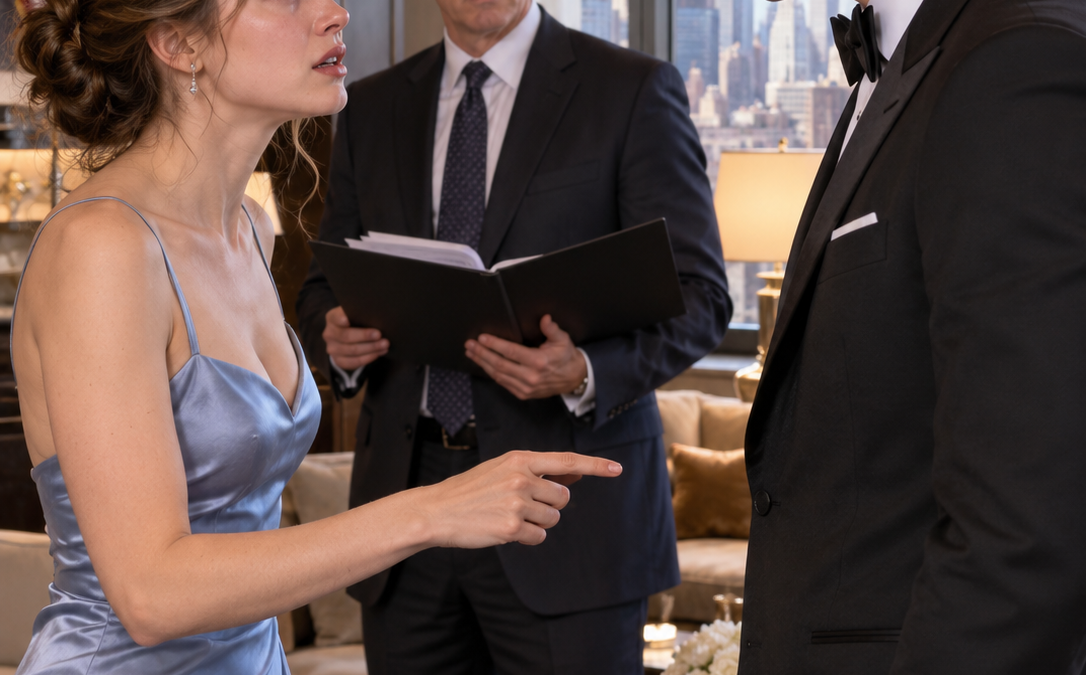
“I don’t know how important you are at your company, mister, but right now, your manners are worse than a five-year-old’s. Please sit in that thinking chair over there.”
The young CEO of Vanguard Holdings, Theodore Sterling, had agreed to attend a high-society blind date arranged by his family in place of his irresponsible younger brother. The woman waiting for him, however, was not who she appeared to be, either. Emily Parker, a local preschool teacher, had agreed to impersonate her wealthy socialite friend.
Neither knew the other’s true identity. From their very first meeting, their personalities collided in spectacular fashion.
Theo had spent his entire life surrounded by people who obeyed his every instruction. Yet he found himself strangely captivated by a woman who scolded him as though he were a misbehaving child. And when he noticed a small preschool logo on her bag, he had no idea that their unexpected encounter was about to become entangled with the most consequential business decision of his career.
“I don’t know how important you are at your company, mister, but right now, your manners are worse than a five-year-old’s. Please sit in that thinking chair over there.”
When Emily Parker pointed toward an empty chair at the edge of the table, the atmosphere inside the café seemed to freeze.
Theo Sterling slowly lowered the cellphone from his ear.
Only moments earlier, he had been speaking to one of his company’s executives in a voice cold enough to make anyone on the receiving end nervous.
“Process the termination today. Someone who makes the same mistake three times doesn’t deserve a fourth chance.”
In the middle of the call, a waiter had approached to check on their order and accidentally bumped Theo’s water glass. Without even looking at the young man, Theo had snapped, “Can’t you see I’m on a call right now?”
Emily had watched the entire exchange. By the time Theo finished speaking, she had reached the limit of her patience.
“Were you just talking to me?” Theo asked quietly.
Emily didn’t retreat an inch.
“Yes. Is there anyone else here who needs to reflect on their behavior?”
One of Theo’s eyebrows twitched.
“Do you know who I am, speaking to me like that?”
“I don’t,” Emily replied. “But I do know that no matter who you are, you shouldn’t speak to people that way.”
“Are you saying you’re going to teach me a lesson?”
“Teaching is what I do for a living. When I see someone doing something wrong, I can’t just walk past and pretend I didn’t notice.”
Theo gave a short, incredulous laugh.
Emily’s expression became even more determined.
“Please don’t laugh. First, you need to apologize.”
“To whom?”
“To the waiter. And to the person on the other end of your phone call, too. Talking about firing someone so casually isn’t a good attitude to have.”
Throughout his life, dozens of senior executives had held their breath over a single word from Theodore Sterling. Entire departments adjusted their schedules around his decisions. Men twice his age lowered their voices whenever he entered a boardroom.
Yet the woman sitting across from him was looking at him as though he were a kindergarten student who had thrown a wooden block and refused to apologize.
Until an hour earlier, Theo had possessed absolutely no intention of sitting in this café.
He had been reviewing authorization forms in his executive suite on the top floor of Vanguard Holdings headquarters when his younger brother, Julian Sterling, barged through the door without bothering to close it properly.
Julian clasped his hands together in a pleading gesture.
“Bro, just this once. Please help me out.”
“No.”
“I haven’t even said anything yet!”
“Whenever you ask for help, it’s one of three things. Money, women, or trouble.”
Julian looked genuinely offended.
“This time it’s a family issue.”
Theo continued looking at his documents.
“You know I have that arranged blind date today, right?” Julian asked. “I seriously can’t do it.”
“It’s a meeting you promised to attend.”
“I didn’t promise anything. Grandmother and the Brooks family patriarch arranged the whole thing. Please, just go in my place this once.”
Theo finally lifted his gaze.
“What exactly are you expecting me to do?”
“Just show your face and behave in a way that makes her reject us. That’s all.”
“You want me to go under my own name?”
Julian waved the objection away.
“You have no interest in women. You never smile. And the way you talk is terrifying. She’ll dump you in ten minutes flat. In this particular field, you’re the absolute best, bro.”
Theo’s eyes turned icy.
Julian immediately straightened.
“That’s a compliment. I mean, you’re highly capable.”
Ultimately, Theo didn’t agree because he wanted to sacrifice himself for his brother. He made a straightforward calculation: enduring one unpleasant blind date would be more efficient than answering Julian’s endless phone calls throughout the afternoon and dealing with the inevitable family interference later that evening.
He intended to spend exactly twenty minutes at the meeting, make himself thoroughly unappealing, and leave after ensuring the other party rejected him.
What he didn’t realize was that the woman waiting across from him had arrived with precisely the same objective.
That morning, in the staff room of a neighborhood preschool, Emily Parker had been asked an equally outrageous favor.
Her college friend, Elena Brooks, had appeared wearing oversized sunglasses and an expression of desperation. Before Emily could even put down the construction paper she was cutting, Elena seized both her hands.
“Please. Think of it as saving my life today. Just do me this one favor.”
Emily stopped cutting and gave her friend a weary look.
“Whenever you make that face and ask me for something, it never ends well. What is it this time?”
“It’s a blind date.”
“No.”
“I haven’t even explained it yet!”
“Going on a blind date in someone else’s place is a no, even if I listen to the entire explanation.”
Elena was an heiress to the Brooks family fortune. Although she had grown up surrounded by privilege and glamour, she had been resisting the marriage her parents wanted to arrange for her as though her very survival depended on it.
Her prospective partner was Julian Sterling, the second son of the family behind Vanguard Holdings. In high-society circles, Julian was notorious for his endless romantic scandals and his spectacular lack of responsibility.
Elena wanted Emily to attend the meeting under her name and persuade Julian to reject her first.
“They say he’s an absolute playboy with zero sense of responsibility,” Elena explained. “If you give him one of your classic lectures about life, he’ll run for the hills.”
Emily resisted until Elena admitted that her parents might discover the romantic relationship she had been secretly maintaining if the arranged meeting went badly.
That confession weakened her resolve.
In the end, Emily agreed on three conditions. The meeting would last exactly one hour. She would tell as few lies as possible. And the encounter would end before anyone even mentioned marriage.
Now, sitting inside the café, she found herself facing a thoroughly different kind of troublesome man from the one Elena had described.
Theo hadn’t moved to the thinking chair.
He remained in his original seat, his expression unreadable. But Emily’s unwavering gaze had somehow persuaded him to place his cellphone on the table.
A moment later, when the waiter who had accidentally bumped his glass returned, Theo spoke words he would ordinarily never have considered saying.
“I was on edge earlier. I apologize.”
The waiter bowed in surprise before hurrying away.
Emily’s expression softened slightly.
“Good job.”
Theo stared at her.
“Good job?”
“Yes. An apology is always best made promptly. If your attitude improves a little more, I might even consider giving you a gold-star sticker next time.”
For the first time, Theo truly studied the woman sitting opposite him.
She wore almost no makeup. Her hair was neatly tied back, and there wasn’t a single luxury-brand logo on her clothes. A small, slightly worn bunny keychain dangled from her handbag, the sort of inexpensive little gift a child might have given her.
He interpreted the supposed Brooks heiress’s appearance through the assumptions of his own world. Perhaps she had grown exhausted by high society and deliberately dressed modestly to contradict the rumors surrounding her.
She wore no extravagant jewelry and carried no trace of alcohol on her breath. Yet her audacity toward strangers was more remarkable than anything he had encountered at a social gathering.
“Do you normally speak to people that way?” Emily asked.
“If it’s necessary.”
“If you keep doing that, you’re going to lose all your friends.”
“I have the people I need.”
“Those are employees, not friends, aren’t they?”
For a moment, Theo had no answer.
His planned twenty minutes had already expired. His executive assistant had called twice, but Theo had quietly switched his phone to silent.
Unaware of that small departure from his usual habits, Emily asked what he did for a living.
Remembering that he was attending the date in his brother’s place, Theo offered a deliberately vague answer.
“I help out with the family business a little. I’m not officially working, but it’s close enough.”
A knowing expression appeared in Emily’s eyes.
“So, do you have enough money for living expenses?”
“My family provides it.”
Theo paused before allowing himself a faint chuckle. Strictly speaking, his CEO salary and dividends did come from the family holding company.
“You could definitely put it that way.”
Emily sighed in disappointment.
“What are you going to do? Relying on your family no matter how old you get.”
Since taking over as CEO of Vanguard Holdings, Theo had averaged barely four hours of sleep a night.
This was the first time anyone had treated him as an unemployed slacker.
He opened his mouth to defend himself, then inexplicably stopped. The concern in Emily’s face was too genuine to dismiss.
“Just because you have a lot of money doesn’t automatically make you an adult,” she continued. “You need to take responsibility for your own life. Pick something small, if you have to, and stick with it consistently.”
“Are you giving me career counseling now?”
“As your blind date, it’s the bare minimum advice I can offer.”
Theo lifted his water glass to conceal the smile threatening the corner of his mouth.
A laugh was building inside him.
No reporter, board member, or relative had ever spoken to him like this.
As their conversation continued, however, something equally unexpected began to happen on Emily’s side.
Theo deliberately introduced topics such as urban redevelopment and corporate management. At first, Emily seemed bored. But when he casually asked what she would do to improve a deteriorating commercial strip in a certain neighborhood, her expression changed.
“Just because the buildings are old doesn’t mean the lives of the people there have become outdated, too.”
Theo leaned back slightly.
“Are you opposed to development itself?”
“No. Dangerous structures should be repaired, and necessary facilities should be built. But you shouldn’t automatically demolish everything just because it’s been around a long time. To someone, a tiny family-owned hardware store might be their entire world.”
Theo studied her more carefully.
He had initially dismissed her as a simple idealist who disliked corporate profiteering. Yet her answer carried a strangely concrete understanding of everyday life.
“Even so,” he continued, “when a project affects the livelihoods and profits of thousands of people, someone inevitably has to bear a loss, doesn’t he?”
Emily considered the question.
“Maybe. But the people making those decisions shouldn’t look at the losses as nothing more than numbers on a spreadsheet. They should go there themselves. See the place. Listen to the people. Understand why they’re holding on to it.”
Her words grated against Theo’s instincts.
At the same time, they settled somewhere uncomfortably deep in his mind.
He had always evaluated neighborhoods through executive summaries and assessed population changes through charts and graphs. Site visits were delegated to the appropriate vice presidents. It was the most efficient management structure.
Yet Emily had identified its weakness with unsettling precision, almost as though she understood exactly how he operated.
As Emily reached into her bag for a tissue, a small sketchbook and several crayons tumbled onto the floor.
Theo bent down to retrieve them before she could.
That was when he noticed the green tree embroidered onto the corner of her handbag.
Beneath it, in small letters, were the words Blue Sky Preschool.
Something about the logo was strangely familiar.
When Emily noticed him looking, she pulled the bag closer to her chest.
“What is it?”
“That logo looks familiar.”
“It’s the preschool where I work.”
“You’re a preschool teacher?”
For the first time that afternoon, unmistakable surprise entered his voice.
Emily raised her chin.
“Yes. That’s why, whenever I see adults behaving like you, my occupational instincts take over. And that thinking chair I mentioned? We actually use one.”
Theo looked at her.
“It’s a place where children can calm their emotions,” she explained. “It isn’t supposed to be a punishment. Although, judging from your behavior, you might need one yourself.”
Theo silently committed the name Blue Sky Preschool to memory.
He was certain he’d encountered it before.
Had it appeared in a project proposal? A zoning map? He couldn’t immediately remember.
At that moment, Emily’s phone rang. Elena’s name flashed across the screen, and Emily quickly turned the device facedown.
Almost simultaneously, Julian Sterling’s name appeared on Theo’s phone.
He declined the call.
Neither realized that while each was concealing something from the other, the person across the table was doing exactly the same thing.
When it was finally time to leave, Emily rose from her chair.
“To be honest, I don’t think this arrangement is going to work.”
It was precisely the outcome Theo had intended to produce.
Yet hearing the words left him oddly dissatisfied.
“May I ask why?”
“Your attitude toward life isn’t very good. You seem to see people only in terms of efficiency. And most importantly, you speak far too coldly.”
Every criticism struck with uncomfortable accuracy.
Theo lowered his voice.
“Was there not a single good point?”
Emily blinked, surprised by the question.
After considering it, she answered, “When I told you to apologize, you eventually did. So I don’t think you’re someone who completely refuses to listen to others.”
For reasons he couldn’t explain, that single sentence stayed with Theo.
He reached into his jacket for a business card, then stopped.
Printed beneath his name were the unmistakable words: Theodore Sterling, Chief Executive Officer, Vanguard Holdings.
He slipped the card back into his pocket and picked up his phone instead.
“Can I have your number?”
Emily regarded him suspiciously.
“Why? We’re finished here.”
“If I want to earn that gold-star sticker, I’ll have to see you again, won’t I?”
Emily let out a baffled laugh.
It was the first time she had genuinely smiled during their encounter.
Somehow, they exchanged phone numbers.
After Emily left the café, Theo remained seated, staring at the empty chair across from him.
He couldn’t remember the last time he had been the one to ask someone for another meeting.
That evening, the atmosphere in the top-floor boardroom of Vanguard Holdings bore no resemblance to the unexpectedly comical encounter earlier that afternoon.
The moment Theo entered, the executives rose together.
Richard Thorne, the senior vice president of urban development, brought up an enormous map on the conference screen.
“Mr. Sterling, this is the final review draft for the Chelsea redevelopment project. If we complete the relocation negotiations for the buildings scheduled for demolition before next week’s board meeting, everything will be ready.”
Theo studied the documents without expression.
The map was covered with markers identifying retail shops, residential lots, parking structures, and community facilities.
Then his hand stopped.
Near the lower-right corner of the map was a small green tree logo.
It was identical to the one embroidered on Emily’s handbag.
Theo slowly enlarged that section of the screen.
Blue Sky Preschool.
Instantly, Emily’s words returned to him.
Just because the buildings are old doesn’t mean the lives of the people there have become outdated, too.
Richard noticed his silence.
“Because the facility is relatively small, a standard buyout and relocation payment would be the most efficient approach. We’ve already secured the surrounding properties. There’s no reason to change the master design for one building.”
Theo kept his eyes on the screen.
“Who conducted the site survey?”
“The field team, sir.”
Richard hesitated.
“There was no reason for you to visit personally.”
Ordinarily, Theo would have agreed.
That evening, however, something was different.
He closed the folder.
“Put all decisions regarding this particular facility on hold.”
A brief silence swept through the boardroom.
Richard’s eyes narrowed.
“May I ask why, sir?”
Theo offered no explanation.
He couldn’t have explained it accurately even if he’d wanted to.
All he knew was that he couldn’t stop thinking about the woman who had accused him of having worse manners than a five-year-old, and the fact that she spent her days teaching children in the very building his company intended to demolish.
After the meeting, Theo returned to his office and loosened his tie.
Twelve messages from Julian were waiting on his phone.
Bro, are you alive?
How was Elena Brooks?
Are you seriously mad?
Did she contact you?
Theo ignored them for a while.
Eventually, he typed a single reply.
Send me everything you know about Elena Brooks.
Julian called almost immediately.
“Why, bro? Did you actually like her?”
Theo didn’t answer.
Instead, he looked through the windows at the glittering New York City skyline.
Countless lights and intersecting avenues stretched into the distance, arranged in a pattern that had always given him a sense of stability.
It was a world of planning, calculation, and control.
Yet that afternoon, a woman he’d met for the first time had dragged a tiny chair into the center of that carefully ordered world and told him to sit down and think.
Her words returned once again.
You shouldn’t look at losses as numbers on a spreadsheet. You need to see the place, hear the people, and understand why they’re holding on to it.
Theo turned his computer monitor back on and opened the zoning files surrounding Blue Sky Preschool.
Without realizing it, he smiled faintly.
“Emily Parker. A preschool teacher, huh?”
He still didn’t understand that she believed he was Julian Sterling.
And he remained equally convinced that she was Elena Brooks.
On the morning of the third day after their blind date, Theo appeared outside Blue Sky Preschool.
Emily was helping the arriving children zip their coats when a black luxury sedan stopped near the entrance to the narrow street.
She looked up.
Theo stepped out wearing an even more impeccably tailored black overcoat than the one he’d worn at the café. In one hand, he carried an expensive-looking shopping bag.
Emily stared at him in disbelief.
She hurried the children into the classroom, then stepped onto the front porch.
“How did you know to come here?”
Theo answered as though the explanation should have been obvious.
“The name was written on your bag. I saw it and tracked down the location. Is there a problem?”
Emily folded her arms.
“Normal people don’t track down someone’s workplace after one blind date.”
“Your standards for normal behavior seem remarkably complicated.”
“Because you’re the one acting strangely.”
Theo held out the shopping bag.
“Consider this an extension of my apology from the other day.”
Inside were assorted cookies from a famous artisan bakery and a selection of premium imported fruit.
Emily peeked inside and sighed.
“You really didn’t need to bring all this.”
“Can’t the children eat it?”
“Some of them have nut allergies. And we can’t distribute outside food without their parents’ consent.”
For a moment, Theo didn’t know what to say.
When arranging corporate gifts, he simply considered the recipient’s preferences and the appropriate price range. The rest was handled by his staff.
But here, even extraordinarily expensive cookies couldn’t override a single preschool rule.
Emily pushed the bag gently back toward him.
“Besides, an apology should be demonstrated through actions, not gifts.”
Theo watched her.
“Then what kind of actions should I take?”
Before she could answer, someone called urgently from inside the classroom.
“Miss Emily!”
She turned instinctively, then stopped in the doorway and looked back at him.
“If you really want to apologize, help me out for one hour today.”
Theo agreed.
Only a few minutes later would he begin to regret that decision.
Blue Sky Preschool was exceptionally busy preparing classroom decorations and art projects for the upcoming parent observation day.
An assistant teacher had originally been scheduled to help, but a sudden emergency had kept her away. Emily was left managing sixteen children by herself.
Theo’s first assignment was distributing construction paper.
He approached the task with the precision of someone allocating resources across a multinational corporation. He organized the sheets by color and gave every child exactly the same quantity.
Then five-year-old Mason raised his hand.
“I need more red paper.”
“You’ve already received two sheets,” Theo replied.
Mason stuck out his lower lip.
“My race car needs three red sheets or it won’t work.”
“Use a different color for the remaining section.”
“No!”
“Not everyone can have everything they want in life.”
Emily noticed the confrontation from across the classroom and hurried over.
“Are you seriously lecturing a five-year-old about resource allocation?”
Theo answered with complete seriousness.
“The quantity is limited, isn’t it?”
“We have plenty more red.”
She opened a nearby drawer.
Inside was an enormous stack of brand-new red construction paper.
The children burst into laughter.
Without a word, Theo handed Mason three additional sheets.
Mason smiled brightly.
“Mister, do they skimp on colors at your company, too?”
Emily pressed her lips together to keep from laughing.
Theo studied the little boy before answering.
“We don’t use construction paper at my company.”
“Well, that sounds boring.”
The classroom erupted into laughter again.
Theo wasn’t accustomed to being laughed at.
Strangely, though, he discovered that it didn’t feel particularly unpleasant.
His second assignment proved even more difficult.
The children were making clay models of “The Town I Want to Live In,” and Theo was placed in charge of supervising one of the tables.
One child attached purple windows to a blue roof. Another made a dog three times larger than the house beside it.
Theo instinctively opened his mouth.
“The proportions don’t match—”
He caught Emily’s warning look from across the room and stopped himself.
Instead, he turned to the child.
“Why is your dog so big?”
The child answered matter-of-factly.
“My dog protects me, so he has to be the biggest.”
Theo’s fingers paused.
It was a kind of logic that couldn’t be expressed through numerical measurements or efficiency models. Yet to that child, it was an entirely correct answer.
After a while, Theo began shaping a small, square building from clay.
Emily came over and examined it.
“What’s that?”
“A building. Can’t you tell by looking at it?”
“What kind of building?”
“An office building.”
Emily stared at him.
“I asked the children to build their dream town. Who puts a corporate office building in a dream town?”
Theo answered earnestly.
“People need places to work.”
Emily sighed and pressed a lump of yellow clay into his hand.
“If you’re going to build one, at least make the windows bigger. People need sunlight.”
Theo looked dissatisfied, but he enlarged the windows.
A little later, a child attached a tiny clay playground beside Theo’s office building.
“Mister, the people at your company can come play here during lunch.”
Theo studied the little playground for a long time.
His headquarters contained executive boardrooms, fitness centers, and sophisticated dining facilities. Yet he had never seriously considered whether his employees experienced genuine rest during their lunch breaks.
By lunchtime, the classroom had become even noisier.
For the first time in his life, Theo discovered that his mental energy could be completely exhausted without completing a single sheet of paperwork.
He approached Emily and asked quietly, “Is it like this every day?”
Emily was tearing bread into smaller pieces for a child who hadn’t been eating much.
She laughed.
“They’re actually being pretty quiet today.”
Theo looked at her in genuine disbelief.
At that moment, a little girl named Emma, sitting alone in the corner, put down her spoon and began crying.
Unlike the other children, Emma had barely spoken all morning.
Emily immediately went to her.
“What’s wrong, sweetheart?”
“Mommy said she’s going to be late today,” Emma whispered.
Emily didn’t rush to comfort her with empty assurances.
Instead, she sat beside the little girl and acknowledged what she was feeling.
“That must have made you feel scared.”
Emma nodded.
Emily pointed toward a small lamp in the corner of the classroom.
“I’ll turn that light on for you. And I’ll stay right here until Mommy gets here, okay?”
Theo watched from a distance.
The words were simple, but Emma’s crying gradually subsided.
A little while later, the child approached Theo instead of Emily and took hold of the hem of his overcoat.
He looked down in confusion.
“Mister, have you ever waited for someone who was late picking you up?”
The question caught him completely off guard.
For a moment, he couldn’t speak.
Long ago, when his mother had been hospitalized, he had eaten his meals alone, surrounded by drivers and nannies, waiting for his father to return.
His father’s board meetings always ran late.
Even as a little boy, Theo had believed that showing how desperately he was waiting would make him appear weak.
After a long silence, he answered quietly.
“I have.”
Emma seemed satisfied.
She wrapped her tiny hand around one of his fingers and squeezed.
By the time the children settled down for their afternoon naps, Emily could finally catch her breath.
She and Theo sat in the small preparation room at the back of the classroom, drinking coffee that had already gone lukewarm.
Theo had loosened his tie.
Emily glanced at him and laughed.
“Exhausted already?”
“Why don’t the employees here have meetings? If you established clearer rules, everything would be much more efficient.”
“What kind of meeting would you have with five-year-olds? They don’t operate according to project timelines.”
Theo took a sip of coffee.
“So your entire job consists of handling unpredictable situations all day?”
“Pretty much.”
Emily looked toward the playground outside the window.
After a moment, her expression softened.
“When I was little, my mom was always late picking me up. I hated waiting alone. But my teacher stayed with me every single time, right until the end.”
Theo listened.
“She never did anything extraordinary,” Emily continued. “She just switched on a little light and told me, ‘I’m right here.’ But for a child, something like that can stay in your heart for a very long time.”
Theo finally understood why Emily had known exactly how to comfort Emma.
“Is that why you became a preschool teacher?” he asked.
Emily nodded.
“It isn’t a job that makes a lot of money, but it’s something I’m good at.”
“Isn’t money important?”
Emily laughed softly.
“Of course it is. I have rent to pay, and I need to eat. But money isn’t the most important thing.”
That answer was difficult for Theo to comprehend.
To him, money represented more than desire or luxury.
It represented control.
He had spent his life believing that with sufficient resources, almost any risk could be contained.
Yet Emily didn’t regard a life with limited financial resources as an automatic misfortune.
As the afternoon classes wound down, Theo noticed a document pinned to the noticeboard outside the director’s office.
It announced a public town hall meeting concerning the Chelsea redevelopment project.
His gaze stopped on the notice.
Emily approached from behind.
“There’s been a lot of discussion around here lately. All that talk about redevelopment.”
Theo kept his expression neutral.
“Is the preschool included?”
“I’m not completely sure yet. The director is looking into it.”
Emily tried to laugh as though the subject didn’t trouble her, but he heard the anxiety beneath her voice.
“Surely they wouldn’t suddenly tear down a place where children come every day.”
Theo couldn’t answer.
The phrases scheduled for demolition and relocation negotiations appeared vividly in his memory.
After a moment, he asked, “What if the preschool could move to a much better facility?”
Emily stopped smiling.
“What do you mean by better?”
“A newer building. Larger classrooms. Better equipment. Under those conditions, moving wouldn’t necessarily be a bad thing.”
“That’s an adult’s idea of convenience.”
“It could also be a safer environment for the children.”
Emily turned toward him.
“Do you really think children remember only how nice a building is?”
Theo remained silent.
“They remember the street they walk down every morning,” she continued. “The grandmother who lives next door. The hardware store owner they say hello to. The flowerpots they planted with their friends. Those are the things that stay with them.”
Her voice softened, but her conviction didn’t.
“A place isn’t made of walls alone.”
Theo found himself unable to respond.
Not one report he had reviewed contained measurements for the things she had just described.
That evening, immediately after returning to headquarters, he opened the urban development files again.
This time, he examined more than Blue Sky Preschool.
The surrounding shops and homes filled the map, each marked with data on compensation costs, projected construction budgets, return on investment, floor-area ratios, and scheduling requirements.
Normally, those numbers gave him comfort.
They made the world understandable.
Now, however, the faces he’d seen that afternoon kept appearing between the figures.
Mason, who needed three sheets of red paper.
Emma, who was frightened because her mother would arrive late.
The child who had made a dog three times bigger than a house.
Theo stared at the screen for a long time.
Then Richard Thorne opened the office door.
“Still reviewing that site, Mr. Sterling?”
Theo made no attempt to close the files.
Richard sat opposite him.
“The residents’ resistance is within expected parameters. If we adjust the buyout terms slightly, the complaints should subside.”
Theo looked at him.
“Have you personally visited the site?”
Richard frowned.
“The field team conducted a thorough survey.”
“I’m asking whether you’ve seen it yourself.”
Richard hesitated, then replied, “You’ve never spent your own time on matters like that either, have you, sir?”
Theo said nothing.
Richard was right.
After a moment, the vice president gave a quiet laugh.
“I’m not sure why you’ve suddenly developed such an intense interest in this particular location, but—”
Theo’s eyes sharpened.
“I’m conducting the necessary reviews.”
“The board meeting schedule remains unchanged,” Richard reminded him. “This project could become the greatest achievement of your tenure as CEO. Or it could become your greatest weakness.”
With that warning, Richard left.
Alone in his office, Theo picked up his cellphone, set it down, and picked it up again.
Eventually, he sent Emily a message.
The clay was harder than I expected today.
Her reply came shortly afterward.
You couldn’t even make what you were trying to build. Clearly, you need more practice.
Theo smiled faintly.
Can I come by again sometime?
This time, her answer took a little longer.
Only if you promise not to yell at the kids, not to take work calls, and not to skimp on colors.
Theo almost automatically typed Understood before stopping.
He had spent his entire life establishing conditions for others. Accepting conditions from someone else was unfamiliar.
Yet he didn’t dislike the feeling.
A moment later, Emily sent him a photograph.
Beside his crooked clay office building, the children had added trees and playgrounds.
In a child’s handwriting beneath the little town were the words:
Company Mister’s Town.
Theo enlarged the photograph and studied it for a long time.
He could no longer pretend Blue Sky Preschool was merely another numbered demolition target.
There was, however, another truth he wasn’t ready to face.
He would eventually have to tell Emily who he really was.
The next morning, Theo instructed the development team to prepare alternative proposals for the Blue Sky Preschool property.
He requested a full evaluation of expanded relocation assistance, modifications to the master plan, and the feasibility of preserving the educational facility on its existing site.
The operations team showed considerable reluctance.
Richard Thorne opposed the idea outright.
“If we alter the traffic flow of the entire block for one facility, the costs will skyrocket.”
Theo remained calm.
“Run the numbers first.”
“Is there a particular reason you’re so fixated on this facility, Mr. Sterling?”
Theo went silent.
The reason was obvious to him, but admitting it would mean acknowledging that personal feelings had entered a business decision.
“It’s part of the project’s risk management,” he finally answered.
That was only half the truth.
The other half remained unspoken.
Theo convinced himself that he could explain everything to Emily after he’d found a workable solution.
Fix the problem first. Explain it afterward.
That was how he had always operated.
He didn’t yet understand that the method itself was the problem.
Meanwhile, Emily was outside in the preschool garden, moving flowerpots with the children, when her phone vibrated.
A message from Elena appeared.
Emergency. There’s a foundation gala next week. My family and the Sterlings are both officially attending. Julian Sterling will be there, too.
Emily stopped moving.
If the man she’d been seeing was Julian Sterling, why would Elena mention his attendance in such an ominous way?
She called her friend immediately, but Elena didn’t answer.
Seconds later, another message arrived.
Wait. Are you still seeing him?
Emily looked toward the classroom.
The image of the man who had awkwardly laughed while playing with clay the previous day came to mind.
She hadn’t seriously considered that he might be lying to her.
But now, disconnected little details began arranging themselves into an uncomfortable pattern.
He claimed to be merely helping with the family business, yet discussed corporate management with extraordinary fluency.
He drove an absurdly expensive car.
His driver treated him with an almost excessive degree of deference.
His expression had tightened the moment redevelopment was mentioned.
And whenever his phone rang, he had a habit of turning it over before she could see the screen.
Emily didn’t want to assume the worst.
Another message arrived from Elena.
If something’s wrong, I’ll explain everything today.
Emily slowly typed her reply.
No. This time, I’ll ask him directly.
When she sent it, she felt an unexpected trembling in her chest.
What frightened her most wasn’t the possibility that the man wasn’t Julian Sterling.
It was the realization that she had already begun falling for him.
On the evening of the foundation gala, Emily stood near the entrance of a luxurious hotel, feeling completely out of place.
Ordinarily, this was the hour she would have spent surrounded by children, with paint on her hands and construction paper scattered across her desk.
Instead, she wore a silk cocktail dress Elena had insisted she borrow and high heels she could barely walk in.
During the drive, Elena had apologized repeatedly while making last-minute adjustments to Emily’s hair.
“Seriously, if we just survive tonight, I’ll tell my parents everything. I won’t drag you into this again.”
Emily’s expression remained stiff.
“But what do you mean Julian is coming? The person I’ve been seeing is Julian, isn’t he?”
Elena’s hands went still.
“I think it’s strange, too. My family explicitly said Julian Sterling would be attending. Didn’t you confirm his name?”
“I was pretending to be you from the beginning. How was I supposed to ask him to show me his identification?”
Elena bit her lip.
The strange details of the past several days rushed through Emily’s mind.
His sophisticated business vocabulary.
The driver.
The way he’d suddenly grown serious whenever Blue Sky Preschool was mentioned.
Elena reached for her hands.
“If there’s been some kind of mistake, I’ll explain everything tonight.”
Emily gently withdrew them.
“No. I’ll ask him myself.”
Even as she spoke, her heart was trembling.
At the same time, Theo stood inside a private VIP suite upstairs, staring at his younger brother.
Julian looked immaculate in his formal suit, but his expression suggested he was already searching for an escape route.
“Bro, if Elena Brooks shows up tonight, I’m seriously just going to say hello and leave. Don’t give Grandmother any weird expectations.”
Theo adjusted his cufflinks.
“Handle your own problems.”
Julian narrowed his eyes.
“You’ve been acting strangely lately. Usually, you wouldn’t even acknowledge a conversation about blind dates. Did you actually like this Elena girl that much?”
Theo didn’t answer.
Simply liking someone couldn’t adequately explain what had happened to him.
Over the past few days, he had exchanged countless messages with Emily. He remembered things she’d said in the middle of important board meetings. He had even begun planning another visit to the preschool.
He wasn’t entirely comfortable acknowledging those changes within himself.
“I have something to tell her when I see her tonight,” Theo said quietly.
Julian’s eyes widened.
“A confession?”
“Shut up.”
Julian laughed, then checked his phone.
“Oh. Looks like Elena Brooks just arrived.”
Theo’s fingers paused.
An unfamiliar tension tightened inside him.
Tonight, he intended to tell Emily his real name.
He also planned to explain the situation surrounding Blue Sky Preschool and the alternative development proposals his team was preparing.
The solution wasn’t complete, but he understood that postponing the truth any longer could be dangerous.
He still believed that, if he explained everything carefully enough, she would understand.
Downstairs, the ballroom was crowded with foundation sponsors, corporate leaders, and prominent members of New York’s social elite.
The moment Emily entered with Elena, she felt almost suffocated.
People evaluated each other’s surnames and social positions in an instant. An invisible hierarchy shaped every introduction and every greeting.
Emily came from a world where no one cared if a child wore a name tag upside down.
Here, a single person’s title could change the atmosphere of an entire room.
When an acquaintance drew Elena into conversation, Emily stepped toward a window and checked her phone.
A message from Theo was waiting.
Have you arrived?
Her fingers hovered above the screen.
Then she answered.
Yes. There’s something I absolutely need to ask you tonight.
His reply appeared almost immediately.
I have something I want to tell you, too.
Emily stared at the message, her heartbeat quickening.
Then the area near the ballroom entrance suddenly grew quiet.
The crowd parted almost instinctively.
Several senior executives bowed their heads at once.
Emily looked up.
Theo entered wearing an impeccably tailored black tuxedo.
It was the same man who had sat on the preschool floor making clay buildings while children teased him mercilessly.
Yet the atmosphere surrounding him was completely different.
No one addressed him casually. Even men considerably older than he was approached with respectful expressions, bowing before speaking.
A middle-aged businessman hurried forward.
“Mr. Sterling, thank you so much for coming.”
Emily felt her stomach drop.
Mr. Sterling?
For an instant, she thought she’d misheard.
Theo noticed her standing near the window.
Although he’d never seen her wearing such an elegant dress, he recognized her immediately.
He acknowledged the surrounding greetings with brief nods and started walking toward her.
But Julian emerged from behind him first.
His gaze swept through the crowd until he spotted Elena.
He approached her with an awkward smile.
“You must be Elena Brooks. I’m Julian Sterling.”
Emily heard every word.
She turned slowly toward Julian.
Then she looked back at Theo.
It felt as though something inside her mind had collapsed.
At that precise moment, Elena pushed through the surrounding guests and grabbed Emily’s arm.
“Emily, I’m so sorry. I’ll explain everything.”
Theo stopped.
“Emily?”
He repeated the name in a low voice.
Elena immediately fell silent.
Julian, apparently oblivious to the disaster unfolding around him, turned toward his brother.
“Bro, this is Elena Brooks. Wait. Then who was the girl you met?”
A heavy silence descended over the group.
Theo and Emily stared at each other.
The same realization appeared in both their expressions.
Both had lied.
Both had been deceived.
Emily spoke first.
“You aren’t Julian Sterling.”
Theo’s voice was equally restrained.
“And you aren’t Elena Brooks.”
Emily gave a hollow laugh.
“Then what’s your name?”
Theo knew there was no longer any point in hiding.
“Theodore Sterling.”
Julian added quietly from beside him, “CEO of Vanguard Holdings.”
Whatever color remained in Emily’s face disappeared.
The two of them left the crowded ballroom and moved into a quiet, private lounge.
Elena and Julian attempted to follow, but Emily stopped them at the entrance.
“Neither of you. Stay outside. I’ll handle this.”
The door closed.
Emily turned to face Theo.
“Did you know from the beginning that I wasn’t Elena?”
“No. I found out tonight.”
“And I only just found out you weren’t Julian.”
Silence stretched between them.
Strangely, this was the one deception neither could fairly blame on the other.
Both had attended the date as substitutes.
Both had concealed their identities.
Emily lowered her gaze first.
“I was wrong. I should have told you the truth from the beginning.”
Theo’s voice softened.
“So should I.”
Emily smiled bitterly.
“It’s almost funny, isn’t it? We met using false names, so neither of us even has the right to be angry about that.”
Theo carefully stepped closer.
“That’s why I wanted to tell you everything tonight. My real name. What I actually do.”
Emily looked at him.
A small part of her heart began to soften.
At least she hadn’t been the only one deceived.
Then a familiar voice sounded outside the lounge.
“Mr. Sterling? Are you in here?”
Richard Thorne.
Theo’s expression hardened.
Richard entered, glanced between them, and immediately seemed to understand that he’d interrupted something private.
Nevertheless, he pretended not to notice.
He held out a document.
“The board packet for the Chelsea redevelopment project has been revised, particularly regarding the Blue Sky Preschool matter. We marked the facility as pending according to your instructions, sir, but we urgently need a final decision about whether to proceed.”
Theo’s gaze turned icy.
“This isn’t the time to discuss that.”
But it was already too late.
Emily had heard the words Blue Sky Preschool with perfect clarity.
She slowly turned toward him.
“What did he just say?”
Theo couldn’t answer immediately.
Richard glanced at Emily with a fleeting, calculating expression.
“Oh, are you perhaps affiliated with that preschool?”
He continued before anyone responded.
“The CEO has been personally reviewing that particular facility for days. Everyone has been wondering why.”
Emily went rigid.
“For days?”
Theo’s voice became a low growl.
“Richard. Get out.”
Richard bowed slightly and withdrew.
The door clicked shut.
For a long moment, Emily said nothing.
To Theo, her silence felt more dangerous than any accusation.
Finally, she asked, “When did you find out?”
Theo knew he couldn’t lie.
“The evening after we first met. I recognized the logo from your bag when I saw it in the project documents.”
Emily drew a slow, unsteady breath.
“So when you came to the preschool, you already knew?”
Theo didn’t answer.
His silence told her everything.
Her expression changed.
“When I told you I was worried about the redevelopment—when I laughed and said surely they wouldn’t suddenly demolish a place where children go every day—you already knew?”
“Emily, let me explain.”
“When I told you a place wasn’t made of walls alone, you knew exactly what was happening?”
Theo stepped closer.
“That’s why I’ve been looking for alternatives. I ordered my team to review ways to preserve the preschool, change the blueprints, and reassess the relocation packages.”
Emily stared at him in disbelief.
“Are you actually bragging about that?”
“I’m not bragging. I wanted to solve the problem before telling you. I didn’t want you worrying unnecessarily about something that wasn’t certain.”
The moment he finished speaking, anger flashed across Emily’s face.
“So you decided everything first.”
Theo fell silent.
“You decided what I was allowed to know, when I was allowed to know it, and exactly how much I was allowed to worry.”
He opened his mouth, then closed it again.
Emily’s voice began trembling.
“It’s my preschool. It’s where my children go, where I work every single day. And you sat there, as the CEO of the company that might bulldoze it, and you said nothing.”
“Emily—”
“You were going to fix everything behind my back and tell me afterward, as though my opinion didn’t matter.”
For the first time, Theo began to understand the depth of his mistake.
But the realization came too late.
“I have never once used you,” he said quietly.
Emily answered immediately.
“I didn’t say you used me. What I hate even more is that you genuinely believed you were doing the right thing.”
Those words pierced him.
Theo had no rebuttal.
Emily fought to control the emotions rising in her eyes.
“Do you remember what I told you at the preschool? That people making decisions need to go see a place themselves, listen to the people there, and understand why they want to stay?”
“I remember.”
“Is that why you came? To make a business assessment?”
Theo immediately shook his head.
“No.”
“Then did you come because you wanted to see me?”
He hesitated for only a fraction of a second.
“Yes.”
Emily’s eyes wavered.
She knew the answer was sincere.
Somehow, that made everything hurt worse.
“Then that’s even worse. You liked me, but you hid information I needed to know because it was more convenient for you.”
Theo reached toward her, then stopped halfway.
“I’m truly sorry.”
Emily didn’t look at his outstretched hand.
“When you apologized to the waiter, I told you, ‘Good job.’”
Theo’s expression tightened.
“But this time, an apology doesn’t fix anything.”
Her voice was quiet now.
“You still treat people’s hearts like business problems. You think all you have to do is find a solution, prepare a report, and explain the results when everything is finished.”
Theo stood motionless.
“But people aren’t spreadsheets that will sit around waiting for you.”
Emily turned and walked out of the lounge.
Elena was waiting outside.
One look at Emily’s face was enough to silence her.
Without asking questions, she followed her friend through the hotel and out into the night.
Only after they had left the lobby did Elena speak.
“Did something happen?”
Emily was quiet for a long time.
Then she answered, “The man I met wasn’t Julian. He’s Theodore Sterling. The CEO of Vanguard Holdings.”
Elena had already begun suspecting something like that, so the revelation didn’t produce complete shock.
Emily laughed bitterly.
“Do you want to know what’s even crazier? Vanguard Holdings is the company trying to bulldoze our preschool.”
Elena’s face stiffened.
Emily tried to sound composed, but her voice continued trembling.
“He knew from the very first day we met. He knew I worked there, and he knew the property was part of his company’s redevelopment project.”
Elena chose her words carefully.
“Maybe he had a reason for keeping it secret.”
Emily shook her head.
“I thought that at first, too. He’s not a bad person. He tried to be good to the children. Even when he was awkward and completely out of his depth, he genuinely tried.”
Her voice weakened.
“I just never realized someone could hurt you this much without being a bad person.”
For the first time, Emily began questioning her own judgment.
She had always found it easy to divide people into those who were good and those who were bad.
Theo didn’t fit neatly into either category.
He genuinely cared about her.
He had genuinely tried to protect the preschool.
And he had genuinely ignored her right to make decisions about her own life.
Back in the ballroom, Theo continued accepting greetings from important guests without allowing his expression to change.
Inside his mind, however, Emily’s words repeated endlessly.
People aren’t spreadsheets that will sit around waiting for you.
Julian approached cautiously.
“Bro, are you okay?”
Theo didn’t respond.
Julian became unusually serious.
“If this happened because I begged you to take my place, I’m sorry.”
Theo looked at him for a moment.
“It wasn’t your fault.”
“Then go after her. Explain everything.”
“I already explained.”
Theo smiled bitterly.
“It seems this isn’t a problem that an explanation can fix.”
Across the ballroom, Richard Thorne was watching him.
Having observed Emily’s reaction as she left the lounge, Richard had deduced enough to understand what had happened.
He approached a board member and spoke quietly.
“I think I finally understand why our CEO has been delaying the Chelsea project.”
By the end of the evening, the story had begun circulating discreetly among several influential board members.
The CEO of Vanguard Holdings was allegedly delaying a major corporate redevelopment project because of a personal romantic entanglement.
Richard didn’t need proof that Theo had made an improper decision.
He only needed the board to believe Theo might.
The following morning, the official notice for the Chelsea redevelopment town hall arrived at Blue Sky Preschool.
Emily, the director, several teachers, and a handful of parents gathered in the small staff room to discuss it.
One person argued that a generous compensation package might make relocation worthwhile.
Another worried that the neighborhood children would be scattered across different districts.
Only a few days earlier, Emily would have insisted that they protect the existing building at any cost.
But now she remembered something Theo had asked during their first meeting.
If a project affects the livelihoods and profits of thousands of people, someone has to bear a loss, doesn’t he?
Had she answered him too easily?
After listening to the discussion, Emily placed the notice on the table.
“Instead of simply opposing the project, maybe we should figure out exactly what we’re trying to protect.”
Everyone looked toward her.
“Is it the building itself? Or is it the environment that allows the children to stay in their own neighborhood? Are we protecting the teachers’ jobs? Are we trying to make sure the community doesn’t lose its childcare facilities?”
She paused.
“And we need to understand why the developers need this land, too.”
The director stared at her in surprise.
Only days earlier, Emily had been one of the most outspoken opponents of the project.
Emily lowered her voice.
“Listening to their reasons doesn’t mean agreeing to everything. But if we don’t understand their position, we can’t fight them fairly.”
Separate from the hurt Theo had caused her, something had begun changing within Emily herself.
At the same time, Theo attended a preliminary board meeting at Vanguard Holdings.
The Chelsea redevelopment data filled the conference screens, and more eyes than usual were fixed on him.
One board member raised a question.
“Mr. Sterling, is it true that you ordered a redesign specifically for one educational facility?”
Theo glanced briefly at Richard before answering.
“We’re reviewing several alternative proposals.”
Another member spoke.
“I’ve heard there may be personal reasons involved.”
Silence settled over the room.
Richard kept his gaze on his papers.
Theo understood the choice before him.
He could deny the rumors, distance himself from the preschool, and protect his position.
Or he could continue the review and risk being accused of allowing his feelings to interfere with business.
Emily’s face appeared in his mind.
If he made another decision alone and merely presented everyone with the result, nothing would truly change.
Theo closed his folder.
“For the next meeting, I don’t want only the original demolition plan. Bring me proposals that preserve essential community facilities while maintaining the project’s profitability.”
Richard looked up.
“And what if the alternatives produce lower profit margins?”
Theo considered the question.
“Then we’ll evaluate the numbers. But this time, we’ll also verify precisely what those numbers fail to capture.”
A subtle shift passed through the boardroom.
Richard’s gaze grew cold.
On the day of the town hall, the auditorium near Blue Sky Preschool was crowded with folding chairs.
The space, usually filled with children’s songs and laughter, now echoed with anxious adult voices.
Some parents wanted clear information about compensation and improved facilities. Older residents who owned nearby stores worried about losing the businesses that supported their families.
Emily sat near the middle rather than the front.
She listened until everyone had finished speaking.
A few days earlier, merely seeing the Vanguard Holdings logo would have made her furious.
This time, she opened her notebook and wrote down three priorities.
Children remaining in their neighborhood.
Teachers keeping their jobs.
The community retaining a childcare facility.
She was beginning to distinguish the physical building from the things that truly needed protection.
The moderator explained that under the current proposal, the preschool would be demolished and relocated to a newly constructed facility in another district.
One parent raised a hand.
“A new building sounds better. Why are we so obsessed with staying in this exact spot?”
Several people turned toward Emily.
They expected an immediate, passionate rebuttal.
Instead, she thought before answering.
“I’m not saying we absolutely have to keep this exact building. I’m asking whether there’s a way to create a safer, better space without forcing the children to leave the neighborhood they know and love.”
The director looked at her with surprise.
Emily continued.
“I don’t believe development is automatically bad. But I want the developers to reconsider the assumption that our preschool has to disappear completely.”
At the rear of the room, several Vanguard operations employees exchanged glances.
Theo did not attend.
Initially, his absence irritated Emily.
Later, she began to understand why it might have been for the best.
If the CEO himself had appeared, the entire conversation would inevitably have revolved around what he intended to decide.
Instead, Theo watched the town hall through a live video feed in his boardroom.
On the screen, Emily carefully recorded the residents’ concerns.
Several times, he opened his mouth as though he intended to speak, then stopped.
The vice president of development seated beside him eventually commented, “Sir, I believe the residents would respond differently if you visited personally.”
Theo answered immediately.
“That’s exactly why I’m not going.”
The vice president looked surprised.
“If I appear, they’ll concentrate on persuading me to give them the answer they want,” Theo explained. “Right now, we need to listen to what they’re actually asking for.”
Only days earlier, he would have considered personally taking charge of the negotiations the fastest approach.
Now he couldn’t forget Emily’s accusation.
You decided what I was allowed to know before you ever asked me.
He was finally beginning to understand that the power in his hands could solve problems, but it could also silence the very people affected by those solutions.
After the meeting, the operations director delivered an updated review.
Preserving the preschool on its existing site would complicate underground construction and extend the project schedule.
Moving it entirely remained the least expensive option.
Theo studied both proposals.
“Where’s the third option?”
The director looked confused.
“We don’t have one at the moment, sir.”
“Then create one.”
Theo set the documents on the table.
“The assumption that our only choices are to preserve the entire old building or erase it completely may be fundamentally wrong.”
That same evening, Emily arrived at an almost identical conclusion.
After the town hall ended, she returned to the preschool with the director, several parents, and local business owners.
Children’s crayon drawings covered the walls around them as the adults gathered over laptops, maps, and documents.
One store owner insisted they should block the entire redevelopment project.
A parent argued that they needed to file a lawsuit.
Emily interrupted.
“Is stopping the entire project really what we want?”
The room fell quiet.
“We know there are old buildings here,” she continued. “People have complained about safety at night. Parking is terrible. If we insist that absolutely nothing should change, our argument loses credibility.”
A parent frowned.
“So you’re saying we should just pack up and leave?”
“No. I’m saying we should propose what we actually need.”
Emily pointed to a blueprint showing an empty lot beside the preschool and a planned pedestrian walkway.
What if the existing design could be adjusted?
What if the preschool and an after-school childcare center could be integrated into the lower levels of the new development?
Perhaps a small community library could connect to a public garden.
It wasn’t a professional architectural proposal.
There were no sophisticated return-on-investment calculations.
But it was the first suggestion that went beyond simply demanding that the demolition stop.
The director looked worried.
“Do you really think a corporation that size would consider something like this?”
Emily was quiet for a moment.
“I don’t know. But if we just call them an evil corporation without explaining what we want, we’ll be forced to fight within the choices they’ve already made for us.”
It was a difficult realization.
Some of her reasoning had grown directly from the questions Theo had asked her, the very questions she’d resented so strongly.
But just because he had handled their relationship badly didn’t mean every question he’d raised was wrong.
A few days later, the residents’ proposal arrived at Vanguard Holdings headquarters.
The document was titled Proposal for the Preservation of Educational Spaces in the Chelsea Community Zone.
Theo knew Emily had been involved the moment he saw it.
He instinctively wanted to call her.
Instead, he stopped himself and summoned the operations team.
“Evaluate this using exactly the same standards as any other external proposal.”
The vice president hesitated.
“Are you suggesting we should give it favorable consideration, sir?”
Theo’s expression hardened.
“The exact opposite. I don’t want anyone claiming that emotions determined the outcome. Evaluate the costs, logistics, timelines, and public benefits with absolute strictness.”
He continued.
“Document precisely why the impossible sections are impossible. For the sections that are feasible, attach workable alternatives.”
Theo understood something he hadn’t understood before.
If he used his position to force Emily’s proposal through, she might feel that her right to choose had been taken from her all over again.
For two days, the design, finance, and development teams examined the community’s proposal.
The results surprised them.
Preserving the original preschool building was impractical.
But converting the lower floors of the planned commercial development into educational space, while connecting part of the existing green area to a public plaza, proved feasible without significantly extending the construction schedule.
The initial capital investment would increase.
However, the revised design could reduce long-term conflict with residents, improve public goodwill, and lower certain project risks.
It wasn’t a perfect plan.
But it was possible.
As Theo studied the report, he released a breath he hadn’t realized he was holding.
Then Richard Thorne entered his office.
The moment Richard recognized the document, his expression darkened.
“Are you seriously planning to submit this to the board?”
He stood across from Theo’s desk, turning through the pages.
“It adds costs and reduces available retail space. The return on investment is lower than the original plan. Why are you insisting on this review?”
Theo answered calmly.
“It reduces the risk of prolonged disputes with residents and gives us a stronger position in public-benefit negotiations. Considering long-term risks, it deserves review.”
Richard’s voice hardened.
“Do you genuinely believe that’s business logic? Or is it logic you’ve invented to get back into Miss Parker’s good graces?”
Theo’s gaze turned cold.
Richard refused to retreat.
“Ever since you met that woman, you’ve suddenly become interested in site visits, suspended decisions on specific educational facilities, and now you’re trying to redesign the master plan. How do you imagine the board sees this?”
“That’s exactly why I’m asking the board to judge the data.”
“The board will look at the numbers,” Richard replied. “They aren’t interested in the emotions you’ve apparently discovered.”
Theo watched him for a moment.
“What exactly do you want, Richard?”
For the first time, something deeply personal appeared beneath Richard’s anger.
“I want to prove that this company doesn’t rise or fall according to the mood of one man.”
Richard had joined Vanguard long before Theo became CEO.
He had managed construction sites, resolved crises, and endured the unpleasant consequences of countless corporate decisions.
Yet when the time came to appoint a chief executive, the position had gone to Theo, the founder’s direct heir.
“I’ve done what needed to be done for fifteen years,” Richard said. “It didn’t matter who hated me. I gritted my teeth and endured it. Then you meet one woman and suddenly start talking about humane management.”
Theo finally understood that beneath Richard’s corporate ambition lay years of resentment and deprivation.
Understanding that pain, however, didn’t make Richard’s behavior right.
“I have no intention of dismissing what you’ve done for this company,” Theo said quietly.
Richard stared at him.
“But enduring pain for a long time doesn’t give you the right to ignore everyone else’s.”
The atmosphere in the boardroom was unusually tense on the day of the final vote.
Richard presented the original redevelopment proposal first.
The screens displayed projected profits, construction schedules, and completion timelines.
By conventional financial measures, the plan was impressive.
Then the revised proposal prepared under Theo’s direction appeared.
The new design integrated a preschool and community center into the base of the planned high-rise development, connecting existing green spaces to an open public plaza.
Several board members immediately questioned the additional costs.
A senior director looked directly at Theo.
“Mr. Sterling, please answer honestly. Did a personal relationship influence this proposal?”
The room fell silent.
The old Theo would have denied it without hesitation.
This time, he didn’t avoid the question.
“A personal experience was the catalyst for initiating the review.”
Murmurs spread around the table.
A gleam appeared in Richard’s eyes.
Theo continued.
“But that doesn’t mean I’m asking you to approve the proposal for personal reasons. That experience made me realize how blind I’d been to conditions on the ground.”
He changed the slide.
“As a result, we recalculated costs and risks that had previously been overlooked.”
The next screen displayed estimated losses from extended resident disputes, potential public backlash from demolishing community facilities, and the public-relations and goodwill benefits of the revised proposal.
“The original plan produces higher short-term profitability,” Theo acknowledged. “I’m not claiming the revised plan is automatically correct.”
He paused.
“But until now, we’ve calculated only the cost of demolition. We’ve never calculated the cost incurred when a community is erased.”
Several board members leaned forward.
“I’m asking you to consider both sets of costs and make your decision accordingly.”
One director spoke.
“And what is your choice, Mr. CEO?”
Theo didn’t answer immediately.
“It’s not my choice alone. The board has to judge. If the data is insufficient, we review it further.”
He looked around the table.
“But I won’t force the original proposal through simply because I’m the CEO. And I won’t force the revised proposal through simply because I care about Emily Parker.”
Those words represented the most difficult decision Theo had ever made.
For most of his life, he’d controlled his anxiety by holding tightly to decision-making authority.
This time, he was deliberately refusing to use that authority to guarantee the outcome he wanted.
During the final question-and-answer session, Richard stood again.
“If the revised plan is rejected, what will you do? Will you authorize the demolition of the preschool?”
It was a brutally precise question.
Richard was attempting to force Theo into choosing between his feelings and his responsibilities as CEO.
Theo thought carefully before responding.
“I must follow legal procedures and the board’s decision. But until that decision becomes final, it’s my responsibility to examine every possible alternative.”
Richard scoffed.
“So you’re saying you want it both ways?”
Theo met his gaze.
“No. The old me believed that choosing one side and eliminating the other solved a problem. Now I’m saying we need to establish whether those really are the only two choices available.”
The board voted.
The revised plan passed as the subject of a conditional secondary review.
It hadn’t received final approval.
But the original demolition proposal was no longer guaranteed to proceed automatically.
If the design and financial models could be refined successfully, formal adoption remained possible.
Richard refused to acknowledge defeat.
Nevertheless, the reactions of the directors leaving the room were different from what he’d anticipated.
His attempt to portray Theo as an emotional, compromised executive had backfired.
Instead, the proceedings had revealed a CEO willing to disclose his personal feelings while still adhering to corporate procedure.
Emily heard the news shortly after the afternoon classes ended.
The preschool director hurried into the room, smiling broadly.
“They say our proposal has officially been accepted for further review!”
Several teachers and parents applauded.
Emily was happy, but her feelings were complicated.
Later that afternoon, a Vanguard operations manager contacted her with a request for a meeting to discuss detailed spatial arrangements based on the residents’ feedback.
At the bottom of the message was an unexpected sentence.
This request is part of the standard operational review process and does not constitute a direct instruction from the CEO.
Emily read that sentence several times.
The old Theo would have called her personally and announced that he’d fixed everything.
This time, he had taken a step back.
That evening, Emily found him outside the preschool.
Theo had been sitting inside his car for some time.
He opened the door only when she approached.
The hurt from their confrontation at the hotel still lingered between them.
Theo spoke first.
“I saw the proposal.”
Emily answered simply.
“I heard about the board meeting.”
“It was a good plan.”
“It hasn’t been approved yet.”
“That’s true.”
A moment of silence passed.
Theo didn’t describe the arguments he’d faced or the battles he’d fought inside the boardroom.
Instead, he said, “I’m sorry about what happened that night. I didn’t come here to tell you I’d fixed everything.”
Emily studied him.
“Then why did you come?”
He answered slowly.
“I wanted to ask what you plan to do next.”
She looked surprised.
Theo continued.
“Before, I thought all I needed to do was decide on the right answer and deliver it to you. I won’t do that this time.”
Emily remained silent.
“If the revised project is going to proceed, we’ll need detailed input from the residents. If you want to participate, I’ll make sure you can speak directly with the operations team.”
He paused.
“And if you don’t want to participate, I’ll respect that, too.”
Emily watched him for a long moment.
“What if I push back?”
Theo waited.
“What if our demands become bigger than the plan your company proposed? You’ll have to negotiate with us, won’t you? It’s not as though the CEO is simply going to let me win.”
A faint smile appeared on Theo’s face.
“I don’t lose when it comes to company business.”
Emily almost smiled, but quickly controlled her expression.
“I’m still angry with you, you know.”
“I know.”
“The false name. Hiding the preschool project. None of that just disappears.”
“I know that, too.”
“Then how can you act so calm?”
Theo looked down briefly.
“I’m not calm,” he admitted. “I’m just trying not to rush into eliminating the problem of you being angry, the way I used to.”
Emily’s eyes wavered.
It wasn’t a perfect apology or a grand romantic confession.
But he was doing something he’d never been particularly good at.
He was waiting.
Silently.
Without attempting to control the outcome.
Emily sighed.
“Then promise me one thing.”
Theo looked at her.
“From now on, don’t make decisions that involve me without my knowledge.”
“I promise.”
“And if you break that promise, you’ll go straight to the thinking chair.”
Theo laughed genuinely.
“Is that chair still around?”
“I’m considering keeping it permanently reserved for the CEO.”
A few days later, the operational review meeting for the revised proposal took place at Blue Sky Preschool.
The sight of Vanguard executives in expensive tailored suits sitting on tiny children’s chairs, studying blueprints beside teachers and parents, was both comical and strangely symbolic.
Emily explained the morning drop-off traffic patterns and the space parents needed while waiting for their children.
The preschool director discussed classroom dimensions and safety procedures.
Theo sat near the back and spent most of the meeting listening.
When someone eventually requested his final opinion, he answered, “Today is about listening to the people who actually use this space.”
After the meeting, the children returned to their classroom.
Mason spotted Theo and rushed toward him.
“Company Mister!”
He grabbed Theo’s sleeve.
“Is our preschool going away?”
The room fell quiet.
The old Theo might have avoided the question with a vague, noncommittal answer.
Instead, he knelt until his eyes were level with Mason’s.
“The adults are trying to find a way to make sure it doesn’t disappear. But nothing has been completely decided yet.”
Mason looked worried.
“Are you helping look for a way, too?”
Theo nodded.
“Yeah. Together with your teachers.”
Mason thought for a moment.
Then he reached into his pocket, removed a gold-star sticker, and pressed it onto the back of Theo’s hand.
“Then I’ll give you this. Make sure you look really hard.”
Soft laughter moved through the room.
Emily watched from a short distance away.
It was the very sort of gold star she’d teased him about on the day they first met.
It hadn’t come from her, and it was only a tiny sticker given by a child.
Yet Theo studied it more carefully than any multimillion-dollar contract he’d ever signed.
After the meeting, he and Emily remained in the preschool garden.
The sun was beginning to set, and the flowerpots the children had been tending cast long shadows across the ground.
“Richard Thorne won’t back down,” Theo said. “When the final draft reaches the board, he’ll oppose it again.”
Emily gently pressed the soil in one of the pots with her finger.
“I suppose he has his reasons, too.”
Theo looked at her in surprise.
Emily smiled bitterly.
“I’ve learned something lately. Just because someone has a reason doesn’t mean they’re right. But if you label someone a bad person without even listening to those reasons, you end up blind to everything else.”
Theo quietly watched her.
Then Emily turned toward him.
The wounds between them hadn’t completely healed.
But something important had changed.
Neither was trying to force the other into a narrow category anymore.
Emily no longer saw Theo as nothing more than a cold, money-obsessed CEO.
And Theo no longer regarded Emily as a naive preschool teacher who didn’t understand how the world worked.
After a moment, Emily pointed toward the gold star on his hand.
“Don’t get too excited just because you got one.”
“Why?”
“Because you’re still a long way from earning one of my gold stars.”
Theo stepped slightly closer.
“Then I’ll just have to keep trying.”
Emily didn’t answer.
But this time, she didn’t look away.
From the classroom came the distant sound of children laughing.
For the first time, Theo began to understand that loving someone might not mean making all their problems disappear.
Perhaps it meant standing beside them while they made their own choices.
Four months later, the final revised plan for the Chelsea redevelopment project was approved by the board of directors.
It wasn’t a plan that preserved the original Blue Sky Preschool building forever.
Safety inspections had revealed that several sections were unsuitable for long-term use, and some demolition was unavoidable because of the underground infrastructure and road improvements.
In exchange, Vanguard Holdings agreed to incorporate the preschool, an after-school childcare program, and a small community library with an indoor play area into the lower floors of the mixed-use high-rise originally intended entirely for commercial retail.
The old oak tree, the existing playground, and the children’s small garden were preserved as part of a public park.
A temporary educational facility was provided nearby so the children wouldn’t have to leave their neighborhood during construction.
Most importantly, the decision-making process itself had changed.
Previously, Vanguard had arrived with finished plans and explained them to residents as though approval were a mere formality.
This time, teachers, parents, and community representatives participated in regular meetings from the design stage onward.
Emily became one of the most demanding participants.
She rejected blueprints because the hallways were too narrow.
She spent more than an hour arguing with operations managers because the placement of the children’s restrooms didn’t fit the teachers’ daily routines.
Theo watched those discussions without once interrupting to say, “I’ll handle it.”
After one particularly exhausting meeting, an employee approached him cautiously.
“Mr. Sterling, Miss Parker’s requirements are quite extensive.”
Theo answered calmly.
“They aren’t demands. They’re user feedback. If the concerns are valid, incorporate them. If something is difficult to implement, explain the reasons honestly.”
After the employee left, Theo chuckled to himself.
Only months earlier, he would have considered the entire process an infuriating waste of time.
Now he understood that slowing down was sometimes the only way to avoid carelessly trampling over someone else’s life.
Richard Thorne cast the final dissenting vote at the ultimate board meeting.
But his accusations about Theo’s personal feelings no longer carried the same force.
Independent feasibility studies had supported the revised plan’s potential to reduce long-term conflict costs and strengthen public goodwill.
And the directors understood that Theo hadn’t manipulated figures or abused his authority to force a particular decision.
When the meeting ended, Richard lingered in the empty boardroom, organizing his papers.
Theo could have walked past him.
Instead, he stopped near the doorway.
Richard looked up, his face carrying the exhaustion of a man who refused to admit defeat.
“Congratulations, sir. In the end, you got the result you wanted.”
Theo remained standing.
“It wasn’t about getting the result I wanted. A proposal that genuinely deserved consideration was allowed to survive.”
Richard laughed bitterly.
“It must be nice to say things like that. A CEO has the luxury of learning from failure. For someone like me, the moment I’m pushed out, everything is over.”
Theo said nothing for a while.
The old Theo would have heard only excuses.
Now he could recognize the years of insecurity and resentment beneath Richard’s words.
But understanding those feelings didn’t mean overlooking his actions.
Richard had selectively leaked information to board members, interfered in Theo’s private life, and pressured the operations team to obstruct the revised proposal.
“Your interference with internal procedures during the Chelsea project will be reviewed by Human Resources,” Theo said. “I won’t pretend those things didn’t happen.”
Richard’s expression stiffened.
“However,” Theo continued, “regardless of that review’s outcome, I have no intention of erasing the fifteen years of work you’ve contributed to this company.”
Richard was silent for a long moment.
Finally, he asked quietly, “Are you pitying me?”
“No. Because if I simply dismiss you as a bad person, I won’t learn anything, either.”
For the first time, Richard looked away.
Eventually, he stepped down from his position and was reassigned to an executive role at a subsidiary, temporarily leaving frontline management.
It wasn’t a spectacular downfall.
Neither was it a sudden absolution.
It was the realistic consequence of the methods he’d chosen.
Julian, meanwhile, could no longer hide behind his older brother.
When the truth about the arranged blind date reached the Sterling family, the strongest reaction came, predictably, from their grandmother.
This time, Theo made no excuses on Julian’s behalf.
“Bro,” Julian pleaded, “just back me up this once.”
Theo answered coldly.
“You started it. You explain it.”
Ultimately, Julian stood before his family and admitted that he’d sent his older brother as a substitute to escape the marriage pressure.
He also had to confront his lifelong habit of avoiding responsibility.
At first, he offered every excuse he could think of.
Eventually, however, he realized that his usual charm and laughter wouldn’t get him out of this situation.
A few weeks later, Julian was placed in charge of a youth-support initiative at the Vanguard Foundation.
For the first time in his life, he began making a serious effort to arrive at work on time.
The transformation wasn’t immediate.
One morning, Julian strolled into a boardroom after eleven o’clock.
Theo simply tapped his watch.
Julian frowned.
“I was reading documents until two in the morning. I’m actually working these days.”
Theo replied without sympathy.
“I haven’t received any memorandum stating that your official starting time has changed.”
Julian grumbled.
The next day, he arrived on time.
Elena Brooks also stopped hiding behind someone else.
She confessed to her parents that she’d asked Emily to impersonate her because she didn’t want the arranged marriage.
The Brooks household remained in an uproar for some time.
But Elena refused to use Emily as a shield again.
During the spring, she called her friend.
“I told them I’ll decide who I marry. Dad and I are still barely speaking, but strangely, I feel relieved.”
Emily laughed.
“Good job. Just don’t send me to handle your life problems again.”
Elena’s voice turned mischievous.
“But didn’t you end up finding a romance because of it?”
“I never said we were dating!”
Emily’s cheeks were already burning.
In truth, Theo and Emily’s relationship hadn’t magically returned to normal simply because the redevelopment dispute had been resolved.
Emily hadn’t forgotten how deeply he’d hurt her at the hotel.
Theo didn’t expect one apology to erase everything.
They saw each other during planning meetings, occasionally shared coffee near the preschool, and laughed comfortably when the children were around.
But whenever they found themselves alone, both became strangely cautious.
One afternoon, Emily finally asked, “Why haven’t you been contacting me much lately?”
Theo froze.
“I thought it might be a burden.”
“Since when did you start thinking about things like that?”
“I learned recently.”
Emily laughed.
“You always go to extremes. Before, you made decisions without even listening to me. Now you seem to think you need permission just to send a text.”
Theo considered this seriously.
“Then what level of communication would be appropriate?”
Emily stared at him.
Then she burst into laughter.
“Are you seriously trying to establish a metric for this?”
Theo closed his mouth.
A moment later, Emily’s expression softened.
“Just contact me when you’re curious about me. If you want to see me, tell me. If I don’t want to, I’ll say no. Stop calculating my reaction before I even have one.”
Theo thought about her words for a long time.
That night, shortly after eleven, he sent her his first completely purposeless message.
I want to see you.
Emily didn’t reply for almost ten minutes.
Theo endured the wait with more anxiety than he’d experienced during the board vote.
Finally, a message appeared.
I have an hour free after preschool tomorrow.
Theo read it and laughed more loudly and foolishly than he had at any point since becoming CEO.
Their first proper date didn’t take place at an exclusive Michelin-starred restaurant.
Instead, Emily, hungry after work, dragged him to a crowded pastrami deli in Chelsea.
Theo stopped outside the entrance.
A long line stretched onto the sidewalk.
Emily glanced at him.
“Don’t tell me the CEO doesn’t wait in line.”
Without arguing, Theo joined the line behind her.
About fifteen minutes later, a small child standing ahead of them suddenly turned around and bumped into Theo, spilling hot soup onto his expensive coat.
The child’s mother panicked and apologized repeatedly.
Theo simply wiped the fabric with a napkin.
“It’s perfectly fine.”
Emily watched him carefully.
Once they were seated inside, she asked, “You really aren’t angry?”
“I can send it to the dry cleaners.”
He paused.
“Although the old me probably would have considered the entire incident a severe inefficiency.”
Theo placed his sandwich on the table and looked at her.
“Was I really that terrible?”
Emily pretended to think.
Then she held her thumb and index finger a tiny distance apart.
“You were about this good.”
Theo raised an eyebrow.
“Doesn’t that mean I had at least a little goodness in me?”
“The opposite. That’s how many good qualities you had in total.”
Theo looked exasperated.
Emily laughed.
They ate quietly for a while.
Eventually, Theo spoke again.
“There’s something I want to ask you, too.”
“What?”
“Why did you get so angry with me so easily? I was practically a stranger.”
Emily’s smile faded.
She considered the question before answering.
“When you teach children, it becomes a habit to correct bad behavior the moment you see it.”
She paused.
“But looking back, I went too far. I didn’t know your circumstances. I immediately decided you were a rude person without understanding anything else about you.”
Theo shook his head.
“I was incredibly rude that day.”
Emily looked surprised.
“The way I spoke to my employee was wrong,” he continued. “Understanding the circumstances doesn’t change that.”
Emily smiled softly.
Neither tried to erase the other’s mistakes.
Instead, they were finally learning to understand those mistakes more accurately.
On the day of the groundbreaking ceremony for the new Blue Sky Preschool, Theo didn’t remain at the center of the stage for long.
He delivered a short speech and posed for photographs beside the decorations the children had made.
Once the formalities ended, he intended to return directly to headquarters.
But Mason and Emma grabbed his arms.
“Company Mister! We have a dance performance today!”
Theo turned toward Emily.
She shrugged with an expression that said she had nothing to do with the situation.
“Don’t look at me. The children decided this.”
The class had prepared a simple dance involving the graduating children and their parents.
Somehow, Theo ended up standing at the edge of the formation.
At first, moving his arms in time with the music felt unbearably awkward.
But the children didn’t seem concerned when they made mistakes. They simply laughed and started again.
Gradually, Theo began following their movements.
Julian, who had come to watch, filmed the entire scene on his cellphone while laughing so hard he had to clutch his stomach.
“Bro, if this ends up on the company’s anonymous employee board, Vanguard’s stock price is going to crash.”
Theo shot him an icy glare.
Julian quickly lowered his phone.
But Emily called from behind them.
“Why stop? You’re doing great. Much better than when you started.”
Theo looked toward the children again.
Only a few months earlier, he would have regarded an event like this as the ultimate inefficiency, something to eliminate from his schedule immediately.
Now he felt exactly the opposite.
His corporate responsibilities remained important.
He still had difficult decisions to make. There were employees he would have to let go and projects he would have to abandon.
He hadn’t suddenly become incapable of making cold, rational judgments.
What had changed was that he no longer forgot the human beings on the other side of those decisions.
On graduation day, the Blue Sky Preschool auditorium was decorated with paper stars and crookedly written letters created by the children.
Emily called each student’s name and presented a small graduation certificate.
Emma, much braver than before, greeted the audience loudly from the stage.
Mason spotted Theo in the audience and waved excitedly the moment he received his certificate.
Theo had postponed two morning board meetings to attend.
For the man he’d once been, that would have been unimaginable.
Of course, he hadn’t simply canceled his obligations carelessly.
The previous day, he’d delegated responsibilities and reorganized the necessary schedules.
When Emily learned what he’d done, she teased him.
“You finally learned how to trust other people with work.”
Theo complained.
“Isn’t it a little unreasonable to expect me to change my entire corporate governance style because of you?”
Yet the truth was that Vanguard was operating more smoothly.
His obsessive need to personally verify every detail was gradually weakening.
It hadn’t disappeared entirely.
He still straightened a misaligned pen the moment he noticed it.
His expression still tightened when a meeting began three minutes late.
But he no longer made everyone around him suffer because of those small discomforts.
After graduation, the parents began leaving, and the classroom slowly grew quiet.
Emily was putting away the chairs.
Theo had removed his suit jacket and was helping her when he noticed a small yellow chair pushed into a corner.
His hands paused.
It was exactly the same size as the thinking chair Emily had mentioned on the day they met.
He picked it up.
“Is this the thinking chair?”
Emily laughed.
“I’ve told you a million times. It’s not supposed to be a punishment.”
Theo placed the little chair in the center of the room.
“Then do I still need to sit in it?”
Emily folded her arms and studied him from head to toe.
“Let’s conduct an evaluation.”
“What are the metrics?”
“There you go again. Always looking for metrics.”
Laughing, Emily opened a drawer in her desk.
Inside was a box filled with leftover stickers of every shape and color.
Theo’s gaze immediately settled on it.
Emily reached toward a gold star.
Then she deliberately put it back.
“Not yet.”
Theo’s expression stiffened slightly.
“I spent months protecting the preschool. I even changed how I run my company. And that still isn’t enough?”
Emily’s gaze softened.
“Look at you, calculating your score again. Expecting a reward just because you’ve done a few good things.”
Theo closed his mouth.
Then he began laughing.
“You’re right.”
Emily stood in front of him.
“But you’ve gotten much better,” she said quietly. “You used to find it almost impossible to admit you were wrong. And you’d always try to fix everything before asking what the other person actually wanted.”
Theo watched her.
“You’ve changed, too.”
Emily raised an eyebrow.
“You used to dismiss me as someone who cared only about making money.”
She looked away, slightly embarrassed.
Theo continued.
“Now, at the very least, you listen until I’ve finished speaking.”
Emily smiled.
“So we basically educated each other, didn’t we?”
“And here I thought I was the only student.”
“That’s because the CEO was the one with the real problems.”
They laughed together.
When the laughter faded, however, Theo suddenly looked nervous.
After watching him closely for months, Emily had become surprisingly good at recognizing even the smallest changes in his expression.
There was something inexplicably endearing about seeing a man who could sign a billion-dollar contract without blinking take a deep breath before speaking to her.
“Emily Parker,” he began.
She blinked.
“Why are you using my full name all of a sudden?”
“Because I want to ask you something properly.”
Theo put one hand into his pocket.
But he didn’t take out a ring or a small box.
Instead, he let his hand fall back to his side.
“When I first met you, I thought you were Elena Brooks. And you met me believing I was Julian Sterling.”
Emily listened quietly.
“Even after that, I hid important information and tried to make decisions for you because I thought I knew what was best.”
He paused.
“So this time, I haven’t decided anything in advance.”
Emily watched him.
“When we might get married, where we’d live, what happens afterward—those are things we can decide together, when we’re both ready.”
Her eyes widened slightly.
Theo drew another careful breath.
“But would it be all right if I stood beside you simply as Theodore Sterling? Not as the CEO. Not pretending to be Julian. Just as myself?”
There was no sweeping orchestra.
No reporters or paparazzi.
Outside the classroom window, a street sweeper hummed along the road.
Scraps of construction paper still littered the floor.
Yet to Emily, that simple question sounded more sincere than any glamorous romantic declaration.
She didn’t answer immediately.
Instead, she reached into the sticker box and selected a single small yellow star.
Theo watched her.
“Is that your answer?”
Emily pressed the sticker onto the lapel of his jacket.
“It’s your evaluation score for today.”
Theo looked mildly exasperated.
“So does that mean I’m a good boy now?”
Emily deliberately adopted a serious expression.
“Not even close. Sometimes you still speak too coldly. You skip meals when work gets busy. And you still have a habit of trying to plan everything by yourself.”
Theo listened.
“So you might never get the final gold star,” she continued. “But I’ll give you one today.”
Theo looked down at the tiny star on his chest.
On the day they first met, he’d believed he’d encountered the most unreasonable woman in the world.
No one had ever ordered him into a thinking chair.
No one had ever lectured him about his behavior without knowing his title.
But in the end, Emily hadn’t destroyed his world.
She had made it larger.
Theo looked back at her.
“You still haven’t given me an answer.”
Emily laughed.
“You really have learned to wait a little.”
“It’s still very difficult.”
She studied his impatient expression for a moment.
Then she finally spoke.
“Okay.”
Theo went still.
“But there’s a condition,” Emily added. “While I’m beside you, if I say I don’t like something, I mean it. And if I tell you I’m angry, don’t immediately start searching for a solution. Listen to me first.”
Theo nodded.
“Understood.”
“And you’re not allowed to miss preschool events.”
“I’ll have to check my schedule for—”
Emily narrowed her eyes.
Theo immediately corrected himself.
“I’ll attend as many as humanly possible.”
Emily laughed and took his hand.
“That’ll do.”
A few months later, the newly completed Blue Sky Preschool held its first open house.
Children’s laughter filled the mixed-use building.
In one corner of the expanded classroom hung the wooden sign that had been brought over from the old preschool.
Outside the windows, the transplanted oak tree stood tall in the public garden.
Theo, still wearing one of his impeccably tailored suits, sat on the classroom floor kneading clay with the children.
This time, he wasn’t making an office building.
Mason leaned closer.
“Mister, what are you making?”
Theo attached a tree and a little bench beside a slightly crooked house.
“A place where people don’t work. Somewhere they can just rest for a while.”
Mason looked impressed.
“Company Mister, you’ve grown up a lot!”
The surrounding children burst into laughter.
Emily heard the comment from across the classroom and covered her face, laughing too.
A moment later, Theo’s cellphone vibrated.
A notification appeared on the screen reminding him of a critical executive board meeting.
He studied it briefly.
Then he sent a message to his vice president.
Proceed with the meeting as scheduled. I’ll review the report this evening.
He placed the phone facedown beside him.
Then he reached out and accepted the blue clay a child was offering.
Emily came over and sat beside him.
“You really don’t need to take that call?”
Theo looked at her.
“I have to do what I need to do right now.”
“Efficiency?”
“My schedule says that being right here is the most important thing today.”
Emily laughed.
“So you put this on your schedule after all.”
Theo laughed with her.
“If someone changes completely overnight, that’s a problem too, isn’t it?”
Emily selected another small star sticker and placed it just beneath the temporary visitor badge on his chest.
Theo glanced down.
“Do I get another one today?”
“Yes.”
“Really?”
“If I give them all to you at once, you’ll develop bad habits.”
The children’s laughter filled the classroom again.
This time, Theo didn’t argue.
He had spent most of his life learning the fastest way to acquire everything he wanted.
Now he understood that some things lasted much longer when they were built slowly.
Emily had learned something important, too.
Love wasn’t about reshaping another person until they perfectly matched your expectations.
It was a process in which two different people kept asking questions, kept listening, and gradually learned to change together.
Their beginning had been built on false names.
But in the end, what they chose wasn’t a title, a family pedigree, or a carefully polished version of themselves.
It was the real person standing in front of them.








