That night, I was kicked out by my in-laws with nothing. Out on the street, I saw a strange ad: “Looking for a mother for a child; free food and shelter.” I grabbed my suitcase, went to the location, and my life changed…
My chest tightened so painfully that I gasped for air. I wanted to scream at the top of my lungs. I wanted to demand to know who it was that had woken before dawn every single morning for four years to scrub that five-bedroom luxury duplex from floor to ceiling. Who had given up a promising corporate career at an international firm just to become an unpaid full-time housekeeper? Who had spent endless days and sleepless nights taking care of Margaret’s little boy, my sister-in-law’s son, from the time he was in diapers until he took his first steps, just so Margaret could spend her afternoons relaxing at luxury day spas and shopping on Newbury Street?
Yet my throat felt completely dry, and tears streamed down my face like twin rivers, scalding the corners of my eyes. I knew in my heart that any explanation, any plea, any outcry of injustice would be utterly useless against their premeditated cruelty.
In their eyes, my devotion was merely the natural obligation of a penniless girl whom they had done a charitable favor by allowing into their wealthy household.
The deep, suffocating depression that had dragged me down over the past year had worn out both my body and my spirit. The long nights staying up with a sick nephew, the constant baseless insults hurled by my mother-in-law, and Ryan’s freezing glares whenever he returned late from his clandestine dinners with his mistress had all weighed down on my chest like invisible granite stones. And when I finally collapsed under the unbearable burden, they seized upon that very vulnerability as the ultimate excuse to discard me without a second thought.
They labeled me unstable, an embarrassment, a pathetic burden to the family name. With trembling fingers, I had picked up the pen and quickly scribbled my signature on the line.
Catherine Miller Vance.
I didn’t want to argue anymore. I had no strength left to defend myself. The only thing I needed at that moment was to escape that toxic, suffocating prison.
When the heavy oak door of the Vance penthouse clicked shut, I felt as though an invisible iron chain had finally broken away from my neck. Yet alongside that sudden freedom came an overwhelming void, a bone-chilling loneliness that pushed me to the absolute edge.
Rainwater mingled with the salt of my tears and dripped steadily from my chin, freezing and bitter. I drifted aimlessly beneath the hazy yellow glow of the streetlights, which reflected in the dark puddles pooling on the asphalt.
At that late hour, the avenues were deserted. I looked around. In the surrounding brick townhouses, the lights had long been turned off for the night. Behind those warmly curtained windows were happy families and the quiet laughter of children, while I possessed not even a modest roof over my head.
Back in the quiet hills of West Virginia, my parents were elderly and frail. My mother suffered from severe cardiovascular disease. How could I ever find the heart to return to their humble doorstep in such a wretched state, empty-handed and broken, only to bring fresh heartache and misery to two old people who had already sacrificed everything for me?
All I could do was keep moving forward, walking into the dark unknown, whispering silently in my heart, Dear God, what did I do so wrong? Why has life backed me into this dead end?
The deeper the night grew, the more the autumn chill seeped through the thin fabric of my light trench coat, making my shoulders shiver violently. My feet, crammed into thin ballet flats that offered no protection against the soaked pavement, began to swell and throb with unbearable pain.
Exhausted, I sank onto the cold metal bench of a deserted bus shelter along the avenue. I laid my old suitcase flat on the concrete to use as a makeshift footrest, pulling my knees up against my chest in a desperate attempt to gather whatever meager warmth remained in my body. The distant rumble of long-haul delivery trucks passing on the nearby highway only deepened the eerie, frightening silence of the night.
Reaching into my handbag, I pulled out my aging smartphone. The dim screen flickered to life, showing that only five percent of the battery remained. I opened my banking application to check my available balance. The single figure glowing on the glass made my heart twist with absolute bitterness.
Fifty dollars.
That was the entirety of my savings after four years of marriage, the sole remaining asset of a university graduate who had once finished near the top of her class.
Throughout our entire time together, Ryan had maintained absolute, tyrannical control over our finances. Every month, he would transfer a meager allowance for household expenses, calculated down to the exact penny. At the end of every four weeks, I had to record every single grocery receipt and utility bill in a ledger for my mother-in-law to scrutinize. They guarded every dime against me as though I were an untrustworthy thief, never once treating me as a true partner or family member.
With that insignificant sum of fifty dollars, I could not even afford the cheapest motel room on the outskirts of town for a single night, let alone buy food for the days ahead.
A cold panic gripped my chest, the terrifying dread of a woman with no money, no shelter, and no allies in the heart of a vast, unforgiving city. I rested my forehead against my knees, and hot tears spilled over once again, wetting the denim of my trousers. The backs of my hands were numb with cold.
In that moment of complete despair, I happened to lift my eyes and look toward the weathered concrete pillar standing right beside the glass shelter.
Beneath the faint beam of the streetlight, I noticed a white sheet of printer paper carefully secured to the post with clear packing tape. The lower half of the page had been dampened by windblown rain, but the bold black lettering across the top remained perfectly legible.
Driven by a strange spark of curiosity, I pushed myself up from the bench and walked over to read it. It was a classified advertisement with an extraordinarily peculiar headline.
“Stepmother Needed. Full Room and Board Included.”
I rubbed my tired eyes several times, wondering if the exhaustion and cold were causing me to hallucinate, but the words did not change.
The notice read:
“Seeking an educated, patient, and compassionate woman to assume the role of stepmother for a four-year-old boy. Specific responsibilities include managing daily meals, establishing healthy sleep routines, providing transportation to and from preschool, and offering warm emotional engagement.
“Requirements: Physical appearance is irrelevant. Age between 25 and 35 years. Clean criminal background and an unblemished personal history.
“Compensation: Private living quarters and full board within a private luxury residence. Monthly salary to be negotiated directly with the homeowner. Contact number listed below.”
I stood frozen in front of the post, a whirlwind of questions racing through my mind.
Did such bizarre job opportunities truly exist in this world? Who looked for a mother figure by posting a flyer on a utility pole, as though searching for a lost dog or an evening cleaner? Was this some sick, cruel prank? Or worse, could it be a dangerous trap set by human traffickers to lure vulnerable, desperate women?
Terrifying thoughts flooded my imagination. But then I turned to look back at my battered green suitcase sitting on the wet pavement. I realized that within a few hours, the night would swallow me entirely, and I would have nowhere to sleep except the cold ground.
My heart wavered. What did I honestly have left to lose? I had no money, no home, and my spirit was completely drained. Who on earth would go to the trouble of scheming against someone as utterly destitute as I was?
I smiled bitterly at the absurdity of my fate.
After taking a deep breath, I decided to spend the last remaining drops of my phone’s battery dialing the number printed at the bottom of the flyer.
The long ringing tone hummed against my ear, dragging out in the quiet drizzle. My heart hammered against my ribs, and cold sweat coated my palms. I told myself that if no one answered after five rings, I would hang up, give up, and simply surrender to whatever fate awaited me on the street.
On the fourth ring, the call suddenly clicked open.
From the other end came a deep, composed, impeccably polite voice belonging to a middle-aged gentleman.
“Good evening, Harrington residence. It is quite late. May I ask who’s calling, and is there an urgent matter?”
I startled slightly, clearing my throat in a hurry to steady my breathing and keep my voice from trembling.
“Good evening, sir. I apologize for disturbing you at this hour. I happened to see a flyer posted on a utility pole regarding the search for someone to care for a child, the position for a stepmother. Could you tell me if the role has already been filled?”
There was a brief silence on the other end of the line, lasting perhaps three or four seconds. It felt as though the man was carefully listening to my tone, assessing my demeanor through the receiver. Then he spoke calmly.
“Ah, yes, that posting. I am Arthur, the estate manager for the Harrington family. As of tonight, we are still searching for the right candidate. Did you read the listed requirements thoroughly?”
“Yes, sir. I read every single word,” I answered quickly. “I hold a Bachelor of Arts degree in English literature, and I have four years of direct experience caring for a young child, managing his daily routines, meals, and early education. I am in desperate need of a live-in position right now.”
I hesitated slightly on that final sentence, trying to mask the edge of desperation in my voice so as not to sound suspicious. Arthur remained silent for a moment before replying in a measured, warm tone.
“Very well. Your voice sounds cultured, gentle, and sincere. However, this particular position comes with unique challenges because our young master requires very special care and understanding. If you are genuinely willing to try, and if you are capable of beginning tomorrow morning, please come to the estate. The address is 12 Pine Hollow Road, out along the coastal lane in Greenwich. I will meet you in person at the gates to discuss the details.”
“Yes, absolutely. Thank you so much, Mr. Arthur. I will be there promptly,” I said.
I repeated the address in my mind, burning it into my memory just moments before my phone emitted a faint, high-pitched chime and powered down completely, its screen going black.
Slipping the dead phone back into my purse, I let out a long, trembling breath. Even though I had no idea what the coming morning would bring, at least a fragile ray of hope had pierced through the darkness of my night.
I huddled back down on the cold bench, wrapping my arms tightly around my old suitcase as though it were the only life preserver keeping me afloat in an unforgiving sea. Closing my eyes, I prayed silently that the long, freezing hours of darkness would pass quickly.
The following morning, when the pale autumn sunlight finally began to filter through the wet leaves of the trees, I gathered the few loose coins remaining in the bottom of my bag to buy a commuter bus ticket heading out toward the prestigious coastal enclave in Greenwich.
After getting off at the main road, I had to walk a considerable distance along a winding shoreline lane swept by the crisp Atlantic breeze. The air out there was remarkably clean and still, carrying the faint scent of salt water and pine needles, completely detached from the roar and frantic rush of the city center where I had lived for the past four years.
Stately mansions lay secluded behind high stone walls draped in English ivy and dense evergreen hedges. It was clearly a sanctuary reserved for the nation’s wealthiest families.
Eventually, I came to a stop before the address: 12 Pine Hollow Road.
A pair of monumental black wrought-iron gates stood before me, crafted with intricate decorative patterns that looked more like museum ironwork than a residential entrance.
Catching my reflection in the dark glass of the security kiosk by the driveway, a sudden wave of self-consciousness washed over me. My face was pale and hollow from a sleepless night spent shivering in the cold. My dark hair was pulled back into a hasty, practical ponytail, and my modest clothing, though dry now, still bore the rumpled creases of yesterday’s rain.
I took a slow, deep breath to steady my nerves, stepped forward, and pressed the small brass call button beside the gate.
Only a few moments passed before a smaller pedestrian side gate unlocked with a soft mechanical click and swung open. A distinguished middle-aged man with neatly styled silver hair, dressed in an immaculate charcoal-gray wool suit, walked down the stone path toward me.
His face carried a natural, grandfatherly warmth. Yet his eyes were sharp, observant, and intensely perceptive, precisely what one would expect from an estate manager serving a prominent dynasty.
“Are you the young lady who called me late last night?” he inquired pleasantly.
“Yes, sir. Are you Mr. Arthur?” I asked, looking up at him.
His gaze swept over me from head to toe, pausing for a quiet moment on the worn olive-green suitcase resting on the gravel beside me. Yet his expression revealed neither disdain nor judgment.
“Indeed, I am Arthur, and you must be Catherine.”
“Yes, Catherine Miller,” I said, offering a polite nod. “Please forgive my disheveled appearance today. It has been a difficult night, but I hope you will understand.”
Arthur offered a slight, reassuring smile. The warmth in his voice immediately dissolved a layer of my anxiety.
“There is no need to apologize, Miss Catherine. I understand more than you might think. Please come inside. We can continue our discussion in the warmth of the house.”
I rolled my suitcase behind Arthur, following him past the gates onto the private grounds.
The long driveway winding up to the main residence was paved with natural gray cobblestones. On either side lay immaculate, rolling emerald lawns bordered by blooming late-season rosebushes and sculpted boxwood hedges. In the center of the circular courtyard, a carved limestone fountain bubbled gently, the sound of the cascading water soothing and melodic.
The main house was a magnificent three-story neoclassical manor built from warm limestone, featuring grand double-hung windows that invited the coastal daylight deep into its interior. Everything about the architecture spoke of immense generational wealth.
Yet an unmistakable aura of stillness hung over the property, as though the warmth, energy, and laughter of a vibrant family had long since departed its grand halls.
Arthur led me through the towering double front doors and into an expansive ground-floor drawing room. The space was furnished with deep espresso leather sofas, rich mahogany woodwork, and exquisite oil paintings of coastal landscapes hanging along the walls.
He asked me to take a seat, excused himself for a moment, and returned with a steaming porcelain cup of Earl Grey tea.
“Miss Catherine, before you meet Mr. Henry and the young master, there are several matters I must discuss with you candidly,” Arthur said, taking a seat in the armchair opposite me.
His expression turned solemn.
“Of course, Mr. Arthur. Please tell me whatever I need to know. I’m listening,” I replied respectfully.
Arthur folded his hands neatly over his knee and spoke in a steady, measured voice.
“Our employer is Mr. Henry Sterling. He is a prominent figure in commercial real estate development, an extraordinarily busy man who shoulders immense corporate responsibilities. And our young master is Leo, who is four years old. The boy’s biological mother passed away suddenly when he was still an infant. It was an earth-shattering blow to this household.”
Arthur paused, letting the weight of his words settle before continuing.
“Since that tragedy, little Leo has developed severe emotional challenges. He has become deeply withdrawn, refuses to eat properly, fears contact with anyone he does not know, and rarely speaks a word to anyone other than his father and myself. Mr. Henry approved that public flyer out of pure desperation, hoping against hope to find a patient, kindhearted woman who could stay beside the boy, care for him around the clock, and help him slowly open his heart back up to the world.”
Arthur paused again. His piercing gray eyes looked straight into mine, and his voice became noticeably firmer, edged with an unmistakable warning.
“However, I must be entirely transparent with you. Over the past year, many women have crossed this threshold claiming they wanted nothing more than to care for the child. But in reality, their true ambition was to get close to Mr. Henry, harboring delusions of becoming the wealthy lady of Sterling Manor. Every single one of those opportunistic individuals was dismissed without hesitation. I trust that, as an educated and sensible woman, you are here strictly to fulfill your duties to little Leo, and that you do not harbor unrealistic designs that would cause unnecessary trouble for yourself or this family.”
Arthur’s warning was direct, almost blunt, but I found myself completely understanding his position. These were the protective instincts of a fiercely loyal steward, looking out for the welfare of his employer and a vulnerable child.
I did not feel the slightest bit offended. If anything, his blunt honesty gave me a profound sense of relief.
I met Arthur’s gaze without wavering. A small, self-effacing yet completely steady smile touched my lips.
“Mr. Arthur, I understand your caution entirely,” I said softly. “I give you my word that I am here for two simple reasons. I need honest work to survive, and I need a safe roof over my head while I rebuild my life after a devastating storm. I have just finalized a painful divorce. My own heart has been torn apart, and because of that, I understand deeply what it feels like for a helpless child to be deprived of maternal warmth.”
I continued, my voice quiet but resolute. “I came here solely with the hope of offering genuine care, patience, and kindness to that little boy. Beyond that, I have absolutely no interest, expectation, or designs regarding Mr. Henry Sterling. If you have any doubts, you may observe me every single hour of every single day. If I ever take one step out of line, you may dismiss me on the spot without a single cent.”
Seeing the absolute clarity and sincerity in my eyes, untainted by hidden greed, the stiffness in Arthur’s posture softened. A faint glimmer of approval appeared in his eyes, and he gave a slow, satisfied nod.
“Your words bring me great comfort, Miss Catherine. I believe you will honor them. Now, let me escort you upstairs so you may meet Mr. Henry and little Leo. They should be sitting down for breakfast at any moment.”
I stood up, smoothed down the front of my coat, and left my suitcase in the foyer as Arthur led me up a grand, polished cherrywood staircase.
Inwardly, I reminded myself that I had to pour every ounce of effort into this unexpected opportunity.
Arthur guided me down a long second-floor hallway lined with thick crimson wool carpet, which completely swallowed the sound of our footsteps. We halted before the entrance to a sunlit morning room where vast floor-to-ceiling windows looked out over the coastal bluffs, casting bright morning light across a massive solid oak dining table.
The room was stunning, yet the air inside was thick with tension and sheer exhaustion.
Standing by the edge of the table was a tall, broad-shouldered man in his mid-thirties. He wore sharply pressed charcoal trousers and a navy-blue dress shirt with the top two buttons undone and the sleeves rolled to his forearms. His features were strikingly handsome, with high cheekbones and a straight, chiseled nose. Yet his dark eyes were shadowed by deep circles reflecting the bone-weary fatigue of someone who had not known peaceful sleep in a very long time.
This was undoubtedly Henry Sterling, the powerful real estate magnate, a man who commanded boardrooms and negotiated multimillion-dollar transactions, yet stood utterly helpless in the presence of his own son.
Crouched on the plush wool rug beneath the corner of the table was a tiny, fragile-looking boy.
Little Leo was dressed in light-blue fleece pajamas printed with cartoon polar bears. He had large, round, dark eyes that mirrored his father’s, but his gaze was vacant, staring fixedly down at his small bare toes curled tightly against the floor.
Between the father and the boy sat a small porcelain bowl of warm oatmeal, faint steam rising into the air. The pristine wood floor around them, however, was already splattered with white flecks of cereal, the remnants of the child’s fierce resistance.
“Leo, buddy, please just take one small bite for Daddy.”
Henry’s voice was hoarse, laced with a faint tremor of suppressed helplessness. He knelt on one knee, holding a small blue plastic spoon heaped with oatmeal, gently extending it toward his son’s lips.
“Just one spoonful, and then we can go down to the harbor to watch the boats.”
The little boy did not respond. He violently whipped his head to the side, his lips pressed together so tightly that they turned white.
When Henry attempted to bring the spoon closer again, the child suddenly swung his small arm with surprising force. The plastic spoon flew across the room, clattering against the wall, while a warm dollop of oatmeal landed squarely on Henry’s expensive shirt.
An agonizing, suffocating silence descended over the room.
Henry closed his eyes. His broad chest rose and fell in rapid, shallow breaths, his fists clenching at his sides as he fought with every fiber of his being to contain the sheer frustration building within him, desperate not to frighten the fragile child.
“Mr. Henry,” Arthur said softly, stepping forward and breaking the stifling silence with his customary calm. “Miss Catherine, the young lady who inquired about the posting last night, has arrived.”
Henry opened his eyes slowly. He stood up, drew a crisp white linen handkerchief from his pocket, wiped the stain from his shirt, and finally turned his gaze upon me.
His look was intense and probing, as though trying to see straight into the depths of my character. His eyes took in my modest, unadorned clothes, lingered on my pale face, and studied my eyes, perhaps searching for any trace of superficiality, deceit, or calculation.
After a long, heavy silence, he let out a quiet sigh. His voice, when he spoke, was deep and cool, tinged with sheer weariness.
“You have a degree in literature, and you have experience caring for young children?”
“Yes, that is correct, Mr. Sterling,” I replied softly, keeping my composure steady. “I have four years of experience managing a household and raising a boy from infancy through preschool.”
My gaze drifted down toward Leo, who had curled himself into an even tighter ball beneath the shadow of the table. A sudden wave of profound tenderness and empathy washed over my heart.
That little boy looked so much like the wounded, hidden corners of my own soul: lonely, frightened, and utterly distrustful of the outside world.
Henry looked at the half-spilled breakfast on the table, picked up a fresh bowl of warm oatmeal that a quiet maid had just set down, and extended it directly toward me.
His tone was uncompromising.
“I do not care about paper diplomas, nor do I care about polite recommendations. Right now, your task is to get my son to eat at least half of this bowl. If you can manage that, you are hired on the spot at our advertised rate. If you fail, Arthur will compensate you for your travel expenses, and you may leave.”
It was an extraordinarily harsh practical trial. Here was a child in such an extreme state of emotional defense that he refused to communicate with his own loving father. How could anyone expect him to obey a total stranger who had walked through the front door less than ten minutes ago?
I looked at the warm bowl in Henry’s hands, then down at the trembling little boy hiding beneath the table. I knew that if I used standard methods of coercion, sweet-talking, or insistence, I would fail completely.
Taking a slow, calming breath, I took the porcelain bowl from Henry’s hands, offered a gentle nod, and walked quietly toward the boy, completely ignoring the skeptical gaze of the billionaire and the anxious expression of the aging estate manager.
I did not rush straight toward Leo. I knew that for a terrified, traumatized child, having an unfamiliar adult barge into his personal space would only trigger alarm bells and deepen his instinct to flee.
Instead, I sat down gently on the soft wool rug about three feet away from him, a distance that allowed him to feel safe and unthreatened.
Setting the bowl of oatmeal down beside me on the floor, I did not look directly at the child. Instead, I turned my attention to the scattered building blocks and plastic astronaut action figures resting near the wooden table legs.
Reaching out, I picked up a small plastic astronaut dressed in a bright red spacesuit whose visor had been knocked askew. I gently brushed away a speck of dust from the toy and began to murmur aloud to myself, keeping my voice sweet, musical, and low, like an older sister whispering a bedtime fairy tale in the dark.
“Oh dear, this brave red astronaut looks so tired today,” I said softly, turning the toy over in my palms. “His energy reserves are completely drained after yesterday’s big mission to protect the outer galaxies. If we do not find some magical starlight fuel for him, he will not have enough power to fly back up to the stars.”
From the shadow beneath the table, I noticed a tiny movement.
Little Leo’s small, round ears twitched slightly, listening intently to the unusual words spilling from my lips.
Seeing that tiny glimmer of curiosity, I pressed on. I picked up another toy, a small green robot, and set it beside the red astronaut. I lowered my pitch, imitating a funny metallic robot voice.
“Astronaut, where can we find the magical starlight fuel? Where is it hiding?”
Then, using the brave voice of the red astronaut, I brought the toy closer to the steaming bowl of oatmeal.
“The starlight fuel is right here in this white lunar crater. It is the special porridge of space warriors. Just one spoonful, and a warrior’s body fills with super strength, and his eyes shine bright enough to see the distant constellations.”
By this point, Leo was completely entranced by the miniature drama unfolding before him. The boy crept forward by several inches, peeking out from under the table, his wide, dark eyes fixed entirely on the two figures in my hands.
I pretended not to notice him at all.
I dipped the small spoon into the warm oatmeal, brought it up near the helmet of the red astronaut, and made a cheerful little sound of appreciation.
“Delicious! The fuel is rushing through his systems. But oh no, the red astronaut is too tired to hold the spoon himself. Is there any brave little commander here who can help the red astronaut recharge his engines?”
Slowly, I turned my head toward Leo, offering him the warmest, most welcoming smile I possessed.
The little boy looked at me, then down at the spoonful of oatmeal, and then at the red astronaut resting gently in my open palm.
A visible psychological struggle played across the four-year-old’s innocent face. I did not rush him by a single second. I simply held the spoon steady at an easy distance, softly humming the gentle tune of an old American lullaby.
After a breathless minute of pure silence, Leo moved.
Casting aside his hesitation, the boy reached out a tiny, pale hand, lightly touched the shoulder of the red astronaut, and then opened his mouth just a sliver.
I moved smoothly and with infinite gentleness, sliding the spoonful of warm, creamy oatmeal past his lips. The warm cereal slid easily down his throat.
Leo swallowed.
His dark eyes blinked once, twice, as though he were genuinely waiting to feel the magical starlight energy I had promised.
“Outstanding,” I whispered with genuine delight, dipping the spoon back into the bowl. “Commander Leo has just restored level-one energy to the spacecraft. Now, let us try level two.”
And so, with boundless patience and an improvised saga about space travelers and distant moons, I guided little Leo through spoonful after spoonful.
The boy ate with genuine appetite, without a single tear, without a single whimper of resistance. Once or twice, he even nodded his head vigorously when I asked if the red astronaut was feeling stronger.
When the spoon finally scraped the empty bottom of the porcelain bowl, Henry, who had remained standing like a statue behind us, looked utterly stunned.
The severe, aristocratic lines of his face had softened completely. In his eyes shone a turbulent mixture of astonishment and deeply suppressed emotion, which he hastily tried to mask by clearing his throat and looking away toward the window.
Behind him, Arthur discreetly raised a hand to wipe away a stray tear of pure relief from the corner of his eye.
How many months had it been since anyone had witnessed such a tender, miraculous scene in that lonely house?
From that decisive morning onward, I was officially welcomed into Sterling Manor.
A lovely, sun-drenched bedroom on the second floor, with French windows overlooking the ocean bluffs and the manicured rose gardens below, became my new sanctuary after the bitter storms of my previous life.
As the days turned into weeks, I devoted every waking hour and thought to little Leo’s well-being. I studied his smallest habits, from the slight tilt of his head when he grew drowsy to the bright colors of food that made him smile.
Although his appetite had returned, his deep-seated anxiety and his fear of communicating with the outside world remained a thick stone wall, one that would require time, gentleness, and immense patience to dismantle.
One crisp, golden autumn afternoon, when the sun bathed the estate in warm amber light, I brought Leo out onto the back lawn to play.
A magnificent golden retriever named Cooper, with a dense, shimmering honey-colored coat, was sunbathing near the stone fountain. Cooper was an exceptionally gentle and intelligent dog whom Henry had raised from a puppy. But because Leo had always been so timid and easily frightened, the boy and the dog had rarely interacted.
Watching Cooper lazily thump his feathery tail against the grass, his intelligent brown eyes watching us with affectionate curiosity, an idea struck me.
It was the perfect opportunity to help Leo become more active and stimulate his appetite before his afternoon snack.
I slipped into the kitchen and prepared two small bowls. In one, I arranged several warm, bite-sized apple-cinnamon pancakes for Leo, accompanied by a small plastic fork shaped like a friendly bear. In the other bowl, which I set down on the stone patio, I placed a serving of Cooper’s favorite crunchy treats.
Taking Leo by the hand, I led him over to a white wooden garden bench shaded by a towering oak tree. Cooper, noticing the activity, trotted over with wagging hips and sat down obediently at the boy’s feet, his tail softly sweeping the grass.
“Commander Leo, today we are hosting an extraordinary championship,” I announced, setting the two plates down and keeping my voice brimming with theatrical excitement to capture his attention. “It is the grand snacking race of champions!”
Leo tilted his head, looking between me and Cooper, who was already licking his chops in eager anticipation. In the boy’s dark eyes, a rare spark of pure childlike amusement ignited.
I stroked Cooper’s soft golden head, then turned to Leo.
“Brave Cooper, Super Leo, are you both ready? When I give the signal, whoever finishes their plate first wins a special sunset walk down by the sandy beach.”
Cooper let out a soft, low woof as if he understood every single word, his tail thumping faster.
Leo flinched slightly at the sound, but seeing that the big dog remained seated politely, waiting for permission, a wide, breathtakingly innocent grin spread across the child’s face, a smile that no one had seen in months.
“Ready, set, go!” I called out, waving a small white handkerchief.
Cooper immediately dove into his bowl, crunching his biscuits with comical enthusiasm. Leo, seeing his furry opponent moving so fast, did not hesitate for a second. He gripped his little bear fork, speared an apple pancake, shoved it into his mouth, and chewed vigorously.
As he ate, the boy kept darting glances down at the dog. Seeing that Cooper had already cleared half his plate, Leo kicked his little feet and began chewing even faster, his round cheeks puffing out like two ripe peaches, making him look hopelessly adorable.
“Keep going, Leo! Cooper is catching up to you!” I cheered from the side, gently patting the boy’s small back to encourage him.
Watching my little boy eagerly devour two whole servings of pancakes without a single word of pleading or cajoling filled my heart with an overwhelming sense of fulfillment, as though I had just achieved the greatest triumph of my life.
As he swallowed the final morsel, Leo held his empty plate high in the air and burst into a clear, ringing laugh.
Cooper, having licked his own bowl clean, stepped forward and nudged his wet, cold nose right against Leo’s small palm, as if offering congratulations to the winner.
The boy showed no fear at all. He threw his tiny arms around the golden retriever’s thick neck, burying his face in the dog’s warm fur. The sound of their joyful laughter echoed across the manicured lawn.
Up on the quiet second-floor terrace, Henry had been standing motionless for quite some time. He had watched the entire heartwarming scene unfold below, listening to the rich, unrestrained laughter of his only son.
The late-afternoon sunlight illuminated Henry’s features, softening the sharp, brooding lines of a man hardened by corporate battles and profound personal loss. The corners of his lips curved upward into a gentle, grateful smile, a warmth that had not touched that solitary man in years.
In that quiet moment, he realized that bringing this gentle woman with the sorrowful eyes into his home had been the most fortunate decision he had ever made.
Outside, the coastal trees began shedding their final crimson leaves, bracing for the cold Atlantic winds of early winter. Yet inside the three-story limestone manor, the atmosphere had transformed entirely.
It felt as though the warmth of genuine love had slowly seeped through every window that had been bolted shut for so long.
A little over a month had passed since I arrived to care for Leo. It was not a long time, but every single day felt like a rebirth. There were no more baseless accusations, no more cutting insults from a mother-in-law, and no more icy contempt from Ryan.
My spirit, which had been like a parched wasteland after a prolonged drought, was finally putting out tender green shoots.
Late one evening, after tucking Leo into bed under his soft down comforter, I quietly closed his bedroom door and stepped into the carpeted hall, intending to return to my own room.
Just then, Arthur ascended the stairs. His face was composed, yet it carried a note of unusual gravity.
“Miss Catherine,” Arthur said in a low, respectful tone, “Mr. Henry is waiting for you in his private study on the third floor. He has a few important matters he wishes to discuss with you personally. I hope you might have a few moments to step up there.”
A faint tremor ran through me, and a vague knot of anxiety tightened in my stomach. Had I done something improper to cause Mr. Sterling displeasure? Or had my growing closeness with little Leo crossed the professional boundaries expected of an employee, just as Arthur had cautioned on my first day?
I nodded gently, smoothed down my wool cardigan, and walked up the stairs to the private third-floor wing, an area belonging entirely to Henry, where I had never previously set foot.
Standing before the heavy dark mahogany door of the executive study, I took a steadying breath and tapped three times against the polished wood.
From inside came Henry’s deep, resonant voice.
“Come in.”
I pushed the door open and stepped inside.
The spacious room was wrapped in the rich aromas of aged leather, cedarwood, and the crisp scent of architectural blueprints. Henry sat behind an imposing desk surrounded by binders containing commercial development projects.
He wore a fine-knit gray cashmere turtleneck sweater, and a pair of thin, elegant reading glasses rested on his nose, giving him the appearance of a thoughtful, highly distinguished scholar.
Seeing me enter, he took off his glasses, placed them neatly on the blotter, and gestured toward the comfortable leather sofa across from his desk. Then, rising to his feet, he walked over to a designer water dispenser and poured a glass of warm water himself, carrying it over to me.
“Drink some warm water, Catherine,” Henry began, his voice polite and disarmingly gentle, instantly easing the tension in my chest. “It seems winter has arrived early this year.”
“Thank you, Mr. Sterling,” I said, cradling the warm glass with both hands. “May I ask why you requested to see me at this hour? Do you have new instructions regarding Leo’s care?”
Henry did not answer immediately. He sat down in the leather armchair across from me, interlacing his long fingers, and studied my face with an intense, thoughtful expression, serious yet entirely devoid of coldness.
After a brief pause, he spoke slowly, each word ringing clear in the quiet room.
“Catherine, I have closely observed the way you care for Leo over this past month. Both Arthur and I have witnessed an astonishing transformation in my son, something I had honestly stopped daring to hope for. Leo has gone from a deeply traumatized child who refused to engage with anyone into a boy who laughs, eats heartily, and explores the world with joy. All of this is the result of your extraordinary patience, your natural kindness, and your genuine affection for him.”
“Mr. Sterling, you are far too generous,” I replied honestly, feeling a weight lift from my shoulders upon learning I was not in trouble. “My background is in education, and I have always loved children deeply. Caring for Leo is both my professional duty and a true source of personal joy. I find immense comfort in being around such a sweet boy.”
Henry nodded slowly, an appreciative light gleaming in his dark eyes. He fell silent for a few heartbeats before continuing in an even more deliberate tone.
“It is precisely because I see how deeply attached Leo has become to you, and how much he depends on your presence, that I have spent considerable time thinking about his long-term future. Leo’s child psychologist has made it clear that, for a boy who suffered such profound developmental trauma in infancy, the stable presence of an official, loving mother within a complete, permanent home is the single most vital factor for his full healing.”
His expression grew even more serious.
“I refuse to let my son grow up haunted by an underlying sense of abandonment, constantly fearing that the woman he loves and trusts might pack her bags and leave at any moment.”
I listened attentively, feeling deep empathy for this devoted father’s fierce, protective love for his boy.
Yet Henry’s very next sentence left me entirely paralyzed.
The glass of water nearly slipped right through my fingers onto the Persian rug.
“Therefore, Catherine, I would like to propose that you and I enter into a legal civil marriage. We will register our union at city hall so that you become Leo’s official mother in the eyes of the law and society.”
I sat frozen, my eyes wide with disbelief as I stared at the man sitting opposite me. My heart thumped violently against my ribs, and a loud ringing filled my ears. I could scarcely process what I had just heard.
Why would a man as extraordinarily wealthy, influential, and powerful as Henry Sterling extend a sudden proposal of marriage to a woman who had just walked out of a broken marriage, owned nothing to her name, and battled lingering clinical depression?
“Mr. Sterling, you must be joking,” I stammered, my voice trembling with shock. “I… I am merely the live-in caregiver for your child. How could such an arrangement even be conceivable?”
Henry offered a warm, reassuring smile to calm my frayed nerves.
“Catherine, I assure you, I have never spoken more seriously in my life. I know this proposal must feel shockingly sudden, perhaps even reckless, particularly when you have so recently emerged from an unhappy marriage. But please hear everything I have to say before you form a conclusion.”
I took a sip of the warm water, trying to stop my hands from shaking, and looked directly at him, waiting for an explanation.
Henry leaned back comfortably in his chair, his demeanor calm, reflecting the poise of an executive accustomed to steering complex negotiations with clarity and fairness.
“Since the passing of Leo’s mother, marriage is no longer something I pursue for personal romance,” he explained plainly. “The sole priority of my life is to raise my son and provide him with the most secure, fulfilling childhood imaginable. I am proposing this union strictly for Leo’s welfare. However, I have no intention of selfishly exploiting your maternal heart to trap you in an unfair commitment.”
He reached across the small table and slid a slender, navy-blue leather-bound portfolio toward me. Embossed across the front in gold lettering were the words Prenuptial and Cohabitation Agreement.
“I want everything between us to be defined by absolute transparency, legality, and profound mutual respect,” Henry said quietly. “I drafted this agreement myself with my family attorneys. Please review it.”
I opened the leather folder.
Every single clause had been articulated with exquisite precision and care.
The document stated that upon our legal marriage, I would become the recognized legal adoptive mother of Leo Sterling, sharing full parental authority and responsibility for his upbringing alongside Henry.
In return, Henry would automatically deposit a fixed sum of $2,000 on the first day of every month into a private, independent checking account under my name alone. I would have complete and unrestricted autonomy over these funds, to spend on myself, to save, or to send home to support my elderly parents in West Virginia as I saw fit.
All household expenses, health insurance, living costs, and Leo’s private educational needs would remain the sole financial obligation of Henry Sterling.
Yet what moved me to my core, earning my deepest respect for Henry, was the final operational clause:
“Guaranteed respect for personal liberty and absolute privacy of Catherine Miller. There shall be no marital or physical obligations between the parties unless by the explicit, mutual, and voluntary consent of both individuals.”
“Two thousand dollars a month,” I whispered beneath my breath, a wave of complex, overwhelming emotions sweeping through my spirit.
To someone in my circumstances, that sum represented true financial security.
Memories of my four years with the Vance family rushed back unbidden. Every single month, I had been forced to demean myself, holding out an open palm to beg Ryan for every single dollar for groceries, only to be met with derisive sighs and petty lectures, while his mother scrutinized every receipt down to a single bunch of parsley or a carton of eggs.
They had treated me like cheap, disposable domestic labor, an unpaid maid who was expected to be grateful for scraps.
And here, this prominent billionaire was offering me ironclad financial independence, legal standing, and absolute protection of my personal boundaries and dignity.
“Catherine, I know you are a woman of immense personal integrity,” Henry said, his voice remarkably gentle. “Perhaps receiving a designated monthly stipend makes you feel slightly uneasy. But I need you to understand this. What you have given to Leo, the peace, laughter, and light you have brought back into this house, is truly priceless. This financial provision is merely a modest baseline acknowledgment of your extraordinary dedication. I want you to know without a shadow of a doubt that your worth is deeply valued here.”
Henry looked at me with complete sincerity. In his voice, there was not the faintest hint of wealthy arrogance or condescending pity. There was only profound, dignified respect.
I looked down at the crisp legal document and then out the large window into the dark coastal night.
In my mind’s eye, I saw my aging parents back in their small, worn house in West Virginia. My mother, with her failing heart, required expensive specialty medications every single month. My father, his back permanently stooped from decades of hard labor, still took on odd repair jobs just to make ends meet.
With this money, I could immediately ensure they had top-tier medical care and a comfortable, worry-free retirement. I would also secure a solid foundation beneath my own feet, standing tall after life’s cruelest storm.
Most important of all, I loved little Leo with all my heart. The thought of ever leaving that vulnerable boy, who looked to me as his entire world, was something I could no longer bear.
I took a deep, steadying breath, raised my chin, and looked Henry directly in the eye.
“Mr. Sterling, I am honored to sign this agreement. I accept your proposal of marriage so that together we can give Leo the whole, loving family he deserves. I promise you on everything I hold dear that I will pour all my heart, love, and devotion into raising and protecting your son.”
A visible wave of relief washed over Henry’s strong features.
A brilliant, genuine smile illuminated his face, banishing the last shadows of fatigue. He stood up, walked to his desk drawer, retrieved a small crimson velvet jeweler’s box, and placed it gently before me on the table.
“Thank you for your trust, Catherine,” he said softly. “These are our wedding bands, understated and classic. We will wear them when we appear in public, at corporate functions, or when meeting family, so that no one ever has reason to question the legitimacy or dignity of our marriage.”
Henry opened the box. Resting within the white satin was a pair of matching bands crafted from polished platinum, free of flashy ornamentation yet radiating an undeniable, timeless elegance.
I took the smaller band and slipped it onto the ring finger of my left hand.
It fit perfectly.
The cool metal brushed against my skin, sending a tiny shiver down my arm, followed instantly by an extraordinary sense of calm and warmth that spread through my entire chest.
I made a silent vow to myself right then.
This marked the opening of an entirely new chapter in my journey. The days of tears, subservience, and humiliation were over. Ahead lay only dignity, self-respect, and total devotion to an innocent child.
Our marriage was formalized at the local municipal courthouse on a bright, crisp winter morning.
There was no extravagant reception, no lavish celebration, and no chorus of congratulations from extended family. There was only Henry, myself, and Arthur, who proudly served as our legal witness.
Holding the embossed marriage certificate bearing the official gold seal of the state, clearly declaring Catherine Miller and Henry Sterling to be husband and wife under the law, I still felt as though I were moving through an unbelievable, wondrous dream.
Following the courthouse visit, life at the Greenwich estate continued with the same quiet grace and mutual respect as before.
True to our agreement, I remained in my bright, comfortable bedroom at the end of the second-floor corridor. Henry occupied the master suite across the hall, while Leo’s room sat directly adjacent to mine, making it effortless for me to tend to him during the night.
Henry’s innate gentlemanly character showed itself in every small detail. He never once overstepped the boundaries of our private arrangement. He always knocked politely before speaking to me at my doorway and treated me with unwavering courtesy.
One blustery Sunday evening, strong gale-force winds swept off Long Island Sound, rattling the heavy double-paned windows.
I sat curled up in an upholstered armchair beside my bed, reading a book on childhood cognitive development beneath the soft amber light of a reading lamp.
A tiny, hesitant tap sounded at the bottom of my bedroom door.
A smile immediately touched my lips. I knew that timid knock by heart.
I stood up, walked over, and pulled the door open.
There stood little Leo, clutching a large illustrated storybook about deep-sea creatures tightly to his chest. He was wearing his favorite navy-and-gray penguin pajamas, and his big dark eyes looked up at me with shy vulnerability.
“Mommy Catherine,” he whispered, his little voice barely louder than the wind outside. “Can I… can I sleep in your big bed tonight? The wind outside is so loud. I’m a little bit scared.”
My heart melted entirely at that sweet, natural title.
Mommy Catherine.
Ever since the morning our marriage became official, Henry had sat down gently with his son and explained that I was now his mother, someone who would love and protect him forever.
Leo, who had already formed a profound attachment to me, now had a secure, recognized foundation upon which to pour out his innocent affection.
That single word, Mommy, meant everything to me.
Having never had a child of my own, it carried a sacred weight, filling every cold, hollow corner of my being with radiant warmth.
“Mommy Catherine is right here, sweetheart,” I whispered, kneeling down to wrap my arms around his small body, which smelled faintly of lavender baby wash. “Come here into the warmth.”
I scooped him up into my arms and carried him over to the bed, tucking him beneath the thick down duvet.
Leo giggled happily, wiggling his toes under the covers, and laid his heavy picture book across his knees, pointing a small finger toward an illustration of a massive blue whale swimming through the vast ocean depths.
“Mommy Catherine, will you read the story about the baby whale looking for his mommy?” Leo asked softly, leaning his head against my arm. “The little whale was lost in the dark waters, just like me, Mommy.”
I settled in beside him, pulling the soft comforter up around his small shoulders, and turned the glossy pages.
Using my most expressive, soothing voice, I drew him into an enchanting underwater world of glowing coral reefs, playful clownfish, and a brave little blue whale who swam through towering, stormy waves to find his way back to his mother’s warm embrace.
“Even though the little blue whale felt frightened by the great ocean storms, he was so very brave, my darling,” I whispered gently, stroking his soft, dark hair as my other hand rhythmically patted his back. “He always remembered that his mother’s love was like a shining lighthouse in the night, guiding him safely home. And in the end, he was held so tightly in her arms that he never had to fear the storm again.”
Leo listened intently, his long eyelashes fluttering softly as sleepiness gradually overtook him.
Soothed by the rhythmic warmth of my voice and body, he snuggled even closer, his tiny fingers curling tightly around the hem of my sweater, holding on out of pure, instinctive trust.
His little lips moved in a faint, drowsy murmur just before he drifted off into a deep, peaceful sleep.
“I love you, Mommy Catherine. Please don’t ever go away.”
Looking down at his sweet sleeping face and hearing that innocent plea brimming with pure, unconditional love, tears welled up in my eyes and spilled down my cheeks.
These were no longer the bitter tears of resentment and sorrow that had soaked my pillow in the Vance household. These were tears of profound tenderness, born of the miraculous healing this precious child had brought into my life.
I leaned down and pressed a soft, lingering kiss to his forehead, whispering into the quiet room.
“Mommy promises you, Leo. Mommy will always stand beside you, and I will shield you from every storm this world ever brings, my sweet boy.”
Outside, the coastal wind seemed to soften its howling.
There was only the gentle, unified breathing of mother and son, forging a sacred bond far stronger than blood, a foundation upon which we would walk together through all the days to come.
Winter settled fully over the coastal hills of Greenwich, bringing regular snowstorms that blanketed the sprawling lawns in pristine white.
But inside our home, the halls echoed with Leo’s bright laughter and the rich aromas of home-cooked meals I lovingly prepared.
My new life settled into a harmonious routine. Every morning, I woke early to prepare a hearty breakfast for father and son. I collaborated with Arthur to oversee the smooth running of the house, spent afternoons teaching Leo how to draw and read, and watched with joy as his vocabulary and confidence blossomed.
One Friday afternoon, while Leo and I were sitting on the rug in the living room coloring a large sketch of our dream house with crayons, Henry returned from his Manhattan headquarters earlier than usual.
He wore an elegant, tailored navy-blue wool overcoat over an Italian suit. His face, carrying the traces of intense executive meetings, transformed into radiant joy the moment he stepped through the door and saw his son grinning proudly, holding up his artwork.
“Daddy, look at what we drew!” Leo called out excitedly, holding up the paper with both hands.
Henry immediately shed his coat, walked across the room, and knelt down on the rug, gathering his son into a warm embrace.
“Let me see, buddy. Wow, this is magnificent! Who are all these wonderful people in our house?”
“Right here is Daddy Henry,” Leo explained enthusiastically, pointing a small finger at the crayon figures. “Here is Mommy Catherine holding my hand, and here is Cooper sleeping by the front door to keep us safe.”
Henry looked down at the drawing. His gaze lingered on the figure of the smiling woman with long dark hair and a pink dress holding the little boy’s hand.
Then he lifted his eyes to meet mine.
In his dark gaze was an expression of profound, unspoken gratitude and an extraordinary quiet warmth.
He ruffled his son’s hair gently.
“You did a fantastic job, Leo. Why don’t you run outside to the sunroom and play fetch with Cooper for a few minutes? Daddy needs to speak with Mommy Catherine for a moment.”
“Okay, Daddy!” Leo chirped, scrambling to his feet and dashing out toward the glass-enclosed veranda.
Once the child was out of earshot, Henry stood up, reached into his leather briefcase, and pulled out a thick white envelope, setting it down on the glass table before me.
“Catherine, this is an additional bonus that I wanted to hand to you personally, separate from the monthly household transfer sent to your account earlier this week,” Henry said smoothly, speaking as though it were the most natural gesture in the world.
I blinked in confusion, gently shaking my head in refusal.
“Mr. Henry, please. The monthly allowance you provide is already far more generous than anything I spend. Truly, I want for nothing. Caring for Leo is my greatest joy and my duty. I cannot accept an additional cash bonus from you.”
Henry smiled faintly, nudging the envelope an inch closer to my hand. His voice became intensely earnest.
“Catherine, please do not turn it down. This is not mere charity. It is my heartfelt acknowledgment of your extraordinary devotion over these past months. Arthur told me that you spent hours hand-stitching soothing herbal lavender sachets to place inside Leo’s pillow so he would sleep through the night without nightmares.”
He continued, his expression deeply sincere.
“I also know you spent several late nights researching specialized nutritional menus to heal his sensitive stomach. It is entirely because of your love and dedication that my son has grown into the healthy, joyful boy he is today. Your contributions to this family cannot be measured in simple numbers. This is something I truly want to give you so you know that your hard work and beautiful heart are deeply recognized.”
Looking at the thick envelope on the glass table and listening to Henry’s words of genuine respect, my chest tightened with an emotion so powerful it threatened to take my breath away.
I lowered my head slightly, blinking back the tears of vindication that sprang to my eyes as dark memories of my previous marriage flashed through my mind.
For four agonizing years under Ryan Vance’s roof, I had worked myself to the bone, cleaning an entire penthouse, cooking elaborate dinners for his family, and acting as a full-time nanny for his sister’s child.
Not once had I ever received a single word of thanks, let alone recognition.
My mother-in-law had always insisted that my relentless labor was merely the baseline duty of a penniless girl who was lucky to have married up.
Ryan had endlessly reminded me that because I did not earn an outside paycheck, my voice held zero value in his home.
They had exploited my body and broken my spirit until I fell into deep depression. And the moment I collapsed, they had thrown me onto the curb like a broken, useless toy.
And here, in the home of this prominent, wealthy man, every small act of care, every ounce of love I poured into his child, was observed, valued, and honored with absolute dignity.
That profound respect was worth a hundred thousand times more to my wounded soul than any stack of currency. It restored my belief in my own worth as a human being.
“I am so deeply grateful to you, Henry,” I said, my voice thick with emotion, finally accepting the envelope with humble appreciation. “Your respect and the love of little Leo are the greatest gifts I could ever receive.”
Henry noticed the tears glimmering on my eyelashes. He did not pry into the painful shadows of my past, choosing instead to let out a quiet, understanding breath.
His voice was as warm and comforting as a gentle spring breeze.
“Catherine, from this day forward, this is your home. No one will ever look down on you or disrespect you under this roof again. Live in peace and be happy.”
His steady affirmation acted like a powerful balm, wiping away the lingering storm clouds from my soul and opening up a clear, bright sky.
The winter winds blew freezing cold against the glass outside. But within my heart, the sunlight of respect and genuine family had finally taken hold.
The winter that year proved to be unusually harsh, with back-to-back blizzards rolling off the Atlantic, leaving the coastal air biting and bitter.
My chronic depression, though dramatically improved by the peaceful rhythm of my life with Leo, occasionally flared during severe barometric shifts, manifesting as throbbing tension headaches and a heavy, suffocating anxiety in my chest.
One morning in mid-December, I woke up feeling utterly exhausted. My head was pounding, and a dense fog seemed to press against my temples.
Looking at my pale reflection in the bathroom vanity, I realized I could not simply push through it. I needed to visit the specialized psychiatric clinic in downtown Boston to meet with my physician and adjust the dosage of my maintenance antidepressants.
As I wrapped a warm wool coat around myself in the foyer, Leo came bounding down the grand stairs. Seeing me dressed to go out, he ran straight toward me, wrapping his small arms around my knees.
He looked up with wide, anxious eyes.
“Mommy Catherine, where are you going? Can I come with you? I don’t want to stay home without you today.”
I knelt down, gently cupping his warm cheek in my palm. My voice was a bit faint from the headache.
“Leo, sweetheart, be a good boy for Mommy today. Mommy is feeling a bit under the weather, so I need to go see the doctor in the city for a quick checkup. You stay here and play with Mr. Arthur and Cooper, and Mommy will be back home by early afternoon.”
The moment the word doctor left my lips, Leo’s little face turned pale with sheer terror.
His small fingers clenched the fabric of my coat with desperate strength, his voice trembling on the verge of sobs.
“No! I’m scared of doctors and hospitals. When my first mommy went to the hospital, she never, ever came back. I don’t want Mommy Catherine to go to the hospital and leave me all alone. Please take me with you so I can protect you, Mommy.”
Those innocent, terrified words, bursting with the raw panic of a four-year-old child who had already experienced the devastating trauma of maternal loss, shattered my heart.
I realized with an ache that the sudden departure of his biological mother remained a terrifying nightmare lingering in the boy’s tender psyche.
I could not leave him behind in such acute distress.
I nodded gently, pulling him into a comforting embrace.
“All right, my love. Mommy will take you with me, but you must promise to stay right by my side, hold my hand, and be Mommy’s brave little helper.”
He dashed into the coat closet, grabbed his warm fleece beanie with playful bear ears, pulled it snugly over his head, and proudly took my hand, walking with me out to the car service Arthur had arranged at the gate.
The psychiatric specialty center in Boston was quiet and subdued, with long, pristine corridors painted in calming cream tones and smelling faintly of antiseptic.
Several patients sat waiting, their expressions tired and heavy.
Holding Leo’s small hand, I sat outside the consulting office, waiting for my name to be called.
A sudden pang of vulnerability and old shame crept into my thoughts. A quiet fear whispered in my mind.
What if my little boy saw how fragile and broken I was? What if he realized that the mother he looked up to was actually an emotionally damaged woman who relied on prescription medication just to function normally?
Lost in these dark, self-critical thoughts, I suddenly felt a small, warm pressure envelop my cold fingers.
I looked down.
Leo was holding my hand between both of his tiny palms, warming it with earnest devotion.
He looked up at me with clear, luminous eyes filled with an understanding that seemed far beyond his four short years.
Reaching into the pocket of his yellow winter jacket, he pulled out a small strawberry lollipop wrapped in shiny pink cellophane and pressed it gently into my open hand.
His voice was a sweet, tender whisper that seemed to instantly chase the sterile chill from the hospital corridor.
“Mommy Catherine, whenever I fall down and scrape my knee, or when Daddy has to scold me, Daddy always gives me a sweet strawberry pop so I won’t feel sad anymore. Today, you have to see the doctor, so it must hurt a lot. Here is my favorite strawberry pop for you. When you eat it, all the hurt and sadness will go away fast. I am right here holding your hand, Mommy. Don’t be scared.”
Staring down at the tiny pink lollipop resting in my palm and listening to those pure, loving words from my little boy, every shred of insecurity, fear, and shame dissolved into a rush of hot, unstoppable tears.
I could no longer hold back my emotions.
I knelt down on the corridor floor and pulled Leo into a fierce, tight embrace, burying my face in the soft wool of his jacket as tears of profound gratitude soaked his collar.
In this vast, often cold world, there was someone who loved and needed me unconditionally. A child who did not care whether I was flawless or broken, who did not judge me for my mental struggles, but simply loved me for who I was.
His innocent compassion was worth a hundred thousand times more than any chemical tranquilizer.
“Thank you, Leo. Thank you so much, my precious boy,” I sobbed softly against his cheek. “With you by my side, Mommy will never be afraid of anything again.”
Inwardly, I renewed my vow to fight with every fiber of my being to overcome this illness, to become the strong, joyful, and healthy mother this little boy deserved for the rest of his days.
As the Christmas and New Year holidays approached, the atmosphere across the region grew wonderfully festive.
The streets were lined with twinkling fairy lights, shop windows displayed elaborate seasonal wreaths, and the enticing scents of spiced cider and gingerbread drifted through the crisp air.
Managing the holiday preparations for the large Sterling residence kept me remarkably busy. I needed to make frequent trips to upscale specialty markets and department stores to purchase holiday decorations, gourmet ingredients, and gifts.
Because I did not have a vehicle of my own, each shopping trip required walking down to the main road to catch the local transit line or waiting for a taxi, an inconvenient and exhausting chore when hauling heavy shopping bags through freezing rain and winter slush.
One evening during a quiet family dinner, while we were enjoying warm bowls of roasted butternut squash soup, I turned to Henry with slight hesitation.
“Henry, over the coming two weeks, I will need to make numerous trips to procure supplies for Christmas and the holiday gatherings. Traveling by bus or taxi is proving to be quite time-consuming and awkward with packages. I was thinking of using a portion of my personal savings to purchase a reliable used sedan, just something simple to run errands and perhaps take Leo out to the coastal parks on sunny afternoons. What are your thoughts?”
Henry, who was cutting a tender piece of roasted chicken for Leo, paused. He looked at me thoughtfully, remained quiet for a brief moment, and then nodded.
“Having reliable personal transportation is completely reasonable. I will look into it.”
I assumed Henry was merely being polite, so the following morning, I planned to browse certified pre-owned car listings online.
However, when I walked down to the ground floor after breakfast, I stopped dead in my tracks.
Parked proudly in the center of the cobblestone courtyard, gleaming brilliantly beneath the morning sun, was a brand-new pearl-white luxury sport utility vehicle.
The rich leather seats inside still bore their clear protective plastic wrap, and the vehicle radiated pristine, powerful elegance.
Arthur stood beside the driver’s-side door. Seeing me emerge onto the porch, he offered a wide, beaming smile and held out a pair of electronic key fobs attached to an adorable silver teddy-bear keychain.
“Miss Catherine, Mr. Henry instructed me to have this vehicle delivered and detailed for you first thing this morning. The tank is completely full, and all registration and title documents have been executed directly in your name. Mr. Henry emphasized that this all-wheel-drive model possesses the highest safety ratings in its class, perfect for navigating winter roads comfortably, handling errands, and driving young Master Leo to his appointments.”
I stared at the magnificent vehicle in absolute shock, the keys in Arthur’s outstretched hand feeling as heavy as a mountain.
I did not dare reach out to take them.
“Mr. Arthur, this… this vehicle is far too extravagant,” I protested, my face flushing with embarrassment. “I only needed a simple secondhand car to carry groceries. I cannot possibly accept such an extraordinary gift from Mr. Henry.”
Just then, the front door opened, and Henry stepped out onto the porch, dressed casually in a dark sweater and jeans.
In his hand, he carried a small green package, which he placed gently into my palm alongside the car keys.
“Catherine, please do not refuse,” Henry said, his voice warm and completely sincere. “This vehicle is for the safety of our family. Your security and Leo’s well-being on the road are of paramount importance to me. Please accept it, if only to give me complete peace of mind while I am working in the city.”
He then gestured to the green box in my hand, his tone softening even further.
“And these are specialized neurological supplements and gentle mood stabilizers formulated by a close friend of mine who chairs the psychiatric department at Johns Hopkins. I consulted your primary physician in Boston beforehand. They confirmed this formula is remarkably gentle, promotes restorative sleep, and relieves chronic tension headaches without any unpleasant side effects. Please take them consistently every day so you can regain your full strength.”
Looking at the gleaming white vehicle in the driveway, clutching the specialized medication in my hand, and hearing Henry’s thoughtful, deeply protective words, my eyes stung with fresh tears.
Henry’s kindness was never flashy, loud, or performative. It flowed from a profound, observant understanding of the quiet burdens and pain I carried.
He not only shielded me from the world’s harshness, but he also cared for my physical and emotional health in ways that my former husband of four years had never once considered.
I clutched the keys and medicine tightly, offering a deep, respectful nod, my voice wavering with happiness.
“Thank you, Henry, from the bottom of my heart. Thank you. I will cherish your kindness for the rest of my life.”
Beneath the clear winter sky, the bright morning sun broke through the frosted tree branches, casting brilliant reflections across the new white car, warming the entire estate with the tender, growing affection of two wounded souls learning to trust again.
As Christmas week arrived, the energy throughout the greater metropolitan area reached a joyous crescendo.
The streets were adorned with grand evergreen wreaths, brass bands played carols on street corners, and shop windows gleamed with holiday displays.
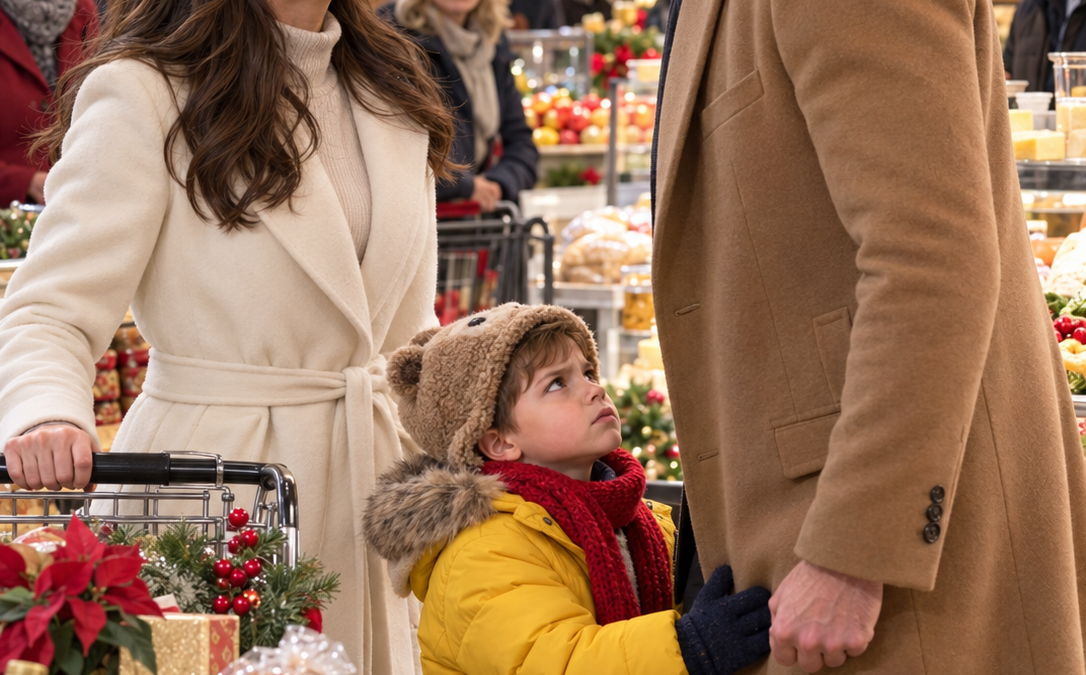
On a crisp Tuesday afternoon, after a light morning snowfall had cleared, I bundled Leo into a thick yellow down parka and his fleece bear-eared hat, buckled him securely into the back of our new white sport utility vehicle, and drove toward an upscale shopping center on the outskirts of the city.
I wanted to handpick special artisanal chocolates, festive gingerbread cookies, and a few surprise toys for my little boy.
The shopping mall was bustling with cheerful holiday shoppers. Upbeat Christmas melodies floated from the sound system, filling the air with holiday spirit.
Leo was an absolute angel, holding tightly to my hand, his wide, dark eyes gazing in wonder at the towering holiday tree and the sparkling glass display cases filled with sweets.
We strolled through the gourmet food market, selecting specialty treats while I patiently explained the traditions of the season to him.
“Mommy Catherine, is Christmas when we gather around the warm fireplace and stay together forever?” Leo asked, tilting his round face up toward me, his little voice sweet and clear.
I smiled with immense tenderness, bending down to adjust his red woolen scarf.
“That is exactly right, my love. The holidays are when the people who love each other gather close in a warm home, and Mommy Catherine will always be right beside you.”
Just as I stood up to push our shopping cart toward the organic fruit display, a voice suddenly echoed from behind me.
A voice carrying a sharp mixture of shock, arrogance, and mocking condescension that caused my entire body to freeze in place.
“Catherine? Well, look at that. Is it really you?”
I turned around.
My eyes landed squarely on the face of Ryan Vance, my ex-husband, the very man who had thrown me out onto the street in the freezing rain without a shred of pity.
He wore an expensive designer camel-wool overcoat, projecting the image of a polished, successful businessman, but in his cold eyes burned the same familiar, self-absorbed arrogance as he looked me up and down.
He was alone, apparently doing some last-minute corporate gift shopping of his own.
Ryan took two steps toward me, his contemptuous gaze scanning my tasteful, understated winter clothes before stopping on Leo, who immediately shrank back against my coat in cautious apprehension.
The corners of Ryan’s mouth twisted into a derisive smirk.
“My mother mentioned that an acquaintance thought they spotted you out in Greenwich near the ultra-wealthy private estates,” Ryan scoffed, crossing his arms. “At first, I didn’t believe it. I wondered where you would get that kind of audacity. But seeing it with my own eyes… wow. You went to an Ivy League school, got your fancy literature degree, only to end up as a glorified domestic servant, wiping the runny noses of rich people’s brats for minimum wage.”
Ryan’s voice was not exceptionally loud, but every word was coated in venom, calculated to strike at my self-esteem and resurrect the humiliating memories of my years under his thumb.
My chest tightened involuntarily, and my hands gripped the handle of the shopping cart so hard that my knuckles turned white.
I took a deep, steadying breath, determined not to let this cruel man see a single flicker of weakness.
Seeing my silence, Ryan’s smug confidence swelled. He took another step forward, attempting to use his physical height to intimidate me, just as he had always done.
“Catherine, don’t play these childish games trying to get my attention or provoke my family,” Ryan sneered, his voice brimming with self-importance. “You chose a nanny gig in the exact county where my investment firm operates, didn’t you? You just wanted an excuse to cross paths with me, hoping I’d see how pathetic you look, take pity on you, and take you back.”
He genuinely believed the entire universe revolved around his ego, convinced that every action I took was merely a desperate plea for his validation.
I looked at the man standing before me, a man I had once loved with all my heart, to whom I had given four prime years of my youth.
Now, looking at him, I felt only profound disgust and a wave of pity for his shallow, blind arrogance.
Compared to the quiet strength, immense dignity, and effortless respect that Henry Sterling embodied, Ryan appeared astonishingly small, petty, and thoroughly vulgar.
“Ryan, please conduct yourself with some dignity,” I said, my voice completely level, freezing, and unshakable.
I looked him dead in the eye without blinking.
“I support myself through honorable, meaningful work. I do not beg for scraps, nor do I depend on anyone’s charity. My life right now is infinitely peaceful and fulfilling, and it has absolutely nothing to do with you or the Vance family.”
Ryan blinked, clearly taken aback by my unyielding posture.
In the past, whenever he or his mother raised their voices, I had instinctively bowed my head, swallowed my tears, and submitted in silence.
This sudden, unshakable strength struck a direct blow to his fragile male pride.
A dark flush of anger rose up his neck. He leaned closer, lowering his voice into a sharp, threatening hiss.
“Don’t be a fool, Catherine. I’m offering you a lifeline here because we used to be married. I don’t want people seeing my ex-wife embarrassing me by working as a hired maid. If you finally learned your lesson, if you realize how helpless you are on your own, I might consider giving you a second chance.”
He continued, his arrogance growing with every word.
“Come back to the penthouse, get down on your knees, apologize properly to my mother and Margaret, admit that you were incompetent and ungrateful, and maybe I’ll think about letting you come back. Let’s be real. A divorced, penniless woman with a history of depression? No respectable man in this city will ever touch you except for me.”
Hearing those vile, shameless words, I felt no pain, only an overwhelming sense of revulsion.
His utter lack of decency had exceeded every boundary of civil human behavior.
I drew a breath, ready to tell him off in no uncertain terms, when suddenly, little four-year-old Leo stepped boldly forward.
The tiny boy placed himself directly between me and my towering ex-husband. His round, dark eyes blazed with fierce, protective fury.
He reached out his small gloved hands, pushed forcefully against Ryan’s knee, and shouted in a clear, determined, ringing voice.
“Bad man! Go away! You are not allowed to be mean to my Mommy Catherine! Mommy Catherine is the best mommy in the whole wide world! Leave us alone right now!”
Ryan recoiled, completely stunned, staring down at the tiny four-year-old boy who had just dared to defy him.
His face burned crimson with embarrassment as several passing shoppers stopped and turned their heads to stare at the commotion.
I immediately reached down, pulled Leo protectively against my side, and looked straight into Ryan’s pale, furious face with finality.
“You heard my son,” I said, every word like ice. “Get out of our way, and never dare to cross our path again.”
Without waiting for his response, I pushed the cart smoothly around him and walked directly toward the checkout registers, leaving my former husband standing frozen in the middle of the crowded aisle, his jaw clenched in humiliated rage.
After paying for our purchases, I guided Leo out to the parking garage, secured him in his car seat, started the white luxury sport utility vehicle, and drove out toward the highway along the coastal road.
The smartphone in my coat pocket began vibrating relentlessly.
I pulled the vehicle over onto a scenic turnout beneath a cluster of frosted pines, looking out over the rolling gray waves of the Sound.
The incoming number flashing on the screen was all too familiar.
Margaret Vance, my former sister-in-law.
Taking a slow breath, I answered the call, wanting to see what final theatrical tantrum the Vance family had concocted.
The moment the line connected, Margaret’s shrill, grating voice attacked my ear like a bucket of ice water.
“Catherine, you manipulative little snake! You deliberately took a domestic job right in the area where my brother’s business partners operate. And now you’re parading around playing the victim, making it look like the Vance family mistreated you and threw you out with nothing.”
She barely paused for breath.
“Do you think we don’t see through your pathetic game? Cleaning up after other people’s kids just to make us look like the villains! People in our country club circle are already gossiping about this. How long are you going to keep up this cheap, disgraceful act, you shameless, calculating gold digger?”
The baseless slander and venomous insults made my throat tighten for a fleeting second, the old sting of unfairness threatening to surface.
But in the very next heartbeat, I remembered little Leo standing bravely in front of me at the grocery store, using his tiny hands to defend me.
I remembered Henry’s unwavering respect and the absolute safety of the home I now commanded.
I was no longer the fragile, intimidated daughter-in-law they could bully at will.
I took a deep, grounding breath.
When I spoke, my voice was smooth, resolute, and piercingly calm.
“Margaret, I have never uttered a single word about your family to anyone. How you treated me is something your own conscience knows full well. The only people destroying the reputation of the Vance family are yourselves, through your own cruelty, pettiness, and lack of character. Your opinions hold zero relevance in my life. Do not ever call this number again.”
Before Margaret could screech another word, I ended the call.
Without a second thought, I permanently blocked her number along with Ryan’s and Eleanor’s, severing the very last toxic threads tethering me to that wretched past.
Setting the phone into the cup holder, I leaned back against the leather headrest, my shoulders trembling slightly from the adrenaline of the confrontation.
The cold winter wind blew against the car windows.
Then a tiny, warm hand reached over from the back seat, gently patting my cheek.
Leo had leaned forward as far as his harness allowed, using a tiny pocket tissue to tenderly dab away a single stray tear from my cheek.
“Mommy Catherine, don’t cry,” he whispered, his eyes full of pure, healing warmth. “That mean man and the loud lady on the phone are bad. I will always protect you, Mommy. I am right here. Don’t be sad.”
His sweet, gentle voice washed over my spirit like a warm, soothing river, washing away the last lingering remnants of the emotional trauma I had carried for so long.
I turned around, clasped his tiny hands in mine, and pressed a kiss to his palms, a radiant, tearful smile breaking across my face.
“Thank you, my brave little Leo. Mommy isn’t crying anymore. Let’s go home, sweetheart.”
I shifted the vehicle into drive and guided it smoothly along the coastal avenue, past the elegant streetlamps glowing warm against the twilight.
Ahead, the wrought-iron gates of 12 Pine Hollow Road stood wide open, welcoming us home to the magnificent estate where Henry and Arthur were already waiting for our family dinner.
That house was no longer merely a place of employment.
It was my true sanctuary, an unyielding fortress protecting me from the world’s storms.
The serene atmosphere inside the mansion seemed to absorb and dissolve the turbulence of that afternoon.
Even though I made every effort to maintain a cheerful demeanor during dinner, my quiet distress did not go unnoticed.
Arthur, with his decades of intuitive observation, immediately detected the subtle shadow in my eyes as he poured the evening tea in the formal dining room.
True to his professional discretion, he asked no intrusive questions. However, I knew he quietly shared his concerns with Henry when the master of the house returned from his late corporate meetings.
Later that evening, as I was in my sitting room organizing Leo’s wooden puzzle sets, a soft knock sounded at my door.
I opened it to find Henry standing in the corridor.
In his hands, he held a large, luxurious presentation box wrapped in emerald-green damask silk and tied with an exquisite velvet ribbon.
His gaze rested upon me with profound respect and unwavering resolve, the look of a man prepared to stand between me and any adversity life dared throw in my direction.
“Catherine,” Henry began, his voice calm, deep, and carrying immense gravity, “tomorrow evening is the annual winter gala of the Metropolitan Commercial Development Association. The city’s most prominent executives, civic leaders, and investors will all be in attendance.”
His expression remained earnest as he continued.
“I would be deeply honored if you would accompany me. I want you to stand beside me, not merely as a guest, but with all the honor, dignity, and prominence that belong to you as my wife.”
A sudden wave of self-doubt fluttered in my stomach.
I clasped my hands nervously, feeling the old insecurities stirring within.
“Henry, I am overwhelmed by your kindness,” I murmured softly. “However, I feel completely out of place at such an elite high-society gathering. I am a simple person from a quiet background. My past still casts lingering shadows, and I fear that my presence might cause you embarrassment or invite unwanted gossip from your fellow board members and business partners.”
Henry looked directly into my eyes.
His reassuring smile was as clear and steady as mountain water, washing away the old wounds of rejection and shame that still tried to take root in my mind.
“Catherine, I need you to banish those thoughts of self-doubt forever,” he said firmly, stepping forward. “Through everything you have done for my son and for me, you have proven yourself to be a woman of rare grace, intelligence, and extraordinary nobility of spirit. You deserve the very best this world has to offer.”
He continued, each word carrying the weight of sincere conviction.
“I did not marry you to keep you hidden away in this house like a secret. My desire is to present you proudly to the entire community, to let everyone see clearly that you are my lawful wife, the respected matriarch of this family, and of everything I build. I will never allow anyone, blinded by superficial prejudice, to look down on you or treat you with anything less than absolute reverence.”
With those words, Henry gently placed the heavy emerald-green box into my hands, his voice lowering, filled with authentic emotion.
“This is your gown for tomorrow evening. I personally commissioned one of the finest couturiers in Manhattan to design it specifically for you, using your exact measurements. I know with absolute certainty that it will reflect your natural grace and quiet beauty. Please accept it and prepare to walk proudly by my side tomorrow night.”
I cradled the box against my chest.
The warmth of his hands seemed to linger on the silk ribbon, making my heart race with a wondrous, unfamiliar flutter.
When I lifted the lid, I was left completely breathless by the exquisite creation resting inside.
It was a floor-length evening gown fashioned from the heaviest, most luminous emerald-green silk, featuring a graceful, fluid train designed to glide across the floor.
Along the bodice, delicate floral motifs had been meticulously hand-embroidered using fine platinum thread and tiny seed pearls, representing an astonishing level of haute couture craftsmanship.
The design was neither ostentatious nor revealing. It radiated an understated aristocratic grandeur that perfectly captured the thoughtful, protective character of the man standing before me.
Tears gathered in my eyes once more, not of sorrow, but overflowing with pure, radiant gratitude.
During my four years of marriage to Ryan, I had never once been permitted to wear an evening dress.
My former mother-in-law had sneeringly dismissed me as an unsophisticated country girl, while Ryan had strictly forbidden me from attending any corporate functions for his firm, claiming he was terrified I would embarrass him in front of his wealthy peers.
And now this extraordinary man standing before me had orchestrated every single detail to elevate my dignity, shielding my self-esteem with magnificent care.
I lifted my head to meet Henry’s warm gaze.
A radiant smile curved my lips, illuminated by the tears of joy resting on my cheeks.
“Thank you, Henry. I accept your gift with all my heart. I promise you that I will not let you down. Tomorrow night, I will stand beside you and represent your name and your family with all the grace and dignity this honor deserves.”
Henry offered a gentle nod, his eyes shining with relief and profound satisfaction.
He wished me a restful night and quietly closed the door, leaving me alone with the magnificent emerald gown and the absolute certainty that my life had finally emerged into the sunlight.
The following evening, the Grand Metropolitan Ballroom at the downtown waterfront resplended with breathtaking magnificence.
Thousands of crystal chandeliers cast a brilliant, shimmering glow across the vast hall, while a continuous procession of luxury limousines and town cars pulled up beneath the grand marquee.
A wide crimson carpet stretched across the stone plaza, ready to welcome the most influential figures in finance, real estate, and philanthropy from across the East Coast.
Inside, the lush melodies of a live symphony orchestra drifted through the air, harmonizing with the sophisticated hum of conversation and laughter.
Distinguished gentlemen in bespoke black-tie tuxedos and elegant ladies adorned in haute couture and sparkling diamond jewelry created a scene of dazzling opulence.
When our chauffeur opened the door of the town car, I stepped out onto the red carpet.
My gloved hand rested securely on the strong arm of Henry Sterling, who stood tall, commanding, and impeccably handsome in his custom midnight-blue tuxedo, offering me a solid, unwavering anchor.
The emerald-green silk gown draped over my figure with flawless precision, accentuating my slender silhouette with effortless elegance, while the delicate platinum floral embroidery caught the light with every step I took.
My dark hair had been swept up into an intricate, sophisticated chignon, secured by an exquisite antique pearl-and-diamond hairpin that Arthur had proudly presented to me from the Sterling family vault.
The moment Henry and I appeared together at the entrance of the grand ballroom, the entire room seemed to fall into a hushed stillness.
The ambient chatter paused.
Hundreds of eyes turned toward us, wide with undisguised curiosity, admiration, and awe.
Whispers of wonder rippled through the gathering crowd.
For a brief, fleeting second, balancing upon my satin evening heels beneath the collective gaze of the city’s elite, an instinctive flutter of nervousness made my breath hitch.
An army of society photographers and press reporters stood along the velvet ropes, their camera flashes igniting in a blinding, rhythmic cascade of bright white light, capturing our every movement.
Lenses were focused entirely upon us as we walked forward along the carpet.
But in that exact moment, I felt the reassuring, gentle pressure of Henry’s arm guiding me, his tall frame shielding me effortlessly from the onslaught of lights.
I felt the cool platinum wedding band resting securely against my finger.
I remembered the sweet face of little Leo kissing my cheek before we left, proudly declaring that his mommy was the most beautiful princess in the world.
I lifted my chin high, my shoulders squared with natural, regal poise.
The last trace of fear vanished like mist before the sun.
I was no longer the broken, destitute woman who had been driven out into the autumn rain with an old suitcase and fifty dollars to her name.
I was Catherine Sterling, standing tall beside the man and child who cherished me.
Finally home, where I truly belonged.








