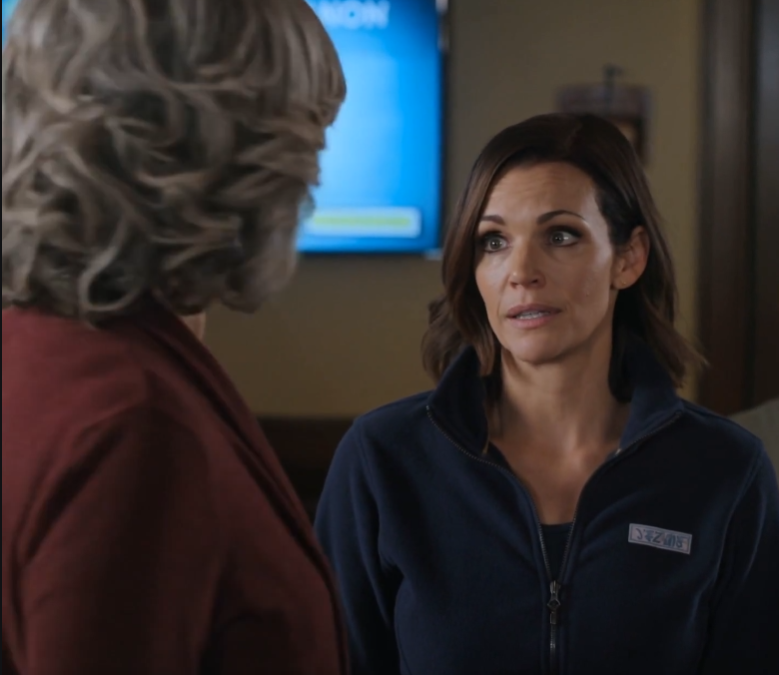
. Thanksgiving eve. Dad’s old bar. “To my daughter the ghost,” Mom toasted. “Too busy sulking to come home.” Forty people laughed. Every phone on the bar lit up at once. Then the TV. Mom kept laughing. “What is everyone looking at?” “Mom. Please don’t turn around.”
I went with him.
From the time I was six or seven, it was our arrangement. My mother did not like it, and she said so. My father said it was one beer and a Coke with a cherry in it, and what exactly was the harm?
I would sit on the stool next to his with my sneakers hooked over the brass rail, and I would listen.
Gus Casper had been an Army supply sergeant in Germany, and he liked to say he had fought the Cold War one clipboard at a time. My father liked to say the Army was a fine organization for people who could not get into the Marines. They had been having that argument since 1976, and neither of them wanted to win it.
I learned the whole vocabulary on those stools. Bulkhead and head and deck and scuttlebutt. Semper Fi. The way my father’s voice went quieter and straighter when he talked about the men he had served with.
Every November 10th, the Marine Corps birthday, my father brought home a sheet cake from the Giant Eagle with a red-and-gold eagle, globe, and anchor on it in frosting. He cut the first piece and gave it to the oldest person in the room, which was him. Then he cut the second piece and gave it to the youngest, which was me, until Kevin was old enough to want it.
That is the tradition. The oldest Marine and the youngest Marine.
I was not a Marine, of course. I was nine. But my father handed me that slice of cake with both hands, the way you hand someone something that matters, and I took it the same way.
My mother stood at the sink with her back to us.
I want to be fair to her, because I have had a long time to think about this, and fairness is the only thing I have to offer that is worth anything.
My mother was Sharon Kowal before she was Sharon Novak. She grew up four streets over, the oldest of five, and she had been running a household since she was 11. She married my father at 22.
She was the secretary at Millbridge Elementary for 31 years, and she knew the name of every child in that building and the name of every child’s mother. She ran our house the way she ran that front office, on time and on budget and without any help from anybody.
She was capable and proud and very tired.
And I think she felt, for most of my childhood, that there was a door in her own house that she was on the wrong side of.
The door was the Marine Corps. It was the stool at Casper’s and the cake and the stories and the way my father and I looked at each other when the national anthem played before a Steelers game.
She was not in that room. She had never been asked into it, and she had never asked to come in. By the time anybody noticed there was a door at all, it had been closed for years.
“You two and your Marines,” she would say, drying a plate.
It was not a joke, though she said it like one.
My brother Kevin came along three years after me, and from the day he was born, he belonged to my mother the way I belonged to my father. He was sunny and easy and good with people, and he liked the things she liked. He never once asked to go to Casper’s.
When we were teenagers, she would say, “Kevin is my easy one.”
And she would look at me when she said it.
I understood.
I was not easy. I was the one who read the military history books in the library and ran in the rain and asked my father what Parris Island was like until he finally stopped telling me the funny parts.
In the spring of my senior year of high school, I was awarded a Naval Reserve Officers Training Corps scholarship to Penn State, Marine Option. I had applied without telling anyone but my father.
When the envelope came, he read it at the kitchen table and then read it again. Then he put his hand flat on it as though it might blow away, and he did not say anything for a long moment.
My mother read it standing up.
“What does Marine Option mean?”
“It means when I graduate, I’ll be commissioned as an officer in the Marine Corps,” I said.
She set the letter down.
“It’s a phase with a haircut,” she said.
And she went to start dinner.
It was not a phase.
I spent four years in State College running hills in the dark at five in the morning and sitting in classes where a Marine major with a jaw like a cinder block explained that logistics decides wars and nobody ever makes a movie about it.
I found out I had a talent for the thing nobody makes movies about.
Fuel and water and ammunition and food and people. I could look at a problem with ten moving parts and see the order they needed to move in.
The major wrote on my evaluation that I had an unusual instinct for the flow of a system.
My father had it framed.
My mother asked what it meant, and I tried to explain.
“So you’ll be in charge of supplies?” she said.
“More or less.”
“Well, somebody has to order the toilet paper.”
I laughed. I thought she was teasing.
It took me years to hear it the way she meant it.
I was commissioned a second lieutenant in the United States Marine Corps on a bright, windy morning in May of 2006, on the lawn outside the old Wagner Building at Penn State.
I was 22.
There is a tradition that two people you choose pin your gold bars on your shoulders, one on each side.
I chose my father and Gus Casper, because Gus had driven my father to every one of my events for four years when the bread truck schedule made it impossible for him to drive himself, and because I could not imagine that morning without him.
My mother drove down with them.
She came as far as the parking lot.
I did not know it then.
I was standing on the lawn in my dress blues with my hands at my sides, and I could see my father walking toward me across the grass in the one good suit he owned, with Gus beside him in a sport coat that did not quite button anymore. I looked past them for her and did not see her.
My father said later that she had a headache.
Gus told me years later the truth, which was that she sat in the car with the engine running so she could keep the heat on, and she watched through the windshield.
My father pinned the bar on my right shoulder. His hands were shaking, and he could not get the clasp to catch. Gus reached over and steadied his wrist without saying anything, and the clasp caught.
Then Gus pinned the left one.
My father stepped back and looked at me for a long time.
“Second Lieutenant Novak,” he said. “Say it out loud once.”
“Second Lieutenant Novak,” I said.
“Good,” he said.
His voice broke on it, and he turned away and looked at a tree for a while.
My mother watched through a windshield.
I have thought about that windshield more than I have thought about almost anything else in my life.
Nineteen years later, I sat in the lot at Casper’s and watched the shapes behind the fogged window. I thought about how you can be 41 years old and a lieutenant colonel of Marines and still be afraid of a woman sitting on a barstool.
I had come because of a promise.
It was not a promise to my mother.
I took the key out of the ignition. I sat for one more full minute, the way I used to sit in the pickup waiting for my father. Then I got out and locked the car and walked toward the door.
The last Thanksgiving I spent in my mother’s house before that night was in November of 2013.
I was 29 and a captain.
I had run a convoy platoon in Iraq and a combat logistics company in Helmand Province, which meant that for 11 months, several thousand Marines spread across a desert never ran out of fuel, water, food, or ammunition.
When that job goes right, nobody notices.
When it goes wrong, people die.
That summer, I had been awarded the Navy and Marine Corps Commendation Medal for the Helmand deployment. It is not a heroic medal. It is the kind they give you for doing a hard job well for a long time.
But the certificate had my father’s last name on it in gold ink, and I had it framed at a shop outside camp. I carried it home on my lap for nine hours so it would not get scratched.
I gave it to him after dinner at the table.
He took it in both hands the way he had handed me that first slice of cake, and he read every word of it. He did not say anything, and his eyes were wet.
My brother had been promoted that month, too.
Kevin was 26 and had just been made assistant sales manager at Hollis Chevrolet out on the bypass.
My mother had baked a cake for him with a little plastic car on top. She raised her wineglass.
“To Kevin,” she said. “Who stayed.”
Everybody drank.
My father set my certificate down beside his plate, face up, and my mother looked at it.
Something in her face closed like a gate.
“Nobody at this table cares about your little Marine certificates, Rachel,” she said.
She said it pleasantly, the way she said most of the worst things.
“You come home once a year to make the rest of us feel small.”
Nobody said anything.
Kevin looked at his plate. My father opened his mouth and closed it again.
I remember the sound of the furnace kicking on in the basement and the smell of the turkey carcass cooling on the counter and the little plastic car on Kevin’s cake, which was red.
A Corvette, I think.
“I’m sorry, Mom,” I said. “I didn’t mean it that way.”
“You never mean it anyway,” she said. “That’s the trouble with you.”
My father walked me to my car at nine. It was sleeting.
He stood by the driver’s door with his hands in his jacket pockets and the sleet collecting on the shoulders of his coat.
“She doesn’t mean it,” he said.
“She meant it, Dad.”
He did not argue.
He looked down Water Street toward Casper’s for a while, and then he said, “Send me pictures of everything. Send them to the bar. Gus will give them to me.”
I did not understand why he wanted them sent to the bar.
I understood later.
I did not come home for Thanksgiving in 2014 because I was on a ship in the Mediterranean with a Marine Expeditionary Unit. I ate turkey loaf off a steel tray in the wardroom and called my father on a satellite phone for four minutes.
That one was not my choice.
The next year, it was.
I was a captain on the staff at Camp Lejeune, and when the duty roster for the holidays went up, I walked into the operations office and asked the gunnery sergeant who kept it which of the Marines on the Thanksgiving and Christmas rotation had small children.
He gave me a look, and then he gave me three names.
I took all three duty days.
That is how it started.
It is not as noble as it sounds, and I want to be honest about that. I told myself I was doing it for my Marines, and I was. But I was also doing it because it gave me a reason not to sit at my mother’s table.
And a reason is a very comfortable thing to hide behind.
In December of 2016, I had just been promoted to major.
One of my sergeants, a sharp, quiet young woman from San Antonio named Marisol Ortega, was on the Christmas duty roster.
Her husband was a lineman back in Texas. Her son had been born on the 12th of December, three weeks early, and she had not yet held him.
Her leave had been denied because the unit was short.
I found her in the passageway outside the supply cage looking at a picture on her phone.
“Give me your duty day,” I said.
“Ma’am, you can’t take Christmas.”
“I just did. Go meet your son.”
She stood there with her mouth open.
Then she said, “Yes, ma’am.”
And she went.
I spent Christmas Day of 2016 in a cinder-block duty office with a space heater and a phone that rang twice, and it was one of the better Christmases I have had.
I called my mother that night.
She was at my aunt’s. I could hear a television and people laughing.
“Where are you?” she asked.
“On duty, Mom.”
“At the base? On Christmas?”
“Somebody has to be.”
“Somebody,” she said. “It’s always you, isn’t it? Always somewhere. Well, you’d rather sit down there by yourself and sulk than come home to your family. Everybody knows it.”
And she handed the phone to my aunt.
Everybody knows it.
That phrase stayed with me.
It was accurate in its way. Everybody in Millbridge did come to know it.
My mother told it at the Giant Eagle and at church and at the Saturday table at Casper’s, where she had begun going after my father’s knees got too bad for him to stand at the bar.
Rachel doesn’t come home for the holidays.
Rachel sulks down there in North Carolina.
Rachel was always like that, even as a girl, always off by herself.
Rachel orders toilet paper for the Marines, and she thinks it makes her better than us.
I did not correct any of it.
I told myself my mother did not want to hear it.
That was true.
It was not the reason.
I sent my father pictures at the bar the way he had asked. My major’s promotion. The ship. The Command and Staff College diploma in 2020. A picture of my Marines stacking pallets of water on a flight line at three in the morning.
He never mentioned them on the phone.
He would just say, “Got your mail, kiddo.”
And I would know.
My father died in February of 2021 in his recliner during the third period of a Penguins game.
He was 67.
The doctor said it was his heart and that it was quick.
I came home for the funeral.
The Marine Corps League sent two old men in red blazers to fold the flag, and one of them had to stop partway through to steady his hands, and the other one waited for him.
My mother received the flag.
She held it on her lap like a pie plate.
At the luncheon in the church basement, while I was carrying a tray of ham sandwiches out of the kitchen, she stopped me by the coffee urn.
“He waited for you every November,” she said. “Every single one. He’d sit by that window.”
I held the tray.
I did not say anything because there was nothing I could say that would not start something in a church basement on the day of my father’s funeral.
I flew back to North Carolina the next morning.
I did not go into Casper’s.
I could not.
That was the past.
Here is the other thing, the one that brought me back.
In October of 2025, I was a lieutenant colonel, 41 years old, and I was the commanding officer of a combat logistics battalion attached to a Marine Expeditionary Unit deployed off the west coast of Africa.
On the 9th of October, a civil war that had been simmering for months in a small coastal country came to a boil in about six hours.
An armed column was moving on the capital.
The embassy requested evacuation.
The part of an evacuation people see on the news is the helicopters.
The part nobody sees is the evacuation control center.
And that was mine.
You take a hangar, you build lanes out of rope and folding tables and pallets, and you run every human being who wants to leave through them: identity, documents, medical, baggage, screening, manifest.
You do it for frightened people carrying their whole lives in one bag.
And you do it without stopping because the aircraft do not wait.
We ran that control center for 72 hours at an airport on the coast, in a hangar that smelled of jet fuel and wet concrete and too many people.
By the second night, we could see the smoke from the column on the ridge above the city.
My control center chief was a gunnery sergeant with a clipboard in one hand and a radio in the other and a voice that could cut through an engine run-up.
Her name was Marisol Ortega.
I had not known she would be on that deployment until the day she reported. She had walked into my office, saluted, and said, “Ma’am, I believe I owe you a Christmas.”
“Ma’am,” she called to me at two in the afternoon on the second day. “Lane three is backing up to the fence.”
“Open lane six. Pull two Marines off baggage.”
“Baggage is backing up, too, ma’am.”
“Then baggage waits. People don’t.”
By the end, we had moved 1,140 civilians from 23 countries onto aircraft and out.
Some of them were Americans.
Many were not.
One was a woman from the embassy staff, the deputy chief of mission, a tall, gray-haired Nigerian-American diplomat from Houston named Helen Okafor, who refused to leave until the last of her local staff were through the lanes.
At three in the morning on the third night, hour 51, she found me sitting on a pallet of bottled water behind lane four, eating a cold meal ration out of the pouch with a plastic spoon.
She sat down next to me without asking.
I offered her half.
She took the crackers.
We did not talk about the column or the smoke. We talked about Houston and her daughters and whether meal-ration cheese spread was technically cheese.
And then, out of nowhere, she asked me, “When were you last home for Thanksgiving, Colonel?”
I don’t know why I told her the truth.
Maybe it was the hour.
Maybe it was that she was a stranger, and strangers are safe.
“Eleven years,” I said.
She looked at me for a long time.
“Why?”
I told her.
Not all of it.
Enough.
The duty days. The Marines with families. The table I could not sit at.
She listened the way my father used to listen to Gus, without interrupting.
When I was done, she brushed the cracker crumbs off her slacks and said, “Go home this year, Colonel. That’s not a suggestion. When this is over, you go home.”
“Yes, ma’am,” I said, although I did not work for her.
The MEU came home in the middle of November.
On Veterans Day, from my office at Camp Lejeune, I called my mother and told her I was coming for Thanksgiving.
There was a long pause on the line.
“We’ll believe it when we see it,” she said.
I had promised a diplomat on a pallet of water at three in the morning.
That was the only reason I was standing in the parking lot at Casper’s with my hand on the door.
The heat hit me first, and then the noise.
Casper’s on the night before Thanksgiving is 40 people in a room built for 25, every one of them talking over a jukebox playing Bob Seger. The air is thick with fryer oil and wet wool coats and the sweet, flat smell of spilled beer on old wood.
The floor is the same black-and-white tile it has been since 1952. The ceiling is pressed tin, painted over so many times that the pattern has gone soft.
Behind the bar, above the register, was the same television my father used to watch the Steelers on, although it was a newer one now, a flat screen bolted to a bracket, tuned to a Pittsburgh station with the sound turned down low under the music.
Nobody noticed me for a moment.
I stood inside the door and unwound my scarf and looked.
Gus was behind the bar. He was 68 now, heavier and grayer and slower, but he still stood behind that bar the way he had stood behind it when I was seven, with a white rag over one shoulder and his reading glasses pushed up on his forehead where he could not find them.
At the table in the back corner, under the framed photograph of the 1979 Pirates, sat Ed Brozek, who was 76 and had been a Marine rifleman in Vietnam in 1968. He had come to my father’s funeral in a Marine Corps League cap and stood at attention through the entire service on two bad knees.
He was eating a basket of pierogies with a fork.
And on the third stool from the end, my father’s stool, sat my mother.
There was a small brass plate screwed into the edge of the bar in front of that stool. Gus had put it there in 2023. I had heard about it from my aunt, but I had never seen it.
It said “STAN’S SEAT,” and underneath, in smaller letters, “SEMPER FIDELIS.”
My mother was holding court.
She had a glass of white Zinfandel in one hand, and she was turned halfway around on the stool, facing the room with her back to the bar and the television.
She had on the burgundy cardigan she wore to every holiday, and her hair was done, and she was laughing at something.
My brother Kevin stood beside her with a beer, wearing a quarter-zip pullover with the Hollis Chevrolet logo on the chest. His wife, Brooke, was next to him, holding her phone.
Kevin was the general sales manager now. My mother had told the whole town.
Kevin saw me first.
His face did something complicated.
Then he grinned.
“Well, look at that,” he said loudly. “Ma, look.”
My mother turned.
She looked at me for a long second, from my boots to my hair, and I watched her decide how she was going to play it.
“Well,” she said, “look what the wind blew in.”
A few people nearby laughed.
A woman I had gone to high school with, Tammy something, waved at me. I raised a hand.
I made my way to the bar, to the end two stools down from my mother, and Gus came down to meet me. He put both hands flat on the bar and looked at me over the top of the glasses he had finally found.
“Rachel,” he said.
That was all.
His voice was rough.
“Hi, Gus.”
“What will it be?”
“Iron City,” I said.
He nodded once, slowly, because he knew exactly whose drink that was, and he went to get it.
My mother had turned back to the room.
She had an audience, and she was not going to waste it.
There was a knot of people around her, women from church, a couple of Kevin’s friends from the dealership, and a retired teacher I recognized from the elementary school.
She raised her voice just enough that it carried over Bob Seger.
“This is my daughter,” she said. “The Marine. Rachel. Some of you remember her.”
“Sure,” somebody said. “Hi, Rachel.”
“She’s very important down there in North Carolina,” my mother said. “She orders the toilet paper for the Marines. Isn’t that right, Rachel?”
The laughter was warm and a little uncertain. People did not know yet whether they were allowed to laugh.
My mother let them decide.
“Something like that,” I said.
“Something like that,” she repeated.
She smiled at the room as though I had proven her point.
“She’s so busy ordering that toilet paper, she hasn’t been home for a holiday since 2013. Eleven years, isn’t it, Kevin? Eleven straight.”
“Ma,” Kevin said.
He was grinning. He had been at this bar since five.
“Eleven Thanksgivings. Eleven Christmases. It’s a streak. We should call the newspaper.”
More laughter.
Easier now.
Permission had been given.
“You know, she flew in for her father’s funeral,” my mother told the retired teacher, loud enough for the next table. “In and out. Didn’t even stop in here. Stan’s best friend in the world is standing right there behind that bar, and she couldn’t spare him five minutes. Isn’t that right, Gus?”
Gus did not answer.
He was pulling a draft for somebody, very slowly, with his eyes on the glass like a ghost.
My mother kept going.
“That’s what she is. You see her for a day, and then she’s gone, and nobody knows where, and nobody knows what she does down there. And if you ask, she gets that look.”
She did the look.
It was not a bad impression. I had seen it in mirrors.
People laughed.
“Stan always said she was busy. Busy! Eleven years of busy. I said, ‘Stanley, nobody is that busy. She just doesn’t want to be here. She’d rather sit down there and sulk than sit at a table with us.’ And he’d get quiet and go sit by the window.”
The window.
I had been hearing about the window for five years now.
A man at the end of the bar whom I did not recognize, somebody’s husband, leaned toward me and said, not unkindly, “So what is it you do down there, exactly?”
“Logistics,” I said.
“Toilet paper!” my mother called over.
The whole corner laughed again.
Gus set the Iron City down in front of me.
He did not say anything. He put a cardboard coaster under it and wiped the bar on both sides of it slowly, although the bar was dry. Then he looked at my mother and went back down to the taps.
Most of what I felt was tired, not angry.
I had set the anger down somewhere around Christmas of 2016.
What I felt was the tiredness of a person who has explained herself in her head ten thousand times and never once out loud.
I looked at the brass plate in front of my mother.
Stan’s Seat.
I looked at the back of her burgundy cardigan and thought of her in the car in May of 2006, with the heater running, watching through the glass.
Then my mother stood up on the brass rail of my father’s stool so she was a head taller than the room.
She tapped her wineglass with a fingernail, and the people nearest her went quiet. The quiet spread the way it does in a bar, table by table, until even the jukebox seemed to lower its voice.
“I want to make a toast,” she said.
Somebody whistled.
Kevin said, “Here we go.”
“Thanksgiving is about family,” my mother said. “It’s about the people who show up every year for the dishes and the driving and the hospital visits and the funerals. Kevin shows up. Brooke shows up. Every one of you in this room has shown up for me at one time or another, and I love you for it.”
She turned and looked straight at me, and she lifted her glass high.
“And then there’s the other kind.”
Brooke raised her phone.
I saw the little red light.
“To my daughter, the ghost,” my mother said. “Too busy sulking to come home.”
Forty people laughed.
It was not cruel laughter, most of it.
That was the strange part.
It was the laughter of people who had heard the story about Rachel, who sulks in North Carolina for 11 years, and who had been waiting without knowing it for the punchline.
Here was the punchline, standing at the end of the bar in a fleece jacket with a beer she had not touched.
Glasses went up all over the room. Kevin clinked his bottle against my mother’s glass. Somebody near the pool table said, “To the ghost!”
And more glasses went up.
I kept my glass on the bar.
I did not lift it, and I did not look away.
I looked at my mother, and she looked back at me, flushed and triumphant and, I think now, a little frightened by what she had just done.
Neither of us moved.
Then every phone in the bar lit up at once.
It is a very particular sound.
Forty phones at once. Not a ring, but a kind of chorus of buzzes and chimes and little electronic tones, all overlapping, coming from pockets and purses and from the bar top where people had set their phones down beside their drinks.
Screens flared white in the dim room, one after another after another, like a string of lights coming on.
Brooke’s phone, still raised to film my mother, buzzed in her hand. She flinched and turned it around to look at it.
Kevin’s buzzed in his back pocket.
Gus’s, beside the register, rattled against the wood.
People looked down.
That is what people do.
And one by one, as they read what was on their screens, they looked up again.
Not at my mother.
Past her.
Then the television.
The Pittsburgh station had broken into its regular programming.
The banner across the bottom of the screen was red. I could not read it from where I stood, but I did not need to read it, because above the banner, filling the screen, was a photograph I had never seen before.
It had been taken, I found out later, by a Navy combat photographer at four in the morning on the third night at that airport on the coast.
In it, a woman in a sweat-darkened desert uniform with her sleeves rolled up stands in a hangar under hard white lights, holding a clipboard in one hand, with the other hand on the shoulder of an old man in a white robe who is weeping.
She is leaning down to hear him.
It was me.
It was my face, gray with exhaustion, 40 feet across the bar above my mother’s head.
My mother did not see it.
She was still standing on the brass rail with her back to the television and her glass in the air.
The laughter she had built was coming apart in front of her, and she did not know why.
People had stopped drinking.
The retired teacher had her hand over her mouth. Tammy from high school was looking from the screen to me and back again.
Near the pool table, a young man in a Penn State hoodie said out loud to nobody, “Wait. Is that her?”
My mother kept laughing.
She laughed louder, the way you laugh when you feel a room slipping and you do not know which direction it is going to fall.
She looked around at the faces turned past her.
“What?” she said. “What is everyone looking at?”
Gus, down at the register, reached slowly for the remote.
I looked at my mother on my father’s stool, 66 years old, in her holiday cardigan, with her glass still raised and her face beginning to understand that something had changed, but not yet knowing what.
And I found, to my surprise, that the only thing I wanted in that moment, the only thing in the world, was to spare her the next 60 seconds.
“Mom,” I said quietly. “Please don’t turn around.”
She heard me.
I saw her hear me.
I saw her read my face.
Then she turned around.
Gus turned the volume up.
He did not turn it up a little. He turned it all the way, and somebody near the jukebox pulled the plug out of the wall, and Bob Seger died in the middle of a word.
The photograph was gone.
In its place was a live picture from a government building in Washington: a lectern with the State Department seal on it, flags behind it, and a row of tired people in folding chairs.
Families.
Some of them still in the clothes they had fled in.
The banner at the bottom of the screen said the last group of evacuees from the West African embassy evacuation had landed at Dulles that evening and that the Department of Defense had released the names of the Marines involved now that every evacuee was safe.
At the lectern was Helen Okafor.
She looked better than she had on the pallet.
She had slept.
She spoke for about four minutes. She thanked the Marines and the sailors and the aircrews. She thanked her own staff, and she said the name of every one of her local employees who had made it out.
And then she looked straight into the camera, and her voice changed.
The way my father’s used to change.
“The evacuation control center at that airport was commanded by a Marine officer named Lieutenant Colonel Rachel Novak,” she said. “For 72 hours, she did not sleep. Every person in these chairs walked through her lanes.
“At three in the morning on the third night, I asked her when she had last been home for Thanksgiving. She told me 11 years. She told me she gives her holidays to the Marines who have children waiting for them.
“I told her to go home this year.”
She paused.
“Colonel, if you are watching, I hope you are home tonight.
“We are because of you.”
Then the station cut to Major General Roy Hadley, who commanded the logistics group my battalion belonged to. He said some things about me I will not repeat because they were not the point.
Nobody in Casper’s was looking at the screen anymore.
They were looking at me.
My mother was still standing on the brass rail of my father’s stool, with her back to the room now and her face to the television.
The wineglass in her hand was tipped slightly, forgotten, so that a thin line of white Zinfandel ran down over her knuckles and dripped onto the bar beside the brass plate.
At the back table under the photograph of the 1979 Pirates, Ed Brozek set down his fork.
He put both hands flat on the table and pushed himself up.
It took him a while.
His knees were bad, and the chair was low, and nobody helped him because nobody moved.
When he was all the way up, he pulled his shoulders back and stood at attention the way he had stood through my father’s entire funeral.
He looked at me across the room and did not say a word.
Then the young man in the Penn State hoodie stood up.
Then Tammy from high school.
Then the retired teacher.
Then the table of Kevin’s friends from the dealership, awkwardly knocking a chair over.
Then the whole room.
Forty people standing in a bar on Water Street on the night before Thanksgiving, in total silence except for the television, which had moved on to the weather.
My brother stood beside my mother with his beer bottle hanging from two fingers and his mouth slightly open.
Brooke had lowered her phone.
The little red light was off.
My mother stepped down off the rail.
She did not look at me.
She sat down on my father’s stool slowly, as though her legs had been taken out from under her, and set her glass on the bar next to the brass plate.
She looked at it.
She sat there for perhaps ten seconds.
Then she got up and walked the length of the bar and went out through the front door into the cold.
She left her coat on the hook.
Kevin went after her.
Brooke went after Kevin.
Nobody sat down until I did.
People came to the end of the bar and shook my hand. Some said, “I had no idea,” which was true because I had made sure of it.
Gus closed at one.
He locked the door behind the last customer and pulled the shade. Then he went into the back room and came out with a cigar box.
It was a White Owl box, the old kind with the owl on the lid, soft at the corners from handling.
He set it on the bar in front of my father’s stool and pushed it toward me.
“He told me everything,” Gus said. “Every promotion, every ship, every picture you sent. He’d come in on Saturday and open that box and show me what came that week, and then he’d put it back behind the register, and I’d keep it for him.”
He took off his glasses and rubbed his eyes.
“He just never told her.”
“Why not?”
Gus was quiet for a long time.
“Because he knew what it would do to her,” he said finally. “To see that you and him had a whole world she wasn’t in. He thought he was protecting her. He was wrong. But he loved her, Rachel. He wasn’t a cruel man. Just a quiet one, like you.”
I opened the box.
My commissioning photo. The ship. My major’s leaf. Every picture I had ever sent him, in order, with the dates on the back in his square block printing.
I sat on his stool until almost two in the morning.
When I finally walked out to my car, the lot was empty except for my mother’s Buick, still nose-in by the dumpster.
Kevin must have driven her home.
I had kept quiet for 11 years to keep the peace.
Sitting in the car in the dark, I was no longer sure whose peace it had been.
I drove past my mother’s house on the way to the motel.
The kitchen light was still on.
I went to Thanksgiving dinner the next day because I had said I would, and because I have never in my life failed to show up where I told someone I would be.
That is not a virtue so much as a habit the Marine Corps sanded into me.
But I sat in the motel parking lot for a long time before I went.
My mother’s kitchen had not changed.
The same yellow curtains. The same clock shaped like a rooster above the stove, three minutes fast, as it had always been. The same smell of sage and onion and turkey fat.
My mother was at the stove with her back to the door, basting, and she did not turn around when I came in.
I thought of the night before and understood that she might never want to turn around toward me again.
Kevin and Brooke were at the table pretending to fold napkins.
Kevin stood up when he saw me. He did not seem to know what to do with his hands.
“Hey, Ra,” he said.
“Hey, Kev.”
My mother closed the oven door.
She set the baster in the spoon rest.
Then she turned around, and her eyes were red and her jaw was set.
“You let me make a fool of myself in front of the whole town,” she said.
“I didn’t let you do anything, Mom.”
“You stood there. You knew. You stood there at the end of the bar and let me stand up on your father’s stool and say all of that, and you knew what was coming, and you let me.”
“I didn’t know it was coming,” I said. “I didn’t know they’d released the names last night. And I asked you not to turn around.”
“You should have told me.”
Her voice cracked.
“Eleven years. You should have told me.”
“When?” I said.
It came out quieter than I meant it to.
“At Thanksgiving in 2013, when I brought Dad the certificate? You told me nobody at the table cared.”
She flinched.
Kevin looked at the floor.
We sat down to eat because the turkey was done, and my mother had never in her life let a turkey go cold for any reason.
We passed the stuffing and the green bean casserole and the cranberry sauce from the can with the ridges still on it, the way Kevin liked it.
Nobody talked.
The rooster clock ticked.
Halfway through, I set my fork down and said what I had come to say.
“Mom, I’m not going to apologize for my service. Not for the deployments, and not for the holidays I stood duty so a Marine could go home to a new baby. I’d do every one of those again.”
I made myself keep looking at her.
“But I’m going to tell you something true, and it isn’t easy for me to say. Not all 11 years were for my Marines. Some years I could have come home, and I didn’t because I couldn’t sit at this table and be talked to the way you talked to me.
“I didn’t sulk. I worked. And some years, I just couldn’t sit here. Both of those things are true.”
My mother put her napkin down.
Her hands were shaking.
“So it was me,” she said. “That’s what you’re saying. It was all my fault.”
“That’s not what I said.”
“Your father sat by that window every November,” she said.
Her voice rose the way it used to rise in this kitchen when I was 15.
“Every November for 11 years, and you let him. And now you come in here and tell me it’s my fault you didn’t come home.”
She looked straight at me.
“Your father would be ashamed of you, Rachel. Ashamed.”
Brooke made a small sound.
Kevin said, “Ma,” very quietly.
I felt the old 15-year-old thing rise in my chest. The thing that wanted to shout.
I let it rise, and I let it go.
“He wasn’t ashamed of me, Mom,” I said. “Gus has his box. You should go and read it.”
She stared at me.
“What box?”
“Ask Gus.”
I stood up.
I took a paper plate from the stack by the pie and put some turkey and some stuffing on it, and covered it with foil, because I had nine hours to drive and my mother makes the best stuffing in Clearfield County, and I was not going to leave without it.
I kissed Brooke on the cheek.
I put my hand on Kevin’s shoulder.
I looked at my mother, who was looking at the tablecloth.
“Happy Thanksgiving, Mom,” I said. “I’m glad I came home.”
I meant it.
That was the strange part.
I drove back to North Carolina that night with the plate on the passenger seat.
And somewhere south of Breezewood, I realized that I had meant it completely.
December came, and Millbridge rearranged itself around my mother quietly, the way small towns do.
I was 400 miles away at Camp Lejeune, planning the turnover of my battalion. I heard about it in pieces, mostly from Brooke, who started texting me the week after Thanksgiving.
It turned out she had a dry sense of humor and had been watching my mother’s performances at that bar for 12 years without ever quite enjoying them.
The Millbridge Courier ran the story on its front page the first Sunday in December, under a photograph of the hangar.
The headline said, “Local Marine Led West Africa Evacuation.”
The reporter had called my mother’s house for a quote.
My mother had hung up on him.
So the reporter called Gus, and Gus said, “Her father would have told you she was the best thing Millbridge ever made, and he’d have been right.”
That was the quote they printed in a box in large type.
At church, Brooke said, the women my mother had sat with for 20 years greeted her the way you greet someone recently bereaved.
Kindly.
Carefully.
Nobody brought it up.
They had all been at Casper’s.
They had all raised a glass.
My mother stopped going to Casper’s.
The Saturday table in the corner, where she had sat every week since my father’s knees gave out, had one empty chair at it now, and Gus left it there.
“She’s not sleeping,” Brooke texted. “The kitchen light is on at two in the morning. Kevin drove by.”
I read that one several times.
Kevin handled it the way Kevin handles things, which is to say he tried to sell it.
The Monday after Thanksgiving, he posted a photograph on Facebook that he had taken of the television screen at Casper’s with my face on it.
Underneath, he wrote, “My big sister, the hero,” with three American flags and a picture of an eagle.
It had 400 likes by lunch.
By Tuesday, somebody from the dealership had put it on the Hollis Chevrolet page.
I called him.
“Take it down, Kev.”
“What? Why, Ra? I’m proud of you.”
“I know you are. Take it down anyway.”
“A week ago, you were toasting my streak,” I said. “You don’t get to borrow it now.”
He did not answer for a long time.
When he did, he sounded younger than 38.
“That’s fair,” he said. “That’s fair, Ra.”
“If you’re proud of me, you can be proud quietly,” I said. “The way Dad was.”
The post came down that afternoon.
So did the one on the dealership page.
I did not call my mother.
That was deliberate, and it was not easy.
I had said what I had to say at her table, and I had told her where the box was. I understood that anything more from me would be pressure, and pressure was the language we had spoken for 30 years.
I wanted to find out what she would do in silence.
I wanted, if I am honest, for her to have to walk into Casper’s on her own.
Christmas came.
I stood the duty again by choice, the same as always.
But this time, I told myself the truth about why.
I was not hiding from anyone.
There was a young corporal on the roster whose wife was due on the 20th, and I wanted him to be there.
At about two in the afternoon on Christmas Day, Gunnery Sergeant Ortega walked into the duty office with a paper plate covered in foil.
“Tamales,” she said. “My mother-in-law’s. Flown in from San Antonio in a cooler.”
She set the plate on the desk in front of me.
“You went home, ma’am?” she asked. “For Thanksgiving?”
“For one night,” I said.
“How was it?”
I thought about how to answer that.
“Loud,” I said. “And then very quiet.”
She nodded as though that made complete sense.
We ate tamales off paper plates and watched the rain.
On the 14th of January, when I got home from the battalion, there was an envelope in my mailbox.
It was addressed in blue ink, in a small, careful, slanted hand I had not seen on an envelope since I was 22 years old.
My mother’s handwriting.
I did not open it for an hour.
I set it on the kitchen counter and changed out of my uniform and made a cup of tea I did not drink.
And I looked at it.
It was a plain white envelope with a flag stamp.
It was thick.
The last letter my mother had written me was in the summer of 2006, when I was at The Basic School. One page, mostly weather, ending, “I hope you’re eating.”
This one was five pages, both sides in blue ink, with words crossed out and written over.
She wrote that after I left on Thanksgiving night, she had sat in the kitchen until four in the morning.
She wrote that on the first Saturday in December, she had put on her coat and walked the three blocks to Casper’s at two in the afternoon, when my father used to go. She had sat on his stool and asked Gus for the box.
She wrote that Gus had not said anything. He had just gone into the back and brought it out and set it in front of her, and then he had gone to the other end of the bar and left her alone.
“I read all of it,” she wrote. “Every picture, every date on the back in your father’s printing. I did not know about Iraq until I was 66 years old, Rachel. I did not know about the ship. I did not know you were a major. And then I did not know you were a colonel.
“Your father knew all of it. And he kept it in a cigar box behind a bar because he was afraid of what I would say. And he was right to be afraid. I know what I would have said.”
There was a sentence crossed out so heavily that the pen had torn the paper.
Underneath it, she had started again.
“I made you small because your father made you big,” she wrote. “And I was jealous of my own daughter.
“That is the ugliest sentence I have ever written. I have written it four times on four different sheets of paper trying to make it sound better, and it does not sound better, so I am leaving it the way it is.”
She wrote about the commissioning, the car, the windshield.
“I told your father I had a headache. I did not have a headache. I sat in that car because I knew if I walked across that grass, I would see the two of you look at each other, and I would know for certain that I was never going to be in that room.
“So I stayed in the car, and I made sure of it myself.”
She wrote about the toast.
“I have gone over it a thousand times. I stood on your father’s stool. I said those things on top of his name. I would give anything to take it back. And I know I cannot. And I know that sorry is a very small word for it.”
She did not ask me to forgive her.
I noticed that.
I read the letter three times, and it was not in there anywhere.
At the very end, she wrote, “I don’t know what you want from me. If you want nothing, I will understand. But if there is anything, I would like to know what it is.”
I did not answer it for nine days.
It was not a punishment.
I had spent 11 years building a sturdy way to live without my mother in it, and I was not going to take it apart for five pages of blue ink, however true.
A repair has to be earned, and I had to decide what earning it would look like.
On the ninth day, a Sunday, I called her.
She picked up on the first ring as though she had been sitting by the phone.
Maybe she had.
“Hi, Mom.”
There was a long silence.
Then, “Hi, honey.”
Her voice was very small.
I could not remember the last time she had called me honey.
“I got your letter.”
“Okay,” she said.
“I’m going to tell you what I want,” I said. “And it isn’t much, and it isn’t negotiable.”
“Okay.”
“In May, I’m giving up command of my battalion. There’s a ceremony at Camp Lejeune. A parade field, bleachers, a band. I’d like you to come.”
I heard her breath catch.
“But here’s how it works. No speeches. You don’t make a toast. You don’t tell anybody who you are. You don’t post anything, and you don’t tell anyone in Millbridge about it before or after.
“You come, and you sit, and you watch. That’s all. Just watch.”
She did not answer right away.
When she did, her voice was steady.
“I can do that,” she said.
After that, we talked on Sundays.
Not for long. Fifteen minutes, sometimes 20.
And for the first time in my life, my mother asked me questions and waited for the answers.
What is a manifest?
What does a combat logistics battalion actually do?
What is a lane?
What did you eat at three in the morning with that woman on the pallet of water?
“Crackers,” I said, “and a cheese spread that may not technically be cheese.”
She laughed.
It was the first time I had made my mother laugh on purpose since I was about 12.
In the middle of March, she asked me for the date of the change of command.
“May the 22nd,” I said. “Ten in the morning.”
“Wait,” she said.
I heard her put the phone down and cross the kitchen. I heard a drawer open, and I heard her come back.
“I’m writing it on the calendar,” she said. “In pen.”
The 22nd of May, 2026, was a hot, bright morning at Camp Lejeune, with the humidity already sitting on the parade field like a wet towel by eight, and the pines along the edge of the field so still they looked painted.
I had been awake since four.
A change of command is a simple, very old ceremony.
The battalion’s colors, the flag that belongs to the unit and not to any person, pass from the sergeant major to the outgoing commander, to the reviewing officer, to the incoming commander, and back.
It takes about four seconds.
It means the Marines are no longer yours.
She came down with Kevin.
They drove the whole way in one day, nine hours. Kevin told me later that she did not turn on the radio once, and that when they crossed into North Carolina, she asked him to pull over at a rest stop so she could change into her good blouse.
I saw her from the field, at parade rest in my dress blues.
Fourth row on the aisle.
Navy-blue blouse, her hair done, her hands folded in her lap, sitting very straight.
Kevin beside her in a tie.
She did not wave.
She did not stand up.
She did exactly what I had asked her to do.
She sat and watched.
The band played.
The adjutant read the orders.
When the colors came to me, I held them for the few seconds the ceremony allows, and I thought, for no reason I can explain, of a certificate in a gold frame on my father’s kitchen table, and of a slice of sheet cake handed across with both hands.
Then I passed the colors on.
My battalion was somebody else’s now.
I had given them nearly two years, and they had given me back more than I could count.
Afterward, there was a reception under the pavilion by the field.
Sweet tea, sheet cake, too many people in too many uniforms.
I lost sight of my mother in the crowd.
When I found her again, she was standing at the edge of the pavilion talking to Gunnery Sergeant Ortega.
I stopped where I was.
I did not go over.
Ortega had brought her family, her husband, a big, gentle man in a pressed shirt, and her son Matteo, nine years old, in a clip-on tie, who was trying very hard to stand still and not managing.
Ortega was talking.
My mother was listening.
I saw my mother’s hand go to her mouth.
Later, Ortega told me what she had said.
“Mrs. Novak, I’m Gunnery Sergeant Ortega. I worked for your daughter at the airport in October. I ran her lanes.”
And then, because Ortega has never in her life been able to leave a thing half said, she continued.
“But that’s not why I wanted to meet you.
“Christmas 2016. My son was born three weeks early, and my leave got denied. Your daughter took my duty day. On Christmas, she walked up to me in a passageway and told me to go meet my son.”
She put her hand on the boy’s shoulder.
“This is him. This is Matteo. I held him for the first time on Christmas morning because your daughter was sitting in a duty office by herself.”
My mother looked at the boy for a long time.
Then she shook his hand very seriously, the way you shake the hand of a grown man.
He looked pleased and embarrassed and ran off to find more cake.
When the reception thinned out, my mother came and found me at the far end of the pavilion, where I was standing in the shade looking out at the empty parade field.
She stood beside me.
We looked at the field together for a while.
The heat came up off the grass in waves.
“How many?” she said.
I knew what she meant.
I did not pretend otherwise.
“All of them, Mom,” I said. “Eleven Thanksgivings. Some Christmases. Some years I was deployed. Most years I gave them to somebody.”
She nodded slowly.
She did not cry.
I think she had done her crying in January at the kitchen table over five pages of blue ink.
“Then I owe you eleven,” she said.
I did not know what to say to that.
So I did not say anything, and we stood there in the shade until Kevin came to tell us the car was getting hot.
In the parking lot, while Kevin loaded the trunk, I saw my mother take out her phone and walk a little way off toward the pines and make a call.
She talked for about five minutes with her back to us.
When she came back, her face was composed, and she did not say who she had called.
It was Brooke who told me two weeks later.
My mother had called Gus.
She had asked him whether Casper’s could close to the public for one night in June.
The invitation came in the mail, handwritten in blue ink.
It said, “Thanksgiving dinner. Saturday, June the 20th. Casper’s Tavern. 6:00. Please come home.”
The sign on the door of Casper’s that night said “CLOSED FOR A PRIVATE FAMILY EVENT” in Gus’s block capitals, taped to the glass under the green neon that still read Casper’s Tavern.
It was 84 degrees in Millbridge.
The mill stacks stood over the town in the long, gold summer light, and the air smelled of cut grass and hot asphalt.
And from inside the tavern, when I opened the door, it smelled like November.
My mother had cooked a 22-pound turkey in June and driven it over in the back of the Buick, wrapped in towels, with Kevin holding it steady on the curves.
Stuffing, green bean casserole, two kinds of pie, and three cans of cranberry sauce so Kevin could have it with the ridges.
The tables had been pushed together down the middle of the room and covered with white paper.
Gus was behind the bar in a clean shirt with the rag over his shoulder.
Ed Brozek sat at the head of the long table with a carving knife in his hand and his Marine Corps League cap on his head, because my mother had asked him to carve, and he had told her that the oldest Marine in the room always does.
Kevin and Brooke were setting out plates.
And at the far end, just in from the long drive, were Gunnery Sergeant Marisol Ortega and her husband and Matteo, who was wearing the clip-on tie again and holding a pie of his own.
“My mother-in-law’s pan,” Ortega said, handing it to me. “She says it’s for your mother, not you.”
I had not been expecting her.
My mother had not told me.
She had written to Ortega herself, care of the battalion, in blue ink.
The television above the bar was off.
I noticed that.
Before we sat down, my mother went to the bar.
She carried a full plate, turkey and stuffing and all of it, covered with foil, and she set it at the third stool from the end, on top of the brass plate that said “STAN’S SEAT.”
Then she took something out of her purse and stood it on the bar beside the plate.
It was a small frame.
Inside it was the photograph from Penn State, May of 2006.
A second lieutenant in dress blues on a windy lawn, and a man in his one good suit with his hand on her shoulder, and another man in a sport coat that did not quite button.
She stood there with her hand on the frame for a moment.
Nobody said anything.
Then she came back to the table and sat down next to me.
Ed carved.
We passed the dishes.
Matteo asked Ed whether he had really been in a war, and Ed said yes, a long time ago, and that the food had been much worse than this.
Matteo seemed satisfied with that.
Kevin did not mention my streak.
Brooke kept my glass full.
When the pie came out, my mother stood up.
She did not stand on anything.
She stood on the floor, on the black-and-white tile, at her place at the table, and she lifted her glass.
The room went quiet the way it does at Casper’s, table by table, except that tonight there was only one table.
She looked at me.
Her hand was steady.
Her eyes were not.
“To my daughter,” she said. “Who came home.”
Everybody raised a glass.
Ed. Gus behind the bar. Kevin and Brooke. The Ortegas. Matteo with his lemonade.
I raised mine.
I looked at my mother standing on the floor of my father’s bar in June with a turkey on the table.
And I thought about a woman sitting in a car with the engine running, watching through a windshield.
And I thought about how long a person can sit behind glass before she decides to get out and walk across the grass.
“Thank you, Mom,” I said. “I’m glad I’m here.”
That was all.
It was enough.
I go home for holidays now.
Not all of them.
I am still a Marine, and there are still young Marines with new babies on the duty roster, and some years I still take the day.
But I tell my mother why, and she understands, and she sends a plate.
I have learned something from all of this, and I want to leave it with you because you may be sitting in a car of your own right now, or standing at the end of a bar waiting for someone to see you.
The people who could not see you may still learn to look.
Leave the light on for them if you can, but do not stand in the dark to wait.
Thank you for staying with me through this one.
My father’s cigar box sits on my mother’s kitchen counter now, and she adds to it.
The last thing she put in there was the invitation she wrote me in blue ink.
I’d love to hear from you.
Have you ever stayed away from a family table and told yourself it was only for good reasons when part of it was just that you couldn’t bear to sit there?
Has someone in your life ever kept your story safe for you the way Gus kept that box?
And if you were in my mother’s place, standing on that stool, what would you have wanted someone to say to you before you turned around?
Tell me in the comments. I read every one.
If this story meant something to you, hit that like button, subscribe, and share it with someone who is still sitting in a parking lot deciding whether to go.








