My VP took credit for my patent—when the board demanded a live demonstration, I stepped aside and said, “Let the VP explain it.”
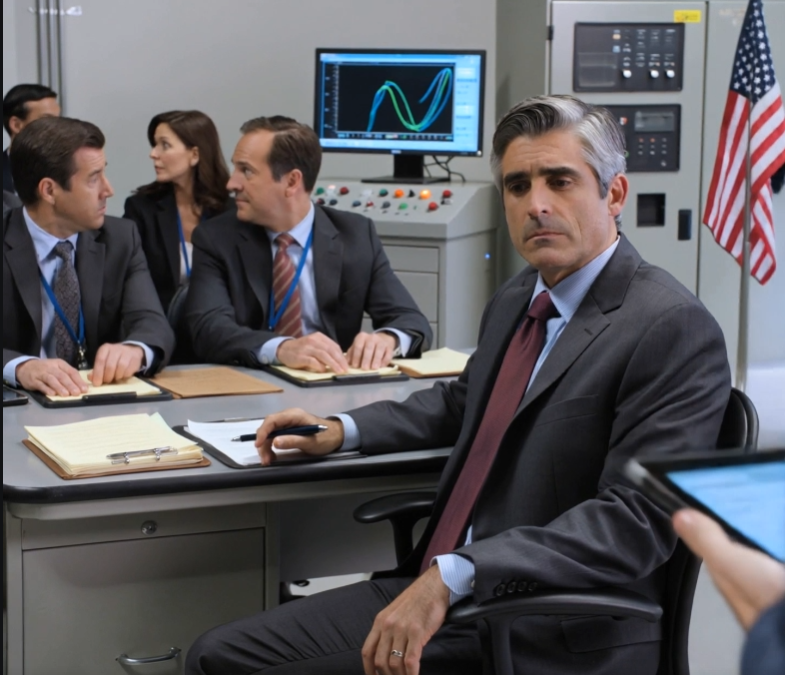
Daniel did not finish.
Olivia Reed was Keystone’s intellectual property coordinator. She was twenty-seven, careful, and usually more comfortable with a document control system than with a conversation in a hallway. She had sent me the first invention disclosure template three months earlier and asked me to fill in the technical sections.
I had written every page.
The system architecture, the heat exchanger arrangement, the adaptive control logic, the test conditions, the limitations, the failed experiments, and the version history were all mine and the team’s.
Daniel had helped with process integration. Thomas Miller, our senior structural engineer, had designed the support modifications for the pilot skid. Victor had secured budget and personnel after the company finally accepted that the project might have commercial value.
That did not make Victor an inventor automatically.
I read the page again.
“When was this changed?”
“Friday afternoon,” Daniel said. “The original list had you first. I was second. Thomas was listed as a technical contributor, not an inventor.”
“And now Victor is first. You’re second. I’m third.”
I looked through the glass toward the lab.
Three years of work sat behind that wall. The new control cabinet, the insulated piping, the test instrumentation, and the software repository were all parts of a system that had started with a problem nobody thought was worth solving.
Victor had not adjusted one control parameter. He had not run one overnight test. He had not sat beside me while a heat exchanger drifted outside its expected range because a valve response lagged under low load.
But he had the best title on the page.
“Who approved the change?” I asked.
Daniel’s mouth tightened.
“Victor.”
I put my coffee on the windowsill.
“I’m going to talk to Olivia.”
“Ethan, I’m not telling you to make a scene.”
“That’s not what I meant.”
“Then what did you mean?”
He glanced toward the offices.
“I mean that Victor knows how to turn a technical disagreement into a performance issue.”
I looked back at the bulletin board.
“Let him try.”
Olivia was at her desk in the intellectual property office, sorting electronic signatures by project number. When she saw me, she sat straighter.
“Ethan.”
“Can we talk about the invention disclosure?”
She closed the file in front of her.
“Of course.”
“Why was the inventorship list changed?”
Her eyes moved to the second monitor.
“The project leadership team reviewed the contribution summary.”
“Who is the project leadership team?”
“Victor’s office.”
“That’s not a team. That’s a reporting line.”
She folded her hands.
“I’m an administrative coordinator. I don’t make the inventorship decision.”
“Did you change the record?”
“I entered the revised information I was given from Victor.” She looked uncomfortable. “Yes.”
“Is there an audit log?”
“The invention system records changes.”
“Can it be preserved?”
She hesitated, then nodded.
“Yes.”
“Please preserve it. Don’t alter anything further.”
Her face turned pale, though I did not think she was afraid of me. She was afraid of being placed between a senior vice president and the engineer who had written the work.
“Ethan, the application hasn’t been filed with the USPTO,” she said. “The internal list isn’t the same as a patent record.”
“I know. That’s why I’m asking now.”
She nodded again.
I returned to my office and opened the project repository. The code history showed 437 commits under my engineering account. The initial design document had been created three years earlier. The first test log was dated June 14. The first successful low-load run was from the following winter.
None of those records called me the first inventor. They did something more useful.
They showed what had been done, when it had been done, and who had done it.
That night, I took the long way home through Pittsburgh traffic. The sky was low and gray over the Monongahela, and rain had begun to gather on the windshield. Keystone’s campus sat in an industrial technology park east of the city, surrounded by old steel buildings that had been converted into laboratories and offices.
At home, Sarah was helping our daughter Lily with a drawing.
Lily was seven and had filled half the page with blue machinery, red pipes, and a stick figure wearing safety glasses.
“Daddy,” she said, holding it up. “You’re the inventor.”
I smiled because she expected one.
“That’s a lot of equipment.”
“It’s your lab. I put fire here because you work with heat.”
Sarah carried a bowl of pasta to the table. She looked at me once and immediately saw what Lily could not.
“What happened?”
I put my coat over the chair.
“The patent disclosure was changed. Victor put his name first and mine third.”
Sarah did not ask whether I was sure. She had learned that I never brought work home as a complaint unless I had checked the facts twice.
“Is it already filed?” she asked.
“No. It’s an internal disclosure package. The patent attorney hasn’t submitted an application.”
“Then you have time.”
“Time isn’t the same as protection.”
She served Lily first, then sat across from me.
“What do you want to do?”
I looked at the drawing. Lily had written INVENTOR in large, uneven letters above the figure.
“I want the record corrected before the company files anything. And if Victor refuses, then I’ll bring the evidence to the people who are supposed to review it.”
Sarah took my hand.
“Don’t pick a fight just to be right,” she said. “But don’t let fear make you disappear from your own work.”
The sentence stayed with me after Lily went to bed.
At 11:18, I opened my work laptop and began making a list of every record I was authorized to access: project emails, engineering logs, approved design documents, version histories, performance reviews, and the invention disclosure drafts stored in the company system.
I did not copy the code repository to a personal cloud drive. I did not forward confidential customer files to myself. I did not take proprietary drawings outside the company’s approved document system.
I made notes about where the records existed and asked Olivia by email to preserve the relevant audit history.
Then I took a small brass steam whistle from the shelf above my desk.
My father had given it to me years earlier. Robert Carter had spent thirty-eight years as a boiler operator at an industrial heating plant outside Johnstown. He had no engineering degree, but he could hear a bad pump from across a boiler room and could tell when a pressure reading made no sense before the gauge finished moving.
The whistle had belonged to the old plant’s maintenance crew. It was not evidence of anything. It was just a piece of brass, scratched and darkened at the mouthpiece.
I held it in my palm and remembered what my father always said when I was growing up.
“If you build something, leave a mark on it. Not for applause. So people know where to look when it fails and who to thank when it works.”
I put the whistle beside the drawing.
The next morning, I requested a meeting with Victor Shaw.
Chapter 2: Three Winters of Heat
Three years earlier, Keystone Energy Systems had been making money from conventional heat recovery equipment and losing patience with anything that required long testing.
Our customers were power plants, chemical processors, and heavy manufacturers trying to reduce fuel use without rebuilding entire facilities. We sold heat exchangers, control packages, monitoring systems, and integration services.
The company was large enough to have a formal board and a legal department, but small enough that a successful pilot project could change the next year’s budget.
I was thirty-two and worked as a field energy engineer. My job was to help customers evaluate equipment, diagnose performance problems, and translate plant-floor conditions into engineering requirements.
The idea for the adaptive waste heat system began at a combined-cycle power facility in western Pennsylvania.
The plant’s recovery system performed well at high load. When demand dropped, the system became unstable. The heat exchanger still received enough thermal energy, but the temperature profile shifted. Fluid distribution became uneven. The control loop reacted too slowly to one change and too aggressively to the next.
The result was not a dramatic explosion or a science-fiction failure. It was worse in a business sense.
The equipment remained safe, but the recovery rate fell below the design target, and the operators had to use conservative settings. Fuel was wasted, and the customer was paying for capacity it could not reliably use.
I wrote a field report describing the problem.
My proposal was a segmented coupling design paired with adaptive control. Instead of treating the recovery circuit as one large system, the approach divided the thermal exchange into coordinated sections. A control layer would use sensor feedback, feedforward compensation, and dynamic fluid management logic to adjust the sections as load changed.
The proposal was not a miracle. It could not create energy that was not present. It could reduce instability and improve the portion of recoverable heat captured under variable conditions.
I estimated a relative efficiency improvement in the low-load operating range, not a fifteen-percentage-point increase across every operating condition.
That distinction mattered. It was also one reason the first reviewers found the project less exciting than a sales presentation would have made it sound.
My manager wrote, Promising but resource-intensive. Market case unclear.
For a month, nothing happened.
I called my father from the parking lot one evening.
“They don’t like it,” I said.
“Do they understand it?”
“Some of them.”
“That’s different.”
He coughed before continuing. His lungs had been damaged by years in industrial facilities, and winter always made him sound older.
“When I was in the boiler room, people liked repairs that could be finished before the next shift,” he said. “The difficult repairs were the ones that saved trouble six months later. Nobody wanted to claim them until the trouble arrived.”
“You’re telling me to keep working without funding.”
“I’m telling you to find out whether the idea is real.”
So I did.
Keystone had a small approved development area in a corner of the thermal systems lab. I did not run unsafe tests. I submitted a work plan, used low-pressure water and air for the first bench model, and worked with the lab safety officer before introducing higher temperatures.
The first sensors came from retired equipment, but they were inspected and calibrated before use. The old control cabinet was used only for low-risk signal testing until the lab approved a replacement.
After work, I stayed late to model the control response.
At home, Sarah gave me our older laptop because the simulation software ran poorly on my company-issued machine.
“This one’s slow,” she said.
“It’s faster than the desktop in the lab.”
“That’s not a compliment.”
Lily was four at the time. She slept in the next room while I tested control cycles and adjusted the proportional, integral, and derivative terms.
I did not chase a single impressive number. I wanted the system to remain stable when load shifted, sensors lagged, and the operator did not choose ideal settings.
The first useful result came during a January cold snap.
The test rig showed a measurable improvement in low-load recovery, but the control system oscillated after a sudden valve change. I stayed until midnight and found that the feedback loop was using a temperature measurement that arrived too late to support the selected update interval.
The fix was not faster code.
It was a better architecture: faster measurements at the local control layer, slower supervisory optimization above it, and a safety limit that would return the system to a conservative state if sensor values disagreed.
I documented the change.
Six weeks later, I presented the results at an internal engineering session.
Victor Shaw sat in the front row. He had recently been promoted to vice president of research and development. He asked questions that showed he understood the commercial opportunity, even if he did not understand every control decision.
After the meeting, he found me near the coffee station.
“This could be a product,” he said.
“It could be a pilot.”
“You’re too cautious.”
“The equipment should be cautious.”
He smiled.
“I can get you a real budget.”
He did.
Within two months, the project moved into a formal development program. Keystone gave us an approved test area, a new data acquisition system, and a small team.
Daniel Brooks joined as the process engineer. Thomas Miller advised on structural modifications to the pilot skid. Olivia handled the disclosure paperwork.
Victor also made the project visible to senior management. He brought board members and customers to the lab. He explained the commercial potential in language people understood.
That contribution was real.
He secured resources, removed obstacles, and pushed the company to fund work it had initially ignored.
It did not make him the inventor.
At the time, I did not think I needed to say that aloud.
The first year was full of failures.
A flow sensor drifted under heat. A pump control sequence caused a pressure spike within the approved range but outside our preferred operating window. One version of the supervisory algorithm overcorrected when two sensors reported contradictory values.
Each failure went into the project log. We held design reviews, updated the control model, and repeated tests. The system gradually became less fragile.
Daniel was good at translating process conditions into engineering questions. Thomas noticed a structural load issue before it became a field problem. Olivia kept the files organized. I wrote the control logic and the experimental plans.
Victor presented progress.
At first, he called it our team project. Then it became the R&D group’s innovation. Later, his slides described it as a strategic initiative led by the vice president of research.
My name moved from the first page to the appendix.
I noticed, but I did not confront him.
The pilot was working. The company had approved a larger demonstration. Customers were asking about commercialization.
I believed credit could be corrected later.
That was my first mistake.
The second came during a control failure in the test lab.
A key parameter had been changed in the software before a demonstration. The system responded poorly, and Victor criticized me in front of the team.
“Keystone has funded this for a year,” he said. “This is what we have?”
I traced the problem to a modified set point and found that my permissions were not the only ones with access.
Victor said he might have clicked the wrong field during a demonstration.
“Then we need to document the change,” I said.
“Don’t turn a minor mistake into a process lecture. Fix it.”
I fixed it.
I also saved the incident record in the approved system.
At the time, I thought I was protecting the project from delay. In retrospect, I was teaching people that I would absorb the consequences of decisions I had not made.
Chapter 3: The Space Between Credit and Control
The demonstration system reached stable performance in its second winter.
Under variable-load tests, the adaptive control strategy improved heat recovery relative to the baseline configuration without violating the system’s safety limits. The gain varied with the operating condition. At some loads, the improvement was modest. At others, the new control approach kept the system in a range the old design could not maintain.
That was enough for a customer to care.
It was also enough for Victor to care about the patent file.
Before the invention disclosure was revised, the internal presentations had begun to change. Victor’s title appeared beside the project name. His office asked me for summaries rather than inviting me to technical reviews.
A customer-facing presentation described him as the project architect and described me as the engineering lead supporting implementation.
I went to his office.
Victor’s office had a view of the river and a glass cabinet filled with awards. He offered me coffee from a machine that cost more than my first car.
“You wanted to see me?” he asked.
“The project presentations are changing the roles.”
“They’re simplifying the story for executives.”
“They say you’re the project architect.”
“I’m responsible for the program.”
“That’s not the same as conceiving the control system.”
He leaned back.
“Ethan, no one is trying to erase you. You’re a senior engineer, not a politician. You should be glad the work is receiving attention.”
“Attention isn’t the issue.”
“Then what is?”
“The record.”
He smiled in a way that did not reach his eyes.
“You’re talented, but you have a habit of treating engineering work like a personal possession. The company paid for the lab, the employees, the testing, and the customer access. No one accomplishes anything alone.”
“I agree. The contributor list should reflect the actual contributions.”
“And it will.”
“Will it?”
His smile disappeared.
“If you want a future here, I suggest you cooperate with the people responsible for the program.”
I knew what he meant.
He was not threatening to fire me. He was reminding me that he controlled my budget, my performance review, my access to the test facility, and the next promotion conversation.
“I want a future here,” I said. “I also want the record to be accurate.”
“Those aren’t always the same thing.”
I left with no resolution.
At home, Sarah noticed that I was quieter than usual.
“Did Victor threaten you?” she asked.
“Not directly.”
“That usually means yes.”
I told her about the presentations. She listened while folding Lily’s school clothes.
“What would happen if you lost your job?” she asked.
“We’d use savings. I’d look for work. The mortgage would be tight, and my health insurance would change.”
“And your father?”
“We’d keep his medication covered.”
“Then make decisions with those facts in mind. Don’t let fear pretend to be loyalty.”
I sat beside her.
“You make it sound simple.”
“It’s not simple. It’s just clearer when you say it out loud.”
The next week, I met with Daniel.
He was not a lawyer. He was the process engineer who worked beside me. He had started to avoid my office because he was caught between my technical leadership and Victor’s authority.
“I need to ask you a direct question,” I said. “Did you contribute to the inventive concept?”
Daniel looked tired.
“I contributed to the process integration. I suggested a change to the fluid distribution sequence after the second pilot test. You incorporated it into the control logic.”
“That may matter.”
“I know.”
“Do you believe Victor contributed to the conception of the claimed system?”
He stared at the floor.
“He asked questions. He chose to fund the program. He told us which customer problem mattered.”
“That’s a management contribution.”
“I know what you’re saying.”
“Do you agree?”
He sighed.
“I didn’t want to be listed as an inventor either. Victor told me refusing would make me look disloyal. I signed because I needed the job.”
His honesty made the situation harder, not easier.
“You’re not responsible for my name,” I said. “But you need to tell the truth if counsel asks.”
“I will.”
“Even if it costs you?”
He looked at me.
“I don’t know.”
That was the most honest answer he could give.
Thomas Miller was less hesitant.
He brought me the structural review notes for the pilot skid and said, “I’m not an inventor of the control system. I changed the bracket design so the vibration wouldn’t damage the sensor housing. If somebody asks, that’s what I did.”
“Thank you.”
“Don’t thank me. Put it in the record.”
The invention disclosure process required contributors to sign a statement about their involvement. Olivia sent the revised form through the system.
I added a comment explaining that the list did not match the dated engineering records and requested review by patent counsel before filing.
Victor rejected the comment.
The system showed: Management Determination Final for Internal Submission.
I took a screenshot for my personal notes, then closed the page. I did not access anything outside my authorized account. I did not delete the form.
I emailed Olivia asking her to preserve the version history and the audit log.
Her answer came twenty minutes later.
I will preserve what the system retains.
That sentence was cautious, but it was enough to tell me she understood the stakes.
The company’s HR business partner told me that inventorship was a research and development matter, not an employment complaint. The IP department told me that the list was not final.
Victor told me to focus on the project.
Everyone had a reason not to be the person who made the problem official.
I decided I would be that person.
Chapter 4: The Record Before the Fight
I did not begin by accusing Victor of stealing a patent.
That phrase was emotionally accurate and legally premature.
The application had not been filed. Inventorship would have to be analyzed claim by claim. Victor might have contributed to some aspect of the claimed invention. Daniel’s process suggestion might be part of a claim. Thomas’s structural change might matter to a different claim or might remain an engineering contribution rather than an inventive one.
My job was to preserve facts, not declare a verdict.
I retained patent counsel outside the company through a professional referral. Her name was Rachel Morgan, and her office was in downtown Pittsburgh in a renovated stone building near the courthouse.
I brought her only documents I was allowed to possess: my employment agreement, performance reviews, copies of personal correspondence sent to me, and a written timeline describing where the engineering records existed inside Keystone systems.
I did not download the source code or take customer drawings.
Rachel listened for almost an hour before asking to see the internal disclosure.
“The first thing to understand,” she said, “is that inventorship isn’t a reward for effort, rank, or management. It depends on who contributed to the conception of the invention reflected in the claims. A person can contribute to reduction to practice without being an inventor of every claim. A manager can contribute an inventive idea, but merely approving a budget or directing a team isn’t enough.”
“So the name order doesn’t decide the case.”
“Correct. The order may be misleading, but the legal issue is whether the right people are listed and whether anyone was improperly included or omitted.”
“What should I do?”
“Preserve what you lawfully have. Don’t access records you’re not authorized to access. Send a written request through the company process asking that patent counsel review the inventorship before filing. Identify the evidence by location and date. Don’t copy the entire project to a personal account.”
She paused before continuing.
“If the company files with the wrong names, then we examine the application status and the available correction procedures. If there’s intentional misconduct, that may raise serious issues. But we don’t threaten a federal lawsuit in the first email.”
I asked about ownership.
“Your employment agreement may assign patent rights to Keystone,” Rachel said. “That’s separate from inventorship. The company can own a patent and still be required to name the correct inventors. Don’t assume that owning the technology gives them permission to rewrite history. And don’t assume that being an inventor gives you personal ownership.”
The distinction was not satisfying, but it was clear.
I sent Rachel a written chronology without including proprietary technical details beyond what was necessary to identify the project. She drafted a letter to Keystone’s general counsel requesting preservation of the invention records and a formal inventorship review before any filing with the USPTO.
The general counsel, Melissa Grant, agreed to meet.
The meeting took place in a small conference room with Victor, Melissa, Olivia, and me. Victor arrived five minutes late and placed his phone face down on the table.
Melissa began carefully.
“Ethan, Keystone takes invention disclosures seriously. The internal list is preliminary.”
“Then why was the change described as a management determination?”
Victor answered before Melissa could.
“Because the project had to move. We can’t let every engineer rewrite an executive summary because they dislike the way a team is represented.”
“This isn’t an executive summary. It’s an inventorship disclosure.”
“It’s an internal form.”
Melissa raised a hand.
“We’ll review it as an IP matter. Victor, the issue isn’t whether the project required leadership. It’s whether the named inventors contributed to the conception of the claimed invention.”
Victor’s expression hardened.
“I contributed to the program’s direction. Without me, there would be no project.”
“That’s relevant to management recognition,” Melissa said. “It’s not automatically inventorship.”
For the first time, I saw Victor understand that his title would not settle the question with legal counsel.
He turned to me.
“Do you want to claim that I did nothing?”
“No. I want the record to distinguish what you did from what I did.”
“You’re making this personal.”
“The company made it personal when my name was moved without asking me.”
Melissa asked us to provide written contribution statements. She froze the current disclosure package and instructed Olivia not to make further changes without counsel’s approval.
The meeting ended without a decision.
Outside, Victor walked beside me toward the elevators.
“You think Rachel Morgan is going to save you?” he asked.
“I think she’ll help me understand my options.”
“Your options are inside this company.”
“Then the company should protect them.”
He stopped near the elevator doors.
“You’re a good engineer, Ethan. But people who can’t understand organizational reality don’t last in leadership.”
“That may be true.”
“I can recommend you for a promotion if you stop turning this into a fight.”
“A promotion can’t be the price of an accurate record.”
The elevator arrived. I stepped inside.
That night, Sarah found me at the kitchen table with the whistle in my hand.
“You’re thinking about quitting,” she said.
“I’m thinking about whether staying makes it possible to protect the project.”
“Those aren’t the same question.”
She put a bowl of soup in front of me.
“What does Rachel say?”
“That I should use the process and preserve what I can legally preserve.”
“Then do that.”
“What if the process fails?”
“Then you decide whether the failure is something you can live with.”
Lily came into the kitchen holding her drawing.
She had added a second person beside the inventor figure.
“Who’s that?” I asked.
“The engineer who helps.”
“Is he important?”
“Yes. He’s holding the wrench.”
Sarah looked at the drawing.
“Maybe you should add the people who helped you,” she said.
Lily added three smaller figures in colored pencil. Then she wrote a title at the top.
OUR MACHINE.
I thought about the project and the argument that no one accomplished anything alone.
Victor was right about one thing.
The system was a team achievement, but teamwork did not mean the team could assign invention to whoever had the highest title.
I put the whistle beside the drawing.
The next week, the board scheduled its technology review.
Victor would present the project.
I would run the demonstration.
Chapter 5: The Test Stand
The board review was scheduled for a Thursday morning in July.
The board would meet at Keystone’s Pittsburgh headquarters, and the technical session would take place in the large test hall rather than the executive conference room.
The chair, William Harrison, wanted the directors and external advisers to see the system under operating conditions.
Dr. Michael Anderson, an external thermal systems expert, would attend. He had spent years designing industrial heat recovery systems and now advised several energy companies.
The board had also invited Thomas Miller and two people from the controls team.
Victor prepared the slide deck.
I prepared the test stand.
The distinction became a source of tension.
“Your presentation has to follow the board deck,” Victor told me during a rehearsal. “Don’t wander into details that confuse the business case.”
“The test will show the business case.”
“The directors need to understand the market opportunity.”
“They also need to understand the operating limits.”
Victor looked at the control cabinet.
“You’re responsible for making the system look stable.”
“The system is responsible for being stable.”
He stared at me.
“This isn’t the time for cleverness.”
“Then don’t ask me to hide the conditions.”
He walked away without answering.
The demonstration unit was a scaled industrial rig, not a full power plant system. It used a controlled heat source, a heat exchanger, pumps, sensors, and a software layer that simulated variable-load conditions.
The system was designed to show the control concept, not to generate electricity for the building.
Two days before the review, I ran the standard pretest.
The system passed the first sequence. During the second, the supervisory controller failed to shift into its expected low-load state. A temperature signal rose faster than the physical system should have allowed.
I stopped the test immediately.
The lab safety officer, Sam Patel, isolated the equipment. We tagged the system out and inspected the control cabinet.
A power transistor on the main control board had failed.
The failure could have been caused by a component defect, a transient, or a wiring problem.
We did not guess.
Sam reviewed the electrical records. Thomas inspected the mounting and grounding. Daniel examined the process loop. I reviewed the controller history.
One of the configuration files had changed after our last approved test.
The change was not automatically malicious. A technician might have applied a test profile, but the parameter affected the supervisory response, and the edit had been made through an account with broader access than the test team needed.
I asked Olivia to preserve the access logs.
“Should I include the account name in the incident report?” she asked.
“Include the account and the time. Don’t state who’s responsible until the review is complete.”
The account belonged to a shared administrative profile. Victor’s office had access to it.
That did not prove Victor had changed the setting.
It proved our access control was weak.
I told the board liaison that the demonstration would be delayed unless the test stand passed a safety review.
Victor objected.
“We have a board session in forty-eight hours.”
“Then we have forty-eight hours to test safely, not forty-eight hours to pretend the failure didn’t happen.”
“Can you replace the board and run the system?”
“Maybe. We need a qualified technician, a replacement part, and validation.”
“You’re making this larger than it is.”
“A failed control board is exactly as large as the failed control board is.”
The replacement arrived the next morning.
We installed it under approved procedures, verified wiring, and loaded the last known good configuration from the controlled repository.
We did not simply overwrite the current file. We compared versions and documented the differences.
The controller ran through the low-load sequence.
Then it failed again, this time in a controlled way when the sensor values were deliberately varied.
The system entered a safe state as designed, but the board review could not be based on a single successful run.
I spent the night with Daniel and Thomas analyzing the response.
We found that the modified parameter was not the sole cause of the original board failure, but it had increased the stress on the control loop. The configuration had been unsuitable for the demonstration profile.
At 4:10 a.m., Daniel found a second problem in the test script.
A data import function was using a stale calibration file that could have made the output look better than the real response.
We corrected it and repeated the tests.
By noon, the system had completed the full sequence.
The result was slightly lower than the best earlier run and more credible.
I updated the report to say exactly that.
Victor read the draft and crossed out the paragraph about the failed configuration.
“The board doesn’t need this detail,” he said.
“The board needs to know the system was retested after a control error.”
“It’ll make the project look unreliable.”
“It makes the report accurate.”
He lowered his voice.
“You’re scheduled to run the demonstration. If you keep undermining the presentation, I can remove you.”
“Then remove me and explain why the person who wrote the system isn’t allowed to explain the test.”
His jaw tightened.
“Don’t confuse technical ownership with authority.”
“I don’t. I’m asking for technical accountability.”
He left the room.
The following morning, Olivia sent me an email.
Counsel requests that the technical review materials preserve the full test history, including failed runs and configuration changes.
I forwarded the message to Daniel and Thomas.
None of us replied to Victor.
At home that night, Sarah found the brass whistle beside my keys.
“Your father called,” she said. “He wants to know whether the system is safe.”
“It’s safe to demonstrate under the approved test conditions.”
“He’ll understand that better than you think.”
She handed me the phone.
My father answered on the first ring.
“How’s the boiler?” he asked.
“It’s not a boiler.”
“Everything that gets hot has rules.”
I told him about the failed board and the changed parameters.
“Did you stop it?”
“Yes.”
“Did anyone tell you to keep it running?”
“Someone wanted the demonstration to stay on schedule.”
He grunted.
“A schedule isn’t a safety device.”
“I know.”
“Good. You can lose a meeting. You can’t unburn a person.”
He was silent for a moment.
“Take the whistle with you,” he said. “Not because it’ll help the machine. Because it’ll remind you to stop when something sounds wrong.”
I put it in my work bag.
Chapter 6: The Board Review
The technical review began at nine on Thursday morning.
The board members sat behind a long table at the front of the test hall. William Harrison, Keystone’s chairman, sat in the center. Beside him were the CEO, the chief financial officer, two independent directors, and Dr. Michael Anderson.
Counsel sat near the end with Olivia and a notebook.
The demonstration rig stood behind us beneath bright industrial lights. Pipes ran from the heat source to the exchanger and back through the recovery loop. The control cabinet’s door was closed. A monitor displayed the live measurements without hiding the alarm history.
Victor began with the business case.
He spoke well. He described industrial demand, rising fuel costs, customer interest, and the possibility of licensing the control platform to equipment manufacturers.
He said Keystone had built a multidisciplinary team to solve a problem that conventional systems had not addressed.
For the first ten minutes, he used the word team.
Then he began using the phrase under my direction.
“The platform was developed under my direction by the R&D group,” he said. “We created a control architecture that can adapt to variable-load operation while maintaining safe thermal limits.”
I stood beside the equipment with a tablet in my hand.
Dr. Anderson watched Victor rather than the slides.
When Victor finished, William Harrison said, “Let’s see the system.”
He turned toward me.
“Ethan, please take us through the demonstration.”
I loaded the approved test sequence.
The heat source rose gradually. The sensors began reporting. The controller adjusted the flow path, then shifted the system into a lower-load condition.
The curve moved across the screen without the sharp oscillation we had seen in the old configuration.
Dr. Anderson leaned forward.
“What’s the update interval for the local feedback loop?”
Victor answered from the table.
“The system runs on a fast adaptive cycle, approximately two hundred milliseconds, with supervisory optimization above it.”
Dr. Anderson looked at him.
“That’s a description. I asked how the layers interact when the sensor latency exceeds the local cycle.”
Victor’s expression did not change, but his hand moved toward the pen in front of him.
“The controller compensates through dynamic filtering.”
“Which filter?”
Victor glanced at the screen.
“The adaptive filter in the control layer.”
“What prevents the filter from smoothing a dangerous rise in temperature and delaying the protective response?”
Victor looked toward me.
“Ethan can explain the technical implementation.”
I did not move.
The room became very quiet, not because everyone was shocked, but because the question had landed exactly where the presentation was weakest.
Victor had introduced himself as the technical leader.
Now he was asking the engineer beside the machine to rescue the explanation.
I turned toward him.
“Victor, you presented yourself as the inventor and technical lead. I think the board deserves to hear your explanation.”
He stared at me.
No one spoke.
Dr. Anderson lowered his pen.
Victor tried again.
“The safety layer is independent of the optimization filter.”
“Which measurement does it use?” Dr. Anderson asked.
Victor looked at the slide deck, then at the controller cabinet.
“It uses the validated sensor set.”
“Which one?”
There was no answer.
William Harrison glanced at the general counsel, then back at Victor.
“Ethan, please explain the system.”
I stepped toward the monitor.
“The two-hundred-millisecond cycle applies to the local control layer, which uses the fastest validated measurements to maintain the current operating range. The supervisory layer works more slowly because it’s optimizing the distribution of heat and fluid across the coupled sections.”
I indicated the measurement traces on the screen.
“The safety layer doesn’t rely on the filtered value. It compares the raw sensor readings and the independent limit checks. If those values disagree beyond the approved tolerance, the controller returns to a conservative state.”
Dr. Anderson nodded.
“Why divide the system into sections?”
“Because under low load, the thermal profile isn’t uniform. A single control decision treats the exchanger as if each section sees the same conditions. Our design measures and adjusts the sections independently while maintaining a coordinated supervisory objective.”
“What was the hardest problem?”
“Sensor latency and instability after a rapid valve change. The early model reacted too late, then overcorrected. We moved the fast feedback decisions closer to the local measurements and kept the slower optimization above them.”
“Who proposed that structure?”
The question was simple.
The answer would not be.
I looked at the board.
“I proposed the original architecture. Daniel contributed to the process integration sequence. Thomas designed structural changes to the pilot skid. The team tested and refined it over three years. Victor secured the resources and led the program from a management standpoint.”
Victor’s chair moved against the floor.
Dr. Anderson looked at the internal disclosure on the table.
“The document names Victor as the first inventor.”
“The current version does.”
“Do you dispute that?”
“I dispute the accuracy of the inventorship record. I’m not asking anyone to decide it based on my statement. The company has dated design documents, experiment logs, code history, emails, test results, and the system’s change audit. Those records should be reviewed by patent counsel.”
William Harrison picked up the disclosure package.
“Victor, did you make the change to the inventor list?”
Victor answered carefully.
“I approved the project contribution summary. Olivia entered the information.”
“Did you personally tell her to place your name first?”
Victor looked at Melissa Grant, the general counsel.
She did not answer for him.
“I told her the project leadership structure had changed,” he said. “The final inventorship decision was administrative.”
Olivia’s head lifted.
She did not speak, but she opened the laptop in front of her.
William Harrison turned to her.
“Olivia, what does the audit record show?”
She swallowed.
“The system shows that Victor Shaw logged in Friday at 5:40 p.m. and changed the inventor fields. I entered the names from the revised form he gave me.”
Victor’s face tightened.
“That’s not the same as making a legal determination.”
“No,” Olivia said. “It’s the administrative record of the change.”
The board did not announce a verdict.
William Harrison asked counsel to preserve all relevant materials and commission an independent inventorship review. He instructed Victor to step away from patent approvals and the project reporting chain while the review proceeded.
“The technical project remains active,” he said. “The patent record will be handled through counsel. No one is to alter the files.”
The meeting continued for another hour.
Dr. Anderson asked questions about test conditions, baseline comparisons, sensor calibration, and commercial deployment limits.
I answered what I knew and said when I did not know something.
The system completed the full demonstration.
When the directors left, Victor stopped beside me.
“You waited until the board to embarrass me.”
“You asked me to explain a system you’d presented as your own.”
“You could have helped me.”
“I did help. I told you to explain it.”
He leaned close enough that I could smell coffee on his breath.
“You won one meeting.”
“The meeting isn’t about winning. It’s about whether the system works and whether the records are accurate.”
“You think that’ll protect you?”
“I think the record should be enough.”
He walked away.
Daniel came to stand beside me.
“Are you all right?” he asked.
“I’m tired.”
“You did the right thing.”
“We still need the investigation.”
“I know.”
We began shutting down the test stand according to procedure.
In my bag, the brass whistle rested beside my notebook.
Chapter 7: The Investigation
The independent review lasted six weeks.
Keystone retained a patent attorney from outside the company and an engineering expert with no connection to the project.
The review team interviewed me, Victor, Daniel, Thomas, Olivia, and other members of the controls group. They examined the invention disclosure history, design notes, test logs, code repository history, emails, project meeting notes, and the system’s access records.
I answered questions without trying to turn every disagreement into proof of misconduct.
The reviewer asked whether Victor had ever proposed a technical feature.
I said he had suggested that the system be designed for variable-load operation and had pushed the company to focus on the commercial problem.
That was true.
The reviewer asked whether Victor had contributed to the claimed adaptive control architecture.
I described the meetings, the questions he asked, and the technical decisions made by the engineering team.
I did not say that he knew nothing.
He knew enough to recognize value and ask whether a proposal could become a product. He did not write the control logic or conceive the specific structure reflected in the draft claims.
The reviewer asked about Daniel’s process integration suggestion. I explained exactly where it entered the design and what changed afterward.
The reviewer asked Thomas about the pilot structure. He explained that the bracket modification supported the system but was not necessarily part of the core control invention.
The review showed why inventorship could not be decided by seniority or a single meeting.
It also showed that Victor’s role was real but different.
He had obtained funding, organized the commercial plan, approved hiring, and secured the customer pilot. Those accomplishments could support an executive award or leadership recognition.
They did not automatically make him an inventor of every technical claim.
The patent attorney prepared a claim-by-claim analysis.
Some claims focused on the adaptive control architecture. Some involved the coordinated fluid management method. A possible system claim included elements Daniel had helped refine.
Thomas’s structural work might support a separate improvement if the company chose to pursue it.
The attorney recommended that the inventorship list be corrected to reflect the actual contributions to the claims.
Victor should not be listed merely because he directed the program. Daniel might be a joint inventor on specific claims if the evidence supported it. Thomas’s contribution should be analyzed separately rather than inflated or dismissed.
The company had not yet filed the application with the USPTO, so the immediate correction could be made in the application materials before filing.
Counsel also reviewed the internal announcement that had described Victor as lead inventor and recommended that it be withdrawn and corrected.
When the findings came back, William Harrison called a special board session.
The board approved the correction.
The final application preparation listed Ethan Carter and Daniel Brooks as inventors for the claims to which they had contributed, with other claims reviewed separately.
Victor was removed from the inventor list for the core adaptive control claims.
Keystone retained ownership under the assignment provisions in the employment agreements.
The result was not that I personally owned the company technology. It was that the company would own the rights it had lawfully acquired while naming the people who had actually made the inventive contribution.
That distinction mattered to me.
The board also required a correction to the internal project history and customer-facing materials.
The project would be described as a team development led by the engineering group, with Victor credited for executive sponsorship and resource coordination.
Victor was removed from direct R&D management and transferred to a corporate strategy role pending a separate employment review.
The board did not call him a criminal. It did not announce that every decision he had ever made was invalid.
It found that he had used his authority to alter inventorship records and had failed to provide accurate information about his contribution.
The employment committee determined that he had violated the company’s conflict and records policies.
He was removed from the vice president position and later negotiated a departure.
Daniel remained with Keystone but requested a transfer to the process integration group.
Thomas received formal recognition for the structural work he had done.
Olivia was not blamed for following an instruction, but she was required to strengthen the approval process and complete additional IP training.
The company offered me a patent award payment under its invention recognition policy and a promotion to director of engineering innovation.
The money was meaningful.
The title mattered less than the authority it carried: access to the lab, responsibility for technical review, and a seat in the process that determined how engineering work was documented.
Sarah asked whether I was satisfied.
“I’m relieved,” I said.
“That’s not the same thing.”
“No. Satisfaction will take time.”
Lily sat beside us, coloring a new drawing. This time, the machine had a large blue control panel, and the figure beside it had three people standing behind him.
“Who are they?” I asked.
“The team.”
“You used to draw only me.”
“Daddy, nobody builds a machine alone.”
Sarah looked at me.
I laughed.
“She’s been listening to us.”
“She’s listening better than some executives,” Sarah said.
I put the drawing beside the brass whistle.
Chapter 8: The New Room
I did not move into Victor’s office.
The first morning after my promotion, the executive assistant offered me the key. I thanked her and asked for the smaller office beside the lab instead.
“That office is half the size,” she said.
“It has a window into the test area.”
“The vice president’s office has a river view.”
“The river doesn’t tell me when a pump is making the wrong noise.”
She smiled and gave me the smaller key.
The new role was not a reward vacation.
I still reviewed design work and helped solve difficult technical problems, but I now had to manage budgets, schedules, performance reviews, and people who had opinions about how I should manage them.
My first team meeting began with a disagreement about the invention record policy.
“A seven-day internal review will slow every disclosure,” one engineer said.
“It may,” I replied. “A rushed disclosure can create a much larger delay later.”
“What if somebody uses the review to claim credit for every small suggestion?”
“Then the review record should distinguish an idea, an implementation contribution, and an inventive concept.”
“Who decides?”
“Patent counsel decides the legal inventorship question. The engineering team documents the facts. Management can’t settle it by title.”
I created a contribution template with separate sections for conception, design, implementation, experimental work, process integration, structural modifications, and project leadership.
It did not replace legal analysis.
It made the evidence easier to find.
Olivia helped design the workflow. She required each contributor to sign the statement and gave them a clear way to raise a disagreement without sending an angry email to the executive team.
Daniel became the first person to test the system.
He submitted a disclosure for a process control improvement and listed himself as a potential inventor only for the portion he had conceived.
The patent attorney confirmed the analysis.
“It feels strange,” he told me. “I’m used to writing whatever the manager wants in the box.”
“That’s why the box needs instructions.”
The team also adopted version-controlled engineering records.
Code repositories were reviewed more carefully. Configuration changes required named approvals. The test lab introduced stronger account controls and removed shared administrative credentials where possible.
Failed tests were not hidden, but they were classified and reviewed so that a bad result could teach the next experiment something useful.
The changes met resistance.
One senior manager said I was turning engineering into a paperwork department.
“Documentation is part of the engineering system,” I told him. “If the design can’t be reconstructed, the company can’t maintain it, defend it, or improve it.”
He did not agree, but he followed the process.
The adaptive waste heat system moved into a commercial pilot at a manufacturing facility outside Pittsburgh.
The customer had approved a limited deployment with clear operating limits. A qualified field team installed the hardware. The plant’s control staff participated in the validation.
We did not promise the customer a number the tests could not support.
The first month produced mixed results.
The system improved low-load performance, but one sensor location was too close to a temperature transition and created noisy readings.
The customer wanted an immediate software fix.
I told the team to pause the change until the data was reviewed.
“Victor would’ve pushed the update,” Daniel said.
“Victor isn’t running this project.”
“I didn’t mean—”
“I know what you meant. We’re not going to make decisions by comparing ourselves with him. We’re going to make them based on the system.”
We moved the sensor, recalibrated the model, and repeated the validation.
The resulting improvement was smaller than the most optimistic simulation, but more stable across the operating range.
The customer accepted the result.
That was the first time I felt like a manager rather than a promoted engineer.
I had wanted the bigger number.
I chose the reliable one.
At home, Sarah noticed the change.
“You’re saying no more often,” she said one evening.
“I’m trying to do the work that should be done differently.”
“Good. Lily wants you to say no to one more conference trip.”
I looked toward the living room.
Lily was building a paper model of a power plant.
“What conference?”
“The one next month.”
“I haven’t decided.”
“She has. She says the model needs a roof.”
I canceled the trip and helped Lily fold the paper.
The project could survive without me for one evening.
My family should not have to.
Chapter 9: The Second Test
Victor left Keystone in November.
The company did not announce the details of his separation. It said he would pursue opportunities outside the organization and thanked him for his leadership.
Internally, the board circulated a more complete summary of the policy findings and the correction to the inventorship record.
I did not attend his exit meeting.
Three months later, Dr. Anderson sent me an email about an industrial modernization project in western Pennsylvania.
A new company, Allegheny Thermal Controls, had been invited to bid alongside Keystone.
Victor was working there as vice president of commercial technology.
The project involved waste heat recovery and process control upgrades for a manufacturing facility. It was large enough to matter to both companies and complex enough that the customer would evaluate the technical approach, expected performance, implementation schedule, service, support, and price.
When I saw Victor’s name on the bidder list, I felt the old anger return.
It surprised me.
I had thought I had outgrown it.
Sarah saw me reading the email.
“He’s on the other proposal,” she said.
“Yes.”
“Do you want to win because your design is better or because he’s there?”
“Both would be honest.”
“Only one belongs in the proposal.”
She was right.
The bid team included Daniel, Thomas, two younger controls engineers, and a commercial manager.
I told them the project had to stand on its own.
We would not mention Victor’s history. We would not imply that Keystone owned more technology than the contract required. We would give the customer a clear description of the system’s expected performance and limits.
The technical review took place at the customer’s plant.
The room smelled of hot metal and dust. A large process line ran behind a safety barrier, and the sound of rotating equipment came through the walls.
Victor sat at the opposite end of the table in a dark suit.
He looked composed.
When the customer introduced us, he nodded professionally.
The customer asked each bidder to explain how the system would respond during a rapid reduction in plant load.
Victor’s team presented a polished diagram.
Their proposal used a simpler architecture and promised a slightly higher peak recovery rate. It also depended on assumptions about sensor quality and operating consistency that the plant’s history did not support.
When our turn came, Daniel explained the process integration. Thomas addressed structural modifications. One of the younger engineers described the monitoring system.
I explained the adaptive control layers and the safe fallback behavior.
The customer asked whether our expected improvement was guaranteed.
“No,” I said. “The range depends on your operating profile, the condition of the existing equipment, and the quality of the measurements. We can guarantee the testing and acceptance procedure. We can’t guarantee energy that the process doesn’t contain.”
The plant manager leaned back.
“Your competitor is promising more.”
“Then ask them what assumptions support the promise.”
Victor looked at me but did not speak.
The customer asked about ownership of the control algorithms.
Our lawyer explained Keystone’s license and the boundaries of the deployment. We disclosed which portions were proprietary and which interfaces belonged to the customer.
The process took three weeks.
Keystone won the engineering and integration portion. The equipment supply went to another company.
Allegheny Thermal Controls lost the bid.
It was a strong result, but not a public victory.
The customer cared about a contract they could implement, not the history between two executives.
After the award meeting, Victor found me outside near the employee parking lot.
“You did a good job,” he said.
“So did your team.”
“They’re good people.”
The statement sounded genuine.
“I heard Keystone corrected the application,” he said.
“It did.”
“And you’re running the innovation group.”
“I’m leading it. Other people run it with me.”
He gave a brief smile.
“You always hated that phrase.”
“Which phrase?”
“Team leadership.”
“I hated using it to hide individual contributions. I don’t hate the team.”
He looked toward the plant.
“I made a mistake.”
I did not answer immediately.
“You made several,” I said. “The important question is what you do with them.”
“I’m trying to build something at Allegheny.”
“Then build it honestly.”
He nodded.
There was no apology dramatic enough to erase the past.
There was only a short conversation beside a parking lot, followed by two people walking in different directions.
That was enough.
Chapter 10: The Name Corrected
The patent application was filed after the board approved the corrected inventorship analysis.
The application listed the inventors for the claims supported by the evidence. Keystone was the assignee under the applicable employment and assignment agreements.
My name was not larger than Daniel’s, and Daniel’s was not larger than mine.
The document did not rank our human value.
It identified the legal inventors for the claimed subject matter.
When Olivia sent me the filing confirmation, I printed it and carried it to my office.
The page looked ordinary.
No music played. No executive appeared at the door. The company did not suddenly become perfect because a form was corrected.
But my name was there.
I called my father.
“The application was filed,” I said.
“With your name?”
“With the correct names.”
He was quiet for a second.
“Good. Did the machine work?”
“It did.”
“Then you have two reasons to sleep tonight.”
My father had never cared for speeches.
The board awarded me the company’s patent recognition payment and approved a promotion package.
The payment came from Keystone’s internal innovation policy, not from patent law.
The promotion included a higher salary, technical authority, and a performance plan tied to team development and successful commercial deployment.
I negotiated one additional condition.
Engineering contributions had to be reviewed independently of the employee’s reporting relationship whenever a manager was named as a potential inventor.
William Harrison accepted the condition.
“You’re asking us to assume that managers can have conflicts,” he said.
“I’m asking us to assume that they’re human.”
He nodded.
The policy was adopted companywide.
Every invention disclosure required a contribution statement. Every significant change generated an audit record. Employees could request counsel review without routing the concern through the manager whose name appeared in the dispute.
The policy did not guarantee that nobody would ever argue about credit again.
It gave people a place to take the argument before it became a silent alteration in a system.
Olivia was promoted to IP program manager.
She told me she had considered leaving during the investigation.
“Why did you stay?” I asked.
“Because I realized that being administrative doesn’t mean being powerless. It means the record passes through my hands. So I need to know what I’m signing.”
“That’s a good lesson.”
“I learned it because you asked me to preserve the log instead of blaming me.”
“You still had a responsibility to follow the process.”
“I know. That’s why I changed the process.”
Daniel became the technical lead for process integration.
He had to learn how to disagree with senior managers without waiting until a crisis forced him to speak.
Thomas began mentoring two young structural engineers.
I still worked in the lab every week.
The title on my email signature changed, but the test stand continued to produce noisy data and inconvenient failures.
One afternoon, a young engineer asked whether she should list her manager as an inventor because he had approved her budget.
“What did he contribute to the inventive concept?” I asked.
“He suggested that we focus on reducing pressure loss.”
“That may be a technical direction. Write down exactly what he proposed and what you developed afterward. Let patent counsel analyze the claims. Don’t include or exclude anyone because of a title.”
She nodded.
“What if he gets angry?”
“Then bring the concern to the IP program manager. You’re not responsible for protecting somebody else’s ego.”
She smiled nervously.
“That sounds like something you’ve said before.”
“I’ve learned to repeat useful things.”
At home, Lily’s drawing hung above the desk.
The original said, My dad is an inventor.
The newer drawing showed a group of engineers around a machine.
She had given everybody the same-size head.
“Why is no one bigger?” I asked.
“Because you’re all working.”
Sarah was in the kitchen making soup.
Our mortgage remained. The health insurance premiums remained. My father’s medical expenses had not disappeared because the patent application was filed.
The difference was not that life had become easy.
It was that my work no longer required me to pretend that accuracy was a personal inconvenience.
Chapter 11: The Award Dinner
The City Technology Council recognized Keystone’s heat recovery project the following spring.
The award was not a national prize and would not change the company’s valuation. It was a regional industrial innovation award given to projects that demonstrated measurable technical value and responsible implementation.
The council invited the team to a dinner in a hotel ballroom near downtown Pittsburgh.
I almost declined.
I had become suspicious of ceremonies after seeing how easily a stage could turn a team into one person’s story.
Sarah persuaded me to attend.
“You don’t have to enjoy the speech,” she said. “You can enjoy the fact that Lily wants to see you wear a jacket.”
Lily had made another drawing.
She had drawn the brass whistle beside the machine and a small figure of my father beneath it.
“Grandpa helped too,” she said.
He did.
At the dinner, the project description named the engineering group, the operations team, the customer pilot site, and the people responsible for the control architecture.
My name was listed with Daniel’s under technical innovation.
Victor’s role as former executive sponsor was acknowledged in the project history, but not confused with inventorship.
The company asked me to accept the award on behalf of the team.
I went to the stage with Daniel and Thomas.
Olivia stood near the first table, holding the program in both hands.
The council representative handed me the plaque.
“Say a few words,” he said.
I looked at the room.
Sarah sat beside Lily.
My father was not there because the trip was too difficult, but he had watched the livestream from home. I could imagine him sitting in his recliner with the brass whistle’s twin, an old maintenance wrench, on the side table.
“This project started with a problem that was easy to measure and difficult to solve,” I said. “A system could operate safely and still fail to deliver its expected value under changing conditions. We improved it because people kept recording the failures instead of hiding them.”
I looked toward the team.
“That includes engineers, technicians, operations staff, the customer team, and the managers who eventually gave us the resources to finish.”
I did not mention the bulletin board.
“A technical project is stronger when the record is honest about who did what. The company owns the rights it lawfully acquired. Customers receive the system they paid for, and the people who made the invention can be identified accurately. Those responsibilities support each other.”
The applause was not thunderous.
It was steady.
Afterward, Lily ran to me in the hotel lobby.
“You didn’t say you were the inventor,” she said.
“I didn’t need to.”
“But your name was in the program.”
“Yes.”
“At the top.”
“Names don’t have to be at the top to be true.”
She frowned.
“But yours was first in the drawing.”
“That’s because you drew it.”
Sarah laughed.
My father called the next morning.
“I saw the award,” he said.
“You watched the whole thing?”
“I skipped the part where somebody talked about quarterly markets.”
“That was most of the dinner.”
“Then I saw the useful part.”
He asked me whether I had taken the whistle to the event.
“No.”
“Why not?”
“It would’ve looked strange.”
“It’s a whistle. Strange isn’t dangerous.”
I smiled.
“I kept it at home.”
“Good. It belongs near the people who know what it means.”
His breathing was rougher than usual.
“How are you feeling?” I asked.
“Old.”
“That’s not a diagnosis.”
“It’s the one I trust.”
I arranged to drive to his town the following weekend.
Sarah and Lily came with me.
We brought groceries, medication, and a small model heat exchanger Lily had built from cardboard and paper tubes.
My father examined it seriously.
“Where’s the safety valve?”
Lily pointed to a red button.
“Here.”
“Good. Never build anything without a way to stop it.”
She nodded solemnly.
I took the brass whistle from my coat pocket and handed it to her.
She blew into it.
The sound was weak, but sharp.
My father laughed.
“That’s enough to wake a boiler room,” he said.
The afternoon moved slowly.
My father showed Lily his old maintenance notebook. The pages contained rough sketches, pressure readings, and notes about repairs made before I was born.
One page had a sentence underlined twice.
A good operator leaves the next shift a machine that can be understood.
I read it aloud.
My father shrugged.
“That’s all engineering is most days. Make it work. Make it safe. Leave good notes.”
I thought of the patent record, the version history, and the names on the application.
It was more than most days.
It was enough.
Chapter 12: The Work That Stayed
After the award, I expected the old conflict to fade completely.
It did not.
There were still moments when I saw Victor’s name in an industry newsletter or heard that Allegheny Thermal Controls had hired another senior manager.
There were still people at Keystone who believed the project would have moved faster if I had not challenged the inventorship record.
They might have been right about speed.
They were wrong about cost.
The new disclosure process added days to a submission. It also prevented a junior engineer from being pressured into signing an inaccurate contribution statement.
The added controls made it easier for counsel to identify the inventors before a patent application was filed rather than after a dispute became expensive.
The board eventually approved a technical ethics review as part of the annual audit.
I sat on the committee along with Melissa Grant, Olivia, an independent engineering adviser, and a representative from finance.
Our work was not to decide every technical argument.
It was to ensure that the process did not favor the person with the highest title before the evidence was considered.
One case involved a manager who had suggested a broad commercial goal and an engineer who had developed a specific control method to achieve it.
The manager expected credit because he had written the project request.
I asked both of them to explain their contributions.
The manager said, “Without my direction, the invention wouldn’t exist.”
The engineer said, “Without the project request, I wouldn’t have worked on this particular problem. But the method came from testing several approaches and solving the failure in the third prototype.”
The patent attorney reviewed the claims.
The manager was not an inventor of the method.
He was recognized as the project sponsor.
The decision was uncomfortable and correct.
I learned that leadership required more than defending engineers. It required telling engineers when their own claims were too broad.
A person did not become an inventor merely by being present at every meeting or writing the first sentence in a project brief.
The system had to be fair in both directions.
Daniel and I continued to work together.
Our friendship had been strained during the early dispute because he had signed the revised list. He never pretended otherwise.
“I should’ve objected sooner,” he said one afternoon.
“You were afraid.”
“That doesn’t make it right.”
“No, but it makes it understandable.”
He looked at the project dashboard.
“Would you have done better if you were in my position?”
I thought before answering.
“I want to say yes. I can’t prove it.”
He smiled.
“That’s the most honest answer you ever give.”
“I’m improving.”
Thomas took a different path.
He left Keystone for a smaller engineering firm where he could work on structural design without reporting through a large management chain.
Before he left, he trained his replacement and completed the documentation for the pilot system.
At his farewell lunch, he gave me a small metal stamp.
“What’s this?” I asked.
“An old marking tool. My grandfather used one in his machine shop. Put your initials on equipment you build.”
I turned it over in my hand.
“You’re giving me a way to mark everything.”
“No. I’m giving you a reminder that not every mark has to be a signature. Sometimes it’s a date, a version, or a note saying who checked the weld.”
I kept the stamp beside my father’s whistle.
At home, Lily’s drawings filled a folder.
The first one, with a single figure and the large flames, had faded at the edges. The later ones showed teams, safety signs, and a small house in the corner.
She was learning that inventions did not happen in empty rooms.
Sarah was learning that I could leave work at a reasonable hour more often.
I was learning that proving my name belonged on a document did not mean my name had to be on every document.
That was a harder lesson than I expected.
Chapter 13: The Second Board Question
Two years after the first board review, Keystone considered a new industrial project.
The customer wanted to combine waste heat recovery with a broader energy management platform.
The proposed system would need to respond to variable production schedules, changing steam demand, and periods when the plant’s exhaust profile shifted rapidly.
I led the technical proposal.
The customer requested an on-site review at a facility north of Pittsburgh. The visit included plant operators, maintenance staff, procurement managers, and a consulting engineer from another firm.
As we walked through the facility, I recognized the old tension in myself.
The equipment was loud. The schedule was tight. Everyone wanted a number before the measurements were complete.
I refused to provide one.
“We can model the range after we inspect the data,” I said. “We shouldn’t promise a percentage just because the proposal needs a percentage.”
The customer seemed disappointed.
“Your competitor is more confident,” the procurement director said.
“Your competitor may have better information. If so, choose their proposal. If they have a more optimistic assumption, ask how they’ll verify it.”
The phrase reached Victor before the final review.
He was now with Allegheny Thermal Controls and had become the commercial lead for the competing bid.
At the customer presentation, Victor described his system as a simplified evolution of the approach Keystone had developed.
He did not mention me.
He did not use Keystone’s confidential technical details. His proposal was based on public industry knowledge and his own company’s design.
The customer was entitled to consider it.
The technical questions revealed the difference between a concept and an operating plan.
“How will you handle sensor disagreement during a rapid load drop?” the plant’s controls manager asked.
Victor’s team had a general answer about filtering and redundancy.
“Which measurement controls the protective state?” the manager pressed.
Their answer remained general.
Our team explained the independent safety layer, the local feedback loop, the supervisory optimization, and the conditions that would force a conservative fallback.
We also showed where our design would not produce the expected gain.
The customer did not award the entire project to Keystone.
It divided the work.
Another company received the hardware package. Keystone received the control integration and validation scope. Allegheny received a smaller monitoring contract.
It was a commercial decision, not a public judgment on Victor.
Afterward, Victor found me near the equipment room.
“You’ve become careful,” he said.
“The work was always careful. I’m just allowed to say so now.”
He gave a short smile.
“You think the board made you a leader because they corrected a form?”
“No. The team and the customer decide whether I lead well. The corrected form only made the record accurate.”
“You still want the last word.”
“No. I want the system to work.”
He looked through the window at the plant.
“I’m not the same person I was at Keystone.”
“Neither am I.”
“Do you regret not helping me during the board review?”
I considered the question.
“I regret that the project was put in a position where one person had to rescue another person’s story. I don’t regret asking you to answer for the claims you made.”
He nodded slowly.
“Fair.”
Then he walked away.
The project moved into implementation.
We had to solve actual problems: a sensor location that interfered with maintenance access, a control cabinet that needed better environmental protection, and an operating schedule that changed more often than the customer’s original model predicted.
The work was less dramatic than the board review and more difficult in the way that mattered.
The customer could stop paying if we failed.
The plant operator could be hurt if we ignored a safety boundary.
The system had to perform when nobody cared who had invented the original idea.
That was the best kind of test.
Chapter 14: The Director’s Work
As director of engineering innovation, I had to learn how to protect the team without becoming another gatekeeper.
I created weekly technical reviews, but I kept them short. I asked for written materials before the meeting so people could spend the time solving problems rather than performing competence.
I rotated who presented.
A person did not need a management title to explain the work.
The first time Olivia presented an IP process update to the executive committee, she was visibly nervous.
She had spent months being treated as the person who entered names into a system.
Now she was explaining why the system needed independent review when an executive was a proposed inventor.
The CFO asked whether the process created unnecessary cost.
Olivia answered before I could.
“The cost is measured in counsel time and review steps. The avoided cost is a disputed patent application, a correction proceeding, or a damaged employee who leaves with the knowledge we needed to keep.”
The CFO looked at me.
“Did you coach her?”
“I reviewed the process. She wrote the presentation.”
Olivia continued.
She did not speak like an executive, and she did not need to.
She spoke like someone who knew exactly where the records passed and how an administrative decision could change the story of a technical project.
The committee approved the process.
Daniel managed a pilot team.
At first, he copied my habit of answering every technical question himself.
I told him that was not leadership.
“If you remain the only person who can explain the system, you’ve built a dependency, not a team.”
He assigned a difficult customer question to a younger engineer.
The engineer made a mistake in the first answer, corrected it, and later became the person customers requested for that subject.
Thomas’s replacement developed a structural improvement that might support a separate patent claim.
He was worried about raising the issue.
“What if they think I’m chasing credit?” he asked.
“Then the record will show whether your contribution is inventive. Asking for review isn’t claiming a patent.”
He submitted the disclosure.
The attorney found that the improvement was eligible for protection and that he was the appropriate inventor for that claim.
When the application was filed, he sent me a thank-you email.
I replied, Keep good notes. They’re cheaper than arguments.
The phrase became part of the training program.
The company also changed the way it handled performance reviews.
Technical employees could document their contributions to projects through a standardized portfolio. Managers could disagree, but they had to identify the basis for the disagreement.
A senior employee could not be described as merely supporting a project if the record showed that person had developed the central method.
That did not turn reviews into perfect measurements.
Human judgment remained involved.
It made the judgment visible.
I struggled with the management side.
One engineer was brilliant but dismissive of technicians. Another was kind but missed deadlines. A third had excellent ideas and poor documentation.
I had to evaluate the whole role, not choose the person who reminded me most of myself.
Sarah noticed the change at home.
“You’re asking more questions,” she said.
“That’s because I have more people depending on my decisions.”
“You used to think being responsible meant knowing the answer first.”
“Now I think it means making sure the right person can find the answer.”
She kissed my cheek.
“That sounds like progress.”
Lily had started middle school planning and had become interested in drawing buildings.
She no longer called every machine an invention. She asked what problem it solved and who would use it.
My father was proud of that.
During one visit, he took her into the garage and showed her how a pressure valve worked.
She listened seriously, then asked why the old valve was not in a museum.
“Because it still works,” he said.
“That’s not a reason to keep everything.”
He looked at me.
“She’s your daughter.”
“I know.”
He handed her a small wrench.
“If you ever build something,” he told her, “make sure someone else can maintain it.”
Lily nodded and placed the wrench beside the brass whistle.
The objects were not valuable.
The lessons were.
Chapter 15: The Names We Leave
The final patent issued after another round of examination and a request from the examiner to clarify several claims.
The process took time. The company responded through counsel. The engineering team supplied technical explanations.
We revised the claim language without changing the underlying inventorship record.
When the patent certificate arrived, it came in a plain envelope.
Olivia brought it to my office.
“No bulletin board this time,” she said.
“Good.”
I opened the envelope.
The document listed the inventors for the issued claims.
The names were in the place they belonged.
I did not feel the same shock I had felt in the hallway years earlier. The anger had burned down into something quieter.
I made two copies.
One went into the company archive. One went into a frame at home beside Lily’s drawing.
The original stayed in the legal file.
Sarah stood behind me as I placed the frame on the shelf.
“You could hang it over the fireplace,” she said.
“We don’t have a fireplace.”
“Then you’ll have to build one.”
“I have enough projects.”
She smiled.
Lily came into the room carrying the whistle.
“Can I use this for show-and-tell?”
“What will you say about it?”
“That Grandpa worked with boilers and Dad works with heat.”
“That’s true.”
“And that Dad’s name is on a patent.”
Sarah raised an eyebrow.
“That’s also true,” I said.
“Will you come to school?”
I looked at the calendar.
I had a project call scheduled that morning, but it could be moved.
“Yes.”
At school, Lily stood in front of her class with the whistle in both hands.
She explained that it was not a magic object and could not make a machine work. It was a signal used by people who worked around steam and pressure.
“It tells people to pay attention,” she said.
The teacher asked what her father invented.
Lily looked at me.
“He helped invent a way to control heat recovery when a plant isn’t running at the same speed,” she said. “But lots of people helped.”
I felt Sarah’s hand find mine.
After school, Lily gave the whistle back.
“You can keep it,” I said.
“No. Grandpa gave it to you.”
“You can borrow it.”
She considered that distinction.
“Okay. I’ll return it when I’m an engineer.”
My father was at home when we told him.
He laughed so hard that he had to sit down.
“She has better contract terms than most adults,” he said.
The family dinner that night was simple.
Chicken, roasted vegetables, and bread Sarah had bought from the bakery near the hospital.
My father’s medication sat beside his water glass. Lily’s drawing supplies covered half the table.
Nothing looked like a corporate victory.
That was why it felt like one.
Chapter 16: The Whistle in Winter
The following winter, a severe cold snap moved through western Pennsylvania.
The pilot facility increased production during a period when the ambient temperature fell below the assumptions in the original model.
The control system responded safely, but its recovery performance dropped more than expected.
The customer called at 5:40 on a Monday morning.
“We’re not in danger,” the plant manager said. “But the system is conservative, and our fuel use is higher.”
I drove to the facility with Daniel.
Snow gathered on the roads, and the hills outside Pittsburgh were white at the edges.
By the time we reached the plant, the operators had already moved the system into the approved fallback state.
We inspected the sensors, the fluid distribution, and the control history.
The system had made the correct safe decision because two measurements disagreed.
The problem was not the safety layer.
It was that one sensor was responding more slowly in the cold environment, which caused the controller to remain conservative longer than necessary.
We did not bypass the limit.
We did not force the system to run at a higher rate to satisfy a performance target.
We installed a temporary approved sensor, ran validation tests, and adjusted the model only after the data supported it.
The recovery rate improved, but not to the number in our original winter estimate.
We revised the estimate.
The customer appreciated the honesty more than a promise would have helped.
On the drive home, Daniel said, “Victor would’ve called the lower performance a temporary anomaly.”
“Maybe it was.”
“You going to defend him now?”
“No. I’m refusing to make a judgment before the data is complete. That’s what we wanted the company to learn.”
Daniel looked out the window.
“You really changed.”
“I hope so.”
When I got home, Lily was asleep on the couch with a schoolbook open on her lap.
Sarah was in the kitchen heating soup.
“How bad was it?” she asked.
“Manageable. We kept it safe, found the reason, and changed the estimate.”
“Will the customer be angry?”
“Probably.”
“Will the company lose money?”
“A little.”
She put the soup on the table.
“Then it sounds like a real day.”
I laughed and sat down.
Above the desk in the living room, the patent certificate hung beside Lily’s drawing. The brass whistle was beneath it on a small hook.
My father’s old maintenance notebook lay nearby, its pages curled at the corners.
The next morning, I took the whistle to the office for the first time since Lily’s show-and-tell.
I placed it beside the project board, not as a symbol for the team and not as a prop for a speech.
It was there because my father had spent his life around heat, pressure, maintenance, and consequences.
He had taught me that a machine could be impressive and still be dangerous if nobody knew when to stop it.
He had also taught me that a name on a piece of work was not decoration.
It was a record of responsibility.
At ten, I held a review with the young engineers.
One of them asked whether the cold-weather incident would hurt the patent’s commercial prospects.
“The patent protects a claimed invention,” I said. “It doesn’t guarantee that every installation performs identically in every condition. A customer buys a system, a process, and the honesty to know its limits.”
The engineer wrote that down.
I looked at the team around the table.
Their names were on the project documents. Their questions were in the meeting notes. Their work was visible.
The company still had politics.
It still had budgets and deadlines.
There would be other arguments about credit, promotions, and authority.
No policy could remove every person who wanted to stand in front of somebody else’s work.
But the next time it happened, the records would be there before the story changed.
Chapter 17: The Work Is Still Ours
At the end of the year, Keystone’s board asked me to present the innovation program’s results.
I brought the technical committee report, the patent award summary, the training statistics, and a list of projects that had been paused because their data did not support the original claims.
The board chair asked why I had included the failed projects.
“Because the program isn’t healthy if we report only success,” I said. “We need to know whether engineers feel safe reporting bad results.”
“Do they? More than before?”
“Not always enough.”
William Harrison considered that.
“How do you know?”
“Because people now bring me problems before they become customer complaints.”
The board approved continued funding for the lab and expanded the invention review process to the company’s other technical groups.
It also approved a mentorship budget for junior engineers.
I recommended Daniel for a principal engineer role. I recommended Olivia for a senior IP program position.
Thomas’s replacement received a technical leadership award.
Nobody received a title because I owed them a favor.
I wrote the recommendations based on work that could be examined.
After the meeting, William Harrison stopped me in the hallway.
“When you first came to the board, you were angry,” he said.
“I was.”
“Now you seem less interested in being right.”
“I’m still interested in being right. I’m less interested in making the room feel it.”
He smiled.
“That may be the difference between an engineer and a leader.”
“I’m still working on both.”
He walked away toward the executive offices.
I returned to the lab.
The adaptive control system had become one product line among several. The company was developing new applications, some of which had nothing to do with my original work.
Young engineers had begun proposing improvements I could not have designed myself.
That was the measure of whether the department was growing.
I no longer needed to be the smartest person in every room.
I needed to make sure the room could recognize good thinking when it appeared.
At home, Sarah was preparing dinner when I arrived.
Lily was older now and working on a school project about industrial history.
My father’s whistle sat on the table beside a stack of photographs.
“Why’s the whistle here?” I asked.
“Lily wants to make a timeline,” Sarah said. “She says your father is the beginning, you’re the middle, and she’s not sure about the ending.”
Lily looked up from her notebook.
“There is no ending. People keep building things.”
I put my coat away.
“That’s a good answer.”
She showed me the timeline.
It included my father’s boiler room, my first field report, the old test stand, the board review, the patent application, and the winter repair.
She had written names beneath each event.
Not every name was spelled correctly.
They were all there.
My father came for dinner the following weekend.
He walked more slowly but still insisted on carrying the bread from the kitchen to the table.
“You’re not supposed to lift that,” Sarah said.
“It’s bread, not a boiler.”
He sat beside Lily and asked about her timeline.
She explained each picture.
When she reached the board review, she said, “This is when Dad made Victor explain his own machine.”
My father looked at me.
“Did he explain it?”
“Not very well.”
“Then he should’ve listened better before he claimed it.”
We ate.
My father told stories about a boiler operator who had once ignored a pressure alarm because he was too proud to stop a production run.
The story ended with a maintenance shutdown, a soaked control room, and a lesson nobody forgot.
Lily listened with wide eyes.
“Did anybody get hurt?” she asked.
“No,” my father said. “Because someone finally pulled the lever.”
After dinner, he took the whistle from the table and handed it to Lily.
“You keep it tonight,” he said.
She blew once.
The sound was clearer than before.
I watched them in the warm light of the kitchen.
The patent certificate was on the wall. The drawing was beside it.
The whistle moved from one generation to the next without becoming anything more than what it had always been.
A signal to pay attention.
Chapter 18: The Name That Stayed
The next patent certificate arrived in the spring.
This one belonged to a younger engineer who had joined Keystone after the board review.
She had developed a monitoring improvement during a project that began with one of my team’s field observations.
She came to my office holding the envelope.
“Would you like to open it?” she asked.
“It’s your certificate.”
“I know. I thought you should be here.”
She opened the envelope.
Her name was listed correctly, along with the name of a controls engineer who had contributed to the claimed method.
The manager who had funded the project was listed as the sponsor, not the inventor.
She read the page twice.
“It feels strange,” she said.
“Good strange?”
“Good. I kept expecting somebody to tell me the list had changed.”
“Check the records anyway.”
She laughed.
“You really do say that to everyone.”
“It’s cheaper than repairing an inaccurate history.”
She framed the certificate and placed it in the department archive.
The archive was not a shrine.
It held ordinary work, test summaries, version histories, lessons learned, and the names of people who had contributed.
I visited my father that summer.
The small town looked much the same, though the old industrial plant had been demolished and the land was being prepared for a distribution center.
My father sat on the porch with his maintenance notebook beside him.
“They’re building something new where the plant was,” he said.
“That’s usually what happens.”
“They’ll need better boilers.”
“You should send them your résumé.”
He gave me a look.
“I’m retired.”
“So am I, apparently, according to Lily.”
He laughed and handed me the whistle.
“You can take it home.”
“I thought Lily had it.”
“She gave it back. Said it belonged with the person who understood the sound.”
I turned the brass in my hand.
“Do you want it back?”
“No. I want you to remember where it came from.”
We sat quietly for a while.
The air smelled like cut grass and distant rain.
“Dad,” I said, “did you ever regret staying at the plant so long?”
He thought about the question.
“I regretted some bosses. I regretted missing things with you. I never regretted learning the work.”
“What about the recognition?”
“The machines knew who fixed them. That was enough for me.”
I looked at the notebook on his lap.
The pages held no awards, only measurements and small diagrams.
“It wasn’t enough for me,” I said.
“I know.”
He reached over and tapped my wrist.
“Wanting your name to be correct doesn’t make you vain. Letting the name become more important than the work would. You found the middle.”
On the drive home, I called Sarah and told her I would be late for dinner.
She asked whether my father was all right.
“He is. He gave me the whistle again.”
“Then you have a story to tell Lily.”
“I have several.”
“Keep the short ones.”
When I arrived, Lily was at the table doing homework.
Sarah had made soup and toasted bread.
The patent certificate from the first project hung beside her timeline and the family drawing.
I placed the whistle on the hook beneath them.
Lily looked up.
“Grandpa gave it back?”
“For now.”
“Does it still work?”
I lifted it and blew gently.
The sound was rough, but it carried through the house.
Lily smiled.
“That means pay attention,” she said.
“Yes.”
Sarah ladled soup into bowls.
“Then pay attention to dinner before it gets cold.”
We sat together outside.
The evening settled over Pittsburgh.
The city lights came on one by one, reflecting in the dark windows.
Somewhere beyond the hills, industrial equipment was heating, cooling, turning, and carrying out the work people had designed it to do.
The invention was no longer only mine.
It belonged to the company that had funded its development, to the engineers who had tested it, to the customer who had trusted us, and to the people who would improve it after we were gone.
But the name on the patent was correct.
That was not the whole victory.








