My parents texted: “Don’t come to our wedding anniversary party. Only high-society guests will be there.” So I stayed alone in my apartment. On that very day, my sister called, her voice shaking: “Why did you hide this from the family?” Mom and Dad just saw the news and they…
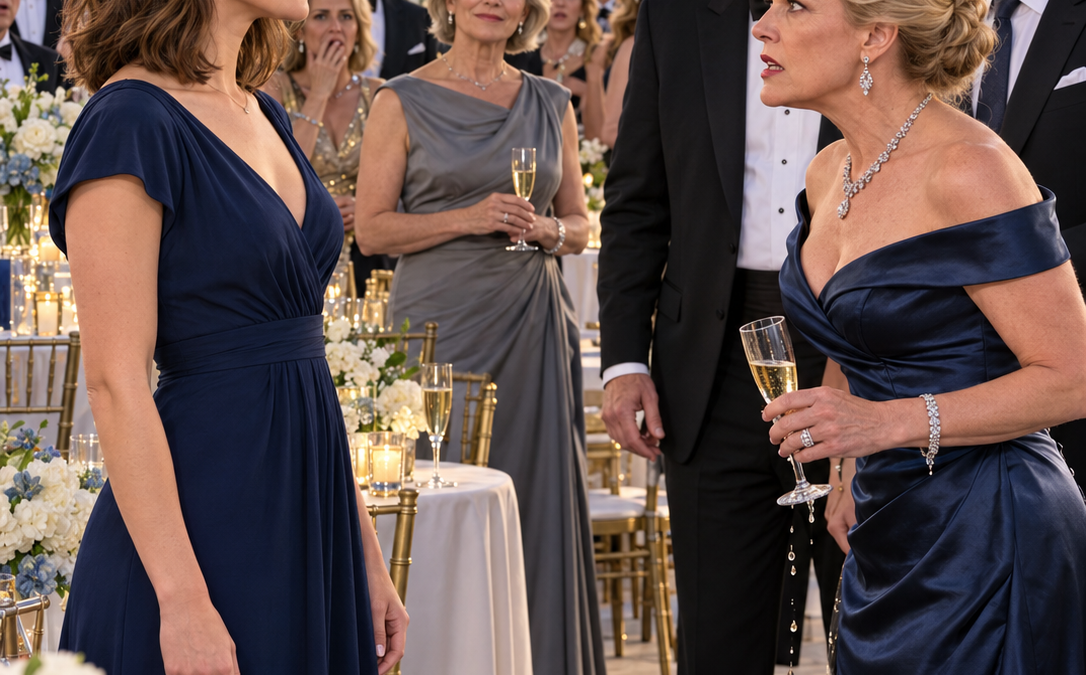
My name is Kora Uli, and I’m 35 years old.
Three weeks ago, my parents sent me a text telling me not to attend their 40th wedding anniversary party because I would embarrass them in front of real society. So I stayed home, alone, just as they had asked.
But there was something they didn’t know.
The book half the country had been arguing about that month, the one even their distinguished guests kept on their nightstands, was mine. I had written every word of it.
They didn’t know that. They didn’t know a great many things.
On the night of the party, my sister called me, her voice trembling. “Why did you hide this from the family? Mom and Dad just saw the news.”
But the part of that night I still struggle to believe came later.
Before I tell you what happened, I’d love to know where in the world you’re listening from. Tell me in the comments. I read every single one. Welcome back to Hidden Family Revenge, where the people dismissed by their own families finally step into the light, and the evidence speaks for itself. If quiet justice is your kind of story, leave a comment and subscribe so you don’t miss what happens next.
Now, let me take you back three weeks, to the text message that started everything.
Three weeks before the party, the Uli family group chat came alive for the first time in nearly two years, and the message was addressed directly to me. My family had never officially removed me from the conversation. They had simply stopped speaking to me there, leaving my name sitting among theirs like an address on an old envelope no one intended to mail.
Then my mother typed the first words anyone had directed toward me in that chat in two years.
“Kora, please don’t come to the anniversary. Only high-society guests this year. We can’t spend the night explaining what you do.”
The conversation went silent again.
I took a screenshot before the message could disappear beneath whatever arrangements they might discuss next.
My family is what Charleston society likes to call good people. Forty years of attending the right church, belonging to the right club, and carrying the right last name, pronounced the right way at all the right parties. My mother had spent decades cultivating those distinctions as carefully as another woman might tend a garden.
She had introduced me to her friends more times than I could count as “the one who does a little of this and that.”
I stopped correcting her sometime around the third Thanksgiving. Correcting people who have already decided who you are simply provides them with free entertainment, and I had grown tired of being the show.
So I placed my phone facedown on my desk and returned to work. I had a deadline, and deadlines had never once cared what my mother thought.
What she hadn’t written in that message, although she’d been saying it in one form or another for years, was the sentence she had handed me when I was 24 and told her I’d sold my first short story.
“You’re a woman with a hobby, Kora, not a writer.”
She had broken two years of silence in the family chat for one sentence and one humiliation. She had no idea it would be the last of her lies that ever managed to stand unchallenged.
Here is what none of them knew, and I’ll say it plainly.
For six years, I had been publishing novels under a name that wasn’t mine.
C. J. Vesper.
My third novel, The Quiet Daughter, had spent fourteen consecutive months on the bestseller list and sold more than two million copies. People read it on airplanes, discussed it in book clubs, and argued about its characters over dinner. One woman even had a sentence from the novel tattooed on her forearm and sent a photograph to me through my publisher.
Not one person in my family had the faintest idea.
I had written every word at a small oak desk with a cheap steel fountain pen I’d bought when I was 23. That same week, a literary magazine had mailed me a check for fifty dollars in payment for a story.
Fifty dollars.
I framed the check, kept the pen, and had signed everything important with it ever since.
I do my best writing before the house wakes, with a mug of Earl Grey cooling beside my elbow. Something about the sharp, fragrant scent of bergamot reaches my brain more reliably than any alarm clock ever could.
My literary agent, Francis Keller, had represented me from the beginning. She was 66, formidable in the most wonderful way, and the only person besides my husband who knew both my names. She had arranged the contracts, protected my anonymity, and kept a nondisclosure agreement bearing my legal signature in a locked drawer.
A pen name isn’t hiding, whatever my mother would later scream. It’s a door, and you get to decide who walks through it.
My family had stood outside that door for years without ever bothering to knock. They were too occupied telling everyone that the door led nowhere.
You would think having a daughter whose novel appeared on the national bestseller list might become a topic of conversation at Christmas dinner.
Last December, I drove to my parents’ house in Mount Pleasant, uninvited as usual, because at 34, I apparently still hadn’t learned my lesson.
My older brother, Spencer, was holding court beside the fireplace. Spencer was 38, the golden child, the son who could do no wrong largely because he’d never been required to do anything particularly difficult.
He spotted me and grinned. “Still scribbling your little stories?”
My father didn’t bother looking up from his bourbon.
“When you’ve actually published something, we’ll talk.”
He said it with the same dismissive certainty he’d been using for the previous ten years.
By then, I had published three novels. One of them was being taught in a college literature course less than two miles from his house.
I said nothing.
That was the thing my family had never understood about me. I didn’t argue. I remembered. And memory keeps better records than any fight.
A little later, my mother escorted a guest past the side table, and I saw something that nearly made me stop walking.
There, displayed face outward like a trophy, was a hardcover copy of The Quiet Daughter.
“Oh, everyone’s reading this one,” my mother told the woman, lightly touching the cover. “So moving. That poor girl in it.”
My mother was using my book to impress a stranger, and she had absolutely no idea whose blood was on those pages.
I finished one glass of wine and left before dinner. On the drive home, I laughed until laughing no longer seemed quite the right word for what was coming out of me.
My mother had displayed my book like a prize on her mantel. She simply couldn’t recognize the family inside it, because she had never once managed to recognize me.
To be fair to my mother, and I do try to be fair on the good days, she had not grown up with much.
Lorraine came from a mill town two hours inland, where she’d lived in a house with a tin roof and a father who regularly drank the rent money before it could become rent. She married my father at nineteen and clawed her way into Charleston society the way someone might climb a wet rope, hand over raw hand.
The country-club membership, the Harbor View House, the children who turned out right. None of those things felt like vanity to her. They were proof that she had escaped.
A son people called successful. A son-in-law employed at a respectable firm. Achievements she could mention over a Tuesday luncheon while the women around the table nodded their approval.
And then there was me.
“She writes” was not an answer my mother could comfortably offer those women. To her, it sounded like an apology, an admission that the rope had slipped several inches while nobody was looking.
My father was simpler to understand.
He had managed a regional bank branch for thirty years and firmly believed that a real job was one that provided a W-2 and a pension. To him, writing fiction was playing pretend with the lights on.
I understood them both. I understood exactly why a daughter who earned her living arranging sentences felt like a hairline fracture in the wall they had spent forty years plastering smooth.
Understanding it never made the plaster hurt any less. It only meant I eventually stopped expecting the wall to apologize.
By the time my mother’s text arrived, I had made a difficult peace with the silence. What I hadn’t anticipated was that the silence itself was running out of time.
A week before the anniversary party, my younger sister called.
Whitney was 33 and allergic to conflict in much the same way some people are allergic to bee stings, complete with the tendency to swell up emotionally and become very, very quiet.
“Kor! Hey!” she said, using that overly bright voice she always adopted immediately before doing something cowardly. “I tried to get them to invite you. I really, really did.”
“Did you?”
“You know how Mom gets about appearances. And honestly, you’d hate it anyway. All those society people, the small talk, the whole stiff thing.”
“The whole stiff thing,” I repeated.
“You’d just feel out of place,” she finished softly, as though she were offering me some great kindness.
There it was.
Not We want you there. Not This is wrong, and I’ll fight it.
Just a small knife, carefully wrapped in concern for my comfort.
Then Whitney did what Whitney always did. She went fishing.
“So, what have you been up to? Anything new with you?”
She wanted a scrap of information, something small she could carry back to the others. I gave her nothing.
“Same as always,” I said. “A little of this and that.”
I could practically hear her shoulders relaxing through the phone. The quiet sister was still quiet, still safely dismissed, still someone they could leave standing outside in the cold.
Before hanging up, she added, “Don’t make it a thing, okay? For Mom’s sake.”
I told her I wouldn’t make it a thing.
And that part was completely true.
I had never made it a thing. I had simply kept building my life inside the dark room they assured everyone was empty.
And Whitney, sweet, frightened Whitney, had just helped them lock a door she would one day find herself standing on the wrong side of, crying.
Three days later, my father called. He generally called me twice a year, and both occasions seemed reserved for delivering verdicts.
“Kora.”
He said my name sharply, like a bank manager closing a teller window at five o’clock.
“The guest list is final. I want that understood.”
“It’s understood, Dad.”
“There will be important people there. I won’t have the evening turned into a discussion about your situation.”
My situation?
I almost asked which situation he meant. I had a mortgage, a marriage, and, as of that week, a film offer on the table. He would really have needed to narrow things down.
But I didn’t ask.
Then he said something that changed the temperature of the entire month.
“Your mother’s worked hard to get a certain woman to fly down. Adele Hartwell runs some big literary foundation up north. Lorraine’s been writing them checks for years, and now she wants a seat on the board to show for it. So everyone is to be on their best behavior.”
I had to sit down on the edge of my bed.
Adele Hartwell.
The Hartwell Foundation for American Letters.
The woman who had spent the previous year publicly searching for the anonymous author of The Quiet Daughter. The woman who had called my novel, in print, “the most honest thing I have ever read about being invisible inside your own family.”
My parents were rolling out the red carpet for the one person on earth who openly worshipped my work, while arranging an entire evening around making sure I remained invisible.
“Best behavior,” I said. “Got it.”
I ended the call before my father could hear me breathe.
He wanted to impress Adele Hartwell so badly he could practically taste it. He had no idea he’d already sent her my entire soul, gift-wrapped in two million copies.
Two days before the party, I received a text from Aunt Patricia, my father’s sister, a woman I saw once a year and liked approximately twice that much.
“Sweetheart, your mom told me about the party. Are you doing okay? She mentioned you’ve been struggling mentally lately. I just want you to know I’m praying for you.”
I read the message twice to make sure I understood.
So that was the story now.
Not Kora wasn’t invited.
Kora was unwell. Kora was fragile. Kora was a sad little situation the family managed quietly, with tremendous grace and a great deal of prayer.
I opened the family group chat, the same one where they had effectively muted me into oblivion, and scrolled through the messages.
More than forty conversations about the anniversary. Seating charts, questions about whether the band knew my parents’ song, and a close-up photograph of my mother’s evening gown.
My name appeared nowhere, except in a message my mother had sent weeks earlier.
“Let’s keep it simple re: Kora. People worry. Bless them.”
Bless them.
I found the rest on Facebook, where my mother did her most effective damage.
One of her friends had written, “Thinking of your family during this hard season, Lorraine.”
Underneath, my mother had replied, “Some children just struggle. We do what we can.”
She had even liked another comment describing me as unstable.
Apparently, having a daughter with a hobby was no longer sufficient. Now I needed to be a tragedy, because an unstable daughter explained an empty chair much more sympathetically than an uninvited one.
Lies need feeding to stay alive.
My mother had been feeding this particular lie for years. She simply never bothered checking whether the thing she’d kept inside the cage was still small.
Now let me take you into the other half of my life, the half my family had collectively decided did not exist.
The morning after Aunt Patricia’s text, I drove downtown to a glass office tower and took the elevator up to Francis Keller’s office.
Francis doesn’t waste time on small talk. Before I had even settled into the chair opposite her desk, she slid a printed document toward me.
The Quiet Daughter had made the shortlist for the Hartwell Prize, Adele Hartwell’s own literary award and the biggest prize in American fiction that year.
“And,” Francis said, tapping a second page with one ringed finger, “Callaway wants the film. The director, Kora. A serious written offer. Not some cocktail-party handshake.”
I read the number twice, giving my eyes a chance to believe it.
Francis leaned back and studied me the way she studies a contractual clause she doesn’t entirely trust.
“You should know something before you celebrate. If you win that prize and the film gets announced at the same time, the press will start digging. They’ve done it to anonymous writers before. Real journalists, forensic readers, somebody’s cousin who knows somebody at the bank. Your name could come out. Your real name.”
I sat with that possibility for a long moment.
For six years, I’d controlled the door between Kora Uli and C. J. Vesper. Now a steady wind had begun pressing against the frame.
“How long do I have to decide?” I asked. “Whether to confirm it myself or let some stranger do it for me?”
Francis gave a small shrug.
“Days. Not weeks.”
Then she said something I would later write on a card and keep beside my desk.
“You wrote the truth, Kora. The truth has a way of knocking on its own door.”
I drove home that afternoon wondering whose hand it would use.
Francis called again that night with news that made me laugh aloud in my empty kitchen.
“You’ll appreciate this one,” she said.
“Adele Hartwell has been telling everyone in New York that she’ll find Vesper if it’s the last thing she does. She personally put your book at the top of the prize list, over quite a few objections.”
She paused, because even Francis enjoys a perfectly timed revelation.
“She’s flying down to Charleston this weekend. Some anniversary party a donor talked her into attending.”
I lowered my mug onto the kitchen counter with extraordinary care.
“A donor named Uli, by any chance?”
The other end of the line went silent.
“How on earth did you know that?”
I explained that the event was my parents’ anniversary party. The exact celebration I had been forbidden to attend because my presence might embarrass them in front of important people.
Francis went quiet.
Francis is never quiet.
“So let me make sure I have this right,” she said slowly. “The woman your mother is auditioning for, practically begging for a board seat from, has spent a year searching for you?”
“Yes.”
“And your mother personally invited that woman into a room you are banned from?”
“Yes.”
Francis began to laugh. It was a dry, rasping sound, like an old wooden drawer sliding open.
“Kora, I have sold over four hundred books in my career. I have never in my life seen a setup arrange itself this neatly.”
Neither had I.
And that frightened me more than it pleased me.
I told her I needed the night to think.
What I didn’t tell her was that I’d already begun thinking. Not about whether the truth would eventually come out, but about whether I’d be standing in the room when it did.
This is the part of the story where people probably expect me to rub my hands together and plot some grand, theatrical entrance.
That isn’t what happened, and I want to be honest about it.
I sat at my desk that evening with my husband, Nathan, who teaches tenth-grade history and had loved me through six years of rejection letters and two years of a kind of literary fame he had promised never to mention in the teachers’ lounge.
“You don’t owe them a performance,” he said quietly. “You don’t even owe them a warning.”
He was right.
I wasn’t going to call my mother and threaten her with my success like a character in a soap opera. I wasn’t going to beg for a seat at her table, either.
Begging for a place among people who have deliberately cropped you out of every photograph only helps them feel more powerful. I was finished volunteering for that.
Instead, I made a pot of Earl Grey.
The scent of bergamot rose sharply and cleanly through the kitchen, familiar enough to settle something inside me. It was the smell I had relied upon for years to find solid ground beneath my feet, the floor underneath the floor.
And while I drank my tea, I made one genuine decision.
My daughter, Laya, was six years old. My parents had met her exactly twice.
Whatever happened that weekend, Laya would never spend a single Christmas of her childhood auditioning for love that had already been promised to someone else.
I would end that pattern before it ever reached her.
The quiet sister was finished being quiet about that, at least.
Everything else could unfold according to its own schedule. I simply hadn’t decided whether I would open the door for the truth or be standing inside when it finally swung wide.
Meanwhile, my brother was busy being Spencer.
He operated what he proudly called a lifestyle brand, which consisted mostly of photographs of himself in flattering light, holding expensive-looking objects he wanted other people to want.
That week, he posted a story to his thirty thousand followers.
In the photograph, he sat at a beautiful wooden desk that he most certainly did not use for writing. The caption read, “Big literary project in the works. Can’t say more yet,” followed by a pair of eyes emojis.
I rolled my eyes so hard I nearly gave myself a headache.
Spencer had never finished reading a book in his life, much less writing one, but he’d been telling people for months that he had important publishing connections and something major was coming soon.
Watch this space.
The truth, which Whitney had once let slip and instantly regretted, was both uglier and considerably more ordinary.
Spencer was drowning financially.
His entire lifestyle brand ran on credit and favorable lighting. He had invited a sponsor to the anniversary party, an actual brand representative who was flying in because Spencer desperately needed to close a deal that weekend just to keep the lights on in his condominium.
So picture the room my mother was so painstakingly assembling.
Adele Hartwell, hunting for a mysterious author. A potential sponsor, deciding whether Spencer was worth writing a check for. My parents arranging their supposedly successful children on the mantel like trophies beneath expensive track lighting.
And the one daughter who could topple the entire display was sitting twenty-five minutes away with a pot of tea and an unsigned film contract.
“Best behavior,” my father had ordered.
Every last one of them was about to display their truest behavior instead.
And the strangest part was that almost none of it would be my doing.
All I had to do was let people keep being exactly who they already were.
Saturday morning, the day of the party, I drove back to the glass tower downtown.
Francis had asked me to come in person, something she only did when ink was about to become involved.
Charleston was already warm by nine o’clock. The harbor lay flat and bright beneath the morning sun, shining like a freshly minted coin. By the time I reached Francis’s office, she had two things waiting on her desk.
The first was news.
The Hartwell Prize winner would be announced that evening by livestream at exactly 8:15.
Eight fifteen.
My parents’ party started at six.
I found myself calculating the difference without meaning to, the way your body flinches automatically at a sudden loud noise.
The second item on Francis’s desk was a crisp folder containing the film option agreement from Callaway’s production company.
The offer was $1.2 million for the option rights to The Quiet Daughter.
My legal name appeared on the signature line. A separate nondisclosure agreement had been drafted to protect the identity of C. J. Vesper for precisely as long as I wished to keep it private.
Francis tapped the folder twice.
“I’ve read every line twice. It’s clean. Cleaner than clean.”
She extended one of her expensive, heavy pens toward me, but I gently waved it away. I had brought my own, as I always did.
“All it needs,” she said, watching me search through my bag, “is your real name.”
I took out the steel fountain pen I’d bought when I was 23, the fifty-dollar pen my mother had once picked up from a kitchen table, turned over between her fingers, and called a toy.
I removed the cap.
For a long moment, I simply stared at the empty line where the name Kora Uli was supposed to go.
The name my family had spent years insisting led absolutely nowhere was about to be attached to a contract worth more than my father had earned in a decade of closing the bank branch at five.
Then I signed.
Kora Uli, in steel-blue ink, across the line that turned a million-dollar offer into a real agreement.
The nib scratched faintly against the paper, just as it always had, dragging a little on the downward strokes.
I thought about the framed fifty-dollar check hanging at home. I thought about my mother holding that very pen across our kitchen table and calling it a toy in front of company.
“My mother called this thing a toy,” I told Francis. “I just bought a house with it.”
Francis didn’t laugh.
She watched me replace the cap and studied me for a moment.
“Do you understand what you’re holding now?”
I did.
And it wasn’t really about the money. By then, the money was almost beside the point.
What I held was proof.
A contract bearing my legal name. A copyright registration filed under Kora Uli six years earlier, with a date officially stamped and preserved by a federal office. A major literary prize only hours away from being announced, judged by the very woman my parents had spent years trying to impress.
For years, my family had assembled their version of me out of almost nothing.
A hobby. A struggle. A sad little situation.
And I had allowed them to do it, because correcting every lie demanded more of me than I was willing to spend.
But you cannot argue with a signature.
You cannot gossip your way past a registered copyright, a filed contract, or a publicly announced literary prize witnessed by thousands.
My family had spent years weaponizing whispers in all the right rooms.
I had used ink, dates, and the eyes of people who actually knew how to read what was in front of them.
Ink doesn’t care what the country club thinks of you.
I slipped the folder into my bag and tucked the fountain pen into my coat pocket, where I could feel its small, familiar weight against my ribs.
Francis walked me to the elevator.
“Adele Hartwell is going to that party tonight,” she reminded me. “Whatever you decide, decide it before 8:15.”
The elevator doors closed between us.
I rode down forty floors inside a mirrored compartment, carrying a contract worth more than the house I’d grown up in, exactly three weeks after my mother had informed me that my presence would embarrass the family.
I had until 8:15 to make a choice.
I could let the truth knock on the door, or I could walk it through myself.
I should explain what The Quiet Daughter is actually about, because that matters enormously to what happened next.
It’s a novel, with invented characters in an invented town. But I built every brick of that fictional world from the raw materials of my own thirty-five years.
There is a mother who measures love strictly in achievements she can mention at luncheon. A favored brother whose brilliance is never questioned because no one has ever required him to do anything difficult. A father who quietly mistakes a reliable paycheck for proof of a person’s worth.
And there is a daughter.
A daughter who slowly stops explaining herself. Who begins disappearing on purpose, until disappearing becomes the only genuine power she has left inside the house where she grew up.
Critics called the novel unbearably honest.
In her review, Adele Hartwell described the mother as “one of the great quiet monsters of recent American fiction.”
Two million readers had encountered that woman on the page and shuddered. Not one of them knew she answered to the name Lorraine at the Harbor View House in Mount Pleasant.
My family had been reading about themselves for fourteen consecutive months.
My mother proudly displayed the book. My aunt mailed copies to friends with little handwritten notes. Strangers wept on airplanes over a childhood that was, give or take a few names and locations, my own.
And the people who had actually lived that childhood from the other side never recognized a single room.
That is the part that still genuinely amazes me.
You can write the truth in letters six feet tall, place it on every nightstand in America, and the people it’s about will walk straight past it.
Because recognizing the truth would require them to recognize you first.
I had handed my family a mirror more than two million times.
They just kept stopping to admire the frame.
At five o’clock that afternoon, exactly one hour before the party, Whitney called again.
This time, the artificially cheerful voice was entirely gone.
“Hey,” she said. “I just… Are you doing okay tonight? Really okay?”
“I’m fine, Whitney.”
“Okay. Good. It’s just…”
She stopped.
I waited. My sister has a tell. Whenever she approaches something true, her breathing changes, as though she’s standing on a high diving board and preparing to jump.
“Never mind,” she said. “Forget I called.”
But she didn’t hang up.
That was new.
“Kora, can I ask you something kind of weird?”
“Sure.”
“That book everyone’s reading. The Quiet Daughter.”
My pulse seemed to turn over once, slow and complete.
“What about it?”
Another deep breath, like someone preparing to dive.
“I read it last summer, and there’s this scene. The birthday one, where the girl waits alone in the kitchen for people who never come downstairs.”
She laughed, but the sound was pitched much too high.
“It just… it felt like our kitchen. The yellow clock over the stove. I don’t know. It’s stupid. Forget it.”
I kept my voice level and steady, like someone carrying a full cup of coffee through a moving train.
“Lots of kitchens have yellow clocks, Whitney.”
“Yeah,” she said.
A second passed. Then another.
“Yeah, you’re right. Sorry.”
For an entire year, my sister had been standing at the edge of the truth, close enough to feel its heat against her face, but too frightened to turn and look directly at the fire.
“I should go get ready,” she said. “Wish me luck tonight.”
“Okay.”
She ended the call before I could decide whether to finally tell her.
The anniversary party would begin in one hour.
The entire world would know my secret in three.
And my sister, bless her careful heart, had come closer to figuring it out than anyone in the family.
Then, one more time, she had chosen to look away.
Let me pause for one second. If your family ever decided who you were without bothering to check the facts, and you went on building your real life quietly anyway, I see you. Leave the words “built it quiet” in the comments so I know you’re out there with me. And if you want to see a rooftop full of strangers discover who actually wrote the novel they’d been crying over all year, stay with me.
We’re almost at six o’clock.
I wasn’t at the party when it began, so let me describe the scene as I later pieced it together from Francis, Whitney, and one guest who afterward seemed incapable of telling the story often enough.
The celebration was held on the rooftop of the Rutledge, an elegant glass-and-limestone hotel in downtown Charleston, with sweeping views of the harbor and a bar that charged fourteen dollars for a bottle of water with an interesting backstory.
There were 120 guests dressed in black tie. A jazz trio played in the corner. Waiters moved through the crowd carrying silver trays of fresh oysters and glasses of champagne my mother had selected largely because the name sounded expensive when spoken aloud.
She wore a long column of midnight-colored silk and stood at the top of the stairs greeting arrivals like a woman who had finally gained admission to the room she’d dreamed about all her life, and fully intended to die in it.
My father circulated among the guests, shaking hands and addressing everyone as “my friend.”
Spencer worked the room with his potential sponsor at his elbow, laughing half a second too loudly at his own jokes.
Forty years of marriage, and the evening wasn’t truly about the marriage at all.
It was about being seen surviving it beautifully.
Somewhere among the polished shoes, glittering jewelry, and champagne flutes stood a sixty-year-old woman in an unremarkable gray dress that almost certainly cost more than the entire bar.
She held a glass she barely touched.
Nobody knew it yet, but Adele Hartwell was the only person on that rooftop who had arrived genuinely searching for the truth.
My mother had spent a solid month assembling the perfect audience for her triumph.
She’d simply misunderstood, from beginning to end, what those people were ultimately going to witness.
Adele Hartwell arrived at seven, and my mother descended upon her like weather rolling in from the harbor.
“Mrs. Hartwell, what an honor. I’ve followed the foundation’s work for years.”
Adele, who had heard that exact sentence from a thousand strangers at a thousand charity events, gave her the careful smile of a woman conserving her energy for later.
“Thank you for having me. I’ll confess I had an ulterior motive in coming this far south.”
My mother brightened immediately.
She could practically see the opening, the connection, the coveted board seat reaching toward her.
“Oh?”
“I’m hunting an author,” Adele explained. “C. J. Vesper, who wrote The Quiet Daughter. I’m convinced the writer is a Carolina native. The book knows these places far too well to be faking them. I keep hoping I’ll simply bump into the author in a room like this one.”
My mother had read the novel, displayed it in her home, and recommended it warmly to her friends.
“Such a moving story,” she said. “That poor daughter.”
Adele’s gaze drifted across the crowd.
“It’s the mother I genuinely can’t shake. One of the great quiet monsters. I think you almost understand her, and that’s precisely what makes her unbearable.”
My mother nodded enthusiastically, agreeing that the monstrous fictional woman was indeed unbearable.
She had absolutely no idea she was standing there, reviewing her own behavior, for the author’s most devoted admirer.
Then Adele asked a question, lightly, as if it were nothing more than polite conversation.
“Do you have any children who write? These talents do tend to run in families.”
My mother sensed that her moment had finally arrived.
She smiled broadly.
“My son, actually. Spencer. He’s working on something quite big in publishing right now.”
Across the rooftop, Spencer was beaming at his sponsor, completely unaware that our mother had just presented his entire bluff to the one woman in the room most qualified to expose it.
At exactly 8:15, the Hartwell Prize announcement went out on livestream.
And the internet did what the internet does.
The announcement itself was straightforward. The Hartwell Prize, the largest honor in American letters that year, had been awarded to The Quiet Daughter, written by C. J. Vesper.
The foundation didn’t reveal anything beyond the pen name.
It didn’t need to.
The legal name emerged from somewhere else.
Reporters had spent the previous week pulling at the loose threads left behind by a new film deal. One of them had investigated the book’s copyright records and discovered a registration dating back six years, filed under the legal name of an actual woman at an actual address.
Suddenly, the mystery surrounding C. J. Vesper began to unravel.
The pseudonym gave way to a real name and a real location.
Kora Uli.
Charleston, South Carolina.
On a rooftop in Charleston, South Carolina, 120 phones seemed to light up at almost the same instant.
The jazz trio continued gamely playing for several seconds, unaware that a silence was already spreading across the room like spilled wine.
A culture reporter who had managed to secure an invitation through a friend gasped aloud and seized her colleague’s arm.
“It’s her. They found Vesper, and she’s local. She’s from right here.”
Then the reporter’s gaze caught on the cocktail napkins, the decorations, and the large anniversary banner.
Gold lettering announced forty years of marriage.
Her expression changed, slowly and unmistakably, as the pieces came together.
“Wait,” she said, now loudly enough for the surrounding guests to hear. “Uli? Isn’t that… Aren’t these people the hosts?”
The name moved through the crowd like an electrical current finding the easiest path through water.
People who had been admiring the harbor turned together to stare at my mother. Guests who had spent the previous month crying over the tragedy of a fictional family began silently calculating what they knew about the very real family standing before them.
Adele Hartwell stood perfectly still in her gray dress.
She lowered her untouched glass onto a passing tray, slowly and deliberately, the way someone sets down a fragile object after finally understanding the full significance of what they’ve just heard.
My mother had spent the entire evening promoting the wrong child to the perfect audience.
And that audience had just discovered the truth, with every light in the room turned on.
My phone rang at 8:17.
Whitney.
I was sitting at my kitchen table, my tea cold beside me, with the livestream open on my screen and my own name appearing in a stream of breaking headlines.
I answered.
“Why did you hide this from the family?” Whitney demanded, her voice trembling. “Mom and Dad just saw the news. Everyone’s looking at them. Kora, the whole party stopped. Why didn’t you tell us?”
I could hear the room behind her.
A hundred people murmuring at once. Above those voices rose my mother’s familiar, increasingly shrill protests.
“There must be another one. It’s a common name. It isn’t… Someone’s gotten confused. That’s all.”
“I didn’t hide anything, Whitney,” I said evenly. “I published three books under a pen name. That’s allowed. You all just never once asked the quiet one a single real question in fifteen years.”
Silence.
Not the comfortable kind. The kind that arrives when someone has stopped breathing because thinking suddenly requires all the air in the room.
Then Whitney spoke again, much more quietly.
“The kitchen scene. The yellow clock. It was us. It was always us, wasn’t it?”
“Yes.”
“Oh, God.”
She began to cry.
“I knew. Some part of me knew. And I… I just…”
“You looked away,” I said. “You’ve been looking away your whole life, Whitney. It’s okay. You learned it from professionals.”
Back on the rooftop, my father had reportedly turned the exact color of the building’s limestone facade, while Adele Hartwell was already making her way, unhurriedly, toward the center of the crowd.
I couldn’t see any of that from my kitchen.
But for the first time in years, I felt the floor of my entire life tilt toward something resembling level ground.
“I have to go,” Whitney whispered. “Mom’s… Kora, she’s losing it.”
“I know,” I said.
“Let her.”
What happened on the rooftop during the next several minutes was pieced together afterward from more eager eyewitness accounts than I knew what to do with.
One of the guests, the wife of a retired judge and precisely the kind of woman my mother had spent forty years trying to impress, found an old interview on her phone.
She read it aloud to the people gathered around her.
In the interview, C. J. Vesper, still anonymous at the time, had been asked where the inspiration for The Quiet Daughter had come from.
My answer had been simple.
“I grew up being told I had a hobby, not a voice. So I built a voice nobody could mute. It just took me a long while to stop asking their permission first.”
A hobby, not a voice.
The judge’s wife slowly raised her eyes from the screen and looked directly at my mother.
By then, other guests were finding the same evidence. Some of them quite literally had the book open in front of them.
Someone had turned to the dedication page.
It read, in full:
For the ones who were edited out of the photo.
Edited out of the photo.
People who knew my family well enough to remember there had always been another daughter, a quiet one whose circumstances nobody ever seemed willing to explain, began connecting details that had been sitting in plain sight on bestseller tables across America for fourteen months.
Adele Hartwell reached the center of the rooftop.
The jazz trio, finally reading the mood of the room correctly, allowed its music to fade away.
My mother stood frozen, a champagne flute clutched in a hand she seemed to have forgotten belonged to her.
And in that ringing silence, the woman Adele had called one of the great quiet monsters of recent American fiction waited to discover what would happen next.
For the first time in her life, she was surrounded by a room full of people who had read her story from cover to cover.
Before I tell you what happened next, understand one thing about the scene on that rooftop.
None of what followed involved me shouting or making threats. It was a contract, a literary prize, and a room full of witnesses accomplishing what years of whispered lies never could. If you’ve ever wished the truth could prevail without your having to scream it across a crowded room, leave the words “Let the truth talk” in the comments.
Because this was the moment I finally decided to open the door.
Francis texted me at 8:20.
“Adele is holding the room. It’s yours if you want it. Or stay home and let the press write it for you. Your call. But decide now, Kora.”
I stared at the message.
Then I looked at my daughter’s crayon drawing, taped crookedly to the refrigerator. I looked across the kitchen at Nathan, who was watching me without pressing for an answer.
“Whatever you decide,” he said, “I’ll drive.”
And then I made tea.
I know exactly how that sounds, but I poured the remaining Earl Grey into a steel thermos, and the familiar fragrance of bergamot rose sharply through the kitchen.
Only this time, it didn’t calm me the way it had through six years of early mornings.
This time, it seemed to point me somewhere.
That smell had always represented solid ground, the quiet foundation I stood upon while writing truths I wasn’t prepared to speak aloud.
Now, for the first time, it felt like a door.
I wasn’t going downtown to make a scene.
I’d spent thirty-five years carefully avoiding scenes, and I wasn’t about to hand my mother the satisfaction of one in front of all her important friends.
I was going because 120 strangers were standing inside a story I had written with my own hands, and I had fairly and completely earned the right to stand inside it, too.
“Get your keys,” I told Nathan.
I secured the lid on the thermos, slipped my steel fountain pen into my coat pocket, and felt its reassuring weight settle against me.
Then I walked out to the car.
It was a twenty-five-minute drive downtown, with the harbor stretching along my left, its lights scattered across the dark water like strands of gold.
I wasn’t on the guest list.
But I had already written my way into every conversation taking place in that room.
All that remained was to open the door.
The elevator at the Rutledge opened onto the rooftop at 8:50.
Warm harbor air greeted me, along with a wall of lights and 120 beautifully dressed people who had somehow all turned away from the magnificent view they’d paid so much to enjoy.
Instead, every face seemed directed toward my mother.
I stepped out.
A woman standing near the bar noticed me first. Her hand flew to her mouth.
“That’s her,” she whispered. “That’s Vesper.”
My pen name moved through the crowd for the second time that evening.
Quieter now, like a tide retreating across sand.
People stepped aside, creating a path I hadn’t asked them to make.
I’m five feet four in flats, and I had deliberately worn flats that night. I hadn’t dressed for a victory. I wore a plain navy dress, carried my steel pen in my pocket, and brought with me the calm I’d been building, brick by brick, since I was twenty-four years old.
Then my mother saw me.
The champagne flute in her hand tipped sideways. A thin stream of champagne spilled over the rim and ran down her wrist, but she didn’t seem to notice.
My father looked as though he’d aged a full decade in two hours.
Spencer stood with his mouth hanging open. Across the room, near the stairs, his sponsor was very quietly and very quickly putting on his coat.
And beyond them stood Adele Hartwell.
She smiled.
It was the first genuinely warm smile anyone later described seeing from her that entire evening.
Then she gave me the smallest nod, almost as if she were saying, The floor is yours. Take all the time you need.
I didn’t rush.
I’d learned patience from people who had never once offered me any.
I walked toward the center of the rooftop, past the silver trays of oysters, the silent jazz trio, and forty years of my mother’s careful social calculations.
I stopped a few feet from my parents.
Close enough for everyone to hear me clearly.
Calm enough for everyone to believe me completely.
“Sorry I’m late,” I said. “I wasn’t on the list.”
My mother finally found her voice.
It emerged too loudly, cracking at the top.
“You did this!” she accused. “You planned this to humiliate us in front of… after everything we have…”
“I didn’t plan anything, Mom. A prize committee picked a night. A studio filed a contract. I just answered the phone when my own name finally rang.”
“Don’t you dare make me out to be the…”
She stopped herself and looked around at the watching faces.
It was far too late.
“You’ve always wanted attention,” she snapped. “Always. The dramatic one.”
That accusation sounded particularly strange in a room that had gone completely silent, considering I was the only person involved in the confrontation who wasn’t raising her voice.
“You called me the dramatic one,” I said evenly. “For thirty-five years, you’ve called me a lot of things.”
I held her gaze.
“Do you remember what you told me when I sold my first story? I was twenty-four.”
She said nothing.
“You said, ‘You’re a woman with a hobby, Kora, not a writer.'”
I allowed the words to hang between us.
Around us stood 120 people who had spent the previous year reading a novel about a mother who spoke to her daughter in precisely that way.
“I put that sentence on page forty,” I continued quietly. “Reviewers thought I invented it. They wrote that no real mother would ever actually say such a thing to her own child.”
My father’s face had turned gray. He stepped forward, rigid as a fence post.
“This isn’t the time or the place, Kora.”
“You’re right, Dad. The time was when I was twenty-four.”
I turned toward him.
“You looked me in the eye and said, ‘When you’ve actually published something, we’ll talk.'”
He stood perfectly still.
“I’ve published three novels. One is taught in a college classroom two miles from your front door.”
Then I opened one hand toward the rooftop, toward the gold anniversary banner, toward the literary prize announcement still glowing on a dozen phone screens.
“Here I am,” I said. “Let’s talk.”
My father had nothing to say.
Nothing at all.
My mother began to cry.
I recognized the performance immediately. It was the familiar kind of crying that had worked for her throughout my childhood, accompanied by delicate movements of her fingers around her eyes while she searched the surrounding faces for sympathy.
But there wasn’t a single reliable ally left in that room.
The whispers had finally encountered witnesses.
And the witnesses had read the book.
Adele Hartwell chose that precise moment to speak.
The crowd turned toward her as instinctively as houseplants lean toward a window.
“Forgive me,” she began.
Her voice was quiet, but it carried across the entire rooftop without any apparent effort.
“I came here tonight hoping to meet a writer. I did not expect to meet the family that spent her entire childhood trying to erase her.”
Then she turned toward me.
“Miss Uli, the Hartwell Prize is the highest honor my foundation gives. As of tonight, it’s yours, for a novel that taught two million readers what it costs to go unseen by the very people who should have seen you first.”
Someone near the bar began clapping.
The applause was polite at first, hesitant and scattered. Then it spread, growing louder and fuller until it became the genuine kind, the kind that surprises the people participating and draws them into something larger than they expected.
I stood there listening, unable for a moment to reconcile the sound with the silence I’d lived inside for so long.
Then Adele turned toward my mother.
The warmth left her expression as completely as though someone had closed a door.
“Mrs. Uli, I understand you’ve been quite interested in a seat on our board. And you’ve been generous to the foundation for years now.”
My mother straightened.
Some ancient, stubborn hope flickered behind her eyes. Even after everything that had happened, she apparently believed there might still be something left for her to win.
“I’ll be honest with you,” Adele continued. “Your checks bought you real consideration. I came south half intending to offer you that seat.”
My mother lifted her chin slightly.
Then Adele finished.
“I’ll be extending the invitation instead to the writer whose work my foundation exists to protect.”
She looked at me.
“Miss Uli, if you’ll have it.”
The silence that followed seemed to settle over every inch of the rooftop.
“Some things you fund,” Adele said. “Some things you earn.”
There it was.
A $1.2 million film agreement.
The most important literary prize in the country.
And the coveted board seat my mother had built an entire poisonous evening around winning, offered in front of every important person she knew to the daughter she’d dismissed as a woman with a hobby.
I didn’t gloat.
I didn’t have to.
The numbers were doing all the talking, the way ink always does the work in the end.
My mother was learning, in real time, the one lesson she had refused to accept her entire life.
You cannot whisper your way out of a signature.
Two more things happened during the next five minutes, and I only stayed for one of them.
Spencer’s sponsor, the man he’d brought to Charleston to impress, the man whose financial support was supposed to keep the lights on in Spencer’s condominium, had seen and heard enough.
He had just watched an entire family proudly advertise a major literary project supposedly connected to their successful son, only to discover that the genuine literary achievement belonged to the daughter they had hidden away like an unwanted coat in a back closet.
He approached Spencer and shook his hand.
It was the kind of handshake you give someone whose hand you’ve already decided never to take again.
He said something brief and quiet, then walked toward the elevator without looking back.
Spencer stood there in a suit he’d financed, holding a glass of champagne he couldn’t afford, watching his entire business prospects disappear toward the parking garage.
Whitney, meanwhile, was crossing the rooftop toward me.
Her mascara had run down her cheeks. Her face was red, and there was nothing composed or socially acceptable about the way she was crying.
For once in her life, she wasn’t performing.
She was simply, genuinely undone.
“I knew,” she said, her voice breaking. “The kitchen. The clock. I knew.”
I waited.
“And I said absolutely nothing, because saying something meant looking at all of it, and I was a coward.”
She tried to steady herself, but the words kept coming.
“Kora, I was such a coward.”
I looked at my little sister.
She had helped lock that door years ago, and now she was standing on the wrong side of it, crying exactly as I’d quietly feared she someday would.
“I believe you’re sorry,” I told her.
And I did believe it.
“That’s not the same thing as it being fixed.”
She nodded quickly, almost frantically, as though she’d prepared herself for something much harsher and was simply grateful it hadn’t come.
I think that was the most honest exchange I’d had with anyone in my family in twenty years.
It wasn’t a reconciliation.
It was a thin line of light beneath a door I might someday decide to open.
Someday.
Not tonight.
I didn’t stay to watch my mother gather up the pieces of her evening.
Instead, I turned toward my parents one final time.
The guests were still watching, but I kept my voice perfectly level.
“I’m not here to ruin your anniversary. Forty years is forty years, and I mean that.”
I glanced around the rooftop, taking in the beautiful dresses, the expensive decorations, and the people who had spent the evening discussing my novel without knowing I existed.
“But the book all your important people spent tonight praising? I wrote it.”
My mother lowered her eyes.
“The prize they just announced is mine.”
I looked from her to my father.
“And now I’m going home to my husband and my daughter, who will never once in her life be made to feel like somebody’s hobby.”
A woman standing nearby held a hardcover copy of The Quiet Daughter. Apparently, half of Charleston owned one by then.
She stepped forward hesitantly, clutching the book against her chest.
“Would you sign it?” she asked.
I looked at the cover.
For fourteen months, my mother had proudly displayed that same image in her living room, never realizing whose name belonged beneath the title.
I reached into my coat pocket and took out my fountain pen.
The steel pen I’d bought at twenty-three.
The fifty-dollar pen my mother had once turned over between her fingers and dismissed as a toy.
I opened the book.
And for the first time in my life, I signed my real name publicly as the author, in full view of the people who had spent years pretending I had no work worth acknowledging.
Kora Uli.
Not Vesper.
Kora.
The girl they’d cropped out of every family photograph was writing herself back into the frame in steel-blue ink, with the whole room watching.
I closed the pen and slipped it back into my pocket.
“Turns out the hobby paid for itself,” I said.
I wasn’t speaking to anyone in particular.
And I was speaking to everyone.
Then I walked toward the elevator.
Past the remains of forty years of careful social arithmetic that had finally, publicly failed to add up to anything.
Nathan was waiting downstairs in the car, with the harbor lights stretching out behind him.
I opened the passenger door and climbed inside.
He looked at me, but he didn’t immediately ask what had happened.
He simply waited until I was settled and then reached for my hand.
I didn’t look back toward the rooftop.
Not once.
I’d already written everything I would ever need to say about that place.
Two million copies of it.
And the entire city was holding the receipt.
The fallout was quiet and total, which is the best kind of fallout there is.
Within a week, Charleston society had subtly rearranged itself around my parents, the way a body walls off a splinter it can no longer ignore.
Invitations changed. Conversations became strained. People who had once competed for my mother’s attention suddenly found reasons to be elsewhere.
No one needed to make a public announcement.
Those rooms had always known how to communicate disapproval without using a single honest sentence.
The board seat went to me.
I accepted it, and as it turned out, I was good at the work.
The film was scheduled to begin shooting the following spring.
Spencer’s lifestyle brand folded by summer. The loss of his sponsor had been the third domino to fall, not the first, but it was the one that finally made pretending impossible.
He sells real estate now.
And, frankly, I think it suits him better than all that flattering lighting ever did.
My mother told everyone the entire incident had been a simple misunderstanding.
According to her revised version of events, she had always supported my writing. She’d merely respected my desire for privacy, and the evening had gotten a little out of hand because people had misunderstood her intentions.
A few people even pretended to believe her.
That is, after all, precisely what those social circles are designed to accommodate.
My father hasn’t called.
Knowing him, he probably never will.
Admitting he was wrong would cost him the only thing he’d ever truly banked on, which was the absolute certainty that he was always right.
As for the Uli family group chat, the one they’d left me sitting inside, silent and forgotten, for nearly two years, only to use it for a single sentence instructing me to stay away from their anniversary, I finally left it myself.
There was no announcement.
No farewell speech.
No carefully composed message explaining why I was going.
I simply opened the conversation, found the small gray words that said Leave Group, and tapped them.
Then I watched my name disappear from a place where it had never really been allowed to live anyway.
For the first time, I was the one deliberately editing myself out of the photograph.
And I was doing it with my own hand.
It felt like setting down something I’d been carrying for so long that I’d genuinely forgotten how heavy it was.
I hadn’t even noticed the strain anymore, not until the weight was suddenly gone and my arms felt light again.
A month later, Whitney asked if we could meet.
I agreed.
We had coffee together, just the two of us.
One cup each. No parents. No anniversary party. No audience to impress or perform for.
She apologized again.
Properly this time.
Not the quick, nervous kind of apology people offer when they’re hoping to move past an uncomfortable subject. Not one wrapped in excuses about how difficult our mother could be, or how she’d never meant to hurt anyone.
Whitney acknowledged what she’d done.
She admitted that she’d known I was being mistreated, that she’d recognized more than she’d been willing to acknowledge, and that she’d chosen the comfort of silence over the inconvenience of standing beside me.
She meant every word of her apology, all the way down.
I listened.
Then I told her the truth.
“The door isn’t locked, Whitney. But it isn’t open, either.”
She looked at me over the rim of her coffee cup.
“It’s just a door now,” I continued. “And the handle is on my side. That’s going to have to be enough for a long while.”
Her eyes filled with tears.
But she nodded.
“That’s fair,” she whispered.
It was the first genuinely fair thing anyone in my family had ever offered me.
So I accepted it carefully, the way you accept something fragile that might still break in your hands.
I wasn’t punishing anyone.
I was simply finished auditioning for a part that had always been mine from the beginning.
Some relationships you repair slowly, with both people willing to do the work.
Others you simply stop bleeding into.
Learning to recognize the difference, without guilt, turned out to be the most important work of all.
For thirty-five years, I had waited for my family to finally read me.
I’d hoped they would recognize something worthwhile beneath the quietness they’d always mistaken for emptiness. I’d hoped my father might someday ask what I was working on and actually listen to the answer. I’d hoped my mother might introduce me to her friends without making my life sound like an embarrassing little misunderstanding.
I’d hoped Spencer would stop treating me as the family joke, and that Whitney would someday decide being my sister mattered more than keeping everyone else comfortable.
But I had spent so much of my life waiting for them to see me that I almost failed to recognize what was happening outside their carefully controlled world.
Millions of strangers had already read my words.
They had carried them onto airplanes, tucked them into bags, marked passages with pencils, and discussed them in rooms I’d never entered. They had recognized feelings I once believed belonged only to me.
They’d seen something in my work that my own family had refused to see in my face.
And eventually, I understood that the answer had never been to argue louder or beg harder.
It was to write the truth down plainly, sign my own real name to it, and let the quiet do the rest of the work.
That’s my story.
One text message telling me not to come.
One book that said everything I’d never been able to say aloud.
And one fifty-dollar fountain pen my mother had once called a toy.
I used to think being quiet meant allowing other people to tell my story for me. I know now that silence and surrender aren’t the same thing.
Sometimes silence is simply the space in which you build something no one else can take away.
If someone in your life has ever reduced you to a hobby, a disappointment, or a version of yourself small enough to make them comfortable, take this as your sign to keep building anyway.
Quietly.
With your real name.
Share this story with someone who needs to hear it. Leave a comment, subscribe, and I’ll see you in the next one.








