My mom left me at a train station as a joke. The whole family laughed. “Ha! Let’s see if he can survive on his own.” I disappeared that day. I never went back. Twenty years later… They finally found me. The moment I appeared… They went dead silent. Mom. Dad. My sister….
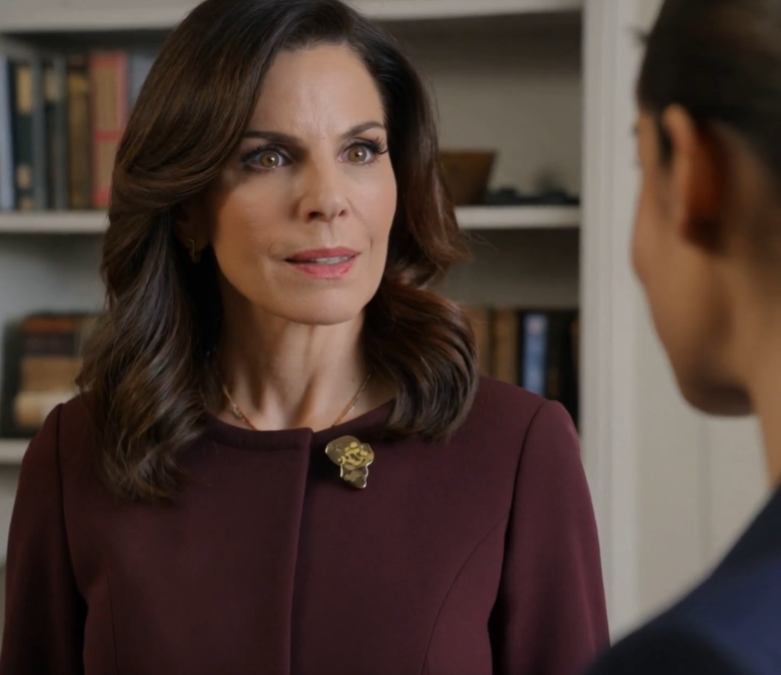
The last time my birth family saw me, I was twelve years old, standing alone outside a train station with an envelope full of blank paper.
My name is Meredith Collins. I am thirty-two now, a transportation safety attorney in Seattle, and I have built my entire career around one question most people never have to ask: What happens when a person with no money, no phone, and no safe adult is left in a place where everyone assumes someone else is responsible?
Back then, my mother called it a joke. My father let the doors stay locked. My sister laughed hard enough to shake the camera in her hands.
“Let’s see if she can survive on her own,” they said.
Then the family SUV pulled away from the curb.
I disappeared that day. I never went back.
Twenty years later, they found me in a private legal conference room, expecting a frightened runaway. Instead, I walked in with my attorney, set an old transit police file on the table, and watched the laughter die in their throats.
Before I explain why they left me there and what was inside that file, tell me this: What time is it there, and where are you listening from? I want to know how far the truth can travel.
To understand what happened in that conference room, I have to go back to Boise in the summer of 2006, when my name was still Meredith Mercer and everyone in town thought my family was respectable.
My mother, Elaine Mercer, ran a polished real estate office with framed awards in the lobby and a voice that softened the second a client walked through the door. My father, Douglas Mercer, managed insurance claims and described himself as practical, patient, and fair. My older sister, Vanessa, was the daughter they liked to display: pretty, confident, popular, and always at the center of photographs.
I was the difficult one.
Difficult meant I noticed when rules changed. Difficult meant I remembered exact words. Difficult meant I did not smile fast enough after being blamed for something I had not done.
The first time I understood the pattern clearly, Vanessa scraped our neighbor’s parked car while backing out of the driveway. I saw it happen. Elaine saw it, too. But Vanessa was applying for a leadership scholarship, and Elaine said a complaint might ruin her chances.
That night, my mother told me to admit I had accidentally thrown my backpack against the car. I said that made no sense. Douglas looked up from his laptop and said, “Your mother is asking for cooperation, not a courtroom.”
So I cooperated.
The neighbor accepted an apology I did not owe, and Vanessa cried about the pressure she was under.
A few months later, I won second place at a regional science fair for a project about safer bus routes near schools. I had drawn maps, counted crosswalks, and interviewed drivers. My teacher called the project unusually practical for a seventh grader. I carried the display board home as carefully as if it were made of glass.
It lasted two hours in the living room before Vanessa complained that it made the house look weird because her friends were coming over. Elaine folded it and put it behind the laundry room door, telling me not to turn every achievement into a performance.
“Your sister just wants one normal afternoon,” Douglas said.
That was how I learned that my pride became rude whenever it made Vanessa feel smaller.
By winter, they had become skilled at erasing me without appearing cruel. They took a weekend trip to McCall and left me with a neighbor because Elaine said I had an attitude and needed time to think. Then she posted pictures with the caption, “Merc family weekend.”
I was not in a single photograph, but nobody asked why.
When relatives called, Elaine laughed and explained that I preferred books to people. Douglas never invented the lies himself. He simply stood beside them until they hardened into something everyone accepted as the truth.
The only person who seemed to notice was my mother’s younger sister, Celia Whitmore.
Celia lived outside Bend, Oregon, and visited infrequently, usually arriving with homemade jam and careful eyes. When Elaine snapped at me for breathing too loudly or corrected the way I held a fork, Celia watched.
Once, while helping me dry dishes, she asked whether I felt safe at home.
The question startled me so badly that I dropped a glass.
Elaine appeared before I could answer and told Celia I lied for attention. After that, my aunt looked at me with a worry she could not prove was justified.
Everything shifted at a school ceremony that May.
I received an award for my bus route proposal because the district planned to review part of it. Vanessa had expected to receive a leadership award, but she did not get one.
On the drive home, Elaine said I had humiliated my sister by acting surprised onstage. Douglas said I needed to stop competing with Vanessa. I told them I had not even known her award category was being announced.
Vanessa stared out the window and whispered that I always found a way to steal things.
The next morning, Elaine woke me with pancakes and an unusually bright voice. She announced that we were taking a family weekend in Portland to reset and remember gratitude.
I wanted to believe her.
I packed my blue backpack, tucked eleven dollars into a side pocket, and climbed into the SUV.
During the drive, Elaine talked about independence, about children who thought being smart made them better than their parents, and about how real families tested one another. Douglas kept his eyes on the road.
Vanessa kept turning her small digital camera on and off, pretending to film clouds, road signs, and me.
When we reached the busy streets near Portland’s train station, Elaine handed me a small envelope.
“Hold on to these,” she said. “Return tickets.”
I nodded like a responsible daughter.
I did not know the envelope held only blank paper, and I did not know Vanessa had just pressed record.
By late afternoon, the station was crowded enough that I had to stay close just to keep my family in sight. Elaine moved quickly, not frantically, but with purpose. Douglas carried no luggage because Elaine said the hotel had made a mistake and they needed to confirm the shuttle pickup first.
Vanessa walked behind me with the camera angled low, recording my shoes, my backpack, and the envelope in my hand.
I did not know she was collecting a souvenir.
Inside the station, Elaine told me to check the departure board for a delayed train to Eugene.
I asked why we needed that train if we were spending the weekend in Portland.
She gave me the look that meant I was about to be accused of arguing.
“Just do what I asked, Meredith.”
So I crossed the main hall, read the board twice, and came back confused. No one was standing where I had left them.
Then I spotted my family near the side doors.
Elaine waved me over with an irritated smile and explained that our luggage had been sent to the wrong curb. She told me to wait by a marked passenger pickup area while they straightened everything out.
“Do not wander,” Douglas added. “For once, follow instructions.”
I waited.
Five minutes was nothing. Ten minutes was annoying. Twenty minutes made the envelope feel heavier in my hand.
I watched families load cars and taxis. I watched travelers check phones I did not have. I watched station employees move with the confidence of people who knew exactly where they belonged.
At about forty minutes, our family SUV turned into the curbside lane.
Relief hit me so hard I almost cried.
I stepped toward it, ready with a complaint about how long they had kept me waiting. The SUV slowed beside me, but the doors did not unlock.
Vanessa raised the camera from the back seat.
Douglas looked straight ahead, both hands on the steering wheel.
Elaine lowered her window just enough for her voice to come through clearly.
She was smiling.
“Let’s see if she can make it home on her own.”
For one second, I thought I had misunderstood.
Then Vanessa laughed.
It was the delighted kind of laughter that comes when a prank works exactly as intended. Douglas’s mouth twitched as though he were trying not to smile, and the SUV began rolling forward.
I grabbed the door handle, but it stayed locked.
“Mom!” I shouted. “This isn’t funny!”
Elaine looked back once. The window slid up between us, and then they were gone.
I opened the envelope before the taillights disappeared.
Inside were three blank sheets of paper, folded around nothing.
My backpack held a paperback, a notebook, a pencil, a granola bar, and eleven dollars.
I had no mobile phone because Elaine said phones made children entitled. I had no identification because I was twelve. I did not know the name of our hotel because there was no hotel. I knew our home address in Boise, but not one phone number that felt safe to call.
I understood then that they had not forgotten me.
They had left me.
Panic arrived as math.
How far was Boise? How much did a ticket cost? Could eleven dollars buy anything useful? Would a ticket clerk call my mother? Would Elaine say I was lying?
I studied maps until the lines blurred. I tried a ticket kiosk, but every option cost more than I had. I considered calling home collect, then imagined Elaine laughing.
My hands started shaking, so I sat on the edge of a bench and pretended to tie my shoe.
A woman in a navy station jacket noticed me after my third trip to the same wall map. Her name tag read Lydia Brooks, Operations Supervisor.
She asked whether I had missed a connection.
Before I could stop myself, I repeated one of Elaine’s old warnings.
“I’m not supposed to cause trouble.”
Lydia crouched until her eyes were level with mine and asked what was inside the envelope. When I showed her the blank paper, her expression changed from concern to something more serious and procedural.
Transit police arrived within minutes.
Officer Calvin Price asked calm questions and reviewed the curbside security footage while Lydia gave me water.
The camera showed our SUV slowing, my hand reaching for the door, and the vehicle leaving. The license plate was clearly visible.
When Officer Price called Elaine, she told him I was participating in a family independence exercise. They were teaching consequences, she explained. The police were overreacting, and they would return when they decided the lesson was complete.
That call changed everything.
It meant the station staff were not simply confused. It meant the adults were not dealing with a lost child whose parents were panicking somewhere nearby.
It meant my mother had confirmed that leaving me there was intentional.
A child welfare worker named Marissa Cole arrived before dark. She told me I would be taken into emergency care for the night.
I asked whether I would have to go home afterward.
She said no decision would be made without speaking to me.
During one recorded call, Elaine finally spoke to me directly.
“You made this public, so do not expect everything to go back to normal.”
That was the moment my fear changed shape.
Before that, I had been afraid they would not come back. Afterward, I was afraid they would.
The following morning, Marissa placed three documents on the table and asked me one question.
“Do you feel safe returning to Boise with your parents?”
There were adults in the room, and adults had always decided what my words meant. If I said yes, everyone else could move on. If I said no, I would officially become the problem.
I looked at the documents, then at the cup of orange juice someone had poured for me without asking me to earn it.
And I said no.
That word did not rescue me instantly.
Real life moves more slowly than a dramatic ending.
The investigation opened like a drawer full of things my family thought had been thrown away.
School records showed anxiety surrounding family contact. A counselor’s note described me as unusually fearful of involving adults. The neighbor who had watched me during the McCall weekend confirmed that Elaine had left me behind as punishment while presenting the trip publicly as a family event.
My science teacher described the bus route project and the way Elaine had dismissed it. The neighbor whose car had been damaged remembered the apology that had never made sense.
Each statement was small by itself, but together they formed a map of my place in that house.
Elaine and Douglas arrived in Oregon with an attorney, wearing the kind of clothes people choose when they want a room to respect them before they speak.
Vanessa came too, dressed as though she were attending a scholarship interview.
She said I had misunderstood a prank. She said they had planned to circle back. She said I had walked away before they could retrieve me.
Douglas called it a regrettable family decision.
Elaine said I had always exaggerated normal discipline because I wanted special attention.
Their attorney repeated the phrase “miscommunication during travel” until it sounded rehearsed by everyone except the evidence.
The transit footage contradicted enough of their story to matter.
It did not show the SUV’s interior, Elaine’s smile, or Vanessa’s exact laugh. But it did show the vehicle slowing, my hand reaching for the locked door, and the SUV leaving without me.
Vanessa claimed her camera had stopped working before anything important happened. The recording was never produced.
Elaine said the blank envelope was probably a mistake.
Douglas said he had assumed I knew the plan.
They argued from every direction except the truth.
I was first placed with a temporary family who were kind but careful, the way people are when they know they are only part of a bridge.
Then I met Raymond and Joanna Collins in Vancouver, Washington.
Raymond taught middle school history and believed every home needed a visible calendar. Joanna worked as a pediatric nurse and spoke in clear sentences even when she was tired.
Their house did not feel magical.
It felt understandable.
The rules were written on the refrigerator. If I broke one, the consequence was explained before it happened, not invented afterward. Nobody searched my backpack for evidence of an attitude. My bedroom door stayed closed when I wanted privacy, and my caseworker’s number remained taped beside the phone.
Raymond and Joanna did not ask me to call them Mom and Dad. They did not require me to prove my gratitude.
That made me trust them faster than any speech could have.
The legal process was not the kind of revenge people imagine.
Elaine and Douglas were not dragged away for life. They faced a child endangerment investigation, attorney fees, mandatory evaluations, supervised contact requirements, and a temporary no-contact order while the dependency case proceeded.
Douglas received workplace discipline because the SUV was company-leased and because his initial statement about the trip did not match the footage.
Elaine resigned from a youth housing committee after the police report reached board members who had once admired her.
Their public image cracked, but people like Elaine know how to call a crack character assassination.
The court gave them a path toward reunification: counseling, acknowledgment, monitored visits, and a written safety plan.
Elaine treated every requirement as an insult. Douglas said he wanted peace, but peace meant I would stop making his choices visible.
Vanessa protected herself by saying she had been a minor following instructions, which was partly true and entirely incomplete.
Months later, Marissa visited the Collins house and told me Elaine and Douglas were willing to terminate their parental rights if the court would close the matter quietly.
I thought I had already understood rejection.
I had not.
Abandonment at a station was cruel, but signing papers in an office proved something colder.
They would rather lose me legally than stand under oath and say they had harmed me.
I went to my room, opened the closet, and counted the shirts Joanna had bought me.
Seven shirts.
Seven ordinary pieces of evidence that someone expected me to stay.
Once the papers were signed, my life stopped revolving around whether my parents wanted me back.
That freedom did not feel like joy at first. It felt like the silence after a machine shuts off.
I had spent twelve years listening for footsteps, moods, accusations, and the sudden change in Elaine’s voice that meant an entire room was about to turn against me.
In the Collins house, no one made me perform innocence.
Raymond asked about homework because homework mattered, not because he wanted to trap me. Joanna knocked before entering my room.
They both understood that safety was not a speech.
It was repetition.
I was adopted at fourteen and became Meredith Collins.
I kept my first name because Elaine had used it like a handle, but she did not get to own it. Collins became the name attached to field trips, braces, college forms, and the first birthday cake where nobody made a joke about how sensitive I was.
Raymond cried more than I did at the adoption hearing. Joanna held my hand beneath the table, lightly enough that I could pull away and firmly enough that I did not want to.
My interest in maps and public transportation did not disappear after what happened at the station. It sharpened.
I wanted to understand why a place filled with schedules, cameras, uniforms, and posted rules could still become dangerous for someone adults had decided to discard.
I learned about missing-person procedures, child welfare jurisdiction, emergency shelter access, and the gap between someone should help and someone is required to help.
In high school, I volunteered with a youth legal clinic that helped students obtain replacement documents. In college, I studied public policy and wrote papers about transit access for vulnerable travelers.
In law school, I was the student who always asked what happened to the person without identification, without a phone, and without an adult willing to tell the truth.
By thirty-two, I was a transportation safety attorney in Seattle. I reviewed municipal procedures, trained staff, represented families after failures, and helped transit agencies develop protocols for unaccompanied minors and stranded passengers.
Some days involved nothing but paperwork. Others meant standing in public meetings where officials hated being told their systems depended too much on luck.
I did not tell every client my history. I did not need my pain to become my business card. But whenever someone asked why I cared so much about clear responsibility, I had an answer I carried like a sealed file.
I married Daniel Pierce, a public school counselor who never used my past as a shortcut to understanding me.
He knew my story, but he also knew I hated mushrooms, loved bad airport coffee, and checked the front door twice before going to sleep.
My closest friend was Hannah Walsh, an emergency management consultant who could read a city plan and find its weakest point in ten minutes.
Raymond and Joanna became the grandparents my future children would know if I ever chose to have them.
I had built something quiet, strong, and mine.
Celia Whitmore existed at the edge of that life like a name written on an envelope.
For years, birthday cards arrived through the Collins family. At first, they were unsigned. Later, they bore only two initials: CW.
I refused contact.
In my mind, Celia was still part of Elaine’s world, and Elaine’s world had taught me that kindness could be bait.
Raymond never pushed me. Joanna kept the cards in a box in case I wanted to read them someday.
I did not.
What I did not know was that Celia had begun questioning the family story almost immediately after I disappeared.
Elaine told relatives that I had run away at the station after being disciplined for lying. According to her, Oregon officials had misunderstood a private family matter, and I had rejected reconciliation because the Collins family had filled my head with resentment.
Douglas repeated a softer version of the same story. Vanessa said the incident was too painful to discuss.
Celia listened, waited, and eventually obtained a copy of the dependency court docket.
The dates, reports, and supervised contact orders did not match Elaine’s version of events. Celia confronted her privately, and Elaine cut her off.
Years later, while sorting through a storage box Vanessa had left behind after college, Celia found a damaged digital camera wrapped in an old sweatshirt.
The camera would not power on, but Celia remembered it.
She sent it to a technician in Portland.
The file that came back was short, shaky, and devastating.
It showed me approaching the SUV. It captured Vanessa laughing. It recorded Elaine saying, “Let’s see if she can make it home on her own.”
And it showed Douglas driving away.
Celia did not call me.
Maybe she knew I would not answer. Maybe she understood that proof arriving late could still hurt.
Instead, she changed her estate plan, preserved the recording, wrote a letter, and created instructions that would matter only if Elaine tried to lie again.
Twenty years after the station, a certified letter arrived at my office from a probate attorney named Erica Monroe.
Celia was dead.
I was the principal beneficiary of her estate.
And Elaine Mercer had filed an objection accusing me of manipulating a confused woman I had never met.
I read the letter twice.
My hands did not shake.
My birth family had not found me.
Their lie had.
Three days after the certified letter arrived, I read my mother’s petition from beginning to end.
Elaine had not become more honest with age. She had simply become more formal.
According to her petition, I had run away from the station after a minor disagreement. My parents had searched desperately. Oregon officials had misunderstood what happened, and I had rejected every attempt at reconciliation.
Celia, supposedly vulnerable and confused in her later years, must have been influenced by an unknown person with access to my story.
The petition suggested I had somehow inserted myself into an elderly woman’s estate from a distance, like a ghost with a law degree.
Douglas signed a declaration supporting Elaine’s timeline. His sentences were cautious, filled with regret but devoid of responsibility.
Vanessa’s declaration was worse.
She wrote that she remembered a chaotic travel day, that everyone had been upset, and that the family had been unfairly judged. She said she hoped the probate court would not reward bitterness.
I stared at that word.
Bitterness.
Twenty years of silence, and they were still trying to name my wound for me.
Erica Monroe explained my options the next morning.
I could accept a private settlement and avoid publicity. I could renounce the inheritance and remain invisible. Or I could defend the will, which meant allowing evidence to enter the probate record.
She did not push me toward any decision.
“There is also a sealed evidence package from Celia,” she said. “I cannot describe all of it until the mediation, but your aunt anticipated the challenge.”
A week later, Elaine’s attorney sent an offer.
They would pay me $250,000 if I gave up most of the estate, returned any recovered recording, agreed not to discuss the train station incident publicly, and described the family conflict as a misunderstanding.
They wanted to buy the last copy of the truth.
I did not answer immediately.
The twelve-year-old inside me wanted to throw the offer across the room. The attorney I had become knew rage was not a strategy.
I took the letter home to Daniel.
He asked what outcome would allow me to sleep peacefully ten years from now.
Raymond and Joanna drove up from Vancouver that weekend.
“Silence protected them, not you,” Joanna said.
Hannah asked whether the probate record could keep my address sealed. Erica confirmed that it could.
The mediation was scheduled in Portland, close enough to the station that my body recognized the city before my mind did.
I wore a navy suit, low heels, and the watch Joanna had given me when I passed the bar.
Erica met me in the lobby with Celia’s sealed package and the old transit police file.
The file had traveled through copies, archives, and attorneys, but the first page still carried Officer Calvin Price’s careful handwriting.
I touched the folder once before we entered, reminding myself that the record had existed all along.
Elaine, Douglas, Vanessa, and their attorney were already seated.
For a fraction of a second, nobody reacted.
Then recognition moved across the table like a light going out.
Elaine’s mouth opened first. Douglas stopped in the middle of a whisper. Vanessa stared at me, then at the folder, then at the sealed package Erica was carrying.
They had expected an intimidated daughter, or perhaps a distant relative they could portray as opportunistic.
They had not expected a woman whose professional biography was easier to verify than their sworn declarations.
Elaine recovered first because Elaine had always believed speed could replace sincerity.
“Sweetheart,” she said, as if no time had passed.
“My legal name is Meredith Collins,” I replied. “Please speak through counsel.”
Her face tightened.
Douglas tried next. He called the station incident a terrible family mistake made under stress. Vanessa said she remembered almost nothing and had spent years trying to heal.
Erica did not argue.
She opened the police file, distributed the original report, and then opened Celia’s sealed package.
The video played on a conference room screen no larger than a framed photograph.
It did not need to be large.
The image shook because Vanessa’s hand had been shaking with laughter.
I saw my twelve-year-old self step toward the SUV. I heard my own voice, small and confused.
Then I heard Elaine clearly.
“Let’s see if she can make it home on her own.”
Vanessa’s laughter filled the room.
Douglas looked straight ahead and drove away.
Nobody moved.
I had imagined that moment for years without knowing I was imagining it. I had pictured myself yelling, crying, demanding an answer.
Instead, I felt perfectly still.
The sound in that room belonged to them, not to me.
Their laughter had finally returned to its owners.
Then Erica opened Celia’s letter.
It stated that Celia had changed her will not because I had contacted her, not because I had manipulated her, and not because age had clouded her judgment.
She had changed it because Elaine, Douglas, and Vanessa had lied to the family for twenty years.
The letter also explained that any attempt to challenge the will would reduce the challenger’s remaining shares and transfer their portions to a youth assistance fund established in my name.
Elaine stared at the paper as though the words had betrayed her personally.
I looked at the frozen image of the SUV pulling away and understood something I had never been able to see so clearly before.
They had found me only to meet the version of me they had failed to create.
After the video ended, nobody on their side of the table spoke for nearly a minute.
Silence had always been dangerous in my childhood home. It was the space where accusations gathered, where I waited for someone to decide what I had done wrong.
But this silence was different.
It belonged to the record, to Celia’s letter, and to the frozen image of the curb where my family had left me.
Elaine did not begin with an apology.
She began by attacking Celia.
She said her sister had always been jealous, always dramatic, always determined to make Elaine look bad.
Douglas rubbed his forehead.
“One incident should not define the rest of their lives,” he said.
Vanessa’s eyes filled with tears only after Erica mentioned the sworn declaration she had signed.
She said she had been sixteen when it happened. She had followed her parents’ lead. Nobody understood how controlling Elaine could be.
I listened.
The adult version of me could do something the child version never could: let them finish speaking without believing them.
Then I answered each one.
I told Elaine she had designed the act, confirmed it to police, and spent twenty years rewriting it whenever the truth threatened her public image.
I told Douglas he had controlled the vehicle, the locks, and the decision to stop.
And he had chosen motion over protection.
I told Vanessa that being young might explain her first laugh, but it did not explain the adult declaration she had signed two decades later.
Their probate filings were not old mistakes.
They were current decisions.
Elaine stared at me with the same expression she used to wear when I challenged one of her explanations at the dinner table.
“We are still your family,” she said.
“No,” I replied. “You are the people in the record.”
That sentence changed the room more than anger ever could have.
Families can demand loyalty.
Records demand accuracy.
I refused the confidential settlement.
I did not ask for revenge, a tearful apology, or a reunion dinner where everyone pretended pain was proof of love.
Through Erica, I requested that Celia’s will proceed under its written terms, that the recovered video and Celia’s letter remain in the evidentiary record, and that all future communication go through attorneys.
I also requested that my home address and personal contact details remain sealed, and that Elaine, Douglas, and Vanessa each receive a formal written no-contact notice.
Their attorney objected to the tone of my requests.
Erica looked at him and asked which legal point he was objecting to.
He had none.
The probate fight did not end that afternoon, but the outcome had already begun to change.
Elaine could no longer perform wounded motherhood without the recovered video waiting behind her words. Douglas could no longer hide inside vague expressions of regret. Vanessa could no longer describe herself as a bystander while her adult signature sat beneath a false declaration.
Over the following months, their challenge collapsed piece by piece.
The judge upheld Celia’s will and found that Elaine’s objections lacked credible evidentiary support.
Former contacts learned why Celia had excluded her from the estate.
Douglas paid for the failed contest with retirement savings and was forced to publicly withdraw portions of his declaration.
For the first time in my life, he blamed Elaine in front of other people.
Their marriage began to crack under the weight of a truth he had helped bury.
Vanessa lost the inheritance share she had expected. She also resigned from the board of a local family support nonprofit after the recovered video created an ethical conflict she could not explain away.
Her adult children began asking what she had done and why she had lied.
The court record was available if they wanted the answer.
I received Celia’s estate, but I did not keep it as a trophy.
I used a substantial portion to establish the Whitmore Collins Safe Passage Fund, providing legal assistance, emergency transportation, document replacement, and case support for minors stranded away from safe guardians.
Hannah helped design the response protocols. Daniel connected us with school counselors. Raymond reviewed every public statement to make sure the language was clear and understandable.
Joanna cried when the first teenager received a replacement ID and a supervised ride to a safe placement.
That felt like the opposite of what had happened to me.
I had once been a twelve-year-old girl standing outside a train station with eleven dollars, three blank sheets of paper, and no adult willing to take responsibility for me.
Now, through the fund, another young person had the help I had once needed.
I kept Celia’s house long enough to sort through her records.
In a desk drawer, I found copies of every birthday card she had sent through the Collins family without ever knowing whether I had opened them.
I sat on the floor and read them in order.
For years, I had imagined those cards as another attempt by Elaine’s family to pull me back into the world I had escaped. I had allowed Joanna to keep them, but I had never wanted to know what they said.
Now I held the copies in my hands, reading words written by someone who had spent years questioning the lies surrounding my disappearance.
The last card had been written only months before Celia died.
In it, she said, “Truth sometimes arrives late, but I hope it still finds the right door.”
I folded that card and kept it.
After the estate was settled, I sold the house.
I did not visit Elaine. I did not call Douglas.
When Vanessa sent one final message asking for a private conversation without attorneys, Erica returned it unopened with the no-contact notice attached.
Some people hear boundaries only when paper speaks louder than pleading.
The lesson is not that success erases childhood harm or that money creates justice.
It does not.
The lesson is that a person can stop carrying a family’s false version of events.
I did not need reconciliation to heal, and I did not need to punish anyone directly. The truth, the court record, and the boundaries I established created the consequences.
My mother once left me at a station to see whether I could find my way home.
Twenty years later, I walked away from her for the last time.
And this time, nobody got to call it a joke.








