My grandson stayed with me for spring break. The next morning, I asked, “Want another steak?” He trembled and burst into tears: “At your house, I can have more?” What he told me next stunned me. I made 4 calls and set things in motion. His stepmother had no idea what was coming.
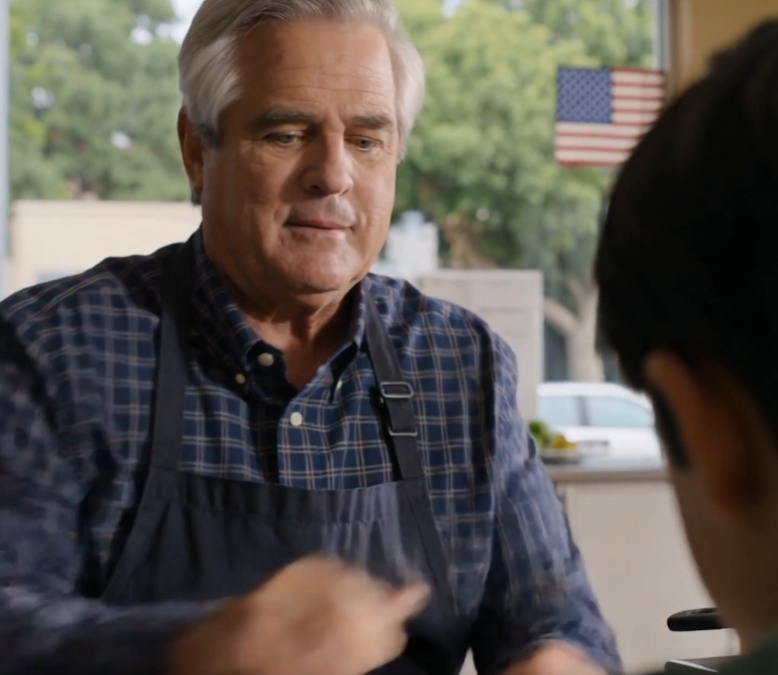
My grandson came to stay with me for spring break. The next morning, I asked him, “Do you want another piece of steak?”
He went quiet for a moment. Then he looked up at me and whispered, “At your house, am I allowed to have more?”
What he told me after that left me speechless. I immediately made four phone calls and started putting everything in order. His stepmother had no idea what was waiting for her.
I appreciate every one of you at Silent Dad Revenge. Which corner of the globe are you watching from? Drop your city below.
Also, please note that fictional details were crafted for storytelling and educational impact. Any similarities to actual events or identities are coincidental, but the underlying wisdom is practical.
I’ve been cutting meat for thirty-one years. Beef brisket, pork shoulder, lamb ribs. I know every grain, every layer of fat, every place where a blade needs to slow down and let the muscle speak for itself.
I’m not a man who misses things.
That’s what I told myself, anyway, until the morning my grandson asked me if he was allowed to eat a second piece of steak.
It was a Saturday in late March, the kind of morning Pasadena does better than anywhere else on earth. Cool air coming down off the San Gabriel Mountains, thin gold light cutting through the kitchen window of Merritt’s Cut and Smoke, the smell of cast iron and rendered fat filling every corner of the shop.
I’d been up since four-thirty. Old habit. The cases needed restocking, the smoker out back needed checking, and I’d promised Cody a real breakfast before the shop opened. Not cereal. Not a granola bar grabbed on the way out the door. A proper plate. Ribeye, two eggs over easy, sourdough toast with real butter.
Cody had arrived Friday evening with a duffel bag and that old green hoodie he’d been wearing since sixth grade started. He was twelve now, tall for his age, with his mother’s dark eyes and his grandfather’s stubborn jaw.
I hadn’t seen him in almost three weeks. Sable had sent a text saying he had some kind of respiratory thing and the doctor recommended limited contact.
I hadn’t questioned it.
I should have questioned everything.
He ate the first piece of steak the way a kid eats when he thinks someone might take the plate away. Fast, head down, fork working before he’d fully settled into the chair.
I didn’t say anything about it. I figured maybe he was just hungry after the drive over.
I flipped the eggs, and when Cody’s plate was nearly empty, I looked over at him and asked, “Do you want another piece of steak?”
It was a simple question, the kind a grandfather asks without thinking twice.
That was when something shifted in his face.
Not a big movement. Just a small, careful stillness, the way a person goes still when they’re trying to figure out the right answer to a question that shouldn’t require one.
His fork stopped moving.
He looked at the remaining steak on the cutting board. Then he looked up at me, and what I saw in his face wasn’t hunger.
It was calculation.
He was trying to figure out whether this was a test.
“At your house,” he said, real quiet, almost under his breath, “am I allowed to have more?”
I set the pan down on the burner. I turned the heat off, pulled out the stool across from him, and sat down because my legs suddenly didn’t feel entirely reliable.
“What do you mean, allowed?” I said.
His eyes dropped to the plate.
“Nothing. Never mind, Grandpa.”
“Cody.” I kept my voice even. Thirty-one years of running a shop means you learn that the tone you use when something goes wrong matters more than the words. “You asked me something. I want to hear it.”
He picked up his fork again, but he didn’t eat. He turned it over in his fingers, over and over, the way a nervous person handles something small when they need their hands to be busy.
“At home,” he said, “you have to finish your chores before you can open the fridge. And if you already had your afternoon snack, you can’t have anything else until dinner.”
He paused.
“And dinner isn’t always…”
He stopped again.
“Dinner isn’t always what?” I said.
He put the fork down.
“If I broke a rule that day, Sable says dinner is a privilege, not a right.”
The kitchen was very quiet.
Outside, a truck rolled by on the street. The smoker ticked as it cooled. I was aware of both sounds the way you become aware of ordinary things when your body is trying to keep you calm while your mind is doing something else entirely.
“How long has this been going on?” I asked.
He shrugged with one shoulder. Not the casual shrug of a kid who doesn’t care, but the careful shrug of a kid who has learned that saying too much leads to consequences he can’t predict.
“Since she moved in, I guess. Maybe a little after.”
“And your dad,” I said. “Does he know?”
Cody looked at me.
Then he really looked at me, and what was in his face was something I’m not going to describe in detail, because some things a grandfather shouldn’t have to put into words.
He looked older than twelve. He looked like someone who had already asked that question and gotten an answer he was still trying to make peace with.
“He says Sable knows what she’s doing,” Cody said. “He says I need to learn self-control.”
I stood up from the stool. I walked to the sink, turned on the cold water, and put both hands under it.
Not because I needed to wash anything, but because I needed thirty seconds where Cody couldn’t see what was happening in my expression.
I stood there until I was sure my face was doing what I needed it to do. Then I turned the water off and dried my hands on the dish towel hanging from the oven handle.
When I turned around, Cody had pulled his sleeve down over his right wrist.
It was a small movement, almost automatic. The kind of thing a person does without thinking when they’ve gotten used to hiding something.
But I’d spent thirty-one years watching hands. I knew what an instinct looked like.
“Pull your sleeve up,” I said.
“Grandpa…”
“Cody. Please.”
He pulled it up.
Around his wrist, faded to yellow and green at the edges, were bruises the shape and size of four fingers and a thumb.
Somebody had grabbed him hard enough to leave a mark that hadn’t finished healing a full week later.
I didn’t raise my voice. I didn’t put my fist through anything.
I walked back to the stool, sat down across from him, and told him in the steadiest voice I owned that he wasn’t going anywhere today. That whatever was supposed to happen on Sunday, whatever the schedule said, whatever anyone expected, none of that applied anymore.
He looked at me with those two old eyes and asked, “Is Dad going to be mad?”
“Your dad’s feelings,” I said, “are not your job. They never were.”
I picked up my phone from the counter.
I had four calls to make.
And I already knew exactly who to call and in what order.
I stepped outside through the back door of the shop into the narrow alley behind the smoker, where the morning air still carried that mountain chill.
Cody was on the couch inside with the television on, volume low. I could see him through the window. He’d pulled his knees up to his chest and was staring at the screen without watching it.
I turned my back to the window and dialed.
The first call was to my sister, Vera Cullen.
Vera spent twenty-two years as a school nurse in the Pasadena Unified District before she retired, and she still kept a blood pressure cuff, a digital scale, and a medical bag in her hall closet the way some people keep umbrellas. Because you never know, and being caught unprepared had always offended her personally.
She picked up on the second ring.
“Clyde, it’s seven in the morning on a Saturday.”
“I know what time it is,” I said. “I need you to bring your bag over here. The cuff, the scale, everything.”
A pause.
Vera has known me for sixty-eight years. She can read the specific weight of my silences the way I read a cut of meat.
“How bad?” she said.
“I don’t know yet,” I said. “That’s why I need you.”
“I’ll be there in twenty minutes,” she said, and hung up without asking anything else.
That’s the thing about people who have seen real trouble in their working lives. They don’t waste time on questions that can wait.
The second call was to Coach Harlan Pruitt.
Harlan had been running the Pasadena Youth Baseball Association for eleven years, and Cody had been one of his players since the boy was nine years old. Number seven. Left-handed hitter with a good eye and a tendency to crowd the plate that Harlan had been working with him on since last spring.
I called to ask about the schedule for the current season.
Simple question.
I already had a bad feeling about the answer.
Harlan picked up on the fourth ring, slightly out of breath, like he’d been moving around.
“Clyde. Hey, what can I do for you?”
“I was wondering about Cody’s game schedule,” I said. “He’s here for spring break, and I was hoping to catch a game this week.”
The silence that followed was two seconds too long.
“Clyde,” Harlan said, and his voice had shifted into something careful, the tone of a man choosing words the way you choose footing on a wet surface. “Cody isn’t on the roster this season. His mother pulled him from the team about three weeks ago.”
My jaw tightened.
“What reason did she give?”
“She said the family was going through some financial difficulty. Said they couldn’t cover the equipment fees and the field costs.”
Harlan paused.
“I tried to tell her we had a hardship fund, that we could work something out. She said it wasn’t necessary. She’d already made up her mind.”
Another pause, shorter.
“Clyde, when I told Cody he couldn’t hold his spot anymore, that boy cried. Stood right there on the field and cried like I hadn’t seen a kid cry in a long time. He asked me not to tell his dad.”
I thanked Harlan and told him I’d be in touch.
I stood in the alley for a moment after I hung up, looking at the back wall of the smoker, at the black staining around the exhaust vent from three decades of mesquite and hickory.
I breathed in through my nose and out through my mouth, the way my doctor had told me to when my blood pressure crept up two years ago.
The third call was to Pete Garland.
Pete owns the hardware store two doors down from mine on Mentor Avenue, and we’ve been eating lunch together at the diner on Lake Street every Thursday for going on nineteen years.
Pete knows everybody in this part of Pasadena.
And more importantly, everybody knows Pete.
“I need a favor,” I told him. “You remember that new BBQ restaurant that opened on Marengo last fall? The one that passed on my supply contract?”
“That’s the one,” Pete said. “Sure, I know the owner. Bill Dutton. Good guy.”
“Next time you see him, I need to know the real reason he went with someone else. Not the official reason. The real one.”
Pete was quiet for a moment.
“You think somebody got to him?”
“I don’t know,” I said. “That’s what I need to find out.”
“I’ll call him today,” Pete said. “You doing okay, Clyde?”
“Not especially,” I said. “But I will be.”
The fourth call was the one I’d been building toward without letting myself think about it too directly.
Dina Whitfield was Cody’s mother.
She lived in Fort Collins, Colorado, where she worked a contract position with an agricultural equipment company that kept her schedule tight and her travel irregular.
She and Garrett had been divorced for four years. The arrangement was that Cody spent the school year in Pasadena with Garrett and came to Dina for summers and alternating holidays. Phone calls and video chats in between.
She answered on the third ring, and I could hear wind in the background, like she was outside.
“Mr. Merritt,” she said, and her voice warmed immediately.
Dina had always been decent to me, even after everything with the divorce.
“Is Cody okay? Is something wrong?”
“That depends on what you already know,” I said. “And I need you to tell me honestly. When was the last time you spoke to Cody without Garrett sitting in the room?”
The wind on her end kept moving.
She didn’t answer right away, and that told me more than any answer she could have given.
“Garrett always says Cody is busy,” she said slowly. “Or tired. Or at practice. The video calls, there’s usually…”
She stopped.
“Garrett’s usually there?”
“Yes. He says Cody needs consistency. That too much back and forth makes the transitions harder.”
“Dina,” I said, “I need to tell you some things. And I need you to stay on the line until I’m finished.”
I told her.
Not everything. Not yet. But enough.
The food restrictions. The bruises on his wrist. The baseball team.
When I finished, the wind on her end was the only sound for a long moment.
“He told me Cody was thriving,” she said.
Her voice had gone flat and tight, the way a voice goes when emotion is too large to carry any inflection.
“He used that exact word. Thriving.”
She made a sound that wasn’t quite a laugh.
“I asked Cody directly on one of those calls. I asked him if he was happy. And Cody looked right at the camera and said yes. Garrett was sitting right next to him.”
“I know,” I said.
“I want to drive there tonight,” she said, and her voice cracked on the last word.
“Not yet,” I said. “Give me a few days to put things together properly. Come with information, not just anger. Your son needs this done right, not fast.”
She agreed, though I could hear what it cost her to agree.
We said goodbye, and I stood in the alley another minute, the phone warm in my hand, the smoker ticking quietly beside me.
Then the back door of the shop opened, and Cody stuck his head out.
His hair was still flat on one side from sleeping. He looked at me with those careful eyes and said, “Is everything okay, Grandpa?”
“Everything is fine,” I said. “You hungry? I think I’ve got enough ribeye for round two.”
He almost smiled.
Not quite.
But almost.
I held the door open and followed him back inside.
Vera arrived at 8:47 in the morning with a canvas tote bag over one shoulder and the expression of a woman who had already prepared herself to be angry.
She’d worked school health clinics for twenty-two years. She’d seen hungry kids. She knew what they looked like before she even set her bag down on my prep counter, because she’d stopped in the doorway, looked at Cody sitting on the couch, and something in her face had gone very still.
She didn’t say anything about it.
She set the bag down, pulled out a box of nitrile gloves, and snapped one onto her right hand with the efficient crack of someone who had done it ten thousand times.
Then she turned to Cody with a smile that was warm enough to be real and professional enough to be reassuring.
“Hey, sweetheart,” she said. “Your grandpa tells me you’ve been a little run-down lately. You mind if I check a few things? It’ll take five minutes, I promise.”
Cody looked at the glove, then at the canvas bag, then at me.
I gave him a small nod.
He got up from the couch without arguing, which told me something on its own. Twelve-year-old boys argue about everything. The ones who’ve learned not to argue have usually learned it the hard way.
Vera weighed him first.
She set the digital scale on the flat section of floor near the back wall, the spot where I keep the hand truck when it’s not in use, and asked him to step on in his socks.
Cody stepped on without hesitating.
That bothered me more than hesitation would have.
He was used to being weighed. It was routine to him.
Vera noted the number on her pad without reacting to it.
Then she took his blood pressure. She explained each step as she did it. Told him the cuff was going to squeeze tight for a second, told him to breathe normally, and kept her voice at the same even temperature throughout.
When the reading came up, she noted that too.
Then she checked his fingernails, looked at his eyes, and asked him a few questions about whether he ever felt dizzy at school, whether he got headaches in the afternoon, and whether he had any trouble staying awake in class.
“He does sometimes,” Cody said to all three.
“That’s helpful to know,” Vera said, in the tone of a person for whom that information was deeply not helpful to know, but who was keeping that reaction in a locked room until later.
“Thank you, sweetheart. You want to go pick something to watch while I talk to your grandpa for a minute?”
Cody went back to the couch.
Vera waited until the television came on. Then she took me by the elbow, steered me into the small office off the side of the prep area, and closed the door behind us.
She didn’t sit down.
She stood in the middle of the room with her notepad and looked at me with the eyes of someone who was furious and exhausted and trying to be neither of those things for my sake.
“He’s lost somewhere between eleven and twelve pounds since his baseline checkup in the fall,” she said. “I remember his chart from October when I was doing my final transition paperwork before retiring.”
She held up the notepad.
“His blood pressure is low. Not emergency-room low, but low enough that it explains the dizziness and the headaches. His fingernails show early signs of nutritional deficiency. The ridging, the color. This didn’t happen in a week, Clyde. This is months.”
I leaned against the doorframe.
My chest felt like something heavy had been set on it and left there.
“Can you put that in writing?” I said.
“I can write down every number I observed this morning,” she said. “I want to be clear. I’m not diagnosing anything. I’m a retired school nurse, not a physician. What I’m telling you is that these numbers, in a twelve-year-old boy who should be in a growth phase, are not normal. He needs to see a family doctor today if you can manage it, or first thing Monday morning.”
“I’ll call Dr. Farrell when the office opens,” I said.
Vera nodded.
Then she put the notepad down on my desk, pressed both hands flat against the surface, and looked at the wall for a moment, collecting herself.
When she turned back, her eyes were bright in a way that had nothing to do with happiness.
“He stepped on that scale without blinking,” she said. “You understand what that means? That child has been weighed regularly enough that it doesn’t even register as unusual to him anymore. Someone has made standing on a scale and being measured and recorded feel like a normal part of his day.”
Her voice dropped.
“He’s twelve years old, Clyde. He’s supposed to be eating everything that isn’t nailed down. He’s supposed to be driving you crazy asking for snacks at ten at night. Instead, he sat at your counter this morning and asked permission to eat a second piece of steak.”
I didn’t answer because there wasn’t anything to say to that.
The truth of it sat between us in that small office like a third person in the room.
“Tell me about the bruising,” Vera said.
I told her what I’d seen on his wrist. I described the pattern, four fingers and a thumb spread the way a hand spreads when it grabs and holds.
Vera listened without interrupting.
When I finished, she was quiet for a moment, and then she said, “I want to look at it properly before I leave. With his permission and yours.”
She picked up her notepad again.
“And I want to document it. Measurements, color staging, placement. Not for any legal purpose right now. Just so there’s a record that exists, made by someone with medical training, with a date and a time on it.”
I told her to go ahead.
We went back into the main room.
Vera sat beside Cody on the couch and asked very gently if she could look at his wrist again, the one he’d shown his grandpa that morning.
Cody pulled his sleeve up without a word, but his jaw tightened as he did it, and he turned his face away and looked at the television screen while Vera examined the bruising.
His free hand gripped the couch cushion hard enough that his knuckles went pale.
Vera documented everything with the quiet precision of twenty-two years of professional practice.
When she finished, she pulled his sleeve back down for him, patted the back of his hand once, gently, and said, “You’re doing great, sweetheart. I mean that.”
Cody nodded at the television.
His jaw was still tight.
He was holding himself together with the concentrated effort of a kid who had gotten very good at holding himself together.
And that was the thing that broke something loose in my chest in a way the bruises alone hadn’t quite managed.
I walked Vera to her car.
She put her bag in the back seat, closed the door, and turned to look at me across the roof of the car with tears standing in her eyes that she was too stubborn to let fall.
“Monday morning,” she said. “Dr. Farrell.”
“Monday morning,” I said.
She drove away.
I went back inside.
Cody was still on the couch, still watching the television, still holding himself together.
I went to the kitchen and started heating up the cast iron again.
It was almost noon.
The boy needed lunch.
Monday morning, I unlocked the front gate of the shop at 6:15, same as I’d done every weekday for thirty-one years.
The metal was cold under my hands. The street was still mostly quiet, just a delivery truck idling at the corner of Mentor and Colorado and a woman walking a dog the size of a small horse.
Normal Pasadena morning.
Nothing about it felt normal.
Cody was still asleep upstairs.
I’d called Dr. Farrell’s office the minute they opened at eight and gotten him an appointment for Wednesday. The woman on the phone said Wednesday was the earliest available.
I said Wednesday was fine, and then I stood at the counter for a moment after I hung up, thinking about what Wednesday meant.
Which was two more days of making sure the boy ate enough to get through the afternoon without his blood pressure dropping out from under him.
Coach Harlan called at 7:50 while I was breaking down a primal cut of beef in the back room.
I had the bone saw going, so I almost missed it.
I killed the saw and picked up.
“Clyde,” Harlan said. “I’ve been thinking about our conversation yesterday. There’s something else I should’ve told you.”
“Go ahead,” I said.
“The week after Sable pulled Cody from the team, I saw him at school. He was sitting alone on the bleachers before first bell. Just sitting there, not talking to anyone. I went over and asked if he was okay.”
Harlan’s voice thickened slightly.
“He said he was fine, but he asked me… He asked me if I could keep his jersey for him. Number seven. He said he didn’t want to bring it home because he was worried it would get thrown away.”
Harlan cleared his throat.
“I’ve got it hanging in my office right now, Clyde. I didn’t know what else to do with it.”
I thanked him.
I set the phone facedown on the steel prep table and stood there with both hands braced against the edge, looking at the beef in front of me, breathing steadily the way Vera had taught me years ago when my temper ran hotter than it does now.
In through the nose, out through the mouth.
Four counts each way.
I did it three times.
Then I washed my hands, took off my apron, and told my counter assistant, Marcus, to handle the floor for a couple of hours.
I drove to Diamond Sports on Green Street.
Diamond Sports had been on Green Street for about fifteen years. The owner, a compact man named Phil Esterhouse, knew me the way most of the business owners in that part of Pasadena knew me. Well enough to nod at Chamber of Commerce meetings, well enough to exchange names and weather and complaints about parking.
He was behind the counter when I walked in, working through what looked like an inventory spreadsheet.
“Clyde Merritt,” he said. “Don’t usually see you in here. You taking up pickleball?”
“Not today,” I said. “I need to ask you about a purchase. My son came in here back in December. Bought a youth baseball set. Composite bat, fielding glove, cleats. The full setup.”
Phil’s expression shifted in a way that was subtle, but not subtle enough.
He pulled up something on his computer, clicked around for a moment, and said, “Yeah, I’ve got it here. December fourteenth. Four hundred sixty-two dollars with tax.”
“And when did he bring it back?” I said.
Phil stopped clicking.
He looked up at me carefully, the way a man looks at someone when he’s trying to figure out exactly how much they already know.
“December seventeenth,” he said. “Three days later. Full return. Everything still in the original packaging.”
The packaging.
The bat and glove and cleats had never even been taken out of the packaging.
My grandson had never touched them.
“He give a reason?” I said.
“He said the kid changed his mind,” Phil told me. “Decided he didn’t want to play.”
Phil set his pen down on the counter.
“I remember because the father, your son, he seemed real relaxed about it. Didn’t seem bothered at all. Usually when a parent returns sports equipment, they’re a little embarrassed, you know? He wasn’t.”
Phil paused.
“I’d actually recognized the name from the team roster because my nephew plays in the same league. I remember thinking it was a little strange because I’d heard the kid was good.”
I asked Phil what form the refund had taken.
He checked his records.
“Cash.”
Garrett had paid cash, and Garrett had taken cash back.
I thanked Phil and walked out to the parking lot.
The morning sun was already warming the concrete.
I sat in the truck for a while with the windows down, my hands resting on the steering wheel, and I let myself feel what I was feeling for exactly sixty seconds.
Because that’s all I ever allow myself when something makes me want to drive fast and make decisions I can’t take back.
Four hundred sixty-two dollars.
That was what my grandson’s place on that team had cost.
I’d handed Garrett five hundred dollars in cash back in early December and told him to get the boy a proper setup, something that would last him a few seasons.
Garrett had driven to this parking lot, walked into that store, spent the money, and then driven back three days later and taken it all back.
The equipment had gone from the store shelf to Garrett’s hands and back to the store shelf without ever once touching the hands it was meant for.
And the same weekend Garrett collected that refund, he and Sable had posted photographs from a resort hotel in Laguna Beach.
I knew because Vera, before she drove over that Saturday morning, had pulled up Garrett’s public social media the way a careful person gathers information before walking into a situation they want to understand.
She’d shown me the pictures during the hour after she finished examining Cody. Quietly, without comment. Just turned her phone toward me and let me look.
Oceanfront room. Room-service breakfast. Sable in sunglasses on a balcony, smiling at the camera like a woman without a single thing to answer for.
I started the truck.
I sat there another moment, engine running, hands on the wheel.
Then I thought about a twelve-year-old boy asking a baseball coach to keep his jersey safe because he was afraid it would get thrown away at home.
I put the truck in reverse and headed back to the shop.
Before I reveal the shocking truth I uncovered on that tablet late that night, comment “Stay” or drop a 1 below so I know you’re still here with me.
Also, please note that the upcoming part contains fictional elements and dramatized details. If you prefer not to continue, feel free to pause or exit the video right here.
Tuesday evening, Cody fell asleep on the couch at 9:15, with the television still going and his tablet sitting faceup on the cushion beside him.
I turned the television off, pulled the blanket up over his shoulders, and picked up the tablet to set it on the counter so it wouldn’t slide off onto the floor during the night.
That was all I meant to do with it.
The screen was still lit.
The app that was open was a messaging application, and the account logged in wasn’t Cody’s.
The name in the top corner of the screen was Garrett’s.
Garrett had never logged out of the family messaging app on this tablet, which was an old device he’d passed down to Cody eight months ago when he bought himself a new one.
I should’ve set the tablet on the counter and walked away.
I’m sixty-eight years old, and I’ve lived long enough to know that some information changes you in ways you cannot come back from.
I sat down at the kitchen table, and I read.
The thread I found was between Garrett and Sable, dated five weeks earlier.
Sable had written first, late on a Wednesday night.
“He looked so sad sitting in the corner tonight. Maybe we let him have a sandwich or something? Just a small one.”
Her message sat there for eleven minutes before Garrett replied.
I know it was eleven minutes because the timestamps were right there on the screen, small gray numbers that didn’t care what they were telling me.
Garrett’s reply read:
“No. You set a rule. You follow through. Let him sit with it one night and he’ll remember next time. You go soft now and he’ll walk all over both of us by summer. Don’t blink.”
Sable had sent back a single word.
“Okay.”
I read that exchange four times.
Not because I didn’t understand it the first time, but because some part of me kept looking for a different interpretation, some angle from which Garrett’s words meant something other than what they plainly meant.
There was no other angle.
My son had looked at a message from his wife saying their twelve-year-old boy looked sad and hungry, and he’d told her to let the child sit with it.
I set the tablet down on the table.
I pressed both hands flat against the wood surface and looked at the far wall of the kitchen, at the framed photograph hanging there of the original Merritt’s Cut and Smoke signage from 1994, back when my wife Carol was still alive and used to bring me lunch on Thursdays and complain that I smelled like hickory smoke all the way home.
I looked at that photograph for a long time.
Then I picked the tablet back up.
I wasn’t looking for anything else, but the voicemail application was listed in the open tabs along the bottom of the screen, still logged into Garrett’s account, the notification badge showing fourteen unheard messages.
I pressed it without fully deciding to press it.
The first message in the list was dated June ninth of last year, nine days after Garrett and Sable had moved into the house behind my shop.
The label on the recording showed Sable’s name.
I pressed play.
Her voice came through the small speaker with the slightly compressed quality of a phone recording, but it was clear enough.
She sounded different than she did in person.
Less careful. Less curated.
She sounded like someone talking to a person she didn’t need to perform for.
“Babe, quick question while I have a second,” she said. “The house behind the shop, that’s in your dad’s name, right? Not yours? And the joint account, the one he added you to, what’s the current balance on that? I just want to make sure I have the full picture of what we’re working with. And listen, if he ever starts talking to any lawyers or financial people, I need to know right away. Just give me a heads-up before anything gets official. Okay? Call me back.”
The recording ended.
I sat at the kitchen table in the quiet of the shop after hours, the refrigeration units humming in the back room, the street outside making the small sounds that streets make at ten o’clock at night in a neighborhood where people go to bed at a reasonable hour.
I pressed play again.
I listened to her voice a second time, the same words in the same order.
And what I was listening for the second time wasn’t the content.
It was the tone.
The ease of it.
The way she asked about the balance on my joint account the same way a person asks what time dinner is ready.
She’d been inside my shop for nine days when she recorded that message.
She’d brought homemade lemon bars to our first meeting and told me the shop had a warmth to it that reminded her of her grandfather’s place back in Tennessee.
I found Garrett’s reply in the thread below, a voice message he’d sent back within the hour.
“House is in his name only. Account balance, last I checked, was around thirty-four thousand. And yeah, I’ll keep an eye on the lawyer thing. He’s not really the type to go looking for outside advice, so we should be fine. Don’t stress about it.”
Don’t stress about it.
I put the tablet facedown on the table.
I sat there in the kitchen of my shop, the place I’d built with thirty-one years of four-thirty mornings and beef-stained aprons and handshake deals with ranchers up in the Central Valley, and I understood something I’d been carefully not understanding for nine months.
This hadn’t started with Sable losing her temper over a snack.
This hadn’t started with Garrett failing to stand up to a difficult woman.
This had started nine days after they moved in, with a phone call, with a question about a bank balance, with a man who heard his wife planning something and said, “Don’t stress about it.”
I looked over at the couch.
Cody was still asleep, one arm hanging off the edge, breathing slow and even the way kids breathe when they’re finally somewhere safe enough to sleep deeply.
I got up and went to my desk.
I opened the financial ledger I kept in the bottom drawer, the one with thirty-one years of transactions recorded in it.
I turned to the most recent pages and started reading from the beginning of last June.
The ledger went back thirty-one years. I’d kept one every year since I opened the shop, handwritten in the same style of black composition notebook my father had used for his accounts when he ran a feed supply business outside Bakersfield.
Every page had the same four columns: date, description, amount in, amount out.
Thirty-one notebooks stacked in the bottom cabinet of my office, each one labeled on the spine with the year.
I pulled the current one and the one from last year and set them both on the desk under the lamp.
I started with June of last year, the month Garrett and Sable moved in.
The first thing I looked for was the housing arrangement.
I’d never charged Garrett rent for the house behind the shop. The place was mine, free and clear. I’d paid it off eleven years ago, and when Garrett came to me saying he needed a fresh start after the divorce, somewhere stable for Cody, I told him to move in and not worry about it.
What I hadn’t fully calculated, sitting there with the ledger open under the lamp, was what that arrangement had been worth in actual dollars over the past nine months.
Twelve hundred dollars a month, which was the low end of what a two-bedroom in that part of Pasadena went for.
Nine months.
Ten thousand eight hundred dollars just in rent I’d never collected.
Then I looked at the utility line.
I’d noticed the bill going up and assumed it was the summer heat hitting the refrigeration units harder. I hadn’t thought to question it.
The overage across nine months came to just under two thousand dollars.
Then I looked at the meat inventory.
I kept detailed records of every cut that left the shop. Sales, waste, personal use, everything.
Starting in June, there was a recurring line item I’d entered myself, labeled “family,” that appeared every Thursday without fail.
I’d written those entries in my own hand. I remembered writing them.
What I hadn’t done, apparently, was add them up over nine months and look at the total as a single number.
When I did that now, sitting at the desk at 11:45 at night, the number that came back was four thousand three hundred eighty dollars in wholesale meat value that had walked out of my shop and into Garrett’s kitchen.
I set the pen down.
I got up from the desk, walked into the back room, and stood at the shelf where I keep the household items. Dish soap, paper towels, the first-aid kit, a small radio I’d had since the nineties.
I turned the radio on low, just for the noise of it.
Just so the shop didn’t feel quite so empty.
A late-night jazz station out of Long Beach.
I stood there listening to it for a minute.
Then I went back to the desk.
The bank statements were in the file drawer. I pulled the folder for the joint account, the account I’d opened with Garrett’s name on it ten years ago when he was twenty-eight and just starting out, and I wanted him to have access to something if things ever got difficult.
Joint account. California law. Both parties have full withdrawal rights.
I’d known that when I set it up.
I’d considered it a feature, not a risk, because I’d trusted my son completely.
The withdrawals started in August.
Eight of them over five months, ranging from two thousand to six thousand dollars, each one spaced far enough apart to stay under the threshold that would’ve triggered an automatic bank alert.
The total came to thirty-one thousand four hundred dollars.
I had to count it twice because the first time my eyes moved over the number too fast, the way your eyes move over something your brain isn’t ready to accept.
Pete called at 12:20 in the morning.
I picked up on the first ring.
“I talked to Bill Dutton today,” Pete said without preamble, because Pete had known me long enough to know that at that hour I didn’t need small talk.
“He said a woman called him last October. Said she was a longtime customer of Merritt’s and wanted to give him a heads-up before he signed anything. Told him the quality had been going downhill, that you’d had some product returned recently, that you were getting up there in age and maybe not as sharp as you used to be.”
The radio played something slow and low in the back room, a trumpet working through a melody I almost recognized.
“She leave a name?” I said.
“No,” Pete said. “But Bill said she had a Southern accent. Tennessee, he thought.”
I thanked Pete and told him to go back to sleep.
I sat at the desk for a while after that, not reading anything, just sitting.
The ledger was open in front of me. The bank statements were spread across the right side of the desk. The radio kept going in the back room.
After a while, I opened the bottom drawer and took out the photograph I kept there.
Cody at eight years old, standing behind the counter of the shop in an apron that came down to his knees, wearing a pair of grilling gloves so large his hands disappeared inside them completely, grinning the way a kid grins when he’s exactly where he wants to be and hasn’t yet learned to be careful about showing it.
I looked at that photograph for a long time.
Then I set my alarm for four in the morning, turned off the desk lamp, and sat in the dark.
I didn’t sleep.
But when the alarm went off, I was already dressed.
I had a list written on a yellow legal pad on the corner of the desk.
Seven items.
I’d thought through each one carefully in the dark, and I was going to work through every single item before Garrett and Sable had finished their first cup of coffee.
The locksmith I use is named Gerald Foss.
He’s been doing commercial lockwork in Pasadena for twenty-three years, and he owes me approximately forty pounds of brisket in favors accumulated over that time.
I called him at 4:15 in the morning, and he picked up because Gerald is the kind of man who keeps his ringer on at night and doesn’t complain about it.
“I need new locks on the shop front, the back entrance, and the storage building,” I told him. “Everything. Today.”
“How early?” Gerald said.
“How soon can you get here?”
He arrived at 5:40 with a toolbox and a thermos of coffee and asked no questions, which is one of the things I value most in a person.
By 6:30, every exterior lock on Merritt’s Cut and Smoke had been replaced.
I pocketed the new keys and crossed the first item off the list.
The second item was the bank.
The mobile app handled the transfer in four minutes.
I stopped the recurring monthly payment I’d been sending to Garrett’s account and set up a new direct payment to the Pasadena Unified School District student account portal, earmarked for Cody’s lunch account and activity fees.
The money was going to reach my grandson one way or another.
It was simply no longer going to pass through hands that had demonstrated they couldn’t be trusted with it.
Third item: the storage building power.
I walked out back, opened the breaker panel on the exterior wall, and switched off the dedicated circuit I’d run to the building three years ago for my own equipment.
The building went dark.
I padlocked the door with one of the new locks Gerald had left me.
Sable’s training clients had been paying her to use a space that cost her nothing, in a building that cost me money every month to power.
That arrangement was finished.
Fourth item: the truck.
I own a 2019 Ford F-250 that I use for supply runs and deliveries.
Garrett had been borrowing it daily for eight months on the basis of a casual conversation we’d had when his own car needed a repair that somehow never got completed.
I sent him a text message at 6:50 in the morning.
The truck keys needed to be left on the front step of the shop before eight.
No explanation.
Just the request and the time.
I was restocking the front case when Tommy Briggs arrived for his seven o’clock shift.
Tommy was seventeen, a junior at Pasadena High, and he’d been working weekday mornings and Saturday afternoons for me since the previous September.
He was reliable and quiet, and he worked hard, which was all I’d ever asked of him.
He stopped inside the front door when he saw the new locks, looked at them for a moment, then looked at me.
“Morning, Tommy,” I said.
“M-morning, Mr. Merritt.”
He tied on his apron and came behind the counter.
He started pulling the case trays without being asked, which was his habit.
We worked in silence for a few minutes, and then I straightened up and looked at him directly.
“I need to ask you something,” I said. “And I want you to know before you answer that whatever you tell me, your job here is not in any kind of jeopardy. You understand?”
Tommy’s hands slowed on the tray he was holding.
He was a seventeen-year-old kid, and his face was doing the thing faces do when someone asks a question you’ve been hoping no one would ask.
“Okay,” he said carefully.
“The Wednesday afternoons when I’m out making supply runs,” I said. “Has anything been happening in the shop that I should know about?”
Tommy set the tray down.
He gripped the edge of the counter with both hands and looked at the surface between his palms.
I watched his jaw work for a moment before he spoke.
“She told me you knew,” he said. “Mrs. Garrett. Sable. She told me you had asked her to handle some of the walk-in customers on Wednesdays while you were out. She said you wanted her to offer a discount to the regulars.”
He looked up at me then, and his eyes were red at the corners, the way a young person’s eyes get when they’re ashamed of something they didn’t fully understand they were part of.
“She was taking cash, Mr. Merritt. Straight into her bag. I watched it happen three times, and I didn’t say anything because she told me you had set it up that way, and I didn’t want to…”
His voice broke slightly.
“I didn’t want to call you a liar, basically.”
My chest tightened with a specific kind of anger that had nothing to do with Tommy and everything to do with the calculated precision of what Sable had done.
Not just the theft, but the engineering of it.
The way she’d constructed the situation so that a seventeen-year-old boy would feel that questioning her meant questioning me.
“Tommy,” I said. “Look at me.”
He looked up.
“This is not your fault. Not one piece of it. She… she lied to you specifically so that you would feel exactly the way you’re feeling right now. That is on her, not on you.”
He nodded, but his hands were still gripping the counter edge hard enough that his knuckles had gone pale.
I could see him working to hold himself together.
I told him to take ten minutes and get some air out back.
He went.
At 8:12, I looked out the front window and saw Garrett’s truck keys sitting on the front step.
No knock.
No message.
Just the keys in a small pile on the concrete.
Which told me everything I needed to know about what Garrett thought his options were.
Pete came by at nine for his weekly order.
He looked at the new locks, looked at me, and said exactly what I’d expected Pete to say after nineteen years of Thursday lunches and knowing each other’s business without needing to be told everything.
“You need anything,” Pete said, “you call me.”
“I will,” I said. “I have a feeling the week isn’t close to over.”
Thursday afternoon, I was breaking down a half side of beef in the back room when I heard the bell above the front door.
I heard it the way you hear things when you’re already expecting them.
Not as a surprise, but as a confirmation.
I set the knife down on the magnetic strip, wiped my hands on my apron, and walked out front.
Garrett came through the door first.
He was wearing the gray button-down he wore when he wanted to look like a reasonable person having a reasonable conversation, which told me he’d thought about this before he came.
Sable was behind him.
She’d done something with her expression that I recognized from the nine months she’d spent in my shop pretending to be one thing while being another.
A kind of practiced openness.
The face of a woman who had decided that warmth was her best tactical option.
Cody was behind the counter with me.
He’d been helping me label the new cuts for the display case, something he’d been doing since he was old enough to hold a marker.
When Garrett and Sable walked in, Cody’s hand stopped moving on the label he was writing.
He didn’t drop it.
He held it very still and watched his father cross the floor.
Pete Garland was at the far end of the counter, working through a cup of coffee I’d poured him twenty minutes earlier. He’d come in on the pretense of finalizing his weekly order, which neither of us had actually discussed.
Pete was a good friend, and he knew how to be present without making himself the center of a room.
Garrett stopped at the counter and looked at me with the expression of a man who has rehearsed his opening line enough times that he’s started to believe it.
“Dad,” he said. “I think we need to talk about what’s been going on this week. You’ve made some decisions that affect my family, and I think you owe us a conversation.”
“You owe me thirty-one thousand four hundred dollars,” I said. “But I’m not going to talk about that right now.”
His jaw tightened.
Sable touched his arm once, lightly, the way a person touches a partner they need to stay on script.
She looked past Garrett and found Cody behind the counter.
Her face rearranged itself into something that was supposed to look like relief and love and concern all at once, which was an impressive amount of work for one expression to do.
“Cody, sweetheart,” she said, and her voice had that particular softness she deployed when she needed an audience to see her as the reasonable one. “I know things have been confusing this week. I think if we all just go home and sit down together, we can work through whatever misunderstanding has happened here.”
Cody looked at her.
He didn’t say anything for a moment, and in that moment I could see him making a decision.
The way you can sometimes see a person make a decision. A small settling in the shoulders, a steadying of the breath, something that moves through a person when they stop being afraid of the thing that’s been frightening them.
“There’s no misunderstanding,” Cody said.
His voice was quiet, but it was even.
Twelve years old, and his voice was steadier than mine would’ve been.
“You know exactly what you did.”
Sable’s expression flickered.
She recovered it quickly, but not quickly enough.
“Cody, honey, I know you’ve been upset, and your grandfather has been filling your head with—”
“He hasn’t told me anything I didn’t already know,” Cody said.
Garrett stepped forward then, and his voice dropped into the register I recognized from Cody’s childhood as the voice Garrett used when he wanted to end a conversation through sheer weight of authority.
“Cody. Get your things. We’re going home.”
Cody took one step backward until his shoulders were an inch from my chest.
He looked up at his father, and his eyes were clear and dry and absolutely direct.
What was in them wasn’t defiance exactly.
It was something quieter and more final than defiance.
It was the look of someone who had already done their grieving and come out the other side.
“You stopped being my dad,” Cody said, “the night I texted you I was hungry and you told me to go to sleep.”
The shop went completely quiet.
The refrigeration units hummed.
Outside on Mentor Avenue, a car went by.
Pete Garland set his coffee cup down on the counter with a sound that was very small in all that silence.
Garrett’s mouth opened.
Nothing came out of it for a long moment.
His face did something I hadn’t seen it do since he was a boy.
It lost its composure entirely.
Not into anger, but into something rawer than anger.
Something that looked like a man suddenly confronted with an accurate mirror after a long time of avoiding one.
His eyes went bright and wet at the corners.
Sable put her hand on Garrett’s arm again, harder this time.
“Garrett,” she said sharply. “Don’t.”
He pulled his arm away from her hand.
It was a small movement, but it was the first time I’d seen him pull away from her, and I think she noticed it too.
Because something shifted in her face that wasn’t part of any performance.
“This isn’t over,” Garrett said to me.
His voice had gone rough at the edges.
“No,” I said. “It isn’t. But today it is.”
He held my eyes for a moment longer.
Then he turned and walked out the front door.
The bell rang above it.
Sable stayed for exactly three seconds, long enough to look at me with an expression I didn’t fully have a name for.
Not quite anger.
Not quite fear.
Something in between that I suspected she didn’t let many people see.
And then she followed him out.
Cody hadn’t moved from the spot where he was standing.
His marker was still in his hand.
He was looking at the door, and his jaw was tight, and his eyes were bright, and his breathing was careful in the way breathing gets careful when a person is holding something large and doesn’t want to drop it in front of other people.
I put my hand on his shoulder.
I didn’t say anything.
There are moments when words are the wrong instrument entirely, and this was one of them.
After a minute, Cody looked down at the label in his hand and then at the cut of meat in the case in front of him.
“New York strip,” he said.
“New York strip,” I said.
He uncapped the marker and went back to writing.
Pete picked up his coffee cup.
The refrigeration units kept humming.
Outside, Pasadena went about its Thursday afternoon the way Pasadena always does, which is to say without particular concern for what is happening inside any one shop on any one street.
And I was grateful for that.
Because some things deserve to happen quietly.
Pete called Saturday morning at 10:45 while I was restocking the cold case.
“You need to know something,” he said. “Sable’s got folding tables set up in the shared driveway. String lights, a portable speaker, a cooler the size of a small vehicle. She’s been out there since nine. I count at least twelve people already and more coming.”
I set down the tray I was holding.
“Who’s she got?”
“Her gym clients, mostly. A few of the neighbors from the street. The Hendersons from next door. Opal Fitch is out there, which surprised me because Opal doesn’t go to things she wasn’t personally invited to.”
Pete paused.
“She’s telling people you’ve gone difficult in your old age. That you’re trying to break up Garrett’s family because you can’t accept that he moved on and built something new.”
I looked through the front window of the shop at the strip of driveway visible between the buildings.
I could see the edge of one of the folding tables and the string lights Sable had threaded through the chain-link fence that ran along the property line.
She’d put real effort into this.
That didn’t surprise me.
“Give me twenty minutes,” I said.
I called Vera first.
She answered on the second ring, and I told her to bring the documentation she’d prepared. The written record of the numbers she’d observed when she examined Cody the previous Sunday.
Not to wave around or make speeches with.
Just to have.
She said she’d be there in fifteen minutes.
Then I called Harlan Pruitt.
I told him to bring the jersey.
Cody was upstairs when I went to find him.
He was sitting at the small desk in the back bedroom, doing something on his tablet, and he looked up when I came in with the particular alertness of a kid who has spent months learning to read the mood of a room before committing to a reaction.
“Things are happening outside,” I said. “I’m going to go deal with them. You can stay up here if you want. You don’t have to be part of any of it.”
He thought about that for a moment.
Then he said, “Is it Sable?”
“Yes.”
He looked back at his tablet, then set it facedown on the desk.
“I’ll stay up here,” he said. “But leave the window open so I can hear.”
I told him I would.
I went back downstairs, took off my shop apron, put on the flannel shirt I keep on the hook by the back door, and walked outside.
The driveway had been transformed in the way that only someone with genuine organizational talent can transform a concrete strip between two buildings.
Folding tables covered with paper tablecloths. A playlist of something upbeat coming from a Bluetooth speaker balanced on the cooler. Paper plates stacked at one end with the plastic cutlery fanned out beside them.
Sable was at the center of it, moving between small groups of people with the ease of a woman entirely in control of her environment.
She had on a sundress, and her hair was down, and she looked, I’ll give her this, like someone you would want to believe.
She saw me come out of the shop door, and something moved through her expression quickly.
A recalibration, fast and invisible to anyone who hadn’t spent nine months watching her face make adjustments.
She smiled.
“Clyde,” she said loudly enough for the people around her to hear. “I’m so glad you came out. I was hoping we could all just—”
“Harlan,” I said.
Coach Harlan Pruitt came around the corner of the building from the street side.
He was carrying a folded baseball jersey in his hands the way a person carries something they’ve been trusted with.
Number seven.
White with blue lettering.
Pasadena Youth Baseball Association across the chest.
He walked to the nearest folding table and set it down flat where people could see it.
“I pulled Cody Merritt from my roster three weeks ago,” Harlan said without preamble, without theater, in the same voice he used when he was talking to his players about something that mattered.
“His stepmother told me the family couldn’t afford the fees. I want the people here to know that I offered a hardship waiver, and she declined it. I also want people to know that a week after I told Cody he couldn’t hold his spot, I found him sitting alone on the bleachers before first bell. He asked me to keep his jersey safe because he was afraid it would get thrown away at home.”
The playlist kept going for a moment.
Then someone near the speaker reached over and turned it off.
Vera stepped forward.
She wasn’t a dramatic person, and she didn’t make a dramatic entrance.
She simply stood where people could see her and said, in the measured voice of someone who had spent twenty-two years making sure frightened children understood they were being heard, “I’m Vera Cullen. I’m a retired school nurse. Last Sunday, I conducted an informal wellness check on Cody Merritt at his grandfather’s request. I’m not going to read numbers out loud in a driveway. What I will tell you is that what I documented that morning was consistent with a child who had not been adequately fed over an extended period of time. I have a written record with a date and my signature on it.”
Sable’s voice came from somewhere to my left, sharp and climbing.
“This is completely inappropriate! You’re making accusations at a neighborhood gathering based on—”
“I’m not making accusations,” Vera said calmly. “I’m describing what I observed. There’s a difference.”
Then Mrs. Opal Fitch spoke up.
Opal was seventy years old and had lived on this block for thirty-four of them, and she had the particular authority of someone who had outlasted four different city councils and wasn’t afraid of anyone’s sundress or string lights.
She raised her hand like she was in a meeting, which in a way she was, and said, “I’d like to say something.”
She didn’t wait for permission.
“Back in October, I was standing outside Dutton’s restaurant on Marengo when I heard a woman on the phone telling the owner that Clyde Merritt’s shop had been having quality problems. I was close enough to touch her.”
She pointed at Sable without any particular heat, the way you point at a street sign when giving directions.
“It was this woman. I didn’t know what she was doing at the time. I do now.”
Sable turned to Garrett.
Her voice dropped, but not enough.
“Say something. This is your father. Say something to him right now.”
Garrett was standing at the edge of the gathering with his hands in his pockets and his eyes on the folded jersey on the table.
He looked like a man watching something collapse that he’d built badly and always known was badly built.
His throat moved.
“Garrett,” Sable said again, harder.
He looked up at her.
“What do you want me to say, Sable?”
His voice came out ragged and flat at the same time.
“That none of this happened? That Harlan’s lying? That Opal’s lying?”
He shook his head once.
“I can’t say that.”
Sable stared at him.
Two seconds.
Three.
The string lights swayed slightly in the afternoon breeze.
“Then we have a serious problem,” she said.
And her voice had finally dropped every performance it had been carrying.
What was underneath was cold and precise and not particularly interested in anyone present.
I turned and walked back into the shop.
I didn’t need to stay for the rest.
The truth had its own momentum now and didn’t require my supervision.
I went upstairs, knocked twice on the bedroom door, and opened it.
Cody was sitting on the bed with the window open, looking at his hands in his lap.
He looked up when I came in, and his eyes were red but dry.
“Is it done?” he said.
“Most of it,” I said. “The important parts.”
He nodded and looked back at his hands.
I sat down in the chair by the window, and we stayed there like that for a while, the two of us, while the sound of the gathering outside slowly came apart.
The Sunday after the cookout, Dina Whitfield pulled into the parking lot behind the shop at seven in the morning in a car that still had Colorado plates and a back seat full of everything she’d packed in a hurry two nights earlier.
She knocked on the back door, and when I opened it, she looked at me the way a person looks when they’ve been driving through the night on something that felt like both grief and purpose at the same time.
“Where is he?” she said.
I pointed upstairs.
She nodded and went past me.
I heard her footsteps on the stairs, and then the quiet sound of the bedroom door, and then nothing for a long time.
I made coffee and left a cup outside the door and went back down to open the shop.
What followed wasn’t simple or fast.
Because nothing real ever is.
The family court in Los Angeles County moved at the pace of an institution that handles thousands of cases and has learned not to be hurried by urgency, which is a reasonable policy that feels unreasonable when it’s your grandson.
But Dina had documentation.
Vera’s written record. The medical notes from Dr. Farrell’s examination on that Wednesday. Harlan’s account. The photographs Vera had taken of the bruising on Cody’s wrist, with the date stamp on them.
The court issued a temporary order within the week, granting Dina primary custody while the matter was under full review.
Garrett’s access was supervised and scheduled, which meant it was no longer in Garrett’s hands to arrange or withhold as he saw fit.
Garrett and Sable received a thirty-day notice on the house behind the shop.
Under California law, a thirty-day written notice was what the situation required, so that’s what I gave them.
I didn’t rush it, and I didn’t extend it.
They were out by the end of April.
Sable didn’t say goodbye to me, which was fine.
There was nothing left between us that required a ceremony.
Garrett stood in the driveway on the last day with two boxes stacked on a dolly and looked at the back of the shop for a moment.
Then he looked at me.
His face had the emptiness of a person who had finally run out of things to blame.
He called me once in May, on a Thursday evening while I was locking up.
“I wanna ask you something,” he said.
“Go ahead,” I said.
“Do you think he’ll ever…”
He stopped.
Started again.
“Is there a way back from this with Cody?”
I sat down on the front step of the shop, the way I used to sit out there on summer evenings when Cody was small and would ride his bike up and down the sidewalk until the streetlights came on.
“That’s not a question for me,” I said. “That’s a question for Cody. And the answer to it is going to depend entirely on what you do from here. Not what you say. What you do.”
Garrett was quiet for a moment.
“That could take years.”
“Yes,” I said. “It could.”
He hung up.
I sat on the step for a while after that, looking at the empty sidewalk, listening to the neighborhood do what Pasadena neighborhoods do on May evenings.
Sprinklers.
A dog somewhere.
Somebody’s radio through an open window.
I wasn’t angry at Garrett in that moment.
Anger requires a kind of energy I’d mostly spent.
And what was left in its place was something closer to a long, tired sadness for a man who had made himself into someone his son would one day have to decide whether to forgive.
Sable’s training clients drifted away when the studio behind the shop closed.
She posted something on her social media about relocating to a new facility, but from what Pete told me the following week, the explanation she gave for the relocation required several follow-up explanations, each one more elaborate than the last.
Sable had always believed that if she could control the story, she could control what people believed.
What she hadn’t accounted for was Opal Fitch, who had lived on this block for thirty-four years and had a very clear memory and no particular reason to keep it to herself.
Dina found a rental six blocks from the shop.
She’d transferred her contract work to a remote arrangement, which her company had agreed to after some negotiation that she described to me as unpleasant but successful.
Cody started at his new school in April and made the baseball team in May.
Coach Harlan drove to the first game and sat three rows up in the bleachers and didn’t tell Cody he was coming.
And when Cody came up to bat in the fourth inning and hit a clean single to left field, Harlan put two fingers in his mouth and whistled so loud that the family in front of him turned around in annoyance, which Harlan told me later was entirely worth it.
By June, Cody was riding his bike to the shop on Sunday mornings the way he’d done before any of this happened.
The distance between Dina’s rental and the shop was six blocks, which took him approximately four minutes on the bike he’d outgrown by two inches but refused to replace because he’d picked it out himself when he was nine and felt some loyalty to it that I didn’t fully understand but entirely respected.
The first Sunday in June, he arrived at 7:40, parked the bike against the back wall, came through the side door, and climbed onto the stool at the prep counter the way he’d been climbing onto that stool since he was small enough that his feet didn’t reach the floor.
I had the cast iron going.
The ribeye I’d set aside for him was the best cut from Friday’s delivery, which is the one advantage of having a grandfather who runs a butcher shop.
We talked while I cooked.
He told me about a math test he thought he’d done reasonably well on. About a kid on the baseball team named Fowler who could throw harder than anyone Cody had ever seen but had no idea where the ball was going. About a movie Dina had taken him to see the previous weekend that he described as okay but with a bad ending, which in his opinion ruined everything that came before it.
I told him I generally agreed with that principle.
He said he figured I would.
I put the plate in front of him.
He picked up his fork.
He cut into the steak the way he always cut into a steak, working from the edge in, and he ate the first piece without looking up from the plate, still talking about Fowler’s throwing arm and the mechanical problem Harlan had identified with his release point that Cody had been trying to figure out how to mention to him without it sounding like criticism.
He finished that piece.
He kept talking.
His fork moved without hesitation to the next cut, a larger one near the center of the plate.
He put it in his mouth and chewed and reached for his glass of orange juice, all without pausing the sentence he was in the middle of.
All without looking at me.
All without asking a single thing.
I turned toward the sink.
I ran the water and picked up the pan that needed rinsing and stood there with my back to him, looking at the water running over the cast iron.
And I let the thing that had been living in my chest since that first Saturday morning in March finally come loose.
It didn’t make much noise.
Just the water and the pan and the sound of my grandson on the other side of the counter, still talking about baseball, still eating, still entirely at ease in a place where he’d always been allowed to be hungry.
After a while, I turned the water off and dried my hands and turned back around.
“So Fowler can’t aim?” I said.
“At all,” Cody said. “It’s actually kind of impressive.”
I sat down across from him and cut a piece of my own steak.
Outside on the street, the morning was doing what Pasadena mornings do in June.
Warming up slowly.
The San Gabriel Mountains going from gray to brown to gold as the light shifted.
The neighborhood easing into a Sunday with the unhurried confidence of a place that has been here a long time and expects to keep being here.
I’d opened this shop thirty-one years ago, and I planned to be here thirty-one more.
And sitting across from my grandson with a plate of ribeye between us and nothing urgent left to fix, that plan felt, for the first time in a long time, entirely possible.
I’m not a man who talks about himself easily.
Thirty-one years behind a butcher counter will teach you that most things worth saying are better shown than spoken.
But I will say this much.
I made mistakes.
I trusted too completely, too long, and too quietly.
I saw the signs. The way Cody flinched. The way he asked permission for things that should never require permission.
And I told myself it was nothing because believing it was something meant I had to act.
And acting meant disrupting a peace I’d confused with family.
Don’t be like me.
When a child in your life starts asking if they’re allowed to be hungry, that isn’t a phase.
That’s a signal.
Hear it the first time.
I believe God puts certain moments in front of us not to test whether we’re strong enough to survive them, but to show us what we were put here to protect.
Cody sitting across from me, eating that second piece of steak without asking.
That was my moment.
I understood it completely.
Here is my personal opinion, for whatever it’s worth.
Family justice doesn’t always arrive loudly.
Sometimes family justice looks like a locksmith at 5:40 in the morning and a yellow legal pad with seven items on it.
Sometimes being a Revenge Dad doesn’t mean rage.
It means patience, precision, and protecting the people who cannot yet protect themselves.
That’s the only kind of Revenge Dad worth being.
And family justice, when it finally comes, tends to be quiet and absolute.
If this story reached something in you, if you’ve ever had to fight for someone who couldn’t fight for themselves, leave a comment below.
Share this with someone who needs to hear it.
And if stories about family justice and the people who quietly fight for it are the kind of stories that keep you up at night, subscribe. There are more coming.
A few of the stories ahead contain fictional elements built entirely for the purpose of making you think, feel, and perhaps see your own life a little more clearly.
If that isn’t for you, that’s completely understood. Step away and find what serves you better.
But if you’re staying, I’m glad you’re here.
Thank you for listening all the way to the end.
It means more than you know.








