. My grandmother walked into the diner where I work weekends and stopped in the doorway. “Why are you waiting tables? Your grandfather paid off your student loans in 2019.” “I’m still paying them,” I said. She sat down in my section and called her lawyer from the booth.
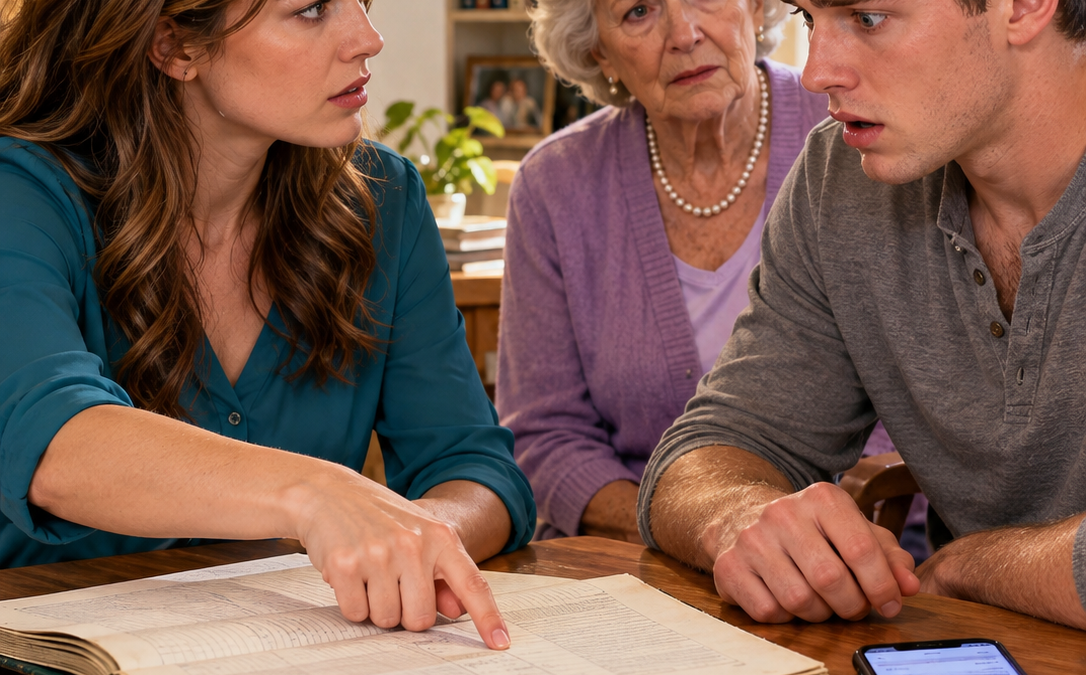
My grandmother walked into the diner where I work weekends and stopped in the doorway.
“Why are you waiting tables? Your grandfather paid off your student loans in 2019.”
“I’m still paying them,” I said.
She sat down in my section and called her lawyer from the booth.
I had a pot of regular coffee in one hand and a pot of decaf in the other when the bell over the door jingled. I turned around with my waitress smile already in place, and there was my grandmother.
She was standing just inside the doorway in her church clothes—a lavender blouse and the pearl earrings my grandfather had given her for their fiftieth anniversary—with three white-haired women from her new church crowded behind her like ducklings.
She’d moved into town two weeks earlier. I’d been meaning to tell her about my weekend job. I just hadn’t figured out how.
She looked at my apron, my name tag, and the two coffee pots. Her smile disappeared.
“Hallie, why are you waiting tables?”
I laughed, a little embarrassed. “Weekends, Grandma. Just to help with the bills.”
“What bills? Your grandfather paid off your student loans in 2019.”
The three church ladies looked at one another.
I answered very carefully because I thought she was confused. “Grandma, I’m still paying them. Every month. Four hundred and twelve dollars.”
My grandmother is eighty-one years old, and she has never raised her voice in my entire life. She didn’t raise it then, either. She simply stood there in the doorway of that diner while the bell finished jingling above her head, and I watched something in her face go hard and quiet, like a pond freezing.
Then she walked past the hostess stand, past the counter, and straight to the booth by the window in my section.
She sat down.
The church ladies followed her in a confused little line and slid into the booth across from her. My grandmother didn’t pick up a menu. Instead, she opened her purse, took out the old flip phone she refuses to replace, held it at arm’s length, and dialed with one finger.
“Emmett, this is June Overstreet. I know it’s Sunday. Call me back today. It’s about Elwood’s money.”
She snapped the phone closed and placed it on the table. Then she looked up at me, still standing there with my two coffee pots.
“Sit down for a minute, honey.”
I couldn’t. I had six tables to look after, and I had no idea that my grandmother had just started pulling a thread that went all the way back to my father.
My name is Hallie Overstreet. I’m twenty-nine years old. Monday through Friday, I work as a dental assistant in Grand Junction, Colorado. On Saturdays and Sundays, I wait tables at a diner on North Avenue that’s been there since 1962 and still has its original pie case.
My parents divorced in 2012, when I was fifteen. My mother moved to Arizona and remarried. My father, Dwayne, kept the house in Grand Junction, and my little brother Bryce and I stayed with him.
My dad isn’t a monster. He’s fifty-seven now, and back then he was a tired man running a small RV repair shop off the highway, a business that always seemed to be one bad month away from closing. He loved us. He just loved Bryce in a way that was easier.
Bryce is three years younger than me. He was the athlete, the charmer, the kid who could talk his way out of anything. I was the one who managed things. At fifteen, I was packing his lunches, signing his field trip forms, and making sure the electric bill got mailed.
Dad used to say, “Hallie always lands on her feet.”
He meant it as a compliment. It took me a long time to realize it was also permission.
I went to Colorado Mesa University in Grand Junction and studied biology. I wanted to be a veterinarian, and I lived at home to save money. When it came time to pay for college, Dad sat me down at the kitchen table and said, “We’ll help where we can.”
And then he never did.
So I took out federal student loans. By the time I graduated in May 2019, I owed $41,200.
I didn’t go to veterinary school. You can’t keep taking out more loans when you’re already drowning in the first ones. Instead, I got certified as a dental assistant. It’s a good job, and I like it. I just think about the animals sometimes.
Bryce went to a private college in California. I never asked how that was paid for. Dad said he’d worked it out, and I figured he’d worked it out the way he worked out everything for Bryce—somehow, out of thin air.
My grandparents are the other half of this story.
Elwood and June Overstreet ran a forty-acre peach orchard outside Palisade, on the east side of the Grand Valley, for fifty-one years. If you’ve ever had a Palisade peach, you know they’re the best peaches in the world, and I will fight anyone who says otherwise.
I spent every summer of my childhood in that orchard. I picked peaches with a canvas bag slung over my shoulder from the time I was eight. My grandmother taught me to can fruit. My grandfather taught me to drive his old orchard truck between the rows when I was eleven.
And my grandfather kept a book.
It was a green clothbound ledger, the old-fashioned kind with red lines across the pages. He wrote everything in pencil, using his careful, square handwriting. Every crate of peaches sold, every bag of fertilizer bought, every dollar that came into or went out of that orchard for fifty years.
He had an entire shelf of those ledgers in his office, one for every few years, going all the way back to 1972.
Once, I asked him why he didn’t use a computer.
“Because a computer can’t be wrong in pencil,” he said, and laughed at his own joke.
My dad had one firm rule about my grandparents, and he’d had it my entire life.
“Don’t ask your grandparents about money. It embarrasses them.”
So I never did.
Not once. Not when I was drowning in loan payments. Not when I took the weekend job. I had been raised on that rule, and I followed it without questioning why.
There’s one night I’ve thought about a hundred times since that Sunday in the diner.
My twenty-third birthday was in January 2020. My grandparents had invited me out to the farmhouse in Palisade for supper, the way they did every birthday.
My grandmother made fried chicken and a peach upside-down cake with peaches she’d frozen the previous August. My grandfather sat at the head of the table in his flannel shirt. All through supper, he kept looking at me and smiling a little, almost as though he were waiting for something.
Finally, while my grandmother was cutting the cake, he leaned toward me.
“So, anything new with you, Hallie-girl? Any good news in the mail lately?”
I didn’t understand what he meant.
“Not really, Grandpa. Just bills.”
His smile faded a little.
“Just bills, huh?”
“You know how it is. Student loans. The payments just started last month.”
He looked at me for a long moment.
I remember his face. First, he looked confused. Then he looked hurt. Finally, he lowered his eyes to his plate and didn’t say anything else for the rest of the meal.
My grandmother put her hand on his arm beneath the table.
I thought he was tired. I thought maybe his hearing was getting bad. I drove home that night and didn’t think about it again for six years.
He had been waiting for me to thank him.
He’d paid off what he believed were my loans a month earlier, and he’d been sitting at that table waiting for his granddaughter to say thank you.
And I told him I was paying bills.
My loan payments started in December 2019, at $412 a month. Three months later, the pandemic hit, and the federal government paused federal student loan payments.
For three and a half years, I didn’t have to pay. It felt like being underwater and suddenly finding air. I paid down my credit card and bought a used car that actually started every morning.
Then, in October 2023, the payments came back.
Four hundred and twelve dollars a month, every month like clockwork, on top of rent, a car payment, and everything else.
By the spring of 2024, I was falling behind on everything. So I got the weekend job at the diner.
By that Sunday in August, I owed about $29,800.
I knew the exact number because I checked it every month, the way you check a wound to see whether it’s healing.
My grandfather died in March 2021, at eighty-four. He suffered a stroke in the orchard on a cold morning while pruning a tree. My grandmother found him.
At the funeral, I held her hand.
My dad handled all the paperwork afterward—the estate matters, the bank accounts, everything. He told me not to worry about any of it.
The week after the funeral, I drove out to the farmhouse to help my grandmother sort through my grandfather’s clothes.
When I got there, my dad’s truck was already in the driveway. He was in my grandfather’s little office off the kitchen with a stack of empty banker’s boxes, taking the ledgers off the shelf.
All of them.
Fifty years of green clothbound books.
“I’ll store these at the shop, Mom,” he said. “No sense in you having to dust them. Nobody needs fifty years of peach receipts.”
My grandmother walked into that office in her slippers and took the book out of his hand.
It was the last one, covering 2018 through 2021.
“Those stay with me, Dwayne.”
He laughed. “Mom, it’s just old numbers.”
“They’re his handwriting. They stay with me. Put them back.”
He looked at her for a second as though he might argue. Then he returned the ledgers to the shelf, one by one, and carried the empty boxes back out to his truck.
At the time, I thought it was grief. I thought my grandmother couldn’t bear to see any piece of my grandfather leave the house. I thought my dad was just trying to be helpful in that clumsy way people sometimes are when someone dies.
I don’t think that anymore.
My grandmother stayed at the orchard for five more years, managing it by herself with a neighbor helping during harvest.
This spring, she finally sold the property to that neighbor. In late July, she moved into an independent living apartment in Grand Junction, ten minutes from my place.
I’d been having supper with her every Thursday.
I’d been meaning to tell her about the diner, but I didn’t know how to say it without sounding as though I were asking for help.
And I’d been raised never to ask.
So she found out by walking through the door.
My manager, Vic, is a big man who’s owned the diner for twenty years and calls everybody “kiddo.” He saw my face that Sunday morning and told me to take ten minutes.
He took over my tables himself, coffee pot and all.
I slid into the booth beside my grandmother. The church ladies were very politely pretending to read their menus.
“Your grandfather paid off your loans, Hallie,” Grandma said. “In December of 2019. Thirty-eight thousand dollars and change. He sent a cashier’s check from our bank in Palisade. He told me himself. He wrote it in his book.”
“Grandma, I’ve never seen a dime of that. My loans have never been paid off. I’ve been paying every month.”
She looked at me for a long time.
Then she said, very quietly, “Your father brought him the letter.”
“What letter?”
“At Thanksgiving that year. Your grandfather asked your father to get him the payoff letter for your loans so he’d know exactly how much to send. He wanted it to be a surprise for your birthday in January. Your father brought him the letter. Your grandfather wrote the check.”
She stopped for a moment, studying my face.
“And your father told us you were embarrassed and didn’t want to talk about it. He said you’d thank your grandfather when you were ready.”
Her voice grew quieter.
“Elwood waited for that thank-you for a year and a half. He died waiting for it.”
I didn’t cry in the diner. I’m proud of that.
I went back to my tables and poured coffee for another two hours, my hands shaking so badly that I spilled coffee on a man’s eggs and had to comp his entire breakfast.
That evening, I drove to my grandmother’s apartment.
She’d already set the kitchen table, but not with food. There were her reading glasses, a legal pad, and a green clothbound ledger waiting there.
“Show me your statements,” she said.
I took out my phone, pulled up the website for Granite Loan Servicing, and logged into my account.
I scrolled back through my payment history, all the way to the beginning.
Four hundred and twelve dollars. Four hundred and twelve dollars.
In December 2019, there was one regular payment of $412, which I’d made myself from my checking account.
No large payment. No payoff. Nothing from anyone but me.
My grandmother studied the screen through her glasses for a long time.
Then she opened the ledger.
It was the last one my grandfather had ever kept, covering 2018 through 2021. The pages at the back were blank after March.
She turned to December 2019 and placed her finger on a line.
In my grandfather’s careful, square pencil handwriting, it read:
December 3, 2019. Hallie’s college loans paid in full. Cashier’s check: $38,640.12. Account ending 7730.
He’d underlined paid in full twice.
I looked at the account number on my phone.
My account with Granite ended in 2219.
“That’s not my account number,” I said.
My grandmother looked up.
“Then whose is it?”
That night, sitting in my car in her parking lot, I called my dad.
He answered on the fourth ring. There was a baseball game playing on the television in the background.
“Dad, did Grandpa pay off my student loans in 2019?”
There was a pause.
Not long. Just long enough.
Then he laughed, a big, easy laugh.
“Is that what your grandma’s saying? Oh, sweetheart, your grandpa was pretty confused those last couple of years. He’d write things down that never happened.”
I sat perfectly still, listening.
“And your grandma’s getting up there. She mixes things up. Just yesterday, she called me Elwood.”
“She has his ledger, Dad. It’s in his handwriting.”
“Hallie, listen to me. Don’t go stirring things up with Grandma. She’s eighty-one. She just moved. She’s fragile. You’ll give her a heart attack. Let it go.”
Then he said, “Love you, kiddo,” and hung up.
I sat in my car in the darkness, staring at the phone.
My dad had never once in my entire life called my grandmother fragile. She had run a forty-acre orchard by herself for five years after my grandfather died.
The next morning, Monday, my grandmother’s lawyer called her back.
His name was Emmett Kirkland. He’d been practicing estate and probate law in Grand Junction for thirty years. He’d drawn up my grandparents’ wills and their trust, and he’d known them since before I was born.
That afternoon, I took a long lunch break and drove my grandmother to his office in a brick building downtown.
He was a tall, stooped man in his late sixties, with a bow tie and a voice like gravel. He hugged my grandmother and called her Junie, which nobody else alive is allowed to do.
He read the entry in my grandfather’s ledger. Then he looked through my student loan payment history.
He was quiet for a long time.
Finally, he said, “A cashier’s check leaves a trail. The bank that issued it keeps a copy of the front and back for years.”
He turned toward my grandmother.
“June, you need to request a copy of that check from your bank in Palisade. They’ll charge you a small research fee, and it might take a couple of weeks. But when we have it, we’ll know exactly where Elwood’s money went.”
“Can’t we just ask my dad?” I said.
Mr. Kirkland looked at me over his glasses.
“You did ask him, didn’t you?”
The next two weeks were the longest of the summer.
My grandmother drove to her bank in Palisade on Tuesday morning, filled out the request form herself, and paid the twenty-five-dollar research fee in cash.
I went back to work.
I cleaned teeth on weekdays, poured coffee on weekends, and checked my phone every hour.
And my dad started visiting my grandmother.
He’d visited her maybe four times in the five years since my grandfather died. In those two weeks, he dropped by her apartment three times.
He brought her flowers once and a rotisserie chicken another time.
He sat on her couch and talked about how worried he was about her. How tired she seemed. How maybe living alone at her age was too much. Whether she’d been sleeping well. Whether she’d been forgetting things.
My grandmother told me about every visit when we had supper together on Thursday.
“He keeps asking me about my memory,” she said. “He’s never once asked me about my memory.”
The Sunday in between, my grandmother asked me to drive her out to Palisade.
She wanted to see the peach trees one more time before the new owner pulled out the old ones in the fall.
We parked beside the old packing shed. The neighbor who’d bought the orchard waved from his tractor and let us walk the rows.
It was the middle of harvest. The air smelled exactly like every summer of my childhood—sweet and dusty and warm.
My grandmother walked slowly with one hand resting on my arm, touching the trunks of the trees as she passed them, almost as though she were saying goodbye to old friends.
Halfway down the third row, she stopped.
“You know, your grandfather’s eyes were going those last years.”
“I knew he’d gotten new glasses.”
“It was more than glasses, honey. Macular degeneration. The center of everything went blurry. He could see the edges of things, but not the middle.”
She told me he’d used a magnifying glass to read the newspaper. By 2019, he couldn’t read a bank statement without holding it right up to his nose.
“He was too proud to tell anybody but me.”
She looked down the long row of trees before continuing.
“When your father brought him that letter at Thanksgiving, Elwood held it up to the kitchen window and squinted at it. He said, ‘Overstreet. Granite Loan. Thirty-eight thousand dollars. That sounds about right for college.’ And he wrote the check right there at the table.”
She paused.
“I remember because I was making the gravy.”
Then she looked directly at me.
“Dwayne knew his eyes were bad, Hallie. Dwayne drove him to the eye doctor.”
We stood there in the third row for a long time, with the bees working over the fallen peaches around our feet.
Neither of us said anything else.
On Tuesday, August 25, the copy arrived in the mail.
My grandmother called me at work during my lunch break. She didn’t say hello.
“It’s here.”
I drove straight over.
She had the document laid out on her kitchen table inside a clear plastic sleeve, as though it were evidence.
I suppose it was.
It was a photocopy of both sides of a cashier’s check issued by her bank in Palisade, dated December 3, 2019.
Pay to the order of: Granite Loan Servicing.
Amount: $38,640.12.
Remitter: Elwood Overstreet.
And in the memo line, typed by the bank teller:
Account 7730.
On the back was the loan servicer’s endorsement stamp and the date the check had been deposited.
My grandfather’s money had gone to Granite, the very company servicing my loans.
But it had been applied to account 7730.
Not mine.
That afternoon, I called Granite Loan Servicing and waited on hold for fifty minutes.
When a woman finally answered, I gave her my name and account number. I explained that a payment of $38,640.12 had been made in December 2019, and that I believed it had been intended for my account but had been applied to another account ending in 7730.
She was polite and firm.
She confirmed that no such payment had ever been applied to my account. When I asked about account 7730, she said she couldn’t discuss any account that didn’t belong to me.
“Can you tell me if it’s in my name?”
There was a pause.
“I can confirm that account ending in 7730 is not associated with you, ma’am. That’s all I can say.”
When I told Mr. Kirkland, he nodded slowly.
“That’s what I expected.”
He explained that to find out whose account it was, we’d have to file a lawsuit and subpoena the loan servicer’s records.
“That’s a big step,” he said. “Let’s think before we take it.”
He didn’t have to say who he thought the account belonged to.
None of us did.
On Wednesday night, my phone rang.
It was my aunt Coralie, my dad’s older sister, who lives in Montrose and whom I usually only see at Christmas and funerals.
She didn’t say hello, either.
“Hallie, what in God’s name are you doing to your grandmother?”
“What?”
“Your father called me. He’s beside himself. He says Mom is slipping. Confused. Forgetting things. And he says you’ve been over there every day, filling her head with nonsense about money and working her for a payout. Is that true?”
My face went hot.
“Aunt Coralie, I’ve never asked Grandma for a single dollar in my life.”
“Well, that’s not what your father says. You stay away from her until this blows over.”
She hung up before I could say another word.
My dad had called his own sister and told her I was trying to rob my grandmother.
I sat on my bathroom floor with my phone in my lap and laughed until I cried because it was so exactly backward that I didn’t know what else to do.
On Friday, August 28, my grandmother called me at work.
Her voice was shaking.
It never shakes.
“Your father took my car keys.”
He’d come by that morning, she explained. He told her he’d heard from a neighbor at her apartment complex that she’d gotten lost driving home from the grocery store.
She hadn’t.
She’d taken the long way home because the main road was under construction.
But Dad told her it wasn’t safe for her to drive anymore. For her own good, he said.
Then he took her keys off the hook beside her door and put them in his pocket.
Before he left, he told her he’d been talking to a lawyer about getting guardianship over her.
Just to help her, he said.
Just so somebody could manage things for her, just in case.
I left work in the middle of the day and drove straight to Mr. Kirkland’s office.
He listened without interrupting. When I finished, his gravelly voice became very low and very calm.
“June is as sharp as she was forty years ago. Any doctor in this valley would say so. She’s not going to lose a guardianship case.”
He leaned forward slightly.
“But Hallie, a guardianship petition in Mesa County means court-appointed evaluators. A visitor coming to her home. Doctors’ examinations. A hearing in front of a judge. Lawyers’ fees. Her whole family dragged into a courtroom to testify about whether she’s losing her mind.”
He let that settle before continuing.
“For an eighty-one-year-old woman, that is a humiliation. An exhausting, expensive, public humiliation.”
I sat there looking at him, unable to think of anything to say.
“Your father doesn’t need to win that case,” he said. “He just needs to make your grandmother afraid of it. That’s what that threat is for. It’s built to make her stop.”
On Saturday, sitting at her kitchen table, my grandmother looked smaller than I’d ever seen her.
“Maybe we should let it go, honey,” she said. “He’s my son.”
“Then I’ll let it go, Grandma. I mean it. If you want me to drop this, I’ll drop it today. I’ll pay the rest. I’ve paid it this long. I don’t want to lose you over money.”
She looked up at me.
Her chin set.
I’d seen my grandfather make that exact face in the orchard when a hailstorm came over the Book Cliffs and he decided he wasn’t going to lose a single tree.
“No,” she said.
Then she looked toward the green ledger lying on the table.
“Elwood wrote that line in pencil. A computer can’t be wrong in pencil.”
On Sunday afternoon, August 30, my brother walked into my grandmother’s apartment.
I hadn’t seen Bryce since Easter.
He lives in Denver now and sells commercial insurance. He’d driven four hours over the mountains that morning.
Dad had called him the night before, Bryce said, and told him I was manipulating Grandma. He’d come to talk some sense into me.
He was angry when he came through the door.
He was wearing his weekend clothes, with a ball cap turned backward and his car keys still in his hand.
“Hallie, what are you doing? Dad says you’re trying to get Grandma’s money.”
My grandmother looked at him.
“Sit down, Bryce.”
He sat.
Nobody disobeys my grandmother when she uses that voice.
I put the ledger in front of him, open to December 2019.
Then I placed the photocopy of the cashier’s check beside it.
Next to that, I set my phone with my Granite loan account open on the screen.
I didn’t say anything.
I simply pointed to the line in my grandfather’s handwriting, then to the account number written at the bottom.
Account ending 7730.
I watched my brother read it.
I watched his lips move as he silently repeated the four digits.
7730.
His face went white.
All the anger drained out of it at once, as though somebody had pulled a plug.
Then he spoke, very quietly.
“That’s mine.”
I stared at him.
“What?”
“That’s my Parent PLUS loan for school. The one Dad took out in his name for me. I know that number. I had to call them once in 2019 about a form.”
He looked up at me, his face still pale.
“Hallie, Dad told me Grandpa paid my loans.”
Then Bryce told us what had happened at Christmas in 2019.
Dad had handed him an envelope containing a letter from Granite Loan Servicing. It was a payoff confirmation.
Paid in full.
Dad had told him, “Grandpa took care of it. Don’t mention it to Hallie. She’ll be jealous.”
And then he’d added, “Don’t bring it up with Grandpa, either. It embarrasses him.”
Bryce had been twenty years old.
He’d thanked our dad.
He’d felt guilty for about a week, and then he’d forgotten about it, the way twenty-year-olds sometimes forget things that work out in their favor.
“I never thanked Grandpa,” he said. “Dad told me not to.”
His voice was barely above a whisper.
“Grandpa died thinking I didn’t care.”
My grandmother reached across the table and placed her hand over his.
Bryce told us he still had the letter. He’d kept it in a shoebox full of papers from college, a box he’d carried with him to every apartment he’d lived in since.
That night, from Denver, he texted me a photograph of it.
The letter was printed on Granite Loan Servicing letterhead and dated December 9, 2019.
It was addressed to Dwayne Overstreet.
Re: Parent PLUS Loan, Account Ending 7730.
Your loan has been paid in full. Thank you.
Beneath the photograph, Bryce had written:
I’m so sorry, Hallie. I didn’t know. I swear I didn’t know. I believed him. I still do.
Before he drove back to Denver that Sunday, Bryce and I stood outside on my grandmother’s little balcony in the dark while she washed the dishes.
The lights of Grand Junction spread out below us, all the way to the Colorado National Monument.
He didn’t say anything for a long time.
Then he looked at me.
“You used to pack my lunches.”
“Every day for three years.”
“Peanut butter and honey,” he said. “You cut the crusts off. You put a note in sometimes. ‘Have a good game.’ ‘Don’t fail your math test.’”
He swallowed.
“I never once said thank you for that, either.”
“You were twelve.”
“I’m twenty-six now, and I’ve been walking around for six years thinking Grandpa paid my way because I was his favorite, and you were the one who got stuck with the bill. And Dad just let me think it.”
He stopped and looked out over the city.
“He let us both think it.”
His voice cracked.
My little brother, who hadn’t cried in front of me since he broke his arm when he was nine, put his hands over his face on my grandmother’s balcony and cried.
I put my arm around him.
“We both got used,” I said. “That’s not on you, Bri.”
“It’s a little on me. I should have asked.”
“We were raised not to ask.”
On Monday, the three of us sat in Mr. Kirkland’s office—me, my grandmother, and my brother, who’d called in sick to his job in Denver and stayed an extra night on Grandma’s couch.
Mr. Kirkland laid everything out across his desk.
The ledger. The cashier’s check. My payment history. Bryce’s letter.
He looked at each of us before speaking.
“What happened here is not complicated.”
He placed his hand on the ledger.
“Elwood asked Dwayne for Hallie’s payoff letter. Dwayne gave him the payoff letter for his own loan instead. Elwood’s eyesight was failing in 2019. He saw the name Overstreet on a letter from a loan company and the right kind of amount, and he trusted his son.”
He moved his hand to the photocopy of the check.
“He wrote the check, and it paid off Dwayne’s debt.”
My grandmother sat perfectly still.
“In Colorado, that is fraud,” Mr. Kirkland continued. “Your father obtained money from his own father by misrepresenting what it was for.”
He explained that the deadline to sue for fraud was three years from when the fraud was discovered.
“You discovered it three weeks ago in a diner,” he said. “June, if you want to, you can sue your son.”
My grandmother was quiet for a long time.
Then she said, “Emmett, there’s something else. It just came back to me sitting here.”
He turned toward her.
“After the funeral in 2021, in April, Dwayne came to me and said Hallie needed money for graduate school applications. Veterinary school. He said there were fees and tests and travel, and that she was too proud to ask me herself.”
I felt something cold settle in my stomach.
“He asked for ten thousand dollars,” she continued. “I wrote him a check. I was so happy you were going to try for vet school again.”
She looked at me.
I spoke very slowly.
“Grandma, I never applied to graduate school. Not in 2021. Not ever.”
Mr. Kirkland picked up his pen.
He wrote the number down on his legal pad and drew a line beneath it.
Then he added the two amounts together.
$48,640.12.
My father’s lawyer sent a letter the following week.
It was addressed to my grandmother, care of Mr. Kirkland.
The letter stated that Dwayne Overstreet was deeply concerned about his mother’s welfare and her recent isolation from the rest of the family.
It claimed there were signs that June Overstreet was being unduly influenced by her granddaughter.
And it warned that if my grandmother attempted to change her trust, her son would contest it in court.
Mr. Kirkland read the letter.
Then, for the first time since I’d met him, I saw him smile.
“Then let’s make sure there’s nothing to contest.”
He made an appointment for my grandmother with her own doctor, a man who’d been seeing her for twenty-two years.
The doctor examined her and wrote a letter stating that June Overstreet was fully alert, oriented, and competent to make her own legal and financial decisions.
On Thursday, September 10, my grandmother sat in Mr. Kirkland’s conference room with two members of his staff serving as witnesses and a notary present.
She signed an amendment to her trust.
Under the amendment, the $48,640.12 my father had taken would be deducted from his share of her estate when she died and paid to me instead.
She signed her name in blue ink, in big, steady letters.
Then she looked at Mr. Kirkland.
“Emmett, I want him to hear it from me.”
On Sunday, September 13, my grandmother invited my father to dinner at her apartment.
He came.
I think he thought he’d won. I think he thought she’d invited him over to tell him she was dropping the whole thing, that she was sorry for the trouble, and that I’d be sitting at the table waiting to be scolded.
My grandmother made pot roast.
She prepared it the way she’d made it every Sunday for sixty years, with carrots, little red potatoes, and gravy made from the drippings.
The apartment smelled exactly like the old farmhouse in Palisade.
Dad arrived carrying a bouquet of grocery-store flowers and wearing a big smile.
He kissed her cheek.
Then he saw me sitting at the table, and his smile got smaller.
When he noticed Bryce, who’d driven over the mountains again, it got smaller still.
“Well, look at this,” he said. “The whole gang.”
We ate.
Nobody said much.
Dad talked about the RV shop, the weather, and the Rockies. My grandmother passed the gravy. Bryce stared at his plate.
When we’d finished, my grandmother stood and cleared the dishes herself.
She wouldn’t let anybody help.
Then she returned to the table carrying a manila folder and sat down directly across from my father.
She opened the folder.
First, she took out the photocopy of the cashier’s check, still inside its clear plastic sleeve.
Then she removed the letter from Granite Loan Servicing that my brother had brought from Denver.
Paid in full.
Account ending 7730.
Addressed to Dwayne Overstreet.
She placed the two documents side by side and slowly slid them across the table with two fingers until they rested directly in front of my father’s empty plate.
“Dwayne,” she said, “which of my grandchildren has their name on that account?”
My father looked down at the papers.
I watched his face.
I’d been watching that face my whole life. I’d seen it tired and stressed, proud and worried. I’d seen him exhausted after long days at the shop, smiling at Bryce’s games, and frustrated over bills.
But I’d never seen his face do what it did then.
It didn’t turn red.
It didn’t go pale.
It simply went still.
Like a man who’d been holding his breath for seven years and had finally run out.
“Mom, where did you get this?”
“I asked you a question.”
He looked toward Bryce.
Bryce looked back at him and said nothing.
My father turned to my grandmother again.
“Dad wanted to help me, too. You know, he always said family’s family. He’d have wanted to help me with Bryce’s loans. He’d have understood.”
My grandmother didn’t raise her voice.
“Then he’d have written it in his book.”
Dad said nothing.
“He wrote everything in that book, Dwayne. Every bag of fertilizer. Every crate.”
She placed one finger on the photocopy.
“He didn’t write your name. He wrote hers.”
Then she looked directly at him.
“He underlined it twice.”
My dad put his elbows on the table and buried his face in his hands.
When he finally spoke, he spoke toward the tablecloth.
The RV shop had been about to go under in the fall of 2019.
Two of his biggest customers had gone bankrupt. He was making payments on Bryce’s Parent PLUS loan, five hundred dollars a month, and he couldn’t make them anymore.
He was going to default.
He was going to lose the shop.
Then Grandpa had asked him for my payoff letter.
“I had both letters on the counter,” he said. “Mine and hers.”
His voice sounded different now.
“And I just thought, Dad’s eyes are bad, and Hallie always lands on her feet. Hallie’s always fine. She’s tough. She’ll handle it.”
He stopped, then looked at Bryce.
“And Bryce… Bryce needed a break.”
I sat across from him, trying to understand how a father could take a sentence he’d repeated throughout his daughter’s childhood and use it to justify something like that.
“I wasn’t fine, Dad.”
He looked up.
“I’ve been working weekends for two years.”
I don’t think he’d really looked at me in a very long time.
My grandmother spoke quietly.
“Hallie didn’t land on her feet, Dwayne. She landed on a coffee pot in a diner on North Avenue.”
She held his gaze.
“I watched her do it.”
Nobody said anything for a long time.
The kitchen clock ticked.
Then my grandmother told him what was going to happen.
Mr. Kirkland had drawn up a promissory note.
My father would repay $48,640.12 to her trust on a payment plan beginning in October.
If he signed it, there would be no lawsuit.
If he refused, Mr. Kirkland would file suit in Mesa County District Court on Monday morning. The entire matter would become part of the public record, including the ten thousand dollars he’d taken for veterinary school applications that had never existed.
And his share of her estate had already been reduced by the same amount to make sure the money was paid back one way or another.
My father sat quietly, looking at the papers.
Then he signed the promissory note at my grandmother’s kitchen table with the pen she handed him.
His hand was steady.
Mine wasn’t.
He stood, pushed back his chair, and went to get his jacket.
At the door, he turned around and looked at my grandmother.
He opened his mouth.
For one moment, I thought he was going to say he was sorry.
Instead, he said, “Can I have my keys back? I mean, your keys. I’ll bring your car keys by tomorrow.”
My grandmother looked at him.
“Leave them on the hook.”
He did.
They’d been in his pocket the whole time.
The next morning, Monday, my grandmother didn’t wait for my father’s first payment.
She didn’t wait for anything.
She asked me to drive her to her bank.
She sat across the desk from a young banker and asked for a cashier’s check made payable to Granite Loan Servicing for $29,800.
Then she took the pen from the banker’s desk and wrote the memo line herself, in her careful, round handwriting.
Account 2219.
She checked it twice.
Then she made me check it.
Four days later, I logged into my Granite account on my phone at the dental office, between patients.
I was standing in the supply closet.
My balance said zero.
And directly beneath it, in green letters, were the words:
Your loan has been paid in full.
I cried so hard in that supply closet that one of the hygienists knocked on the door and asked if I was okay.
I said I was.
I was.
Bryce doesn’t speak to our father right now.
He says he will someday. He just doesn’t know when.
He calls me every Sunday now.
He never used to.
Last week, he asked me if I’d ever thought about applying to veterinary school again.
“I’m twenty-nine,” I told him.
“So?”
He offered to help pay for the applications.
Real ones this time.
I worked my last weekend shift at the diner on Saturday, September 19.
At 11:30 that morning, the bell over the door jingled.
I looked up, and in walked my grandmother, wearing her lavender blouse and pearl earrings, with the same three church ladies following behind her.
She walked straight to the booth by the window in my section and sat down.
When I came over with my coffee pot, she looked up at me.
“What kind of pie do you have today?”
“Peach from Palisade.”
“Bring a whole one for the table,” she said. “And four forks. And one for yourself, honey. Sit down.”
Vic covered my tables again.
That night, my grandmother asked me to get something from the shelf in her apartment.
It was the green clothbound ledger.
My grandfather’s last one.
She opened it to the page from December 2019 and found the line he’d written in pencil all those years ago.
Hallie’s college loans paid in full.
Underlined twice.
She took a pencil out of her purse.
Then, on the line directly beneath his, she wrote in her own careful handwriting:
September 17, 2026. Hallie’s college loans paid in full.
For real this time, Jo.
She underlined it twice.
Then she closed the book and placed it in my hands.
“He’d want you to have it,” she said.








