My dad yelled, “You choose: your loan signature or your 4-year-old daughter’s?” My own dad said it, Mom just laughed and said, “Your life means nothing to us!” My sister kept my daughter from running, and my brother forced the papers in my face…
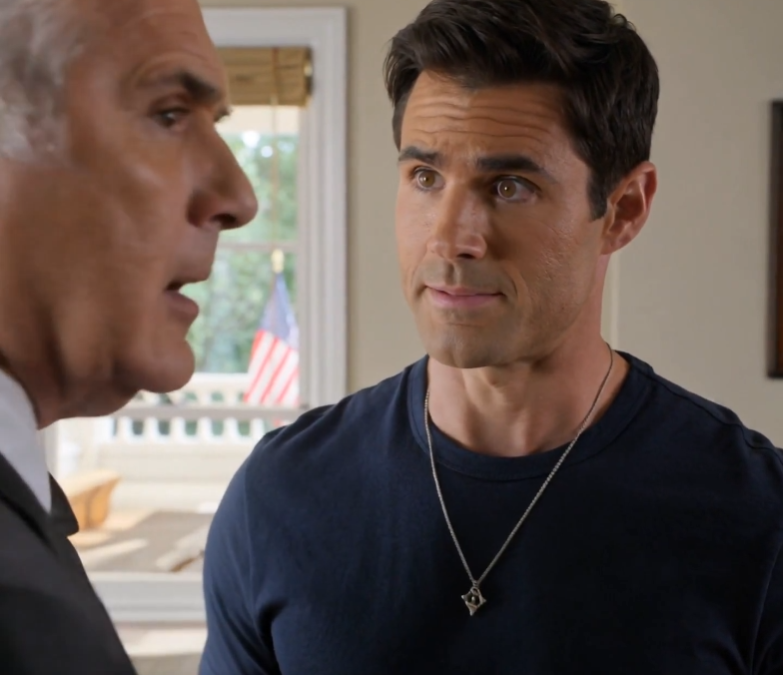
Today’s story is about the family disappointment—the nurse son, the one who supposedly wasted his potential. His father built a real estate empire worth tens of millions. His brother was handed the vice president title on his very first day. And when Joshua’s daughter was born, all he received was a twenty-dollar bill tucked inside a generic grocery store greeting card.
But when his father showed up at his house with a loaded gun pressed against his four-year-old daughter’s head, demanding that he co-sign a fraudulent $2.3 million loan, this so-called disappointment had already wired his entire house for surveillance. He had armed backup four minutes away, and he’d been waiting for exactly this moment. What happened next sent all four members of his family to prison.
My dad yelled, “You choose. Your signature or your four-year-old daughter!”
My own father said those words. Mom just laughed and told me, “Your life means nothing to us.” My sister kept my daughter from running, and my brother shoved the papers in my face. When I refused and tried to pull her away, everything went wrong in a single second.
The first thing I noticed when my father walked into my living room that day was how out of place his suit looked against everything around it. Custom Italian fabric against the secondhand couch Mara and I had picked up from a local listing three years earlier. His hand, the same hand that had taught me how to tie my shoes, was wrapped around a black handgun, its barrel pressed against my daughter’s head.
Hazel was four years old. She’d stopped crying. She stood frozen, her wide eyes locked directly on mine as she clutched her little blue plastic dolphin with both hands. Her knuckles were completely white. My sister, Khloe, was crouched right behind her, diamond rings glinting beneath the living room lamp, both hands clamped down on Hazel’s shoulders so she couldn’t run. She was whispering little words of false comfort into Hazel’s ear in that syrupy voice she only used when she was putting on a performance.
My brother Carter shoved a stack of legal documents into my chest. Loan papers. A $2.3 million co-signature liability. Then he held out a pen. My mother, Diane, leaned against my kitchen counter beside the bakery box she’d brought along as some kind of prop. She was laughing. Not nervous laughter, either. Full, satisfied laughter, as though she were watching her favorite television show.
“Sign the loan papers right now, or else,” my father said.
Robert Whitmore. Patriarch. Community pillar. A man holding a gun to his own granddaughter’s head.
I refused to take the pen. Carter shoved me backward so hard that I stumbled over my coffee table and hit the hardwood floor. The impact knocked the breath straight out of my lungs. And then the gun went off.
The sound seemed to punch through the air and rattle the walls. Hazel fell sideways, slipping out of Khloe’s grip and collapsing onto the carpet. My brain simply shut down. For what must have been two full seconds, there was nothing. Then I heard her crying.
She was okay. Robert had flinched when I lunged, and his shot had gone wide. The bullet had struck the ceiling, sending plaster dust drifting down over all of us like snow.
But I’m getting ahead of myself. To understand how a wealthy grandfather ends up holding a loaded gun against a four-year-old’s head in a suburban living room over a stack of paperwork, you have to understand the Whitmore family from the bottom up. You have to look at what was underneath the reputation.
Hold on. Let me jump in here. For everyone listening, this is me talking, not the original poster. I need a second because I want to make sure this really sinks in. Robert Whitmore, respected businessman, charity golf sponsor, the guy who got his own name on a hospital wing, just fired a gun inside his son’s house with a little girl in the room. Diane’s reaction was to stand in the kitchen and laugh.
These four people didn’t simply lose control. This was the plan. Captain Legacy and his crew showed up with a bakery box and a loaded weapon as though they were making a perfectly normal family visit. Buckle up, because somehow, the backstory is even worse.
To the outside world, the Whitmore family was local royalty. My father had spent forty years building a commercial real estate development empire. Office buildings, mixed-use properties, commercial leasing operations spread across three counties. He was the kind of man you saw in the newspaper shaking hands with the mayor, the kind who had his name engraved on a hospital wing. People respected him. Behind the iron gates of our family estate, however, the whole operation was a straight-up dictatorship.
Carter was the golden child, the firstborn son groomed from childhood to take over the empire. He received sports cars for his birthdays, fully paid Ivy League tuition, and the title of vice president of acquisitions on the literal day he graduated from college, despite barely managing to pass his classes. He spent his days barking orders at men twice his age and charging expensive lunches to the company credit card, lunches that somehow always stretched until sundown.
Khloe was the princess, raised for one specific purpose: to marry well and expand the family’s social reach. She accomplished exactly that when she landed Dylan, a successful investment banker. Their wedding cost more than most people earn in an entire decade.
And then there was me. Joshua. The middle child. The constant, grinding disappointment.
I never cared about real estate portfolios, corporate acquisitions, or country club politics. I wanted to actually help people. When I was eighteen and told my parents I was going to nursing school to become a pediatric nurse, you would have thought I’d announced I was joining a cult.
The Thanksgiving dinner right after I received my nursing license was when I finally understood exactly what I was dealing with. I’d brought Mara, my girlfriend at the time, who worked as a public school teacher. My mother looked her up and down as though she were inspecting furniture at a garage sale, then sighed loudly enough for everyone at the table to hear.
“A teacher and a male nurse. How quaint,” Diane said. “Tell me, Joshua, how exactly do you plan to survive on those salaries? We don’t subsidize mediocrity in this family.”
Mara squeezed my knee beneath the table. I kept my voice flat and my expression neutral. “We do fine, Mom. We enjoy what we do.”
Robert snorted from the head of the table, carving the Thanksgiving turkey as though it had personally insulted him. “Changing bedpans isn’t work. Carter just closed a twelve-million-dollar deal this week. That’s real work. You’re embarrassing the Whitmore name.”
It was the same script every single time. But I watched Mara absorbing their insults across the dinner table, and I made myself a quiet promise.
We went on to build our own life. We paid for our own house, drove older cars, and budgeted our grocery trips. We didn’t take a single dollar from them, and we were genuinely happy in a way I’m not sure anyone living behind those estate gates had been in a very long time.
When Hazel was born four years ago, I made the mistake of believing that a baby might soften them. I called my parents from the delivery room, my voice cracking with that particular kind of exhausted joy you only experience during those first few hours after your child is born. Diane answered on the third ring, already sounding irritated.
“Oh, good. Tell Mara congratulations. I have to go. They’re starting my highlights.”
Click.
They didn’t come to the hospital. Three weeks later, a store-bought greeting card arrived in the mail with a crisp twenty-dollar bill tucked inside. The message read, “Buy the baby something nice.”
Meanwhile, when Khloe had her two children, Robert immediately established trust funds for both of them. Diane practically moved into Khloe’s house so she could play the role of devoted grandmother for all her wealthy friends to admire.
Hazel didn’t exist to them because I didn’t exist to them.
Eventually, I made peace with that reality. Mara and I built a solid wall around our little family, and Hazel became the center of everything. She was a bright, laughing little girl who chased butterflies, collected seashells in a small bucket, and was completely convinced that dolphins were magical creatures. I never bothered arguing the point.
We started her college fund. For three years, we had everything we needed. Genuine peace. I honestly believed the worst my family could do was continue ignoring me.
I was dead wrong.
Pause for a second. Let me get in here, because this next part is where everything takes a turn. Joshua had built an actually good life. A steady job, a wonderful wife, a daughter who collected seashells, and a college fund that was already growing. He walked away from the empire, didn’t take a dollar, and built something real with his own hands.
Then, six months before that Saturday with the gun, his father showed up uninvited with a briefcase full of papers. He simply walked through the door as though the previous five years of silence had meant absolutely nothing.
What follows is a story about what happens when a man who’s been underestimated his entire life finally stops playing defense.
The nightmare started six months before that Saturday, on a rainy Tuesday evening. I’d just finished a twelve-hour shift at the children’s hospital. We’d had to resuscitate a seven-year-old patient earlier that afternoon, and my nerves were still completely raw.
I turned onto my street and saw Robert’s car parked in front of my house. The custom license plate was unmistakable.
By the time I walked inside, he was already sitting in my living room, completely uninvited, drinking the coffee Mara had nervously poured for him. He didn’t stand when I entered. He didn’t ask how I was doing. Instead, he pulled a thick stack of legal documents from his briefcase and placed them on my coffee table like a subpoena.
“We’re expanding operations. There’s a major commercial development bid downtown,” he said, slipping effortlessly into his CEO voice. “The bank requires all immediate family members to co-sign the guarantor forms to spread the liability matrix. It’s a formality. I need your signature here, here, and here.”
I stepped forward and flipped to the second page.
$2.3 million.
“Are you out of your mind?” I asked. “I’m a pediatric nurse, Dad. I make a decent salary, but I’m not sitting on two million dollars in assets. I’m not signing away my family’s future to cover your corporate debt.”
That was when the mask slipped. Beneath the confident businessman I’d feared my entire life, I caught a glimpse of something darker. He looked desperate, cornered, and genuinely frightened.
“You owe this family everything,” he said, lowering his voice. “Every breath you take is because I put a roof over your head. You will sign this tonight.”
“No,” I said. “Get out.”
He stood so abruptly that his chair scraped across the floor. Then he kicked my coffee table hard enough to send my favorite ceramic mug spinning off the edge. It shattered against the hardwood.
“You ungrateful little coward! You have twenty-four hours to change your mind, or I swear I will ruin your pathetic life.”
He stormed out and slammed my front door hard enough to knock a framed photograph of Hazel off the wall. Broken glass scattered across the floor.
That night, Mara and I sat at our kitchen table, staring at the documents he’d left behind. She looked pale as she studied the numbers.
“Joshua, massive companies don’t force estranged sons with modest salaries to co-sign multimillion-dollar loans unless they’re completely out of options. Something is seriously wrong here.”
She was right. I took some of our savings and hired a forensic accountant to investigate Robert’s company finances independently.
It took three days to get the full picture. The $2.3 million had absolutely nothing to do with a downtown development project. That was just a cover story. Robert had a gambling addiction he’d successfully hidden from almost everyone for more than a decade, bleeding money out of the company through offshore high-stakes games.
But that wasn’t even the most dangerous part. He didn’t just owe money to the banks. He owed a man named Cameron, a violent operator connected to organized crime. If Robert didn’t pay Cameron by the end of the month, things were going to get physical.
His plan was to push through a fraudulent bank loan, using my clean credit history as the anchor, pay off his debts, and leave me holding the collapsing bag when everything inevitably fell apart. My own father intended to use his son’s name and his son’s family to cover his criminal debts. He would have stood by and watched us go bankrupt, lose our house, and potentially destroy Hazel’s future. Then he would have called it a necessary sacrifice.
I didn’t just pick up the phone and tell him no again. I went straight to an attorney and had a certified cease-and-desist letter sent to him. No further contact with me, Mara, or our home. Period.
That was the exact moment the Whitmore family declared war.
Wait, wait, wait. Let me step in here, because I need to properly appreciate what we’ve just heard. This man’s actual strategy was to push through a fraudulent loan using his own son’s identity to pay off debts to organized crime, then walk away clean while Joshua’s family lost everything. And when he received a legal letter telling him no, his response was coordinated, multifront retaliation.
What was next? Showing up at Hazel’s daycare with a PowerPoint presentation? King Whitmore apparently thought a cease-and-desist letter was just the opening move in a negotiation. The entitlement required to go from “I need your help” to “I will ruin you” inside forty-eight hours is genuinely staggering.
Keep going, because it gets worse before it gets much better.
The retaliation started the very next morning. Diane called and screamed at me until my eardrum practically rang. I told her I’d already been dead to them for thirty years and hung up. Then I immediately blocked her number.
Two days later, Carter showed up at my hospital.
I was halfway through a shift on the pediatric floor, carefully checking the IV line of a frail seven-year-old leukemia patient, when I heard shouting in the hallway. I stepped outside and found Carter aggressively pushing past two hospital security guards. His face was flushed red, and his suit jacket had been half pulled off his shoulders during the struggle.
“There he is!” he bellowed, pointing a rigid finger directly at me across the ward, right in front of the nurses, patients, families, and colleagues I’d worked with for years. “That’s him! He’s stealing heavy pain medication from the supply closet! My brother is a junkie! You need to drug-test him right now!”
The entire hallway went dead silent.
This wasn’t just another round of shouting. He was trying to take my medical license. He was trying to destroy my ability to feed my daughter and pay my mortgage. Before Carter could get another word out, Julian, the hospital director, stepped out of his office.
Julian was a former military trauma surgeon, a man who had worked in actual combat zones and wasn’t easily impressed by loud, aggressive men in expensive suits. He walked straight up to Carter and looked at him the way you might look at something unpleasant stuck to the bottom of your shoe.
“Sir,” Julian said, his voice quiet but carrying absolute authority, “I personally oversee full random drug testing of my entire staff every month. This nurse’s record is spotless. You are trespassing in a pediatric ward. Security will remove you now. If you resist, we will press charges.”
The guards grabbed Carter by the arms.
“This isn’t over, Joshua! We will ruin you!” he spat as they hauled him backward toward the elevators.
I was still standing in the hallway, shaking, long after they dragged him away. But my family wasn’t finished. Khloe went after Mara next, targeting her school directly.
Overnight, anonymous emails arrived in the school board’s inbox. They contained detailed accusations portraying Mara as emotionally volatile and prone to outbursts, along with carefully worded hints that she was the subject of an active child protective services investigation. The school knew Mara was an outstanding teacher and didn’t fire her, but protocol required the accusations to be formally documented in her permanent file. A flag like that could follow a teacher for years.
Mara came home carrying the printed emails in her shaking hands, clutching a framed photograph of Hazel against her chest.
“They want to squeeze us from every possible angle until we finally sign those papers just to make it stop.”
I told her I wouldn’t let them win, and I meant it. But whatever was building inside me wasn’t fire anymore. It was something colder, something much more focused.
The final escalation came a week later.
I walked into the hospital parking garage after a late shift and found all four tires on my car slashed. The rubber was completely shredded. Across the driver’s side door, someone had spray-painted a message in thick, dripping red letters.
“Sign it or accidents happen.”
I stood there in the cold parking garage, the sharp smell of aerosol paint burning my nose, and understood exactly what had changed. They weren’t threatening my finances anymore. They were threatening my life.
I called Mara, deliberately keeping my voice calm and my words careful.
“Pack a bag. Take Hazel to your parents’ place, two towns over. Don’t post anything. Don’t tell anyone where you’re going. Just go.”
She heard something in my tone and didn’t argue. I stared at the red paint on my car and made a decision. I wasn’t going to file a police report that would sit on some detective’s desk for six months. I wasn’t going to apply for a restraining order that a man with criminal connections would treat as nothing more than a speed bump.
If the Whitmore family wanted scorched earth, I was going to be the one holding the match.
My lawyer, Veronica, sat across from me and listened to everything without interrupting. When I finally finished telling her what had happened, she leaned forward.
“A restraining order is just paper to people with mob debts, Joshua. It won’t stop them. What we need is to let them come to you and make sure that when they do, they hang themselves so thoroughly that no defense attorney on Earth can save them. We trap them.”
She made a phone call. That call connected me to Aaron, a former military intelligence officer who now operated his own private security firm.
Aaron didn’t do standard alarm systems.
While Mara and Hazel stayed safely at her parents’ house, Aaron spent two days transforming my home into a surveillance fortress. He installed pinhole cameras inside smoke detectors along the hallway, concealed wide-angle lenses behind books on the living room shelves, and placed high-fidelity audio receivers inside the base of the kitchen light fixture. He even carefully stitched a small camera into the seam of Hazel’s stuffed blue dolphin, the toy she dragged practically everywhere.
Everything fed into a secure, encrypted cloud server in real time. Even if my family physically destroyed every surveillance device in the house, the footage would already have been uploaded and placed beyond their reach.
Aaron handed me a heavy silver pendant attached to a leather cord. It looked like an ordinary piece of men’s jewelry.
“There’s a wide-angle lens in the center,” he explained. “It streams live using cellular data. More importantly, it has a panic activation. Pick a safe word, something you’d never naturally say during a normal conversation. The moment you say it, my monitoring team bypasses 911 and dispatches directly to your location. Armed response in under four minutes.”
I rolled the pendant around in my palm, considering his instructions.
“Emergency assistance.”
“Done.”
He typed the phrase into his system without looking up.
For the next week, I baited the trap. I made sure word reached a mutual acquaintance, someone I knew would carry it straight back to Diane, that Mara would be out of town attending a weekend work seminar. According to the story, I’d be home alone with Hazel all day Saturday.
I knew they’d see it as the perfect opportunity. A man alone with a small child. Maximum pressure. Maximum vulnerability.
I was right.
Okay, stop. Let me talk to you for a second, because I need you to appreciate what’s happening here. Joshua spent thirty years being told he was the weak one, the family disappointment. And these people, who had built their entire identity around being smarter and more ruthless than everyone else, couldn’t even conceive of the possibility that the nurse son might outplay them.
They thought money equaled intelligence. They thought he’d fold. They had absolutely no idea that he’d already spent two weeks turning his living room into a broadcast studio. He didn’t just set a trap. He invited them to step directly into it.
Princess Country Club and King Whitmore walked straight into a 4K recording. Everything that happened next was entirely their own doing.
It was a quiet Saturday afternoon. Hazel was sitting on the living room rug, building a tower out of wooden blocks with that particular kind of concentration only a four-year-old can achieve. She’d been working on it for about twenty minutes and had already rebuilt the base twice.
I was in the kitchen pretending to read a medical journal, although my eyes kept drifting toward the front window every thirty seconds.
At precisely 2:15 p.m., a black SUV pulled into my driveway hard and fast, bumping over the curb. All four doors opened almost simultaneously.
Robert climbed out carrying his leather briefcase. Diane emerged with a bakery box. Carter was cracking his knuckles, while Khloe adjusted her sunglasses. They walked up my front path in a line.
I reached beneath my shirt, touched the pendant resting against my chest, took a breath, and opened the door.
Robert pushed past me without so much as a greeting. The others filed in behind him. Carter immediately positioned himself near the front door, folding his arms and effectively blocking the exit. Diane walked into my kitchen and dropped her bakery box onto the counter with a loud smack. She looked around my clean little home with undisguised disgust.
Khloe crossed into the living room and went straight for Hazel.
“Hi, sweetie,” she cooed, dropping to one knee beside my daughter and immediately placing both hands firmly on her shoulders.
Hazel instinctively shrank away, gripping a wooden block tightly in her little hand.
Robert set his briefcase on my coffee table, snapped open the latches, and pulled out the familiar stack of paperwork.
“This ends today,” he said, his voice dropping into that quiet register I’d always found more frightening than his yelling. “We are not leaving this house until you sign.”
“I already told you I’m not doing it,” I replied, speaking loudly and deliberately, making absolutely certain every syllable would reach the audio receivers overhead. “That debt is yours. You gambled it away. I am not making my family homeless to cover your criminal mistakes.”
Diane laughed from the kitchen.
“Your life means nothing to us. Trash like you owns nothing worth keeping. Sign it, or we’ll take Hazel and call child services. And trust me, we have enough friends to make sure it sticks.”
“You have no legal right to be in my home,” I said. “Get out.”
Something changed in Robert’s face. It was an expression I’d never seen on him before. His carefully maintained mask dropped completely, and underneath it was pure, unhinged desperation.
He reached into his jacket.
The gun came out slowly and deliberately, its metal surface catching the overhead light. He chambered a round with a sharp metallic snap.
This was not a prop.
“Here’s how this works,” he said, his voice completely flat. “You sit down at that table, sign every page I’ve marked, and then we all leave like one big happy family.”
I reached into my pocket, but Carter lunged toward me so quickly that I didn’t have time to react. He slapped the phone out of my hand. It skittered across the hardwood floor and disappeared beneath the sofa.
Then he shoved the papers into my chest.
“Just sign the documents, Joshua. Stop being dramatic. This is a family matter.”
Diane smiled from her position in the kitchen. Her eyes were bright with satisfaction.
“We handle our own problems. We always have.”
I looked at Hazel. She was trembling. She’d stopped trying to understand what the metal object in her grandfather’s hand was and seemed to have retreated somewhere deep inside herself. She stared silently at the carpet, her little blue dolphin still clutched tightly in her fists.
Robert stepped forward and lowered the gun toward her head.
“Sign the loan papers right now,” he said. “Or else.”
I looked directly into the hidden lens of the pendant resting against my chest.
“Emergency assistance,” I said clearly, carefully pronouncing every syllable.
Robert looked confused.
“What are you babbling about? Sign it!”
“I will not let you destroy her future,” I replied, stalling as I silently counted the seconds in my head.
One. Two. Three.
Robert’s grip on the gun tightened. I lunged forward, throwing my full body weight toward him, trying to knock him backward and put myself between the weapon and my daughter, regardless of what it might cost me.
The gun went off.
The sound was enormous, physical, and wrong in a way that doesn’t translate into words. Plaster rained down from the ceiling. Hazel collapsed onto the carpet, and for one terrible instant, my mind simply went blank.
Then I heard her crying. She was screaming in pure terror as I dropped to my knees beside her and frantically checked to make sure she was all right. There was no sign that she’d been hit. Robert had flinched when I moved, and the shot had struck the ceiling.
Before he could lower the gun again, my front door came off its hinges.
It didn’t simply open. It was knocked completely off its hinges by a steel battering ram. The windows shattered outward into the yard, and a wall of black tactical gear flooded into my living room.
There were at least a dozen SWAT officers, rifles raised, multiple red laser sights trained directly on Robert’s chest.
“Police! Drop the weapon! Drop it now!”
The gun clattered onto my hardwood floor.
Matthew, the squad leader, crossed the room in what felt like two seconds and forced Robert facedown onto the floorboards. Carter threw his hands into the air and began screaming in a pitch I’d never heard from him before. Two officers moved in, swept his legs out from under him, and forced him onto the floor.
Khloe finally released Hazel and backed against the wall, shrieking as an officer handcuffed her from behind. Diane didn’t make it three steps away from the kitchen counter before another officer stopped and handcuffed her.
I grabbed Hazel from the floor and pulled her against my chest so tightly that I was afraid I might hurt her. I buried my face in her hair and simply shook.
She was okay. She was here. She was in my arms.
Once the room had been fully secured, Matthew pulled Robert up onto his knees. My father’s nose was bleeding onto my rug. He looked around at the tactical officers surrounding him and somehow managed to recover enough composure to start talking.
“This is a family dispute,” he insisted. “He attacked me first. I was defending myself. You need to listen to me. I’m Robert Whitmore.”
I walked over and stood directly above him. Then I pointed to the pendant on my chest, the smoke detector overhead, and the bookshelf across the room.
“You didn’t just threaten me, Dad,” I said.
My voice was completely steady. I hadn’t expected that.
“You performed for an audience. Every word, every threat, that gunshot. It wasn’t just recorded. It was broadcast live to a secure cloud server and to this police department in real time. They saw you pull the gun. They heard you threaten my daughter. They watched all of it.”
He followed my pointing finger toward the smoke detector.
His eyes widened, and the realization kept spreading across his face. All the color drained from his skin at once, as though someone had pulled a plug and emptied him from the inside.
Diane stopped laughing. Her mouth fell open, but nothing came out. Carter started hyperventilating on the floor.
“Get this family out of my house,” I told Officer Matthew.
Hold on. I need you to sit with that moment for a second. Robert Whitmore spent forty years building an empire and thirty years making his own son feel like nothing. Now he’d just had his entire situation explained to him by the very man he’d been threatening with a gun.
The smoke detectors were cameras. The bookshelf contained a hidden lens. The pendant was a live feed. His entire plan to handle family matters internally was sitting on a cloud server, and the police had been watching in real time.
That’s the face of a man who spent a lifetime underestimating the wrong person.
And the trial? The trial was even better. Pull up a chair.
Here’s the final update.
The immediate aftermath had a particularly eerie quietness to it. Red and blue emergency lights strobed across my street while neighbors stood on their front lawns, watching the Whitmore family being escorted out of my house in handcuffs.
Carter came out first, sobbing so hard that he could barely walk in a straight line. As the officers pushed him past the porch light, I noticed a dark stain spreading down the front of his khaki pants. He refused to look up.
Khloe came out fighting, screaming about her rights. The officer escorting her guided her head down into the back seat of the patrol car and closed the door on her shrieks.
Diane found my eyes as they walked her down the front path. The viciousness that had been written across her face earlier was gone, replaced by something resembling desperation. But I knew better than to mistake it for genuine remorse.
“Joshua, please! We’re your family! Tell them it was a misunderstanding!”
I turned my back and walked inside. I could still hear her pleading through the wall until the patrol car door finally shut her off.
Robert was the last one out. He was completely silent. No arguing, no commands, no demands to speak with whoever was in charge. Whatever fight he’d brought into my house had disappeared. He shuffled past me looking utterly hollowed out.
Mara arrived ten minutes later, having driven like a maniac from the moment Aaron’s team alerted her. She came through our shattered doorway, dropped her bag, and found me in the hallway. We met in the middle and simply held each other.
For a long time, neither of us said a word.
Veronica showed up while the investigators were still photographing the bullet hole in my ceiling. She handed me a paper cup of water with the calm assurance of someone who had already reviewed the footage and liked what she’d seen.
“The audio is pristine. The video is undeniable. They’re buried, and they’re not getting bail.”
It took eight months for the case to reach trial. Their defense team tried every possible angle to get the surveillance footage thrown out. They argued that recording people inside a private residence without their consent violated state wiretapping laws.
Veronica dismantled that argument in about twenty minutes.
When you force your way into someone’s home to commit armed coercion against a minor, your expectation of privacy doesn’t survive the door coming off its hinges. Every frame of the footage was ruled admissible.
The prosecution kept its presentation simple. They set up a monitor in front of the jury, dimmed the courtroom lights, and pressed play.
Twenty minutes of silence followed, broken only by the sounds of my family destroying themselves in 4K. Robert pulling out the gun. Diane laughing from the kitchen. Carter shoving me into the coffee table. Khloe holding my daughter in place.
Three jurors covered their mouths when the footage showed Robert threatening Hazel with the weapon.
When the lights came back on, Robert’s attorneys sat staring down at their legal pads.
You cannot cross-examine a video.
But the prosecution wasn’t finished.
On the third day of the trial, the courtroom doors opened, and Dylan walked inside.
Dylan was Khloe’s husband, the successful investment banker my parents had always adored. Khloe’s head snapped up the moment she saw him, and she immediately began whispering frantically to her attorney.
Dylan walked straight to the witness stand without looking at his wife even once.
He testified that he’d filed for divorce three months earlier and was pursuing sole custody of their children. Then he described something Khloe had said when she’d come home during the week before that Saturday.
She’d been bragging about how the family was going to squeeze me until I finally broke.
“She told me that sacrificing Joshua’s financial future was the only way to protect her inheritance,” Dylan testified.
He explained that Khloe had been willing to let her own niece suffer severe emotional trauma, or potentially something even worse, just so she wouldn’t lose the wealthy lifestyle she’d become accustomed to.
Khloe’s defense that she’d been an unwilling participant effectively died right there on the witness stand.
Then came Carter.
His attorney had been arguing that Carter’s involvement was the result of misplaced filial loyalty. According to that version of events, he was nothing more than a frightened son reluctantly following his father’s orders.
The prosecution responded by calling a forensic accountant who’d spent six months digging through the company’s frozen assets.
While Robert Whitmore had been funneling company funds toward his gambling debts, his son Carter had simultaneously been draining the business through an entirely separate embezzlement operation.
Over five years, Carter had approved fraudulent vendor invoices for services that had never actually been performed. He’d then routed more than four million dollars into offshore accounts registered in his own name.
The courtroom erupted.
Robert’s head snapped toward Carter. For a brief moment, his face showed genuine shock. Then the expression transformed into pure fury. He lunged across the defense table and managed to grab Carter by the collar before the bailiffs pulled him back.
Carter buried his face in his arms and began openly weeping.
Diane sat completely still, watching the entire structure of everything she’d spent her life building collapse into rubble right in front of a jury.
Robert’s gambling had pushed the company to the edge. Carter had already hollowed it out from within. The $2.3 million loan they’d tried to force me into signing wouldn’t have fixed anything.
There was nothing left to save.
The jury deliberated for less than four hours before returning guilty verdicts on all counts.
At sentencing, the judge looked down at the four of them and spoke.
“In thirty years on this bench, I have rarely seen greed and cruelty quite like this. You viewed your own son not as a person, but as a financial instrument. And Robert Whitmore, you pressed a loaded firearm against the head of an innocent four-year-old girl.”
Robert received twenty-three years in a maximum-security prison. Given his age, he wasn’t coming home.
Diane received eighteen years. The judge specifically noted her laughter during the assault as evidence of a complete absence of empathy.
Carter received seven years for assault, kidnapping, and coercion. A separate federal embezzlement case added another decade to his sentence.
Khloe took a plea deal and received five years in prison. She also lost custody of her children. Dylan won.
The civil lawsuits came next. Veronica went after everything they had left, and the courts sided with us completely. The family estate went to public auction. The company was liquidated.
There was no inheritance. Nothing.
Three years have passed since that Saturday.
We didn’t stay in the house. Too much had happened inside that living room for us to ever feel comfortable sitting there and eating dinner again. We sold the property, packed everything we owned, and moved three states away to a quiet coastal town where nobody had ever heard of Robert Whitmore.
And more importantly, nobody cared.
I found a position at a local pediatric clinic, working with a team that genuinely respects what I do. Mara was hired by an excellent elementary school within a month of our arrival. Our combined income is more than enough to give us the life we want.
We bought a house with a big backyard, a wooden swing set, and a view of the ocean from our back porch.
Hazel is seven now. She’s in second grade, completely obsessed with marine biology, and regularly drags Mara and me to the local aquarium on weekends specifically because she wants to see the dolphins.
She went through some difficult months after that Saturday. There were nightmares, nights when she’d wake up screaming in the darkness, and a lingering fear of loud noises. Mara and I spent countless nights sleeping on the floor beside her bed, holding her hand and reassuring her that the frightening man was locked away and could never come back.
With time, patience, and a whole lot of love, she came through it.
These days, she fills her sketchbooks with colorful drawings of dolphins. Her laughter has returned. She’s a confident, happy, loudmouthed seven-year-old who knows that she is fiercely protected by the people who love her.
Letters still arrive from the Department of Corrections every few months.
Some are from Diane, asking to speak to Hazel for five minutes or complaining about her cellmate. Others are from Robert, demanding that I contact his appeals attorney.
Whenever one of those envelopes arrives, I walk straight from the mailbox to the shredder in my home office and feed it into the machine without opening it.
I listen to the sound it makes.
It’s a very satisfying sound.
They’re dead to me. That chapter of my life is permanently closed.
What I took away from all of this is simple. Blood doesn’t make a family. It just makes you related. A real family is built on respect, loyalty, and the decision to choose one another even when everything gets difficult.
Mara held our little family together when things were terrifying. Hazel trusted me to protect her from the monsters who tried to invade her world.
That’s family.
The rest was just genetics.
I built the life they told me I was too weak to build. And when they finally came to take it away from me, I let them walk straight through the front door and locked the cage behind them.
Look, Joshua’s story doesn’t end with a perfectly tied bow. Hazel had some incredibly difficult nights for a while. When they packed up the moving truck, there was still a bullet hole in the ceiling of their old house. Real life doesn’t give people perfectly clean endings.
But what this man accomplished, quietly and methodically, after spending his entire life being told he was the family disappointment, was about as cold and calculated as it gets. He didn’t beg. He didn’t fold. He built a trap, set the bait, and waited.
Drop your thoughts in the comments. Could you have held it together in that moment?
And if you’re not subscribed yet, hit that button. New stories drop every…








