My company promoted 4 supervisors—everyone but me. When I resigned, my boss panicked: “What will those 4 do without you?”
Dana had joined us three years earlier from a retail scheduling role. She was sharp and eager, but still learning what a bill of lading actually meant. Brendan was 29, a graduate of a logistics management program at Sheridan College. He was quick with a PowerPoint slide but slow to absorb how real freight moved through real terminals in real life and real weather.
Spencer was Douglas’s nephew. He had been with the company for fourteen months. His primary qualification was that he showed up reasonably punctually and did not make a scene at the Christmas party.
Elaine, at least, had earned some credibility. She had transferred in from our Hamilton office two years earlier with solid client communication skills, though she readily admitted she had never managed a single operational file without walking it over to my desk first.
I refilled my mug in the kitchenette and stood by the window overlooking the truck yard below.
Dana slipped through the doorway behind me, her face doing the thing faces do when people are bracing to deliver unwelcome news gently. She said she was sorry about the list and that she had thought it was going to be me.
I told her not to apologize for a decision she hadn’t made, and I congratulated her because she had genuinely worked hard enough to warrant the title.
She started to say something else, but I asked whether she had reviewed the afternoon dispatch schedule yet. We had three LTL shipments heading north to Sudbury that needed her attention before noon.
She nodded and slipped back out.
I returned to my workstation in the open-plan coordination bay, sat down, and stared at the screen for a long moment.
I am not a man who loses his temper easily. If anything, my composure had always been one of the things Douglas relied on most. Sometimes he used it against me without realizing it. Probably both.
The cold clarity that settled over me in that moment was not rage.
It was recognition.
Douglas had told me the budget was too constrained for restructuring two years earlier, then signed a lease on new warehouse automation equipment six months later. He had told me I was too valuable in field operations to be moved into administration three years earlier, then took three members of his administrative team on a company retreat to B.A.
He had told me the previous spring, over dinner at a steakhouse in Port Credit, that the next round of appointments was mine. Full stop. No conditions.
He had raised a glass of Scotch and said it in front of six other people.
Six months later, four names appeared on a corkboard, and none of them was mine.
I opened a blank document and typed two sentences.
“I am writing to formally notify you of my resignation from the position of senior logistics coordinator at Pinnacle Freight and Distribution. Effective immediately, I thank the organization for the experience gained during my tenure and wish the company well in its future direction.”
I printed the page, folded it twice, and sealed it in a plain white envelope.
In the corridor, Brendan Tate was walking toward me with a stack of invoices. When he noticed the envelope in my hand and the cleared expression on my face, something shifted in his posture. He asked if everything was all right.
I told him it would be and kept walking.
I knocked on the doorframe of Douglas Hartwell’s office. He was on the phone but gestured for me to sit.
I remained standing.
When he ended the call, he leaned back in his chair and said something to the effect of it being a good morning for the company.
I set the envelope on his desk.
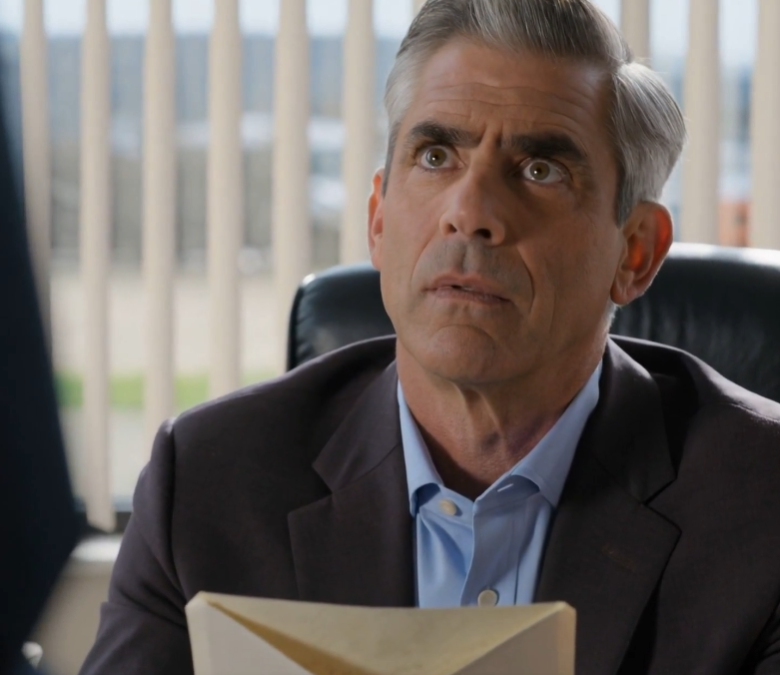
He picked it up, turned it over, then looked up at me with a puzzled half smile. He asked what it was.
I told him it was my resignation.
The half smile dissolved.
He set the envelope down, then picked it up again, as though handling it a second time might change its contents.
He told me I was overreacting.
He used the word “tantrum.”
He said that after eleven years together, he would have expected more maturity from me.
I told him calmly, without raising my voice, that this was not an emotional response. It was a professional one. I had delivered eleven years of consistent, measurable results for the company at the senior coordinator level, and the organization had repeatedly found reasons to withhold advancement.
That pattern had become a conclusion, and I had drawn it.
Douglas stood up and moved around the desk. His voice dropped into something quieter, something conspiratorial.
He explained that the appointments were strategic. Spencer was family, which was a reality of private business. Elaine had strong client relationships that needed a title to anchor them. Brendan’s profile played well with a lender they were courting for an equipment financing round.
He asked me to give him until the end of the fiscal year for a department head position.
He said, “End of the fiscal year.”
I reminded him that he had said something similar at the end of the last fiscal year, and the one before that.
His expression shifted then, the way a man’s face changes when the gap between what he has been saying and what is actually true suddenly collapses in on itself.
What replaced his composure was panic.
The quiet, terrible panic of someone who has just understood exactly what he is about to lose.
He asked how the four of them were supposed to carry the Eastern Ontario accounts without me.
I allowed myself a small, measured pause before answering.
I told him that since he had determined they were ready for supervisory responsibility, he should let them carry it.
I walked back to my desk and retrieved a gray canvas bag from the bottom drawer.
Eleven years fit into it with room to spare.
A ceramic travel mug. A spare pair of reading glasses. A road atlas of Ontario I had used when the routing software went down during an ice storm in 2018. A small framed photograph of my father standing in front of the first truck he ever drove for a living.
When everything was in the bag, it weighed barely four kilograms.
There is something quietly devastating about that arithmetic.
Elaine Chu appeared at my workstation before I had zipped the bag closed. Her voice was low and urgent.
She told me the four of them had spoken informally and were prepared to collectively decline their supervisor titles if I would reconsider staying and overseeing the transition.
She looked genuinely distressed. She wasn’t performing it.
She was truly rattled.
I stopped what I was doing and looked at her.
I told her not to do that. A title formally conferred was hers to hold and her responsibility to grow into. I was not leaving because of anything she had done. I was leaving because Douglas had made a structural choice eleven years in the making, and I had finally made mine in response.
I told her to stop looking for me to anchor every difficult decision because that instinct was precisely what Douglas had exploited in both of us.
I told her to review the Eastern Ontario carrier contracts carefully, document every client communication in writing, and learn to make binding calls without seeking approval first.
She asked what she was supposed to do when she made an error.
I told her to find the root cause, correct the procedure, and put it in writing.
That is what management actually looks like.
By the security desk near the main entrance, a longtime facilities supervisor named Raymond Buckle was doing his morning walkthrough log. Raymond had been with Pinnacle from nearly the beginning, one of those foundational people who outlast organizational trends by being genuinely indispensable to the physical reality of the building.
He looked up when he saw me coming with the canvas bag.
He said nothing for a moment. Then he asked if I was heading out early that day.
I told him I was done.
He set down his clipboard, walked over, and shook my hand with both of his. He said he hoped the road treated me well and that the place would feel different tomorrow morning.
I thanked him and stepped through the main doors into the October air.
The sky above Mississauga was pale gray and clean, the kind of flat Canadian autumn sky that carries neither warmth nor threat, just clarity.
I walked to my car at the far end of the lot and sat in the driver’s seat for a moment without starting the engine.
Through the windshield, I could see the Pinnacle building, its corrugated steel facade, and the rows of loading bays below the second floor.
I had spent eleven winters watching frost form on those bay doors at six in the morning. I had spent eleven summers in that building coordinating freight through heat delays, carrier shortages, and client crises that nobody else in the building had the knowledge or patience to resolve.
A man can give eleven years of quiet competence to an organization and never once receive the acknowledgment that matches his contribution.
He can be called dependable and reliable and invaluable.
And those words can mean, in practice, that the organization has decided he is more useful exactly where he is than he would be anywhere else.
The kindness of those words conceals a transaction that is fundamentally unkind.
I drove home to my townhouse in East Mississauga and made a pot of strong black tea.
I sat at the kitchen table.
Within two hours, my phone began receiving messages. Dana, then Brendan, then Elaine in rapid succession, followed by a call from Douglas.
I let it go to voicemail.
An hour later, a message arrived from Douglas’s personal line.
The tone had shifted.
He wrote that I had departed without completing a formal handover of the central client files and that my final pay, including accrued vacation balance, would be subject to a review pending an assessment of operational liability.
I read that message twice.
Then I opened my laptop.
I had spent eleven years managing contracts, and in doing so, I had absorbed a working familiarity with Ontario’s Employment Standards Act and the Canada Labour Code.
Under Ontario employment law, earned wages and accrued vacation pay must be provided according to applicable payment requirements, without unauthorized deductions or offsets. Withholding earned compensation as leverage for uncontracted transition labor constitutes a breach of the Employment Standards Act, and complaints may be filed with the Ministry of Labour, Training and Skills Development.
I drafted a reply, professional and precise, citing the relevant provisions by name and section number. I also noted that any further communication should be directed to me in writing.
I sent it and set my phone facedown on the counter.
The messages stopped.
On the third evening after my resignation, the rain came in off Lake Ontario. It was the kind of steady, cold October rain that turns the streets dark and quiet by seven o’clock.
I was at my desk, working through a personal review of my professional documentation, when the doorbell rang.
I looked through the peephole.
Douglas Hartwell was standing on my front step, his wool coat dark with rain, his hair pushed flat against his forehead. He was holding a collapsed umbrella in one hand and looked like a man who had not slept well in several consecutive days.
I opened the door.
He asked if he could have a few minutes.
I stepped back and let him in.
He sat in the armchair in my front room and accepted a glass of water, which he held with both hands. He looked around the room with the distracted gaze of someone trying to compose himself before speaking.
Then he told me what had happened in the three days since I left.
On Wednesday morning, Brendan had attempted to coordinate an urgent shipment of industrial components for a manufacturing client in Cambridge.
The routing he selected sent the freight through a transfer hub in London rather than the direct carrier lane, which added eight hours to the transit time and triggered a line-shutdown penalty clause in the client’s service agreement.
The penalty was $65,000.
When the client called, Elaine took the escalation, then called Brendan, then called Dana, and for nearly three hours, nobody made a decision.
While the client’s operations manager grew progressively less patient on hold, Spencer had attempted to process a carrier rate renewal for their primary Quebec partner and inadvertently signed the approval form under the wrong corporate entity, creating a contractual ambiguity that their legal team was still untangling.
The Eastern Ontario grocery chain account, which represented roughly a fifth of Pinnacle’s Ontario revenue, had called Douglas directly to ask why nobody was responding to their weekly status request.
Douglas had personally jumped in, spent four hours trying to locate the right files, could not find two of them, and ultimately emailed the client a partial update at 11:30 that night with an apology note.
I listened to all of it without interrupting.
When he finished, I told him quietly that what he was describing was not a crisis.
It was a consequence.
For eleven years, whenever any of these processes went sideways, the answer had been to hand it to Walter. Nobody had been required to develop independent competence in the difficult workflows because I was always there to absorb the impact.
He had built a structure with a single load-bearing wall and then promoted the decorative elements while I was still holding up the ceiling.
When I left, the ceiling came down.
Douglas leaned forward.
He said he understood that now. He said he had been wrong to hold me in place. He said the company needed me back and that he was prepared to offer me an operations director title, a salary of $105,000, a company vehicle, and a revised corporate structure that would give me genuine administrative authority.
I told him that four years earlier, he had said there was no budget for a $6,000 raise.
He was now telling me he had found $40,000 in discretionary compensation within seventy-two hours of my departure.
That told me something specific about the nature of his decision-making that a new title could not repair.
He reached inside his coat and produced a certified check drawn on Pinnacle’s corporate account, made out to me for $20,000.
He set it on the table between us and asked me to accept it as a retention advance and come back for six weeks to stabilize the accounts and bring the supervisors up to standard.
I looked at the check for a long moment.
Twenty thousand dollars was nearly four months of mortgage payments.
It was not nothing.
But I understood precisely what it was.
It was a purchase offer, not a partnership offer. It was designed to draw me back into the same structure that had held me in place for eleven years, solve all the immediate fires, and restore the conditions under which I could be quietly overlooked again once the emergency subsided.
I slid the check back across the table toward him.
I told him to keep it.
He stared at me.
He said he thought I was letting pride stand in the way of something practical.
I told him it had nothing to do with pride. I had walked into his office eleven years earlier and given him everything I had in good faith. What I was asking for at the end was professional honesty and fair recognition.
You cannot use a man as the foundation of your business for over a decade and then expect to buy his cooperation back with a distress check the moment the foundation shifts.
That is not a partnership.
That is a transaction in which only one party was ever clearly aware of the terms.
He sat with that for a moment.
Then he stood, pulled his coat back on, and walked to the door.
He paused with his hand on the handle and told me that their largest account holder, a building supply distributor out of Burlington named Carrington Industrial, had called his mobile number that afternoon.
The distributor’s logistics manager had heard through a contact that I had left Pinnacle and wanted to know if I might be available for a conversation.
I said nothing.
Douglas nodded once, in a way that acknowledged more than either of us needed to say out loud, and walked back out into the rain.
Two days later, on a Saturday morning, Dana Kowalski appeared at my door with a brown paper bag containing a jar of Ontario wildflower honey, a loaf of good sourdough from a bakery near the Pinnacle office, and the stainless steel travel mug that had lived on my desk for four years.
She said the others had asked her to bring it.
She asked if she could come in for a few minutes.
She sat at my kitchen table with her hands wrapped around a mug of tea and told me honestly that it had been one of the most difficult weeks of her professional life.
She was sleeping badly. She was second-guessing every decision before she made it. She felt like a fraud wearing a title that did not belong to her.
She said she had been on the verge of emailing Douglas to give it back.
I told her not to do that.
I told her the title was hers, and the fear she was feeling was not evidence that she did not deserve it. The fear was evidence that she understood the weight of it, which was exactly the right response.
I told her the single most important shift she needed to make was to stop managing problems and start documenting systems.
Every process that currently lived only in someone’s head, including hers, needed to be written down step by step.
When freight stalled, the question was not who to call, but what the documented protocol said to do.
When a client escalated, the answer was not to find Walter. It was to follow the escalation procedure that she was now responsible for creating.
She asked what to do about Carrington Industrial, since they had declined two of Douglas’s callback attempts.
I told her to drive to their Burlington office Monday morning, ask for the logistics manager directly, and present herself as the new operations supervisor personally overseeing their account.
Not apologetically.
Directly.
Tell them her name, her title, and her commitment.
Carrington Industrial had stayed with Pinnacle for seven years because they valued continuity in professional relationships. She had those skills. She simply had not been required to use them without a safety net until now.
She nodded slowly and looked steadier when she stood up to leave than when she had arrived.
At the door, she said she now understood why everyone at Pinnacle had always found their way to my desk.
Eventually.
I told her that was actually the problem, and that her job now was to make sure nobody needed to find a single desk for every answer.
That Monday, I updated my professional profile and wrote a three-page summary of my operational achievements with specific metrics.
A 96% on-time delivery rate maintained across the Greater Toronto Area and Eastern Ontario accounts over a five-year period. A $3.2 million annual freight budget managed without a regulatory citation. Four junior coordinators mentored through full operational competency. A carrier routing protocol I had designed that reduced average transit variance by 14% over two years.
Numbers, not impressions.
Evidence, not reputation.
I received a call from the logistics manager at Carrington Industrial, a direct and businesslike woman named Sandra Osai, who introduced herself and said she had heard I was no longer at Pinnacle.
She asked with characteristic Canadian directness whether I was looking.
I told her I was evaluating my options carefully.
She said she appreciated that and asked if I would be open to meeting with their operations leadership team before the week’s end.
The meeting took place at Carrington Industrial’s main facility in Burlington, a clean, well-organized operation running four distribution streams across Ontario, Quebec, and British Columbia.
The vice president of operations was a composed man in his early sixties named Arthur Quinland, who had spent the first half of his career in freight and the second half building the systems that made freight manageable.
He asked me directly why a coordinator of my experience had remained below director level for eleven years.
I gave him an honest answer.
I told him I had allowed a productive working relationship to substitute for a clear career structure, and that the lesson I had taken from it was that exceptional performance does not advocate for itself.
A professional must ensure that their contribution is recognized through proper structure, not through being indispensable.
Arthur leaned back slightly, exchanged a brief look with the two people flanking him at the table, and said that was the most accurate description of a common professional failure he had heard in some time.
He said Carrington was not interested in people who rescued emergencies.
They were interested in people who prevented them.
The offer came in writing four days later.
Director of Supply Chain Operations.
Annual base compensation of $138,000.
A full benefits package, including extended health and dental coverage under the company’s group plan. A corporate vehicle allowance. An equity participation structure that vested over three years.
It was more than double what Douglas Hartwell had paid me for eleven years of holding his operation together.
Three weeks after I accepted the Carrington position, Douglas sent me a text message asking if I would be willing to meet him briefly.
I agreed.
We met at a coffee shop in Port Credit on a Wednesday evening, in the same neighborhood where we had shared that steakhouse dinner the previous spring, when he had told six people that the next cycle was my year.
He looked tired but not broken.
He said Dana had gone to Burlington and secured a meeting with Carrington’s logistics team on behalf of Pinnacle’s account, presenting with confidence and without leaning on anyone for backup.
She had not recovered the account, but she had conducted herself professionally and left the door open for future contact.
He said Elaine had restructured the Eastern Ontario client file system in a way that actually made documentation accessible to more than one person.
Spencer had been moved into a business development role that suited his actual skill set.
Brendan was working with an external operations consultant to rebuild the routing protocols properly.
Douglas said that in eleven years, he had watched me solve every problem the company faced, and he had told himself that this demonstrated how well-built the company was.
What it actually demonstrated, he said now, was how much of the building I had been doing alone, without the corresponding authority, recognition, or compensation.
He said he was sorry for that.
I told him I appreciated him saying so.
I meant it.
There was no remaining anger in what I felt toward Douglas Hartwell.
Resentment had never been the primary emotion anyway. What I had felt for most of those eleven years was something quieter and more wearing than anger.
The persistent, low-grade frustration of a man who understands that his work is essential and also understands that this understanding is not shared by the people in the room with the authority to acknowledge it.
That is a particular kind of professional loneliness, and walking out of it had cost me nothing I could not afford to lose.
We shook hands in the parking lot and went our separate ways in the October dusk.
My first quarter at Carrington Industrial was everything the previous eleven years had not been.
The scale was larger, the systems were more sophisticated, and for the first time in my professional life, I had genuine authority matched to genuine accountability.
When something needed to change, I changed it.
When I brought a recommendation to Arthur Quinland, he read it and made a decision.
When I identified a gap in our Manitoba carrier coverage that was creating consistent transit delays, I was given the operational latitude to renegotiate two carrier agreements and establish a backup lane structure within six weeks.
Nobody called me the backbone.
Nobody called me indispensable in a tone that was meant to keep me stationary.
They called me the Director of Supply Chain Operations, which was my title, and they treated the title as real.
About four months into my time at Carrington, Sandra Osai stopped by my office doorway on a Friday afternoon.
She said she had run into someone from Pinnacle at an industry event in Toronto who mentioned I had left there after eleven years without a director title.
She said she had found it genuinely baffling.
I told her it was less baffling when you understood that the most useful thing I provided from the owner’s perspective was not my competence, but my patience.
That patience had been mistaken for contentment, and contentment had been mistaken for permanence.
Sandra tilted her head slightly and said that patience was a virtue the wrong employers exploited and the right ones rewarded.
I told her she was exactly right.
One evening in late winter, I was sitting at my desk at home, finishing a review of a carrier performance report.
It was the kind of document that did not require any particular drama to produce, just careful attention to transit data, on-time percentages, and variance patterns.
The work was quiet and concrete, and mine in a way that work had not felt for a long time.
On the corner of my desk, I kept the gray canvas bag from my last day at Pinnacle, retired now to hold a few personal items, a reminder of what eleven years packed down to when the circumstances demanded it.
I also kept tucked into the inside pocket the original resignation letter, two sentences on a sheet of white paper.
I had not written it in anger.
I had written it in the clear, measured voice of a man who had finally decided that the truth of his situation was worth acting on.
That it was no longer worth performing patience for an audience that had mistaken the performance for agreement.
I thought sometimes about what I might tell a younger version of myself, standing in that first office with Douglas, shaking hands across the folding table.
I would tell him to document everything.
I would tell him that goodwill without structure is just sentiment, and sentiment does not appear on a pay stub.
I would tell him that being the person everyone depends on is only a professional advantage if the dependence is formally acknowledged and compensated.
I would tell him that the moment an employer calls you irreplaceable while simultaneously doing nothing to make your position better, he is not paying you a compliment.
He is describing a lock he has no intention of opening.
Most importantly, I would tell him that leaving is not failure.
Knowing when to leave, and then doing it quietly and with full professional composure, is one of the most precise forms of professional intelligence a person can demonstrate.
I closed the performance report, turned off my desk lamp, and looked out the window at the street below.
The snow had finally finished for the season. The pavement was clear and dry under the amber light of the streetlamp, and the air outside looked cold and open and completely passable.
At 52 years old, I had stopped waiting for a door that was never going to open and walked out through the one I had always had the right to use.
What I found on the other side was not vindication exactly, and not triumph.
It was something simpler and more durable than either of those things.
It was the uncomplicated satisfaction of a man who finally works in a room where the ceiling stays up because the structure was built correctly, and his name appears on the blueprints where it belongs.








