Mom’s party. “This is my daughter. She drives trucks for the army.” Everyone laughed. “She parked down by the pond, thank God.” A retired sergeant major walking his dog stopped at my truck. Went white. Made a call. Five more neighbors came out of their houses. Six minutes later, he knocked on her door.
I dried the truck with an old towel and went inside to find something normal.
My grandfather’s name was Frank Lusk. He was born in Rolla, Missouri, in 1947, and he died there in March of 2019. In between those two dates, he moved more dirt than anyone I have ever known.
He ran a small excavation business out of a gravel lot on the east side of town. Two backhoes, a skid steer, a dump truck with a door that had to be tied shut, and a trailer office with a coffee maker that had not been cleaned since the Carter administration. He dug basements and septic fields and drainage ditches. He dug graves for the county when the county’s own man was sick.
He was very good at it, and he did not talk about it. He did not talk about anything else, either.
He had been in Vietnam. I knew that the way you know the weather.
There was a photograph on the wall of the trailer. A young man with a shaved head standing in front of a bulldozer in a place where the ground was red. When I was small, I asked him who that was, and he said, “Fella I used to know.”
He had been an Army combat engineer from 1967 to 1968. He built roads, and he swept them. That was the entire briefing I received on the subject for the first twenty years of my life.
My mother is his daughter. Her name was Linda Lusk, then Linda Wickham, and now it is Linda Marchetti, which she says with a small lift at the end, like a woman stepping up onto a curb in good shoes.
She was born in 1965, before he left for Vietnam, and I think she grew up on the wrong side of whatever the war did to him. He came home quiet and hard. He drank for about ten years. Then, in 1979, he stopped all at once, the way he did everything, and never touched it again.
But by then, my mother was fourteen, and she had already learned what a quiet house sounds like right before it stops being quiet. She has been filling silences ever since. She fills them with plans and with other people’s names and with the price of things.
She married my father, Paul Wickham, in 1988. I was born in June of 1989. My father was a pleasant man who sold farm insurance and liked a good steak. In the spring of 1995, he sold his last policy in Phelps County, drove to Oklahoma, and did not come back.
I was six. I remember that he left the porch light on. I remember my mother turning it off at midnight and then standing in the dark hallway for a long time with her hand still on the switch.
After that, it was the three of us, more or less.
My mother got a job as a teller at the bank on Pine Street and worked her way up to the loan desk. She was good at it. She is very good at telling people what they can afford. She was less good at our own arithmetic, and some months the numbers did not meet in the middle. On those months, my grandfather would appear at the back door on a Sunday with groceries and an envelope, then leave before anyone could make it into a conversation.
In the summers, I went to the gravel lot. My mother did not like it. She said it was no place for a girl, which was true in the sense that there were no other girls there. There were a lot of men with sunburned necks, a lot of machinery, and a radio that played the same six country songs.
My grandfather put me on a milk crate in the corner of the trailer the first summer with a coloring book. The second summer, he let me sit in the cab of the backhoe while he worked. The third summer, when I was nine, he put my hands on the controls, set his own hands over mine, and taught me how to take a bite out of the ground without tearing it.
“Easy,” he said. “You’re not mad at it.”
By twelve, I could dig a clean trench to grade with him watching. By thirteen, I could do it with him not watching, which is a different thing entirely.
He paid me three dollars an hour in cash, in an envelope with my name on it spelled correctly, which mattered to me more than the money.
He taught me other things, too, without appearing to. How to read a slope. How to look at a field after rain and tell where the water would go. How to spot fill dirt that somebody had pushed in to hide a problem.
“Dirt tells you where it’s been moved, Lena,” he said once, crouched at the edge of a lot where a builder had tried to cheat him. “People mostly don’t.”
I did not understand for a long time that he was talking about himself.
He bought the green truck new in 2003. It was the first new vehicle he had ever owned, and he was ridiculous about it in the quiet way he was ridiculous about anything he loved. He washed it on Saturdays. He would not let the dog ride in the cab. He kept a pressure gauge in the glove box and checked the tires every Sunday before church, which he did not attend.
When I was fourteen, he took me out to the far end of the gravel lot on a Tuesday evening, got out, walked around to the passenger side, and sat down.
“Well,” he said.
I drove it in a big, slow circle around the lot for an hour. I stalled it nine times, which he counted out loud without comment, like a man counting cattle through a gate. On the tenth try, I got it into second gear and kept it there. He looked out the window at the sunset over the county road and said, “There you go.”
That was the whole lesson.
I have driven a great many vehicles since, some of them very large and very expensive and very heavily armored, and I have never once engaged a clutch without hearing him say it.
My mother found out about the driving lessons from a customer at the bank who had seen me at the wheel on the county road. She came home that night and stood in the kitchen doorway with her purse still on her shoulder.
“You do not get in that truck with him again,” she said.
“He’s a good driver.”
“That’s not the point.”
“What’s the point?”
She put her purse down very carefully on the counter.
“Don’t turn into him,” she said.
I was fourteen, and I had no idea what she meant. I thought she meant I should not become a man who digs holes for a living. It took me a long time to understand that she meant something else, and that she was not really talking to me.
I tried to be good to her. I want to say that plainly because it is true and because it matters to what came later.
I was the kind of daughter who did her homework in the bank lobby at five o’clock so her mother would not have to drive home alone. I learned to cook because she came home tired. At sixteen, I got a job at the hardware store. At seventeen, when a late fee on the mortgage came due and she sat at the kitchen table with her face in her hands, I put my summer wages from the gravel lot on the table in the envelope with my name spelled correctly.
She took it, and neither of us ever said anything about it again.
We were a family that did not say things. It turns out that runs downhill.
At three minutes to one on the day of the housewarming, I came out of my house in a pair of khaki slacks, a plain white blouse, and flats, which is as normal as I get. I climbed into the green truck and hit the radio in the right place.
I live outside Waynesville, near the south gate of Fort Leonard Wood, in a small brick house with a carport and a porch that faces the tree line. The drive to Heron Point, which is what the developers named the gated community on the lake where my mother now lives, takes about an hour.
You go north on the highway through the kind of country that does not care who you are. Cattle, hay bales, a church with a sign out front that said, “This week, God answers email.” A billboard for a personal injury lawyer. Then the road bends west, and the lake starts appearing between the trees in bright slices, and the houses get bigger, and the mailboxes get fancier.
Somewhere around the marina, you realize you are no longer in the part of Missouri where people wave.
Heron Point has a gatehouse. It is built to look like a boathouse, with cedar shingles and a copper roof, and it has a white arm across the road and a young man inside with a clipboard.
He was about twenty-two. He had a crew cut, good posture he was trying not to have, and a Marine Corps sticker on the water bottle next to his elbow.
“Afternoon, ma’am. Name?”
“Wickham, for the Marchetti house.”
He ran his finger down the clipboard. Then he looked at the truck, then at me, and then over my shoulder at the bed of the truck, the way people do when they are trying to figure out if you are a guest or the person delivering the ice.
“You’re on the list,” he said, sounding faintly surprised. “Marchetti is the big one at the end of Heron Loop. You can’t miss it.”
He hit the button, and the arm went up.
“It’s the one with all the cars.”
The guard was right. You could not miss it.
My mother’s new house sits at the very end of Heron Loop on a point of land that sticks out into the lake like a thumb. It is gray stone and white trim and a great deal of glass, with a three-car garage, a boathouse, and a lawn that runs down to the water in a series of terraces that somebody was paid a lot of money to design.
Stuart’s company built it. Stuart’s company built most of Heron Point. There’s a sign at the entrance with his company’s name on it in brushed steel.
Cars lined both sides of the loop for a hundred yards. Good cars, German mostly, and a few of those enormous pickup trucks that have never carried anything heavier than a set of golf clubs.
A white catering van was parked on the front lawn, which I noticed because I notice where people put heavy things on soft ground. There was an open space in the driveway right at the front by the walk. It looked like it had been saved.
I had not gotten the engine off before my mother was at the curb.
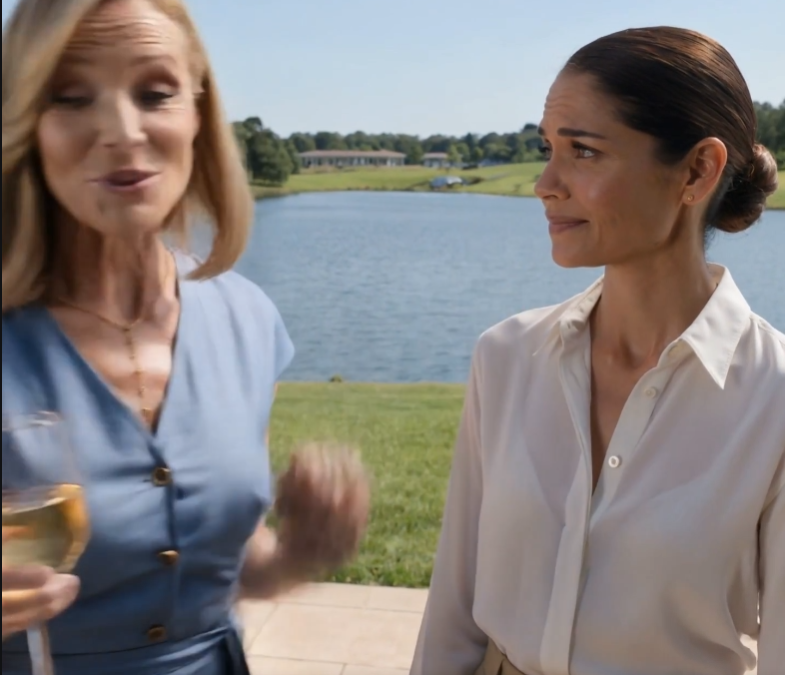
She looked wonderful. I want to be fair to her. She’s sixty-one, and she looks fifty. She had on a linen dress the color of a robin’s egg, a thin gold necklace, and her hair was the particular shade of expensive blonde that she had been working toward for thirty years and had finally achieved.
She had a glass of white wine in one hand. She leaned into my open window with the other hand on the door, and she smiled, but she did not look at me.
She looked at the truck.
“Oh, honey,” she said. “You brought that.”
“It’s the only thing I drive, Mom.”
“I know. I know it is.”
She glanced back at the house, where two couples were coming up the walk.
“Listen, park it down by the pond, would you? Past the mailboxes. The caterers need the driveway.”
I looked at the catering van, which was the size of a small house and was sitting on her lawn.
“Sure,” I said.
“You’re a lifesaver.”
She patted the door twice, the way you pat a horse that has done what it was told. Then she was gone up the walk with her wine, calling somebody’s name in the bright voice she uses for people she wants to like her.
I put the truck in reverse.
I joined the Army in the most ordinary way there is. I went to college.
The Missouri University of Science and Technology is in Rolla, twelve minutes from my grandfather’s gravel lot, and it is an engineering school. I went there because I wanted to learn why the things he did by feel actually worked. I studied civil engineering.
In the fall of my freshman year, a cadet in a gray T-shirt handed me a flyer outside the student center about Army ROTC and scholarships and leadership. I read it walking to class and thought about the photograph on the trailer wall, the young man in front of the bulldozer.
“Fella I used to know.”
I signed up that week.
I did not tell my grandfather first. I told him afterward at the gravel lot, and he was quiet for so long that I thought he was angry. He was greasing a fitting on the backhoe. He finished greasing it. He wiped his hands on a rag.
Then he said, “Engineers?”
“If they’ll have me.”
He nodded slowly and went back to work. At five o’clock, he gave me my envelope, and there was an extra twenty in it. Nothing else was said.
That was, from him, a parade.
My mother said, “You’ll grow out of it.”
She said it at the kitchen table. She said it again at Thanksgiving to my aunts. She said it in the car and on the phone and once, memorably, to the pharmacist. She said it for four years with the steady confidence of a woman who has watched a lot of loans go bad and knows how these things end.
I did not grow out of it.
In May of 2011, at twenty-one, I stood in a lecture hall in Rolla in a uniform that still had creases from the package, raised my right hand, and was commissioned a second lieutenant in the United States Army Corps of Engineers.
My grandfather pinned the gold bar on my left shoulder. His hands shook, which I had never seen them do.
My mother arrived eleven minutes after the oath. She had gotten held up at work. She said she had brought flowers. She kissed my cheek and looked at the uniform the way you look at a costume someone has worn to a party that is not a costume party.
That fall, I went to the Engineer Basic Officer Leader Course at Fort Leonard Wood, which is forty minutes from where my mother lived at the time and roughly the same distance from where she lives now.
She never drove over. Not once.
In January of 2012, at twenty-two, I deployed to Kandahar Province in southern Afghanistan as a route clearance platoon leader.
If you do not know what route clearance is, you are in good company, because my mother did not know either and did not ask.
Here is the short version. In that war, the roads were the most dangerous places in the country. The enemy buried explosives in them, in culverts and potholes and the soft shoulders, and they were very good at it. Somebody had to go out first every morning and find those explosives before the supply trucks and the ambulances and the infantry came through.
That somebody was a route clearance platoon.
We drove slowly in heavily armored vehicles with strange names. The Husky, which carried a metal detector the width of a road. The Buffalo, which had a long hydraulic arm with a fork on the end for digging into things you did not want to touch with your hands. The RG-31, which carried people.
We looked at the ground all day. We looked at every culvert and every pile of rocks and every patch of dirt that was a slightly different color from the dirt around it.
I had spent my whole childhood learning to see where dirt had been moved. It turned out to be the most useful thing anyone ever taught me.
Our call sign was Sapper. My platoon was Second Platoon, and the platoon leader in any platoon is the six. So, on the radio for nine months, I was Sapper 26.
The men in my platoon—and they were all men—were mostly nineteen and twenty and twenty-one, from Georgia and Ohio and Texas, and one from Guam.
My platoon sergeant was a staff sergeant named Rudy Okafor from Houston, who was thirty and had been doing this since before I could drive. He spent my first two weeks deciding whether I was going to get anyone killed. By the third week, he had decided, and after that, he never let anyone else question it.
My mother wrote me one email a month. I have them all. They are about the weather and her book club and a man named Glenn she was seeing who had a timeshare in Branson.
At the end of each one, she wrote, “Stay safe driving over there.”
She told her friends I was driving trucks overseas. I know this because one of them sent me a care package with a card that said, “For our favorite lady trucker,” along with a bag of beef jerky and a travel pillow.
I’m not going to tell you about August yet. I will get there. I have found over the years that there is a right place to tell it, and it is not here.
In October of 2012, we came home.
The buses pulled into a gymnasium parking lot at Fort Leonard Wood at two in the morning, and there were families with banners and balloons and small children asleep on their shoulders. There was a folding table with coffee.
And there was my grandfather.
He was standing by himself near the back in his good jacket and a Veterans of Foreign Wars cap I had never seen him wear. He did not wave. He just watched me get off the bus, then walked over, put his hand on the back of my neck, held it there for a moment, and said, “Well.”
My mother was in Branson that weekend. The timeshare, she explained later, had been booked for months.
In November, I was promoted to first lieutenant.
In June of 2013, there was a ceremony at Fort Leonard Wood. It was held on a parade field under a hot white sky, with a band and a general and a row of folding chairs for families. I was one of four soldiers being recognized that morning.
I am going to leave it at that for now.
My grandfather sat in the front row in the Veterans of Foreign Wars cap, with his back very straight. The chair beside him, which had a piece of paper taped to it that said “Wickham Family,” was empty.
I had called my mother the week before.
“It’s a Friday,” she said. “I can’t take a Friday off for a ribbon, Lena. We’re closing on the Hendricks loan.”
“It’s not really a ribbon, Mom.”
“You know what I mean.”
I did know what she meant.
That was the problem.
After the ceremony, in the parking lot, my grandfather walked me to his truck. He opened the glove box and took out a small square sticker still on its backing.
The surviving men of my platoon had made them after we got home. It was the engineer castle, the red-and-white turreted castle that the Corps has used since the 1800s. Under it, in block letters, it said “26,” and under that, smaller, the name of a road, Route Cardinal, and a date.
They had mailed one to everybody who came home. I had not put mine anywhere. I had put it in a drawer.
“Rudy sent me one,” my grandfather said. “Your sergeant. Nice letter.”
I had not known Rudy had his address.
“Your people put it on theirs,” my grandfather said.
He held it out to me.
“Put it on mine.”
“Grandpa, you don’t have to.”
“Lena.”
So I peeled off the backing and pressed it into the lower corner of his rear window and smoothed it flat with my thumb. He stood there with his hands in his jacket pockets, looking at it for a long time in the heat.
Then he said, “There you go,” got in, and drove home.
He died in March of 2019 of a heart that had simply been worked long enough. He was seventy-one.
He left the gravel lot to his foreman, the backhoes to the county, and the green truck to me.
He left one other thing.
It was in a plain white envelope, sealed, and on the front, in his square carpenter’s capitals, it said “Linda.”
The lawyer gave it to my mother in the funeral home parking lot. She looked at it and put it in her purse. When we got back to her kitchen, she put it in the drawer by the stove where she keeps the takeout menus and the rubber bands.
I watched her close the drawer.
I thought she would open it that night.
She did not.
That summer, I ordered the license plate.
Missouri makes one for people who have received certain decorations. I had never wanted it. I ordered it because the truck was his, and I wanted something on it that would have made him stand up a little straighter in the front row.
It came in the mail in a flat cardboard envelope, and I screwed it on myself in my carport. I have never taken it off.
Life went on. That is the other thing I have learned. It goes on whether you tell anyone about it or not.
I made captain in May of 2015. I commanded a company. I made major in 2021.
In 2025, I became the operations officer of an engineer training battalion back at Fort Leonard Wood, which means I spend my days planning how six hundred soldiers will learn to do the thing I did, and planning it well enough that fewer of them have to do it the way I did.
My mother met Stuart Marchetti at a charity auction in 2023. He was sixty-four, a widower, a commercial developer with a gentle laugh and a boat. They married the next year at a country club in Osage Beach.
At the reception, she introduced me to his business partners as, “My daughter Lena. She’s with the government.”
It was the most accurate thing she had ever said about my job, and it was an accident.
In June of this year, they moved into the new house at the end of Heron Loop. My mother sent a photograph of the view with no message, just the lake, blue and enormous, from a window that looked like it cost more than my house.
I backed the green truck out of her driveway, past the catering van, past the forty cars, down her loop, past the bank of mailboxes, which were bronze and shaped like little lighthouses, to a small gravel pull-off beside a retention pond with a fountain in the middle of it.
There was nobody else parked there. There was a sign that said “No Fishing,” a bench, and a trash can with a lid.
I turned off the engine and sat for a moment with my hands on the wheel. Then I got out, locked it, and started walking back up the loop in my good flats.
It is three hundred yards from that pond to my mother’s front door. I know because I paced it without meaning to, the way you do when you have spent years measuring distances on foot.
I counted forty cars on the way up.
None of them were parked by the pond.
Stuart met me at the front door, which I had not expected.
He is a tall, soft-spoken man with a white beard trimmed very short and the kind of reading glasses that live on top of your head all day. He had on a golf shirt, pressed shorts, and boat shoes with no socks.
He shook my hand with both of his, which is a thing some men do when they’re trying to make up for something, and I have never been able to decide whether he knows what he is making up for.
“Lena, you made it. Did your mother tell you where to park?”
“She did.”
He looked down the loop in the direction of the pond. Something crossed his face, and then he decided not to say it.
“Well,” he said. “Come in. Come in. Let me show you the house before the hordes get to you.”
He gave me the tour.
It was a beautiful house. I am not going to pretend otherwise.
There were white oak floors and a staircase that floated and a kitchen with two islands, which I had not known was allowed. The great room had a wall of glass that looked out over the terraced lawn to the lake and, off to the left, down along the curve of Heron Loop all the way to the bronze lighthouse mailboxes and the little pond with the fountain.
You could see my truck from there. It sat alone on the gravel, very green, like a period at the end of a long sentence.
On the wall along the staircase, my mother had hung the family photographs.
There was her wedding to Stuart. There were Stuart’s grandchildren on a dock. There was my mother at the Grand Canyon, my mother in Rome, my mother holding a very large fish she did not catch.
There was me at my high school graduation in a blue gown, squinting. There was me at about seven on my grandfather’s backhoe, except that my grandfather had been cropped out of it, so it was just a small girl sitting on a machine with a large hand on her shoulder that belonged to no one.
There was nothing after 2007.
I counted the frames. There were twenty-two.
I was in two of them, and in neither was I older than eighteen.
“Your mother says you’re in logistics,” Stuart said, pausing at the landing.
“Something like that.”
“I always meant to ask more about it.”
He took his glasses off the top of his head and looked at them as though they might have an opinion.
“She doesn’t like to talk about it. I figured that was her business.”
“It’s all right,” I said. “It’s not a very exciting story the way she tells it.”
He showed me the boathouse and the wine room and a room over the garage that he called his office and my mother called the room where Stuart hides.
Then he walked me out through the great room onto the patio, and the party took me the way a current takes you.
There were about forty people. They were the kind of people who own lake houses at the Lake of the Ozarks, which is to say doctors from Jefferson City, car dealers from Springfield, a retired judge, a woman who owned four dental practices, and a great many of Stuart’s business partners, who were all named things like Craig and Todd and all wore the same blue shirt.
There was a bar set up under a white tent with a young man in a vest making drinks with fresh mint. There were servers carrying trays of tiny crab cakes. A jazz trio was playing something polite by the pool.
I stood with a glass of iced tea and did what I do at gatherings, which is find the edges and stand on them.
Stuart’s son found me first.
His name is Blake. He is thirty-four and sells commercial real estate for his father’s company and has the specific confidence of a man who has never once been told no by anyone who could enforce it.
He was holding a beer in a koozie that said “Heron Point, Established 2023.”
“The mysterious stepsister,” he said. “Linda says you drive for the Army. Like what? Semis?”
“Different kinds of vehicles.”
“Man, respect. That’s honest work.”
He tipped the beer at me.
“My guy who hauls my boat, he was in the Army. Says it was the worst four years of his life.”
“It isn’t for everybody.”
“Is that the green thing with the stickers down by the pond?”
He laughed.
“I thought somebody’s landscaper broke down.”
My mother’s friend Bonnie Tate joined us, and then the woman who owned the dental practices, and then the president of the homeowners association, whose name was Gretchen Vale.
Gretchen was fifty-eight and extremely fit and had the sharp, pleasant attention of a woman who reads the minutes of every meeting twice. She had a clipboard energy even without a clipboard.
She took my hand and held it slightly too long.
“You must be the daughter,” she said. “Linda’s told us so little about you. What is it you do exactly?”
I opened my mouth.
I had an answer ready. It is a good answer, the one I use on airplanes and at the dentist. It says, “I work at Fort Leonard Wood,” and leaves it at that.
I did not get to use it.
My mother had come up behind Gretchen with a fresh glass of wine, and she did what she has always done in conversations about me, which is arrive just in time to finish them.
It was a little after six. The sun was starting to go gold across the water.
She lifted her glass slightly. Not a toast exactly, just enough to turn a few more heads. She put her other hand on my shoulder and said it to the whole corner of the patio.
“This is my daughter,” she said. “She drives trucks for the Army.”
Everyone laughed.
It was not a cruel laugh exactly. It was worse than that. It was the easy, friendly laugh of forty people who have been handed a small, harmless fact and told it is funny.
Blake laughed the loudest. Bonnie laughed and put her hand on my arm, the way you do with someone who has said something a little sad.
Gretchen laughed politely and looked at me with new and total disinterest, the way you look at a problem that has turned out not to be one.
Somebody by the bar said, “Ten-four, good buddy,” and got a second laugh.
My mother was pleased. She had gotten the room.
She squeezed my shoulder and leaned in toward Gretchen confidentially, but not so confidentially that the others could not hear.
“She parked down by the pond,” she said. “Thank God.”
That got the third laugh.
It was the biggest one.
I want to tell you what I felt, and I want to be accurate, because it would be easy to make it sound larger than it was.
I did not feel humiliated. I have been yelled at by professionals.
I felt something closer to tired.
It was the same thing I had felt at the commissioning when she walked in eleven minutes late. It was the chair with “Wickham Family” taped to it. It was the photograph on the staircase with the hand that belonged to no one.
It was fifteen years of being described accurately enough to be unrecognizable.
“It’s a good truck, Mom,” I said.
“It is a very good truck,” she said, patting my shoulder.
Then she turned to ask Gretchen about the new dock regulations, and the corner of the patio turned with her.
I went inside to get more ice.
This is the part I have gone over the most, so I will tell it carefully.
The kitchen with the two islands has a long window over the sink that looks out on Heron Loop, down the curve of the road, all the way to the pond.
The caterers had taken over most of the kitchen, and there were trays everywhere, and a woman in a black apron was plating something with tweezers.
I found the ice machine, which was built into the second island, and filled a pitcher. While it filled, I looked out the window because it was there, and because the light on the water was very beautiful.
There was an old man walking a dog along the edge of the road.
He was in his late sixties, tall, a little stooped at the top of the spine, the way big men get when they have carried heavy things on their backs for a long time.
He had on a gray T-shirt, khaki shorts, white socks pulled up high, and a ball cap.
The dog was a yellow Lab with a gray muzzle who walked the way old Labs walk, as though every step were a matter of personal principle.
They were coming along the loop from the far end, from the direction of the golf course, at the steady pace of a man who has walked the same route at the same time every evening for years.
The clock on the oven said 6:31.
They reached the pond. The dog stopped to consider the “No Fishing” sign. The old man stopped with him, and his eyes went, the way everyone’s do, to the only vehicle parked there.
He looked at the truck the way people look at an old truck.
Then he looked at the back of it.
Then he stopped looking at it the way people look at an old truck.
He took two steps closer and bent a little at the waist and read the license plate.
I watched him read it twice.
I could see it in the set of his shoulders.
He straightened up. Then he walked around to the rear window and bent down again, very close, with his hands on his knees, and looked at the sticker in the lower corner of the glass.
The faded castle. The two numbers. The name of the road.
He stayed bent over like that for what felt like a long time.
The dog sat down beside him and waited.
When he straightened up, he had gone white.
I could see it from three hundred yards.
There’s a particular white that a sunburned face goes, a kind of gray-white under the red, and I have seen it before on other men on other roads, and I knew it at once.
He took his phone out of his pocket.
He did not dial.
He turned it around and held it up to the rear window of my grandfather’s truck, very steady, the way you hold a phone when someone on the other end needs to see exactly what you are seeing.
He held it there for maybe ten seconds. Then he brought it back to his face and spoke into it.
I could not hear him, of course.
I watched him say something short. I watched him nod. I watched him put his free hand flat on the tailgate, on the dent in the lower left corner, and leave it there.
Then he ended that call and made another one.
Then another.
The pitcher overflowed in my hand.
Ice went across the island and onto the floor, and the woman in the black apron looked at me with professional forgiveness.
I turned off the machine and did not look away from the window.
A door opened in the house directly across the loop from the pond. A man came out, heavyset, in a golf shirt, still holding a napkin. He walked straight down his driveway toward the old man.
Then another door opened two houses up. A thin man with a white crew cut and reading glasses pushed up on his forehead came out, walking fast.
Then a man from the house beside him in a navy ball cap.
Then a very old man, much older than the others, bald and bent, coming slowly down a long flagstone path with one hand on a cane and the other on the railing, still wearing his house slippers.
Then a fifth man, trim in running clothes, who came around the corner of his garage at an easy jog and slowed to a walk as he got close.
Five more neighbors had come out of their houses.
They did not wave to each other. They did not call out. They walked down to the pond, all of them from their separate driveways, and they gathered around the back of my grandfather’s green truck.
And they stood there.
The old man with the dog said something and pointed at the rear window, and each of them bent down in turn and looked.
The man in the navy cap took his cap off and held it against his chest.
Then the heavyset man took off his.
Then all of them did, except the very old man, who was not wearing one and who instead put his hand on the tailgate next to the first man’s.
Six men and an old dog standing around a truck by a retention pond at the end of a summer day with their hats off.
Out on the patio, somebody had noticed.
It was Blake.
I heard him through the open sliding door.
“Hey, what is going on down there?”
Heads turned. People drifted to the patio rail with their drinks. The jazz trio kept playing.
You could not see what the men were looking at, only that they were looking at something altogether in a way that made you want to know what it was.
My mother came to the rail and shaded her eyes with her hand.
“Oh, for heaven’s sake,” she said, and laughed. “The association’s going to tow it.”
Then she looked toward Gretchen.
“Gretchen, are you having her towed?”
“I don’t think so,” Gretchen said in a voice that did not sound entirely sure.
Down at the pond, the old man with the dog handed the leash to the man in the running clothes. He said something to the others. They nodded.
Then he turned and started walking up Heron Loop toward my mother’s house by himself, at the steady, unhurried pace of a man who has walked into a great many rooms where he was not expected.
I looked at the clock on the oven.
It said 6:37.
Six minutes later, he knocked on her door.
It was three knocks, not loud, evenly spaced, with a little weight behind each one. It was the knock of a man who learned in a headquarters hallway a long time ago exactly how to announce himself to someone who outranked him.
The patio went quiet enough to hear the fountain in the pond.
My mother set down her wine and smoothed the front of her robin’s-egg dress and put on the smile she uses for people she wants to like her.
Then she went to answer it.
I followed her.
I did not decide to. My feet did it the way they do when a radio calls your number.
She opened the door wide with the smile still on her face.
The old man was standing on the top step with his cap in his hand. Up close, he was bigger than he had looked from the kitchen and older, and his eyes were red at the rims.
“Ma’am,” he said. “I apologize for the interruption. My name is Walt Brennan. I live at the end of the loop by the ninth green.”
He had a voice that had been used outdoors for a long time.
“The green Ford down by the pond. I need to know who drove it here.”
My mother’s smile did not move, but it got thinner.
“Oh, I’m so sorry. That’s my daughter’s. She’ll move it right now. We didn’t realize it was a problem.”
“No, ma’am,” he said. “Nobody moves that truck.”
The foyer went very still.
Behind me, I could feel the party pressing up to the edge of the great room, the way water presses against a window.
Then he looked past my mother’s shoulder and found me, and his face did something I will not forget.
It fell open like a man who has been carrying something heavy for a long way and has just been told he can set it down.
“Lieutenant Wickham,” he said.
My mother turned around and looked at me as if she had never seen me before.
“It’s Major now, Sergeant Major,” I said. “But you’re not wrong.”
He did not ask how I knew his rank.
It was in the knock and in the way he stood on my mother’s step like it was a parade field.
He held out his phone.
On the screen was a man about my age sitting at a kitchen table with a coffee mug in front of him and a child’s drawing stuck to the refrigerator behind him.
He was crying without making any effort to stop.
“Ma’am,” he said. “It’s Aaron. Aaron Brennan. Dad said it was your truck. I told him there’s only one.”
I had not heard that voice in fourteen years.
The last time I heard it, it was coming out of a burning vehicle.
I am going to tell you about August now.
This is the right place.
On the fourteenth of August, 2012, at about ten in the morning, my platoon was clearing a stretch of road in Kandahar Province that the Army called Route Cardinal.
We had found two devices already that morning.
The Husky was in front, sweeping. Behind it was an RG-31 with four men inside.
The driver was a twenty-one-year-old specialist from Lee’s Summit, Missouri, named Aaron Brennan.
His gunner was Sergeant Dwayne Pickett from Macon, Georgia, who had a daughter he had not met yet.
There was a culvert.
There is always a culvert.
The Husky passed over it clean. The charge had been buried deep and wired to go off on the second vehicle.
It went.
Sergeant Pickett was killed instantly. Two of the men in the back were thrown clear, hurt but alive. The cab caught fire, and the door on Aaron’s side was jammed against the berm. He was pinned by the dashboard.
And then the shooting started from a compound about two hundred meters to the east.
Staff Sergeant Okafor and I got to the RG-31 on foot.
I will not describe all of it.
I got in through the passenger side, which was on fire. I got the dashboard off his legs with a pry bar, and Okafor pulled while I pushed, and we got him out. Then we carried him two hundred meters to the Buffalo because the Buffalo had the best armor and the medic was in it.
Then I got back on the radio and got the platoon turned into something that was shooting back instead of something that was being shot at, and called the helicopter.
And when the helicopter had taken Aaron and the other two and Sergeant Pickett, I finished clearing the route to the checkpoint because there were forty supply trucks waiting behind us.
And that was our job.
That is what the license plate is for.
That is what the sticker says.
Out on the lawn, the other five men had come up the loop and were standing at the bottom of my mother’s front steps in a loose line with their hats in their hands.
Walt introduced them one at a time as if we were at a formation.
Colonel Ed Farnsworth, retired Army, the heavyset man with the napkin.
Master Sergeant Luis Carrera, retired Marine Corps, the thin man with the reading glasses.
Chief Rob Kaminsky, retired Navy, a Seabee in the navy cap.
Sergeant First Class Phil Anderson, retired Army medic, in the running clothes.
And Dale Witt, seventy-nine, who had been a private in the First Infantry Division in 1967 and who said so himself in case anybody was confused about the slippers.
Colonel Farnsworth cleared his throat.
“Major, my grandson went through the Engineer Basic Course at Leonard Wood last year. He called me on a Sunday and told me about a case study they teach. A route clearance lieutenant. A culvert. He said the instructors make the new lieutenants stand up when they finish it.”
He looked at the ground.
“I never thought I’d shake the hand.”
Phil Anderson, the medic, asked the only question anyone asked.
“Did Pickett have any chance?”
“No,” I said.
He nodded as though he had known and was sorry and was glad someone had told him straight.
I have told that story to lieutenants every quarter for a year in a classroom with slides.
I had never once told it to anyone who loved me.
I looked behind me.
Forty people were standing in my mother’s foyer and great room, holding their drinks.
Nobody was drinking them.
Gretchen Vale had her hand over her mouth. Blake had taken his beer out of its koozie and was holding the koozie in his other hand as if he no longer knew what it was for.
And my mother was standing exactly where she had been when she opened the door, with one hand still on the knob, not moving at all.
Dale Witt had made his way back down to the road slowly on his cane.
By the time I walked down to the pond with the others, he was standing at the back of the truck with his palm flat on the tailgate over the dent.
“Engineer,” he said.
Meaning the truck. Meaning the castle.
“My grandfather,” I said. “1967.”
“Hmm,” said Dale Witt. “Good year for engineers. Bad year for everything else.”
My mother came down the loop about twenty minutes later in her party shoes.
She walked the way you walk on a road in heels, carefully, with small steps, and she had left her wine behind, which is how I knew she was frightened.
The six men saw her coming and, without anybody saying anything, stepped back a little from the truck to give us room.
That is a thing that men of a certain kind do without thinking.
They make space for a conversation they are not part of.
“Lena,” she said.
She was a little out of breath.
“Honey, come up to the house. Everyone wants to meet you. Gretchen wants a picture.”
“I’m all right here, Mom.”
“Please don’t do this.”
She lowered her voice.
“People are asking me questions I can’t answer.”
I understood, standing there, that this was the whole of it.
Not that she was sorry.
That she had been caught without an answer in front of people whose opinion she had spent two years and a great deal of Stuart’s money earning.
She wanted me to come up the hill and be the answer.
I did not raise my voice.
I have found that you almost never need to.
“You asked me to park by the pond, Mom,” I said. “This is where I’ll be.”
She looked at me for a long moment.
Then she looked at the truck, at the dent, at the sticker, at the plate.
I watched her read it.
I do not think she had ever read it before.
I think she had seen it every time I pulled into her driveway for seven years and filed it away with the rest of the things about me that were too much trouble to understand.
“I didn’t know,” she said.
“I know you didn’t.”
“You never told me.”
“You never asked,” I said. “Grandpa asked.”
Something went across her face then that I was not ready for, and she turned and walked back up the hill.
The six of us stayed at the pond until dark.
Walt’s wife, Ruth, a small, brisk woman with silver hair in a braid, came down with a stack of paper plates and a casserole dish of pulled pork from her own kitchen because, she said, she was not about to let a soldier stand at a party and not be fed.
We ate off the tailgate.
Luis Carrera had a cooler of beer in his garage and brought it down in a wheelbarrow.
Dale Witt sat on the bench by the “No Fishing” sign with the old Lab, whose name was Moose, asleep across his slippers.
Up the hill, people began to leave, and every car that left the loop had to drive past the pond to get to the gate.
Every one of them slowed down.
At 9:45, I said good night.
Walt walked me around to the driver’s door.
“Aaron’s going to call you,” he said. “Fair warning. He’s been trying to find you for fourteen years. The Army wouldn’t give him your address.”
“The Army’s right not to.”
“The Army’s right about a lot of things,” he said. “Doesn’t make it right.”
I drove home through the dark with the windows down.
The first text came at 11:20, while I was standing in my kitchen with a glass of water.
“You humiliated me in front of the entire association.”
Then, four minutes later:
“Stuart is so hurt.”
Then, at 11:50:
“I don’t know how I’m supposed to show my face at the clubhouse.”
I read them, turned my phone face down on the counter, and went to bed.
I did not answer.
I have spent my whole life answering my mother’s texts within the minute, the way you answer a radio.
I let that one ring.
I slept eight hours straight through for the first time in a month.
Heron Point, it turns out, is a small town that happens to have a gate.
By Monday, everyone knew.
Gretchen Vale told the ladies at the clubhouse pool. The ladies at the clubhouse pool told their husbands on the golf course. The golf course told the marina.
I know all of this because the 6:30 Club told me.
The 6:30 Club is what Walt and the others call themselves because they walk the loop every evening at 6:30, and they had apparently been doing it for five years without once stopping at the Marchetti mailbox.
Now, they stopped every night.
Walt would ring the bell and ask whether the major was coming back that weekend.
My mother did not know what to tell them.
Stuart told me the rest.
He drove down to my house on a Thursday evening in late August by himself, an hour each way, and sat on my porch in one of my two plastic chairs with a glass of iced tea he did not drink.
He looked tired.
He looked like a man whose beautiful new house had developed a crack in the foundation that no one could find.
“Gretchen said something to her at the pool,” he said. “In front of people.”
He looked down at the glass.
“She said, ‘You put a Silver Star by the retention pond, Linda.’ Like it was a line she’d been practicing.”
He shook his head.
“Bonnie canceled their lunch. Two of my partners’ wives have stopped calling. It’s all very small, but she’s never had people look at her that way, and she doesn’t know what to do with it.”
“I’m sorry,” I said.
And I found that I meant it a little.
“Don’t be. I laughed, too. At the truck, when Blake said the landscaper thing.”
He turned the glass in his hands.
“I’ve been married to your mother for two years, and I didn’t know. I never asked. I told myself it was her business. That was a comfortable thing to tell myself.”
We sat for a while.
The tree line was loud with cicadas.
“There’s something else,” he said. “She opened a letter from her father. She said it had been in a drawer for seven years. She read it on Sunday, and she’s been sitting with it ever since. She reads it at the kitchen table at night when she thinks I’m asleep.”
I had not thought about that envelope in a long time.
The square capitals.
Linda.
“Did she tell you what it said?”
“No. She asked me to give you this.”
He took a folded piece of paper out of his shirt pocket and set it on the porch rail. After a moment, because there was a breeze, he picked a rock out of my flower bed and set it on top.
“It’s one line. She photocopied it. She said she couldn’t send you the whole thing yet.”
Then he stood, shook my hand with both of his, and drove home.
I did not read it right away.
My mother called nine times over the next week.
I let every one of them ring.
I was not punishing her. I was not sure what I was doing. I think I was waiting to see if she would do something other than call.
The paper sat on the rail under the rock for two days.
On the third evening, I unfolded it.
It was a photocopy of a single line in my grandfather’s square carpenter’s capitals, slightly crooked on the page, the way his writing always was.
“Ask her about Route Cardinal.”
On Saturday, the fifth of September, at 10:06 in the morning, I came out onto my porch with my coffee and found my mother sitting in my grandfather’s truck.
She was in the passenger seat.
She had let herself in because I never lock it, and she was sitting very upright with her purse in her lap and an envelope on top of the purse.
Her white car was parked on the road.
She must have left the lake at five.
I walked down, opened the driver’s door, and got in.
The wool blanket crackled under me.
We sat there facing my carport.
“I’m sorry you were embarrassed,” she said.
It was a sentence she had clearly rehearsed on the drive.
I let it sit in the cab for a moment, the way my grandfather used to let things sit.
“I wasn’t, Mom,” I said. “That’s the part you missed.”
She closed her eyes.
I watched her understand it.
It took a while.
Then she opened the envelope and took out two sheets of lined paper folded in thirds, soft from being unfolded too many times in one week.
She did not hand them to me.
She read from them in a flat, careful voice, the way you read something you are afraid will change if you add anything to it.
“Linda, I never told you anything. Not about over there and not about after. I thought if I kept it out of the house, it would stay out. It didn’t. It got into you anyway, just without the words. I’m sorry for that. Lena is the best thing either of us did. She won’t tell you what she did over there unless you ask. She’s like me that way. Ask her about Route Cardinal. Don’t let her be me. Dad.”
She folded the pages back into thirds.
“He wrote this seven years ago,” she said. “I put it in a drawer with the takeout menus.”
“I know. I watched you.”
“I was afraid of it.”
She looked out the windshield.
“I was afraid of him my whole life, Lena. Not of what he did. Of what he didn’t say. And when you joined, it was like watching you walk into the same room he walked into and closed the door. So I pretended there wasn’t a room. I told everyone you drove trucks. I think I told myself that, too.”
“I did drive trucks,” I said. “That part was true.”
She laughed, a short, wet sound, and put her hand over her mouth.
I did not tell her it was all right.
It was not all right, and she would have known I was lying, and we have had enough of that in our family to last several generations.
What I said instead was the only thing I could think of that was fair to both of us.
“Ask me something,” I said. “Anything. And then listen to the whole answer. Don’t finish it for me.”
She was quiet for a long time.
A truck went by on the road with a boat on a trailer headed for the lake.
“What’s a culvert?” my mother said.
So I started at the beginning.
Three weeks went by.
My mother started walking with the 6:30 Club.
Walt told me this on the phone with some amusement. She showed up the first evening in white tennis shoes that had never been used for anything as crude as walking, and she did not know that you keep pace with the slowest man, and Dale Witt had to explain it to her.
By the end of the second week, she was carrying the bag for Moose.
“Your mother asked me what a sergeant major does,” Walt said. “Took me forty minutes. She took notes on her phone. Asked me how to spell things.”
She started calling me for answers, too. Sometimes the silence on the line went on so long I thought the call had dropped, and it had not.
She was just listening.
It was a new skill for her.
She was bad at it the way anyone is bad at anything new, and she kept doing it anyway.
In the middle of September, I got a text from a Kansas City number.
“Ma’am, it’s Aaron. Dad says the club is doing a breakfast at the pond on the 26th. I’m coming down. Bringing Jess and the kids. They want to see the truck.”
I read it in my office at Fort Leonard Wood and had to close my door for a minute.
On the Friday night before, my mother called.
She sounded nervous, which she never does.
“Lena,” she said. “Where should I park?”
On Saturday, the twenty-sixth of September, at a quarter to eight in the morning, I turned onto Heron Loop in my grandfather’s green truck and saw my mother’s white car parked on the gravel by the retention pond.
Past the mailboxes, next to the “No Fishing” sign.
She was standing beside it in jeans and the tennis shoes, which were no longer white.
She had parked there on purpose.
She had left the space next to her open.
I parked beside her.
Walt and Ruth had set up two folding tables under the little pavilion by the pond with a camp stove and a griddle and a great deal of bacon.
Dale Witt was on his bench with Moose.
Stuart was there in a Heron Point sweatshirt, flipping pancakes badly.
Even Blake came around 8:30 and stood near the back and did not say anything, which I took as a kind of apology and accepted.
Aaron Brennan pulled in at eight.
He is thirty-five now, a firefighter in Kansas City, a little heavier than the boy I carried, with a scar that runs up his left forearm and disappears under his sleeve.
He got out of his truck, and I saw the sticker in the corner of his rear window.
The same faded castle.
The same two numbers.
The same road.
His wife and his two children climbed out behind him, and the children ran straight past everyone to look at my grandfather’s truck because they had been promised it.
He did not come to me first.
He went to my mother.
“Mrs. Marchetti,” he said, and held out his hand. “I’ve wanted to shake your hand for fourteen years.”
And then, standing by a retention pond in front of six old soldiers and his own family, he told her what her daughter had done in his own words, which were better than mine.
My mother listened to the whole answer.
She did not finish it for him.
Afterward, when the griddle was cooling, she found me at the tailgate.
“Would you drive me somewhere?” she said. “In this?”
We drove to Rolla, an hour and ten minutes.
She sat in the passenger seat, her father’s seat, with her hands in her lap, and about halfway there, she reached back and touched the corner of the rear window, where the sticker is, just once with two fingers.
The cemetery is on a hill on the west side of town, and my grandfather is near the top under a flat bronze marker with his name, his dates, and three words.
Sergeant. Army. Vietnam.
My mother knelt on the grass in her jeans.
She put her hand flat on the marker the way Dale Witt had put his on the tailgate.
“Dad,” she said. “I asked her.”
It came seven years too late for the one person who always asked.
That is the part I carry.
He waited in the front row next to an empty chair, and he never got to see her fill it.
But it came in time for the two of us, and I have learned that you do not get to choose when the right thing arrives.
You only get to decide whether you are standing there when it does.
If someone in your life has parked you down the street, out of sight, where you will not embarrass them, you do not have to move.
You can wait there by the thing that matters to you with your head up.
The right people will walk down to you.
And sometimes, if you are very patient, one of them will be the person who sent you there.
Thank you for staying with me all the way to that hillside in Rolla.
My mother still parks by the pond when she walks with the 6:30 Club. She says it’s the best spot on the loop.
I’ve stopped arguing with her.
Now I’d like to hear from you.
Has someone in your family ever described you so small that you stopped correcting them? Is there a letter or a question that you’ve been keeping in a drawer for too long?
And if you had been one of those six men at the pond, what would you have said to my mother when she opened the door?
Tell me in the comments. I read every one.
If this story meant something to you, hit like, subscribe, and share it with someone who has been waiting a long time to be asked.








