“I will write you up for willful neglect of a compliance-critical system event.” My plant manager threatened to fire me because I refused to stay past five to rescue a failing refinery unit. Just days earlier, he’d given the promotion I’d spent 17 years working toward—and its $18,000 raise—to his own brother-in-law. Then he’d frozen my merit increase for 12 months. Now he desperately needed the very skills he’d decided weren’t good enough for leadership. I looked him straight in the eyes. “My shift ends at five.” And what Nolan Gibbs didn’t know was that his own company’s records were already telling a very different story. It was 4:59 on a Wednesday afternoon. Nolan had come charging across the refinery floor, planting both hands on my tool cart. The sulfur recovery unit had suffered a cascading control-system fault. If we couldn’t restore the thermal oxidizer before the six o’clock handover, the plant faced regulatory enforcement and potential fines starting at $40,000 a day. “Get your calibration kit and get down there.” I set my pipe wrench on the rubber mat and glanced at the orange digital clock above the safety station. 4:59. “My shift ends at five,” I said. Nolan went completely still. For 17 years, I’d been the technician Breenidge Chemical called when everything went wrong. I’d come in at two in the morning to prevent a dangerous pressure excursion. I’d walked supervisors through emergency procedures over the phone on Christmas Eve. I held technical certifications nobody else in the plant had. I’d rebuilt our preventive maintenance database. I’d scored 94 out of 100 on the corporate technical assessment—the highest result in the plant’s history. But when the senior process reliability supervisor position opened, Nolan gave it to Stu Federman. His wife’s younger brother. Stu had spent five years working as a purchasing coordinator. He couldn’t read a P&ID drawing without help and had never opened control-loop tuning software. When I questioned the decision, Nolan told me leadership required interpersonal dynamics and organizational vision. My skills, he explained, were better suited to hands-on work. Four days later, he froze my merit increase, citing a confrontational attitude toward management. And now, at 4:59, he was standing in front of me demanding that I save his operation. “You cannot be serious right now,” Nolan said. “Cal, that EPA window is not negotiable.” I told him to submit a Priority 1 corrective maintenance work order. I’d review it when my next shift started at seven. His face darkened. “I will write you up for willful neglect of a compliance-critical system event. That is a terminable offense under the plant safety charter.” I picked up my personal calibration kit. “Last week, when you gave the supervisor position to your brother-in-law, you told me that hands-on technical skill wasn’t the metric for leadership.” I met his eyes. “So let your new supervisor lead the response and restore the loop.” For a moment, all I heard was the ventilation overhead. Then the shift-change buzzer sounded. “My contracted shift has ended,” I said. And I walked out. By the time I reached my truck, warning alarms were audible from the refinery. Before I got home, both Nolan and Stu were calling. That evening, I counted 23 missed calls. At 9:17, Nolan sent a text accusing me of costing Breenidge Chemical $68,000 in emergency contractor fees. He promised a formal review. The next morning, he was waiting outside the instrument shop. His shirt collar was crooked. Dark circles shadowed his eyes. “You cost this operation $68,000 in emergency labor and regulatory exposure.” I opened my tool cart. “I didn’t cost the operation anything.” Then I reminded him of the technical objection I’d filed four months earlier, warning that extending the thermal oxidizer’s preventive maintenance interval from 90 to 180 days could create exactly this kind of problem. That written warning was still open and unresolved in the plant’s system. Nolan crossed his arms. “That’s not the point.” “It’s precisely the point.” I began the authorized diagnostic at seven. By 7:41, Train 2 was back online. The fault isolation had taken just 12 minutes. The entire intervention took 49. Stu stood six feet away throughout the repair, watching without offering assistance. When the equipment came back online, he walked back toward the supervisor’s office without a word. At one that afternoon, Nolan handed me another document. A departmental reassignment memo. Effective immediately, I was being transferred to the rotating graveyard shift, 10 p.m. to 6 a.m., for at least five weeks. “Enjoy some quiet time to reflect, Cal,” he said. I read the paper carefully. “The overnight shift differential is $2.90 per hour under the CBA,” I replied. “On a 40-hour week, that’s $116 per week. Five hundred eighty dollars over five weeks. Thank you for the additional compensation.” I watched the satisfaction drain from his face. But Nolan still believed he controlled what happened next. He introduced a plantwide directive requiring written supervisor authorization before complex instrumentation work could begin. The rule was supposed to restrict my activities. So I followed it exactly. No more undocumented adjustments. No more informal repairs. No more touching equipment without an approved work order and charge code. For six years, I’d quietly kept the refinery running through hundreds of small interventions that never appeared on the books. Those invisible repairs had saved the operation roughly half a million dollars a year in avoided downtime. Now I stopped donating that work. And the refinery began revealing its actual condition. On my fourth night shift, a flow control valve problem forced the crude distillation unit to reduce production. A young operator named Tommy Ballard called me over the radio. “The valve is hunting, Mr. Drummond. The PID loop is oscillating, and I can’t get it stable.” I checked the diagnostic screen. I knew exactly what was wrong. I could have stabilized the valve in under five minutes. But Nolan’s new directive required written authorization. I explained the procedure. There was a long pause. “The on-call supervisor is Stu Federman,” Tommy said carefully. “Yes, it is,” I replied. Stu needed 40 minutes just to locate his login credentials and generate the work order from home. For those 40 minutes, the crude unit operated at 70% capacity. Every minute of lost production went into the plant throughput report under Stu’s on-call response. And that was only the beginning. Over the following three weeks, I documented everything. Deferred preventive maintenance. Equipment failures. Safety-related work orders kept out of the system. Maintenance costs that looked suspiciously low on quarterly reports while emergency contractor expenses kept accumulating. I recorded the authorization codes. I preserved the supporting documents. And I backed up the evidence to an encrypted personal drive. Nolan continued treating me like a problem he could solve with another memo. He had no idea how much those records revealed. Seven weeks into my graveyard rotation, two corporate compliance auditors arrived unannounced from Houston. Paulina Drexler, Meridian Industrial Group’s director of internal compliance, and Wendell Craft from Corporate Legal. They asked me to come to a conference room near Nolan’s office. Nolan wasn’t inside. He stood in the hallway, watching through the window with his arms crossed and a tight smile on his face. He looked like a man who believed the meeting was finally going his way. Paulina placed a manila envelope on the conference table. “Mr. Drummond, we have received a formal complaint from plant management alleging that you have engaged in systematic work slowdown activity, deliberate procedural obstruction, and unauthorized documentation of proprietary plant operating data.” The complaint went further. It accused me of using those records as leverage to obtain a supervisory promotion I supposedly wasn’t qualified to receive. After 17 years of keeping that refinery running, Nolan was trying to make me look like the person responsible for its problems. Paulina looked directly at me. “How do you respond?” I opened the portfolio case I’d carried in from my truck. “I respond with the original documentation,” I said. I connected my encrypted drive to the conference room display. Eighty-one pages of timestamped records appeared. First, I showed them the security badge logs and the inconsistencies in Nolan’s performance review. Then I opened the technical objection memo he’d left unresolved four months before the sulfur recovery unit failed. Next came six years of informal maintenance work, cross-referenced against the emergency contractor invoices that appeared whenever I took scheduled vacation. Then I showed them the preventive maintenance entries. Work orders marked complete in the system. Except the corresponding fieldwork had never been performed. The pattern began when Stu took the supervisory position. I continued through the records, showing the dates, the approvals, and the equipment failures. Paulina and Wendell watched the screen. Outside the conference room, Nolan was still standing with his arms crossed, wearing that same confident smile. He believed he’d brought Corporate Legal there to investigate me. But I hadn’t finished presenting my documentation. I moved to the next set of records. Five years of emergency contractor invoices. Five years of deferred maintenance orders. And the authorization codes tying those decisions to plant management. Then I brought up the financial data I’d been most deliberate about collecting…
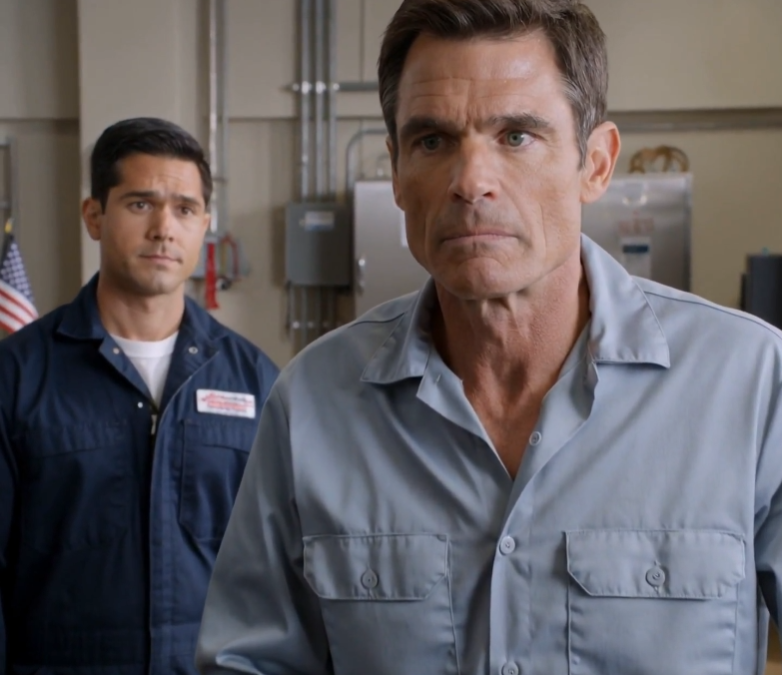
Eleven days earlier, the position of senior process reliability supervisor had opened up when our longtime maintenance lead retired after 30 years. I had applied. The job description might as well have been written around my career because, in many ways, it had been.
I was the only person in the plant who held dual certifications in both Yokogawa distributed control systems and Fisher control valve diagnostics. I had rebuilt the entire preventive maintenance database from scratch eight years earlier when the previous system became too outdated to be useful. In the skills evaluation administered by the corporate technical committee out of Houston, I scored 94 out of 100, the highest mark in the plant’s history for that particular assessment.
Nolan Gibbs awarded the position, the title, and the $18,000 annual raise that came with it to his wife’s younger brother.
Stu Federman was 37 years old and had spent his five years at Breenidge Chemical as a purchasing coordinator, primarily tracking purchase order numbers for valve repair kits and gasket stock. Stu could not read a P&ID drawing without assistance. He had never opened control loop tuning software in his life.
When I asked Nolan directly why the decision had gone the way it did, he leaned back in his leather chair with the relaxed posture of a man who had already made peace with an uncomfortable truth. He told me leadership was about interpersonal dynamics and organizational vision, and that my skill set was best utilized in a hands-on capacity rather than a supervisory one.
Four days after that conversation, Nolan pulled my annual merit increase.
Breenidge Chemical had a structured pay review cycle tied to objective performance metrics: unit uptime percentage, safety incident rate, calibration accuracy scores, and documented continuing education credits. I had scored in the top quartile across all four categories for the sixth consecutive year.
Nolan submitted a performance adjustment memo to Human Resources, noting that I had exhibited a confrontational attitude toward management feedback and a resistance to organizational change. The result was a merit freeze for 12 months.
When I went to Human Resources and walked through the performance evaluation documentation line by line, the HR generalist told me merit adjustments were subject to managerial discretion. Without Nolan’s endorsement, there was nothing to review.
Nolan had smiled when he told me that a high-performing technician was measured by the quality of his technical outputs, not by his feelings about organizational decisions.
Now the sulfur recovery unit on Train 2 had collapsed into a fault state, and suddenly my technical outputs were the most important thing in Nolan Gibbs’s universe.
“You cannot be serious right now,” Nolan said, his voice dropping into something tight and controlled. “Cal, that EPA window is not negotiable. If we lose the air permit variance, we’re talking regulatory enforcement, a potential unit shutdown, and fines starting at $40,000 per day.”
“I understand the compliance landscape,” I said quietly. “I wrote the spill prevention, control, and countermeasure plan update that references that exact permit clause two years ago.”
“Then go fix it,” Nolan snapped, moving to block my path around the tool cart.
I reached past him for my canvas work bag hanging from the pegboard. I pulled it off the hook, folded it neatly, and tucked it under my arm.
“Submit a corrective maintenance work order through the plant management system,” I said. “Flag it as a Priority 1 environmental compliance issue. Assign it under my queue, and I’ll review the diagnostic alarm stack at seven tomorrow morning when my shift starts.”
Nolan’s face went from red to something closer to maroon. His voice came out in a hiss.
“I will write you up for willful neglect of a compliance-critical system event. That is a terminable offense under the plant safety charter.”
I picked up my personal calibration kit from the bottom shelf of the cart, zipped it closed, and met his eyes without any particular urgency.
“Last week, when you gave the supervisor position to your brother-in-law, you told me that hands-on technical skill wasn’t the metric for leadership,” I said. “So let your new supervisor lead the response and restore the loop. And when you froze my merit increase, you told me management discretion was the governing standard for all performance outcomes. That discretion cuts both ways, Nolan.”
The overhead shift-change buzzer activated across the plant, a long, flat tone that bounced off the steel processing towers and the corrugated ceiling panels of the instrument shop.
“My contracted shift has ended,” I said. “Under the Fair Labor Standards Act, hourly maintenance personnel cannot be compelled to perform uncompensated labor. File the work order. I’ll see it first thing in the morning.”
I walked toward the exit corridor without turning back. Behind me, I heard Nolan grab his radio and start calling names.
I badged through the security checkpoint at 5:03, crossed the gravel employee lot in the early October heat, and got into my truck.
Before I had the engine started, warning alarms were audible from the plant perimeter. The cascading loop fault on Train 2 had triggered automated safety interlocks on the adjacent amine treating unit, taking a secondary process offline.
By the time I pulled onto the refinery access road, two emergency vehicles from the plant fire brigade were repositioning near the processing wing. Standard protocol for any sulfur system anomaly.
My phone started ringing before I reached the county highway. My plant manager’s number lit up the display. I put the truck in drive and let it ring through to voicemail.
Thirty seconds later, Stu Federman was calling.
I switched the phone to silent, set it on the passenger seat, and drove south toward home.
The drive back to our neighborhood on the northern edge of Beaumont took about 25 minutes in normal traffic. I used most of it to decompress, watching the flat Texas landscape scroll past the windows, the sky going copper and orange in the west.
For 17 years, I had operated under a belief that felt less like a professional strategy and more like an inherited religion. If you were indispensable enough, if you gave enough of yourself to the work, the institution would protect you.
My grandfather had spent his career at a paper mill in East Texas operating on the same logic. He retired with a partially vested pension and a shoulder he could not lift above his ear.
I sat in traffic outside a Walmart and realized I had been running the same calculation with the same terminal result built in.
Loyalty without reciprocity is not loyalty. It is a subsidy.
My wife, Renee, was at the kitchen counter when I came through the garage door, reviewing invoices for the residential property management company. She had come out of the spare bedroom. She was 53 years old, sharp about money, and had been watching me absorb the professional insults at Breenidge Chemical for the last two weeks with the contained patience of someone who had already done the math.
She looked up and studied me for a moment.
“You came home before six on a Wednesday,” she said. “Nothing exploded?”
“Something tried to,” I said.
I told her everything while I washed up at the kitchen sink. The sulfur recovery fault. Nolan sprinting across the floor. What I said and what I didn’t do. The buzzer sounding at exactly the right moment, the way good timing occasionally shows up in a life.
Renee set down her pen and looked at me steadily. She did not reach for her phone to calculate our household exposure or ask whether I was worried about my job. She already knew the numbers because we had talked through them when I first got passed over for the promotion.
“We have no consumer debt,” she said. “The mortgage has 14 months left. My income covers the baseline. If they come at you sideways, we’re not in a corner. But Cal, from here forward, you do your job exactly as written. Not one unpaid minute. If Nolan Gibbs wants miracles at 4:59, he can budget for them.”
Over the course of that evening, I recorded 23 missed calls from Nolan and Stu.
At 9:17, Nolan sent a text that read, “Breenidge Chemical spent $68,000 in emergency contractor fees tonight because of your decision to abandon a critical system. Expect a formal review by Thursday.”
I plugged my phone into the charger on the nightstand and slept without interruption for the first time in months.
I arrived at the plant the next morning at 6:40, badged through security at 6:48, and walked into the instrument shop to find Nolan Gibbs waiting outside the door.
He had the specific posture of a man who had been awake all night and had decided to assign the fault to someone else. There were dark circles pressed into the skin beneath his eyes, and the collar of his shirt was not quite straight.
“You cost this operation $68,000 in emergency labor and regulatory exposure,” he said as I unlocked my tool cart.
I pulled my insulated meter from the second drawer and checked the battery level.
“I didn’t cost the operation anything,” I said. “The sulfur recovery unit degraded because the preventive maintenance interval on the thermal oxidizer’s thermocouple assemblies was extended from 90 days to 180 days in the last budget cycle to reduce maintenance labor hours. I flagged that change in a written technical objection memo that I submitted through the plant management system four months ago. That memo is still open and unresolved in the system under my name.”
Nolan crossed his arms.
“That’s not the point.”
“It’s precisely the point,” I said. “The work order came in at seven this morning with my name assigned. I’ll begin the diagnostic now.”
I walked through the corridor to the sulfur recovery unit.
Stu Federman was standing near the control cabinet with a printed alarm list in one hand and a confused expression on his face. He had clearly been there for some portion of the previous night and had achieved nothing structural.
He looked at me with a mixture of relief and resentment that I recognized as the emotional signature of a man who knew exactly how he had gotten the job he held.
The fault isolation took me 12 minutes.
The primary thermocouple on the thermal oxidizer outlet had drifted out of calibration range and triggered the Yokogawa loop into a safety override. A secondary instrument air regulator had simultaneously lost 30% of its supply pressure through a failing diaphragm seal, which cascaded the fault across both trains instead of containing it to one.
Either issue in isolation was a 30-minute repair. Together, they looked catastrophic if you did not know where to start looking.
I had documented both degradation trends in my monthly reliability review three months earlier and recommended scheduled corrective work. Neither item had been approved.
I replaced the thermocouple, reseated the instrument air regulator, executed the loop calibration sequence, and had Train 2 back online at 7:41.
The entire intervention took 49 minutes.
Stu Federman stood six feet away the entire time, watching and offering no assistance. When the system came back online, he said nothing. He walked back toward the supervisor’s office that used to belong to someone else.
At one in the afternoon, Nolan issued a departmental reassignment memo.
Effective immediately, senior instrumentation technician Cal Drummond was transferred to the rotating graveyard shift, 10:00 p.m. to 6:00 a.m., for a minimum of five weeks.
Nolan delivered it personally, sliding a printed copy across my cart with a satisfaction I recognized as punitive.
“Enjoy some quiet time to reflect, Cal,” he said.
I read the memo, then looked up at him.
“The overnight shift differential is $2.90 per hour under the CBA,” I said. “On a 40-hour week, that’s $116 per week. Five hundred eighty dollars over five weeks. Thank you for the additional compensation.”
I watched the satisfaction drain out of his face as he walked away.
My first night shift began the following Monday at ten.
Breenidge Chemical ran a lean third shift, approximately 90 process operators managing continuous production across the refinery’s eight units, supported by two junior maintenance technicians who handled basic line clears and simple mechanical issues.
Major instrumentation work and control system faults were typically deferred to the day crew.
What I found when I arrived that first night was a refinery operating far past the edge of its maintenance margin, kept alive by a collection of informal workarounds and undocumented field adjustments that existed entirely inside my own head.
For six years, I had quietly bled stuck control valves, recalibrated drifting pressure transmitters, and manually reset balky level sensors during my regular shift rounds. I logged none of it formally because the work order system required supervisor approval, and Nolan had made it clear that he wanted maintenance metrics to look clean for the quarterly review.
I had absorbed those tasks as an invisible donation to the organization.
They appeared nowhere on the books, saved the operation roughly half a million dollars per year in avoided downtime, and were rewarded with a merit freeze and a brother-in-law’s promotion.
On my first night shift, I stopped doing any of that.
I responded only to formally submitted work orders. I touched nothing that did not carry an approved charge code. I documented every request that came in without proper authorization and returned it to the submitting supervisor with a notation that corrective action could not commence until standard protocols were followed.
The refinery showed its true condition with impressive speed.
By the fourth night, the flow control valve on the crude distillation unit’s atmospheric tower had drifted enough that the overhead temperature excursion triggered an automatic rate reduction.
The unit operator, a young man named Tommy Ballard who had been running that board for less than two years, called maintenance and got routed to me. He was trying to control his voice.
“The valve is hunting, Mr. Drummond,” he said over the radio. “The PID loop is oscillating, and I can’t get it stable. Stu told us to call you if anything got technical overnight.”
I walked over to the control cabinet, pulled up the diagnostic screen, and saw exactly what I expected.
The valve positioner had developed an air leak through the I/P converter, a well-documented failure mode on that valve type. The proportional gain on the associated control loop had also been left at an aggressive setting I had flagged for retuning nine months earlier.
The valve itself could be stabilized by taking it to manual control while a work order was placed for the positioner repair. I could have had Tommy stable in under five minutes.
Instead, I took out the new directive Nolan had posted plantwide two days earlier, a memo titled “Maintenance Authorization and Scope Control Procedure.”
The directive required all instrumentation interventions above a defined complexity threshold to carry written supervisor authorization before work commenced.
Nolan had written it specifically to create a bureaucratic chokehold around my activities. He believed it would prevent me from taking equipment offline unnecessarily. He had not thought through what would happen when it applied to emergency situations requiring management engagement at two in the morning.
“Tommy,” I said, “this valve positioner issue exceeds the complexity threshold defined under the Maintenance Authorization and Scope Control Procedure. I need a written work order with supervisor authorization before I can adjust the control loop or touch the instrument air system. You’ll need to contact the on-call shift supervisor and have him issue formal authorization through the plant management system.”
There was a long pause.
“The on-call supervisor is Stu Federman,” Tommy said carefully.
“Yes, it is,” I replied.
It took Stu 40 minutes to locate his login credentials and generate a work order from his house.
During those 40 minutes, the crude unit ran at 70% capacity. The tonnage lost during that window went directly into the plant throughput report under the date and timestamps of Stu Federman’s on-call response.
Over the following three weeks, I documented everything.
Equipment that failed because of deferred maintenance. Safety-related work orders that had been deliberately held out of the system to suppress maintenance cost metrics. A pattern of manipulated data entries in the plant management software that made Nolan’s quarterly numbers look substantially better than the actual equipment conditions warranted.
I backed up everything to an encrypted personal drive.
On the 22nd night, I received an unexpected call. It came through my personal cell from a number I did not recognize.
The caller introduced himself as Harlon Beauchamp, the vice president of technical operations for Breenidge Chemical’s parent company, Meridian Industrial Group, headquartered in Houston.
He had heard about me through the network of certified Yokogawa technicians across the Gulf Coast region and wanted to discuss an opening for a corporate role.
Three weeks after that conversation, I was sitting across from Harlon Beauchamp in a conference room in Houston with a signed offer letter in front of me.
Director of Process Reliability Engineering. Corporate level. Base salary of $168,000, a 22% annual incentive target, full benefits, and direct reporting to the vice president of operations.
I had not yet resigned when Nolan made what turned out to be the worst calculation of his professional life.
On a Tuesday morning, seven weeks into my graveyard rotation, two corporate compliance auditors drove up from Houston unannounced.
Their names were Paulina Drexler, director of internal compliance for Meridian Industrial Group, and Wendell Craft from Corporate Legal.
They asked me to come to the conference room near the plant manager’s office. Nolan Gibbs was not in the room. He was watching through the window in the hallway, his arms crossed and a tight smile on his face.
“Mr. Drummond,” Paulina Drexler said, setting a manila envelope on the table, “we have received a formal complaint from plant management alleging that you have engaged in systematic work slowdown activity, deliberate procedural obstruction, and unauthorized documentation of proprietary plant operating data.”
She continued, “The complaint further alleges that you have used those records as leverage in a scheme to extract a supervisory promotion you were not qualified to receive. How do you respond?”
I opened the portfolio case I had carried in from my truck.
“I respond with the original documentation,” I said.
I connected my encrypted drive to the conference room display and walked Paulina Drexler and Wendell Craft through 81 pages of timestamped records.
I showed them the raw security badge access logs against Nolan’s falsified performance review notation claiming uncooperative behavior during documented compliance periods.
I showed them the four-month-old technical objection memo I had submitted regarding the thermocouple maintenance interval, still sitting unaddressed in the system while the sulfur recovery unit degraded to failure.
I showed them six years of undocumented informal maintenance work I had performed off the books because Nolan needed his metrics clean. I referenced those records against the emergency contractor invoices that appeared every time I took a scheduled vacation and the informal system went unmaintained.
I showed them the plant management software entries where scheduled preventive maintenance had been manually marked complete by the supervisor role without any corresponding fieldwork having been performed.
It was a pattern that began when Nolan hired Stu into the supervisory seat.
And then I brought up the data I had been most deliberate about collecting.
Over the previous five years, Breenidge Chemical had spent $2,900,000 on unplanned emergency contractor services.
Eighty-one percent of those invoices could be traced to equipment that had documented and deferred preventive maintenance work orders in the plant system. Most of those orders had been deferred under Nolan Gibbs’s authorization code to protect quarterly maintenance cost ratios.
Nolan’s performance bonus for each of the past four years had been tied directly to maintenance cost reduction metrics.
The cost reduction was real on paper and nonexistent in practice.
The money had simply moved from the planned maintenance budget column into the emergency contractor invoice column, where it did not affect his bonus calculation.
“That’s the mechanism,” I said. “Deferred planned maintenance generates emergency failures. Emergency repairs are booked against a separate operational budget line that doesn’t affect the maintenance KPI on which the plant manager’s incentive compensation is calculated. The plant deteriorates, the contractor profits, and the bonus pays out.”
I let the records remain on the display before continuing.
“I have the work order records, the invoice records, and the authorization codes to document every step of that chain for the past five years.”
Paulina Drexler was not writing notes anymore. She was staring at the screen.
Wendell Craft from Legal turned and looked at her. She gave him a single, controlled nod.
“Mr. Drummond,” Wendell Craft said carefully, “is this data fully backed up independent of the plant’s server environment?”
I slid an encrypted flash drive across the table and placed a sealed envelope on top of it.
“The drive contains everything with cryptographic verification timestamps,” I said. “The envelope contains my two-week notice of resignation. I’ve accepted a position with Meridian Industrial Group’s corporate technical operations division. I won’t be returning to the Beaumont plant after that notice period.”
Wendell Craft looked startled.
“You’ve already accepted a corporate role?”
“I have,” I said. “I didn’t come here to extract anything from this plant. I applied for a supervisor position and lost to someone whose primary qualification was his relationship to the plant manager. I had my earned merit increase falsified. I was transferred to overnight shifts as punishment for leaving work at the end of my contracted shift. And when I responded by following every written policy and procedure to the letter, a formal complaint was filed alleging sabotage.”
I looked from one of them to the other.
“I’m not a saboteur. I’m a technician who stopped performing uncompensated labor for an employer who treated that labor as an entitlement.”
Paulina Drexler closed her folder. She looked at Wendell Craft, who lowered his eyes to his legal pad.
I stood, gathered my portfolio, and walked toward the door.
In the hallway, Nolan Gibbs was standing with his arms still crossed, the smile still in place, reading the room incorrectly.
He assumed the meeting had gone sideways on me. People with a guilty conscience often make that mistake when they see someone walking out of a corporate compliance interview looking calm.
“How did that go for you, Cal?” he asked.
I paused and looked at him.
“I would suggest reviewing the Texas Penal Code provisions on tampering with governmental records and the Federal False Claims Act before your next conversation with Corporate Legal,” I said. “You may want an attorney present.”
I walked out of the building into the October morning, got into my truck, and drove home to Renee.
The news traveled the way news does in a petrochemical refinery, which is fast and with significant embellishment.
By that evening, three coworkers had texted me. By the following morning, Paulina Drexler called my cell directly and asked whether I would be willing to serve as a cooperative witness in what was now a formal internal investigation into maintenance fraud and financial misrepresentation.
I told her I would cooperate fully with any legitimate investigative process.
What followed over the next six weeks was thorough and ultimately definitive.
Corporate auditors reconstructed five years of maintenance records. An independent forensic accounting firm traced the emergency contractor invoices. Two members of the plant’s purchasing staff provided statements regarding a pattern of invoice approvals that bypassed standard competitive bidding requirements for vendors with existing relationships to plant management.
Nolan Gibbs was terminated for cause and escorted from the premises on a Thursday morning.
He was subsequently named as a defendant in a civil action brought by Meridian Industrial Group to recover approximately $1,400,000 in documented losses attributable to the maintenance deferral scheme.
The district attorney’s office in Jefferson County opened a criminal inquiry into the falsification of safety inspection records.
Stu Federman lost his supervisor title and was demoted to junior process technician, which was generous given his actual competency level. He was required to complete a structured remedial training program before being permitted to work independently on process control equipment.
Tommy Ballard, the young board operator who had called me on the night the crude unit valve went unstable, received a formal commendation from corporate for his clear and accurate incident reporting during the compliance investigation. He was enrolled in the technical apprenticeship track.
I reported to Harlon Beauchamp’s team in Houston six months after my resignation from Beaumont.
My first priority in the corporate role was building the infrastructure that should have existed in every refinery in the Meridian portfolio.
A centralized preventive maintenance compliance system where no scheduled work order could be administratively closed without field verification, and where any deferral beyond 30 days required automatic escalation to the regional operations director.
We built it in eight months. We deployed it across 11 facilities in the first full year after deployment.
Unplanned emergency maintenance spending across the portfolio dropped by 38%.
Planned maintenance costs went up because we were actually doing the work that had been deferred, but the total maintenance cost per unit of throughput, the number that actually mattered, dropped by 22%.
Four plant managers received performance bonuses that year for genuine results, not accounting gymnastics.
I also built a technical certification pathway for hourly maintenance staff, the first one in the company’s history that tied compensation directly to demonstrated skill rather than years of service or supervisory preference.
In the second cohort to complete the advanced instrumentation track, one of the graduates was a young technician from the Beaumont plant named Marcus. He had been quietly working shifts alongside me for years without any formal recognition.
He sent me a short text when his raise processed.
Just two words.
“Finally matters.”
On a Thursday afternoon in late spring, I was doing a walkthrough of the Beaumont plant as part of a corporate reliability audit.
The refinery had a different character than I remembered. The equipment was cleaner. The instrument cabinet doors were properly latched. Work orders on the shop floor board were dated and current.
The people moved differently, with less of the low-grade anxiety that comes from working in a facility you know is held together with deferred decisions and informal workarounds.
I walked into the instrument shop and stopped.
Above the safety station near the equipment locker, the same orange digital clock was mounted where it had always been.
The display read 4:59.
A control valve chirped on the crude unit.
The new instrument supervisor, a precise and competent woman named Vivien Keane, who had tested into the role at the top of the certified technician ranking, checked the work order screen on her tablet and spoke into her headset without any particular urgency.
“Tag it for the six o’clock shift,” she said. “No fieldwork starts without an approved order in the system. We clear the valve on handover.”
She looked up, saw me, and gave a brief nod.
I looked at the clock.
The shift-change buzzer sounded across the plant. The orange digits rolled from 4:59 to 5:00.
Process operators set down their handheld radios and moved toward the exit corridors in unhurried groups.
Nobody was running. Nobody was waiting to be told that the rules applied only to other people.
I stood under that clock and understood something I had taken 17 years to fully learn.
The leverage was never in the extra hours I donated. The leverage was never in the emergencies I solved in the middle of the night for people who would not acknowledge the cost in the morning.
The leverage was always in the knowledge itself, in knowing exactly what I was worth and being willing to let the silence confirm it, one shift change at a time.
The real power was never clocking in early. It was having the nerve to clock out on time and let the refinery figure out what that silence sounded like.








