I was being let go when the co-founder asked how much of the company I owned. I told him: “62%.” The room went silent.
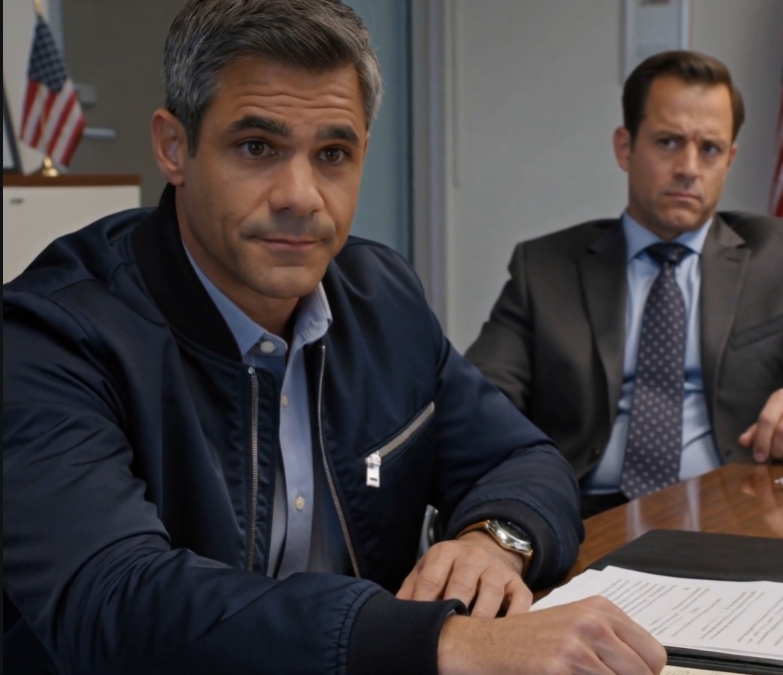
I was already sliding my building access card across the security desk when the co-founder of Meridian Signal Corp. leaned out from the boardroom doorway and asked, in front of everyone, exactly how much of the company I held.
I set the card flat on the counter, straightened my jacket, and looked directly into his eyes.
“Sixty-two percent,” I said.
The corridor outside that boardroom went so still that I could hear the fluorescent lights buzzing in the ceiling three offices away.
That was a Wednesday morning in late October in downtown Calgary, where the first hard frost of the season had glazed the sidewalks overnight and left a fine white rime along the window ledges of the glass towers on 8th Avenue. Inside the fourth-floor offices of Meridian Signal Corp., most of the workstations sat dark. The company had spent the previous three weeks quietly emptying desks under the banner of a so-called organizational efficiency review. Senior engineers, project leads, database architects—people who had spent years pouring themselves into the platform—collected their belongings in cardboard boxes and disappeared through the lobby without ceremony.
I was supposed to be the last one.
Sixty minutes before that question echoed through the hallway, I had been an unremarkable senior systems architect carrying a plant and a banker’s box toward the elevator, being processed out of the company I had personally saved from insolvency six years earlier.
That morning had begun the way most late-October mornings begin in Calgary. A cold pewter sky pressed flat against the mountains to the west, and the air smelled of iron and frost the moment I stepped outside. I had parked my truck in the parkade on Centre Street and walked the four blocks to the office without a hat, letting the chill settle into my thoughts the way it always did when I needed to think clearly.
Inside the building, the fourth floor smelled of burnt coffee and the industrial cleaner the janitorial crew used on the carpet tiles. My corner workstation near the east windows held a broad-leaf monstera plant I had brought in during our first year of operations, when Meridian Signal Corp. was a six-person outfit operating out of a rented unit in a light industrial park in the northeast end of the city. I had purchased that plant for fourteen dollars at a farmers market.
Everyone thought it was a peculiar thing to install beside a server architecture terminal. Our co-founder, Garrett Alderton, had laughed outright the first time he saw it and told me that serious engineers did not haul houseplants into workspaces. I had told him that code goes brittle under pressure, but green things survive as long as someone remembers to water them.
The monstera had grown into something magnificent over six years. Its deep green leaves were nearly as wide as my handspan, cascading off the shelf in thick, healthy arcs. It was coming home with me, regardless of what happened upstairs.
A soft knock on my cubicle partition pulled me out of my thoughts. Nadia, one of the junior HR coordinators, stood in the opening with a manila folder pressed against her chest and an expression that belonged on someone delivering genuinely terrible news to a person who did not deserve it.
“They’re ready for you upstairs, Mr. Callahan.”
Colm Callahan. That was my name. Fifty-two years old, two decades in enterprise systems architecture, and apparently surplus to operational requirements.
I placed the damp cloth I had been using to clean the monstera leaves beside the terracotta saucer. “Tell them I’ll be up in five minutes, Nadia.”
She hesitated in the doorway. She was young, maybe twenty-six, and her distress was genuine rather than performed.
“I didn’t know any of this was happening until Thursday,” she said quietly. “You built the entire ingestion framework, the redundancy architecture, the whole disaster recovery protocol. It doesn’t make sense.”
I stood, picked up the cardboard box, and gave her a steady look.
“You don’t need to carry their guilt, Nadia. Keep your head down, do your job with integrity, and never sign any document you haven’t read twice at your own kitchen table. Not once. Not at speed. Not under the pressure of a ticking clock in a boardroom.”
She nodded, her lower lip tight, and went back toward the elevator bank.
From the next desk over, a young engineer popped his head above the partition. Reed Nakushima was twenty-eight, one of the sharpest infrastructure minds I had ever trained, and his face at that moment looked as though someone had informed him the building was on fire.
“Colm,” he said, keeping his voice low. “Please tell me the Slack channel rumors are wrong. If you’re gone, who’s going to stop Prescott from pushing the September build directly into production without a staging environment review? He sent me an email last night basically saying that’s his plan.”
Prescott Lane, our newly installed VP of Product Operations, had been brought in specifically to trim engineering overhead and accelerate deployment cycles. He was the kind of executive who described quality assurance as a legacy bottleneck.
I reached over the partition and tapped the CI dashboard on Reed’s monitor.
“You’re going to stop him,” I said. “You know every dependency in this architecture because you helped me document every one of them. Every single one.”
Reed’s fingers tightened around the edge of his desk.
“I’m a junior engineer, Colm. Prescott can put a performance flag on my file if I push back. What leverage do I have?”
I set the box down and looked at him squarely.
“You have the only leverage that actually matters. You understand how the system works, and he does not. When management attempts to bypass automated unit tests to protect a quarterly release metric, you put your technical objections in writing and you copy the compliance lead. You never sacrifice your professional integrity to protect someone else’s bonus.”
He held my hand in a long, firm grip before I picked the box back up and walked toward the service elevator.
The ride up to the sixth floor gave me four minutes alone with my own thoughts, and my thoughts drifted, as they often did under pressure, back to the beginning.
When Meridian Signal Corp. was incorporated six years earlier, Garrett Alderton was a thirty-one-year-old with a gift for the kind of presentation that made investors feel they were witnessing the future materialize in real time. He had a previous hardware startup behind him that had dissolved in receivership, leaving a string of creditors and a polished lesson in what not to do.
What he lacked entirely was the technical expertise to build anything.
What I brought to the table was twenty years of systems engineering, several core architectural designs for high-volume data ingestion, and the kind of institutional patience that comes from having survived three major corporate restructurings without losing your professional nerve.
Garrett had recruited me with the kind of sincerity that is hard to manufacture. We met for dinner at a Vietnamese restaurant on Centre Street, and he talked for two hours about building something honest, something that treated its engineers as the actual foundation of the enterprise rather than a line item to be optimized quarterly. He had promised, on what seemed like genuine personal honor, that whatever we built would be built together.
For the first two years, that promise held.
We worked seventy-hour weeks in that industrial park unit, eating takeout at two in the morning from a Thai place that delivered until midnight, rewriting corrupted relational tables in freezing rooms because we couldn’t always afford to run the space heaters and the servers simultaneously.
When our first major government contract was delayed by sixty days and our payroll account ran to nearly zero, I was the one who stepped forward.
I had recently sold my condominium in Beltline, intending to use the proceeds toward purchasing a house in Inglewood, where I had grown up. Instead, I wired $240,000 of my own money into the company’s operating account on a Friday morning in November.
The following Monday, Garrett Alderton and I executed the founding shareholder agreement before a notary on Macleod Trail.
In exchange for that capital injection, Meridian Signal Corp. issued 6,200,000 Class A voting preference shares to Callahan Systems Holdings, Inc., representing sixty-two percent of the total authorized voting capital.
The agreement was explicit that the controlling position could not be redeemed, restructured, or diluted without unanimous written consent from Callahan Systems Holdings and full repayment of the original capital with statutory interest.
Garrett had treated that document like a gentleman’s formality, a historical footnote from the crisis period. He filed it properly because his lawyer insisted, and then he largely forgot it existed.
Success does something peculiar to certain people.
In Garrett’s case, it worked on him the way prolonged exposure to high altitude works on an unprepared climber. Once venture capital started flowing—eighty million dollars across three rounds over four years—Garrett underwent a transformation so gradual that it was almost invisible until it was complete.
The worn flannel shirts gave way to bespoke wool suits from a tailor at Bankers Hall. He hired a personal driver. He moved Meridian Signal Corp.’s executive offices to a suite on the top floor with floor-to-ceiling views of the Bow River Valley. And he began referring to the engineering staff as operational resources in quarterly reviews.
Prescott Lane arrived eighteen months earlier with a mandate Garrett had described to me as strategic recalibration.
What it looked like in practice was the systematic elimination of senior technical staff.
Prescott worked efficiently. Within six months, eleven founding engineers were gone, replaced by offshore contractors whose work required constant emergency patching that consumed the remaining team’s nights and weekends.
When I walked into Garrett’s office to tell him plainly that gutting the core architectural team would destabilize the platform within two years, he had swirled his glass of single malt from a distillery in Speyside and told me that I was a brilliant engineer but had never quite grasped the commercial dimension of enterprise software.
He was transitioning me to an advisory capacity, he said. Prescott would handle the operational decisions going forward.
The elevator opened onto the sixth floor.
The executive level had been renovated eighteen months earlier at significant corporate expense. Polished concrete floors, frameless glass walls, and a reception desk in white Italian marble. Through the double doors of the primary boardroom, I could see the assembled party waiting for me without warmth.
Garrett Alderton sat at the head of a long rectangular table. His silver-streaked hair was precisely arranged. He wore a charcoal suit and an expression of studied corporate neutrality.
To his left sat Prescott Lane, broad-shouldered in a dark vest, a laptop open before him displaying spreadsheet projections. Beside Prescott was our director of corporate finance, a meticulous and visibly uncomfortable man named Frederick Bowen.
At the far corner sat the company’s outside counsel, a senior partner from a downtown firm named Isabelle Nuin, who had placed a two-document stack in front of her and was examining the surface of the conference table with focused attention.
There was no water on the table, no coffee, no pens laid out for anyone’s convenience.
When you have spent two decades attending corporate meetings of every description, you learn to read the small details. This meeting had been designed to conclude inside fifteen minutes.
I pushed open the glass door, set my cardboard box on a side credenza, and sat in the chair they had positioned across the table from the rest of them, slightly isolated and slightly lower, the way interrogation rooms are arranged.
“Colm,” Garrett began, spreading his hands on the table in a gesture of magnanimous reasonableness. “Let’s handle this professionally and cleanly. We all have enormous respect for what you’ve contributed.”
I folded my hands on the table and waited.
Prescott Lane leaned forward. He had the easy surface confidence of someone who had delivered this particular speech many times.
“Colm, as part of our strategic repositioning ahead of fiscal year-end, the executive team has determined that your senior advisory role has reached a natural inflection point. Our core platform is mature. We need to realign our cost structure. We want to ensure your departure reflects the value you’ve added to this organization.”
Frederick Bowen slid a blue-backed legal folder across the table toward me.
Inside was the severance package: three months of base salary continuation, accrued vacation payout, six months of subsidized benefits coverage under the provincial health framework, and a letter of reference phrased in positive-neutral terms.
Standard fare for someone being quietly removed from an organization that had outgrown its need for them.
I did not open the folder.
My attention had moved to the second document that Isabelle Nuin had positioned separately from the main package. She was still not making eye contact.
“What is that second document, Isabelle?” I asked quietly.
She cleared her throat.
“That is a standard equity reconciliation and assignment instrument. It formalizes the orderly surrender and reversion of any legacy advisory equity units to the corporate treasury concurrent with termination of service.”
I picked it up.
The document was titled Universal Relinquishment and Transfer of Founder Equity Interest.
On the second page, the designated transferee was Alderton Capital Ventures Limited.
The share count, share class, and percentage ownership fields had been left entirely blank.
The construction of the trap became absolutely transparent in that moment.
This was not an organizational efficiency review. This was a preemptive strike timed to coincide with a looming acquisition audit. Garrett needed to extinguish my equity position before outside buyers examined the actual capitalization structure of the company they were considering purchasing.
He had assumed, quite reasonably, given that I had spent six years behaving as a quiet technical employee rather than a controlling shareholder, that I would sign the blank form without reading the fields carefully enough to notice what was missing.
I placed the document flat on the table and pressed my index finger against the empty percentage line.
“You left the ownership percentage blank, Garrett,” I said. “What figure were you assuming would go in this field?”
Garrett leaned back, crossed one leg over the other, and produced a brief, tolerant smile—the smile of a man who considered a difficult conversation already essentially resolved.
“Colm, be realistic. Whatever nominal equity you received in those early seed-stage arrangements was always understood as a transitional incentive tied to ongoing technical employment. You’ve drawn a very generous director-level compensation package for six years. You can’t seriously believe you’re walking out the door with a meaningful ownership position in a company that’s raised eighty million dollars.”
He paused, letting the statement settle.
“So why don’t you tell us? What percentage do you imagine you’re sitting on?”
The boardroom went completely quiet.
Prescott Lane placed his hands behind his head and settled back in his chair. Frederick Bowen studied the wood grain of the conference table. Outside the glass wall, the October sky over Calgary had gone the color of old pewter, and a thin sleet had begun to fall against the windows.
I met Garrett Alderton’s eyes directly and spoke with complete deliberateness.
“Sixty-two percent,” I said. “Not nominal advisory units. Sixty-two percent of all issued, outstanding, and voting Class A preference shares of Meridian Signal Corp. Fully vested, non-dilutable without my written consent, held under Callahan Systems Holdings, Inc., and registered with the Alberta Corporate Registry on the fourth of November, six years ago.”
The pen Garrett had been turning between his fingers slipped from his hand and rolled across the table.
Prescott Lane’s chair made a sharp sound against the concrete floor as he lurched upright. His expression, which had been arranged in comfortable condescension, rearranged itself into something I had never seen on his face before.
Genuine alarm.
Frederick Bowen made a sound like a man who had just stepped off a curb he didn’t know was there.
Isabelle Nuin reached forward and retrieved the blank equity transfer form with both hands, as carefully as if it were evidence.
For a full ten seconds, nobody in that room produced a single word.
“What did you say?” Garrett managed at last, in a voice that had lost most of its composure and all of its warmth.
I stood, smoothed the front of my jacket, and reached for my cardboard box.
“Sixty-two percent, Garrett. I will complete a proper technical handover with Reed downstairs today because I care about the engineers on this floor and what happens to the platform after I leave. Beyond that, all equity, governance, and corporate communications will be directed to my attorney, Wallace Brennan. Have a good morning.”
I picked up the box and walked toward the door.
“Colm! Sit down. We are not finished.”
Garrett’s voice was rising behind me. I could hear him pushing back his chair.
I did not turn around.
I pushed open the glass door, walked down the polished corridor, and let it click shut behind me.
The service elevator was empty. I pressed the button for the parkade level and watched the floor indicator count down.
Wallace Brennan picked up on the second ring.
He was my oldest friend. We had played on the same intramural hockey team at the University of Calgary for three years, and he had practiced corporate and securities law for twenty-five years with a firm on 4th Avenue SW.
“Did they set the trap?” he asked.
His voice was calm in the particular way of someone who expected a predictable outcome.
“Blank equity transfer on the table during the termination meeting,” I said, stepping out into the cold concrete of the parkade level. “I told him sixty-two percent to his face.”
Wallace made a sound that was somewhere between a laugh and a long exhale.
“I genuinely wish I could have been in that room. Garrett convinced himself that the November agreement was a formality that would dissolve on its own once you stopped needing to think about it. We have the original executed agreements, the wire confirmations, and the certified registry filings in our safe.”
“File the preservation notices today, Wallace. If Garrett tries to move cash or tamper with the cap table records, I want an injunction before business closes.”
That evening, I sat in the study of Wallace Brennan’s home in Mount Royal, a broad Craftsman-style house with oak bookshelves that ran floor to ceiling and a fire that had been burning since late afternoon. His wife, Patricia, had left a pot of French onion soup on the stove with a note telling us not to let it go cold.
Wallace spread the original documents across the coffee table in chronological order and went through them methodically, the way he had done every time we sat together before a significant corporate action.
“Garrett’s lawyers are going to argue the agreement was transitional,” he said, tapping the signature block on the Series A preferred stock instrument. “They’ll claim the intent was always a temporary bridge position pending an institutional buyout of your stake. The problem for them is that the language is unambiguous and the consideration was real. Two hundred and forty thousand dollars wired from your personal account. Documented, notarized, filed.”
“What’s our timeline?” I asked.
“We serve preservation notices in the morning. Document production demands follow within forty-eight hours. If they try to close the acquisition without disclosing the capitalization dispute, we file for an emergency injunction and corporate governance review under the Alberta Business Corporations Act.”
I stayed and ate the soup, then drove home through light snow that had just begun to settle on the Bow River Parkway.
My apartment, a spacious rental in a converted warehouse building in Inglewood, felt unusually still that night. I sat at the kitchen table with a cup of tea and the original notarized copy of the Callahan Systems Holdings Agreement, reading it through one more time the way you reread a document you have protected carefully for six years.
Not because you don’t trust it, but because you want to be certain.
The notification arrived forty-five minutes after Wallace’s office served the preservation orders the following morning.
Garrett Alderton was calling from his personal mobile, bypassing the company switchboard.
“Colm.”
His voice had moved from boardroom composure through executive fury and arrived somewhere in the vicinity of desperate recalibration.
“This is a catastrophic overreaction. You’ve served preservation orders on me, on Prescott, on the entire board, and you’ve copied our syndicate lenders. Do you understand what this does to investor confidence? We are eight weeks away from closing an acquisition with a serious buyer, a legitimate buyer. We are talking about a transaction valued at ninety-four million dollars.”
I was standing at my kitchen window, watching a pair of Canada geese work their way along the riverbank below in the November light.
“Partners don’t arrange termination meetings with corporate executioners to trick colleagues into signing blank equity surrender forms,” I said. “Everything goes through Wallace from this point. Have your counsel contact his office.”
“Colm, listen to me.”
His voice shifted register, dropping into the quieter, more intimate tone he used when he wanted to sound reasonable.
“I’ll arrange a special consideration separate from the severance. One point two million over thirty-six months, plus a lifetime consulting retainer. We clean up the cap table for the auditors, close the acquisition cleanly, and everyone walks away with something substantial. You were never going to manage a company, Colm. You’re an engineer. This is what’s fair.”
“What’s fair,” I said, “is the agreement we signed six years ago. Have your lawyers call Wallace.”
I returned to the engineering floor that afternoon to complete the handover I had promised.
The atmosphere was subdued and watchful. Word had moved through the building the way significant news always does: quickly, incompletely, in fragments. Reed met me at the elevator with a coffee and an expression of barely contained relief.
We spent three hours at his workstation going through failover architecture, database sharding parameters, and the disaster recovery runbook I had written and updated every six months for the past five years.
I told him plainly not to let Prescott coerce him or the junior team into signing any broad operational liability waivers. I told him to keep technical objections in writing, to copy the compliance function, and never to allow anyone to use urgency as a substitute for rigor.
Before I left, I walked the length of the server room. Cold air at fifty-eight degrees Fahrenheit, the even drone of rack fans, blinking status indicators across thirty-two servers I had specified, procured, and cabled with my own hands during our first year of operations.
I had written the load-balancing algorithms running on those machines. I had rebuilt the database indexing structure twice when enterprise client volumes threatened to collapse our response times.
Standing in that room, I felt no rage toward Garrett Alderton. I felt something considerably more useful: clarity about what needed to happen next.
Across the following ten days, Wallace Brennan and a forensic accounting firm conducted a full shareholder inspection of three years of Meridian Signal Corp.’s financial records.
What they found was extensive, documented, and deeply damaging to Garrett’s legal standing.
Garrett had established two consulting entities registered under his brother’s name in British Columbia, through which he had diverted more than three million dollars in unearned advisory fees from the corporate operating accounts.
He had used the company treasury to fund a ski chalet rental in Revelstoke at seventeen thousand dollars a month for two consecutive winters, recorded in the expense ledger as client development activity.
There were personal travel charges, luxury hotel billings, and a private dining membership at a club on Stephen Avenue, none of which had any relationship to legitimate corporate business.
The forensic team uncovered two additional issues that materially undermined Garrett’s position.
The first was that the core data ingestion architecture powering the platform was registered under federal copyright protection and held under an exclusive conditional licensing agreement by Callahan Systems Holdings.
When Garrett unilaterally terminated my technical advisory role without a board vote, that licensing agreement became subject to immediate termination, which would have rendered the company’s primary product non-licensable to the acquisition buyer.
The second concerned Prescott Lane’s rapid-fire elimination of nineteen engineering employees over the prior six weeks. Those terminations had been executed without the sixty-day advance notice required under the Canada Labour Code for mass terminations, exposing the company to statutory back-pay liability and regulatory penalties.
That Saturday, I drove to my parents’ house in Renfrew, a modest two-story brick home that my father had purchased forty years earlier and maintained with the same methodical care he had applied to everything in his working life.
My father, Donald Callahan, was seventy-six, a retired pipefitter who had worked the oil sands and refinery projects across northern Alberta for thirty-eight years. His hands were broad and calloused and steady, the hands of a man who had built things that lasted.
My mother, Agnes Callahan, was seventy-three, a former secondary school English teacher who could read a room and a person with the same quiet precision she had once applied to marking essays.
We sat in the back kitchen after supper, my father in his reading chair with a glass of rye, while I walked through the week’s events in plain terms.
Donald listened without interrupting until I finished. Then he set his glass down on the side table and looked at me with a particular directness he reserved for serious conversations.
“When I was working on the upgrade projects up in Fort McMurray,” he said, “we had site supervisors who would skip the weld inspection procedures when the schedule ran hot. Saved an hour on the front end, and then something would fail six months later when the temperatures dropped and the metal contracted, and you’d be standing in a field at midnight in minus forty trying to figure out why a critical joint had cracked.”
He paused, letting the old memory settle.
“You cannot shortcut structural integrity.”
He picked up his glass again.
“You did right to hold the document. Just make sure when you take the wheel up there, the people on the shop floor get treated like they matter. That’s the part that counts.”
The shareholder vote was convened on a Tuesday morning in a neutral boardroom at the offices of a corporate arbitration firm on Fifth Avenue.
The table held ten institutional representatives, including delegates from two of the venture capital funds that had participated in our Series B and C rounds.
Garrett Alderton sat at the far end with Prescott Lane and a team of four defense counsel. His eyes were red-edged, and his suit, while excellent, looked like it had been put on by a man who had not slept properly in several nights.
Wallace Brennan took the floor and worked through the evidence with the methodical precision of someone who had spent a quarter century doing exactly this.
Original shareholder agreements, registry filings, wire transfer logs, the forensic accounting findings, the corporate copyright licensing structure, the mass termination liability exposure under the Canada Labour Code.
He presented everything in sequence without drama, letting the documentation speak at its own volume.
When the vote was recorded, Callahan Systems Holdings exercised its sixty-two percent voting position to immediately remove Garrett Alderton as chief executive officer for cause, strip Prescott Lane of all operational authority, and install three independent governance directors pending a formal search process.
Prescott Lane was escorted from the building by security within forty minutes of the resolution, his severance revoked for gross misconduct.
The two shell consulting entities were referred to the corporate fraud unit of the RCMP’s commercial crime section in Calgary for review.
By unanimous resolution of the newly constituted board, I was appointed executive chairman and interim chief technology officer.
Within seventy-two hours, our team enacted the first structural reforms.
We reinstated fifteen engineers who had been unlawfully terminated by Prescott’s efficiency review, offering full back pay and new equity participation.
We terminated the sham consulting arrangements and redirected those funds into an across-the-board salary adjustment for junior and mid-level staff.
We established a formal technical governance committee, something Meridian Signal Corp. had never had, chaired by Reed Nakushima, ensuring that no deployment reached production without peer review and sign-off.
For the first time in three years, the fourth floor felt like a place where engineers came to build things rather than endure things.
Life has a way of reminding you that the corporate world, for all its intensity, is not the largest thing in it.
Three weeks after the vote, on a Thursday evening in early December, I received a call from my aunt Vera in Canmore.
My father had slipped on black ice in the driveway while bringing in firewood, falling hard on his left side, fracturing two ribs, and sustaining a significant head contusion.
My mother had called the ambulance from inside the house.
By the time I arrived at Foothills Medical Centre in the early hours of the morning, Donald was conscious, irritable about the inconvenience, and insisting to the attending physician that he had experienced worse on the job and preferred not to make a fuss about it.
I sat with him in the dim light of the hospital room while my mother dozed in the chair beside him. I held his big, calloused hand and watched him breathe, and I thought about none of the corporate events of the preceding weeks.
I thought only about the Saturday mornings when I was nine years old and he would take me to the construction sites where he worked, showing me how welds were made and tested, explaining why structural honesty mattered more than speed.
He was home within ten days, moving carefully, but moving. My mother arranged the living room so he had everything he needed within arm’s reach.
By February, he was walking two kilometers every morning along the river pathway, which is very much the manner in which Donald Callahan conducts his recoveries.
At Meridian Signal Corp., our enterprise contract renewals for the year came in at just over seventy-one million dollars.
The acquisition process resumed with the new governance structure in place, fully disclosed and fully documented, and concluded six months later at a valuation that satisfied every shareholder on the cap table, including the institutional funds that had been watching the proceedings with considerable unease.
Garrett Alderton did not contest the removal.
Four months after the shareholder vote, he requested a private dinner at a quiet Italian restaurant near the Eau Claire Market, and he said what he needed to say without deflection.
He acknowledged that the emergency capital I had committed six years earlier had been the actual foundation of everything the company became.
He acknowledged that he had treated the shareholder agreement as a document he could simply outlive through executive momentum.
He said he was sorry in the direct, unembellished way of someone who has had sufficient time and consequence to reach an honest accounting of himself.
I accepted it for what it was worth, and we left it there.
On a Sunday afternoon in late April, I drove out to Canmore with a woman named Helena Rosenthal, whom I had met through Wallace and his wife at a dinner the previous autumn.
Helena was forty-nine years old, a structural engineer who managed infrastructure projects across the Rockies corridor for a provincial engineering consultancy.
She was precise, straightforward, quietly funny, and entirely unimpressed by corporate drama, which I found enormously refreshing.
We had been having long dinners and longer conversations for six months, and she had earned the kind of trust you give to people who tell you the truth, even when it costs them something.
We had lunch in the backyard with my parents. Donald sat in his favorite outdoor chair with a cup of tea and a paperback mystery, while Agnes set out cold cuts and rye bread and asked Helena careful questions about bridge foundation design with a subtlety that was not actually subtle at all.
Helena answered everything thoughtfully and helped clear the dishes.
Afterward, my father pulled me aside briefly and said, in his economical way, that she seemed like someone who understood the difference between load-bearing walls and decorative ones.
I took that as significant approval.
On a morning in early October, one full year after that strange and clarifying Wednesday when I had set my access card on a security desk and answered a question that changed the trajectory of everything, I stood at my office window on the fourth floor of Meridian Signal Corp. and looked out over the Bow River Valley.
The cottonwoods along the riverbank had gone full gold, their leaves drifting in slow spirals in the morning light over the pathway where the cyclists and walkers were already moving.
Beside the window, the monstera plant sat in a wide, hand-thrown ceramic pot Helena had brought back from a ceramic studio in B.C.
The leaves had doubled in size over the past year. They were a deep, saturated green, the kind of green that belongs to something that has been properly cared for, given light and space and reasonable expectations, and left to grow at its own pace.
My phone buzzed on the desk with a message from Helena.
She was finishing a site review on the Trans-Canada corridor and would be driving back through the mountains in the afternoon. She wanted to know if I would have the soup on by seven because it was the kind of October evening that called for something warm.
I turned off the desk lamp, put on my coat, and walked out through the office.
Reed was at his workstation running a pre-deployment review protocol with two junior engineers beside him, all three of them leaning into the screen with the focused attention of people who cared about whether the thing they were building actually held together properly.
I told him he was doing good work.
He said, “Thank you,” without looking up, which is exactly what someone should do when there is a review in progress and the work matters.
I took the elevator down, walked out onto 8th Avenue, and let the cold October air hit my face.
For the first time in a long time, I wasn’t managing something or defending something or protecting something from being quietly taken apart.
I was just a man walking to his truck in the autumn morning, heading home to make soup, thinking about the woman coming through the mountains, the plant growing in the window, and the father walking along the river pathway two kilometers every day, steady as a weld inspection that passed on the first try.








