I walked in and heard my daughter sobbing. My sister was standing over her. “If you tell your mom, you’ll regret it.” Down the hall, Dad was opening my locked file cabinet with a screwdriver. He had my deed, tax records, and bank statements spread across the floor. I said nothing. I dialed 911. When Dad saw the police lights—he finally looked scared.
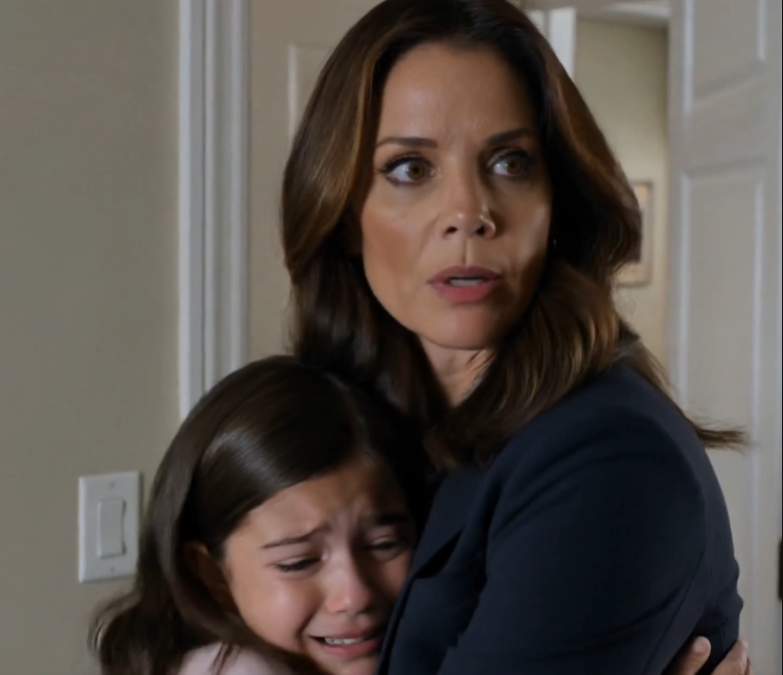
My name is Catherine. I’m thirty-nine years old. I came home two hours early and heard my eight-year-old daughter sobbing like she was trying not to exist. My sister was standing over her.
“Stop crying. Your mom doesn’t want you running to her. If you tell her, you’ll regret it, and she won’t believe you.”
Down the hall, my father was on his knees with a screwdriver jammed into my locked file cabinet. My deed, my tax records, three years of bank statements—all arranged in three neat piles.
He had a key. He still broke the lock.
I didn’t scream. I didn’t ask questions. I stepped back and dialed 911.
They had spent my whole life betting on my silence. That afternoon, my silence wasn’t for them.
When the police lights flashed across his face, my father finally looked scared. He thought those lights were the worst part.
They weren’t.
Welcome back to Family Line Drama, where we tell quiet stories about ordinary people who stop apologizing for taking up space. If you’ve ever been told to stay quiet so everyone else could stay comfortable, this one’s for you. Leave a comment and subscribe so the next story finds you.
The text from my mother came in at 12:10 that afternoon, somewhere between a seventh grader who had stopped eating lunch and a father who wanted to know why his son’s grades had fallen off a cliff.
“Heather’s grabbing Abby today. Jace has a game. Love you.”
I typed back, “Thanks, Mom,” and went back to work.
I’m a school counselor at a middle school in North Knoxville. Wednesdays were my late days. Every Wednesday, I sat with our student support team until a little after five. My mother picked up my daughter from her elementary school and stayed at my house until I got home.
She had been doing it for almost three years, ever since the spring my husband died. She had a key. I’d given it to her myself, tied to a pink ribbon so she wouldn’t mix it up with her own.
At 2:15, our assistant principal went home sick, and the meeting was canceled.
I remember feeling grateful. I remember thinking I would surprise Abby and we would make pancakes for dinner, which she considered a crime she was allowed to commit.
I turned onto my street in Fountain City at 3:38.
Heather’s car was in my driveway. That made sense. Behind it, parked with two tires on my lawn, was my father’s silver truck.
That didn’t make sense.
My mother’s text hadn’t mentioned my father. My father didn’t do school pickups. My father didn’t come to my house unless it was a holiday, a repair he wanted to supervise, or a conversation he wanted to win.
I sat in the car for maybe three seconds. Then I parked on the street and walked in through the garage, the way I always did.
The house was quiet in the wrong way. No television, no Heather talking on speakerphone, no cartoon theme song coming from the living room.
I heard Abby first.
My daughter doesn’t cry loudly. She never has. Even as a baby, she cried like she was apologizing for it. The sound coming from her bedroom that afternoon was small and wet and broken, like she was trying to stop and couldn’t.
Her door was open a few inches. I stopped in the hallway.
Heather was standing over her. Abby was on her bed with her back pressed against the wall, holding the fox pillow she’d had since kindergarten.
“Your grandma says you know where it is,” Heather said. “The little key. Where does Mommy keep it?”
Abby shook her head.
“I don’t know.”
Heather leaned down, and her voice changed.
I knew that voice. I hadn’t heard it in a long time, but I knew it the way you know a smell from a house you grew up in.
“Stop crying. Your mom doesn’t want you running to her. If you tell her, you’ll regret it, and she won’t believe you.”
Then, from the end of the hall, I heard metal scraping against metal.
My home office is at the front of the house, about twenty feet from Abby’s room. The door was open.
My father was on his knees in front of my file cabinet, the tall gray one with the lock in the top drawer. In his hand was the yellow-handled screwdriver he had owned my entire life, the one none of us were ever allowed to borrow.
He had jammed it into the lock and was twisting it like he was trying to open a can.
The drawer was already partly open. Papers lay on the carpet, not scattered but sorted into three piles. My deed was in one, my tax returns in the second, and in the third were my bank statements and the quarterly statements from Abby’s trust.
Three years of them, squared at the edges.
Messy would have meant panic. Neat meant he’d practiced.
On top of the cabinet, right next to the fresh gouges in the metal, sat my mother’s spare key to my house. The pink ribbon was curled beside it like a question mark.
He had a key. He still broke the lock.
Near his knee, face down on the carpet, was a stainless-steel watch with a worn canvas band.
Daniel’s watch.
The crystal had a crack running from corner to corner.
I would like to tell you that I ran in. I didn’t.
I’ve spent twenty years sitting across from kids in crisis, and the first thing you learn is to look before you move. Nobody was touching Abby. Nobody had heard me come in. And every single thing my father had taken out of that drawer was still on the floor in plain sight.
I took two steps back to the spot where I could see both doorways, and I dialed 911.
“911. What’s the address of your emergency?”
I gave it to her. My voice sounded like I was ordering takeout.
“My father is breaking into a locked cabinet in my house. My sister is threatening my eight-year-old daughter. Nobody’s hurt. I want them out, and I want it documented.”
The call took about forty seconds. The dispatcher told me officers were on the way.
Then I walked into Abby’s room.
“Step away from my daughter.”
Heather spun around so fast she knocked a book off the nightstand. Abby came off the bed and into my arms. Her whole body was shaking.
Heather’s mouth opened and closed.
“She was upset about a show. I was just—”
I didn’t look at her.
My father came into the hallway with the screwdriver still in his hand. His face went through about four different expressions before it settled on the one he used at church.
“Cat, it’s not what it looks like.”
I didn’t answer.
He turned back toward the office. I knew exactly where he was going.
“Leave them,” I said.
He stopped.
For the first time in my life, my father did what I told him to do.
So we stood there, my father by the office window, my sister in Abby’s doorway, and me in the hall with my daughter’s face pressed into my shirt.
Eight minutes is a very long time to stand in silence with people who have always been able to talk you out of things.
Then the light came through the blinds.
Red, blue, red.
It fell across my father’s face in stripes. The screwdriver slipped out of his hand and hit the carpet without a sound.
He looked scared.
I had never once seen my father scared, and I didn’t know yet what he was scared of.
There were two officers, Dana Whitfield and Luke Brennan. They did what police officers do when they walk into a family situation.
They separated everybody.
Officer Brennan took my father out onto the front porch. Heather followed them, holding her phone with both hands.
Officer Whitfield stayed with Abby and me in the living room. She crouched down until she was at Abby’s eye level. She didn’t touch her.
“You’re not in trouble, sweetheart. Did someone say something that scared you?”
Abby nodded. She didn’t say anything.
Her eyes went to the front window, where Heather was standing on the porch. Then she leaned close to my ear and whispered, “Do you believe me?”
She hadn’t told me anything yet.
That was what stopped my breath. Not the screwdriver. Not the papers.
My daughter was asking whether I would believe her before she had said a single word, because someone had already told her I wouldn’t.
“Yes,” I whispered back. “I do.”
Out on the porch, my father was doing what he does best.
My father sold cars for thirty-one years, and he never lost the voice. Warm, reasonable, a little wounded.
I could hear him through the door.
“I’m her grandfather. I was looking for my granddaughter’s insurance papers. My daughter hasn’t been well since her husband passed. She’s not well.”
A minute later, he said it again in exactly the same tone.
“She’s not well.”
Not she’s grieving. Not she’s been having a hard time.
She’s not well.
Twice. Word for word.
In my job, when a kid repeats the same sentence the same way twice, you write it down. It usually means someone handed it to them.
Officer Brennan came back inside to look at the office. He photographed the lock, the scratches, the screwdriver on the carpet, the three piles of paper, and the pink ribbon on top of the cabinet.
Then he went back outside, and through the screen door, I heard him ask one question.
“Sir, if you were helping, why did you need a screwdriver?”
My father said the lock was stuck.
Officer Brennan said, “Okay,” in a way that meant it was not okay, and wrote something down.
He asked my father to hand over any papers that belonged to me.
My father had a stack in his hands. He gave it to the officer, and the officer gave it to me. I put the whole thing straight into the drawer while everyone was watching.
I didn’t look through it. I just wanted it back where it belonged.
Officer Whitfield explained the rest to me in the kitchen while Abby sat at the table with a juice box.
Because my mother had a key and they’d been allowed in the house to watch Abby, this wasn’t a break-in in the way most people think of one. But damaging my cabinet was vandalism, and the threat to my daughter was in her notes.
She asked if I wanted to press charges.
“Not today,” I said. “But I want them to know they’re not welcome here anymore.”
“Then that’s what I’ll tell them.”
She paused.
“This won’t settle a family argument, Ms. Reed, but it’ll be on file if you need it.”
She handed me a card with a report number written on it. I slid it into the back of my phone case.
Before they left, I walked into the office and picked up my mother’s key from the top of the cabinet. I untied the ribbon and put the key in my pocket.
Officer Brennan walked my father and sister to their cars.
Heather drove off first.
My father stood next to his truck for a long time, looking at the patrol car parked at my curb. He wasn’t angry. He was looking at it like a man recalculating a number he’d been sure about.
Then he got in and drove away.
That night, after Abby fell asleep in my bed, I sat on the office floor and went through every page in that drawer the way I go through a student file before a parent meeting.
Slowly. In order.
Everything was there. The deed, the tax returns, my checking statements, the trust statements.
But the trust statements were out of sequence. Not shuffled. Laid out of order, as if someone had taken each page out, flattened it, and put it back one at a time.
As if someone had photographed them.
And folded into quarters, tucked between my deed and my 2024 tax return, was a sheet of yellow legal paper.
It wasn’t mine.
I unfolded it, and I recognized the handwriting before I could read a single word.
Small, cramped letters that leaned left.
My father’s.
Before I could read the first line, Abby screamed from the bedroom.
It was 11:20.
She was sitting straight up in bed, still half asleep, saying, “I didn’t. I didn’t. I didn’t.”
I held her until she was awake enough to know where she was. Then I got her a cup of warm milk, and we sat on the kitchen floor with our backs against the dishwasher because that was where she wanted to sit.
She didn’t drink the milk. She just held it.
“Mommy, I lied to Aunt Heather.”
I waited.
“She kept asking where the little key was for the cabinet. I said I didn’t know, but I did know.”
She looked down into the cup.
“It’s in the owl.”
The ceramic owl on my office bookshelf.
Daniel bought it at a craft fair in Gatlinburg the year Abby was born. When Abby was six, she asked if she could see Daddy’s watch whenever she missed him. So I showed her where I kept the little brass key inside the owl.
Our secret.
Sometimes on a Sunday, we’d open the drawer together, and she’d hold the watch up to her ear and listen to it tick.
My mother had been there one afternoon when Abby asked to see it. I hadn’t thought anything of it.
“Is it bad?” Abby asked. “That I lied for Daddy’s watch?”
“No, baby. It’s not bad.”
“Did Grandpa break it? Is Daddy’s watch broken?”
“The glass is cracked. It’s still ticking. We’ll get it fixed.”
She nodded. Then she said something very quietly, almost to herself.
“Aunt Heather said you wouldn’t believe me anyway.”
And just like that, I was nine years old again.
It was the summer of 1996. My sister was twelve.
She was hitting baseballs off a tee in the driveway, which she’d been told not to do, and she cracked the windshield of my father’s brand-new truck.
I was sitting on the front steps. I saw the whole thing.
Heather walked over, bent down, and said, “If you tell Dad, you’ll regret it. He won’t believe you.”
She was right.
When my father came out and saw the windshield, I was the one closest to the truck. I told him what happened.
He looked at Heather, who looked very sorry and very confused. Then he looked at me.
He didn’t believe me.
I was grounded for a month. He took the forty dollars I’d gotten for my birthday, still in the pink envelope from my grandmother, and said it would go toward the glass.
When I cried about it, my mother sat on the edge of my bed, stroked my hair, and said, “Just let it go, Kathy. It keeps the peace.”
So I let it go.
She was right, too. It did keep the peace.
I spent the next thirty years keeping it.
I learned to make sure I never needed to be believed again. I learned to fix things before anyone could argue about them. To apologize first. To say yes before the question was finished.
I became a person who was easy to have around.
I had never once asked who the peace was for.
I looked at my daughter on the kitchen floor, holding a cup of milk she didn’t want, waiting to find out whether her mother was going to believe her.
“I believe you,” I said. “You can tell me more, or you can tell me nothing. Both are okay tonight.”
She leaned her head against my arm.
Everything in me wanted to ask questions.
Who told you to keep secrets? What else did they say? How long has this been happening?
But I’ve sat in enough rooms with enough frightened kids to know what leading questions do. They give a child a story to agree with.
If I asked Abby whether Grandma had made her say things, she would say yes because she could tell I wanted yes. And then nobody would ever be able to separate what had happened from what I’d asked.
So I didn’t ask.
After a while, she said, “Grandma and Aunt Heather made me practice.”
“Practice what, baby?”
“Just things.”
She shrugged against my arm.
“For a lady.”
I kept my breathing slow. I didn’t say anything else.
Her eyes were closing. I thought she was falling asleep.
Then she asked the last question of the night in a voice so small it barely made it out of her mouth.
“Am I going to have to live at Grandma’s?”
I carried her to bed. I sat with her until her breathing evened out.
Then I went back to the office and read the yellow paper.
I understood later how it got into my drawer.
When Officer Brennan asked my father to hand back my papers, my father handed over everything he was holding. He was rattled. He didn’t sort it. His own notes were folded in the middle of my things, and I put the whole stack away without looking.
He hadn’t meant to give it to me.
He just hadn’t expected the police to be standing in my office.
There were five lines.
The first one said, “Westbrook. Wednesday, March 4th. 10:00 a.m. Bring proof she’s hiding Abby’s money.”
The word hiding was underlined twice.
The second line read, “Deed. Her name only? Did she put Abby’s dollars in the house?”
The third said, “Taxes. Can she afford Abby on one salary?”
The fourth said, “Trust. How much? Who signs?”
I read those four lines three times. Each time, they made a little more sense, and each time, I felt a little colder.
Every line matched a pile on my carpet.
The deed would tell him whether the house was in my name alone and whether I’d used Abby’s money to pay for it.
I hadn’t.
Daniel and I bought this house in 2019 for $214,000, and it became mine when he died.
The tax returns would show my salary. The statements would show what was in Abby’s trust and who had authority over it.
He wasn’t stealing.
He was building a file.
I looked up the name Westbrook.
Alan Westbrook was a family law attorney in Maryville, the town where my parents live, about thirty-five minutes south of me. His website had a page about grandparents’ rights.
I read that page twice.
I’m not a lawyer, and I won’t pretend to be one, but I understood enough.
In Tennessee, if grandparents want custody or visitation over the objection of a fit parent, they have to show the child is at risk of real harm. A judge doesn’t take a child away from her mother because her grandparents would like more time with her.
There has to be a reason.
They didn’t need me to be a bad mother.
They needed me to look like one.
In the margin next to the line about my salary, my father had written a single word with a question mark after it.
Fragile?
I sat on the floor of my office at one in the morning and read the last line.
“Ask Carol what the caseworker found.”
My hands went numb.
Three weeks earlier, a caseworker from the Tennessee Department of Children’s Services had sat in my living room and asked whether I left my daughter alone at night.
I had never told anyone in my family about it. Not my mother, not my sister, not my father.
I was too ashamed.
I counsel children for a living. I’m a mandated reporter. I’m the person who calls DCS, not the person DCS calls on.
Nobody knew except the person who had made the call.
It had started on a Tuesday, February 3rd.
I got a phone call at work from a woman named Renee Callaway. She was polite and calm, and she told me she had already spoken with Abby at school that morning, which is how they often do it, and that she needed to visit our home.
She came the next afternoon.
She sat on my couch with a clipboard and told me there had been a report.
She listed three concerns: that I left my daughter alone in the evenings, that I was emotionally unstable, and that there often wasn’t enough food in the house.
I remember the heat in my face. I remember thinking about my job.
If something like that were ever substantiated against a school counselor, I didn’t know exactly what it would mean, but I knew it wouldn’t be nothing.
I opened my refrigerator for her.
Two gallons of milk. A pan of lasagna I’d made too much of on Sunday. Apples, yogurt, and a drawer full of string cheese because Abby goes through it like oxygen.
Renee looked, made a note, and closed the door gently.
“I can’t tell you who made the report,” she said. “I can tell you your daughter seems happy.”
She was kind. She was thorough. She told me I would get a letter when the case was closed.
Then she left, and I sat on my kitchen floor for twenty minutes and decided I had probably been reported by a neighbor who misunderstood something or a stranger who got the wrong address.
That’s what I told myself.
I didn’t tell anyone else anything.
Now I was sitting on my office floor, holding a piece of yellow paper with my mother’s name on it.
And I remembered something else.
Saturday, January 31st.
I had picked Abby up from my parents’ house after a Friday sleepover. On the drive home, she was quiet.
Then, out of nowhere, she asked, “Is the lady coming today?”
I thought she meant the woman who sometimes watched her after school when my mother couldn’t.
“No, honey. Not today.”
I turned up the radio.
That was four days before Renee Callaway knocked on my door.
The next morning at breakfast, I asked Abby one question.
I chose it carefully, the way I’d choose it with any child in my office.
“Did anyone ever talk to you about a lady coming to our house?”
She stirred her cereal.
“Grandma did. She said a lady might come to check if you’re okay because you’re sad.”
Abby looked up at me.
“Grandma said the lady comes when mommies are too sad to take care of kids.”
“Thank you for telling me,” I said.
Then I went to the sink so she wouldn’t see my face.
My mother called that evening.
She sounded the way she always sounds: soft and concerned, a little tired, like she was carrying more than her share and doing it gracefully.
“I heard there was some drama yesterday,” she said. “Your father’s very upset. Honey, are you sleeping?”
“I’m fine, Mom.”
“You don’t sound fine.”
She sighed.
“I’ve been so worried about you ever since Daniel. Your father has, too. We just want to help.”
I didn’t mention DCS. I didn’t mention the yellow paper.
I sat at the kitchen table with the blue notebook I use at school, the one I write session notes in, and I wrote down what she said.
“Why don’t you let Abby stay with us for a few weeks?” she suggested. “While you rest. Nobody would blame you.”
I wrote that down, too.
Nobody would blame you.
Then I sat and looked at it after she hung up.
It sounded like something you’d say to a caseworker.
Once I knew what I was looking for, I found it everywhere.
I keep a calendar on our refrigerator. Every other Friday since October, Abby had slept at my parents’ house.
My mother had offered in early October. She said I looked exhausted and needed a break. She said Abby needed her grandparents.
I said yes because it was easier, and because she was right that I was tired.
Abby put a gold star sticker on each sleepover.
There were ten of them, October 10th through February 13th.
I started writing down things Abby had said since October. Not everything. Just the things that had made me pause and then move on.
“Mommy is fragile.”
She said that in November when I burned my hand on the oven.
“I feel safer at Grandma’s.”
She said that in December, out of nowhere, while I was braiding her hair.
“Mommy cries in the car.”
She told a friend’s mother that in January. The woman mentioned it to me, smiling like it was sweet.
And one more.
In January, Abby knocked a glass off the counter. Before I said a word, she burst into tears.
“It was an accident. But you won’t believe me anyway.”
I hadn’t understood that one at the time. I thought she was just tired.
Kids don’t say fragile. Kids say sad.
Kids don’t say I feel safer. Kids say I like it there.
Somebody had handed my eight-year-old a vocabulary.
I checked the calendar.
Every one of those sentences had come out of her mouth on a Saturday. Every one came the morning after a gold star.
That Thursday, a locksmith changed every lock on my house.
It cost me $185.
I put my mother’s old key in the junk drawer. I didn’t throw it away. I’m not sure why. Maybe I wanted to be able to look at it.
Then I emailed Abby’s school and asked them to remove my parents and my sister from her pickup list.
Twenty minutes later, the school secretary called me.
She knew my mother. Everyone at that school knew my mother. My mother brought the front office cookies at Christmas.
“Just to confirm, Ms. Reed,” she said carefully. “Nobody but you?”
“Nobody but me.”
There was a pause.
Then she said, “Okay. It’s done.”
That afternoon, my father sent his first text since the police left my house.
You embarrassed this family.
I didn’t answer.
I took a screenshot.
The hardest thing I did that week was not talking to my daughter.
I wanted to. Every instinct I had told me to sit her down and ask her every question until I understood every sentence they’d put into her head.
But I knew better.
If I was the one who asked, and this ever ended up in front of a judge, it would be my word about what she said.
And I was the mother everyone had been told was unstable.
I needed someone who wasn’t me to hear her.
I found Dr. Ellen Hartley through a colleague. She works with children who’ve been through family conflict, and she doesn’t take sides.
Her first opening was Monday, March 2nd.
Daniel’s trust was set up to pay for things like that. I called the bank, and they arranged for her invoices to go straight to them.
The first bill came the next week.
At the top, it said, “Billed to Abby Reed Support Trust.”
I remember looking at that line and feeling, for the first time in days, like something in my life was working the way it was supposed to.
Abby’s first session was fifty minutes.
I sat in the waiting room and read the same page of a magazine eleven times.
When the door opened, Abby came out holding a little card with a cartoon face on it.
The word underneath was worried.
She had been asked to pick the feeling that matched her week.
Dr. Hartley asked if I had five minutes.
Abby sat in the waiting room with a coloring book while Dr. Hartley closed the door.
“I’m not going to share the details of what she told me,” she said. “That’s hers. But I’ll tell you one thing because I think you need to know it.”
I nodded.
“About ten minutes in, she asked if I was the judge.”
Dr. Hartley held my eyes.
“Then, when she finished answering one of my questions, she asked me if she’d said it right.”
Said it right.
There was a script.
Somebody had written it.
And my daughter had been practicing her lines.
Before I tell you what was inside the envelope my father stood on, if you’ve ever had to protect your child from your own family, tell me in the comments. You’re not alone.
On Friday, March 6th, I finally reorganized the drawer.
I’d put everything back in a pile that first night, and I hadn’t been able to look at it since. But the cabinet needed to be fixed, and I couldn’t take it to anyone with all my paperwork in a heap.
So after Abby went to bed, I sat down on the office floor and started sorting.
At the very back of the drawer, behind the trust documents, was a white envelope.
On the front, in Daniel’s handwriting, were five words.
For Cat, when you’re ready.
The trust officer had given it to me in the summer of 2023, a few weeks after the funeral.
Daniel had left it in his file with instructions that it be given to me.
I took it home and put it in the drawer, and for two years and ten months, I left it there.
I wasn’t ready.
I didn’t think I would ever be ready.
As long as the envelope was closed, there was still one conversation with my husband I hadn’t had yet.
I picked it up and saw the shoe print.
Half of a print, dusty and gray, stamped across the corner.
A wavy tread pattern I knew.
My father wears the same pair of black dress shoes every Sunday to church. And since he retired, he wears them pretty much everywhere else.
To the hardware store. To the bank.
To my office floor.
The envelope had come out of the drawer with everything else, and somewhere in the middle of the screwdriver and the piles, he’d stepped on it.
He’d been standing on the answer the whole time.
I opened it.
It was two pages long, handwritten, dated March 2021.
There was a coffee ring on the corner of the first page. Daniel never once used a coaster.
“Cat, if you’re reading this, I’m gone, and I’m so sorry. I need to tell you something. I never told you while I was here, and I need to tell you why I set things up the way I did.
“At Thanksgiving, your dad asked me how much my life insurance policy was worth. He asked me in the garage while we were getting more chairs. I told him it wasn’t really something I talked about.
“Then, after dinner, over pie, he asked me again. He asked me twice, Cat. Once in the garage and once over pie, like I might give a different answer.”
I put the letter down on the carpet and sat very still.
Thanksgiving of 2020.
I remembered it.
It was the year we all wore masks in the kitchen and took them off to eat. I remembered my father and Daniel coming in from the garage with folding chairs.
I didn’t remember anything else about it.
Daniel never said a word.
And then I remembered last Thanksgiving, November of 2025.
My father passing me the rolls and asking in a joking voice, “So those bank people, they actually let you spend any of it?”
I laughed it off. I said something about college.
He changed the subject.
He’d been asking the same question for five years.
He just kept asking different people.
I picked up the letter again.
“That’s why I set up the trust the way I did, with the bank in charge instead of you. I want you to understand this part.
“Not because I don’t trust you. Because I’ve watched you say yes to them for more than ten years.
“I’ve watched you lend money you didn’t have. I’ve watched you drive to Maryville on a work night because your mom needed something moved. I’ve watched you apologize for things Heather did.
“You are the kindest person I know, and they know it, and they use it.
“I couldn’t fix that. But I could make sure that if I wasn’t here, nobody could ask you for Abby’s money.
“Not even you.”
I cried then.
I hadn’t cried when the police came. I hadn’t cried over the yellow paper or the DCS letter or my daughter asking whether I believed her.
I cried on my office floor over a letter my husband had written five years ago because he had seen something I had spent my entire life refusing to see.
It didn’t last long. A minute, maybe.
Then I wiped my face with my sleeve and kept reading.
“You know what I always say. Five minutes early is on time. I’m trying to be early for once for something I hope never happens.”
He did always say it.
He was early to everything. Early to our first date. Early to the hospital the night Abby was born. Early to parent-teacher conferences.
He used to tap the face of that watch and say, “Five minutes early is on time, Cat. Everything else is late.”
There was one more paragraph after that.
I read the first line and stopped.
I couldn’t do the rest. Not that night.
I folded the letter so that paragraph was hidden.
But under his signature, there was a postscript in smaller handwriting.
“P.S. If anyone ever pushes, call Gordon. He knows what I wanted.”
Gordon Ellis.
The trust officer at the bank downtown.
I’d met him exactly twice. Once to sign papers after the funeral, and once when Abby’s school tuition needed approval.
The next morning, I took Daniel’s watch to a jeweler on Broadway.
The man behind the counter replaced the crystal while I waited. It cost sixty-five dollars.
When he handed it back, the glass was clear, and the second hand was still moving.
I put it on my own wrist.
It was too big.
I wore it anyway.
What I didn’t know that week was that my father had kept his appointment.
On Wednesday, March 4th, at ten in the morning, he sat in Alan Westbrook’s office in Maryville, exactly as his yellow paper said he would.
I found out about that a little later, from a source I never would have expected.
Thursday, March 12th. 10:52 at night.
My phone buzzed with a text from a number I barely recognized.
It was my niece, Brooke. Heather’s oldest.
She was sixteen.
We were friendly in the way an aunt and a teenager are friendly, which meant she gave me a polite hug at Christmas and spent the rest of the day on her phone.
“Aunt Cat, it’s Brooke. Please don’t tell Mom I sent this. I can’t keep pretending this is normal.”
A picture came through a few seconds later.
It was a photo of a laptop screen taken at an angle. I could see the reflection of my parents’ kitchen light in the corner of the glass.
On the screen was a spreadsheet.
The file name across the top said AB Plan. Final.
I enlarged the picture with two fingers and read it the way I’d read a budget, because that was the only way I could read it.
“Care stipend — H — $1,800 per month.”
That cell was shaded green.
“Abby to Lily’s room. Lily to basement.”
“Westbrook consult — $350.”
“H Visa retainer — $3,500 after consult.”
“Trust — school, activities, household support.”
And next to household support, in a separate cell:
“Ask Westbrook.”
My parents had refinanced their house in 2024, a second mortgage of $96,000 to pay off what was left of Heather’s failed salon.
I knew about that one because my mother had cried to me about it on the phone.
I didn’t know they were still underwater.
I didn’t know Heather was still drowning.
Now I knew what they planned to use to bail out the boat.
They had already decided where my daughter would sleep. They had moved my niece into the basement in a spreadsheet without asking her.
They had put a price on taking care of my child, and they had given the job to the woman who threatened her.
I called Brooke.
She picked up on the first ring and whispered so nobody would hear her.
She told me things in pieces.
My mother at the kitchen counter after dinner, with Abby on a stool, going over little sentences with her.
“Say it again, sweetie. Say it like you mean it.”
Heather laughing and saying Abby was a natural.
“I told Mom it was messed up,” Brooke said.
Her voice cracked.
“I told her I was going to tell you.”
“What did she say?”
There was a long silence.
“She said if I told you, I’d regret it, and that nobody would believe a teenager anyway.”
I closed my eyes.
Three girls. One sentence. Thirty years.
Heather had said it to me on the front steps in 1996. She had said it to my daughter on her bed in February.
Now she had said it to her own daughter in her own kitchen.
It wasn’t a threat anymore.
It was a family recipe.
It got handed down.
“Brooke,” I said, “I’m not going to use your name. Not to them. Not to anyone.”
“Okay. Okay.”
She was crying now.
“I’m sorry I didn’t say something sooner.”
“You said something tonight. That counts.”
The next afternoon, Friday the 13th, my father called me.
I almost didn’t answer.
Then I did, and I didn’t say anything. I let him start.
He wasn’t using his church voice.
He was angry. And when my father is angry, his sentences get shorter and louder.
In the background, I could hear the clatter of an ice tray hitting the kitchen floor.
“You happy now?” he said. “Wes won’t touch it now, thanks to your little stunt with the police.”
There was a pause on the line.
I could hear him breathing.
I could practically hear him replaying what he’d just said.
He’d never told me there was a lawyer. He’d never told me there was an it.
He hung up.
I sat at my kitchen table and looked at the phone.
They hadn’t given up.
Nothing about my father had ever given up.
They had just lost one road.
They’d be looking for another.
On Monday, March 16th, I took a personal day and drove downtown to the bank.
Gordon Ellis was in his sixties, with reading glasses on a cord around his neck and an office that smelled like coffee and paper.
He came out to the lobby to get me himself, and he looked at the watch on my wrist before he looked at my face.
“That’s Daniel’s,” he said.
“It is.”
“He was five minutes early to every meeting we ever had.”
He smiled a little.
“Drove me crazy. I’d still be finishing my lunch.”
He brought me back to his office.
On his desk was a gray folder labeled Reed Support Trust 2021.
I told him everything.
The cabinet. The yellow paper. The spreadsheet. The lawyer.
I told it the way I write up an incident at school, in order, with dates, without adjectives.
He listened without interrupting.
When I finished, he leaned back.
“I’m going to tell you something your husband said to me when we set this up. I’ve thought about it more than once since then.”
He paused.
“He said, ‘Make it boring to ask for.'”
“Boring?”
“His word. He didn’t want it to be a fight. He wanted it to be a dead end.”
Gordon tapped the folder.
“The way he built this, a lot of people could ask. Very few of them would get anywhere.”
Including my father.
Including anyone.
He walked me through the rest of it that morning, carefully, in plain English.
I’m going to save exactly what he told me for a few minutes from now, because the moment that mattered wasn’t when I heard it.
It was when my father did.
Then Gordon took his glasses off and set them on the desk.
“There’s something else you should know,” he said. “You’re listed as the parent contact on Abby’s file, so I can tell you this. On January 21st, we got a call from a man who said he was Abby’s grandfather. He wanted to know how a guardian would access the account.”
The room went quiet.
“What did you tell him?”
“Nothing. We don’t discuss accounts.”
He turned his monitor a few inches so I could see the date on the note.
“But we write down who asks.”
January 21st.
Five weeks before the screwdriver, a month before my father broke into my file cabinet, he had already tried the front door.
On Friday, March 20th, a letter from DCS came in the mail.
The investigation was closed.
The finding was unsubstantiated.
One word, and three weeks of my life I could finally put down.
Nine days later, on Sunday, March 29th, my mother texted me as if nothing had happened.
“Hi, honey. We’d love to have you and Abby for Sunday dinner on the 12th. Pastor Dale will join us after church. Your father had something drawn up so we can all have peace of mind. Bring Abby. Bring a pen.”
There was an Easter lily emoji at the end.
Peace of mind.
In my family, peace always came with a signature line.
I wrote back, “I’ll be there.”
I did not write that Abby would be.
The next morning, I sat in a lawyer’s office of my own for one hour.
It cost me $350, which happened to be exactly what Heather had paid Alan Westbrook.
I updated my will.
Since Daniel died, it had been sitting there unchanged, which meant that if anything happened to me, there was no one named to raise my daughter.
Exactly the kind of gap my father was looking for.
I named Daniel’s younger sister, Megan Reed, as Abby’s guardian.
Megan teaches fourth grade in Asheville. She sends Abby a postcard every month. She cried at the funeral harder than anyone except me.
I called her from the parking lot.
“Of course,” she said before I finished asking. “Cat, of course. Two hours. That’s all I am. Two hours away.”
Abby and I spent Easter weekend at Megan’s house.
Megan made deviled eggs nobody ate.
And on Sunday night, she sat on the couch with Abby and told her about the time Daniel showed up forty-five minutes early to his own high school graduation, then stood outside the gym because the doors weren’t unlocked yet.
“Five minutes early is on time,” Abby said very seriously.
Megan looked at me over Abby’s head.
Her eyes were wet.
The following Saturday, Megan drove two hours to Knoxville to stay with Abby so I could go to dinner alone.
My parents live in the same house in Maryville they’ve lived in since 1990.
The drive from my house takes thirty-five minutes. I spent most of it with the radio off.
On the passenger seat was a plain manila folder.
My mother hugged me at the door. She smelled like pot roast and the same perfume she’s worn my entire life.
She looked past me toward the car.
“Where’s Abby?”
“With her Aunt Megan.”
Something passed over her face so fast I almost missed it.
Then she smiled.
“Well, come in. Come in.”
There were eight of us at the table.
My father at the head, my mother next to him, Heather across from me, Brooke at the far end, then Jace and Lily, and Pastor Dale Whitmore, who had been my parents’ pastor for twenty years.
He shook my hand with both of his.
“It’s good to see you, Catherine.”
He meant it. I could tell.
He thought he’d been invited to help a family heal.
Next to my plate, between the fork and the water glass, sat a clear plastic sleeve with two pages inside.
On top of it was a gold-plated pen with the logo of the dealership where my father had worked for thirty-one years.
We ate first.
My mother asked about my job. Heather didn’t look at me once.
Brooke didn’t eat. She sat at the end of the table, turning a ring around her finger over and over.
After the pie, my mother sent Jace and Lily into the den with their phones. Brooke was told to go with them.
She went as far as the kitchen doorway and stayed there.
My father folded his hands on the table.
“Cat,” he said, “this is just a formality in case, God forbid, something happens to you.”
I slid the pages out of the sleeve.
The first page was a letter, already notarized on his end, stating that if I died or became incapacitated, it was my wish that my parents become Abby’s guardians.
The second page said nothing about raising Abby at all.
It was an authorization for Russell and Carol Dunn to communicate with the bank on Abby’s behalf regarding any accounts or trusts held for her benefit.
Pastor Dale cleared his throat and asked if we could pray.
We bowed our heads.
He prayed for our family. He prayed about honoring our fathers and mothers.
“Families break,” he said quietly when he finished. “But they can be mended if we’re humble enough to let them.”
My mother wiped her eyes with her napkin.
She cries beautifully.
She always has.
I put the pages down.
“Why does the second page talk about the bank?” I asked.
It was an open question, the kind I ask twelve-year-olds when I want them to keep talking.
My father kept talking.
“Because that’s Abby’s money,” he said. “And I’m going to be honest with you, because Pastor Dale is here and I think honesty is what this family needs. That money should be in family hands. Daniel’s gone. We’re still here.”
I nodded slowly.
“And you haven’t been well, honey,” my mother said gently.
She reached across the table and put her hand over mine.
“You’ve been through so much. Anyone could see it. Even the lady from DCS could see you weren’t well.”
The room was so quiet I could hear the refrigerator.
I looked at my mother’s hand on top of mine.
Then I looked at her.
“Which lady, Mom?” I said. “I never told you a lady came.”
Nobody moved.
My mother took her hand back.
She looked at my father.
My father looked at the table.
Pastor Dale looked at all of us one at a time, the way a man looks around a room when he realizes he doesn’t know what room he’s in.
I opened the folder.
The first thing I took out was the sheet of yellow legal paper.
I unfolded it and laid it flat in the middle of the table, next to the pie plate.
“You left this in my drawer, Dad,” I said. “Right next to the screwdriver marks.”
My father stared at his own handwriting.
Pastor Dale leaned forward and read it.
I watched his eyes move down the page.
Westbrook. Bring proof she’s hiding Abby’s money.
Fragile?
I watched his eyes stop on the last line.
He read it aloud, very softly.
“Ask Carol what the caseworker found.”
He turned to my mother.
“Carol?”
“I was worried about her,” my mother said.
Her voice had gone high and thin.
“I was worried. That’s all.”
I laid the next things down one at a time.
I didn’t explain them. I just named them.
The card with the police report number.
The DCS letter with the word unsubstantiated on it.
A short letter from Dr. Hartley stating, without details, that Abby had shown signs of being prepared for an interview with a judge.
A printout of my father’s text.
You embarrassed this family.
Then I looked at my father.
“On January 21st, you called Abby’s bank and asked how a guardian would get into her account.”
“I never—”
“They write down who asks, Dad.”
Heather made a sound.
It was the first noise she’d made all night.
She was twisting her napkin in both hands, and she turned toward our father.
“You said it was simple,” she said. “You said the bank would just talk to you.”
“Heather.”
My father’s voice was sharp.
“Not now.”
But it was too late.
And he knew it.
I watched him realize it.
The church voice was gone. The salesman voice was gone.
And all that was left was a sixty-eight-year-old man at the head of a table who had run out of moves.
So he made the only move he had left.
“How much is in it, Cat?” he said. “Just tell me how much.”
Five years.
He’d been asking that question for five years.
He’d asked it in a garage and over pie at Thanksgiving, on a phone call to a bank.
He’d hired a lawyer to find out.
He’d taken a screwdriver to my file cabinet to find out.
So I told him.
“Last quarter, it was $268,350.”
His eyes moved.
I watched him do the math, the way he’d done math on car deals his whole life.
“And you can’t touch any of it,” I said.
He frowned.
“What are you talking about?”
“There is no account, Dad. There’s nothing to open.”
I put my hand flat on the table.
Daniel’s watch was on my wrist, the new crystal catching the light from the dining room fixture.
“The bank is the trustee. Not me. The bank.”
My father stared at me.
“When Abby needs something, her school sends the bill to the bank. Her doctor sends the bill to the bank. Her therapist, the one she has to see now because of what you did, sends the bill to the bank. They pay it directly.”
I looked at him steadily.
“Nobody gets a check. Nobody gets a debit card. A guardian doesn’t get a single dollar. I don’t get a single dollar.”
I looked at the gold pen next to my plate.
“Daniel set it up in 2021 after you asked him twice.”
My voice didn’t rise.
I don’t think I could have raised it if I’d tried.
“He put it where nobody could ask me for it. Not even me.”
My father looked down at the second page, the authorization, the thing they had built this whole dinner around.
It was worthless.
He could see that now.
And I watched him understand that everything else was worthless, too.
The lawyer. The DCS call. The sleepovers. The script. The screwdriver.
He had done all of it to get to a door that had never been there.
My mother tried one last time.
“We were protecting Abby,” she said.
Her eyes were wet again.
“That’s all we were ever trying to do.”
“You taught her to lie about me to a stranger,” I said. “That’s not protecting her. That’s using her.”
Pastor Dale had been holding his Bible on his lap the whole time.
Now he closed it quietly and set it on the table.
He didn’t say anything.
He didn’t have to.
I gathered my papers back into the folder.
I left theirs where they were, unsigned.
Then I told them how it was going to be.
I’d practiced it in the car, and I said it exactly the way I’d practiced it.
“There won’t be any more sleepovers. Nobody in this house has a key to mine. If you want to see Abby, it will be with me, at a time I choose, in a place I choose. And if anyone in this family calls her bank again or calls DCS again, I’ll take that report number and press charges.”
I stood up and pushed in my chair.
Heather still hadn’t looked at me.
I stopped next to her.
“You said that to me when I was nine,” I said. “On the front steps. Do you remember?”
She didn’t answer.
Her face went red and then white.
I walked to the front door.
My father followed me.
He caught the screen door with one hand and leaned close.
And for a second, he looked like himself again.
Big. Sure.
“You’ll regret this,” he said.
I turned around.
“That’s what Heather told Abby,” I said. “She told her I wouldn’t believe her.”
I looked straight at him.
“I believed her, Dad. That’s the difference between you and me.”
The screen door swung shut between us.
I was halfway to my car when I heard footsteps on the driveway behind me.
It was Brooke, in her socks, her arms wrapped around herself in the April chill.
She stopped a few feet away.
“Thank you,” she said, “for not saying my name.”
Nobody was arrested. Nobody went to court. Nobody lost a house.
At least not because of me.
What happened instead was quieter, and I think it was worse for them.
Near the end of April, my father stepped down from the deacon board at his church for personal reasons.
I heard later that Pastor Dale had asked to speak with him privately the week after that dinner.
I don’t know what was said.
The next Sunday bulletin simply didn’t have my father’s name on it anymore.
Heather was out the $350 she’d put on her Visa.
The $1,800 a month never came.
Neither did the room.
Lily stayed in her own bedroom.
The second mortgage on my parents’ house was still there, and it was still theirs.
Brooke started spending weekends at her father’s place in Oak Ridge.
Jason Pierce called me once. It was a short, awkward call.
He thanked me for something he didn’t explain.
He said Brooke had asked to live with him once school let out, and that he’d said yes.
I didn’t do any of those things.
I didn’t take anything from anyone.
I just stopped handing things over.
On Sunday, May 10th, Mother’s Day, a lavender envelope showed up in my mailbox.
Inside was a card with a basket of carnations on the front.
My mother’s handwriting filled the inside.
“I did what any mother would do. I’m still your mother.”
There was no apology.
I read it standing at the mailbox, and then I read it again at the kitchen table.
I wrote back on a plain card.
Three lines.
“I know. And I’m Abby’s. That’s why.”
Abby found my mother’s card on the counter that afternoon.
She’s eight. She reads everything.
She came into the living room holding it with both hands.
“Is Grandma mad at me?”
“No, baby.”
She sat down next to me on the couch and was quiet for a long time.
She’d been seeing Dr. Hartley every week. The nightmares had mostly stopped.
She’d started laughing at cartoons again. Real laughing. The kind where she falls sideways.
But there were still questions that came out of nowhere, in the car or at bedtime.
Dr. Hartley told me that was normal. She said Abby would ask the questions when she was ready to hear the answers.
This was one of those.
“Was I bad?” she asked. “For lying to Grandma about the key? Is that why everybody’s fighting?”
I put my arm around her.
“Listen to me. Somebody asked you to open something that wasn’t theirs. You kept it safe because it belonged to us.”
I kissed the top of her head.
“That’s not lying, baby. That’s a lock.”
She thought about that.
Then she nodded slowly, like she was putting it somewhere she could find it later.
That night, she asked if the ceramic owl could live on her desk instead of my bookshelf.
I said yes.
It’s been there ever since.
On Wednesday, May 13th, my phone buzzed during a meeting at school.
A voicemail.
Thirty-eight seconds.
It was my father.
“Your mother isn’t sleeping,” he said.
His voice was tired.
“We should talk. Just you.”
I listened to it twice.
Just you.
Not Abby.
He didn’t ask about Abby.
He didn’t say her name.
I met him that Saturday, May 16th, at a coffee shop in Fountain City.
I picked the place.
I picked the time.
I got there five minutes early.
He looked older than he had in April. His shirt was ironed, but his face wasn’t.
He ordered a black coffee and didn’t drink it.
He talked for a while about my mother not sleeping, about the mortgage, about the church, about how hard everything had been on the family.
He used that word a lot.
Family.
I let him.
He never once asked how Abby was doing.
When he finished, I put my hands around my cup.
“I’ll give you one door, Dad,” I said. “Just one.”
He looked at me.
“Write a letter to Abby. Send it through her therapist so she can read it when she’s ready. Tell her you were wrong. Tell her none of it was her fault. And don’t mention money. Not in the letter. Not ever.”
He looked at me for a long time.
“That’s it?”
“That’s it. That’s the only door I’ve got.”
I watched him try.
I really did.
I watched the words come up into his face and get stuck there.
I think a part of him wanted to say them.
But he’d spent sixty-eight years being the man who was right, and he didn’t know how to be anyone else.
He stood up.
He left the coffee on the table untouched.
He walked to the door, and with his hand on the handle, he stopped like he was about to say something.
Then he pushed the door open and kept going.
I sat there for a while after he left.
I wasn’t angry.
I was something I didn’t have a name for yet.
Maybe the feeling you get when you stop waiting for a phone call you’ve been waiting for your whole life.
That night, after Abby was asleep, I took Daniel’s letter out of the drawer.
The cabinet had a new lock now.
It shone a little brighter than the rest of the metal, so you could always tell where it had been broken.
I unfolded the last paragraph, the one I hadn’t been able to read in March.
“One more thing, Cat.
“You’ve spent your whole life trying to earn your place in that family. You’ve been good and quiet and helpful, and you’ve waited for them to notice.
“I need you to hear this from me in case nobody ever says it.
“You don’t have to earn your place with them.
“You already have one with us.”
I read it until I didn’t need to read it anymore.
The next day, I bought Abby a small blue lockbox from the office supply store.
It had a key on a little ring.
I gave her the box, and I gave her the key, and I told her that whatever went inside it was hers and only hers.
Nobody, not even me, would open it without asking.
She put a drawing inside, a rock from Megan’s yard, and a postcard.
Then she locked it, put the key on a string around her neck, and looked very proud of herself.
The last day of third grade was a Thursday at the end of May.
That morning at the kitchen table, Abby asked if she could wear Daddy’s watch to school, just for the last day.
I’d been thinking about it for a while.
The band was much too big for her wrist.
So the night before, I’d taken a leather punch from the junk drawer, right next to my mother’s old key, and made a new hole in the strap.
I buckled it on her.
It still slid around a little.
She held her arm up to her ear and listened.
“It’s ticking,” she said.
“It always has been.”
We left the house early.
We were early to everything now.
We pulled into the drop-off line before most of the other cars.
And while we waited, she looked at the watch and then at me.
“Five minutes early is on time,” she said. “Right, Mom?”
“Right, baby.”
She grabbed her backpack, hopped out, and ran toward the doors.
She didn’t look back.
She didn’t need to.
I sat in the car and watched her go.
For thirty years, silence in my family meant giving in.
It meant letting things go so other people could stay comfortable.
It meant being the one who apologized for things she didn’t do.
In my house, silence means something else now.
It means you get to think before you speak.
It means you get to watch and decide and take your time.
My daughter will never have to keep a secret to keep the peace.
And she will never, ever have to wonder whether her mother is going to believe her.
Protecting your child sometimes means breaking the pattern you survived.
If you’ve ever had to choose your child over your family’s comfort, I’d like to hear your story. Subscribe to Family Line Drama if this one stayed with you, and share it with someone who still believes silence is the price of belonging.








