. For 14 years, my dad worked me like a cheap employee he never had to thank. My brother barely showed up. Then dad gave him 90% of the business. At dinner, my brother smirked: “All that work? You were building my company.” I stood up. “Then you should know what expires at midnight.” His smile vanished.
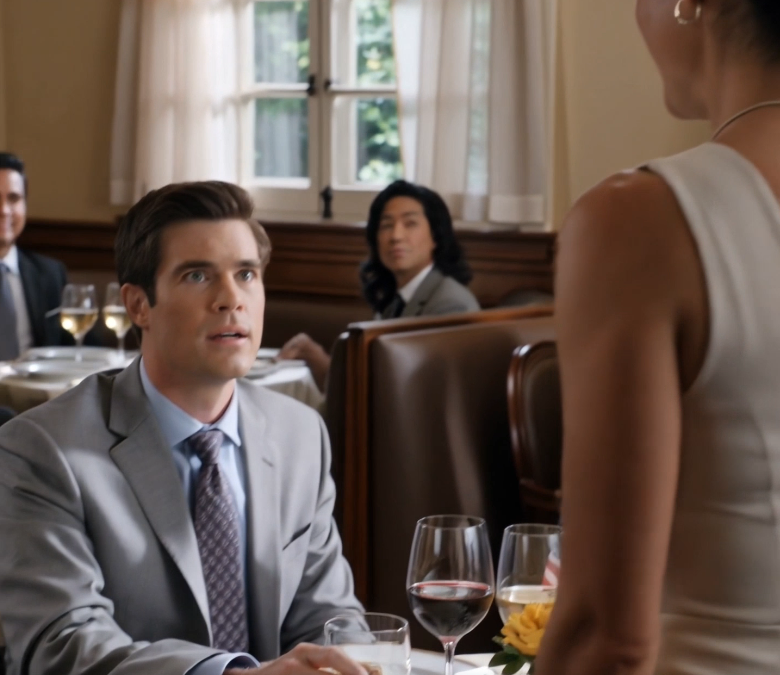
My name is Irene Estrada. I’m thirty-four years old.
For fourteen years, I ran my father’s company for $52,000 a year without receiving so much as a thank-you. At his retirement dinner, in front of our managers, he handed ninety percent of the business to my brother. The room erupted in applause. My brother, who barely showed up for work and earned more than twice my salary, raised his glass in my direction.
“All that work,” he said, grinning. “You were building my company.”
My mother stared at her plate. Nobody said my name. Then my father pressed a pen into my hand.
“Sign it before dessert, sweetheart.”
They thought the evening would end with my signature. What they didn’t know was that I had already read the page my father never intended me to see.
I placed the pen on the table and stood.
“Then you should know what expires at midnight.”
My brother’s smile vanished.
What happened next changed who controlled everything they thought they owned.
Before I continue, if this story resonates with you, please take a moment to like and subscribe, but only if you genuinely want to hear what happened next. And if you’re watching, leave a comment telling me where you’re from and what time it is there.
I’m Irene, and to understand that pen, you have to go back to a parking lot in January 2012.
I was twenty years old, in the second week of my sophomore spring semester at Grand Valley State University. I’d driven home to Grand Rapids after receiving a phone call from my mother.
“Your father needs you,” she’d said. “Don’t ask questions over the phone.”
So I hadn’t.
I found him in the parking lot behind the shop. Estrada Print was a single building with one loading dock, nineteen employees, and a sign my father had painted himself in 1996. He was sitting in his truck with the engine turned off. The temperature outside was nine degrees. When I opened the passenger door, I could see that he’d been crying.
Our bookkeeper had quit that Monday. She’d left a note on his desk with a stack of unpaid invoices underneath it. Payroll was due Friday, there wasn’t enough money in the account to cover it, and nobody who remained at the company understood why.
“I don’t know where the money went,” he told me. “I don’t even know where to look.”
I did. I’d taken two accounting classes, which turned out to be enough to make me more useful than anyone else he had.
“Just one semester, mija,” he said. “Help me save it. Someday, it’ll take care of all of us.”
I said yes before he’d even finished the sentence.
The next morning, he walked me into the office and handed my paperwork to the woman at the front desk. There was a W-4, a direct deposit form, and a starting salary of $38,000 a year. Before handing over the documents, he removed a small, folded piece of paper from his shirt pocket and clipped it to the top of my personnel file.
“What’s that?” I asked.
“Don’t worry about that.”
So I didn’t.
That night, I stopped at a drugstore and bought a notebook. It had a blue cover and wide-ruled pages. On the first page, I wrote: Winter Help, Dad’s Shop, January 2012.
I thought I was documenting a temporary job.
By Friday, I’d found the problem. Two customers had been billed twice, and another hadn’t been billed in four months. I called every one of them myself. At 4:40 that afternoon, payroll cleared, and nineteen people went home with their paychecks.
My father clapped me on the shoulder in the hallway. He didn’t say anything. He didn’t need to. At least, that was what I believed at the time. I thought the hand on my shoulder was the whole sentence.
I never went back to school full-time.
The shop didn’t need a bookkeeper. It needed a reason to exist.
Traditional printing was a dying business. Companies all over Michigan were discovering that they could produce their own flyers on a laptop, and the work that had supported my father’s company for years was slowly disappearing. By the spring of 2013, I had begun searching for something our customers couldn’t print at home.
Grand Rapids was becoming a beer town. New breweries were opening every few months, and every one of them needed labels, six-pack carriers, and boxes that looked better than whatever the brewery down the street was using. Large packaging companies wanted enormous orders. Small breweries wanted somebody who would actually answer the phone.
So I answered it.
I made a list of forty breweries and started calling. Thirty-one never called back. Eight said maybe. One said yes.
His name was Tom Weller. He owned a brewery called Kettle and Crane, and he needed two thousand labels for a seasonal ale in eleven days. Our press had never handled that particular kind of stock, but I told him we could do it.
I spent three nights learning how to make that promise come true. On one of those nights, I slept on the office floor with my coat folded beneath my head as a pillow.
The labels shipped a day early.
When Tom came to collect them, he picked one up and turned it over in his hands. He examined it for a long time before looking at me.
“I’m not buying from Estrada,” he said. “I’m buying from you.”
I laughed. I thought he was paying me a compliment.
By 2016, we had twenty-two brewery accounts, three coffee roasters, and a skincare company in Holland that placed an order every month like clockwork. Our revenue had grown from $3.1 million to $6.8 million. I finished my business degree at night, taking one class at a time, and wrote a forty-page operations manual so the crew could run jobs without needing me to stand beside them.
That fall, the local Chamber of Commerce named my father Small Business of the Year.
I attended the banquet and sat at a round table near the back of the room, listening to his acceptance speech. He talked about his own father. He talked about hard work, the American dream, and the first printing press he’d purchased with a loan nobody believed he could repay.
Near the end of the speech, his eyes found me in the crowd.
“And my daughter helps out.”
People turned toward me and smiled.
I smiled back.
Helps out.
I carried those two words with me for a long time.
In October 2018, I attended a packaging trade show in Chicago by myself. My father considered conventions a waste of money, so I paid for the hotel with my own credit card.
On the second day, a man in a gray suit stopped beside a sample display I was studying. He asked me what I thought about the die-cutting work.
I gave him an honest answer. The cuts were clean, but the board was too thin to survive the cold, wet floor of a working brewery.
He asked where I worked.
“Estrada,” I told him.
“The label people in Grand Rapids?”
I nodded.
“I’ve heard of you.”
His name was Graham Pierce. He worked for Harborline Packaging Group, a national company with manufacturing plants in six states.
We talked for forty minutes. He asked better questions than anyone I’d ever worked with. He understood the business, the machinery, the customers, and the margins. More importantly, he seemed interested in hearing what I actually thought.
At the end of our conversation, he told me Harborline was building a regional accounts team.
“Ninety-five thousand to start, plus relocation,” he said. “Think about it.”
Ninety-five thousand dollars.
At the time, I was earning $44,000.
I called my father from the hotel hallway. I don’t know exactly what I expected from that conversation. Maybe I thought he’d be proud that somebody else had recognized my abilities. Maybe I thought he’d finally understand what I was worth.
He was silent for a moment after I told him.
“Family doesn’t leave, Irene.”
That was all.
Then he asked whether the Kettle and Crane order had shipped.
The next morning, I found Graham at his booth and told him I couldn’t accept the opportunity. He didn’t argue with me. Instead, he handed me a business card, navy blue with a small white lighthouse printed in one corner.
“When you’re ready to be paid what you’re worth,” he said, “call me.”
I never called him.
But I never threw away the card, either.
I tucked it inside the back cover of my blue notebook, where it remained for years.
On Christmas Eve 2019, the main press threw a bearing at four in the afternoon. We had a holiday order scheduled for a brewery that had already paid us, and our maintenance technician was in Florida. My father was at home entertaining guests.
I called to tell him I was going to be late for dinner.
“Can’t it wait?”
“No.”
“Well, do what you have to do. Save me a plate, I guess.”
He laughed at his own joke.
I rebuilt that bearing with the help of a YouTube video, a borrowed puller, and more patience than I knew I possessed. I finished at 11:15 that night.
The house was dark when I finally arrived. Somebody had left a plate of ham on the kitchen counter with plastic wrap stretched across it.
Three months later, the world shut down.
In March 2020, half our brewery customers stopped ordering almost overnight. Their taprooms were closed, and the businesses we’d spent years building relationships with were suddenly struggling to survive.
My father sat in his office and said the word bankruptcy out loud for the first time in my life.
I spent an entire weekend on the phone.
By Monday, we were printing labels for a hand sanitizer manufacturer in Kalamazoo and producing packaging for eleven restaurants that had suddenly become takeout businesses. I slept at the plant for nine consecutive nights so we could operate two shifts.
Not a single person on our payroll lost a job that year.
My brother, Nolan, spent that spring working remotely from my parents’ lake house.
In December, my father distributed the year-end bonuses. Nolan received $20,000 for what my father described, and I quote, as “his loyalty during a hard year.”
I received an envelope containing a $100 gift card to a steakhouse.
I must have stared at it for too long, because my father came over and placed his hand on my shoulder again.
“You didn’t do it for the money,” he told me. “That’s what makes you family.”
And I believed him.
I believed that if I never asked for anything, someday I wouldn’t have to.
My brother is four and a half years younger than I am. When I started working at the shop, he was a sophomore in high school. While I was sleeping on the office floor to finish Tom Weller’s labels, Nolan was learning to drive.
I don’t say that to make him sound like a villain. He was a kid. My parents raised him the way they chose to raise him.
The difference between us was that nobody had ever asked Nolan to save anything.
He graduated from college in 2018, spent a few months skiing in Colorado, and started working at the company in January 2019. He was twenty-two years old.
My father immediately gave him the title of Director of Business Development and a salary of $85,000.
I’d been working there for seven years.
I was making $44,000.
Over time, Nolan’s salary climbed to $110,000. Mine eventually reached $52,000.
He came into the office on Tuesday and Thursday mornings. He played golf with people he called prospective clients. In seven years, I couldn’t name a single one of those prospects who had ever placed an order with us.
He also had a reserved parking space.
Someone had painted his designation in bright white letters directly onto the pavement: RESERVED. N. ESTRADA, DIRECTOR.
I parked beside the dumpsters.
There was always room there.
Once, I asked Nolan how his conversations with those prospective customers were going. He grinned at me the same way he used to when we were children and he’d gotten away with something.
“Relationships take time, Reie. You wouldn’t get it. You’re more of a spreadsheet person.”
Reie.
He’d been calling me that since he was three years old. By the time I turned thirty, he seemed to use the nickname only when he wanted to make me feel smaller.
In January 2026, I was closing out the fourth-quarter accounts when I came across his expense report. There were golf outings, steak dinners, a hotel in Traverse City, and a lease on a new truck that the company was paying for.
In a single quarter, my brother had spent more on entertainment than a third of my annual salary.
I didn’t say anything.
I approved the expenses because my father had already signed off on them.
Every Sunday, we ate dinner at my parents’ house on Reeds Lake. It was the same house they’d purchased in 1995, and we sat at the same table in the same seats.
My father sat at the head of the table. Nolan sat to his right, with my mother beside him. My place was at the far end, closest to the kitchen, because I was usually the one getting up.
My father had one story he told more often than any other.
His own father had owned a hardware store in Lansing. When my grandfather became ill, he sold the store to a stranger for less than it was worth. My father had been nineteen at the time.
“I watched a man I didn’t know put his name on my father’s sign,” he would say. “I swore that would never happen to us. The name stays with the family.”
I’d heard that story perhaps a hundred times.
Not once did I hear the part I was waiting for.
The part where the family included me.
In 2022, I finally asked him about it.
We were alone in his office after a particularly good quarter. I told him I wasn’t asking for much. Maybe ten percent. Just something on paper acknowledging that the business I’d helped build was partly mine.
He leaned back in his chair and regarded me as though I’d said something sweet.
“When the time comes, I’ll take care of both of you.”
When the time comes.
I wrote those words in my blue notebook that night. Then I underlined them because I wanted to be able to prove, someday, that he’d actually said them.
In December 2025, my father’s lawyer came to the shop.
Philip Garner had handled my father’s will and the company’s legal paperwork for years. Ordinarily, whenever he visited, my father left his office door open and waved me inside to join their meetings because I was the one who understood the numbers.
That day, he closed the door.
He had never closed the door before.
I was walking past with a stack of invoices when I heard Philip’s voice coming from inside.
“Does Irene have a non-compete?”
My father laughed.
“She doesn’t need one. She’s family.”
I stood in the hallway for a moment, still holding the invoices. Then I continued walking because I had no idea what I would have said if somebody had opened that door.
On Friday, January 23, my brother turned thirty. My parents threw him a birthday party at the lake house. There were forty guests, a caterer, and a bartender wearing a white jacket. I spent most of the evening in the kitchen because the caterer had run short of glasses, and somebody needed to wash them.
Through the kitchen doorway, I watched my father hand Nolan a small wooden box.
Inside was a watch. It was heavy and gold, the kind you see advertised in expensive magazines. Nolan turned it over and discovered something engraved on the back. He read the inscription aloud, and the guests cheered.
The Next Estrada.
My father raised his glass.
“Thirty,” he announced. “Time for a man to own something.”
Everyone drank.
I dried a champagne flute and placed it on the tray.
Later, when I carried the clean glasses back into the living room, Nolan was standing with a group of friends near the fireplace. He glanced in my direction before turning back to them.
“Big spring coming,” he said. “Everything changes.”
His friends laughed as though they already knew what he meant.
I didn’t.
Two weeks later, on Thursday, February 5, three people wearing business suits walked through our plant. My father met them at the front entrance himself, something he almost never did.
He introduced them to me in the hallway without giving me their names.
“Insurance inspection,” he said. “Just show them around. Don’t ask who they are.”
So I showed them around.
They looked at the presses, although they didn’t spend much time examining the machinery. What interested them were our customers. They wanted to know how many accounts we had, how long we’d maintained those relationships, what percentage of our revenue came from our ten largest customers, and who was responsible for managing those accounts.
“I am,” I told them. “All of them. Most of them.”
One of the visitors, a woman who wore her reading glasses on a chain around her neck, wrote that down.
Another visitor stood near the window, carrying their folders. I noticed the folder in his hand because it was navy blue and somehow familiar, although I couldn’t immediately remember where I’d seen it before.
A small white lighthouse was printed in the corner.
Just before they left, the woman with the reading glasses asked me one final question. She made it sound casual, almost an afterthought, as she put away her pen.
“If you left tomorrow, how many of these customers would follow you?”
I didn’t know what to say, so I told her the truth.
“I’ve never thought about leaving.”
She smiled politely and wrote something else in her notebook.
That afternoon, my father asked me to export our complete customer list. He wanted every account, every contact name, and every annual sales figure included in the report. Then he instructed me to email the entire file directly to him.
“For the insurance people,” he explained.
Insurance people didn’t ask the kind of questions those visitors had asked.
I knew that even then. I simply wouldn’t allow myself to think about what it might mean.
On Sunday, March 8, my father turned sixty-three.
I made pot roast for his birthday lunch, preparing it the way my grandmother used to make it, with carrots cooked so long they practically fell apart. The recipe took five hours, and I’d started cooking at seven that morning.
I’d also brought him a present.
It was a framed photograph from 2013, taken on the day we completed our first real packaging order. In the picture, my father and I were standing beside the press, both exhausted and smiling, holding up a freshly printed sheet of Kettle and Crane labels that were still warm from the dryer.
I’d discovered the photograph on an old phone, then had it printed and placed in a frame.
My father unwrapped it at the table. He examined it for a few seconds.
“Nice,” he said. “Put it somewhere safe.”
Then he placed it facedown beside his plate to make room for his wineglass.
I remember staring at the back of that frame. It was ordinary brown cardboard with a small metal hook attached to it. That was the side facing me for the remainder of the meal.
When our plates were almost empty, my father tapped his wineglass with a fork.
“I have an announcement,” he said. “And I need everyone to stay calm.”
He was smiling when he said it. That’s what I remember most clearly. He looked like a man about to surprise his family with presents.
“I’m retiring at the end of April,” he continued. “Thirty years is enough. On Friday the twenty-fourth, we’ll have a dinner downtown. I’ve already booked the room, and that night I’ll be signing ninety percent of the company over to Nolan.”
Nolan didn’t look surprised. He lowered his eyes to his plate and tried to suppress a grin, although he didn’t quite succeed.
“I’ll keep ten percent,” my father continued, “so I can still stick my nose in.”
He laughed. Nolan laughed with him.
Then my father turned toward me.
“And Irene, you’ll have a stable position. Same job you’ve always had. And I’m giving you a six-percent raise, effective May first.”
Six percent.
I did the calculation before I could stop myself. Six percent of $52,000 was $3,120 a year.
For fourteen years.
I looked at my mother. I desperately needed to see somebody at that table who was as shocked as I was, somebody who couldn’t believe what had just been announced.
But she wasn’t shocked.
She hadn’t even looked up from her plate. She was cutting a carrot into smaller and smaller pieces, and she didn’t raise her eyes once.
She already knew.
“You’re family, Irene,” my father told me.
His voice was gentle, as though he were comforting me.
“Family doesn’t keep score.”
There was only one question I could manage to ask. When it came out, my voice was much quieter than I’d intended.
“Why?”
My father sighed. It wasn’t an unkind sigh. It was the sort of patient sigh an adult makes when a child asks why the sky is blue.
“He carries the name,” my father said. “You’ll get married someday. You’ll have a different name.”
He looked at me as though that explained everything.
“You’re good at the work, Irene. You’re the best I’ve ever had at the work. But Nolan is good at being the face. A company needs a face.”
“I’m thirty-four,” I said. “I’m not married. I’m at the plant at six every morning.”
“And you’ll still be there,” Nolan interrupted.
He reached across the table and patted my wrist as though I were a nervous customer who needed reassuring.
“Don’t make it weird, Reie. Nothing changes for you.”
Nothing changes for you.
I stored that sentence somewhere in my mind and forced myself to keep going.
“Why the twenty-fourth?” I asked. “That’s month-end. It’s the busiest week we have.”
It was a small, practical question, the kind I asked fifty times a day while managing the business.
My father’s expression closed like a door.
“Because I said so. The room’s booked.”
Nolan glanced at him. My father didn’t return the glance.
I tried one more time.
“Is there anything else I should know?”
The two of them looked at each other.
It lasted less than a second, but I saw it. It was the kind of look people exchange across a poker table when both of them know what’s in the other person’s hand.
“No,” my father said.
“No,” Nolan answered at exactly the same time.
I cleared the plates.
That’s what I did. I stood up and started clearing the plates because it was the only thing in that room I still knew how to do.
When I finally left, I sat in my car in the driveway without starting the engine. I don’t know how long I remained there, but it was long enough for the windows to begin fogging over.
Someone tapped on the glass.
It was my mother. She had a cardigan wrapped tightly around her shoulders, and she looked cold and tired.
I rolled down the window.
“Please don’t make this ugly,” she said. “Your father has worked his whole life.”
“So have I.”
She pressed her lips together. For a moment, I thought she might finally say something that mattered.
“Philip drew up the papers in January, honey,” she said. “It’s decided. Just let it be.”
January.
Not today. Not this week. January.
While I’d been washing champagne glasses at Nolan’s birthday party. While I’d been walking strangers through the plant and answering their questions about my customers.
My father had already made his decision.
This birthday lunch hadn’t been a conversation. It had been a notification.
My mother went back into the house. I watched the door close behind her, then started the car and drove home.
The following morning, I unlocked the plant at six, just as I’d done every workday for fourteen years.
I hated myself a little for it.
I did it anyway because forty-six people needed the lights turned on and the presses warmed up.
Dolores Brandt arrived at 6:15. She’d been running our production floor for twenty-two years, long before I’d started working there. When I was twenty and terrified of everything I didn’t know, she’d taught me how to feed a printing press.
That morning, she placed a cup of coffee on my desk without asking whether I wanted one.
“Heard the news,” she said.
She waited until I looked up.
“For what it’s worth, we all know who runs this place.”
I couldn’t answer. I simply nodded, and she returned to the production floor.
At 7:30, something happened that I hadn’t witnessed in years.
My brother’s truck pulled into his reserved parking space before eight in the morning. My father’s car arrived immediately behind him.
They walked past my open office door together. Nolan didn’t bother saying good morning. Instead, he stopped at Paula Greer’s desk.
Paula had been our office manager for eleven years.
“I’ll need all the customer files moved to my office,” Nolan told her. “Today.”
My brother had never opened a customer file in his life.
By the middle of March, he’d opened several. He’d also started making telephone calls.
Naturally, I discovered this the same way I discovered most things that happened at our company: from the people who actually did business with us.
Tom Weller called my cell phone on a Wednesday afternoon.
Thirteen years after placing that first order, Kettle and Crane was still our oldest customer. Tom didn’t call very often, but when he did, there was usually a reason.
“Irene,” he said, “your brother just called me.”
“About what?”
“He says our pricing is being…” Tom paused, and I could hear him reading from a note. “‘Restructured before this transition. Eight percent starting in May.’ Irene, what transition?”
I closed my office door.
“I don’t know yet, Tom.”
“That’s not an answer I’ve ever heard from you.”
“I know.”
He was quiet for a moment.
“There’s something else,” he finally said. “I didn’t think much about it at the time, but back in February, some guy from Chicago called me. Very professional. Asked a lot of questions about how long we’d been with Estrada and whether we’d stay if you left.”
I waited.
“I told him no. Flat out. If you’re not there, I’m not there.”
Then Tom asked, “Was that some kind of test?”
I looked through my office window toward the parking lot, where my brother’s name was painted in bright white letters.
“I’ll call you back,” I said.
A few days later, Nolan stopped by my office. He’d been doing that more frequently, leaning against the doorway and talking about the business as though he’d read a book about it on an airplane.
This time, he wanted to show me photographs.
They were pictures of a house in Saugatuck, about forty minutes west of us, right on Lake Michigan. It had white siding, a wraparound porch, and a private dock. In one of the photographs, his girlfriend, Brooke, stood on the dock holding a glass of wine.
“We signed yesterday,” Nolan announced. “Nine hundred thousand. Closing is May fifteenth.”
Nine hundred thousand dollars.
“There were three other offers,” he added, clearly pleased with himself. “So we waived the financing contingency. Made it clean.”
I understood exactly what that meant. If Nolan and Brooke couldn’t produce the money by May 15, they would lose their deposit.
My brother earned $110,000 a year. He didn’t have $900,000. He didn’t even have ninety thousand dollars readily available.
“With what?” I asked.
He tucked his phone into his jacket, still smiling.
“With what’s coming. Try to be happy for me for once.”
He tapped the doorframe twice and walked away.
With what’s coming.
What could possibly be coming before the middle of May that would give my brother enough money to purchase a nine-hundred-thousand-dollar lake house?
The answer arrived in pieces.
That same week, my father asked me to update our financial statements. There was nothing unusual about the request itself. What struck me was the way he wanted the statements prepared.
“Trailing twelve months,” he instructed. “And pull out your brother’s stuff. The golf, the dinners, the truck lease. List them as one-time owner expenses.”
I stared at him.
“They aren’t one-time expenses. He does this every quarter.”
“Make the numbers look like a company without your brother’s golf,” my father said. “That’s all I’m asking.”
I knew what he was asking for.
I’d learned about it in a night class in 2016, sitting in a classroom above a bank downtown. When you start with a company’s earnings and adjust for items such as interest, taxes, depreciation, amortization, and certain owner-related expenses, you arrive at a financial measure called adjusted EBITDA.
Nobody prepares that number for fun.
You prepare it when somebody is considering paying you a multiple of it.
“Are you selling, Dad?”
He didn’t even blink.
“It’s for the bank. Refinancing. Don’t read into things.”
He handed me a sticky note with the filename he wanted: Adjusted EBITDA.
I returned to my desk and built the spreadsheet. It took four hours, and the numbers were good.
They were good because I’d spent fourteen years making them good.
But I knew something my father appeared to have forgotten.
We weren’t refinancing anything.
I handled every banking document the company signed. There were no new loan applications, no meetings scheduled with lenders, and absolutely no reason for us to provide a bank with a polished presentation of our adjusted profits.
My father had lied to me without the slightest hesitation. He hadn’t even looked away.
On Friday, March 27, I stayed late at the plant.
The building was quiet. I opened my blue notebook to a clean page and began writing down everything that didn’t make sense.
The strangers in business suits. The complete customer list. The word transition. A $900,000 house. A spreadsheet prepared for Philip. A retirement dinner scheduled on the busiest night of the month.
As I flipped toward the back of the notebook, searching for another empty page, something slipped out and landed on my desk.
It was a business card.
Navy blue, with a small white lighthouse printed in the corner.
Graham Pierce. Harborline Packaging Group.
I held the card for a long time.
I pictured the man standing beside the window in February, carrying a navy-blue folder with that same little white lighthouse printed on it.
Harborline didn’t insure companies.
Harborline bought them.
I placed Graham’s business card faceup on my desk and picked up my phone.
But I didn’t call him.
Not yet.
Some part of me still desperately wanted to be wrong about my father.
A week later, the decision was made for me.
On Friday, April 3, Good Friday, most of the office staff left early. I was finishing a production schedule when an email arrived at approximately 4:45 that afternoon.
The sender was a woman named Janet Ror, who worked at a law firm in Chicago. The email was addressed to my father, Philip Garner, and Nolan.
I had been copied.
The subject line read: Project Lighthouse — Key Employee Agreement — I. Estrada — Revised Draft.
I read my own initial three times.
I learned later how the mistake had happened. The buyer’s attorneys had obtained my email address from a list of key employees included in the due diligence documents. Someone at the law firm had accidentally placed my address in the wrong field.
It was a mistake. A small, ordinary mistake, the kind people make on Friday afternoons before holiday weekends.
Twenty minutes later, a new notification appeared at the top of my inbox.
Janet Ror would like to recall the message.
The recall didn’t work.
Those things rarely do.
The original email was still sitting in my inbox, complete with its attachment.
I opened it.
The document was a draft agreement between Harborline Packaging Group and me. The very first paragraph explained why it existed.
Harborline intended to purchase one hundred percent of Estrada Print and Packaging. The proposed purchase price was $12.6 million, and the entire transaction was conditional upon one specific requirement.
Irene Estrada had to sign a key employee agreement committing herself to remain with the business for two years after the sale.
I read that sentence four times.
Then I continued reading.
The document showed every revision the lawyers had made. Deleted language appeared with red strikethroughs. New language was underlined in blue.
The original agreement offered me the position of Chief Operating Officer, a base salary of $145,000 per year, and a retention bonus of $300,000, payable over two years in exchange for remaining with the business.
Every one of those provisions had been crossed out in red.
Chief Operating Officer. Crossed out.
$145,000. Crossed out.
$300,000. Crossed out.
In their place, new language appeared in blue.
Operations Manager. Base salary increased by six percent.
There was also a new paragraph stating that I agreed not to work for any competing business within a hundred-mile radius for two years.
I stared at the screen.
Then I noticed a small comment box in the margin. It was the kind of comment attorneys leave for one another while revising documents and sometimes forget to remove before circulating a draft.
Per V. Estrada, 3/30: Seller confirms key employee has agreed to waive retention bonus. Amount reallocated to purchase price.
Seller confirms key employee has agreed.
Nobody had asked me.
Nobody had even mentioned it.
My father had simply told the buyer that I’d agreed to surrender $300,000. He’d then instructed the lawyers to move that money into the purchase price he expected to receive.
At the bottom of the final page, one more sentence appeared in bold type.
Condition must be satisfied by 11:59 p.m. Eastern Time, April 24, 2026, or buyer’s offer lapses.
April 24.
The retirement dinner. The room that had already been booked. The busiest night of the month.
Because I said so.
I sat alone in my dark office and began doing the calculations my father had never wanted me to do.
The purchase price was $12.6 million. The company owed roughly $1.5 million on its credit line, and there would be legal expenses and transaction fees. That would leave approximately eleven million dollars.
Ninety percent would go to Nolan.
Ten percent would go to my father.
My brother would walk away with almost ten million dollars. My father would leave with a little more than a million.
And I would receive an additional $3,120 a year in salary, along with a contractual promise not to work anywhere else in our industry for two years.
The only thing standing between them and all that money was my name on a signature line.
I sat perfectly still and allowed myself to understand what I’d discovered.
I didn’t cry. I think I was past crying.
It felt more like the moment after missing a stair in the dark, when your body understands what’s happening before your mind has caught up.
Then I remembered that day in December.
The closed office door. Philip’s voice.
Does Irene have a non-compete?
She doesn’t need one. She’s family.
In fourteen years, I’d never signed a non-compete agreement.
Nobody had ever asked me to sign anything because family, according to my father, didn’t need paperwork.
Which meant that right now, at that very moment, I was free to leave.
I was free to work anywhere.
I opened my blue notebook and removed Graham Pierce’s business card.
This time, I called.
He answered on the second ring. I introduced myself, and there was a silence so prolonged that I thought the connection had dropped.
“Irene,” he finally said. “I’ve been hoping you’d call for about three months.”
We arranged to meet six days later, on Thursday, April 9, at a diner just off US-131, south of the city.
Graham drove up from Chicago that morning. The journey took approximately three hours, and he lost an additional hour crossing into the Eastern Time Zone, which meant he’d left home before six.
He looked older than he had when we’d met in 2018. His hair was grayer, but he still had the same careful eyes.
Before we discussed anything else, he made something very clear.
“I want you to know I’m allowed to have this conversation,” he said. “You’re a party to the agreement my company wants signed. You have every right to ask me about it.”
I slid a printed copy of the draft agreement across the table.
Graham examined the red strikethroughs and the comment box. As he read, his jaw tightened.
“Your father told us you’d agreed to this,” he said. “He told me on the phone, word for word, ‘She’ll sign whatever I put in front of her.’”
I said nothing.
“Irene, my board approved this acquisition for one reason. It wasn’t the presses. We have better presses. It wasn’t the building.”
He leaned forward.
“We made reference calls in February. We spoke to your twelve biggest customers. Nine of them told us, without even being asked, that if you left, they’d leave.”
Nine out of twelve.
“So that’s why the condition exists,” I said.
“That’s why.”
He tapped the agreement with one finger.
“The original terms were ours. We wanted you as COO. We wanted you paid properly. Your father asked to eliminate the bonus and add it to the price. He said you were family and you didn’t care about the money.”
“I was never asked.”
“I believe you.”
Graham leaned back in his seat.
“I can put your original terms back on the table. I’ll do it this week. But the money comes out of his price, so he has to agree to it.”
I thought about that for a long time.
The waitress refilled our coffee twice before I finally answered.
“Then ask him,” I said. “Let’s see if he tells me himself.”
Graham nodded slowly. He understood exactly what I meant.
“There’s one more thing,” he said. “While this deal is alive, I can’t offer you anything outside of it. I won’t, and I can’t tell you what to do. But I won’t close a deal where the most important person in it doesn’t know what she’s signing.”
He paid the check.
At the door, he stopped and turned toward me.
“If it isn’t signed by 11:59 Eastern on the twenty-fourth, my board moves on,” he said. “That’s not a threat, Irene. It’s a calendar.”
There was one more thing I needed to see.
On Monday, April 13, I walked over to Paula’s desk and asked to review my personnel file.
In Michigan, employees have the right to inspect their own personnel records. In fourteen years, I’d never once exercised that right.
Paula looked surprised, but she went to the filing cabinet and brought me the folder.
It was remarkably thin. There were tax forms, direct deposit documents, and a handful of salary adjustments, all written in my father’s handwriting.
On top of my W-4 from January 2012, still attached with the original paper clip, was a small, folded piece of paper.
I recognized it the instant I saw it.
Fourteen years had passed, and I still recognized it.
I unfolded the paper.
There were four words and a name, written in my father’s handwriting.
Irene: Temporary until Nolan’s ready.
My brother had been fifteen years old when my father wrote that note. He’d had a learner’s permit and a bedroom full of video games, and my father had already decided that I was only keeping his chair warm.
After Paula left for lunch, I sat alone at her empty desk and read those words again.
I had never been the heir who was waiting for her turn.
I was the placeholder who’d forgotten to leave.
Have you ever discovered that a role you devoted years of your life to was only ever meant to be temporary? Tell me in the comments. I read every one of them. And stay with me, because the next time my father spoke to me about that company, he had no idea what I’d already discovered.
I photographed the note.
Then I carefully folded it along the original creases and clipped it back onto my W-4. When Paula returned from lunch, I handed her the folder and thanked her.
That evening, I sat at my kitchen table with the blue notebook open in front of me and established a set of rules for myself.
I would not sabotage anything. I would not take a single customer file, price list, or email that belonged to the company. I would not tell the employees about the proposed sale, and I would not warn our customers. I would not lie to anyone.
I would continue doing my job every day, exactly as well as I’d always done it.
And I would not sign.
It wasn’t about revenge.
I wrote down my reasoning because I wanted something I could return to if my nerves began to fail me.
If I sign, my brother gets almost ten million dollars for my fourteen years of work. If I don’t, I still get to work. Just not for them.
Then I wrote my resignation letter.
It was a polite letter offering two weeks’ notice, dated Monday, April 27. I folded it and slipped it into the back of my notebook, behind the empty space where Graham’s business card used to be.
The next eleven days were the strangest of my life.
I watched my family prepare for a celebration whose ending I already knew.
My father had his office repainted. Nolan ordered new business cards identifying him as the company’s owner and president. On Wednesday, a florist called to confirm the centerpieces for Friday’s dinner. Paula transferred the call to me because I was the person who always dealt with vendors.
On Thursday afternoon, Nolan leaned against my office doorway.
“Dad’s dinner is next Friday,” he reminded me. “Wear something nice. There’s a little something for you to sign. Just a formality.”
“What is it?”
“Paperwork for the transition.”
He grinned.
“Don’t make a scene, Reie. It’s his night.”
He knocked twice on the doorframe and walked away.
On Monday, April 20, after everyone else had gone home, I knocked on my father’s office door.
I’d decided to give him one chance.
It wasn’t a trap. It was a door. If he chose to walk through it, if he told me the truth, then perhaps the previous fourteen years had meant something to him after all.
He was reading the newspaper when I entered. He didn’t put it down.
The walls had been freshly painted. Nolan’s college diploma hung behind the desk in a new frame.
The photograph I’d given my father for his birthday was nowhere to be seen.
“Dad,” I said, “is there anything about the company I should know before Friday? Anything I’ll be asked to sign?”
He turned a page.
“Nothing that concerns you,” he said. “Just show up, smile, and let your brother have his night.”
That was the door.
He didn’t walk through it.
He didn’t even look at it.
“Okay,” I said.
I was halfway down the hallway when his telephone rang. He answered on speakerphone, as he always did. He claimed it saved his neck.
“Victor, it’s Graham.”
I stopped walking.
“I wanted to raise the key employee terms again,” Graham continued. “My board would be comfortable restoring the original package for Irene. I think it would make the transition smoother.”
My father laughed.
“No, Graham. We’re not changing anything. Trust me, she’ll be there. She’ll sign. She always does.”
I continued down the hallway.
My hands were steady.
That surprised me.
On Wednesday night, my mother called.
“Your father’s planned something special for Friday,” she told me. “I need you to promise me you’ll keep the peace.”
I was standing at my kitchen counter. I could hear her television playing in the background.
“Mom,” I said, “did you sign something in January?”
The television continued talking.
My mother didn’t.
The silence lasted so long that I checked my phone to make sure the call hadn’t disconnected.
“The house is on that loan, Irene,” she finally said.
Her voice sounded thin and exhausted.
“The bank has the house on the company’s credit line. It’s been that way since COVID. When this is done, it’s paid off. Thirty-one years in that house.”
So that was it.
That was the price of her silence.
“Just sign what he gives you,” she said. “And we can all breathe.”
She hung up before I could answer.
On Thursday night, I printed one page.
Just one.
It was the page from the revised agreement showing the $300,000 retention bonus crossed out in red, along with the comment box in the margin.
I folded it in half, then folded it in half again, and slipped it into the inside pocket of my handbag.
At 9:40, my phone buzzed.
It was Graham.
I asked him to restore your terms. He refused. He’s invited me to dinner tomorrow as an old friend from the industry. I’ll be there. I won’t say a word unless someone asks me directly.
I typed a three-word reply.
Neither will I.
Then I turned off the kitchen light.
Twenty-seven hours.
That was all that remained of fourteen years.
The Brass Table was a steakhouse downtown with a private dining room in the back. It had dark wooden paneling, subdued lighting, and a long table set for twelve.
Above the doorway hung a brass clock with Roman numerals.
I noticed it the moment I walked into the room.
My father sat at the head of the table. My mother was on his left, while Nolan sat on his right, wearing a new suit and the expensive gold watch he’d received for his thirtieth birthday.
Brooke sat beside him.
Our three managers were there: Dolores Brandt, Russell Kain from the pressroom, and Paula Greer. Philip Garner had a leather folder positioned neatly in front of him. Ed and Linda Linfist, my father’s golfing friends, were also in attendance.
And near the end of the table, directly across from me, sat Graham Pierce.
“Everybody, this is Graham,” my father announced. “An old friend from the industry. He drove all the way up from Chicago.”
Graham nodded politely to the assembled guests.
He didn’t look at me.
I didn’t look at him.
Dinner lasted two hours.
People told stories about my father and reminisced about the company’s early years. Ed told the familiar story about the first printing press and the bank loan, although he managed to get the numbers wrong.
Russell told everyone about the bearing that had failed on Christmas Eve. He gave the entire team credit for getting the press running again.
I didn’t correct him.
He didn’t know.
When the servers finally cleared the dinner plates, my father stood.
“Thirty years ago,” he began, “I started with one press and a loan nobody thought I could pay back.”
Everyone laughed. They’d heard the story before.
“I swore that whatever I built would stay in the family, with the name.”
He placed a hand on Nolan’s shoulder.
“Tonight, ninety percent of it goes to my son.”
Philip opened his leather folder and placed two documents on the table.
My father signed.
Nolan signed.
Philip initialed both documents and slipped them back into his folder.
The room erupted in applause.
I clapped, too.
My hands moved almost independently of my thoughts. That’s what fourteen years of conditioning will do to a person.
It was a little before ten o’clock.
Nolan picked up his glass and turned in his chair until he was facing me across the length of the table.
He was smiling. He’d had three drinks, perhaps four, and he was thoroughly enjoying himself.
“To my sister,” he announced.
A few people raised their glasses.
“All that work?”
He paused, allowing the words to hang in the air while his grin widened.
“You were building my company.”
Ed Linfist laughed out loud. Brooke giggled into her wineglass.
Dolores placed her glass very carefully on the table.
She didn’t laugh.
My mother stared at her plate.
Nobody said my name.
Then my father reached into Philip’s folder and removed one more document.
He carried it down the length of the table himself and placed it directly in front of me.
A yellow tab protruded from the last page.
“Sign here.”
I glanced at the letterhead.
Harborline Packaging Group.
My father took a pen from his jacket and pressed it into my hand. For a moment, he kept his hand over mine, the way an adult might when passing something fragile to a child.
“Sign it before dessert, sweetheart,” he said. “We’re partnering with Graham’s company. This makes your job secure for two years.”
I didn’t open the document.
I didn’t need to.
I already knew every page.
I placed the pen on the white tablecloth and stood.
The room fell silent in that peculiar way rooms do when somebody stands up at the wrong moment.
I looked directly at my brother.
“Then you should know what expires at midnight.”
His smile vanished.
It didn’t fade gradually. It disappeared all at once, as though somebody had pulled a cord.
Of everyone sitting at that table, Nolan understood what I meant the fastest.
He knew the date.
He knew the deadline.
He’d been counting on it for months.
My father turned his head, but not toward me. He looked at Graham.
Graham looked back at him without saying a word.
“Sit down, Irene,” my father instructed.
His voice was low and controlled.
“You’re embarrassing yourself.”
I remained standing.
My father turned toward the other guests and smiled. It was the smile he used with customers who were about to complain.
“She’s confused,” he explained. “It’s an employment contract. That’s all it is. She gets emotional about change.”
I opened my handbag and removed the folded page.
I unfolded it once, then again, before placing it flat on the white tablecloth in front of my father’s empty chair.
Anyone who leaned forward could read it.
There was the red line crossing out the $300,000 retention bonus.
There was the red line crossing out the Chief Operating Officer position.
And there was the comment box in the margin.
Seller confirms key employee has agreed to waive retention bonus.
Philip leaned forward.
I watched him read the page.
Then I watched his expression change.
“That’s a lawyer’s draft,” my father said. “It means nothing, Irene. Sit down.”
I didn’t argue with him.
Instead, I turned toward the opposite end of the table.
“Mr. Pierce,” I said. “Did I ever agree to waive it?”
Every person in the room looked at Graham.
He carefully set down his coffee cup.
“Your father told us you had,” he answered. “In writing, on March thirtieth.”
Nobody interrupted him.
“And this week, when I offered to put your original terms back, he refused.”
Philip slowly closed his leather folder.
He looked at my father as though he were looking at a man he’d never met before.
“I was never asked,” I said.
Then I looked around the table.
“And this sale doesn’t happen without my signature. By 11:59 tonight.”
Nobody moved.
Dolores put down her fork.
Russell looked from my father to Nolan, then back again.
Russell had operated our presses for seventeen years. He had a child starting college in the fall. He’d spent years depending on that business for his livelihood, and he’d just discovered something that the people running it had deliberately kept from him.
“You were selling the shop?” he asked quietly. “Without telling any of us?”
My father didn’t answer.
He was looking at me, and something fundamental had changed in his expression.
For the first time in my life, my father was looking at me as though I were a person who could cost him something.
“How much do you want?” he asked.
It was so quiet that I could hear people working in the kitchen on the other side of the wall.
He’d never once asked me what I wanted.
Not in fourteen years.
But now that I stood between him and $12.6 million, he suddenly wanted to know my price.
“Fine,” he said before I could answer. “Take the bonus. Take the title. Whatever Graham put in the first draft. Just sign it.”
“Dad!”
Nolan’s voice cracked.
“That’s my money.”
Brooke put a hand on his arm.
He shook it off.
Ed Linfist suddenly became extremely interested in the tablecloth.
My father ignored all of them. He picked up the pen and held it toward me again.
“Three hundred thousand dollars, Irene. Come on.”
I looked at the pen.
“You didn’t offer it when you thought I didn’t know,” I said.
He continued holding it out.
“You’re not offering me anything, Dad. You’re offering them my signature.”
I placed the pen on top of the unsigned agreement and sat back down.
I didn’t leave.
I think they expected me to leave. In fact, I think it would have been considerably easier for them if I’d stormed out of the restaurant.
Then I would have been the daughter who ruined her father’s retirement celebration. The daughter who made a scene. They could have told that story at family gatherings for years, carefully leaving out the details that made them uncomfortable.
Instead, I sat at the table with my hands folded and waited.
My father kept trying for a while.
He told me I was throwing away my future. He accused me of punishing forty-six innocent employees. He even claimed that my grandfather would be ashamed of me.
I didn’t respond to any of it.
Nolan began pacing. At one point, he stepped into the hallway to make a telephone call. When he returned, his face was noticeably paler.
My mother cried quietly without looking at me once.
Ed and Linda Linfist left at 10:40.
Brooke departed alone a few minutes later.
On her way out, Paula came over and hugged me. She didn’t say anything, and I didn’t need her to.
Russell shook Graham’s hand before leaving. He walked out without so much as glancing at my father.
Philip left at 11:20, carrying his leather folder beneath his arm.
Dolores stayed.
She moved into Paula’s empty chair beside me and settled in without a word.
At 11:50, my father finally stopped talking.
At 11:59, the only sound in the room was the clock above the doorway.
At 12:01, the phones began lighting up.
My father and Nolan received the notification at the table. I learned later that Philip received the same email while driving home.
It was a short message from Graham, and only one sentence really mattered.
As the closing condition was not satisfied, Harborline’s offer has lapsed.
Graham stood and buttoned his jacket.
Then he walked toward my end of the table.
“Thank you for your honesty, Ms. Estrada,” he said.
He nodded to my father and left.
It was the first time anyone had ever thanked me in front of my father.
On Monday, April 27, I unlocked the plant at six in the morning for the last time.
I made the coffee, checked the overnight production log, and prepared the press schedule for the coming week. That’s what I’d done every Monday for fourteen years.
And whatever happened next, forty-six people still had orders to complete.
At 8:15, my father walked into the office.
He looked as though he hadn’t slept since Friday night.
I handed him the envelope containing my resignation letter.
He opened it and read it while standing.
Two weeks’ notice. Polite and brief.
He folded the letter in half.
“Don’t bother with two weeks,” he said. “Clear out your desk today.”
“Okay.”
I’d expected that response.
I think part of me was relieved.
I didn’t have many personal belongings to collect. There was the blue notebook, a coffee mug, and a sweater I kept in my bottom drawer for cold mornings.
I left everything belonging to the company exactly where it was.
That included the thick binder sitting on the corner of my desk.
It was my operations manual, the forty-page document I’d written in 2016 and updated every year since.
On the first page, printed in small type, were the words:
Prepared by I. Estrada.
I left the binder right in the middle of my desk, where anyone would be able to find it.
Dolores and Russell walked me out to my car.
We stood beside the dumpsters, in the parking space I’d used for seven years, without saying anything for a full minute.
Then Dolores placed both hands on my arms.
“Fourteen years,” she said. “And I never heard anybody thank you.”
She looked directly into my eyes.
“So thank you.”
I managed to hold myself together until I reached the highway.
Then I couldn’t anymore.
My phone rang before I reached my exit.
It was Graham Pierce.
We met two days later, on Wednesday, April 29, at the same diner where we’d spoken earlier that month.
The acquisition was officially dead.
Harborline’s board had already turned its attention toward another company in Ohio. Graham was no longer restricted by the pending transaction, which meant he was free to discuss other opportunities with me.
He got straight to the point before our coffee even arrived.
Harborline had a plant in Holland, approximately thirty miles west of Grand Rapids. It had a newer label production line that had been operating at half capacity for a year because the company didn’t have anyone in the region who knew how to sell its services effectively.
“Director of Michigan Operations,” Graham said. “One hundred forty-five thousand dollars.”
He paused to let me consider it.
“You’d run the plant and build the book of business. Start whenever you’re ready.”
I didn’t accept immediately.
Instead, I asked about the existing team, the equipment, and the vacation policy. I wanted to know who I’d report to and how the bonus structure worked.
I asked him to put every part of the offer in writing before I gave him an answer.
“This time,” I told him, “I want everything on paper.”
Graham smiled for the first time that day.
“That’s the first thing I would’ve asked for.”
I signed the offer that Friday.
My official start date was Monday, May 11.
I didn’t call a single customer.
I didn’t need to.
On May 1, Tom Weller called me.
“I heard you’re not at Estrada anymore,” he said. “Where are you going?”
“Harborline. The Holland plant.”
“Good,” he said. “Because that’s where Kettle and Crane is going.”
By the end of May, four of our largest accounts had transferred their orders to the Holland facility.
None of them had long-term contracts.
In the packaging business, you earn every order individually. Customers don’t have to keep buying from you simply because they’ve done business with your company for years.
Those customers simply stopped placing orders with the company my father had just given away.
They began placing orders with the person they’d been placing them with all along.
My father didn’t retire.
At sixty-three, he was back at the plant by six every morning, struggling to learn a quoting system he’d never used and a production schedule he’d never built.
Russell told me about it in a text message.
I didn’t ask for updates.
People sent them anyway.
On Friday, May 15, Nolan’s closing date came and went.
There was no money from the sale.
No bank was going to lend him $900,000 based on a salary of $110,000 a year.
The house in Saugatuck went to the next buyer, and my brother lost his $60,000 deposit.
On Monday, May 18, he called me.
It was the first time he’d called in months.
“The quoting system,” he said. “The pricing tabs. I can’t make it calculate the die costs. How does it work?”
He didn’t say hello.
He didn’t apologize.
He spoke as though I still worked for him.
Perhaps, in his mind, I did.
“There’s a manual on my old desk,” I told him. “Page one says who wrote it.”
He hung up.
Two days later, on Wednesday, my father left me a voicemail.
I listened to it once while sitting in my car in the Harborline parking lot.
“Irene, it’s Dad. Come home. We can talk about the ten percent.”
The ten percent.
His ten percent of a company that was losing customers every week.
He still thought I was negotiating.
I listened carefully to the rest of the recording, waiting for an apology or a thank-you or anything that suggested he understood what had happened.
But the message ended there.
On Saturday, May 23, during Memorial Day weekend, my mother knocked on my apartment door.
She was holding something flat, wrapped in a dish towel.
When I let her inside, she carried it into the kitchen and carefully unwrapped it on the counter.
It was the photograph.
The two of us standing beside the press in 2013, holding up that first sheet of Kettle and Crane labels.
The same photograph I’d given my father for his birthday.
“It was in his desk drawer,” she said. “Facedown.”
We stood beside the counter, looking at the picture together.
“I chose the house,” she said.
Her voice broke on the last word.
“I should’ve chosen you.”
I believed her.
And I understood that believing her didn’t mean I owed her anything.
“I’ll have lunch with you, Mom,” I said. “Just you. Not the business. Not Dad’s messages.”
She was silent for a long moment.
Then she nodded.
She didn’t defend him.
In thirty-four years, it was the first time I’d ever heard my mother choose not to defend my father.
After she left, I hung the photograph on the wall above my kitchen table.
Right side up.
On Sunday, May 31, I opened my blue notebook to the very first page.
Winter Help, Dad’s Shop, January 2012.
Fourteen years of handwriting followed those words.
There were customers, promises, and dates. There were records of all the things I’d learned, the problems I’d solved, and the decisions I’d made.
Eventually, I reached the sentence I’d written after that conversation in my father’s office in 2022.
When the time comes.
I’d underlined it twice.
I turned past all those pages until I reached a clean sheet of paper.
Then I wrote three short lines.
My work.
My name.
My terms.
If you’ve ever had to stop saving people who never truly saw you, I hope you understand that it isn’t cruelty. It’s a boundary.
Tell me, what did it cost you to establish yours?
Last Thursday, at the end of my third week in Holland, a young machine operator named Kyle was struggling with a label job that kept printing out of register.
He’d been fighting with the machine for nearly an hour when I walked over.
I showed him where the tension was slipping.
It took two minutes.
When the sheets finally started coming through cleanly, Kyle looked up at me and grinned.
“Thanks, boss.”
My first instinct was to wave away the compliment.
To tell him it was nothing.
That was what I’d said for fourteen years.
For fourteen years, my father had never felt the need to thank me because he’d never believed he was paying for anything.
He thought he’d given my brother ninety percent of a company.
What he’d actually given away was the part of that company that could never be transferred with a signature.
So when that young man thanked me, I didn’t correct him.








