At dinner, my son announced, “Next month, my wife’s parents are moving in.” His wife threw down a floor plan: “Dad, you’re downstairs. We’re taking the master bedroom.” I just smiled. When they arrived with a truck full of belongings, smug smiles vanished—the screaming began.
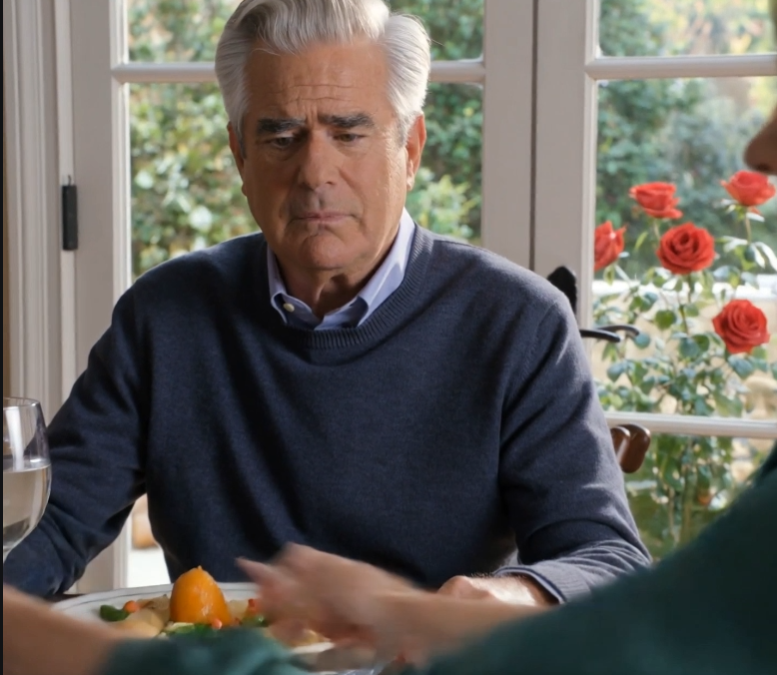
At Sunday dinner in my own home, my son tapped his fork against his glass and stood up to announce, “Next month, my wife’s parents are moving in with us.”
Before I could say a word, my daughter-in-law placed a floor plan on the table and calmly assigned every room.
“Dad, you’ll move downstairs. My husband and I need the master bedroom.”
I didn’t argue. I simply passed the roast and nodded quietly, because they had no idea that the decision I was about to make would give them one big surprise.
If this story already has your heart racing, welcome. I’m glad you’re here. Drop a comment and tell me where you’re watching from—your city, state, or country. I want to know. Subscribe to Silent Dad Revenge so you never miss what comes next.
This story contains fictional elements for entertainment and educational purposes. Any resemblance to real names or places is coincidental, but every lesson in it is worth keeping.
My name is Ebenezer Caldwell. I am sixty-eight years old, a retired mechanical engineer, and I spent my entire career solving problems with precision. Measure twice, cut once. Never rush a calculation.
So when my son stood up at my dinner table on a Sunday evening in June and tapped his fork against his water glass like he was about to give a toast, I did what engineers do.
I paid very close attention.
The house had smelled like pot roast and rosemary all afternoon. It was the kind of Sunday Dorothy used to call a keeper. Golden light came through the kitchen window, the roses she had planted along the back fence nodded in the breeze, and the whole evening felt almost too good to be true.
I had made her recipe. I always make her recipe on Sundays. It is the closest thing I have to a conversation with her anymore.
Elliot cleared his throat. He is thirty-eight years old and has his mother’s eyes and my stubbornness, though he has never once used that stubbornness to do anything useful. His wife, Genevieve, sat beside him with her hands folded on the table like a woman who had rehearsed this moment in the car on the way over.
Her parents, Balthazar and Prudence Voss, who had driven up from Fresno that morning, sat across from them wearing the satisfied expressions of people who already knew how the story ended.
My grandson Orion, seven years old and sticky with barbecue sauce, was the only person at that table who looked genuinely relaxed.
“Dad,” Elliot said, his voice carrying that careful steadiness people use when they have already decided something and do not want to be talked out of it. “I have some news. Genevieve’s family will be moving in with us starting next month.”
I set down my fork. Not dramatically. I simply set it down.
Before I could draw a breath, Genevieve unfolded a piece of paper she had been keeping in her lap and smoothed it out on the table.
It was a floor plan.
My floor plan.
She had drawn it herself, measured and labeled in colored ink, every room accounted for.
“Dad Ebenezer,” she said, smiling the way a real estate agent smiles when she senses a closing, “we figured the reading room downstairs would actually be perfect for you. Easier on your knees, fewer stairs. The master suite upstairs will be ours.”
She tapped the paper twice with one manicured finger.
“The two guest rooms—one for the kids, one for Mom and Dad Voss when they move up from Fresno. Oh, and if you could start clearing out your closet by the end of the week, that would be great. We want to get the measurements done as soon as possible.”
Balthazar let out a deep, satisfied grunt and clapped Elliot on the shoulder like a man sealing a business deal. Prudence had already pulled out her phone and was photographing the floor plan.
The master suite.
Dorothy’s room.
The room where she kept her reading glasses on the nightstand and her gardening journals in the window seat. The room where I still sleep on my side of the bed, because thirty-one years of marriage leaves a person with a preferred side.
Genevieve had assigned it to herself with a colored pen and a smile.
I looked at my son.
Elliot was studying the tablecloth like it owed him an apology. His ears had gone slightly pink, not from shame, I understood, but from the effort of avoiding my eyes.
He had let his wife do the talking on purpose.
He always did.
“Elliot,” I said, keeping my voice level the way you do in a meeting when a junior engineer presents a calculation with a catastrophic error and does not yet know it, “didn’t you mention earlier that you’d treat the whole family to a nice dinner out while your in-laws are in town? I believe you said it right after I passed the ribs.”
Elliot blinked.
“Uh, yeah, sure, Dad. Of course.”
He was barely listening.
Balthazar had just launched into a story about the drive up from Fresno, and Elliot was nodding along, half-turned in his chair. His yes was automatic, the kind of yes you give when someone asks if you want more water and you are already thinking about something else.
I noted it the same way I note a signed document.
Date. Time. Witnesses present.
Four adults at that table besides myself.
He had not really heard the question. He was still relieved that I had not said anything about the floor plan.
That was all right.
I filed it away.
Thirty-four years of engineering had taught me one thing above everything else: You do not challenge a load-bearing wall until you know exactly what is holding the ceiling up.
If I had said anything at that table, anything at all, Genevieve would have had five weeks to maneuver. Lawyers. Guilt. Elliot’s tears. Orion’s face.
I had seen her work a room before.
I was not going to hand her the time.
Balthazar launched into a speech about how wonderful it would be for the whole family to live together, his big hands gesturing expansively over my table, over my pot roast, over my late wife’s roses just visible through the window.
Prudence chimed in about how the grandchildren needed stability.
Genevieve nodded along, already scrolling on her phone, looking at curtains, as I would later find out.
Sage green for the master suite.
Orion tugged at my sleeve and whispered, “Grandpa, can I have more corn?”
“You can have all the corn you want, buddy,” I told him, and I meant it with my whole heart.
I smiled at the table. I passed the breadbasket. I refilled Balthazar’s sweet tea without being asked.
And while they talked about paint colors and move-in dates and which of my furniture would need to go into storage, I thought about a phone call I needed to make first thing Monday morning.
A call to a woman named Dana Whitfield, who had sold me this house thirty-four years ago and whom I had not spoken to in almost two years.
I had kept her card in my engineering binder since 1991, updating it twice when she changed firms, most recently three years ago when she sent a neighborhood market report with a handwritten note.
“Still here, Eb. Best market in thirty years. Call me if you ever think about it.”
I had not thought about it then.
I was thinking about it now.
I thought about the roses along the back fence, about whether they would transplant well into a container by a lake.
I thought about a catalog Dorothy had tucked into the drawer of her nightstand in 2018, with a sticky note on the cover in her handwriting.
“Next summer, Eb. Promise me next summer.”
They had exactly thirty days to get ready.
So did I.
After everyone drove away, I stood at the kitchen sink and washed the pot roast pan by hand, the way Dorothy always insisted we do it.
Hot water, dish soap, a little elbow grease. No shortcuts.
She said a dishwasher was fine for plates, but pans deserved better. I never argued with her about that. I never argued with her about much, honestly, because she was almost always right.
The kitchen felt enormous when it was just me in it.
It had felt enormous for four years now, ever since the spring of 2020, when the house went from two people to one and the silence moved in like a third tenant who never paid rent and never left.
I had learned to fill the quiet with the radio, with the hum of the refrigerator, with the sound of my own footsteps on the hardwood floors Dorothy had refinished the summer before she got sick.
But on nights like this one, with the dinner dishes still warm in the rack and the roses just barely visible through the dark window, the quiet had a weight to it that no radio station could touch.
I dried my hands and walked to the window.
The roses were blooming late this year, fat, deep-red clusters that Dorothy would have photographed and texted to her sister in Portland with seventeen exclamation points.
She had planted the first bush the week we moved in back in 1991, pressing it into the California clay with her bare hands while I was still carrying boxes.
“A house needs something living in the yard,” she told me, dirt on her knees and joy on her face, “or it doesn’t know it’s a home.”
I pressed two fingers against the cold glass and thought about Genevieve’s floor plan. About the master suite labeled in blue ink and assigned to a woman who had been inside my home exactly four times and had spent three of those visits on her phone.
My chest felt like someone had reached inside and closed a fist around something important.
I went to the kitchen drawer, the one beside the stove. The junk drawer Dorothy always threatened to organize and never did.
From it, I pulled out a small notebook.
Dark-green cover. Spiral-bound.
I had started requiring signatures in 2017, after the third time Elliot looked at me with genuine confusion when I mentioned the money from the year before.
Not dishonesty. I want to be fair to my son.
Just the particular amnesia that develops when a person has never had to track what things cost.
The first time I put a piece of paper in front of him, he laughed and said, “Dad, seriously?”
I said, “Elliot, seriously.”
He signed.
After that, it became a habit.
Balthazar had signed the 2019 note in my kitchen with a pen he borrowed from me, in front of Dorothy, two weeks before she was admitted to the hospital. She had not said a word about it, but I had seen her watching from the doorway.
I had been keeping that notebook for ten years, filling it the way I filled engineering logs. Dates in the left margin, amounts in the center column, signatures on the right.
Every loan. Every “just this once, Dad.” Every check I had written because the alternative was watching my son drown and doing nothing.
The total at the bottom of the last page had not changed since March.
It was a significant number.
It was, as it happened, almost exactly the number Dana Whitfield had quoted me when I asked her casually what she thought the house might fetch in the current Pasadena market.
I am an engineer. I do not believe in coincidences.
I believe in data.
And the data was telling me something very clearly.
I put the notebook back in the drawer.
I went to bed, and for the first time in longer than I could remember, I slept like a man who had already made his decision and was simply waiting for morning.
Monday came in bright and warm, the way June mornings in Southern California do, all golden light and mockingbirds and the smell of someone’s jasmine drifting over the fence.
I poured my coffee, sat down at the kitchen table, and called Dana Whitfield at eight o’clock sharp.
Dana had sold me this house in 1991. She had been twenty-eight years old and so confident it was almost frightening, and she had not slowed down in the thirty-four years since.
She picked up on the second ring.
“Eb Caldwell,” she said, and I could hear the grin in her voice. “It has been too long.”
“Dana,” I said, “I need to sell the house quietly. No sign in the yard. No photographs of Dorothy’s bedroom on the internet.”
A pause.
Two seconds, maybe three.
“When?”
“Thirty days.”
“I have a couple,” she said, and I heard papers shuffling on her end. “Clare and David Newman. Young, solid, preapproved. They’ve been trying to get into this school district for eight months. Lost six bidding wars. They would walk through tomorrow if you’d let them.”
“Tuesday,” I said. “Two in the afternoon, while the neighbors are at work.”
Clare and David came on Tuesday as promised.
Clare was a pediatric nurse with steady hands and careful eyes who asked about the load-bearing walls and the age of the water heater. David was a middle school science teacher who walked the yard slowly, notebook already out, writing things down.
When Clare stopped in the back garden and looked at the roses for a long moment, I told her about Dorothy.
I told her about the first bush and the clay soil and the seventeen exclamation points.
Clare turned to me with genuine warmth in her face.
“Mr. Caldwell,” she said, “I will take care of every single plant.”
My throat tightened in a way I had not expected.
I nodded and looked away before she could see my eyes go wet.
They made an offer the next morning.
Clean. No contingencies. Full asking price.
We signed the paperwork on a Friday in a title office in Old Pasadena, with bad coffee and the best silence I had ever sat in.
Under California law, as the sole owner of the property, I had every right to sell without notifying anyone.
We signed a thirty-day rent-back agreement, meaning I paid Clare and David a small monthly rent to remain in the house while I finished packing. Perfectly standard in California real estate, and perfectly invisible to anyone who was not looking for it.
That same week, I signed my full consulting contract with Veridon Engineering.
The offer had been sitting in my email for six weeks. Martin Webb, the operations director, had been asking me to come on full-time since February. I had kept saying I was not ready.
That Monday morning, I wrote back two sentences.
“I am ready. Send the contract.”
He called within the hour.
The conflict-of-interest clause was already in the standard template. It applied to all senior consultants and had been company policy since 2019.
I did not add it.
I simply did not ask them to remove it.
I liked things on paper.
That evening, I sat in the garden with my coffee and looked at the roses in the last of the daylight. Then I went inside, found Dorothy’s RV catalog in the nightstand drawer, and set it on the kitchen table where I could see it in the morning.
“Next summer, Eb. Promise me next summer.”
“I know, Dot,” I said to the quiet kitchen. “I know.”
That same Monday morning, while the coffee was still hot from my second cup and Dana Whitfield’s number was barely off my recent calls list, my phone rang at 8:45.
It was Genevieve.
“Dad Ebenezer,” she said, bright and cheerful as a television commercial. “Just a quick reminder about the closet. We really need those measurements done before the end of the week, so if you could start clearing things out by Wednesday, that would be so helpful. Also, and I hope you don’t mind, I was thinking sage green for the master suite walls. It photographs beautifully.”
I looked out at Dorothy’s roses.
A hummingbird was working the red blooms near the fence, completely unbothered by anything.
“Paint whatever you like, Genevieve,” I said.
“You are so understanding,” she said warmly. “We are so lucky to have you.”
She hung up before I could respond, which was fine because I did not have anything I wanted to say to her right then.
I set the phone down, finished my coffee, and thought about how a hummingbird never asks permission before it takes what it needs.
It just arrives, takes, and leaves.
Not cruel.
Just certain.
Two weeks passed.
I went to work at Veridon three days a week, came home, tended the garden, and packed boxes quietly after dark.
Dorothy’s gardening journals went into a crate lined with bubble wrap, along with her photograph albums and the small clay pot she had made in a ceramics class in 2003. It was genuinely terrible, and I loved it more than any beautiful thing in the house.
I was boxing up the last of her books on a Tuesday afternoon when I heard the back door open.
I want to be precise about what I felt in that moment, because precision matters to me.
It was not anger.
Not exactly.
It was something colder and more specific, the feeling an engineer gets when he sees someone touch equipment they do not understand and do not have permission to operate.
A kind of controlled, quiet alarm.
I came down the hallway and found two men I had never seen before standing in Dorothy’s bedroom with a steel tape measure stretched across the window wall.
Genevieve stood in the doorway in a linen blazer, tapping notes into her phone. Prudence was beside her, arms crossed, nodding with the authority of a woman inspecting a hotel room she had already decided was not good enough.
“Oh, Dad Ebenezer,” Genevieve said, not even glancing up from her phone. “You’re home early. We’re just getting the measurements done. The furniture guys need exact numbers.”
My jaw tightened.
Every muscle in my neck pulled taut.
“Genevieve,” I said, keeping my voice at the same careful level I use in board meetings when a number is catastrophically wrong, “how did you get in?”
“Elliot has a spare key,” she said, as if this explained everything.
As if Elliot’s key were a transfer of ownership.
I looked at the two men with the tape measure. They were just doing their job. I had no quarrel with them.
“Give me a moment,” I told them.
They stepped into the hallway.
I turned back to Genevieve and Prudence.
Prudence had moved to Dorothy’s nightstand and was opening the drawer, peering inside with the casual curiosity of someone browsing a yard sale.
“Prudence,” I said.
Something in my voice made her hand stop.
Then I saw it.
The photograph.
Dorothy and me in our wedding photograph. The one that had hung on the wall beside the bedroom door for thirty-one years. The one where Dorothy was laughing at something the photographer had said and her whole face was lit up like she had invented joy personally.
It was sitting on the dresser, face down, balanced against the baseboard.
Prudence had taken it off the wall to make room for the tape measure to reach the corner.
My throat closed.
My hands, I noticed distantly, had curled into fists at my sides.
I crossed the room and picked up the photograph. I turned it over and looked at Dorothy’s face for a long moment.
That laugh.
That light.
Then I hung it back on the wall where it belonged.
“The camera in the hallway,” I said quietly, turning back to face them both, “has been recording since Tuesday of last week. Everything that happens in this house is logged with a timestamp.”
I had installed the Ring camera two years earlier. Dorothy had asked for one after a neighbor’s garage was broken into. I had finally gotten around to it six months after she passed because doing things she had asked for felt somehow like keeping a promise.
Genevieve’s smile flickered for just a second.
Then it came back, slightly tighter.
“Of course, Dad. We’re just measuring.”
“You are measuring,” I agreed pleasantly, “in a home where I am the legal tenant until the first of next month. I’d appreciate a call next time before you come by.”
I could have called the Pasadena Police non-emergency line.
Under California Civil Code, a tenant has the right to quiet enjoyment of the property, and unauthorized entry, even with a borrowed key, can constitute a violation.
My attorney had confirmed this when I asked the same week I signed the rent-back agreement.
But calling the police that afternoon would have started a conversation I was not ready to have.
The Ring camera had already done the important work.
Evidence collected quietly is worth ten times the evidence collected loudly.
They left twenty minutes later.
The two men with the tape measure looked relieved to go.
I stood in the bedroom doorway for a moment, looking at Dorothy’s photograph on the wall.
Then I called Frank Akur.
Frank had been my best friend for forty years. We had worked together at the same engineering firm in the nineties, and when he retired, he had bought a machine shop and storage facility out in Monrovia that he ran with the cheerful efficiency of a man who genuinely loved his work.
“Eb,” he said, picking up on the first ring. “You doing all right?”
“I’m fine,” I said. “Frank, do you still rent out that storage unit on the side?”
He laughed, a big, rolling laugh that had not changed in four decades.
“Fifteen dollars a day, cash only. Real convenient. You need it?”
“Not me,” I said. “But I have a feeling someone else might be looking for cheap storage very soon. I just want to make sure you have availability.”
“Always got availability,” Frank said. “And Eb, I got that charitable donation clearance coming up Sunday the thirteenth, eight in the morning, same as always. Got the notice posted right on the front door. Big as you please.”
“Good,” I said. “That’s good to know.”
Frank had been running that clearance program since 2018 in partnership with Pasadena Community Relief.
The notice on the door was laminated, eye level, printed in black on yellow, the same format the city required for posted notices on commercial storage units.
He had once told me that in five years, three tenants had missed the deadline.
All three had paid cash.
None had read the sign.
“People who pay cash in a hurry,” Frank had said, “are always in too much of a hurry to read.”
He was not obligated by law or by contract to remind anyone beyond that posted notice. Under California law, charitable donation programs operated by registered nonprofits followed a separate clearance protocol from commercial lien sales. Written individual notice was not required.
He had fulfilled his duty the moment he laminated the paper and taped it to the door.
I hung up, went to the garden, and dug up the first rosebush.
The oldest one.
The one Dorothy had planted with her bare hands in 1991.
I set the root ball carefully into a terracotta pot, packed the soil firmly around it, and carried it to the garage.
Twenty-two days left.
Dorothy’s roses were in boxes, and Frank had just given me everything I needed.
The last morning came on a Wednesday in early July, the way last mornings always do, without fanfare or warning. Just a regular sunrise that happened to be the final one.
I had been up since five, not because I had set an alarm, but because my body had apparently decided that sleep was no longer necessary and replaced it with a low, persistent hum of awareness, the kind that settles into your chest when you know something large and irreversible is about to happen.
I made coffee and drank it standing at the kitchen counter, looking at the room the way you look at a person you are about to say goodbye to.
I tried to memorize the exact quality of the morning light on the tile backsplash Dorothy had picked out from a sample book in 1997.
She had held up four different options and asked me which one I liked.
I said they all looked the same to me.
She had laughed so hard she had to set them down.
I carried the last boxes to my truck in three trips. The engineering files. The good cast-iron skillet that had belonged to my mother. Dorothy’s RV catalog, still bookmarked to page forty-seven.
The Winnebago View.
Charcoal-gray exterior. Panoramic rear window. Queen bed in the back.
And the terracotta pot with the rosebush, wrapped in burlap and buckled into the passenger seat like a small, important passenger.
Clare and David arrived at nine o’clock exactly.
David had his notebook already out, an uncapped pen behind his ear, wearing the expression of a man who had been waiting for this day for a very long time and intended to do it correctly.
Clare came through the front door and stopped in the entryway, pressing both hands flat against the doorframe the way people do when they want to feel something real.
“It’s beautiful,” she said.
Her voice caught slightly on the word, and I understood that she meant it the way people mean things when they are not performing for anyone.
I showed them the circuit breaker box in the garage, the temperamental burner on the left side of the stove, and the way the back gate needed to be lifted slightly before it would latch.
All the private knowledge of a house that only comes from living in it for thirty-four years.
Clare walked slowly through the back garden.
She stopped at the empty space where the oldest rosebush had been, the bare patch of dark soil I had packed smooth after digging it out.
“She planted the first one the week we moved in,” I told her. “Pressed it into the ground with her bare hands. Said a house needs something living in the yard to know it’s a home.”
Clare crouched down and touched the soil with two fingers, gently, the way you check a patient’s pulse.
“I’ll plant something here,” she said, looking up at me with eyes that had gone bright around the edges. “Something that blooms every year. I promise.”
My throat did something complicated and painful that I did not have a word for.
I nodded, looked away at the fence line, and breathed carefully through my nose until the feeling passed.
David appeared from the side yard, phone in hand.
“Locksmith is confirmed for eleven,” he said. “Full rekey. Every exterior door and the garage.”
He said it matter-of-factly, with no apology in it, because there was nothing to apologize for.
His father had taught him to rekey before you sleep in a new house, and his father had been right.
“My dad’s rule,” he added, glancing at me. “First thing, every time.”
“Smart man,” I said.
Under California law, once the rent-back period ends and possession transfers to the buyer, the new owner has the full legal right to rekey or replace any lock on the property.
Our agreement had expired at midnight.
The locksmith was not early.
He was exactly on time.
I set my keys on the kitchen counter, the originals, the ones I had carried on a plain ring for thirty-four years, and slid them across the tile toward Dana, who had come to collect them on behalf of the transaction.
The metal made a small, final sound against the backsplash Dorothy had chosen in 1997.
I did not let myself look at it for too long.
I shook David’s hand.
Clare hugged me, which I had not expected, and which made the complicated, painful thing in my throat come back with reinforcements.
I patted her shoulder twice and stepped back before I embarrassed myself.
The drive to Castaic Lake took forty-five minutes on the 14 North.
I had made the drive twice before, once to look at the site and once to put down the deposit on the RV.
This time, I made it with Dorothy’s rosebush buckled into the passenger seat and the catalog open on the dashboard to page forty-seven.
The Castaic Lake RV Resort sat on a gentle slope above the water, surrounded by cottonwood trees that were arguing softly in the afternoon breeze.
My space was in the second row, a pull-through with full hookups—water, electric, and sewer—and a small concrete pad outside the door, just large enough for two camp chairs and a card table.
The RV was already there, exactly as ordered.
Charcoal-gray exterior.
Panoramic rear window.
I sat in the driver’s seat of my truck for a moment after I parked, hands resting on the wheel, looking at it.
“Dot,” I said to the empty cab, “we’re finally doing it. Just me this time. I know that’s not how we planned it.”
The cottonwoods moved.
A pair of geese crossed the water, low and loud, arguing the way geese do, completely committed to their disagreement.
“I think you’d approve, though,” I said. “I really do.”
I unloaded the rosebush first and set it on the concrete pad outside the RV door, in the full afternoon sun where it would get the most light.
Then I went inside, put the kettle on, and sat down at the small dinette table with the catalog open in front of me.
My phone buzzed on the table.
Elliot.
“Dad, one more week. Genevieve already ordered the curtains for the master. Sage green. They look amazing in the photos. Can’t wait to get in there. This is going to be so great.”
I read it twice.
I set the phone face down on the table.
Outside, the geese had settled on the water. The rosebush caught the last of the afternoon light and held it.
Seven days.
Two U-Haul trucks somewhere in the planning, and a lock that would never recognize their keys.
Before I tell you what happened when those two moving trucks finally pulled up to my front door, drop the number seven in the comments right now. That tells me you’re still here, and trust me, you do not want to miss what comes next. Seven days of careful planning were about to pay off in ways they never saw coming.
A quick note: Some details in this story have been shaped for storytelling purposes and may not reflect every event exactly as it occurred. If that’s not the kind of content you’re looking for, this is a good place to step away. No hard feelings at all.
I was on my second cup of coffee at the lakeside picnic table when my phone rang at 8:43 on a Saturday morning in July.
Elliot.
I let it ring twice, then picked up.
“Dad.”
His voice was tight and strange, the way it gets when something has gone wrong and he cannot yet decide whose fault it is.
“Dad, there is a woman at the front door saying she owns our house. She won’t let us in. What is going on?”
I set my coffee down on the table and looked out at the water.
Two geese were crossing the far end of the lake in a long, unhurried line.
“She does own it, Elliot,” I said. “Her name is Clare Newman. She and her husband David purchased the house from me five weeks ago. We closed escrow on a Friday in June. I left you a voicemail last Tuesday explaining everything.”
The sound that came through the phone was not quite a word.
It was something between a gasp and a cough, the sound a man makes when the ground disappears under his feet without warning.
“You never listen to my voicemails,” I said, not unkindly. “I know that. I left it anyway.”
This was not a guess.
In thirty-eight years, I could count on one hand the number of times Elliot had returned a voicemail unprompted.
He had told me once, without embarrassment, that voicemails felt like homework.
Texts he answered. Calls he sometimes answered. Voicemails he let accumulate until his phone notified him that the box was full, at which point he deleted them in batches without listening.
I had known this when I left the message.
I left it anyway because I needed it on record that I had tried.
“Dad, you—you sold the house? You sold our house without telling anyone?”
“I told you last Tuesday,” I said. “And Elliot, it was never our house. It was my house. I bought it in 1991. I paid the mortgage for thirty-four years, and I had every legal right to sell it, which I did.”
“But we were going to—Genevieve already ordered the curtains, Dad. She—the kids were going to—”
“The curtains are not going to fit,” I said gently. “I’m sorry about that.”
A burst of noise came from his end.
Balthazar’s voice, loud and rising, demanding to know who Elliot was talking to. Then Genevieve, her composed television-commercial tone cracking down the middle for the first time I had ever heard.
And underneath it all, faint and small, Orion asking if he could have a snack.
“One more thing,” I said before Elliot could pull himself back together. “The moving trucks. Are they parked on the street in front of the house?”
“Yes. What does that—”
“There is a red-painted curb on that block. Fire lane. It runs the full length of the property frontage. The fine in Los Angeles County is between one hundred and one hundred fifty dollars per vehicle.”
I paused.
“You have two vehicles.”
A strangled sound came from Elliot.
“You might want to move them before Officer Reyes comes around on his second pass,” I said. “He’s very consistent. Has his route timed to the minute.”
I heard Balthazar erupt in the background, a full-volume torrent of outrage, his voice climbing into the kind of octave range that only activates when money is involved.
I heard Genevieve snap at him to stop yelling.
I heard Prudence announce, with magnificent indignation, that this was absolutely unacceptable and someone was going to hear about it.
Then, very faintly in the background, I heard Clare Newman’s steady voice.
“Sir, I understand you’re upset, but this is our home. I have the deed inside if you’d like to see it.”
And then, cutting through all of it like a horn at a four-way stop, I heard the distinctive electronic chirp of a parking enforcement scanner locking onto a license plate.
Twice.
One for each truck.
“Good morning, son,” I said. “I hope the rest of your day improves.”
I ended the call, picked up my coffee, and watched the geese finish their crossing.
Mrs. Patricia Patterson, my neighbor of sixteen years, had stepped onto her front porch the moment the trucks arrived, coffee mug in hand, wearing the expression of a woman who intended to remember every detail.
She would post about it on the neighborhood Nextdoor page before noon.
I was fairly certain.
She always did.
I learned the rest from Mrs. Patterson, who called me that afternoon with the thoroughness of a woman who had been saving this story up her entire life.
Balthazar had stood on the porch for twenty minutes, jabbing his key at the lock over and over, his shoulders shaking with fury.
A man trying to log into a life he had never owned with a password that no longer existed.
Clare had stood in the doorway the entire time, calm as a school nurse, and said the same sentence each time he tried.
“I’m so sorry, but this is our home.”
Two hundred forty dollars in parking fines before ten in the morning.
And that was still the cheapest part of their day.
I heard about the Oakhurst Grill from Frank, who heard about it from his nephew, who worked the lunch shift there on weekends.
Apparently, Prudence had marched up to the hostess stand at 12:15 and announced loudly enough for three nearby tables to hear that her son-in-law’s father owed her family a sincere apology and a decent meal, and that she intended to collect both before sundown.
The hostess had seated them at a corner table for six.
They had ordered everything on the menu that came with a price tag designed to make a statement.
I arrived at 12:40.
I had taken my time driving over from the lake, stopped for gas, and let the air conditioning run a little longer than necessary.
When I walked in, Balthazar was mid-speech, his thick finger jabbing the air above the breadbasket, his face the particular shade of red that belongs exclusively to men who are certain they are being wronged.
“There he is!” Balthazar announced, loud enough to turn heads at the neighboring table. “The man who threw his own family into the street. Sit down, Ebenezer. You owe us an explanation and a whole lot more than that.”
I sat down.
I unfolded my napkin and placed it in my lap.
“Balthazar,” I said pleasantly, “I am glad you chose this restaurant. It is one of my favorites.”
Dorothy and I had gone there every anniversary for twelve years. The staff knew my name. I had not been back since 2020.
Prudence leaned forward, her eyes bright with righteous fury, her voice dropping into the sharp register she reserved for maximum effect.
“Do you have any idea what you have put this family through today? My daughter was in tears. The children were confused and frightened. We had nowhere to go. Nowhere. And you sat at your little lake and did nothing.”
“I sat at my lake,” I agreed, “and had a very nice morning.”
Genevieve pressed her fingers to her temple and stared at the table.
Elliot was working on his second bread roll with the focused energy of a man who had decided that carbohydrates were safer than eye contact.
The server came.
Everyone ordered steak, lobster, and an appetizer that cost more than my first car payment in 1979.
Prudence ordered dessert before the entrées arrived, which I found genuinely impressive.
When the server left, Balthazar crossed his arms and looked at me with the expression of a man preparing to deliver a verdict.
“You’re going to make this right, Ebenezer. Whatever you got for that house, this family is entitled to a share. We had an arrangement.”
“We had a dinner,” I said. “And speaking of dinner, Elliot, do you remember what you said at Sunday dinner last month about treating the family to a nice meal out while your in-laws were visiting?”
Elliot stopped chewing.
His ears went the color of the lobster bisque.
“I—I said that?”
“You did,” I said. “Right after I passed the ribs. Everyone heard it.”
My phone buzzed in my jacket pocket.
I glanced at the screen.
Frank.
I stood up, already reaching for my jacket lapel.
“Excuse me. I need to take this.”
I walked out through the front door, talked to Frank for four minutes about nothing in particular, and then got in my truck and drove back to the lake.
The server, I was told later, brought the check at 1:45.
The total was $438 before tip.
Elliot’s credit card covered the first $200. Balthazar covered the rest after two declined attempts on a card he had apparently forgotten was over its limit.
That was Saturday.
I drove back to the lake and slept better than I had in years.
Frank’s text arrived Sunday morning at 10:12.
“Clearance crew came through right on schedule. 8:00 a.m., same as every month. Eb, that was a very nice TV. I heard it went to a young family over on Marengo. Three kids. They were very grateful.”
I read it twice, set my phone on the picnic table, and poured myself another coffee.
The notice had been posted on Frank’s storage unit door for three weeks.
Laminated. Eye level. Large black letters on a yellow background.
“Pasadena Community Relief. Charitable Donation Clearance. First Sunday of every month, 8:00 a.m. sharp. Tenants responsible for removing personal items beforehand.”
Balthazar had paid fifteen dollars a day in cash and had not read a single word of it.
Somewhere across Pasadena, a family of five was watching a sixty-five-inch television for the first time in their lives.
I found that genuinely lovely.
Before I show you exactly how their own actions came back to expose everything, type the word karma in the comments if you’re still with me. Because what that little seven-year-old said next in that coffee shop stopped every single person at that table cold.
One more reminder: This story contains some fictional elements woven in for educational and storytelling purposes. The details may not all be exact, but the lesson at the heart of it is one I believe is worth your time.
I was reading on the RV porch when Clare texted me at 2:17 on Sunday afternoon.
“Mr. Caldwell, I thought you should see this. Don’t worry, we handled it.”
She had attached a screenshot.
Genevieve had posted a video to the Pasadena Neighbors Facebook group.
Ninety seconds of shaky camera work and carefully manufactured tears. Genevieve’s voice breaking on cue as she described how her father-in-law had thrown her entire family, including two small children, into the street without a single word of warning.
The post had forty-three comments in under an hour.
Then Clare had replied.
No words.
Just a video clip from the Ring camera.
Forty-eight seconds, timestamped two weeks before moving day.
The footage was sharp and clear.
Genevieve and Prudence letting themselves in through the back door. Two men with tape measures following behind them. Prudence walking into the master bedroom.
Prudence lifting Dorothy’s wedding photograph off the wall and setting it face down on the dresser without a moment’s hesitation, the way you would move a coaster that was in your way.
Mrs. Patterson had shared Clare’s reply to the Pasadena Nextdoor page within twenty minutes, with a single line of her own.
“For those asking for context.”
By four o’clock, Genevieve’s account was private.
By 4:30, it was gone entirely.
My phone rang at 5:45.
Elliot.
His voice had lost all its earlier heat and gone flat and exhausted, like a tire that had been running on nothing for too long.
“Dad, can we meet somewhere? Just somewhere quiet, please?”
Genevieve did not come.
Elliot did not explain why, and I did not ask.
I told him the coffee place on Foothill, the one with the green awning and the corner booth that fits six if everyone is friendly.
I was already there when they arrived.
Elliot, Balthazar, and Orion, who was wearing a dinosaur shirt and carrying a half-eaten chocolate muffin with the seriousness of a man transporting important cargo.
Balthazar dropped into the seat across from me and leaned forward on both forearms, his voice low and stripped of its earlier performance.
“We came here to work this out like adults, Ebenezer. We’re family. Whatever happened this weekend, we can put it behind us and move forward. We were coming to take care of you, to be there for you in your old age. That’s all this ever was.”
Elliot nodded, staring into his coffee cup like it contained instructions he desperately needed.
“Dad, I know this weekend was—I know it looked bad. But everything we did, we did because we care about you. About keeping this family together.”
I looked at my son for a long moment.
His hands were wrapped around his mug so tightly that his knuckles had gone pale.
He meant it, I think, in the way people mean things they have told themselves long enough to believe.
Then Orion looked up from his muffin.
There was chocolate at the corner of his mouth and absolute calm in his seven-year-old eyes.
“That’s not what Mommy said,” he announced cheerfully.
The table went quiet.
Orion continued, perfectly matter-of-fact.
“Mommy told Grandma that if we move into Grandpa’s house, then Grandpa and Grandma Voss can sell their house in Fresno and give Daddy the money, because Daddy borrowed a lot of money from Mr. Fontaine from poker. And Mommy said Mr. Fontaine gets very upset when people are late paying back.”
The muffin in Orion’s hand dropped two inches, and then he caught it again, unbothered.
Balthazar’s face went the color of old concrete.
His mouth opened and then closed without producing a sound, which was the first time I had ever witnessed that particular phenomenon.
Elliot’s knuckles went from pale to white.
He stared at his son with the hollow expression of a man watching a controlled demolition of something he had built very carefully over a very long time.
I reached across the table and pushed the muffin plate gently toward Orion.
“Thank you, buddy,” I said. “Have another one.”
Orion took a second muffin with the calm satisfaction of someone who had done a good deed without knowing it.
I looked at Elliot.
His ears were scarlet, his jaw tight, his eyes fixed on the table with tremendous concentration.
“Thirty-eight years old, son,” I said quietly. “And you still can’t look me in the eye.”
Elliot’s breath came out in a long, shaking exhale that was not quite a sob and not quite a sigh, but something raw and painful in between.
He pressed the back of his hand against his mouth and stared at the wall.
Balthazar pushed his chair back and stood up abruptly, the legs scraping against the tile floor loudly enough to turn heads across the room.
He walked out without a word.
The bell above the door jangled hard behind him.
I still had one folder left in my bag.
I met them at the motel on Monday morning at nine o’clock sharp.
It was a budget property off the 210, with a vending machine outside every room and a pool that had been drained for maintenance and never refilled.
Elliot answered the door in yesterday’s clothes, his hair unwashed, his eyes carrying the particular heaviness of a man who had not slept and had spent the hours thinking about things he could not unknow.
Balthazar was sitting on the edge of the bed behind him, arms crossed, wearing the expression of a man preparing to be unreasonable as a matter of principle.
I sat down at the small table by the window.
I set the notebook on the surface between us.
Dark-green cover. Spiral-bound.
The same one I had pulled from the kitchen drawer the night of the dinner.
“I have been keeping this for ten years,” I said. “Dates in the left column, amounts in the center, signatures on the right. I am an engineer. I document everything.”
Elliot’s eyes dropped to the notebook and stayed there.
I opened it and read from the beginning.
The 2015 entry first.
Eight thousand dollars.
Elliot’s signature in blue ink.
The reason listed as vehicle purchase, repayment promised within six months.
Then the monthly transfers from 2017 through 2018.
Twelve hundred dollars each, labeled “Living Expenses—Temporary.”
Elliot’s initials at the bottom of every page.
Then the 2019 entry that took up half a page on its own.
Thirty thousand dollars.
Balthazar’s signature and his wife’s beside it.
The stated purpose: investment capital.
The actual purpose: something Orion had described with devastating accuracy the night before.
Then the transfers resumed through 2022.
Same amount.
Same label.
Same initials.
Balthazar’s jaw tightened with every number.
His face moved through several colors, none of them healthy.
“You cannot just do this,” he said, his voice climbing. “You cannot take money you chose to give and call it a debt. That is not how family works.”
I turned to the last page of the notebook and laid it flat so both of them could read it clearly.
At the bottom, underlined twice in pencil, was a total.
Beside it, in the margin, I had written a second number.
The net proceeds from the sale of the house.
After the RV deposit and my retirement account contribution, the two numbers were within four hundred dollars of each other.
“Under California law,” I said, “a signed loan acknowledgment is an enforceable debt instrument. My attorney reviewed every entry last month and confirmed the offset is valid. I am not taking anything from you, Balthazar. I’m simply declining to give you anything more.”
I closed the notebook.
I was not collecting in court.
I was simply closing the account between us, the way engineers close a project.
Documented.
Reviewed.
Final.
Balthazar stood up so fast that the chair scraped back hard against the baseboard.
He pointed at me with a shaking finger, his voice cracking with fury and something that might, underneath all the noise, have been shame.
“You planned this. You sat at that table and smiled and planned every bit of this.”
“I did,” I said simply. “Would you like to tell me I was wrong to?”
He did not have an answer for that.
He grabbed his jacket from the bed and walked out, slamming the door hard enough to rattle the window frame.
Elliot sat very still in the remaining chair.
His hands were pressed flat on his knees, his eyes were wet, and he was breathing carefully through his nose, the way people do when they are fighting hard to keep something from coming apart.
“Dad,” he said finally, his voice barely above a whisper. “Where are you even living?”
I looked at my son for a moment.
At the exhaustion in his face.
At the boy still visible somewhere underneath the thirty-eight years of bad decisions and borrowed money and a life he had never quite gotten around to building for himself.
“Come,” I said. “Let me show you something.”
The drive to Castaic Lake took forty minutes from the motel, a little faster than from Pasadena, the 210 putting us closer to the 14 than I had been before.
Elliot did not speak for most of it.
He just watched the San Gabriel Mountains pass outside the window with the hollow, shell-shocked expression of a man being driven somewhere he did not yet understand.
When I pulled into the resort and parked, he looked at the RV for a long time without getting out of the truck.
“Mom always wanted one of these,” he said quietly.
His voice cracked on the last word, and he pressed his knuckles hard against his mouth, his shoulders pulling inward, his breath going ragged at the edges.
“I know,” I said. “We both did.”
I pointed to the terracotta pot beside the door.
Dorothy’s rosebush, the oldest one, was putting out two new leaves in the California sun.
Small and bright and entirely unbothered by the distance it had traveled.
Elliot looked at the rosebush for a long time, his jaw working, his eyes bright and wet and full of something I recognized as grief arriving late.
The kind that waits until you have run out of anger before it comes through the door.
“She never got to see it,” he said.
“No,” I said. “She didn’t. But I think the timing is just about right.”
I went inside and put the kettle on.
Through the window, I could see Elliot still standing in the gravel, hands in his pockets, looking at his mother’s rosebush in the afternoon sun.
His shoulders were shaking very slightly.
It was the quietest I had ever seen him.
And for the first time, the quiet felt like it belonged to him.
I heard about the Veridon visit from Patricia Harmon, the HR manager, who called me Thursday morning as a professional courtesy.
“Mr. Caldwell,” she said with the careful neutrality of someone who has delivered uncomfortable news many times and has gotten very good at it, “I want you to know we handled it exactly as outlined in your advisory. Both gentlemen were informed of our conflict-of-interest policy and declined to leave contact information for follow-up.”
“Thank you, Patricia,” I said. “I appreciate you letting me know.”
I had submitted the advisory two weeks before moving day.
A single page on professional letterhead citing the documented outstanding loans, both signed and notarized, currently in dispute.
Elliot had applied for an accounting position at Veridon the week before moving day. I had seen his résumé in an email he forwarded to me by mistake.
Balthazar had submitted his own application for a facilities role two days later.
Veridon’s internal policy was clear.
When a contractor submitted a formal conflict-of-interest advisory regarding an applicant with whom they held an active financial dispute, the company was required to decline the application pending resolution.
It was not a legal requirement.
It was simply the rule Veridon had written for itself, and I had known about it since my first day as a contractor.
It was the same policy that protected the company from nepotism and internal favoritism.
It applied equally in every direction.
I had not invented a trap.
I had simply read the employee handbook very carefully.
By the end of that week, the pieces had settled into their places the way things do when nobody is holding them up anymore.
Balthazar and Prudence bought two Greyhound tickets back to Fresno on Thursday afternoon.
They left with two suitcases and a carry-on between them.
Everything else was on a street in Pasadena or in a living room on Marengo Avenue, where Frank’s clearance crew had delivered it to a family of five who had never owned a sixty-five-inch television before.
Genevieve moved in with a friend in Burbank and had updated her résumé and applied to four jobs by Sunday.
I respected that quietly and privately, in the way you respect someone doing a hard thing even when the circumstances are complicated.
Elliot rented a room in Glendale.
Nine hundred fifty dollars a month.
A landlord named Mr. Kuzman, who required the first and last month’s rent up front and did not negotiate.
Elliot paid it.
He told me so on the phone with a combination of exhaustion and something underneath the exhaustion that I recognized after a moment as dignity.
Small and new and uncertain.
But there.
The following Tuesday, I sent him a package from Castaic Lake.
Inside, wrapped in a square of cloth, was a small brass key, slightly worn at the teeth from years of use.
The bicycle key he had used every morning for an entire school year when he was twelve, riding to Jefferson Elementary through the San Gabriel heat without ever once asking me to drive him.
I had kept it in my desk drawer for twenty-six years.
The letter was short.
I wrote it by hand.
“Elliot,
“When you were twelve, you rode that bike to school every single morning for a whole year. Rain, heat, it didn’t matter. You never once asked me to drive you.
“I don’t know what happened to that boy, but I kept his key because I always believed he’d need it again someday.
“The door to your own life has always been there. It was never mine to open for you.
“Dad
“P.S. Orion asked if he can come fishing at the lake sometime. The answer is yes. Always.”
Three weeks later, on a Tuesday morning in August, my phone buzzed on the picnic table.
Elliot.
“Dad, I got a job. Night shift at a distribution center on San Fernando Road. It’s not much, but it’s mine.”
I read it twice, the way you read something you want to make sure is real.
Then I typed back three words.
“That’s the one.”
I put the phone in my pocket and picked up my coffee.
The rosebush beside the door had opened its first full bloom overnight.
Deep red.
The same color Dorothy had chosen thirty-four years ago, kneeling in the yard on a June morning, dirt on her knees and joy on her face, the way I had never forgotten.
The lake was doing what lakes do.
Holding still while everything around it shifted and changed and eventually, slowly, found its level.
Some things, it turns out, travel better than you expect.
And some doors, once you finally open them yourself, turn out to have been unlocked the whole time.
People ask me if I feel guilty.
Honestly, I feel free.
I spent thirty-eight years being the safety net for people who never once looked down to check if I was still there.
That is not family justice.
That is a habit dressed up as love.
Real family justice means every person stands on ground they built themselves.
I am not proud of everything I did.
If I could go back, I would have spoken sooner, clearly and directly, before it reached a moving truck and a parking fine and a very expensive steak nobody enjoyed.
Do not wait as long as I did.
If someone in your life is treating your future like a spare room they are entitled to move into, say something.
Say it kindly.
Say it once.
Then let the paperwork do the rest.
I believe God gives every person a door of their own.
Revenge, Dad?
No.
I was just a father who finally stopped unlocking everyone else’s doors and opened his own.
That is family justice.
That is what Revenge Dad actually looks like from the inside.
And this lake, this rose, this quiet morning—this is what family justice feels like when it finally arrives.
If this story moved you, drop a comment and tell me what you would have done at that dinner table. Share this with someone who needs to hear it. And if you haven’t subscribed yet, this is your sign.
Thank you so much for staying until the end. It means more than you know.
The stories ahead contain some fictional elements crafted with care and purpose. If that’s not for you, no hard feelings.








