After a fight with my wife’s family at the family reunion, everyone ignored me, even my wife. “You have two options: apologize or leave!” she said. Instead of apologizing, I bought a one-way ticket. When they noticed I was gone, it was too late and their faces turned pale when I… True life story.
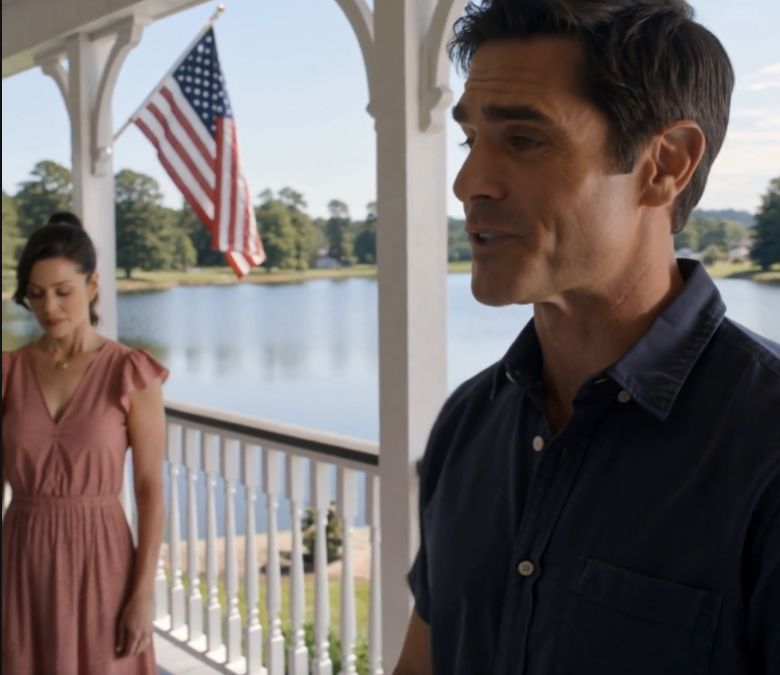
The moment Catherine’s mother pointed her finger at my face in front of 37 people, I made a decision that would change everything. I just didn’t act on it yet.
That’s the part nobody talks about. The quiet, dangerous moment before the explosion. The stillness. The way a man can smile and nod and pour himself another cup of lemonade while building an entire exit strategy in his head.
My name is Joseph Taylor. I’ve been married to Catherine for 11 years. I’m the guy who fixed her parents’ leaking basement, drove her sister Zoey three hours to the airport at 2:00 a.m., and attended every single family reunion. Fourteen of them, without complaint. Fourteen. I counted.
I should have started billing them by year ten.
I want you to understand who I was before the reunion so you understand who I became after it.
Welcome back to Dad’s Sweet Revenge. Grab your snacks, get comfortable, and remember, every villain in these stories thought they were the smartest person in the room. They were not. Subscribe so you never miss a story.
The Taylor-Witmore family reunion was held every summer at Catherine’s parents’ lakehouse in rural Tennessee, a forty-minute drive from civilization. Bad cell service. One bathroom for the main house, one for the guest cabin. Beautiful property, genuinely, but family events have a way of making beautiful things ugly.
Catherine had been talking about this reunion for six weeks straight.
“It’ll be fun, Joseph. Everyone’s been asking about you.”
I’d smiled. “Sure they have.”
“They have. Amber asked if you were coming.”
Amber was Catherine’s older sister, the one who once told me at Thanksgiving that I was doing well for someone without a graduate degree while refilling her wineglass. Charming woman.
“Can’t wait to see her,” I said.
Catherine gave me a look. The look. The one that said, Please behave.
I gave her the smile that said, Always do.
We drove up on a Friday evening. The drive was actually the best part of that whole weekend. Windows down, Catherine’s hand on my knee, the radio playing something we both liked. I remember thinking, This is good. We are good.
I should have turned the car around right there and called it a vacation.
We arrived to the sound of Zoey screaming our names from the dock.
“Joseph! Katie! Oh my God, you’re here!”
Zoey was twenty-four, the baby of the family, and the only one I genuinely liked. She ran toward us with the energy of someone who’d already had three seltzers before sunset.
“Zoey!” I caught her mid-launch and spun her once. “You look like you started the party without us.”
“I started the party for you,” she said, grinning.
Behind her, the rest of the family materialized. Catherine’s parents, Evelyn and Richard; her sister Amber with her husband, Hayes; her brother Bennett and his girlfriend, Sydney; and then the cousins, the aunts, the uncles, and the assorted extended family members I could never keep straight.
Dylan was there, too.
Dylan, Catherine’s cousin, twenty-nine years old, perpetually unemployed, and somehow always the most comfortable person in any room. He had the energy of a man who had never once been inconvenienced by life, which I found deeply suspicious.
I shook hands, hugged necks, and made the small talk. I was good at this. Eleven years of practice.
“Joseph.”
Evelyn, Catherine’s mother, greeted me with her signature smile, the one that reached her eyes just barely enough to be considered a smile.
“You made it.”
“Wouldn’t miss it,” I said.
She patted my arm once, lightly, the way you pat a piece of furniture you’re deciding whether or not to keep.
I didn’t know it yet, but that would be the most warmth she showed me all weekend.
The thing about family disrespect is that it rarely arrives as one big event. It comes in pieces. Small, dismissible pieces. Individually, nothing. Collectively, everything.
Saturday morning, breakfast on the back porch.
Everyone was seated. Evelyn had made her famous biscuits and a casserole. She walked around the table filling coffee cups. She went to Richard, then Amber, then Hayes, then Bennett, then Sydney, then Dylan, then Catherine.
She skipped me and went inside.
I sat there with an empty cup. Hayes, across the table, caught my eye and looked away fast. Sydney pretended to be very interested in her biscuit. Catherine hadn’t noticed. She was laughing at something Amber said.
I got up, went inside, and poured my own coffee.
No one mentioned it.
Saturday afternoon, the men were on the dock. Richard was talking about the property, some drainage issue he needed help with. He looked at Hayes. He looked at Bennett. He looked at Dylan, who once left a ladder on a roof for six months, and asked if any of them had time to take a look.
“I can take a look, Richard,” I said. “I did your basement a few years back. I know the—”
“I think Hayes has more experience with this kind of thing,” Richard said evenly, pleasantly, as if I hadn’t spoken.
Hayes looked at me with an expression that was half apology, half relief that it wasn’t his turn to be invisible.
I nodded. “Sure.”
I didn’t know it yet, but this was the last time I would offer that family anything.
Saturday evening, dinner. The whole group, a long table set up outside, fairy lights, the lake in the background. Genuinely beautiful.
Catherine was glowing. These were her people, her world, and she was happy. I loved watching her happy. That part I want you to hold on to, because it matters later.
Zoey sat next to me. She was my buffer, and she knew it.
“You okay?” she whispered, refilling my glass without being asked.
“Outstanding,” I said.
She gave me a look that said, I see.
I gave her one back that said, I know you do.
The dinner conversation moved the way it always did at these things. Sports, property values, other people’s drama. I was content to eat well and stay out of it.
And then Dylan opened his mouth.
“So, Joseph,” he said, loud enough that the table shifted its attention. “Catherine tells us you’ve been doing really well with the business.”
I looked up. Something in his tone.
“Going all right,” I said.
“What is it again? Landscaping?”
Dead silence around the table.
Because Dylan knew what I did. Everyone at that table knew what I did. I had spent four years building a midsized commercial property management company. We had twelve employees. We managed forty-three properties. Catherine had talked about it at every family event for years.
“Property management,” I said calmly, pleasantly.
Dylan nodded slowly, the way people do when they want you to know they’re not impressed.
“Right. Right. Like mowing lawns and stuff.”
Amber laughed lightly, conversationally. The way you laugh when something lands.
Catherine said nothing.
I looked at her. She was cutting her chicken. She had heard. She was choosing to cut her chicken.
“Sure,” I said. “Like that.”
I didn’t know it yet, but Catherine’s silence at that table was going to cost her everything she thought she had.
Sunday. The last day. The day everything broke open.
We were cleaning up after lunch, a casual, meandering kind of afternoon where people drifted between the dock and the lawn chairs and the kitchen. I was helping Bennett carry folding tables back to the storage shed when Amber found me.
“Joseph, can I talk to you for a second?”
Bennett gave me a see you on the other side look and disappeared.
Amber stood with her arms crossed. She was wearing a yellow sundress and an expression she’d been building all weekend. I could see it now. She’d been saving this.
“I want to be honest with you,” she said. “Because I think you deserve honesty.”
The words you deserve honesty, from a woman who’d been passive-aggressively undermining me for a decade, should have been my signal to simply walk away.
I did not walk away.
“Okay,” I said.
“Catherine is not happy.”
I waited.
“She tries to hide it, but we can all see it. She’s stressed. She’s unhappy. And…” Amber tilted her head. “We think it has a lot to do with you.”
There it was. The whole weekend assembled into one sentence.
Finally honest.
“Amber,” I said carefully, “this is between me and Catherine.”
“It stopped being just between you and Catherine when it started affecting this family.”
“What exactly is affecting this family?”
She listed things. My long hours, my obsession with the business, the fact that I never really fit in at family events, the way I was cold with her parents.
I stood there and listened to all of it. I watched her talk and thought, So this is what it was always building toward.
“I appreciate the honesty,” I said when she finished. “I really do.”
I walked away and found Catherine by the water, standing alone, looking at the lake.
“Hey,” I said.
I sat next to her.
“Amber just cornered me.”
Catherine kept her eyes on the water.
“I know.”
“You know?”
“She mentioned she wanted to talk to you.”
I looked at the side of her face.
“And you didn’t think to warn me? Or, I don’t know, tell her not to?”
“She’s not wrong, Joseph.”
Catherine said it quietly.
“You do work too much. You don’t try with my family. My mom feels like you don’t respect her.”
“Catherine, your mother skipped my coffee cup at breakfast.”
“She forgot.”
“She didn’t forget.”
Catherine turned to look at me, and in her eyes was something I hadn’t seen before.
Not anger. Not sadness.
Distance.
Like she’d already moved herself two steps back and was watching me from there.
“Maybe,” she said slowly, “this weekend was supposed to help. Maybe if you just tried a little harder.”
“I’ve been trying for eleven years.”
She didn’t have an answer for that. She turned back to the lake.
I didn’t know it yet, but this was the last conversation Catherine and I would have where she was still my wife in any real way.
An hour later, the whole family was gathered on the back porch.
I don’t know how it assembled. These things never have a clear origin point. One minute, I was in the guest room pulling myself together. The next, I walked out to find thirty-some people arranged in the loose, dangerous formation of a group that had been talking about you.
Evelyn stepped forward.
She was holding a glass of iced tea like a prop, something to do with her hands.
“Joseph,” she said, “I think we need to clear the air.”
I looked at Catherine. She was standing with Amber. Their shoulders were touching.
“All right,” I said.
What followed was fifteen minutes that I will never fully describe, because there are no words that carry the precise weight of being talked about, judged, and sentenced in front of your wife’s entire family while your wife stands on the wrong side of the room.
Evelyn talked about respect, about family, about how they’d tried to include me and found me resistant. Richard nodded at appropriate intervals. Amber added color commentary.
Dylan, bless his heart, ate a cookie through the entire thing.
And then Evelyn said the words.
“Joseph, I think you have two choices here. You can apologize to this family for how you’ve treated us, sincerely, and we can move forward. Or…” She gestured vaguely toward the driveway. “Maybe it’s best if you go.”
The porch went quiet.
I looked at Catherine one more time. Slow, deliberate.
She looked at the floor.
“You have two options,” Evelyn said again, firmly, like a judge. “Apologize or leave.”
I took a breath, and I chose the third option.
I smiled.
Actually smiled, which I could tell unnerved several people.
“Thank you, Evelyn,” I said, “for the clarity.”
I walked inside, went to the guest room, and pulled out my phone. I had an airline app. Three taps.
Nashville to Chicago.
There was a 6:45 p.m. departure, two hours away.
One way.
I booked it before I’d finished unzipping my bag.
One way. Not because I was being dramatic. Because I was being honest.
I packed efficiently. I’d gotten good at packing over the years. Business trips, client meetings. I folded everything with the calm of a man who had already made his peace.
Zoey appeared in the doorway.
“Joseph.”
Her voice was small.
“What are you doing?”
“Packing.”
“Joseph, don’t. Come on. Just talk to them. Just—”
“Zoey.”
I looked at her.
“I’m not angry at you. I need you to know that.”
She pressed her lips together. Her eyes went glassy.
“You’re one of the good ones,” I said. “You always were.”
She stepped forward and hugged me tight. The kind of hug that’s actually an apology on behalf of other people.
I let her. I hugged her back.
“Tell Catherine…” I started.
“Tell her yourself.”
“She’s not going to come.”
Zoey pulled back and looked at me with an expression that broke my heart a little, because it confirmed what I already knew.
“I’m sorry,” she whispered.
“Don’t be.”
I picked up my bag.
“You didn’t do anything.”
I walked out through the living room, through the kitchen, and out the back door.
The whole family was still on the porch.
They went quiet when I appeared with my bag.
Evelyn blinked.
“You’re leaving?”
I nodded pleasantly.
“You gave me two options. I found a third.”
“Joseph.”
That was Bennett, actually, which surprised me.
He stood up.
“Come on, man. Don’t.”
“I appreciate it, Bennett. Genuinely.”
I looked at Catherine last.
She was standing very still, her face white, like she’d expected me to fold and was now recalculating everything.
“Catherine.”
I said her name once. Like a period. Like a door closing.
Then I walked to my car, put my bag in the trunk, and drove away.
I didn’t look in the rearview mirror. Not because I was being cinematic about it, but because I didn’t need to.
I already knew no one was running after me.
The drive to Nashville was forty-three minutes. I remember it as the quietest stretch of time I’d experienced in years. No podcast, no radio. Just the highway and the sound of my own thoughts finally having room to breathe.
My phone buzzed at minute twelve.
Catherine.
I let it ring.
It buzzed again at minute nineteen.
Amber.
I almost laughed.
Then Evelyn, which I genuinely didn’t expect.
Then Catherine again.
Then a text from Catherine.
“Joseph, where are you going? Call me.”
Then:
“This is not okay.”
Then, after a longer pause:
“Please.”
I read that last one at a red light just outside Nashville.
Please.
One word, and I could hear exactly how she’d said it. Not scared. Not sorry. Just inconvenienced.
The please of someone who expected the problem to solve itself.
I put the phone face down on the passenger seat and drove to the airport.
I left my car in long-term parking. The gesture felt right. I wasn’t rushing back.
I sat at the gate with a bourbon and a silence so complete it felt like a physical thing, like I could press my hands against it.
I called no one. I texted no one.
I boarded when they called my row.
I landed in Chicago at 8:17 p.m. and took a cab to my office. I kept a small apartment-style suite connected to it for late nights. I let myself in, poured water, and sat in the dark for a while.
Then I picked up my phone and did something Catherine would never have expected.
I called my attorney.
She was brilliant, methodical, and had seen every variety of marital collapse in her twenty-year career.
She answered on the second ring.
“Joseph, it’s Sunday evening.”
“I know. I’m sorry, but I need to talk.”
A pause.
“How bad?”
“I need to know where I stand,” I said, “if I wanted to move.”
Another pause.
Then the sound of a chair.
“Tell me everything.”
What Catherine didn’t know, what none of them knew, was that I had been quietly building something for eighteen months.
Not because I planned to leave, but because I had started to feel the edges of something. The way you feel a draft before you find the broken window.
And I had done what I always did.
Prepared.
The business was in my name. Solely.
I’d restructured it fourteen months ago after a particularly tense conversation with Catherine about finances, a conversation I’d filed away and not forgotten.
Our joint accounts existed, but the primary assets, the real equity, lived in a corporate structure that a good attorney could navigate cleanly.
I had also quietly been documenting things. Not obsessively. Not vindictively. But I’d kept records of certain financial decisions made without my input, a pattern of exclusion that I’d noted mostly out of professional habit.
The kind of documentation instinct that runs in people who build things and want to protect them.
My attorney called me back Monday morning.
“You’re in a strong position,” she said. “If you move now, decisively, you control the narrative.”
“What does that look like?”
She told me.
I listened.
I took notes.
By Tuesday, papers had been filed.
Catherine found out Thursday. Not from me, but from the courier who showed up at her mother’s lakehouse, where she had apparently stayed after the reunion, waiting, I suppose, for me to come back and apologize.
My phone rang eleven times in four minutes.
I let it go to voicemail. All eleven.
Then I sent one text to Catherine. The only communication I initiated in that entire period.
“You stood on the wrong side of the room. I won’t be filing any counterarguments.”
She called back instantly.
I answered this time.
“Joseph.”
Her voice was shaking.
“What did you do?”
“What needed doing.”
“You filed for— This is insane. Over a family argument?”
“Catherine.”
I kept my voice level.
“This wasn’t a family argument. Your family has treated me with contempt for eleven years. This weekend, they told me to apologize or leave. And you stood there and watched. You didn’t say one word.”
“I was going to—”
“You didn’t.”
“Joseph, please. We can fix this. Come back and we’ll—”
“I’m not coming back.”
I said it with the same tone I’d used to close a hundred business deals.
Final. Clear. No room for renegotiation.
“You can’t just—”
“I already did.”
I heard her breath catch.
Then the sound of voices in the background. Evelyn, I was almost certain. And the shift in Catherine’s voice when family is listening.
“This is not over,” she said.
“Yes,” I said. “It is.”
I ended the call.
You might expect the next part of this story to be about guilt. About lying awake wondering if I’d made the right call. About the long, difficult nights of a man second-guessing his own choices.
I slept like a stone.
I was up at 6:00. At my desk by 7:00. By 9:00, I had handled two client calls and reviewed a contract.
The world, it turned out, kept moving when you stopped carrying people who refused to carry themselves.
The texts kept coming. From Catherine. From Amber, which I found audacious. Even one from Bennett, which was simply:
“Man, I didn’t think it’d go this far.”
I wrote back:
“I did.”
He never responded.
Dylan texted something I won’t repeat because it doesn’t deserve the ink.
Zoey called once.
I answered.
“Are you okay?” she asked.
“I’m good, Zoey. Genuinely.”
“Catherine’s a mess.”
“I imagine.”
“She keeps saying you blindsided her.”
“She had eleven years of warning signs,” I said. “I’d call that the opposite of a blindside.”
Zoey was quiet for a moment.
“Joseph, for what it’s worth, you didn’t deserve what happened this weekend.”
“No,” I agreed. “I didn’t.”
“I’m sorry I didn’t say something. I should have.”
“You’re not responsible for their behavior.”
“I still should have said something.”
I thought about that.
“Yeah,” I said finally. “You should have.”
It was the most honest thing I said to any of them.
The divorce proceedings moved faster than Catherine expected.
She’d assumed, I think, that I would slow-walk it. That distance would soften me. That time would manufacture nostalgia. That I’d eventually pick up the phone and suggest counseling, and we’d spend six months negotiating our way back to the same arrangements with better language around them.
That was not who I was anymore.
My attorney was surgical.
The business assets were protected. The property portfolio was structured correctly. We had a joint home, a significant one, and that became the primary negotiation.
Catherine had a good attorney, too. I’ll give her that.
It wasn’t a clean split. Nothing at that level ever is.
But when the papers were finalized seven months later, I walked out of that mediator’s office with my company intact, my future clear, and the strange, uncomplicated lightness of a man who has stopped pretending.
Fourteen months after the reunion, my company had added six new properties to its portfolio. I had promoted two employees who deserved it and hired a director of operations so I could, for the first time in four years, take a weekend off without the world ending.
I’d bought a condo downtown. Clean lines, good light, zero emotional residue.
I had, by every measurable metric, thrived.
I know this because Amber told Catherine, who apparently couldn’t stop tracking my professional activity on LinkedIn like it was a wound she kept pressing on.
Catherine’s attorney had made a last-ditch attempt to claim some portion of the business’s recent growth. My attorney made a counterargument so thoroughly documented that it ended the conversation in one session.
I heard through Zoey, who remained the one functional member of that family, that Evelyn had told people I was struggling after the divorce. That I had gone off the rails. That the business was probably going under.
I found this deeply entertaining.
Because here’s the thing about people who mistake your patience for weakness.
They build an entire story around it.
They need you to be struggling. They need the man who walked away to be crawling somewhere quietly, just out of sight.
It confirms the version of events where they were right and you were wrong. Where the reunion was just a dramatic blip and not the verdict that it actually was.
I wasn’t crawling.
I was building.
But the best part, the part that closed the chapter for me completely, came eighteen months after the reunion, at an industry event in Nashville, of all places.
I was there for a property development conference. Three days, good connections, useful conversations.
On the second evening, at a rooftop reception with about two hundred people, I walked into a cluster of professionals near the bar and found Hayes, Amber’s husband, standing there with a drink in his hand and an expression that suggested he very much wished he was somewhere else.
We looked at each other for a moment that lasted approximately forever.
“Joseph,” he said.
“Hayes.”
There was a beat.
Then, to his credit, he said, “You look well.”
“I am well.”
He nodded. Looked at his glass.
“Listen, I want to say I didn’t agree with how that weekend went. I want you to know that.”
I studied him.
“You were there, Hayes.”
“I know.”
“You didn’t say a word.”
He had the decency to look genuinely ashamed.
“I know that, too.”
I could have accepted the apology. I could have been gracious, shaken his hand, let him feel better about it.
That’s what the old Joseph would have done.
The one who fixed the basement and drove Zoey to the airport and showed up to fourteen family reunions without complaint.
“I appreciate you saying it,” I told him. “But I’m going to be honest with you, Hayes. An apology after the fact, when there’s no cost to it, it doesn’t really mean anything.”
I picked up my drink.
“Have a good evening.”
I walked away.
This is what nobody tells you about choosing yourself.
It’s not loud. It’s not a scene. It doesn’t look like the dramatic movie moment where the strings swell and everyone realizes they were wrong.
It’s quieter than that.
It’s a man packing a bag while his wife stands by the lake and decides the floor is more interesting than his face.
It’s a one-way ticket booked in three taps.
It’s a phone left face down on a passenger seat.
The revenge, and yes, I’m calling it that because I’m done pretending it was anything other than what it was, wasn’t a single moment.
It was a sustained choice, repeated every morning when I woke up and went to work on something that was entirely mine.
It was the Monday after the reunion when I called my attorney instead of calling Catherine.
It was the way I answered that last mediation question calmly, with documentation, while Catherine’s attorney scrambled.
It was every missed call I let go to voicemail. Every text I didn’t answer. Every night I slept without apology.
Evelyn wanted me to beg.
Catherine wanted me to come back.
Amber wanted me to struggle.
Dylan… I’m still not sure what Dylan wanted, but whatever it was, I refused to provide it.
They gave me two options.
I took the third.
And here’s the part that I think about sometimes, quietly, on the good mornings when the coffee is right and the city is just waking up outside my window.
They thought the third option was leaving.
It wasn’t.
The third option was not looking back.
Fourteen reunions I attended. Fourteen years of coffees I poured myself. Fourteen years of being the man in the room that the room decided not to see.
They spent years making me invisible.
The day I walked out, I made them disappear.
I just didn’t need to be in the room to do it.
If you liked this story, join our community by hitting that like button and subscribing for more real, raw, and family-centered stories.








