After 35 years, they laid me off—in the elevator, the chairman asked: “Is the $50 million financing deal for the day after tomorrow ready?” I smirked: “I was fired yesterday.”
Welcome to the Career Chronicles. Let’s get into today’s story.
I had worked for Grand View Precision Manufacturing for 30 years. Last Friday, they fired me.
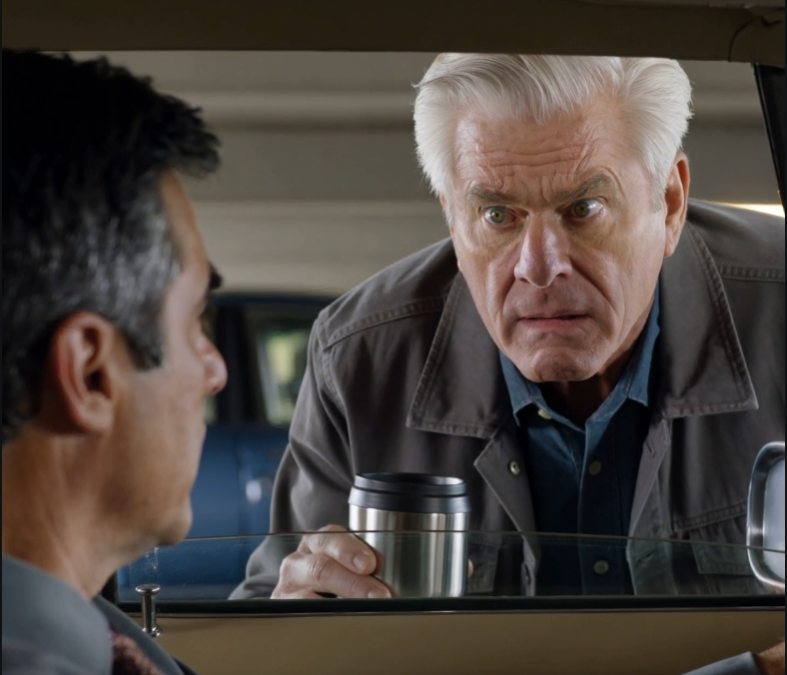
On Monday morning, I was driving out of the company parking garage when Thomas Grant, Grand View’s chairman, stopped beside my car and asked, “George, how is the $60 million financing package for Wednesday’s signing coming along?”
I looked at him through the half-open window. Then I laughed. There was no happiness in it.
“Mr. Grant,” I said, “I was fired Friday. You should ask the new people.”
The smile on Thomas’s face disappeared.
Chapter 1: The Man Who Came Back
“George, wait.”
I had just backed my old Buick halfway out of the parking space when I saw Thomas beside the concrete pillar. He wore a faded gray jacket and carried the stainless steel travel mug he had owned for years. His hair had turned noticeably whiter since the last time I had seen him in person.
I pressed the brake and lowered the window.
“Mr. Grant.”
Thomas bent slightly so he could see me through the opening. He had the relaxed expression of an old friend, the kind of casual familiarity built over decades.
“How are the materials for Wednesday’s $60 million financing deal?” he asked. “Are we ready for the signing?”
My hand tightened around the steering wheel until my knuckles turned white. For several seconds, I said nothing. Then I smiled.
“The materials are probably fine,” I said. “You should ask the people who replaced me.”
Thomas’s expression changed.
“What does that mean?”
“It means I was fired last Friday. Human Resources completed the separation that afternoon.”
He straightened slowly and took one step back, as if he had heard the words but could not make them fit together.
“You were what?”
“Fired.”
The cap on his travel mug was not screwed on properly. A thin ribbon of steam escaped into the cold air. I watched him struggle for words, and an old ache moved through me.
Thirty years earlier, Thomas Grant had been delivering parts around town on a three-wheeled cargo bike. He had hired me when Grand View was still called Grant Metal Works, a 200-square-meter sheet metal shop rented on the east side of town. In winter, the building was so cold our fingers went numb. In summer, the metal roof became hot enough to fry an egg.
Thomas handled customers. I handled the books.
We shared one office, one desk, two chairs, one battered adding machine, and a paper ledger that had to be balanced by hand.
Eventually, the shop became a regional manufacturer, then a national supplier. We moved three times before Thomas bought land in the industrial park and built the Grand View headquarters. The building had 28 floors. The company employed more than a thousand people. Annual revenue had grown into the hundreds of millions, and I had become the oldest employee in the finance department.
People called me Grand View’s Living Ledger.
It was not an exaggeration. I knew where every major payment came from, where every transfer went, and which number on a spreadsheet could be trusted only after it had been checked against three other records.
Thomas had said it publicly more than once.
“George Walker is the anchor of Grand View’s finances,” he liked to tell investors. “As long as George is watching the books, the company won’t drift.”
Now that anchor had been pulled out.
“Who approved it?” Thomas asked.
His voice had hardened.
“Cole Mercer.”
Cole was Grand View’s recently hired chief operating officer, a forty-something executive brought in to modernize the company. He had been at Grand View for 18 months and spoke about transformation as if the word itself could produce cash.
“He said the group needed younger leadership,” I continued. “He said people like me should make room for the next generation.”
Thomas’s jaw tightened.
“Did I approve your termination?”
“You’ve been recovering from surgery. Cole said he had full authority and didn’t need to bother you.”
Thomas did not answer. The veins in his hand stood out around the travel mug.
“Don’t leave,” he finally said. “Park the car and come upstairs with me.”
“I’m no longer an employee. I’m not sure I’m allowed upstairs.”
“If I say you’re allowed, you’re allowed.”
His voice remained quiet, but there was no room to argue.
“You worked beside me for 30 years. If you’re leaving, I’ll be the one to see you out. Nobody else has earned that right.”
My nose burned. I turned toward the rearview mirror and pretended to check the traffic behind me while wiping my eyes.
“All right,” I said. “I’ll park.”
I backed the Buick into the space, turned off the engine, and stepped out. Thomas waited near the elevators. When I reached him, he looked me up and down.
I was not dressed for work. I wore an old navy jacket, a gray checked shirt, and soft canvas shoes. My hair had not been cut. I looked older than my 58 years.
“You look like you’re here to file for retirement,” Thomas said.
“That’s because I am. Five years early.”
He pressed the elevator button.
Neither of us spoke as the doors opened. The elevator climbed through the building one floor at a time, and I remembered the first elevator Thomas and I had taken together.
It was a rattling freight elevator in the old shop. When it opened on the fourth floor, the smell of rust and machine oil hit us in the face.
Thomas had laughed and said, “George, work hard with me. One day, we’ll ride in a real elevator.”
He had been right.
The elevator we stood in now was wide, bright, and air-conditioned.
But the men inside it were no longer young.
Chapter 2: The Empty Desk
When the elevator opened on the 20th floor, the receptionist stood so quickly that her chair rolled backward.
“Mr. Walker?”
“I’m here with Thomas.”
She looked at the chairman, then at me, and immediately stepped aside.
Thomas did not stop. He walked straight toward his office, with me following behind him. As we passed finance, I looked through the glass wall. Young employees stared at computer screens. Keyboards clicked.
A new analyst sat at the desk that had belonged to me for nearly 20 years.
His name was Ethan Shaw. He had graduated from a respected university, spent two years at a national accounting firm, and joined Grand View the previous year.
Cole liked him immediately. Within months, Ethan had received a supervisor title and a salary nearly equal to mine.
When someone had complained that Ethan had been promoted too quickly, I had shrugged.
“If he’s capable, he should have the chance.”
That was what I believed.
But I also knew that Ethan’s promotion was the first stone in a path that led directly to my empty desk.
Cole called the program “Building the Next Generation Talent Ladder.” In practice, it meant pushing veteran employees toward the edges while placing younger people in visible roles.
Finance was hit first.
Mike Dalton, a man who had worked beside me for 20 years, had become Cole’s closest ally. During a department meeting, Mike announced that my “paper ledger mindset” no longer matched the era of digital finance.
“We need real-time intelligence,” he said. “We need automation, predictive models, and flat accountability.”
I said nothing.
I had always been proud, but I had never enjoyed public arguments. I believed that if I kept the books accurate and the work finished, the right people would notice.
I had forgotten that some people looked only upward.
Thomas opened his office door and placed his travel mug on a side table.
“Sit.”
I sat on the edge of the sofa. Thomas took the chair across from me. For a moment, he looked less like the chairman of a large corporation and more like the young man who had once shared a desk with me.
“Tell me exactly what happened.”
“It was a workforce reduction,” I said. “The board set a target to cut 15% of labor costs. Finance lost seven people. I was one of them.”
“Why you?”
I looked at the floor.
“Cole said I cost too much. My salary is about $140,000 a year. He said three recent graduates could be hired for less than the cost of one older supervisor.”
Thomas’s face darkened.
“What else?”
“He said I was too old to keep up. That my thinking was fixed. That Grand View had to embrace a new era and couldn’t let old-fashioned people slow it down.”
“Who delivered the message?”
“Mike.”
Thomas gave a short, bitter laugh.
“Mike Dalton. I promoted him from junior cashier to finance director.”
“Don’t blame him entirely,” I said. “He was following Cole’s plan.”
Thomas’s voice rose.
“He put your name at the top of the list. He was not dragged into that office.”
I did not answer.
I knew Thomas was right.
The termination conversation had taken place three days earlier. Mike had closed the office door and placed a separation agreement in front of me. It offered 31 months of salary under Grand View’s internal severance program, the standard formula for 30 years of service plus one additional month.
The money was not insignificant. If I accepted it, Helen and I could live quietly while I waited for full retirement eligibility.
But the form still felt wrong.
“Don’t blame me,” Mike had said. “Cole made the decision. I have no choice.”
I had looked at his face and remembered the first day he joined Grand View. He had called me Mr. Walker. Then, within a year, he called me mentor.
After he became a manager, I became George.
Later, I became Walker.
Finally, I became a name on a list.
“What did I do wrong?” I had asked.
Mike’s smile had been apologetic and uncomfortable.
“You did everything well,” he said. “That’s not the same as being useful forever. The era changed.”
I signed the agreement.
When I returned to my desk, everything I owned fit into one cardboard box: three notebooks, a ten-year-old travel mug, a photograph of Helen and our daughter, and a wooden abacus.
Thomas had given me the abacus when I joined the original shop. The dark wooden frame was worn smooth, and the beads had become shiny from three decades of use.
I had considered taking it home. Then I left it on the desk.
“Where’s the abacus?” Thomas asked.
“I left it.”
“I’ll have it sent to you.”
“It’s fine.”
“You worked here 30 years,” he said. “You’re not leaving without the first tool I ever gave you.”
Before I could argue, Thomas called an internal extension.
“Send Ethan Shaw to my office.”
A few minutes later, the door opened. Ethan came in with a laptop under one arm. He looked surprised to see me sitting there, but the surprise quickly became professional calm.
“You wanted to see me?”
Thomas pointed to the chair.
“How are the materials for Wednesday’s $60 million financing project?”
“Nearly finished,” Ethan said. “The business plan, financial model, and risk report are complete. I’m checking the last assumptions.”
Thomas glanced at me.
“You heard him, George.”
“I heard him.”
“Do you think he can handle it?”
I studied Ethan. He met my eyes, and there was a trace of challenge in his expression.
“Ethan is young and capable,” I said. “But he should recheck several assumptions.”
“Which assumptions?” Ethan asked.
“The cost model uses last year’s raw material prices. Copper has risen 20%. If you leave last year’s numbers in the projection, the margin will look healthier than it is.”
Ethan’s mouth tightened.
“The model was reviewed.”
“Reviewed isn’t the same as correct.”
Thomas told him to return to the project and recheck the numbers.
After Ethan left, Thomas sat back down.
“George, tell me the truth. Is the project in trouble?”
I took a drink of water.
“I’m no longer an employee. Some things are no longer mine to say.”
“Don’t give me that.”
“If the current plan moves forward, the $60 million financing could disappear.”
Thomas gripped the travel mug.
“Explain.”
Chapter 3: The Numbers Beneath the Numbers
The project appeared to be a partnership between Grand View and a technology company called Windward Systems.
Windward promised to build a smart manufacturing line that would automate part of Grand View’s operations. On paper, it looked like the kind of modernization Cole had been hired to lead.
In reality, Windward had neither the production capacity nor the technical staff to deliver the system.
“How did they qualify for a project this size?” Thomas asked.
“Someone guaranteed them,” I said.
“Who?”
I did not answer immediately. Instead, I asked whether Thomas remembered an $800,000 consulting payment from the previous year.
He frowned.
“The payment to Meridian Advisory?”
“Yes. I flagged it during the internal audit. Meridian’s registered agent is the sister-in-law of Windward’s general manager.”
Thomas put the mug down hard enough to make the lid jump.
“You’re saying the consulting firm is connected to Windward?”
“The relationship is documented. Whether the payment was legitimate is another question.”
I had first noticed the problem while reviewing the prior year’s cost data. Cole had asked me to prepare a profitability forecast for Windward.
Several payments did not match the asset records.
There had been a $2 million equipment purchase in October. The money went to a company called Harborline Machinery, but no corresponding equipment appeared in Grand View’s fixed asset ledger.
I asked Mike about it.
“The equipment is in transit,” he said. “Customs paperwork takes time.”
I accepted the answer because Mike had been my student and because I had not yet imagined that he might be part of the problem.
Later, I checked Harborline’s address.
It was in the same office building as Windward Systems.
I mentioned the discrepancy again. Mike called it a coincidence. Cole called it old-fashioned suspicion.
I wrote the details in my private notebook.
“Cole has ability,” I told Thomas. “He has education, energy, and a talent for presenting a plan. Grand View has changed since he arrived.”
“For better or worse?”
“Both. The workflows are cleaner. The dashboards are more modern. But the company is moving too fast. We used to prioritize stability and verification. Cole prioritizes speed and efficiency.”
“Speed is not a crime.”
“No. But speed without brakes becomes a crash.”
Thomas stared out the window.
Grand View’s headquarters stood above the industrial park. When he purchased the land, it had been farmland. He had walked across the empty field and pointed toward the horizon.
“George,” he had said, “one day our plant will stand right there.”
The wind had thrown his hair into his face, but his eyes had been bright.
Now he looked at the same horizon and saw a corporation that could be hollowed out from inside.
“How serious is Windward?” he asked.
“It was formed three years ago. Its stated capital is less than $1 million. Its technical group has fewer than 20 people, most of them recent graduates.”
Thomas turned toward me.
“A company that small is receiving a $60 million commitment?”
“That’s why I’m concerned.”
I opened my notebook and showed him the figures.
“Somebody wants Grand View’s money to move through Windward. The question is where it will stop.”
Thomas rubbed his forehead.
“You think Cole and Mike are diverting funds?”
“I think the records justify an investigation.”
“Why didn’t you report this before you were fired?”
I looked at the page.
“I did. Mike told me the equipment was delayed. When I pushed, he told me I was resisting the modernization plan.”
Thomas closed his eyes.
His health had been poor for a year. He had been hospitalized twice, and his physicians had ordered him to rest.
That was why he had hired Cole.
Thomas wanted a younger executive to carry the daily load while he moved into an advisory role. He had not expected the young executive to carry the company in a direction he could no longer see clearly.
“Come back,” he said.
I shook my head.
“If I return, Cole will believe you are publicly reversing his authority. Mike will see me as a threat. They will know we’re looking.”
“This is my company.”
“But you cannot watch every account or every signature. Your health won’t allow it.”
Thomas sat in silence.
“What should we do?”
“Don’t act yet,” I said. “Let the project continue. Let them believe you know nothing. If they are trying to divert money, they will leave a trail. We need evidence before we confront them.”
“You want me to pretend I’m blind.”
“I want you to let them walk far enough into the open that they can’t claim it was an accident.”
Thomas studied me.
“You were fired, but you’re still protecting Grand View. Why?”
“Habit,” I said. “After 30 years, a company’s trouble feels like a family emergency.”
He opened a desk drawer and took out an envelope.
“Take this.”
“What is it?”
“A personal payment. Consider it a thank-you.”
I pushed it back.
“If I accept it, Cole can say I’m acting for money.”
“Cole doesn’t need an excuse to say whatever he wants.”
“Then let the evidence speak.”
Thomas nodded slowly.
Before I left, he called after me.
“George.”
I turned.
“Be careful. Cole is not a harmless man.”
“I know.”
Chapter 4: The House After Retirement
I went home that evening with the unused envelope still in my pocket.
My wife, Helen Walker, was in the kitchen sorting vegetables. Our daughter, Rachel, had left her coat on the dining chair before going to work.
Helen glanced at my face.
“Thomas found you?”
“He did.”
“What did he say?”
I took a chicken from the refrigerator and put it on the cutting board.
“He wants me to return.”
Helen froze.
“And you?”
“I said no.”
She stepped into the kitchen doorway.
“Why? You have worked there for 30 years. Thomas asked personally. Why wouldn’t you go back?”
I began cutting the chicken. The knife made a steady sound against the board.
“The people who pushed me out don’t want me there. If I return, I become a problem they have to solve.”
“Who?”
“Mike and Cole.”
Helen shook her head.
“Mike was your student. He used to call you his mentor.”
“People change when their title changes.”
“Then you’re really going to accept being pushed out?”
I rinsed the chicken under cold water.
“The company may be heading toward a serious problem. If I return, I may be caught inside it.”
Helen’s face went pale.
“What kind of problem?”
“A $60 million financing project may contain related-party payments and a false equipment purchase.”
She sat down.
“That sounds serious.”
“It may be. I need to understand it before I do anything.”
“You’re nearly retired. Can’t you leave it alone?”
I thought about the more than a thousand people who worked at Grand View. Most had never heard of Cole or Windward. They came to work, earned their paychecks, and trusted that the company would still be there next year.
“If I walk away, who will look?”
Helen’s eyes filled.
“You always say you have boundaries. Then someone makes a mess, and you decide it belongs to you.”
I dried my hands and sat beside her.
“I won’t put myself in danger. I promise.”
“Promises don’t balance a bank account.”
“No. But records do.”
That evening, I cooked braised chicken, sautéed vegetables, and egg drop soup. The meal was simple, but the kitchen felt warmer than it had in days.
Rachel came home carrying a bag of fruit.
“Dad, Mom.”
“Wash your hands,” I said.
She sat down and tasted the chicken.
“Your cooking has improved since you became unemployed.”
“Early retirement has its advantages.”
She looked at me, waiting for the joke to end.
“Dad, I heard something at work today. Grand View is starting a huge project with a company called Windward Systems. Our design department was asked to create promotional materials for them.”
My hand stopped over the plate.
“Did you take the job?”
“No. The company seemed unreliable. They don’t have a proper website. Their hiring notices contradict one another, and their brand instructions were a mess. How could a company like that support a $60 million project?”
Helen and I exchanged a look.
“Who told you about the project?” I asked.
“My director. Grand View contacted him directly.”
Rachel turned toward me.
“You worked at Grand View, right? Did you know?”
I put down my fork.
“I was fired last week.”
Rachel stared.
“Fired? Why?”
“They’re calling it a modernization decision. I’m old and should make room.”
Rachel’s fork hit the plate.
“You worked there for 30 years. They can’t just throw you away.”
“They can if the paperwork says they can.”
“Then challenge it.”
“I’m handling it.”
She looked furious on my behalf.
I put a piece of chicken into her bowl.
“Eat. You look tired.”
She wanted to keep arguing, but my expression stopped her.
After dinner, Helen helped me wash the dishes.
“Rachel saw the problem,” she said. “If a young designer can tell Windward is unstable, how could Cole and Mike miss it?”
“They didn’t miss it.”
“What do you mean?”
“They may not care whether Windward can deliver. They may care where the $60 million goes.”
Helen’s hands stopped in the dishwater.
“Are you saying they want to steal it?”
“I’m saying I need proof before I use that word.”
She turned off the faucet.
“You should be home, not investigating.”
“I know.”
“Then why do you keep doing this?”
I looked toward the living room, where an old black-and-white factory movie played on television.
“Because I remember when Grand View was a rented metal shed. Thomas and I built it with our hands. If a few people are trying to drain it, I can’t pretend I don’t see the water.”
Helen took my hand. Her fingers were rough from years of work and care.
“Don’t let your sense of duty become someone else’s excuse to hurt you.”
“I won’t.”
Chapter 5: The Split Agreement
The next morning, a former colleague called me.
His name was Eric Turner. He had worked in finance before transferring to procurement.
“George, can you talk?”
“Yes.”
Eric’s voice was low.
“I saw something in procurement. It concerns Windward.”
“What did you see?”
“A purchase agreement for $32 million.”
I sat up straighter.
“The financing project is $60 million.”
“The purchase agreement is $32 million. But there is a supplemental agreement for another $28 million.”
“Thirty-two plus twenty-eight. Exactly sixty. What does the supplement describe?”
“Equipment procurement. An imported production line.”
“Does the line exist?”
Eric hesitated.
“I don’t know. But the address for the supplier is the same building as Windward.”
I closed my eyes.
“Do you have a copy?”
“No. I only saw it when procurement was preparing the file.”
“Then don’t confront anyone. Don’t copy anything illegally. Keep your notes and tell me if you see a legitimate record.”
“I knew you would say that.”
“Why did you call?”
“Because you taught me to check whether a number had a real object behind it.”
We ended the call.
The phrase split agreement stayed in my mind.
I opened the old brown leather briefcase I had used for years and took out my black notebook.
Every entry was written by hand: date, amount, person responsible, reason, supporting document, follow-up.
On the most recent page, I had written:
Windward Systems Project. Possible split agreements. Total commitment: $60 million. Verify.
I underlined the word verify.
Then I put the notebook away.
I had to return to Grand View.
Helen watched me put on my old navy suit.
“Will they let you through the front door?”
“If not, I’ll wait outside.”
She filled my travel mug with hot water and handed it to me.
“Come home before dinner.”
“I will.”
Rachel appeared in the hallway, already dressed for work.
“I’m going with you.”
“No. You have a job.”
“Dad, you have a daughter.”
She picked up her coat.
“I’m coming.”
I wanted to argue, but her eyes were red.
“Fine,” I said. “But don’t speak unless I ask you to.”
“I can do that.”
“You can?”
“I can try.”
We drove to Grand View in my eight-year-old Buick.
The headquarters rose above the industrial park, its gray glass reflecting a sharp morning sun. I sat in the car for a long time.
Thirty years.
I knew every floor, every conference room, every emergency stairwell. Yet the thought of crossing the lobby made my hands cold.
“Dad,” Rachel said, “you’re not going to beg them for your job.”
“I know.”
“You’re going to tell the truth.”
I smiled.
“You sound like your mother.”
“Mom says that, too.”
We walked across the street.
The security guard looked startled.
“Mr. Walker?”
“I need to see Thomas.”
The guard called upstairs. After a brief conversation, he told us Thomas was coming down.
We waited in the marble lobby beneath a crystal chandelier. A landscape painting covered one wall. Thomas had commissioned it when the company first moved into the building.
Rachel whispered, “This place is enormous.”
“A building can be enormous and still be empty inside.”
The elevator opened.
Thomas came out with his assistant and walked quickly toward us.
“George, you should have called.”
“I needed to tell you something in person.”
Thomas looked at Rachel.
“Your daughter?”
“Rachel.”
“Good to meet you.”
He nodded warmly.
“Come upstairs.”
Chapter 6: The Black Notebook
Thomas’s assistant brought three cups of tea and left us alone.
I put the black notebook on the coffee table.
Thomas did not touch it at first.
“What is this?”
“The reason I came back.”
He opened the cover.
My handwriting filled every page. I had recorded the amounts, dates, account numbers, names, and explanations in a way no software had ever managed to make me forget.
Thomas turned to the last page.
“Windward Systems Project. Possible split agreements. Total commitment: $60 million. Verify.”
He looked up.
“Explain.”
I told him about Eric’s call. I explained the $32 million purchase agreement and the $28 million supplemental agreement. I showed him the notes about the $2 million equipment payment and the $800,000 consulting fee to Meridian Advisory.
Thomas’s face became more severe with every item.
“Are you certain?”
“I am. I have known you for 30 years. You know I don’t make accusations without records.”
He went to the window and looked down at the industrial park.
“What do you want to do?”
“Don’t announce anything. Don’t cancel the project yet. Let Cole and Mike believe the deal is proceeding.”
“You want to wait?”
“I want the supplemental agreement. A report showing a suspicious payment is useful. A signed agreement for a nonexistent production line is proof.”
Thomas returned to the sofa.
“You understand what you’re doing?”
“I’m betting.”
“On what?”
“On whether you still trust me. On whether 30 years meant something.”
Thomas looked away. His eyes had reddened.
“I trust you.”
“Then let them continue.”
“What do you need from me?”
“Keep your public schedule normal. Approve the meeting. Let Cole plan his signing ceremony. If they think you suspect nothing, they won’t destroy the records.”
Thomas nodded.
“And Ethan Shaw?” he asked.
“He has the core project materials. He may not understand what Cole and Mike are doing. If I can reach him, he might be the opening we need.”
“He works for Cole.”
“He is young, not necessarily corrupt.”
Thomas agreed.
“Go carefully.”
When we left his office, Rachel remained silent until the elevator doors closed.
“Dad, is all of this real?”
“Yes.”
“You’re going to investigate them?”
“I’m going to verify what we know.”
“How?”
“First, Ethan.”
The elevator reached the lobby.
As we stepped out, someone came through the entrance wearing a dark blue suit and carrying a leather briefcase.
Cole Mercer.
He stopped when he saw me.
“George Walker,” he said. “What are you doing here?”
“Taking care of a personal matter.”
He looked me over.
“You were terminated. What business do you still have here?”
Rachel stepped forward.
“My father worked here for 30 years.”
“Young woman,” Cole said coldly, “you don’t understand corporate modernization. Grand View needs new blood. Your father’s retirement is good for everyone.”
“You’ve been here 18 months,” Rachel said. “How do you know what he contributed?”
Cole’s expression hardened.
“George, control your daughter.”
I touched Rachel’s arm.
“Enough.”
She bit her lip and stepped back.
Cole leaned closer.
“You’ve left the company. Don’t come back and involve yourself in matters that no longer concern you.”
“Cole,” I said, “look closely at the $60 million project before you sign anything. A contract can balance on paper and still hide a hole.”
His eyes sharpened.
“What does that mean?”
“It means $60 million is too much money to sign without checking twice.”
I led Rachel outside.
Behind us, Cole stood in the lobby and watched us go.
“Why didn’t you let me yell at him?” Rachel asked.
“Because yelling would warn him.”
“He deserved it.”
“Deserving something and choosing it are different.”
My phone rang.
The caller was Ethan Shaw.
“Mr. Walker,” he said, his voice low and nervous. “Can we meet?”
“Where?”
“Old Town Coffee, near the industrial park.”
“I’ll be there.”
I told Rachel to go home.
“Who is he?”
“The young man who took my desk.”
“Do you trust him?”
“I don’t know yet.”
“Then be careful.”
“I will.”
Chapter 7: The Young Accountant
Old Town Coffee occupied a narrow storefront on a street the industrial park had forgotten. The sign was sun-faded. The tables were uneven.
Ethan sat by the window with a cold coffee in front of him.
He stood when I entered.
“Mr. Walker.”
“Sit.”
I ordered hot water and waited.
Ethan rubbed his hands together.
“I found a problem with the Windward project.”
“What problem?”
He took a folder from his briefcase and pushed it across the table.
“This is a copy of the supplemental agreement.”
I opened it.
The agreement stated that Grand View would pay $28 million to Windward for an imported production line. The line was described as essential to the smart manufacturing system, but no manufacturer was listed.
There was no shipping schedule, no serial number, no confirmed port, and no installation plan.
On the final page, the agreement carried Grand View’s seal and Cole Mercer’s signature.
The equipment did not exist.
“How did you get this?” I asked.
“I copied it when Mike left the file unattended.”
“Why come to me?”
Ethan looked down.
“I thought I had seen everything at my previous accounting firm. Then I came here. Cole told me this project was a chance to prove myself. The more I reviewed, the less sense it made.”
“Why didn’t you report it?”
“I thought Cole and Mike would take responsibility. I’m a supervisor. The files passed through me, but I didn’t approve the deal.”
“If the project fails, your name will still be in the workflow.”
He nodded.
“That’s why I called you.”
I closed the folder.
“You did the right thing.”
Ethan exhaled as if he had been holding his breath for days.
“What happens now?”
“You go back to work as usual. Don’t let Cole know you copied this. Don’t delete anything. Don’t make another copy unless I tell you.”
“When is the signing?”
“Wednesday. Five days.”
“Let Cole believe everything is proceeding,” I said. “I’ll handle the rest.”
“Mr. Walker, be careful. Cole is not a good man.”
“I know.”
After Ethan left, I called Thomas.
“I have it.”
“Where are you?”
“Old Town Coffee.”
“Stay there. I’m sending a driver.”
Twenty minutes later, a black sedan took me to a quiet two-story building away from the company headquarters.
Thomas had rented the space years earlier as a private meeting room. He sat inside with a pot of tea and two cups.
I placed the supplemental agreement on the table.
Thomas read every page slowly.
“You’re certain the production line does not exist?”
“Ethan found no manufacturer, serial number, shipment, or installation plan. I checked the records after leaving the coffee shop. There is no equipment order.”
Thomas looked at the signature.
“Cole and Mike intend to move $28 million under the name of equipment procurement.”
“And the separate $32 million agreement makes the total look like a legitimate financing package.”
“The signing ceremony is public.”
“That’s why we use it.”
Thomas frowned.
“You want to expose them in front of the partners and the press?”
“If we handle it privately, they can say the agreement was misunderstood. They may destroy other records. In public, they have to explain their own signatures.”
He leaned back and closed his eyes.
“You understand this could damage Grand View’s reputation.”
“The fraud is already damaging it. We are choosing whether the damage is controlled by us or revealed by someone else after the money disappears.”
Thomas opened his eyes.
“All right. I trust you more than I trust the people who fired you.”
Chapter 8: The Signing Ceremony
Wednesday arrived beneath a hard blue sky.
Grand View decorated the first-floor ballroom with banners, flowers, and a huge screen displaying the words:
A New Era of Intelligent Manufacturing.
The room filled with guests.
Windward’s general manager brought two assistants. Several reporters stood near the stage. Grand View executives took seats in the first three rows.
Cole wore a new navy suit. Mike stood beside him with a folder against his chest.
Thomas sat in the front row with a calm expression.
I stood near the back with a glass of water. I wore the old gray jacket I had worn when I left the building.
No one had announced my presence.
To most people in the room, I looked like a retired employee who had been invited by mistake.
Rachel and Helen sat near the side aisle.
I had asked Helen to stay home, but she refused.
“If you’re going to stand in front of a company you helped build,” she had said, “I should be there.”
The host opened the ceremony with a speech about strategic cooperation.
Then Cole walked to the podium.
“Grand View’s next chapter begins today,” he said. “Our partnership with Windward Systems will move us into smart manufacturing and expand our position in the national market.”
His voice was smooth.
His slides showed rising demand, projected savings, and a future that appeared perfectly controlled.
He did not show the nonexistent production line.
He did not show Meridian Advisory.
He did not show the $2 million equipment payment with no asset behind it.
When Cole finished, the audience applauded.
The host announced that the representatives would sign the agreements.
Cole and Windward’s general manager walked to the stage.
Two folders were placed before them.
One held the $32 million purchase agreement. The second contained the financing documents and the $28 million equipment supplement.
Cole lifted his pen.
Thomas stood.
“Wait.”
His voice was not loud, but it carried across the room.
Every head turned.
Cole’s pen stopped above the page.
“Thomas,” he said carefully. “Is there a problem?”
Thomas looked toward the back.
“George, come here.”
I placed the glass of water on a nearby table and walked through the crowd.
Guests moved aside as they recognized me.
I heard whispers.
“Wasn’t he fired?”
“Why is he here?”
Cole’s face tightened.
“What is the meaning of this?”
Thomas did not answer him.
He took the supplemental agreement from me and raised it so the room could see.
“Before anyone signs, I want the guests and employees here to understand the document in front of us.”
He opened it.
“Under this supplemental agreement, Grand View will pay Windward Systems $28 million for an imported production line.”
The room was quiet.
Thomas turned a page.
“There is one problem.”
He looked out at the audience.
“The production line does not exist.”
Chapter 9: The Audit
The room erupted.
Reporters lifted their phones. Executives leaned toward one another.
Windward’s general manager stood up so quickly that his chair struck the wall.
“That agreement is fraudulent,” Cole said.
His face had gone pale.
“Someone forged it.”
Thomas looked at him.
“It carries Grand View’s seal and your signature. If it is forged, are you accusing yourself of falsifying a corporate document?”
Cole’s mouth opened, but no answer came.
Thomas handed the document to a lawyer in the first row.
“The signature will be verified. The seal will be verified. The payment trail will be audited. But the first question is simple. Where is the production line?”
Mike Dalton lowered his head.
Thomas continued.
“Last year, Grand View paid $800,000 to Meridian Advisory. The company is connected to Windward’s management. Grand View also paid $2 million to Harborline Machinery without receiving equipment or recording an asset. The $32 million agreement and the $28 million supplement total $60 million.”
The Windward representative began backing toward the side exit.
“Don’t leave,” Thomas said.
Two security officers moved toward him.
Cole gripped the podium.
“Thomas, you’re making a serious mistake. This is an internal matter.”
“No,” Thomas said. “It became a public matter when you planned a public signing to move company money through a false purchase.”
Cole turned toward me.
“George, you were fired. You have no authority here.”
“I don’t,” I said. “Thomas does. And the records do.”
Thomas faced the audience.
“I started Grand View from a rented shop. I have made mistakes, but I have never knowingly taken money that did not belong to me or the company. Grand View will not allow anyone to enrich himself by weakening the business that supports more than a thousand employees.”
He looked at Cole and Mike.
“Every account will be investigated. Every improper payment will be traced. Anyone responsible will be removed and referred to the appropriate authorities.”
Cole seemed to lose strength. His shoulders dropped.
Mike did not look at anyone.
The signing was canceled.
Windward’s general manager left under escort. Cole and Mike were taken out through the side hallway while reporters followed at a distance.
For several minutes, the room remained chaotic.
Thomas took the microphone again.
“Grand View will not collapse because two executives betrayed it. We still have experienced employees, honest managers, and decades of relationships. The company will survive this because the truth was found before the money left.”
Then he turned toward me.
“George, come up here.”
I hesitated.
“Thomas—”
“Come up.”
I walked onto the stage.
Thomas placed a hand on my shoulder.
“This is George Walker. He worked in Grand View Finance for 30 years. He found the discrepancies, preserved the records, and took the risk of bringing them to me after the company had already terminated him.”
The room turned toward me.
“He is the person I trust most with Grand View’s finances. I should have listened to him sooner.”
Thomas looked at me.
“George, I formally invite you to return as finance department supervisor. Will you come back?”
I looked beyond him.
Helen was crying quietly.
Rachel was clapping with both hands.
Ethan stood near the back, pale but determined.
For 30 years, I had watched Thomas build Grand View. For one week, I had watched a younger executive try to cut me out of its future.
Now the choice was mine.
“Yes,” I said. “I’ll come back.”
The applause rose around us.
It did not feel like a victory over Cole or Mike.
It felt like being given back the right to finish what I had started.
The public confrontation ended the ceremony, but it did not end the problem.
Thomas canceled the financing agreement and notified Grand View’s outside counsel. The board appointed an independent investigation committee that reported directly to directors who had not been involved in Cole’s modernization program.
I returned to work the next morning.
My old desk had been cleaned. The young analyst who had occupied it moved to another office without complaint.
On the corner sat the wooden abacus Thomas had promised to return.
I ran my fingers over its frame. The beads were still bright from 30 years of use.
Ethan came to my office.
“Mr. Walker,” he said, “I’m sorry.”
“For what?”
“For taking your desk.”
“You didn’t take it. They assigned it to you.”
“I should have asked more questions about the project.”
“You did ask. You asked by bringing the agreement to me.”
He looked relieved.
“Will you keep me on the project?”
“If you are willing to work honestly.”
“I am.”
“Then you’ll be fine.”
The investigation took three months.
It found that Cole had designed the Windward project as a channel for related-party payments. Mike had altered internal review notes and pressured staff to approve incomplete documents.
Meridian Advisory had received payments for reports that were copied from public material.
Harborline Machinery had never purchased the equipment it claimed to supply.
The $32 million agreement had been designed to appear legitimate.
The $28 million supplement was the hidden extraction.
Cole had expected the financing to be approved publicly, after which the money would move through a chain of vendors and consultants.
When the investigator asked him why he had signed the supplement, Cole said he trusted the technical team.
The technical team had no knowledge of the nonexistent production line.
When Mike was questioned, he blamed Cole.
Cole blamed the board.
The board blamed the speed of growth.
The documents blamed everyone who had touched them.
The independent committee recommended termination for both men, recovery of improper payments, referral for civil and criminal investigation, and a complete revision of Grand View’s approval system.
Thomas approved every recommendation.
The board also asked why the old finance supervisor had been terminated without his approval.
No one gave a satisfactory answer.
The official report described my termination as a failure of governance and a violation of the company’s internal authority structure.
It did not erase the humiliation, but it gave the truth a permanent place in the company’s records.
That mattered to me.
I had spent my career believing that correct records were a form of protection.
The investigation proved it.
Chapter 10: The Family Dinner
That evening, Helen made roast chicken, vegetables, and soup.
Rachel sat across from me, still angry at Cole.
“Are you going to sue him?” she asked.
“The company’s attorneys and the investigators will decide the legal path.”
“But he tried to steal $60 million.”
“He tried to move $60 million. The investigation will determine exactly what he received.”
“You always make everything sound calm.”
“Calm is useful when everyone else wants to panic.”
Helen put another piece of chicken on Rachel’s plate.
“Your father has been calm for 30 years. That’s how he remembers every number.”
Rachel looked at me.
“Were you really never angry?”
“I was angry when they fired me. I was angrier when they called me outdated. I was most angry when I realized I had been quiet for years because I assumed good work would protect me.”
“What changed?”
“I stopped waiting for someone to notice.”
Helen smiled faintly.
“That is not the same as becoming selfish.”
“No. It means I learned that protecting yourself can also protect other people.”
Rachel put down her fork.
“I was proud of you today.”
“You were shouting at Cole.”
“I was proud before that.”
I felt my eyes sting.
At 58, I had not expected to return to a job because my daughter stood in a ballroom and applauded. I had expected retirement to arrive quietly, perhaps with a final lunch and a card from Human Resources.
Life had chosen a different ending for that week.
After dinner, I walked to the garage and looked at the old Buick.
The car had carried me to Grand View for years. It had carried me away from the company.
Now it would carry me back.
I placed my hand on the roof.
“You’re not retiring yet,” I told it.
The Buick, being a car, did not answer.
Chapter 11: The New Rules
One month after the signing ceremony, Thomas called a board meeting.
He entered with his cane, but his voice was steady.
“I’m older,” he told the directors. “My health will not allow me to manage every detail. I brought in younger executives because I wanted Grand View to continue after me. But modernization without oversight is simply a faster way to make mistakes.”
The board approved a new governance program.
Every major payment required two independent approvals. Related-party disclosures were required before a vendor could receive a contract.
Any equipment purchased above $1 million required proof of delivery, an asset record, and a physical verification report.
No executive could remove a document from the approval system once it had been submitted.
The board also created an employee reporting channel outside the executive chain of command.
“If someone sees a problem,” Thomas said, “he should not have to decide whether the person causing the problem is powerful enough to make reporting dangerous.”
I helped design the controls.
Ethan helped build the data review process. He was no longer treated as Cole’s replacement. He became an accountant with responsibility and an older mentor who could challenge his assumptions.
Mike’s former assistants were interviewed. Several admitted they had noticed problems but were afraid to contradict him.
“Fear is not a control,” I told them. “It is a hidden liability.”
The company established quarterly reviews of high-value vendors. Procurement could no longer approve a supplier simply because an executive had introduced it. Finance could ask questions without being accused of blocking growth.
Some managers complained that the system was slower.
“Yes,” I said. “It is slower than losing $60 million.”
No one had a reply.
Thomas announced the reforms at an all-hands meeting.
He did not hide the scandal. He explained the false agreement, the related-party payments, and the failure that allowed two executives to move ahead without effective review.
“Grand View is not honest because I say it is honest,” he said. “It is honest only when our systems make dishonesty difficult and when our employees are safe enough to question authority.”
When he finished, he called me to the stage.
“This is George Walker. He should have been retired by a decision I never approved. Instead, he saved the company from a deal that could have destroyed it.”
I stood beside him.
“George, I want you to lead finance until you choose to retire. If you say a transaction is not ready, no one signs it without a board-level review.”
The employees applauded.
I leaned toward the microphone.
“I don’t want special authority because I’m old,” I said. “I want clear responsibility because someone has to be accountable for the numbers. The best control is not one person’s reputation. It is a process that remains honest even when that person is absent.”
The applause became louder.
Thomas looked at me with quiet pride.
Chapter 12: Ethan’s Choice
After the crisis, Ethan came to my office late one afternoon.
“Mr. Walker, can I ask something?”
“Of course.”
“Should I look for another job?”
I set down my calculator.
“Why?”
“I was promoted because Cole wanted someone young beside him. Then the project became dangerous. I’m worried everyone thinks I was part of it.”
“Did you know the equipment was imaginary?”
“No.”
“Did you sign the agreement?”
“No. I prepared a model based on the information I was given.”
“Then stay. But learn from this.”
He waited.
“A title is not protection,” I said. “A company can give you a title to make you feel powerful, then leave you with the liability when something fails. Read every contract. Ask who benefits. Ask whether the thing described on paper exists in the physical world.”
“You’re not angry that I replaced you?”
“You did not replace me. Someone tried to replace a system with a person.”
Ethan lowered his eyes.
“I was proud of the title.”
“There is nothing wrong with ambition.”
“What about taking the desk of someone who had been there 30 years?”
“That was a decision made above you. What you do with the opportunity now is your decision.”
He nodded.
“I want to stay.”
“Then stay with your eyes open.”
After that conversation, Ethan became one of the strongest members of the finance department.
He did not imitate me. He built better digital models, automated routine reconciliations, and taught the younger analysts how to trace numbers back to actual transactions.
He also kept a paper notebook.
“You don’t need that,” I teased.
“You told me not to trust a screen that can be changed.”
“I told you to preserve the record.”
“The notebook is how I remember.”
He had learned the important part.
Chapter 13: The Vendor Hearing
The investigation into Windward continued outside Grand View.
The state financial crimes unit questioned the owners of Meridian Advisory and Harborline Machinery. Windward’s general manager disappeared for several days before his attorney arranged a formal interview.
At the hearing, the investigator asked me to explain how the scheme worked.
“The first agreement created a legitimate-looking commercial purpose,” I said. “It described equipment and implementation. The supplemental agreement added the hidden amount. The vendors were related through family and shared addresses. Money could leave Grand View before anyone verified whether the promised equipment existed.”
“Why did it pass internal review?”
“Because the review was fragmented. Procurement checked the vendor. Finance checked the payment. Operations checked the project schedule. No one was responsible for connecting all three.”
“Was that intentional?”
“I can speak to the system, not the intention.”
That answer was important to me.
I had spent a lifetime with numbers. Numbers could prove movement. They could not prove a person’s private thought unless the person wrote it down.
The committee later found text messages in which Cole told Mike to “keep the equipment line clean” and “make sure George is not around when the model is finalized.”
I read the messages without satisfaction.
Being right did not feel as good as people imagined.
The investigators recovered part of the $800,000 consulting payment and froze accounts connected to Harborline.
The $2 million equipment payment was partly recoverable because the transfer had not yet been distributed through the full vendor chain.
Grand View’s losses were serious but survivable.
At the next board meeting, the directors asked whether the company should abandon the smart manufacturing plan entirely.
“No,” I said.
Several people looked at me.
“The problem was not the technology. The problem was the people who used a technology project as a financial disguise. We should continue the modernization effort, but with a real partner and a staged approval process.”
Thomas nodded.
“That is what George means when he says numbers are not the enemy.”
We divided the project into smaller phases.
Each phase required proof of performance before the next payment. The engineering team chose a reputable American manufacturer with an established service history.
The first pilot line was delivered, inspected, and tested before a single dollar of the second phase was released.
It took longer.
It also worked.
The board eventually approved a $12 million pilot instead of the original $60 million commitment. If the pilot succeeded, later phases could expand. If it failed, Grand View would lose an amount it could survive.
That was what responsible growth looked like.
Chapter 14: The Abacus
The wooden abacus remained on my desk.
Young employees sometimes asked why I kept it beside two monitors.
“Because it still works,” I would say.
They laughed, assuming I was making a joke.
Then I would show them how to use it.
“Every bead represents a number. You can’t hide a mistake inside it. You have to move it.”
Ethan became surprisingly good at it.
“Your method is faster than the spreadsheet for small checks,” he admitted.
“The abacus is not faster. It is harder to lie to yourself while using it.”
The old tool carried more than arithmetic.
It carried the afternoon Thomas had bought it for me. He had taken me to a store near the original plant and placed it in my hands.
“You’ll work with numbers,” he said. “Make them respect you.”
I had thought he was talking about discipline.
Now I understood he had been talking about responsibility.
Three decades later, the company had thousands of digital records, predictive models, and automated systems.
But responsibility still came down to the same thing.
Someone had to look at the number and decide whether it represented reality.
Thomas began coming into the office only two or three days a week. His assistant scheduled shorter meetings. He stopped pretending he could do everything himself.
Sometimes he sat in my office and watched the finance department work.
“You never used to let people ask you this many questions,” he said one afternoon.
“I had fewer people to teach.”
“You also trusted your own memory too much.”
I smiled.
“You’re the chairman. You’re allowed to criticize me.”
“I’m your old friend. I was always allowed.”
We sat in comfortable silence.
Then he asked whether I regretted returning.
“No.”
“Even after they fired you?”
“Especially after they fired me.”
“Why?”
“Because before that, I thought loyalty meant staying no matter what. Now I understand that loyalty can also mean confronting the thing that is destroying the company.”
Thomas lowered his eyes.
“I should have seen it sooner.”
“You were sick. You trusted people you had reasons to trust.”
“That is not enough for a chairman.”
“Then make sure the next chairman has a better system.”
He looked out through the glass wall toward the city.
“You always make difficult things sound simple.”
“Only after 30 years of making them difficult.”
Chapter 15: The Retirement Question
Six months after I returned, the board asked whether I wanted to extend my employment beyond the planned retirement date.
Thomas did not attend the meeting.
The directors offered a consulting role, a larger salary, and the chance to chair the new financial governance committee.
I asked for time.
That evening, I discussed it with Helen.
“Do you want to stay?” she asked.
“I don’t know.”
“That means no.”
“It means I’m tired.”
“You’ve been tired since the day I met you.”
We were sitting on the porch behind our house.
The neighborhood had grown around us over the years. When we bought the house, the lot beside it was empty. Now a family with two young boys lived there, and their bicycles leaned against the fence.
“I thought retirement would feel like losing the company,” I said.
“And now?”
“Now I think retirement might be choosing what I want to leave behind.”
Helen poured tea.
“Then make a plan. Don’t let Grand View decide whether you are finished.”
I returned to the office and drafted a proposal.
I would remain for 18 months.
During that time, I would train Ethan and two other managers, complete the governance reforms, and create a permanent audit committee.
After that, I would become an outside adviser for no more than two days a month.
The board accepted.
Thomas was relieved.
“I thought you were going to leave me again,” he said.
“I’m not leaving. I’m teaching you how to survive when I do.”
The phrase became our private joke.
When I introduced the new system to the finance department, Mike’s old office remained empty.
No one wanted it.
Eventually, it became a small meeting room with transparent walls.
I liked that.
A room built around hidden decisions had become a room where decisions could be seen.
Chapter 16: The People Who Stayed
Several employees who had been afraid to speak during Cole’s tenure came to me after the reforms began.
One procurement specialist admitted she had noticed Harborline’s address months earlier but had not raised the issue because Cole had called her negative during a staff meeting.
An accounts payable clerk said she had received a request to expedite the $800,000 consulting payment without the normal verification.
Ethan had seen the clerk’s note in the old system and asked why she had not escalated it.
“I thought the request came from someone above me,” she said.
“Authority is not proof,” I answered.
We added a simple rule.
Employees could flag a transaction without first obtaining permission from the person who initiated it. The flag would go to an independent reviewer and could not affect the employee’s performance rating.
That last part took time to approve.
“What if people abused the channel?” one executive asked.
“Then investigate the complaint,” I said. “Do not remove the channel because some people may use it badly.”
We also created training for managers.
It covered related-party transactions, conflicts of interest, record preservation, retaliation, and the difference between correcting a mistake and hiding one.
During the first session, Ethan asked whether managers should be punished for a good-faith error.
“Not automatically,” I said. “A good-faith error is reported, documented, and corrected. A concealed error becomes a management problem. A deliberate error becomes a legal problem.”
“What if someone doesn’t know whether it was an error?”
“Ask.”
“What if asking makes the person angry?”
“Then record that, too.”
The younger managers found the idea strange. They had been trained to avoid conflict.
I told them that avoiding conflict was not the same as avoiding damage.
Grand View’s culture slowly changed.
Employees stopped whispering in hallways. Meetings took longer but ended with clearer responsibilities. People asked where a number came from without apologizing for the question.
The company did not become perfect.
Perfection was never the goal.
The goal was a company where a problem could be seen before it became a catastrophe.
Chapter 17: The Chairman’s Promise
One year after the signing ceremony, Thomas called an all-hands meeting.
He walked to the front of the auditorium without his cane. His hair was white, but his shoulders were straighter than they had been the year before.
“Grand View is stable,” he said. “The reforms are working. Our smart manufacturing pilot is operating successfully, and our financial controls are stronger.”
Then he paused.
“But I also owe people an explanation.”
He told the employees that the company had nearly committed $60 million to a project built on false documents.
He explained that experienced employees had been treated as obstacles and that a valuable finance supervisor had been fired without proper review.
“The person who found the problem was not a new executive,” he said. “It was the employee we had pushed out. George Walker did not return because he wanted revenge. He returned because he knew the company was larger than the people who had mistreated him.”
I sat in the audience with Helen and Rachel.
Thomas called me to the stage.
“George,” he said, “I want to say this publicly. When I hired you, I promised we would ride a better elevator someday. We did. But I failed to make sure the people inside it were treated with dignity.”
The auditorium was silent.
“You gave Grand View 30 years. When you were pushed out, you still protected the company. I cannot repay that with money. I can repay it with trust and with a system that will not make the same mistake again.”
I accepted the microphone.
“Thomas and I built this company together in different ways,” I said. “He built the doors. I kept track of what came through them. Both jobs matter, but neither job matters more than the people who make the work real.”
I looked at the employees.
“If you see a problem, report it. If someone asks you to sign something you don’t understand, ask. If a manager tells you that silence is loyalty, remember that loyalty to a company is not the same as loyalty to one person.”
The applause was long and quiet at first.
Then it filled the room.
Thomas stood beside me.
For a moment, I saw the young man with a three-wheeled cargo bike standing in an empty field and promising that we would build something there.
We had built it.
Now we had to make sure it belonged to more people than us.
Chapter 18: The Last Year
My final year at Grand View passed with surprising speed.
I trained Ethan to lead monthly close meetings. I taught him how to read not only the numbers but the hesitation behind a number.
I showed him the difference between a late invoice caused by a supplier and a late invoice caused by someone trying to hide a transaction.
He became good at asking questions without humiliating people.
“That is the skill I most needed to learn from you,” he said.
“I’m not always good at it.”
“You are compared with everyone else.”
“That is not a high standard.”
He laughed.
The company promoted him to finance director six months before my retirement.
He came to my office afterward, nervous.
“Mike used to sit here,” he said.
“The chair is not cursed.”
“It feels heavy.”
“Then don’t confuse the chair with the responsibility.”
He sat down.
“What if I fail?”
“You will fail at something. Everyone does. The important question is what you do when you realize it.”
“Report it first.”
“Then?”
“Fix it second.”
“And?”
“Then make sure it can’t happen the same way.”
“Now you’re ready.”
Thomas’s health improved when he stopped trying to prove he was still 30.
He attended fewer meetings and spent more time with his grandchildren.
He still came to my office for coffee.
“You’re leaving in six months,” he reminded me.
“You say that like you’re counting the days.”
“I am.”
“You managed before me.”
“Badly.”
“You managed before me with less paperwork.”
We laughed.
On my final day, I arrived before sunrise.
The finance department was empty.
I opened my desk drawer and took out the wooden abacus. Thirty years of movement had polished the beads.
I placed it in a small box.
Ethan entered carrying coffee.
“You’re really taking it this time?”
“Thomas gave it to me. Now I’m giving it to my grandson.”
“You have a grandson?”
“Not yet. But I’m planning ahead.”
He put the coffee beside me.
“The board approved your advisory arrangement.”
“Good.”
“You’ll come in twice a month if you behave.”
“That’s not how advisory contracts work.”
“It’s how family contracts work.”
At noon, the department held a small lunch.
No banners, no speeches.
Helen brought a cake. Rachel arrived late from work and apologized to everyone except me.
Thomas appeared with his travel mug.
He raised it like a glass of champagne.
“To George Walker,” he said. “Thirty years of keeping us honest.”
“To Grand View,” I replied. “For learning that honesty needs a system.”
Everyone drank coffee.
Chapter 19: The New Page
After the lunch, I walked through the finance department one last time.
The young employees looked up and said goodbye.
The glass walls reflected the afternoon light.
My old desk stood near the window, but it no longer felt like property. It had been a place where I worked. It was not the measure of who I was.
I passed the new reporting channel’s notice board.
On the wall was a sentence from the policy manual.
No transaction is too important to question.
I had written the sentence.
The company had printed it.
That was enough.
At home, Helen cooked roast beef. Rachel brought dessert.
We ate at the same table where I had once told them I had been fired.
“How does retirement feel?” Rachel asked.
“It feels like a day off that lasted too long.”
Helen shook her head.
“You’ll find something to do.”
“I have a garden.”
“You have three tomato plants.”
“That’s a garden.”
Rachel smiled.
“Dad, are you going to miss the office?”
I thought about the numbers, the meetings, the old building, and the elevator.
“I’ll miss the people who stayed,” I said. “I won’t miss pretending that a company is healthy just because the lobby looks impressive.”
After dinner, I opened the black notebook.
The final page was blank.
I wrote:
Thirty years. One company. Thousands of accounts. One decision to tell the truth.
Then I added:
The books are never finished. They only turn to a new page.
I closed the notebook.
The next morning, Thomas sent me a text.
Do you want to come by for coffee?
I replied:
Only if you bring the good beans.
His answer came immediately.
You’re retired. You can buy your own.
I laughed.
Chapter 20: The Work After the Work
Retirement did not arrive like a clean break.
It arrived in small interruptions.
The first interruption came three weeks after my last day, when Ethan called me from the office just before lunch.
“I’m sorry to bother you,” he said.
“If you were sorry, you wouldn’t be calling.”
He laughed, but his voice still carried the careful hesitation of someone who had spent too many years worrying about taking up space.
“We have a question about the Harborline equipment.”
“The equipment that never arrived?”
“That equipment. The investigators want us to reconstruct every approval connected to it. The old files are incomplete.”
“Incomplete how?”
“Some invoices were scanned without the receiving reports. Some receiving reports refer to purchase orders that don’t exist. And the vendor sales representative claims the order was canceled before shipment.”
“Then the payment should never have been released.”
“That’s what I told them.”
I looked out at the backyard.
A squirrel was standing on the fence with half a dinner roll in its mouth. It seemed to be doing a better job of protecting its own interests than some of the executives I had worked with.
“What do you need from me?” I asked.
“I need to understand how you used to trace a transaction when the paperwork was designed to confuse you.”
That question brought me back to the office before I had time to invent an excuse.
The investigators had taken over a conference room on the 22nd floor. There were banker’s boxes stacked along one wall, laptops on the table, and a whiteboard covered with arrows connecting companies, people, and payments.
The atmosphere reminded me of the old days, except no one was pretending the mess was normal.
Ethan stood beside the board with a marker in his hand.
Thomas was there, too, along with two outside attorneys and a forensic accountant named Olivia Benton.
Olivia was younger than Rachel but had the direct, unhurried manner of someone who knew that facts did not become less true when a powerful person disliked them.
She showed me a timeline.
“We found the first reference to Windward Systems in a preliminary capital plan,” she said. “At that point, the company was described as a software integrator. Three months later, the same company was described as a distributor of industrial equipment. Six months after that, it was presented as the manufacturer of a custom production line.”
“A company can change its business,” I said.
“It can. But the ownership records did not change. The employees did not change. The registered address did not change. Only the description changed.”
She clicked to another page.
“The consulting fee went to Meridian Advisory. Meridian’s registered agent is a lawyer who also represents Windward’s general manager’s family. We found no deliverables, no reports, no meeting notes. Just a series of invoices describing strategic implementation support.”
“That phrase can mean anything,” Ethan said.
“Exactly,” Olivia replied. “Which is why it meant nothing.”
I smiled despite myself.
The investigation took months.
It reached beyond the $60 million financing package and into years of smaller decisions that had once seemed too ordinary to challenge.
A vendor was approved because an executive had played golf with its owner.
A maintenance contract was renewed without bids because the plant manager said the supplier was family.
A consulting firm billed Grand View for work that consisted of two lunches and a presentation copied from a public website.
No single payment had been large enough to frighten the board.
That had been the point.
The scheme had not depended on one dramatic theft. It had depended on dozens of people deciding that an uncomfortable question was not worth asking.
The final report used restrained language.
It did not call anyone a criminal.
It said the company had suffered from material control failures, undisclosed related-party relationships, and intentional fragmentation of contract obligations.
Corporate language could be cold, but sometimes cold language was useful.
It gave the truth somewhere to stand.
Thomas read the report in his office after the board approved it.
“They’re recommending that we pursue recovery,” he said.
“Will you?”
“Yes. Even if it takes years.”
He looked at me over the top of the report.
“Especially if it takes years. Otherwise, the next person will think the only risk is being caught quickly.”
The company recovered part of the money through insurance, negotiated settlements, and the liquidation of assets connected to the shell companies.
It did not recover everything.
Real life rarely returned the entire amount it took.
But the process exposed where the money had gone, and exposure changed the balance of power.
People who had once spoken confidently stopped answering questions.
People who had been ignored learned that a dated email could outlast a title.
Grand View’s board also changed its structure.
No executive could approve a vendor, sign a contract, and certify the equipment without independent review.
Related-party disclosures became annual requirements rather than optional paperwork.
The finance department received a budget for training, not just a demand to close the books faster.
The reporting channel went directly to the audit committee, and employees could use it without going through the chain of command.
Ethan helped write the procedures.
He called me twice to ask whether a sentence was clear enough.
“If the policy needs a lawyer to explain it,” I told him, “rewrite it.”
“What if the lawyer is sitting in the room?”
“Then rewrite it anyway.”
On the day the new controls went live, Thomas asked me to speak to the department.
I stood in front of 27 people, most of whom had not known me when I started at the plant.
Some were nervous. Some looked bored. A few were waiting for a speech about responsibility that they would forget before the end of the week.
I decided not to give them one.
“The new rules will feel slow,” I said. “They will create extra steps. People will complain that finance is blocking business. Sometimes we will be blocking business. That is not always a failure.”
I looked around the room.
“A company is not a machine designed to move money as quickly as possible. It is a promise made between employees, customers, owners, and the communities that depend on it.”
I saw Ethan listening near the back wall.
“If a payment is legitimate, verification will protect it. If a payment is not legitimate, verification will stop it. Either way, the paperwork is doing its job.”
Afterward, a young analyst approached me.
She introduced herself as Mia Carter and said she had been afraid to report a pricing discrepancy the previous year because her supervisor had told her not to make trouble.
“What happened after you reported it?” I asked.
“Nothing happened to me,” she said. “The discrepancy was real. They fixed it.”
“Then you did your job.”
She shook her head.
“I thought my job was to make the numbers look right.”
“Your job is to make sure the numbers are right. Those are different things.”
She wrote that down.
I did not know whether she needed to, but I remembered being young, standing in the corner of an office while older men spoke about figures as if figures had no consequences.
Sometimes one sentence could become a handrail.
That evening, Helen asked why I had come home late.
“I gave a speech.”
“Did anyone clap?”
“A few people.”
“Then it was a speech.”
I told her about Mia.
Helen listened while she rinsed lettuce at the kitchen sink.
“You know,” she said, “you could have started giving speeches years ago.”
“I was too busy checking invoices.”
“That is why people trusted you.”
I thought about that after she went upstairs.
Trust had never been written into my job description.
It had not appeared on my paycheck or my business cards.
It had been built in quiet moments: when I refused to sign a document I had not read, when I told a manager that a bad quarter was still a bad quarter, when I answered a young employee’s question without making him feel foolish.
The work after the work was not about saving the company from every dishonest person.
No company could do that.
It was about making dishonesty harder, making questions safer, and making the record strong enough that the truth could survive whoever held the title.
Chapter 21: The Last Elevator Ride
Two years later, I visited Grand View for a quarterly advisory meeting.
Ethan was now finance director.
The reforms had become ordinary.
That was their greatest success.
I rode the elevator to the 28th floor with a group of young employees who did not recognize me.
One of them complained about a new approval rule.
“It takes two signatures to release a vendor payment now,” he said. “It’s ridiculous.”
I looked at him.
“Why?”
“Because one person should be trusted.”
“One person should be trusted to tell the truth. Two people should verify a large payment because the company has more than one future to protect.”
He looked embarrassed.
“Are you with finance?”
“I used to be.”
The elevator opened.
Ethan waited in the hallway.
“Mr. Walker.”
“Don’t call me that. It makes me feel ancient.”
“You earned it.”
We walked into his office.
The old abacus sat on a shelf behind his desk. Not the original one, but a new wooden frame he had purchased.
“You bought one.”
“I thought the department needed a reminder.”
“What does it remind you of?”
“That numbers are made by people.”
I nodded.
Thomas was waiting in the conference room.
He looked older but content.
“George,” he said, “the pilot line is profitable.”
“Good.”
“The board wants to expand.”
“Then expand in stages.”
“You sound exactly like you did before the $60 million disaster.”
“That’s because disasters don’t become better ideas just because time passes.”
Thomas laughed.
We reviewed the numbers.
The plan was reasonable. The vendor was independent. The equipment existed. The payments were tied to milestones.
I approved the recommendation.
Afterward, Thomas walked with me to the elevator.
“Do you remember the first time we rode one together?” he asked.
“The freight elevator.”
“Yes. I said we would one day ride in a better one.”
“You kept your promise.”
“Not completely.”
“What do you mean?”
“I thought the better elevator was the goal.”
He looked toward the glass wall, where employees were working under bright lights.
“It wasn’t.”
“No,” I said. “The goal was making sure the people inside it could trust one another.”
The elevator arrived.
I stepped inside, and Thomas remained in the hallway.
“You’re not coming down?”
“I have a board meeting.”
“Then don’t let them sign anything without reading it.”
“That is your job now.”
The doors began to close.
I saw Thomas standing there with the travel mug in his hand, older than the young man on the cargo bike but still recognizable.
The elevator descended.
Thirty years ago, he had promised me a better ride.
What he had really given me was a place to learn the value of keeping a record, honoring a promise, and standing beside the people who built something before the building had a lobby.
I drove home to Helen and Rachel.
The old Buick was gone. I had replaced it with a smaller hybrid, but I still kept the old keys in a drawer.
Some things were worth keeping even after they stopped being useful.
That evening, Helen asked what I wanted for dinner.
“Roast beef,” I said.
She smiled.
“You always choose the same thing.”
“Some accounts should remain stable.”
Rachel texted that she would be late.
She had a new job and a new apartment. She was building a career that did not depend on being someone’s daughter.
I was proud of her.
While Helen cooked, I opened the black notebook one last time.
The final page still held my sentence.
The books are never finished. They only turn to a new page.
I added one line beneath it.
And the next page belongs to the people who are willing to keep it honest.
I closed the notebook and went to help Helen at the table.
The accounting was done for the day.
The family was home.
And somewhere in Grand View’s 28-story building, the elevator carried someone young toward a future that would be safer because one old accountant had refused to look away.








