After 31 years, my company fired me. Then the CEO called about his $22M contract. He asked if I’d signed it. I was already gone.
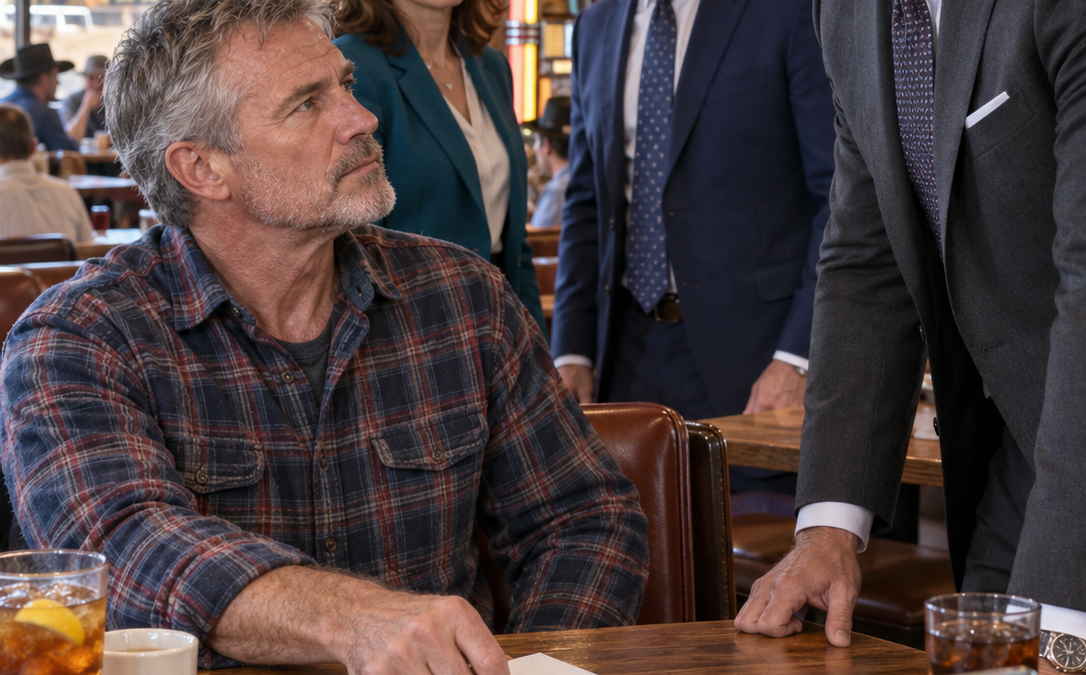
I told him his own signature was at the bottom of the letter.
He turned sharply toward Nadine. She flinched and whispered that my position had been flagged by the workforce optimization review as a legacy infrastructure role with redundant technical overlap.
Dawson lowered his voice and said I was the lead licensed inspector on the entire Midwest Energy project.
Nadine blinked hard. She explained that the external audit system had classified my title under general operations management rather than project-critical technical leadership.
I cut another piece of chicken-fried steak and told them the communication from HR had been extremely clear.
Four days earlier, I had driven through the main gate of Keystone Fabrication’s industrial campus in Tulsa at 5:45 in the morning, just as I had done every single weekday for the past 31 years.
The air that November morning smelled like cold concrete, pipe-welding flux, and the faint chemical bite of industrial coating fumes drifting from the south yard. I was 57 years old, and I had poured the majority of my adult life into that plant. I had started there at 26, fresh out of a two-year technical certification program, carrying a borrowed hard hat and a brand-new inspection toolkit my father had helped me buy.
Over the decades, I had worked my way up through every level of the inspection and integrity division. I designed the original corrosion-monitoring protocols for our underground pipeline systems. I wrote the hazardous liquid inspection procedures that were still being used on the shop floor decades later. I had spent three consecutive Thanksgivings in the field, supervising emergency repair assessments on aging natural gas distribution lines while other people were home carving turkeys.
That Monday morning, my key card still worked at the gate.
It would be the last time.
The first signal that something serious was coming had arrived two weeks earlier in the form of a companywide meeting notice marked URGENT in red capital letters. My longtime work partner, Felix Drummond, had appeared at the entrance to my office carrying two cups of coffee from the break room. Felix was 59, a pipeline metallurgist who had worked alongside me for 22 years.
He leaned against the doorframe and told me the maintenance foreman had overheard HR discussing a list of 18 senior technical positions earmarked for elimination. I looked up from the weld radiography reports on my desk and asked where the foreman had heard such a specific number.
Felix said Keystone had brought in an outside restructuring consultancy from Dallas, paying them somewhere north of $400,000 for a workforce efficiency audit. The firm had spent six weeks inside the building, walking around with laptops and clipboards and sitting in on project meetings without understanding a single technical word being discussed.
Keystone had been under financial pressure for a couple of years, but it wasn’t because we lacked project work. Our sales division kept signing agreements that promised inspection timelines our understaffed field crews couldn’t realistically maintain. Meanwhile, Dawson Burch had stripped the preventive maintenance budget down to almost nothing, allowed six experienced senior inspectors to retire without replacing them, and repeatedly delayed equipment certification renewals until minor technical violations turned into regulatory notices from the Department of Transportation.
But I genuinely believed my position was safe.
The Midwest Energy Solutions contract was the single largest piece of work Keystone had landed in nine years. It covered a comprehensive integrity assessment of 340 miles of aging high-pressure liquid petroleum pipeline across three states, along with a full digital condition-monitoring system installation and a seven-year ongoing inspection maintenance agreement.
I had spent 16 months building the technical proposal from scratch. My pipeline integrity engineering license was listed by name on the federal approval documentation required by the Pipeline and Hazardous Materials Safety Administration, or PHMSA.
Removing me four weeks before final regulatory signoff was not just bad management.
It was legally and operationally reckless.
At 9:30 that Monday morning, roughly 180 employees packed into the main training auditorium. Dawson spoke for about ten minutes about market conditions, organizational agility, and the need for structural efficiency. Then Nadine stepped to the podium and announced that affected team members would receive individual notifications by 11:00 a.m.
When the room emptied, she asked me to stay behind.
There was a box of tissues on the conference table and a sealed envelope beside a single sheet of bullet points explaining severance terms. Nadine told me my senior integrity engineering role had been eliminated, effective that same day.
I asked her who would be covering the certified PHMSA inspector signoff on the Midwest Energy final documentation package.
She said she didn’t have reassignment details available at that time.
I opened the envelope. The letter used fourteen clean corporate sentences to inform me that 31 years of my professional life were over before lunchtime. It offered nineteen weeks of severance pay, contingent on my signing a broad release of claims.
I packed one cardboard box. I sent a detailed handover memo to my department head identifying all open technical risks and unresolved regulatory items on every active project. Then I walked out to my pickup truck in the south parking lot and sat there for a few minutes with the engine off, staring at the plant’s water tower against the gray November sky.
The days that followed were harder than I expected.
I am not someone who has ever been comfortable sitting still. My wife, Pamela, suggested on Thursday evening that I drive into town for lunch because watching me rearrange my tool cabinet for the third time in 48 hours was testing her patience in ways she hadn’t anticipated when she married me.
That was how I ended up at Ricky’s Roadhouse Grill when Dawson Burch walked through the front door on a Friday afternoon.
After I laid out the situation for him at that corner table, Dawson leaned forward and told me to be reasonable. He said there had been an obvious administrative oversight and offered to reinstate my title and salary beginning Monday morning, provided I was willing to come into the plant that very afternoon to help the team finalize the Midwest Energy technical submission package.
Bertram Finch chimed in to explain that $14 million in first-phase deliverables were at risk of contract default if the PHMSA preauthorization package wasn’t submitted by the end of business the following Friday.
I took a slow sip of sweet tea.
I told Dawson that he had signed my termination letter without knowing the names of the people he was letting go. He had eliminated eighteen experienced technical professionals to satisfy a consulting firm’s cost-reduction spreadsheet, and that spreadsheet had apparently failed to note which of those eighteen people were keeping his largest contract from becoming a federal regulatory nightmare.
Dawson appealed to my sense of professional responsibility. He said he hoped I wasn’t going to let the jobs of the people still working on that shop floor suffer over a personal grudge.
I looked at him steadily and told him my professional responsibility had been fulfilled when I sent the handover memo.
His responsibility had been to understand who he was firing before he fired them.
Nadine quietly asked whether another licensed inspector on staff could step in and complete the certification signoff. I explained that under Title 49 of the Code of Federal Regulations, Part 195, and the specific language of the Midwest Energy contract, replacing a designated lead integrity engineer within the thirty-day preauthorization window required written consent from both the client’s executive engineering committee and the regional PHMSA field office, along with a full re-review of all prior technical findings.
That process typically took four to six weeks at a minimum.
I stood up from the table, laid a twenty-dollar bill beside my plate, and walked out to the parking lot.
Before I reached my truck, my phone rang.
The caller ID showed the name Claudia Wentworth, vice president of infrastructure integrity at Midwest Energy Solutions. When I answered, Claudia skipped any greeting and asked directly whether I was currently on administrative leave from Keystone, because that was what Keystone’s executive team had told her project manager two hours earlier.
I looked back through the restaurant window. Dawson was pacing near the bar with his phone pressed to his ear.
I told Claudia the truth.
I was not on administrative leave. I had been terminated Monday afternoon. I had not signed off on the final preauthorization package, and the regulatory documentation was incomplete.
Claudia went quiet for five full seconds. Then she said she needed to confirm whether Keystone had removed the lead licensed inspector from a federal pipeline safety project without notifying the client.
I confirmed that was accurate and told her that submitting the PHMSA package without a properly designated lead engineer would expose Midwest Energy to its own set of regulatory liabilities.
Claudia thanked me and told me to expect a follow-up call from their legal team.
By five that afternoon, Midwest Energy Solutions had issued a formal technical hold on the entire Keystone contract, pending verification of engineering staff continuity.
By 6:30, a process server knocked on my front door and handed Pamela an envelope containing a cease-and-desist letter from Keystone’s outside law firm in Oklahoma City.
The document accused me of tortious interference with business relations, unauthorized disclosure of proprietary project information, and intentional disruption of ongoing contractual obligations. It demanded that I cease all communication with Midwest Energy representatives immediately.
Pamela read through it twice at the kitchen table while I made coffee. She set it down and said they had thrown me out like yesterday’s trash and were now trying to tell me who I was allowed to talk to.
We called an employment attorney named Sheila Branham first thing Saturday morning.
Sheila had built her practice around industrial and pipeline-sector labor disputes in Tulsa and had a reputation for being extremely direct. She reviewed my termination letter, the handover memo, the cease-and-desist letter, and a printed copy of the Midwest Energy contract scope language.
She told us the law firm’s letter was designed to scare me into silence before Keystone’s board realized how badly management had bungled the situation. She said that under the Worker Adjustment and Retraining Notification Act and Department of Transportation pipeline safety regulations, misrepresenting the certification status of a licensed inspector to a federal project stakeholder created personal legal exposure for Dawson Burch at a level no corporate indemnification policy typically covered.
Saturday afternoon, my phone rang again.
This time it was Cody Albbright, a 27-year-old inspector who had joined our department two years earlier and whom I had been mentoring since his first week.
Cody was trying to keep his voice steady, but I could hear the panic underneath it. He told me Dawson had called him directly and ordered him to take over the Midwest Energy file and complete the preauthorization signoff by the following Friday.
Cody said he couldn’t find the baseline corrosion assessment binders from the initial 2019 field survey, the ones containing the original wall-thickness measurement logs for all 340 miles of the line.
Without those records, the integrity model was missing more than three years of trending data. Any engineer signing off on the current documentation without that baseline would essentially be certifying work for which there was no technical basis.
I knew immediately where those binders were.
Dawson’s assistant had pulled them from my office to prevent anyone from tracing the original scope assumptions back to work I had performed.
I told Cody that under no circumstances should he place his license seal on documentation he hadn’t independently verified. A fraudulent inspector certification on a federal pipeline project was not a career setback. It was a criminal matter under federal law.
I met Cody at the plant the next morning and signed in as a visitor. Walking the hallways where I had worked for three decades, now as a guest wearing a paper badge, felt surreal in a way I hadn’t anticipated. We tracked the missing binders to the executive suite, where I found them stacked behind Dawson’s credenza in a box marked ARCHIVE.
Dawson appeared from his inner office and offered to reinstate me under a new employment agreement. I reviewed the document on his conference table. It included a two-year noncompete clause prohibiting me from working for any pipeline inspection or integrity firm within a 500-mile radius of Tulsa, along with a full waiver of all past legal claims against the company.
I closed the folder and set it back on the table. I told him the contract was a trap dressed up in professional language.
Dawson said I was trying to destroy the company’s future. I told him I cared about what happened to Cody Albbright and the twenty-two other people who had lost their jobs so Dawson could make a quarterly bonus look clean on a spreadsheet.
I picked up the binder I had come for and walked out.
On Monday morning, Claudia Wentworth called again. Midwest Energy had issued a formal cure notice to Keystone’s board of directors, requiring a verified engineering staffing plan within five business days. Failure to comply would trigger contract termination for cause and activate the clawback provisions on advance payments already made.
She told me Midwest Energy was requiring an independent third-party review of all inspection documentation completed to date and had specifically requested that I serve as the independent technical reviewer.
Keystone’s board had no viable alternative. They granted access.
That evening, Felix Drummond drove over to my house. He sat at my kitchen table with a cup of coffee and a manila folder containing articles of incorporation. He told me we had been doing the hard engineering work for other people’s bottom lines for long enough, and that between the two of us, we had more combined pipeline inspection experience than anyone else in the region.
He had already spoken to an attorney about forming a technical consultancy. He wanted to know if I was in.
Pamela, who had been listening from the doorway, said she thought it was the most sensible idea she had heard in years. She added that our savings account could cover the initial licensing and insurance costs.
Within forty-eight hours, Drummond Cahill Engineering Services was officially registered in the state of Oklahoma. We set up our first working office in Felix’s detached garage workshop, which was surprisingly well organized and considerably warmer than it had any right to be in November.
Felix and I walked into Keystone the following Thursday to begin the independent audit.
Keystone’s board chair, a no-nonsense woman named Cecilia Strand, had flown in from their parent company’s headquarters in Houston and was running the meeting. Dawson sat at the far end of the executive conference table, looking as though he hadn’t slept in several days.
Cecilia made it clear from the outset that the board had not been informed of my termination before the client crisis. She issued standing instructions that Felix and I were to have complete, unrestricted access to all project files, procurement records, field inspection logs, and fabrication documentation, without exception.
What we found over the next three days went well beyond poor management decisions.
The project completion reports Dawson had been presenting to the board showed 38 percent progress on the pipeline corrosion assessment. The actual field inspection completion rate was 11 percent.
The discrepancy had been achieved by counting preliminary desk reviews of old archival photographs as completed field assessments.
More seriously, Felix uncovered a procurement substitution buried inside the contractor billing files.
The Midwest Energy contract explicitly required the installation of premium high-resolution ultrasonic testing sensors from a specified manufacturer for the digital monitoring system component. Those sensors carried a fifteen-year operational warranty and were certified for sour-gas exposure conditions common along the affected pipeline route.
An internal change order bearing Dawson Burch’s electronic approval had quietly authorized the substitution of lower-cost sensors from an uncertified vendor, saving roughly $840,000 in hardware costs.
A separate routing note attached to the file, written in Dawson’s handwriting, instructed the procurement coordinator that the client’s engineering specification represented conservative overengineering and that the substitution was a standard commercial-equivalent decision that did not require client notification.
I had worked with those pipeline segments long enough to know that wasn’t a minor material substitution.
Several sections of the line ran through geological zones with elevated hydrogen sulfide concentrations. Installing sensors that were not rated for that exposure was not a cost optimization. It was a structural integrity failure waiting to happen on a pressurized liquid petroleum line running within two miles of three separate municipal water intake systems.
When I confronted Dawson with the documentation in the Keystone project room, he said his engineering staff always specified unnecessarily expensive equipment and that procurement had simply made a reasonable commercial judgment call.
I told him a reasonable commercial judgment call did not hide itself inside a routing note marked INTERNAL ONLY.
Felix had also discovered that a field inspection crew supervisor named Garrett Niles, a 31-year-old hire with no pipeline inspection certification, had been signing off on field assessment reports for sections of the line he had never physically visited.
The digital GPS logs from the inspection crew vehicles contradicted the access dates on forty-three separate reports.
Garrett Niles had been hired eight months earlier by Dawson’s director of operations, who happened to be Dawson’s son-in-law.
This was not a company making operational mistakes under financial pressure. This was a company actively falsifying federal pipeline safety documentation.
We filed our preliminary findings with Cecilia Strand at seven o’clock on Wednesday evening. She read through the forty-one-page summary report without interrupting.
When she set it down, she told Dawson Burch that he was being placed on immediate administrative leave, pending board review and a formal inquiry referral to the Department of Transportation’s Office of Pipeline Safety.
Dawson argued briefly, and without much conviction, that the audit was biased. Cecilia told him the findings were supported by the company’s own internal digital records.
The board held a full crisis meeting Thursday morning, with Midwest Energy’s executive team and legal counsel participating by video conference.
Claudia Wentworth presented a formal list of conditions under which Midwest Energy would agree to continue the contract. Those conditions included complete replacement of Keystone’s project technical team, an independent engineering oversight authority with final approval over all remaining work, a third-party regulatory compliance audit of all prior submissions, and a personal guarantee from the board that Dawson Burch and Garrett Niles would have no further involvement in any project deliverable.
Then Cecilia Strand looked across the conference table at me and asked whether Drummond Cahill Engineering Services would be willing to accept appointment as the independent technical oversight authority for the project recovery.
Felix and I had already discussed our terms with Sheila Branham before the meeting.
I told the board our conditions.
Drummond Cahill Engineering Services would serve as the independent technical authority, with unilateral approval power over all engineering decisions, inspector certifications, and equipment procurement specifications.
Keystone would issue a written companywide correction acknowledging that my termination had been a management error unrelated to my professional performance.
Keystone would indemnify our firm against all preexisting project liabilities arising from work performed before our appointment, and our consulting fee structure would reflect current market rates for independent pipeline integrity authority engagements.
Bertram Finch objected to the fee terms, noting that they were considerably higher than my previous employee compensation.
Sheila, who was sitting beside me, pointed out that Keystone had enjoyed access to my professional expertise at employee compensation rates for thirty-one years. The board could reflect on what that expertise was currently worth to them now that they had voluntarily discarded it.
Cecilia accepted every condition without modification.
The written correction went out to all Keystone staff within twenty-four hours.
Felix and I walked back through those plant gates the following Tuesday morning, this time as the independent technical authority.
We assembled a recovery team that included Cody Albbright, three veteran field inspectors we had brought back from the layoff list, and two external pipeline engineering specialists we contracted through professional network connections Felix had maintained for years.
I stood in the main conference room with the entire assembled group and told them directly that we were not going to spend any energy pointing fingers at how we had gotten there. We were going to spend all our energy making sure every inch of that pipeline assessment was performed correctly, documented accurately, and certified honestly.
I told them any one of them could stop work at any moment if they encountered something they couldn’t certify with confidence.
The culture shift in that building over the following weeks was visible to anyone paying attention.
People started asking questions out loud instead of quietly accepting decisions they knew were wrong. Cody grew into his role faster than I would have predicted, running three concurrent inspection subteams with a level of calm organizational clarity that surprised even me.
But we hit a deliberate obstacle in week four.
Drummond Cahill Engineering Services had ordered replacement ultrasonic sensors from the originally specified manufacturer, replacing the uncertified units that had already been installed on the monitoring system.
The hardware order was routed through Keystone’s procurement system, as the independent oversight contract required.
On a Tuesday morning, the equipment supplier called me directly to say the order had been canceled from Keystone’s procurement system the previous evening under a purchase order reversal notice carrying Dawson Burch’s user credentials.
Dawson was still on administrative leave, but apparently he still had system access that no one had thought to revoke.
Rather than filing a formal complaint and waiting for an internal IT resolution, I called the manufacturer directly and arranged a new purchase order under Drummond Cahill Engineering Services’ own business account, with direct billing to Midwest Energy Solutions under the cure notice payment terms Claudia had authorized.
The sensors shipped within seventy-two hours.
When Keystone’s IT team traced the unauthorized purchase order cancellation back to Dawson’s credentials, Cecilia Strand terminated his employment that afternoon and referred the matter to the company’s cybersecurity insurer and the Tulsa County District Attorney’s Office.
Dawson called my personal cell phone that Sunday.
He said the purchase order cancellation had been a misunderstanding and asked me to tell the board the reversal had been a system error.
I told him I had spent thirty-one years doing honest technical work inside a company he had spent two years systematically corrupting, and that I had no interest in the distinction between what he had done deliberately and what he was now calling a misunderstanding.
I blocked his number.
Three months into the recovery engagement, Cody Albbright walked into my temporary site office at the Keystone facility holding a certified field report from our inspection crew on the southern segment of the Midwest Energy line, the segment with the highest historical corrosion risk.
His crew had located a section of pipe with wall-thickness readings 23 percent below the minimum safe threshold under current operating pressure.
That same section had been logged as satisfactory by Garrett Niles in a report dated eight months earlier, a report Garrett had filed without ever visiting the site.
We immediately coordinated with Midwest Energy Operations to reduce pressure on that segment, brought in an emergency repair contractor, and completed a sleeve reinforcement installation within six days.
Claudia Wentworth later told me that the section would almost certainly have experienced a failure event within eighteen months under continued operating conditions.
There were farms and a small unincorporated community within the potential impact radius of that location.
The moment I stood in the field watching the repair crew complete the final weld on that sleeve reinforcement, I understood something I hadn’t been able to articulate clearly in the weeks since my termination.
I had spent three decades working inside a building, doing work that protected people I would never meet from risks they never knew existed.
That is the nature of pipeline integrity work. Nobody knows your name when everything goes right. Everyone knows your name when something goes wrong.
Dawson Burch had never understood what any of us actually did inside those offices and field trucks. He had only ever seen the line items.
By spring, Drummond Cahill Engineering Services had completed the full independent audit and submitted the corrected preauthorization package to the PHMSA regional office.
The package was accepted without a single deficiency notice. It was the first time a submission of that scope had cleared the regional office on its first review in more than four years.
Midwest Energy was so thoroughly satisfied with our performance under what had been genuinely difficult circumstances that Claudia extended our engagement to include ongoing annual integrity assessments for the next six years and referred us to two additional pipeline operators in the region.
Keystone’s board accepted Cecilia Strand’s recommendation to formally acquire Drummond Cahill Engineering Services’ ongoing contract portfolio and offered Felix and me an unusual structure: a joint venture arrangement in which our firm retained independent technical authority while operating out of Keystone’s renovated facility.
We negotiated job security guarantees for all eight members of our recovery team, profit-sharing provisions, and a formal employee feedback mechanism that required management to document the technical impact of any structural change affecting certified personnel before implementation.
Cody Albbright was promoted to lead inspector and regional field supervisor.
He was twenty-eight years old.
Garrett Niles and Dawson Burch both faced federal charges related to the falsification of pipeline safety inspection records. The Department of Transportation investigation, which had been triggered by our audit report, took seven months to complete its review.
Neither outcome was mine to celebrate. I had stopped thinking about them by the time the charges were filed.
About a year after the morning I carried my cardboard box through the Keystone plant exit, Felix and I drove out to the southern pipeline segment where Cody’s crew had found that deteriorated section of pipe.
We parked on the gravel access road at dusk and stood there for a while without talking.
There was a farmhouse with a porch light on about a quarter of a mile away, across the flat Oklahoma field.
Felix said it was strange to think that the people in that house had no idea we existed.
I told him that was exactly the point.
The morning I was terminated, I believed it was the worst thing that had ever happened to me professionally. Looking back, I can say with complete honesty that it was the thing that forced me to stop lending my professional integrity to people who were using it as a liability shield while quietly hollowing out everything it was supposed to protect.
Drummond Cahill Engineering Services now employs thirty-one people.
We built an office on the east side of Tulsa with a field equipment bay and a training room where I spend one afternoon a week working with junior inspectors who are at the beginning of the same kind of career I spent thirty-one years building.
I tell them the same thing every time.
The license seal you put on a document is not a formality. It is a promise to people you will never meet about risks they cannot see, staked against everything you have built.
Guard it like it is the only thing you own.








